In Simple Words
High-caseload advising is like a single doctor attempting to treat 3,000 patients in a single afternoon; the doctor only has enough time to hand out quick prescription slips without ever diagnosing underlying health problems or asking about lifestyle needs.
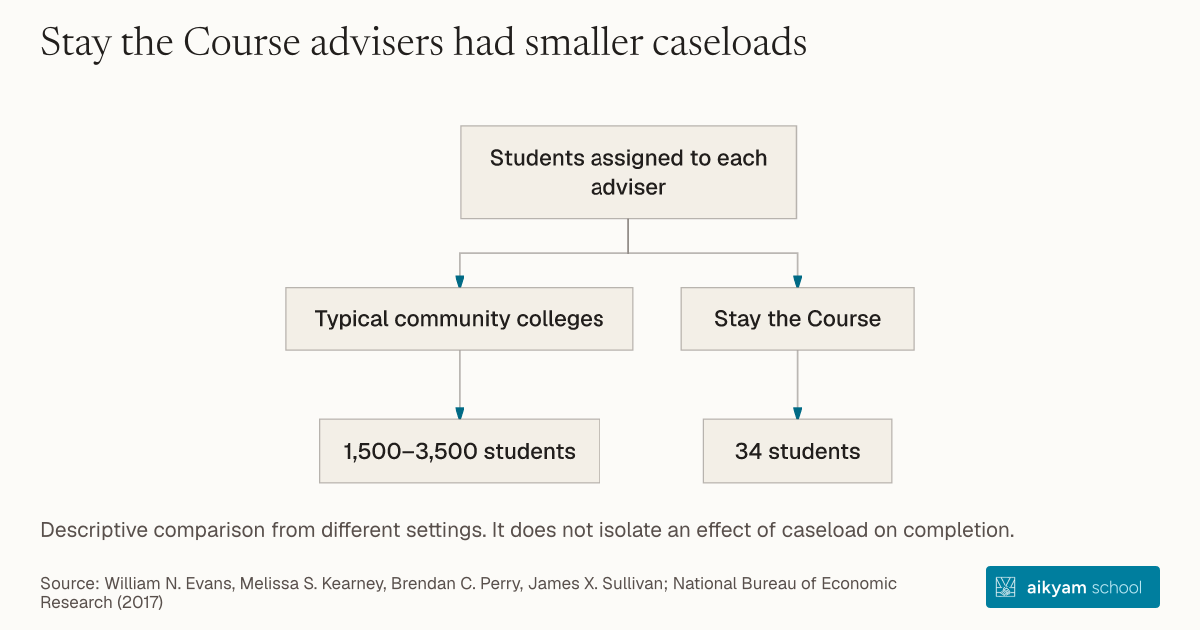
Students assigned to each adviser
- Typical community colleges
- 1,500–3,500 students
- Stay the Course
- 34 students
Descriptive comparison from different settings. It does not isolate an effect of caseload on completion.
See source →Research question
Standard community college counseling departments assign extreme student-to-advisor ratios, forcing advisors into brief, transaction-focused course registration meetings rather than proactive relational crisis support.
Participants
National survey of community college counseling centers across public two-year postsecondary institutions in the United States.
Study Design
Observational national survey data from the American College Counseling Association (Gallagher, 2010).
Results
Over 50% of public community colleges operate at counselor-to-student ratios between 1:1,500 and 1:3,500, contrasting sharply with intensive models utilizing 34:1 caseloads.
Takeaway
Reduce institutional student-to-advisor ratios by restructuring advising departments into specialized tiers with capped caseloads for high-risk student populations.