In Simple Words
In-person mentoring is like visiting a doctor's clinic rather than receiving automated text reminders; automated messages can remind a patient to take medication, but diagnosing underlying personal challenges requires sitting face-to-face in a room to establish trust and observe nuanced needs.
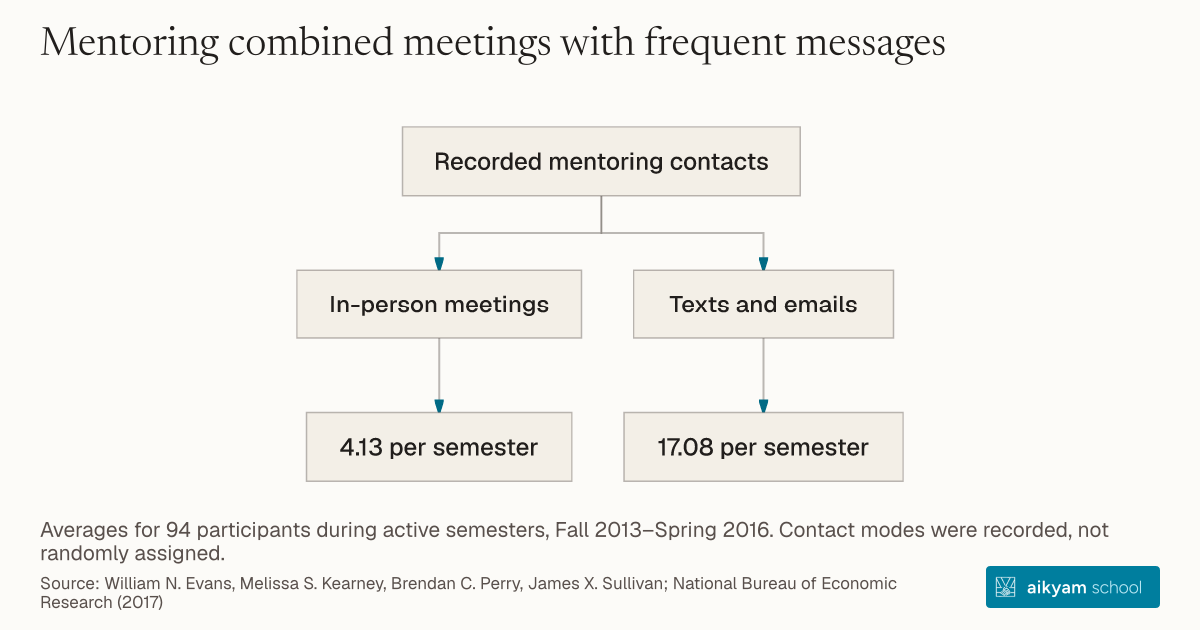
Recorded mentoring contacts
- In-person meetings
- 4.13 per semester
- Texts and emails
- 17.08 per semester
Averages for 94 participants during active semesters, Fall 2013–Spring 2016. Contact modes were recorded, not randomly assigned.
See source →Research question
Digital-only or phone-based advising initiatives struggle to establish the personal trust necessary for low-income community college students to disclose sensitive personal crises, such as housing instability or domestic issues, that threaten academic persistence.
Participants
N = 94 active treatment compliers at Tarrant County College Trinity River Campus in Fort Worth, Texas.
Study Design
Analysis of electronic case notes tracking navigator-student communication modalities across six academic semesters (Fall 2013 through Spring 2016).
Results
Students averaged 33.81 total interactions per semester, consisting of 4.13 in-person meetings (averaging 41.25 minutes each), 17.08 text/email exchanges, and 9.70 phone calls.
Takeaway
Require student navigators to hold face-to-face meetings averaging at least 40 minutes per month with each assigned client alongside ongoing text and phone communication.