In Simple Words
Imagine having a heavy boulder sitting on your chest (debt to village storekeepers or moneylenders). The second someone hands you a shovel (cash), your very first move isn't to buy nice things—it's to push the boulder off so you can breathe freely again.
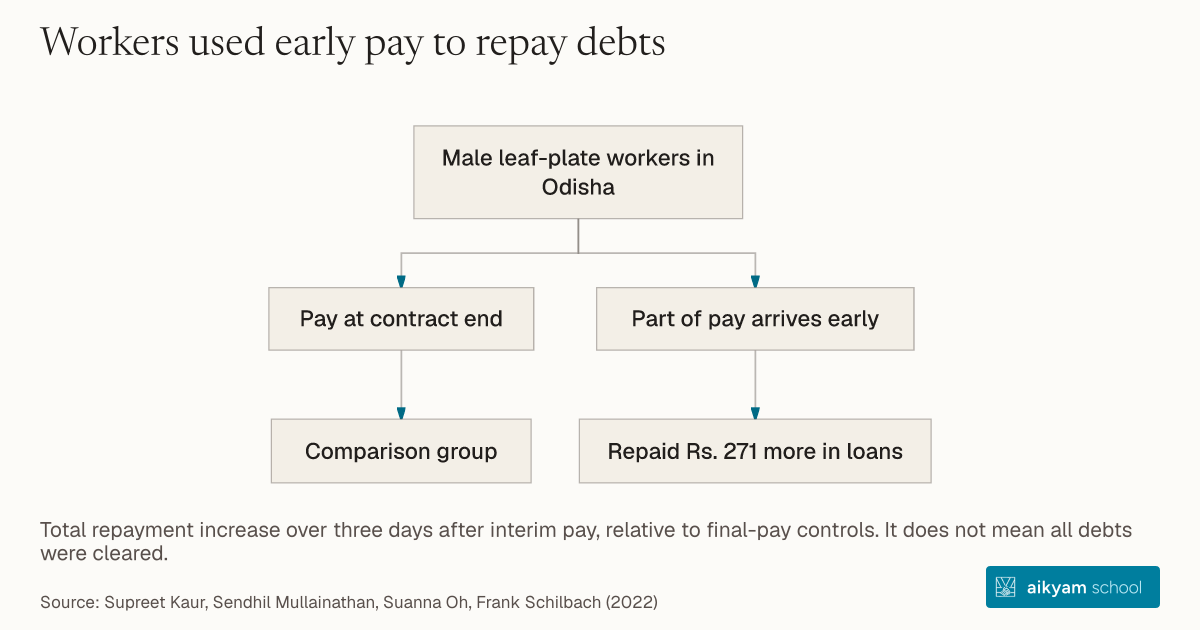
Male leaf-plate workers in Odisha
- Pay at contract end
- Comparison group
- Part of pay arrives early
- Repaid Rs. 271 more in loans
Total repayment increase over three days after interim pay, relative to final-pay controls. It does not mean all debts were cleared.
See source →Research question
When liquidity-constrained workers receive cash infusions, they prioritize immediate debt repayment over consumption or investment, reflecting a high marginal psychological cost of carrying debt.
Participants
N = 402 male manufacturing workers, Odisha, India (1,160 worker-day observations).
Study Design
Expenditure recall survey tracking daily spending and loan repayments across 3 days post-interim payment.
Results
On the exact day cash was received, loan payments increased by Rs. 169 (746% increase, p<0.001); over 3 days, treated workers increased debt repayments by Rs. 271 (287% increase, p<0.001) and were 40 percentage points (222%) more likely to pay off outstanding credit.
Takeaway
Design payroll and payout mechanisms that facilitate direct, friction-free debt settlement to accelerate worker mental unburdening.
Source and citation
See source →Read alongside the research
Plain-English glossary
Original explanations, informed by the references below. Examples are illustrations, not data from the studies above. The research text stays unchanged.
- Percentage points
The difference between two percentages.
ExampleA rise from 40% to 50% is 10 percentage points. Relative to the starting value, that is a 25% increase.
Office for National Statistics · Percentages ↗Read more about percentage points →