In Simple Words
Imagine a bank vault in a town without a police force; the owner must personally hold the keys and monitor every single withdrawal because if an employee steals money, the legal system will not help recover the stolen cash or punish the thief.
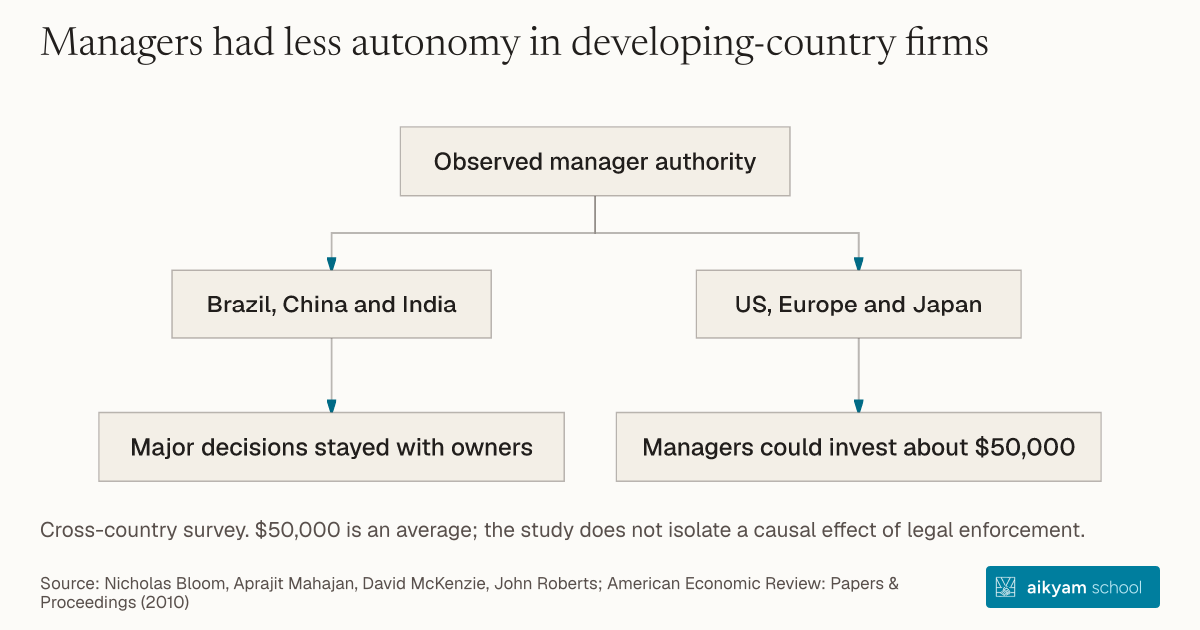
Observed manager authority
- Brazil, China and India
- Major decisions stayed with owners
- US, Europe and Japan
- Managers could invest about $50,000
Cross-country survey. $50,000 is an average; the study does not isolate a causal effect of legal enforcement.
See source →Research question
In jurisdictions with weak legal systems and poor rule of law, business owners face severe expropriation and theft risks from employees. This lack of legal protection deters owners from delegating operational decision-making authority to professional managers.
Participants
Cross-country sample of 6,000 medium-sized manufacturing firms (100 to 5,000 employees) across the US, Europe, Japan, Brazil, China, and India.
Study Design
Cross-country observational survey analyzing governance structures and manager autonomy across legal environments.
Results
Weak legal enforcement directly inhibits decentralization, as owners refrain from granting operational autonomy due to fear of unpunished theft, keeping managerial decision-making highly centralized compared to developed nations.
Takeaway
Establish legal contracts backed by strict internal audit logs and real-time output tracking systems to reduce managerial theft risks before delegating financial authority.