Try, learn and adjust
Check insured loan payout routing
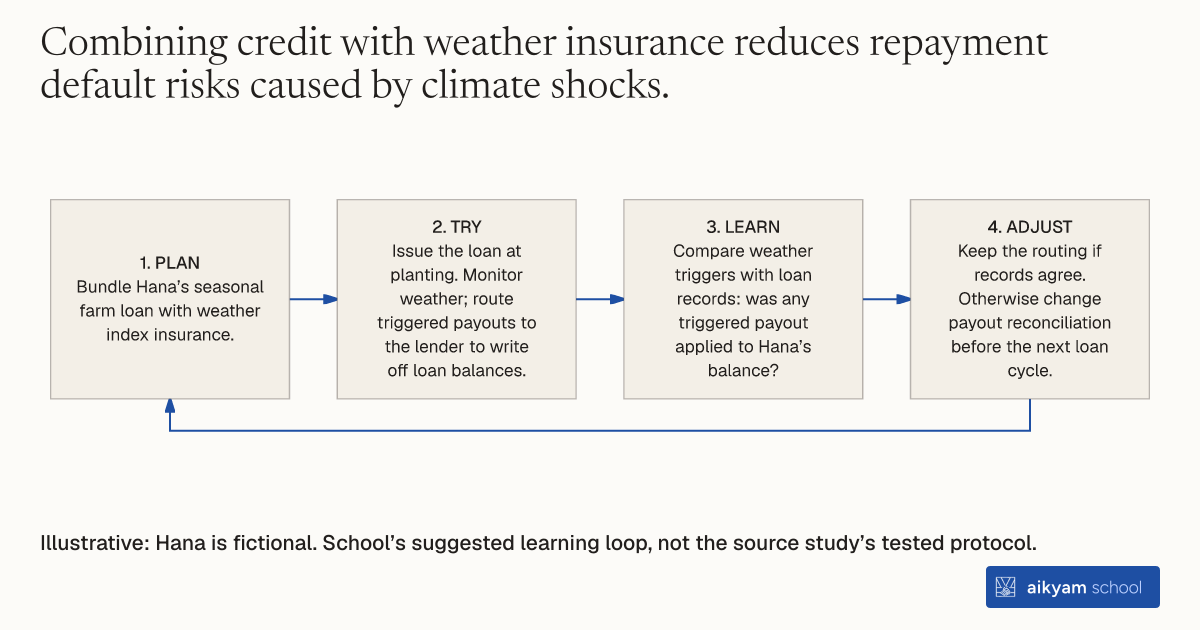
- Plan: Bundle Hana’s seasonal farm loan with weather index insurance.
- Try: Issue the loan at planting. Monitor weather; route triggered payouts to the lender to write off loan balances.
- Learn: Compare weather triggers with loan records: was any triggered payout applied to Hana’s balance?
- Adjust: Keep the routing if records agree. Otherwise change payout reconciliation before the next loan cycle.
Illustrative: Hana is fictional. School’s suggested learning loop, not the source study’s tested protocol.
See source →School’s suggested, untested learning loop. Observe weather triggers and loan write-offs. Cooperatives also hold reserves for uncovered default risks.
How
When to use
Smallholder farmers lack liquidity at planting time to buy agricultural inputs or standalone weather insurance. Lenders hesitate to extend farm credit due to crop loss default risks. Bundling weather index insurance directly with agricultural credit products helps reduce weather risk for borrowers and financial institutions.
Bundle weather index insurance directly into agricultural credit products to manage default risk for lenders and farmers.
- Financial institutions combine weather index insurance policies with seasonal agricultural loans.
- Loan officers distribute bundled credit packages to eligible farmers at the start of the planting season.
- Insurers monitor regional weather index stations during the cultivation period.
- Insurers issue index payouts directly to lenders to write off loan balances if weather shocks trigger coverage thresholds.
- Agricultural cooperatives hold external capital reserves to protect institutional assets against unhedged default risks.
Why it works
It gives farmers the necessary financial liquidity to invest in higher-yielding agricultural inputs.
Example
In Ethiopia, agricultural cooperatives offered smallholder farmers insurance combined with an agricultural loan. Uptake was high among farmers, but cooperatives were hesitant to back loans with their own assets due to default risks.