In Simple Words
Think of installing automated productivity tracking software in an office. Even if management insists the software is only meant to assist employees with time management, workers will fear the data will be used to monitor their performance or replace their jobs, leading them to protest or refuse to use the software.
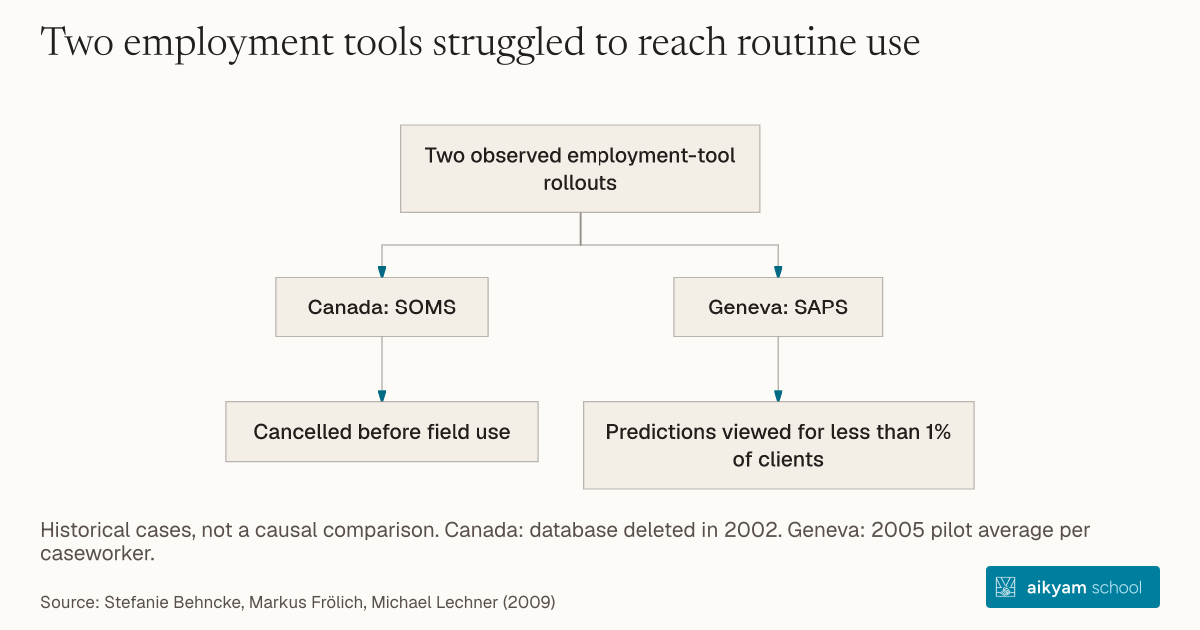
Two observed employment-tool rollouts
- Canada: SOMS
- Cancelled before field use
- Geneva: SAPS
- Predictions viewed for less than 1% of clients
Historical cases, not a causal comparison. Canada: database deleted in 2002. Geneva: 2005 pilot average per caseworker.
See source →Research question
Deploying algorithmic decision-support tools in public bureaucracies triggers severe institutional resistance when frontline staff perceive automated recommendations as supervisory surveillance tools or existential threats to job security and professional autonomy.
Participants
Comparative policy review of national profiling systems, focusing on Canada's Service and Outcome Measurement System (SOMS, 1994–1999) and the Swiss SAPS pilot across 21 employment offices.
Study Design
Comparative historical case evaluation of bureaucratic software rollouts and staff compliance tracking via access logs.
Results
Canadian authorities spent 5 years building SOMS on massive administrative data, but caseworker resistance and job security fears forced complete cancellation and deletion of the national database in 2002 before field deployment; similarly, Swiss pilot caseworkers in Geneva completely rejected SAPS (download rate <1%).
Takeaway
Address frontline job security fears, involve staff unions during software design, and establish binding privacy firewalls before introducing decision-support tools in public sector agencies.