In Simple Words
Acquiring work habits in a temporary specialized role is like learning tactical discipline while training in competitive sports; the foundational discipline and workplace skills developed transfer directly when transitioning to work in completely different industries across the broader economy.
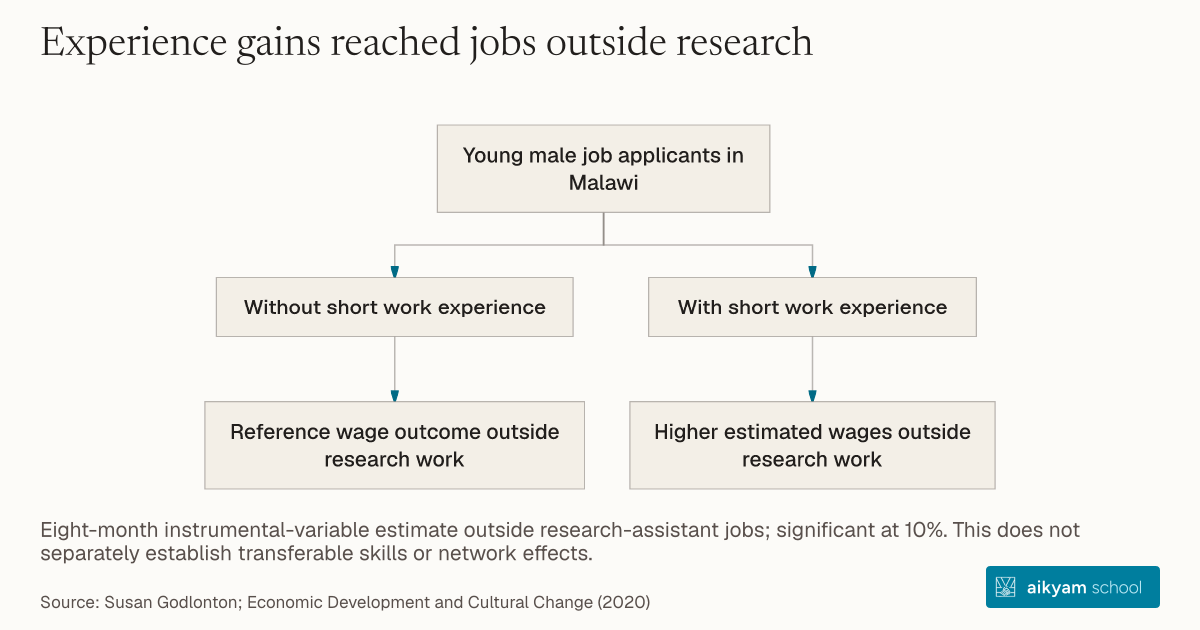
Young male job applicants in Malawi
- Without short work experience
- Reference wage outcome outside research work
- With short work experience
- Higher estimated wages outside research work
Eight-month instrumental-variable estimate outside research-assistant jobs; significant at 10%. This does not separately establish transferable skills or network effects.
See source →Research question
A central question in active labor market policy is whether short-term experience acquired in specialized temporary positions (such as research assistant roles) generates returns only within that specific niche sector or spills over to elevate earnings in broader non-specialized private sector jobs.
Participants
N = 227 urban Malawian male job seekers tracked over an 8-month follow-up period in Lilongwe, Malawi.
Study Design
Instrumental variables (IV) estimation decomposing post-intervention wage returns across research assistant (RA) positions versus non-RA positions.
Results
While employment increases occurred across both RA and non-RA roles, the overall post-intervention daily wage gains were primarily driven by employment in non-RA positions rather than continued research assistant work.
Takeaway
Encourage job seekers participating in short-term specialized employment opportunities to apply for non-specialized private sector roles to capture cross-sectoral wage premiums.
Source and citation
See source →Read alongside the research
Plain-English glossary
Original explanations, informed by the references below. Examples are illustrations, not data from the studies above. The research text stays unchanged.
- Follow-up
Collecting more information about participants later in a study to see what has happened to them. The term can also mean the length of time researchers keep track of them.
ExampleResearchers interview the same workers three months after a programme ends. That later interview is a follow-up.
GET-IT glossary · Follow-up ↗Read more about follow-up →