Try, learn and adjust
Check delivery of bundled seeds and insurance
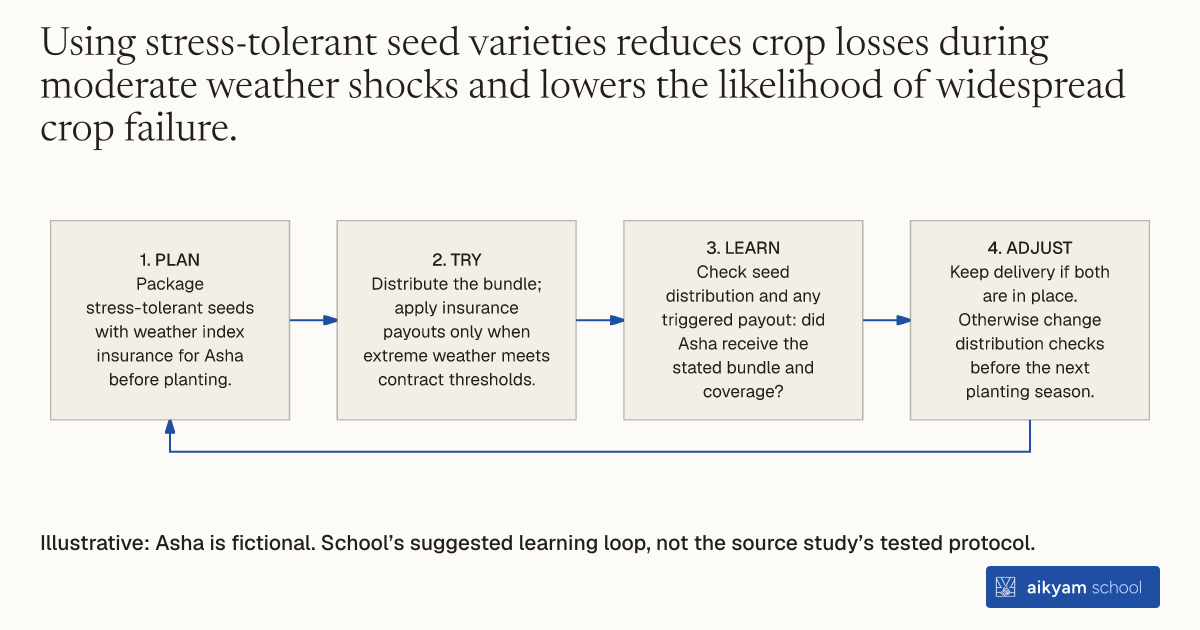
- Plan: Package stress-tolerant seeds with weather index insurance for Asha before planting.
- Try: Distribute the bundle; apply insurance payouts only when extreme weather meets contract thresholds.
- Learn: Check seed distribution and any triggered payout: did Asha receive the stated bundle and coverage?
- Adjust: Keep delivery if both are in place. Otherwise change distribution checks before the next planting season.
Illustrative: Asha is fictional. School’s suggested learning loop, not the source study’s tested protocol.
See source →School’s suggested, untested learning loop. Observe seed receipt and payouts against contract triggers. This does not establish protection from every loss.
How
When to use
Smallholder farmers in low-income regions face moderate and extreme weather shocks that cause crop losses. Using stress-tolerant seed varieties alone protects against moderate droughts, but fails during extreme climate disasters. Bundling stress-tolerant seeds directly with weather index insurance provides smallholders with comprehensive risk coverage across different shock severities.
Offer stress-tolerant crop seed varieties bundled directly with weather index insurance to provide smallholders with holistic weather risk protection.
- Agricultural development organizations identify crop varieties engineered for flood or drought tolerance.
- Program managers package stress-tolerant seeds together with weather index insurance policies.
- Extension agents distribute the bundled seed and insurance kits to smallholder farmers before planting.
- Stress-tolerant seeds protect farmers' harvests during moderate midseason weather shocks.
- Insurers issue index payouts to policyholders when extreme weather triggers contract coverage thresholds.
Why it works
This reduces full payout claims for lenders while protecting farmers against severe disaster events.
Example
In three studies across smallholder farming areas, researchers tested weather index insurance offered alongside stress-tolerant seed varieties. In two of these studies, combining drought-tolerant seeds with weather index insurance encouraged farmers to make riskier, more profitable production decisions.