Try, learn and adjust
Check premium deduction at harvest
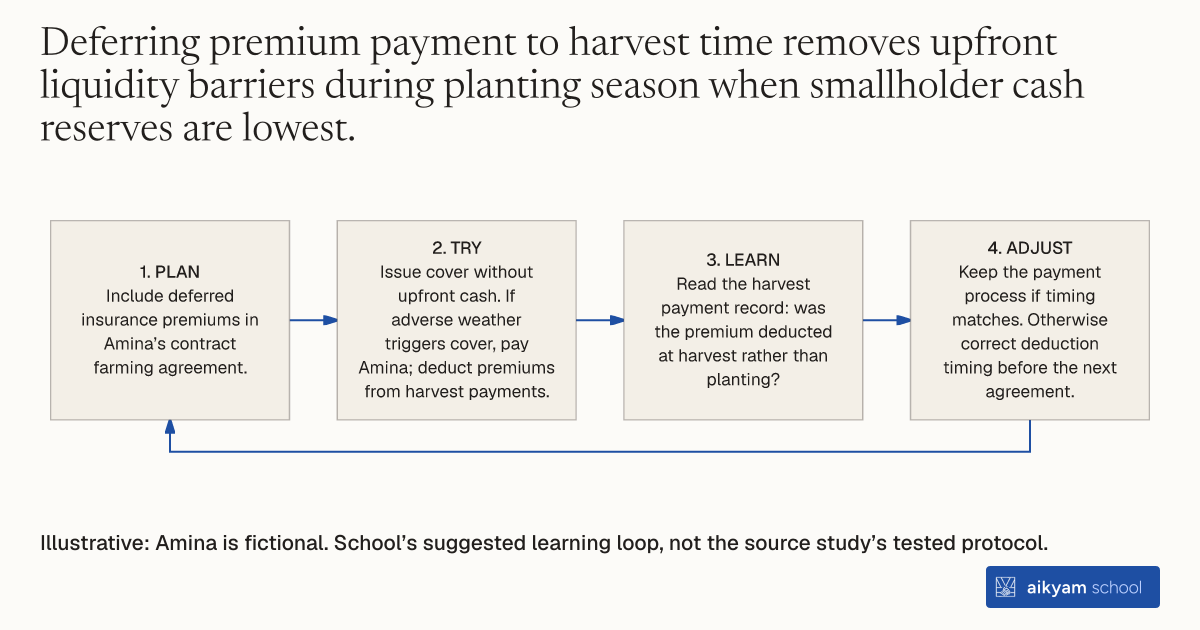
- Plan: Include deferred insurance premiums in Amina’s contract farming agreement.
- Try: Issue cover without upfront cash. If adverse weather triggers cover, pay Amina; deduct premiums from harvest payments.
- Learn: Read the harvest payment record: was the premium deducted at harvest rather than planting?
- Adjust: Keep the payment process if timing matches. Otherwise correct deduction timing before the next agreement.
Illustrative: Amina is fictional. School’s suggested learning loop, not the source study’s tested protocol.
See source →School’s suggested, untested learning loop. Observe policy issue, triggered payouts and harvest deductions.
How
When to use
Smallholder farmers face severe cash constraints at the start of the planting season when insurance premiums are usually due. Standard upfront payment structures depress insurance uptake among cash-poor agricultural producers. Allowing farmers to defer premium repayment until harvest time aligns payment schedules with income streams.
Deduct insurance premiums at harvest time from crop sales within contract farming arrangements to overcome upfront liquidity constraints.
- Contract farming managers integrate deferred weather index insurance options into farmer purchasing agreements.
- Agribusiness buyers issue insurance policies to contract farmers at the beginning of the planting season without requiring cash upfront.
- Insurers evaluate weather station data and distribute index payouts directly to farmers if adverse weather occurs.
- Contract farmers deliver harvested crops to agribusiness buyers at the end of the agricultural season.
- Agribusiness buyers automatically deduct insurance premium costs from final harvest purchase payments.
Why it works
Linking repayment to buyer crop purchases guarantees loan recovery for financial intermediaries.
Example
Under a contract farming scheme in Kenya, researchers allowed farmers to repay insurance premiums at harvest time. Repaying at harvest increased insurance purchase from 5 percent under the standard product to 72 percent, with the largest impact observed among poorer farmers.