Try, learn and adjust
Check stored materials follow inventory limits
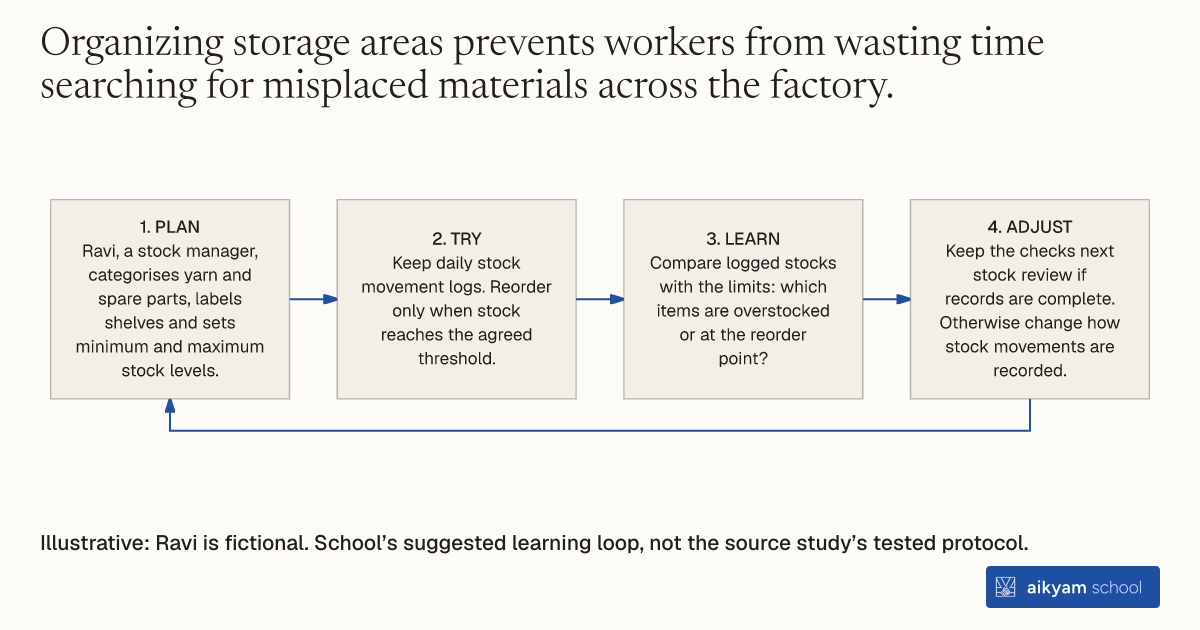
- Plan: Ravi, a stock manager, categorises yarn and spare parts, labels shelves and sets minimum and maximum stock levels.
- Try: Keep daily stock movement logs. Reorder only when stock reaches the agreed threshold.
- Learn: Compare logged stocks with the limits: which items are overstocked or at the reorder point?
- Adjust: Keep the checks next stock review if records are complete. Otherwise change how stock movements are recorded.
Illustrative: Ravi is fictional. School’s suggested learning loop, not the source study’s tested protocol.
See source →School's suggested, untested loop: observe stock movements, buffer levels and reorders; no savings are assumed.
How
When to use
Factory storage rooms in manufacturing plants are often disorganized, lacking formalized systems for yarn and spare parts. This disorganization causes workers to waste time searching for materials and locks up excess working capital in stock. Establishing formalized storage systems and clear inventory control norms organizes raw materials and spare parts efficiently.
Organize yarn and spare parts storage areas with clear physical labeling and establish systematic inventory control norms across the plant.
- Assign warehouse staff to categorize raw yarn and spare parts by specific item type.
- Label designated storage bins and shelves clearly in material and spare parts storage areas.
- Establish minimum and maximum inventory buffer norms for every yarn and spare part category.
- Direct stock managers to keep daily inventory logs tracking stock movements and current buffer levels.
- Require purchasing staff to reorder materials only when inventory levels reach established buffer thresholds.
Why it works
Establishing inventory norms prevents overstocking unnecessary working capital while avoiding production delays from stockouts.
Example
Consultants assisted managers across twenty-eight textile plants belonging to seventeen firms near Mumbai, India, in establishing formalized storage systems for yarn and spare parts.
About the study
Participants
Seventeen large textile manufacturing firms with twenty-eight factory plants near Mumbai, India, averaging 270 employees, US\$13 million in assets, and US\$7.5 million in annual sales per firm.
Study Design
Randomized controlled trial evaluating an intensive four-month consulting intervention that introduced thirty-eight management practices including inventory organization and control norms.
Results
Introducing formalized inventory storage systems and control norms reduced excess inventory and material search delays, contributing to a 16.6 percent total factor productivity increase within twelve months.