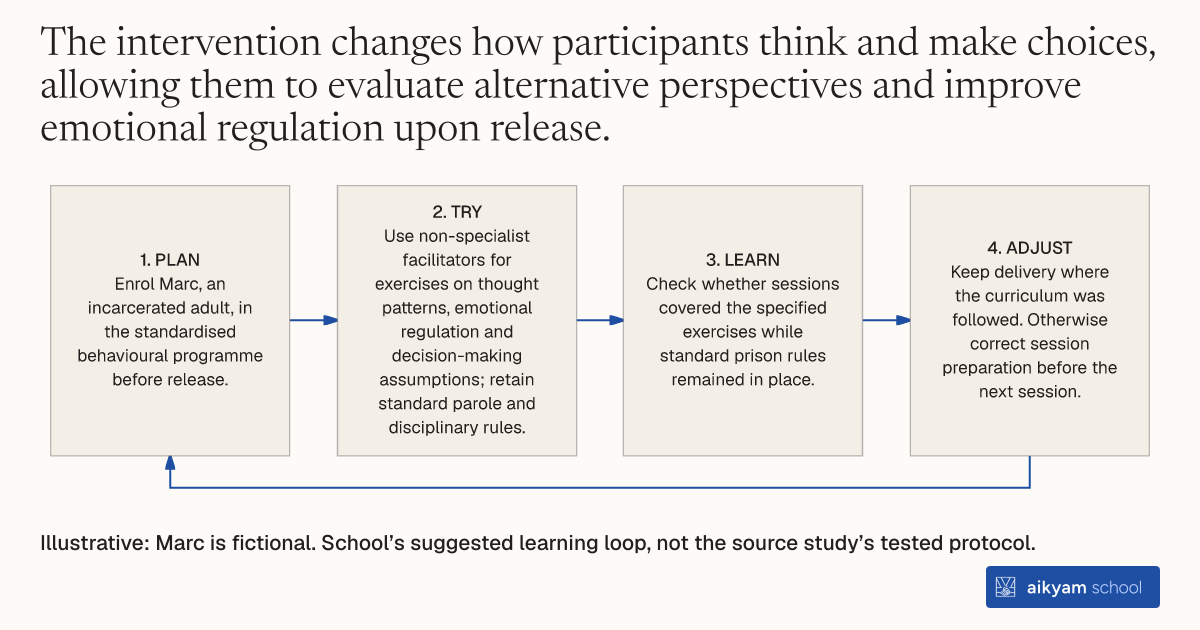
Try, learn and adjust
Check prison sessions follow the curriculum
- Plan: Enrol Marc, an incarcerated adult, in the standardised behavioural programme before release.
- Try: Use non-specialist facilitators for exercises on thought patterns, emotional regulation and decision-making assumptions; retain standard parole and disciplinary rules.
- Learn: Check whether sessions covered the specified exercises while standard prison rules remained in place.
- Adjust: Keep delivery where the curriculum was followed. Otherwise correct session preparation before the next session.
Illustrative: Marc is fictional. School’s suggested learning loop, not the source study’s tested protocol.
See source →School’s suggested, untested loop: observe curriculum delivery. This check does not establish recidivism effects or change parole decisions.
How
When to use
Incarcerated individuals in correctional facilities experience high rates of re-offending after release. Delivering behavioral skill-building sessions behind bars addresses cognitive biases before individuals rejoin their communities. Implement a structured behavioral intervention in provincial jails to reduce post-release recidivism.
Deliver a standardized behavioral program led by non-specialist facilitators to incarcerated adults prior to release.
- Correctional facility staff enroll incarcerated individuals in provincial jails into structured behavioral programming.
- Non-specialist facilitators lead participants through simple, standardized curricula focused on modifying thought processes.
- Facilitators guide participants through exercises to improve emotional self-regulation and evaluate default decision-making assumptions.
- Program staff deliver the curriculum during incarceration without changing standard parole or disciplinary rules.
Example
Implementers evaluated a behavioral program delivered to incarcerated adults in provincial jails in Quebec. One year following release, the program reduced the likelihood of recidivism by 18 percentage points (60 percent), saving roughly US\$3,800 per inmate in incarceration costs.
About the study
Participants
Incarcerated adults in provincial jails in Quebec.
Study Design
Quasi-experimental evaluation measuring recidivism rates, prison misconduct, and parole likelihood one year after release.
Results
Reduced the likelihood of recidivism by 18 percentage points (60 percent) one year following release and saved roughly US\$3,800 per inmate in incarceration costs.