Research procedure
Measure unused referral materials
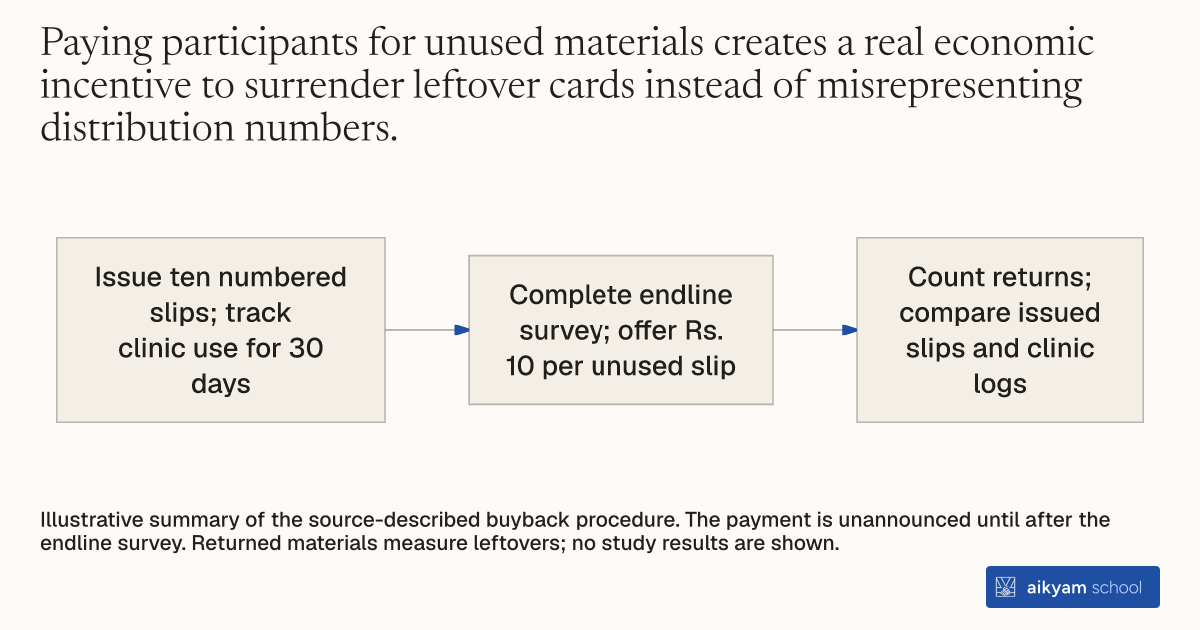
- Issue ten numbered slips; track clinic use for 30 days
- Complete endline survey; offer Rs. 10 per unused slip
- Count returns; compare issued slips and clinic logs
Illustrative summary of the source-described buyback procedure. The payment is unannounced until after the endline survey. Returned materials measure leftovers; no study results are shown.
See source →How
When to use
Evaluating peer referral programs requires distinguishing between referrers who fail to distribute outreach materials and prospective patients who choose not to report for care. Self-reported outreach numbers suffer from social desirability bias and memory errors. This method uses an unannounced financial buyback of unused materials to obtain an accurate measure of distribution effort.
Measure participant outreach effort by offering an unannounced financial payment for returned referral materials following an intervention.
- Issue ten numbered referral cards to patients enrolled in a peer outreach campaign.
- Track all referral cards presented by prospective patients at local health clinics during a 30-day screening window.
- Complete endline health surveys with patient referrers at the conclusion of the intervention period.
- Offer patients an unannounced payment of Rs. 10 for each unused referral card returned to enumerators after the survey.
- Record the number of returned cards to determine the exact number of materials withheld or lost.
- Deduct returned cards from total issued cards and compare against clinic intake logs to calculate unredeemed cards given to peers.
Why it works
Comparing physical returns against clinic registration logs isolates referrer distribution effort from recipient compliance decisions.
Example
Enumerators in India offered tuberculosis patients Rs. 10 per returned referral card after an outreach study, revealing that encouragement patients returned an average of 7.24 cards while conditional incentive patients returned 0.07 fewer cards.
About the study
Participants
869 current tuberculosis patients in peer-outreach arms across 10 cities in India.
Study Design
Incentive-compatible card buyback scheme implemented after an endline survey within a randomized controlled trial across health clinics.
Results
Patients in the encouragement arm returned an average of 7.24 cards, patients with unconditional incentives returned 0.04 additional cards, and patients with conditional incentives returned 0.07 fewer cards, proving financial rewards increased referral uptake by improving communication quality rather than increasing card volume.