Research design
Explain the same incentives through several channels
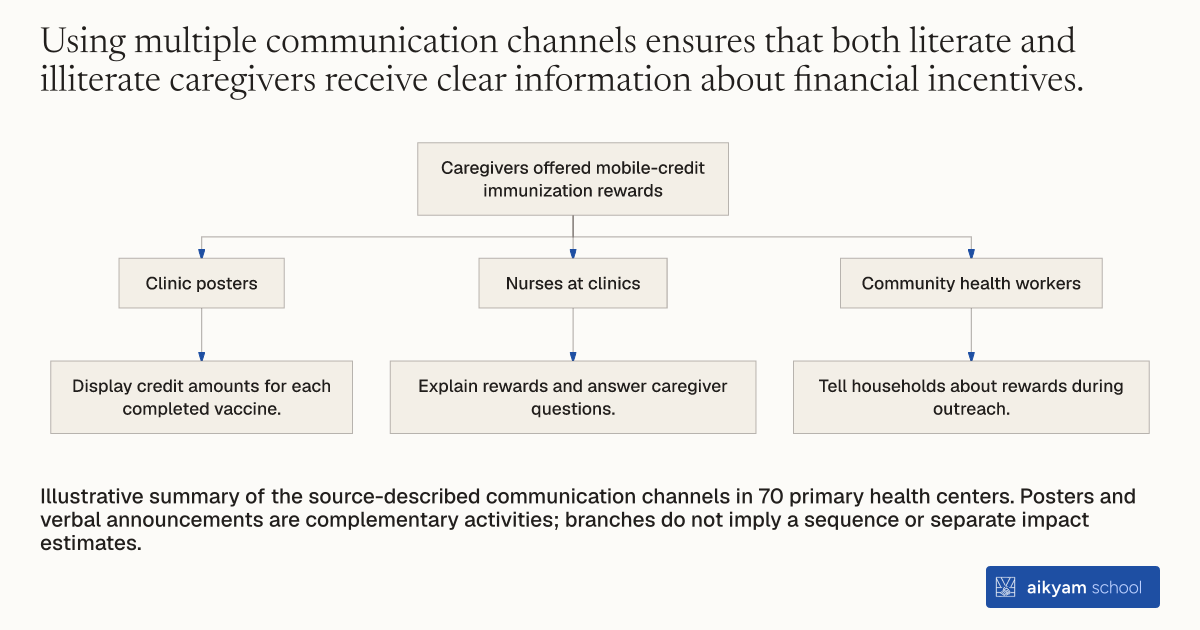
Caregivers offered mobile-credit immunization rewards
- Clinic posters
- Display credit amounts for each completed vaccine.
- Nurses at clinics
- Explain rewards and answer caregiver questions.
- Community health workers
- Tell households about rewards during outreach.
Illustrative summary of the source-described communication channels in 70 primary health centers. Posters and verbal announcements are complementary activities; branches do not imply a sequence or separate impact estimates.
See source →How
When to use
Caregivers in rural areas often lack clear information about financial benefits or incentive structures available at local health clinics. Relying on a single communication channel fails to inform all community members effectively. Deploy this method to combine clinic posters with verbal worker counseling to communicate incentive program details to parents.
Combine visual clinic posters with direct verbal communication from frontline health workers to inform caregivers about available immunization incentives.
- Clinic managers design informational posters detailing mobile phone credit amounts for each completed vaccine.
- Auxiliary nurse midwives put up posters in prominent physical locations inside monthly village health clinics.
- Auxiliary nurse midwives verbally explain available mobile credit incentives to attending caregivers during vaccination visits.
- Accredited Social Health Activists inform households during village outreach visits about mobile phone rewards for child immunizations.
- Clinic workers answer caregiver questions to clarify payment schedules and encourage repeat clinic attendance.
Why it works
Frontline health staff reinforce visual poster messaging through direct, trusted social interactions.
Example
In seventy primary health centers across Haryana, India, auxiliary nurse midwives put up posters and joined accredited social health activists in verbally informing caregivers about mobile phone credit rewards ranging from 250 to 450 rupees total.
About the study
Participants
Caregivers of infants under twelve months of age across 70 primary health centers and associated subcenters in Haryana, India.
Study Design
A randomized controlled trial testing multi-channel communication (posters, nurse midwives, and community health activists) to announce incentive structures cross-randomized across 75 policy bundles.
Results
Posters and worker announcements effectively communicated incentive schedules across 70 primary health centers, enabling caregiver participation in mobile credit transfers totaling 250 to 450 rupees per fully immunized child.