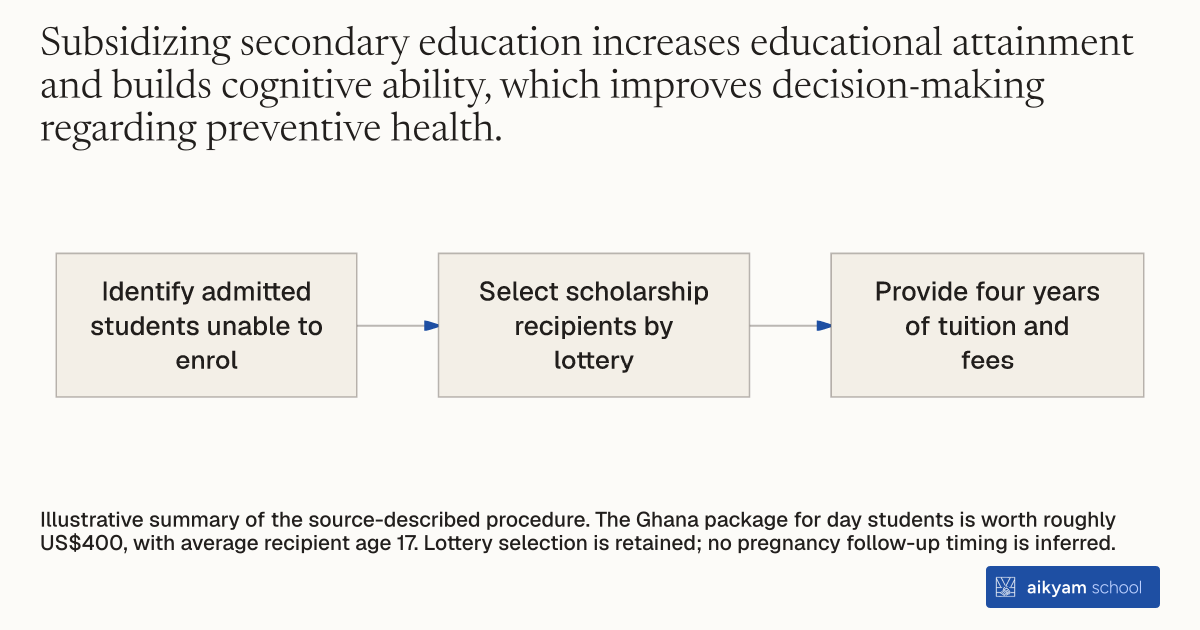
Research steps
Allocate secondary scholarships by lottery
- Identify admitted students unable to enrol
- Select scholarship recipients by lottery
- Provide four years of tuition and fees
Illustrative summary of the source-described procedure. The Ghana package for day students is worth roughly US$400, with average recipient age 17. Lottery selection is retained; no pregnancy follow-up timing is inferred.
See source →How
When to use
Adolescent female students who qualify for secondary education may be unable to enroll due to tuition fees and educational expenses. High costs lead to premature dropouts, lower learning attainment, and increased rates of unwanted adolescent pregnancy. Awarding full secondary school scholarships addresses these financial barriers for qualifying students aged 17 on average.
Award secondary school scholarships covering tuition and fees to qualifying adolescents facing financial constraints to support four years of high school education.
- Program administrators identify female students who qualify for senior high school admission but cannot enroll due to financial costs.
- Administrators select scholarship recipients through a lottery process.
- Program managers distribute four-year scholarship packages covering full tuition and fees for day students, valued at roughly US$400.
- Recipients attend senior high school continuously across four academic years.
Why it works
Additionally, extra schooling shapes long-term fertility preferences and increases expected future earnings, encouraging young women to delay childbearing.
Example
In Ghana from 2008 to 2016, researchers awarded four-year senior high school scholarships worth roughly US$400 to financial-need students aged 17 on average, which reduced ever being pregnant seven years later by 10.7 percentage points (18 percent) and unwanted pregnancies by 11.5 percentage points (20 percent).