Try, learn and adjust
Check the full Graduation package is delivered
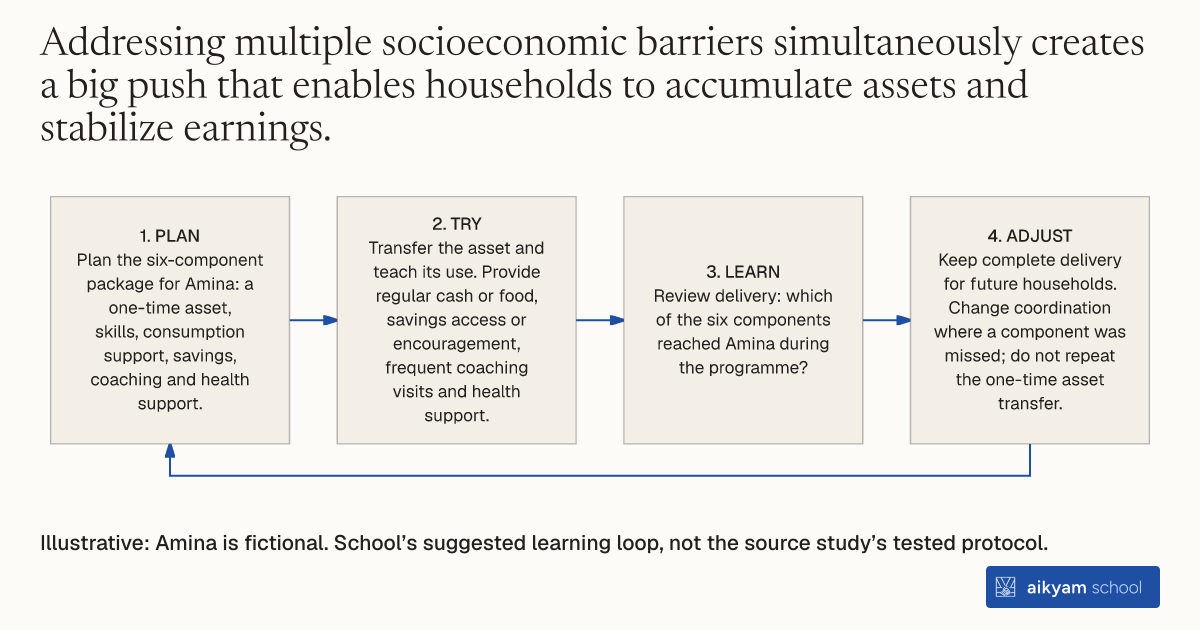
- Plan: Plan the six-component package for Amina: a one-time asset, skills, consumption support, savings, coaching and health support.
- Try: Transfer the asset and teach its use. Provide regular cash or food, savings access or encouragement, frequent coaching visits and health support.
- Learn: Review delivery: which of the six components reached Amina during the programme?
- Adjust: Keep complete delivery for future households. Change coordination where a component was missed; do not repeat the one-time asset transfer.
Illustrative: Amina is fictional. School’s suggested learning loop, not the source study’s tested protocol.
See source →School’s suggested, untested loop. Observe all six components over the multi-month programme. This check does not establish sustained income or consumption gains.
How
When to use
Extreme poverty traps low-income households in fragile wage labor with irregular earnings. Isolated interventions fail because these families face simultaneous constraints like lack of cash, low skills, and risk exposure. Deliver a coordinated bundle of resources to help ultra-poor households transition into sustainable self-employment.
Implement the full Graduation approach by delivering six integrated components to ultra-poor households over a multi-month period.
- Implementation staff transfer a one-time productive asset like livestock or small trade supplies.
- Technical trainers provide tailored skills training to teach beneficiaries how to manage their asset.
- Program officers deliver regular cash or food support for a few months up to a year.
- Field teams grant access to a savings account or actively encourage regular savings.
- Implementing staff conduct frequent home visits to offer coaching, accountability, and encouragement.
- Health workers provide health education, healthcare access, and life skills training.
Why it works
Gaining assets and skills positions participants to pursue higher-return labor opportunities and sustain long-term growth.
Example
In West Bengal, India, an ultra-poor program costing US$2,163 per household broke even by year four, increased consumption by 22 percent and income by 38 percent at year ten, and achieved a 379 percent benefit-cost ratio.