Research description
Describe election technology rollout
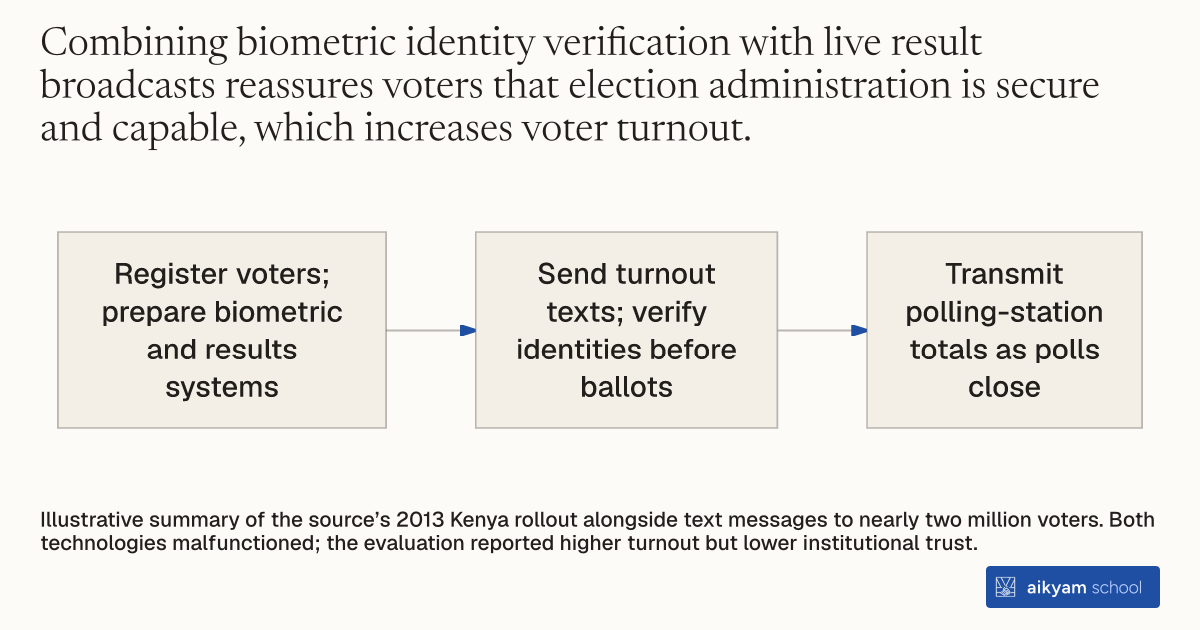
- Register voters; prepare biometric and results systems
- Send turnout texts; verify identities before ballots
- Transmit polling-station totals as polls close
Illustrative summary of the source’s 2013 Kenya rollout alongside text messages to nearly two million voters. Both technologies malfunctioned; the evaluation reported higher turnout but lower institutional trust.
See source →How
When to use
Elections in post-conflict contexts face risks of voter impersonation and delayed public reporting of vote counts. Election commissions deploy technological solutions to verify voter identity and display live polling station tallies. This method targets election administrators aiming to increase voter turnout and electoral transparency.
Deploy biometric identification devices and electronic real-time result platforms alongside voter mobilization text messages during national elections.
- Register voters into an electronic biometric identification database prior to election day.
- Procure biometric verification hardware for deployment to local polling stations.
- Build an electronic transmission system to collect and publicly release real-time vote totals from polling stations.
- Send text messages to registered voters encouraging turnout on election day.
- Verify voter identities at polling stations using biometric identification devices before issuing ballots.
- Transmit local polling station vote counts electronically to the central public results system as polls close.
Why it works
However, when technologies malfunction on election day, unfulfilled high expectations lead citizens to infer electoral unfairness and lose confidence in democratic institutions.
Example
During the 2013 national elections in Kenya, the election commission sent text messages to nearly two million registered voters while introducing biometric ID systems and electronic real-time result displays. Both technologies malfunctioned on election day, which increased voter turnout but decreased trust in the election commission and satisfaction with democracy.
About the study
Participants
Nearly two million registered voters across polling constituencies in Kenya during the 2013 national elections.
Study Design
Randomized field evaluation assessing text message mobilization combined with biometric identification and real-time electronic result transmission systems.
Results
Increased voter turnout, decreased trust in the election commission, and decreased satisfaction with the functioning of democracy in Kenya, with larger trust reductions in constituencies that experienced prior election violence.