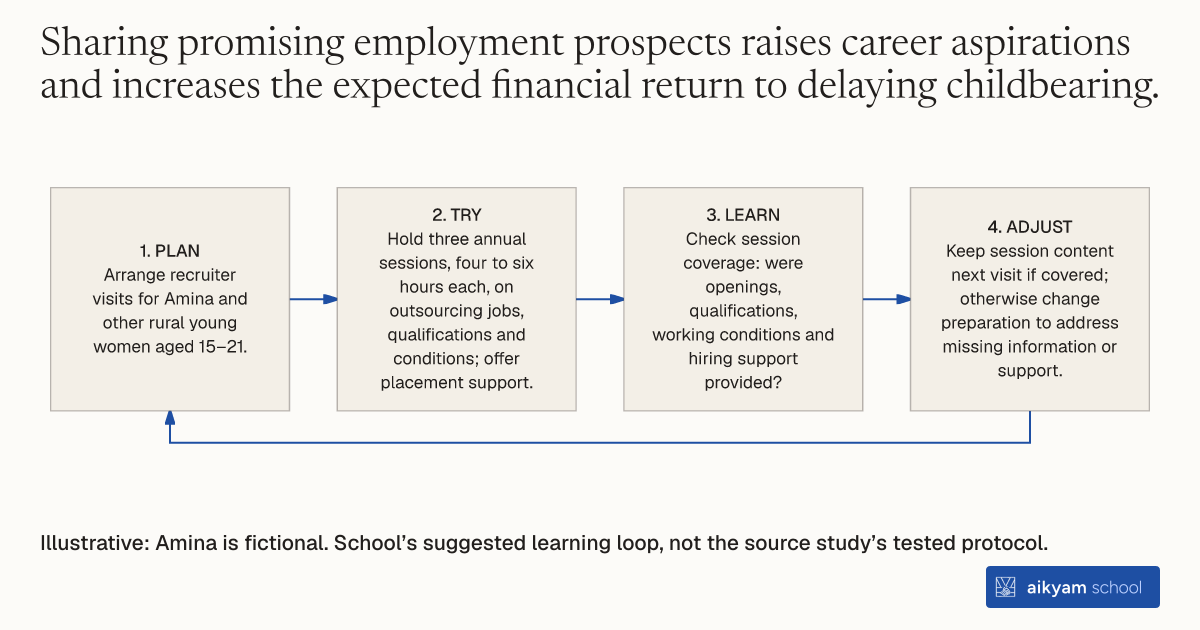
Try, learn and adjust
Check recruitment sessions explain job opportunities
- Plan: Arrange recruiter visits for Amina and other rural young women aged 15–21.
- Try: Hold three annual sessions, four to six hours each, on outsourcing jobs, qualifications and conditions; offer placement support.
- Learn: Check session coverage: were openings, qualifications, working conditions and hiring support provided?
- Adjust: Keep session content next visit if covered; otherwise change preparation to address missing information or support.
Illustrative: Amina is fictional. School’s suggested learning loop, not the source study’s tested protocol.
See source →School’s suggested, untested learning loop. Observe recruitment information and support; no job placement or pregnancy outcome is assumed.
How
When to use
Adolescent females and young women in rural communities face limited awareness of formal labor market opportunities, leading to early marriage and childbearing. Delivering targeted recruitment sessions about emerging sector jobs raises economic aspirations and provides alternative paths to early motherhood. This approach targets young women aged 15 to 21 in rural villages.
Send job recruiters to rural villages to deliver information and recruiting sessions about employment opportunities in growing industries.
- Program managers dispatch job recruiters to rural communities.
- Recruiters conduct three annual sessions lasting four to six hours each for local young women and residents.
- Recruiters present information on job openings, required qualifications, and working conditions in the business process outsourcing sector.
- Recruiters facilitate direct hiring and placement support for interested female participants.
Why it works
These expanded economic opportunities motivate young women to postpone pregnancy to pursue labor market opportunities, while encouraging parents to invest more in their daughters.
Example
In rural India from 2003 to 2006, recruiters held three annual sessions on business process outsourcing jobs, which reduced the likelihood of young women aged 15 to 21 giving birth over three years by 5.7 percentage points (13 percent).