Research steps
Measure interest in women’s employment resources
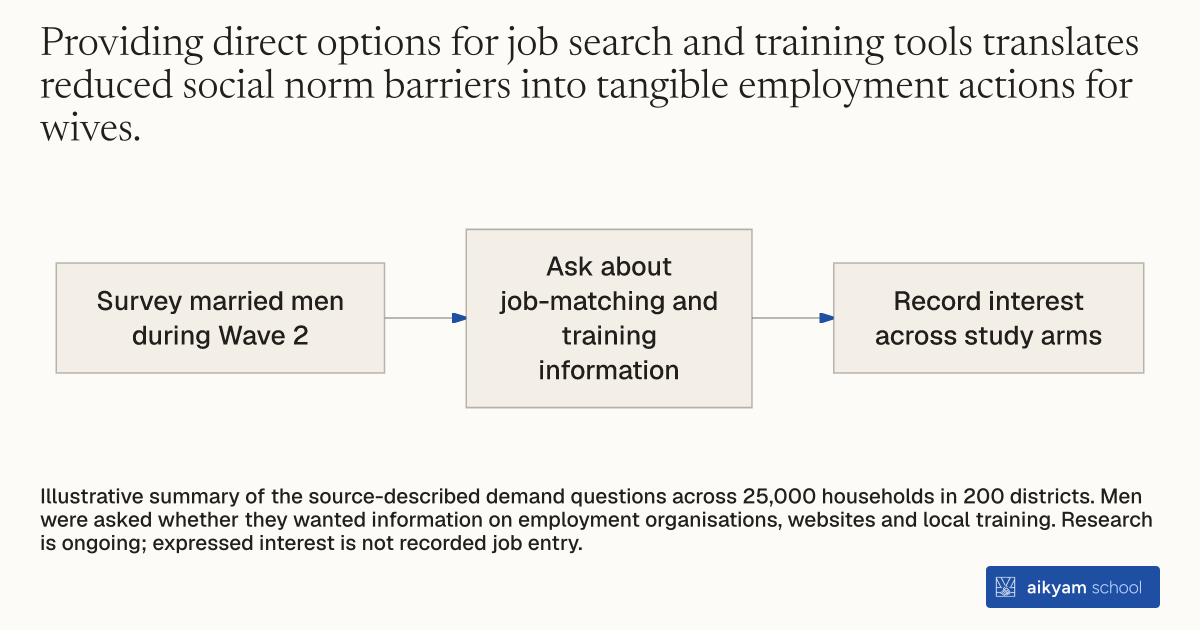
- Survey married men during Wave 2
- Ask about job-matching and training information
- Record interest across study arms
Illustrative summary of the source-described demand questions across 25,000 households in 200 districts. Men were asked whether they wanted information on employment organisations, websites and local training. Research is ongoing; expressed interest is not recorded job entry.
See source →How
When to use
In areas with low female employment, husbands may lack practical knowledge on how wives can access job opportunities or vocational training. Offering targeted informational access measures men's willingness to help their wives enter the workforce once norm perceptions are addressed. This method assesses demand for employment resources among married men across diverse communities.
Offer married men access to employment and vocational resources to gauge household demand for female labor market entry.
- Field staff survey married men during the second wave of a randomized evaluation.
- Surveyors ask each husband whether he is interested in receiving information about organizations and websites that connect women with labor market opportunities.
- Surveyors ask husbands if they want information about local organizations providing job training opportunities for women.
- Field staff record husbands' responses to measure demand for female job matching and skills training across study arms.
Why it works
Measuring men's interest in these resources reveals whether changing norm perceptions increases active support for female employment.
Example
Researchers asked married men across 25,000 households in 200 Indian districts during Wave 2 if they wanted information on local job training organizations and employment websites for women.
About the study
Participants
25,000 married couples with working-age wives (18 to 55 years old) across 200 districts in urban and rural India.
Study Design
Demand measurement module administered to married men during Wave 2 of a randomized evaluation following social norm information delivery.
Results
Research ongoing; results forthcoming.