Try, learn and adjust
Check chlorine dispenser maintenance and use
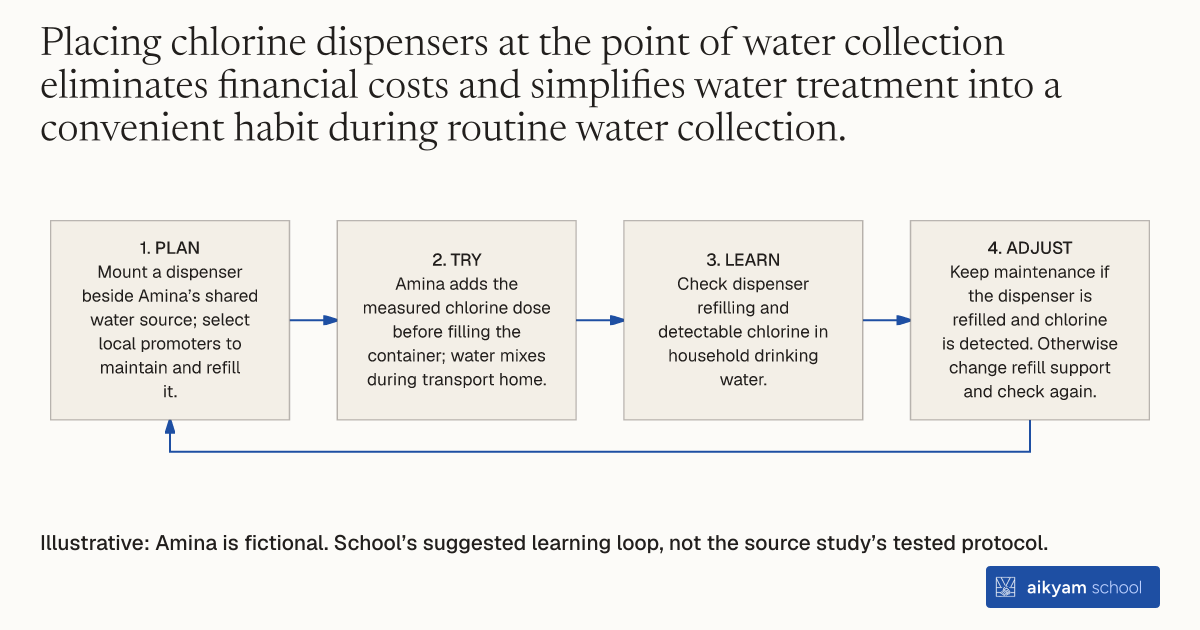
- Plan: Mount a dispenser beside Amina’s shared water source; select local promoters to maintain and refill it.
- Try: Amina adds the measured chlorine dose before filling the container; water mixes during transport home.
- Learn: Check dispenser refilling and detectable chlorine in household drinking water.
- Adjust: Keep maintenance if the dispenser is refilled and chlorine is detected. Otherwise change refill support and check again.
Illustrative: Amina is fictional. School’s suggested learning loop, not the source study’s tested protocol.
See source →School’s suggested learning loop, not the source’s tested procedure. Observe dispenser maintenance and detectable household chlorine. No chlorine dose is specified here.
How
When to use
Many communities in rural areas lack access to piped water or in-line chlorination systems and rely on shared water sources like springs or wells. Water collected from these sources can easily become contaminated during collection, transport, or storage in homes. Installing chlorine dispensers at water collection points provides free, immediate water treatment at the time of collection.
Install point-of-collection chlorine dispensers at local shared water points to enable immediate water treatment during collection.
- Mount a chlorine dispenser containing dilute chlorine solution directly adjacent to a shared community water source.
- Select local community promoters to maintain and refill the dispensers.
- Instruct water collectors to add a measured dose of chlorine solution into their container immediately before filling it with water.
- Allow water collectors to carry the treated water home while the chlorine mixes during transport.
Why it works
The movement during transport ensures proper mixing, protecting drinking water from recontamination during storage.
Example
In Kenya, chlorine dispensers installed at water sources increased the share of households with detectable chlorine in their drinking water from 3 percent in comparison groups to 39 percent in the first year of the program and 23 percent in the second year.