Research procedure
Monitor shops with weekly calls
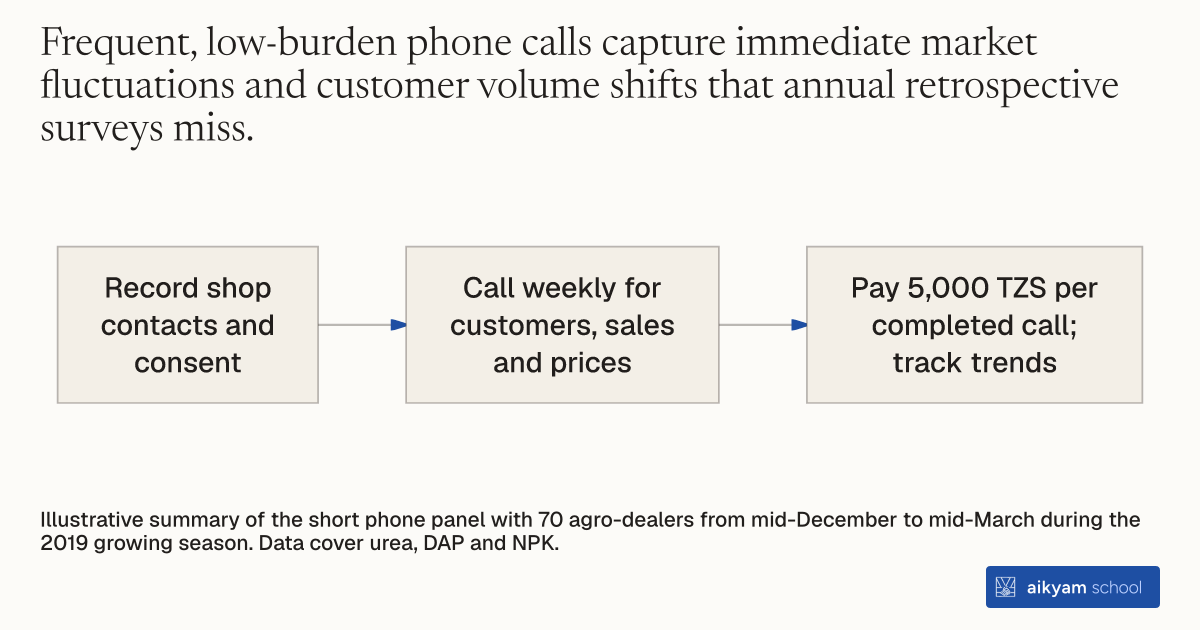
- Record shop contacts and consent
- Call weekly for customers, sales and prices
- Pay 5,000 TZS per completed call; track trends
Illustrative summary of the short phone panel with 70 agro-dealers from mid-December to mid-March during the 2019 growing season. Data cover urea, DAP and NPK.
See source →How
When to use
Program evaluators face challenges tracking rapid market adjustments, price volatility, or unexpected adverse shocks during field interventions. Infrequent annual surveys miss weekly fluctuations and cannot serve as real-time risk monitoring systems. Evaluators use this method to gather continuous high-frequency market data from retail merchants via short incentivized mobile phone calls.
Monitor weekly retail prices, customer volume, and sales trends through short phone calls with enrolled shop owners using financial airtime incentives.
- Collect contact phone numbers and baseline consent from all operating retail shop owners during initial in-person market mapping.
- Schedule short, recurring weekly telephone calls with shop owners or primary staff throughout the main agricultural trading season.
- Offer a small mobile financial airtime transfer, such as 5,000 TZS per completed call, to compensate shop owners for their time.
- Elicit current weekly customer counts, total sales quantities for primary inputs, and going retail market prices using brief, structured questions.
- Track weekly price and volume panel data across treatment and control clusters in real time to detect potential market distortions or adverse shocks early.
Why it works
Paying small airtime incentives maintains weekly respondent participation over several months.
Example
Researchers conducted weekly phone surveys with 70 agro-dealers across Morogoro Region, Tanzania, from mid-December through mid-March during the 2019 growing season. Dealers received 5,000 TZS per completed call to report weekly customer visits, input sales, and retail prices for urea, DAP, and NPK fertilisers.
About the study
Participants
N = 70 agro-dealers completing weekly calls across Morogoro Region, Tanzania.
Study Design
High-frequency weekly panel phone survey with fixed-effects regression analysis evaluating weekly price and customer volume trends during the agricultural main season.
Results
Fixed-effects regressions confirmed a null effect on regulated urea prices and a positive correlation between the market intervention and weekly customer counts purchasing fertiliser (p < 0.10).