Research procedure
Ask about food security
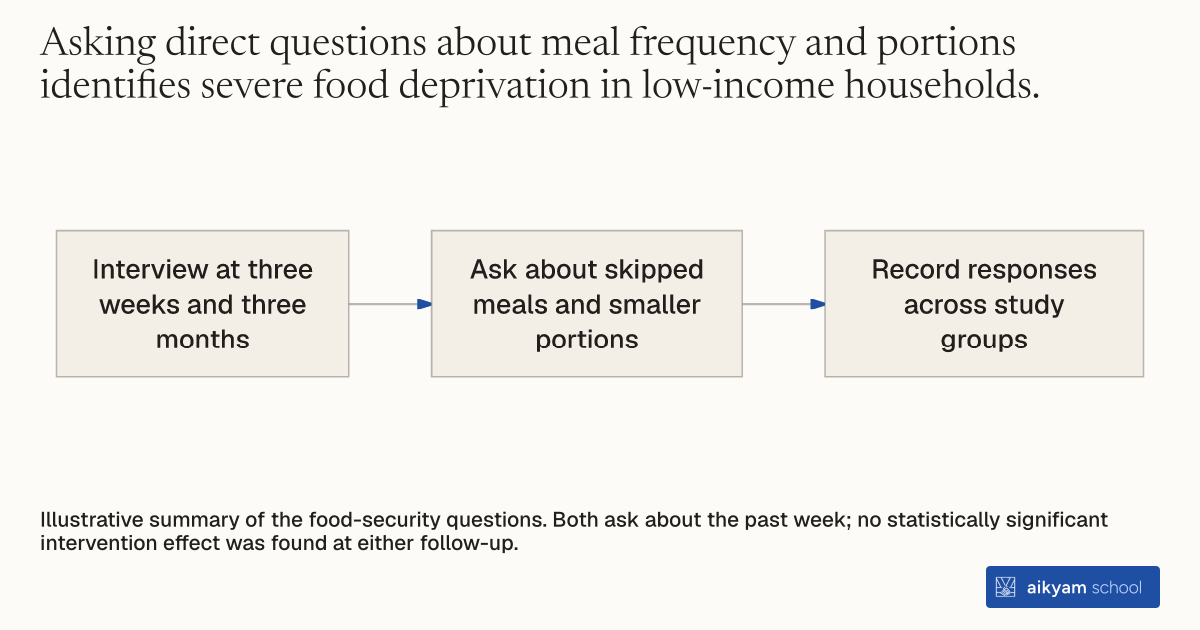
- Interview at three weeks and three months
- Ask about skipped meals and smaller portions
- Record responses across study groups
Illustrative summary of the food-security questions. Both ask about the past week; no statistically significant intervention effect was found at either follow-up.
See source →How
When to use
Low-income older adults living alone face acute financial instability and risks of hunger. Program evaluators need a concise metric to monitor nutritional vulnerability among program participants. Use this survey tool to evaluate whether anti-poverty or therapy interventions reduce short-term meal skipping.
Measure food security among older adults by tracking self-reported meal disruptions over the previous week.
- Surveyors conduct follow-up interviews with older adult participants three weeks and three months post-treatment.
- Surveyors ask participants if they had to skip a meal during the past week.
- Surveyors ask participants if they had to reduce their meal size during the past week.
- Surveyors record participant responses to assess short-term food security changes across study groups.
Why it works
Monitoring short-term meal skipping allows evaluators to determine if cash grants or counseling improve nutritional access.
Example
Researchers in Tamil Nadu, India, surveyed 1,120 older adults living alone to evaluate food security three weeks and three months after therapy and cash interventions. At baseline, nearly a quarter of participants reported skipping or cutting meals.
About the study
Participants
1,120 low-income adults aged 55 or older living alone in Tamil Nadu, India (83 percent women, average baseline monthly spending INR 1,699).
Study Design
Randomized controlled trial assessing self-reported meal skipping and portion reductions over the past week at three weeks and three months post-treatment across four study arms.
Results
None of the studied interventions—phone CBT, cash transfers, or their combination—had a statistically significant impact on food security three weeks or three months after ending.