Research steps
Recruit adults at higher COVID-19 risk
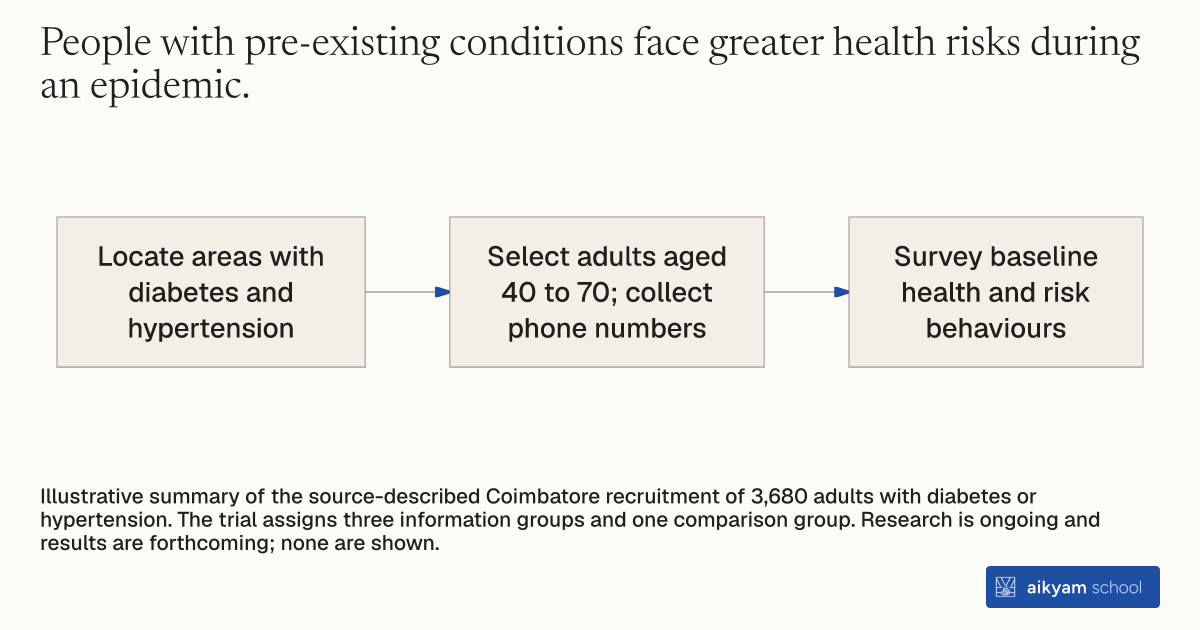
- Locate areas with diabetes and hypertension
- Select adults aged 40 to 70; collect phone numbers
- Survey baseline health and risk behaviours
Illustrative summary of the source-described Coimbatore recruitment of 3,680 adults with diabetes or hypertension. The trial assigns three information groups and one comparison group. Research is ongoing and results are forthcoming; none are shown.
See source →How
When to use
Public health crises like COVID-19 pose severe risks to vulnerable populations with underlying conditions. Adults with diabetes or hypertension face higher mortality rates and need protective health behaviors. Focus resources on this high-risk group to deliver direct health communications.
Target high-risk adults with underlying health conditions for specialized health communications.
- Locate regions or cities with high rates of diabetes and hypertension.
- Select individuals between 40 and 70 years old who have diabetes or hypertension.
- Collect phone numbers for each participant to enable direct communications.
- Conduct an initial phone survey to record baseline health status and risk behaviors.
Why it works
Direct targeting ensures that protective advice reaches the individuals who need it most.
Example
Researchers in Coimbatore, Tamil Nadu, India enrolled 3,680 diabetic and hypertensive individuals aged 40 to 70 years old for a health study.
About the study
Participants
3,680 diabetic and hypertensive individuals aged 40 to 70 years old in Coimbatore, Tamil Nadu, India.
Study Design
Randomized controlled trial assigning participants to three information treatment groups and one comparison group over phone calls.
Results
Research ongoing; results forthcoming.