Research design
Compare paid and free poll replies
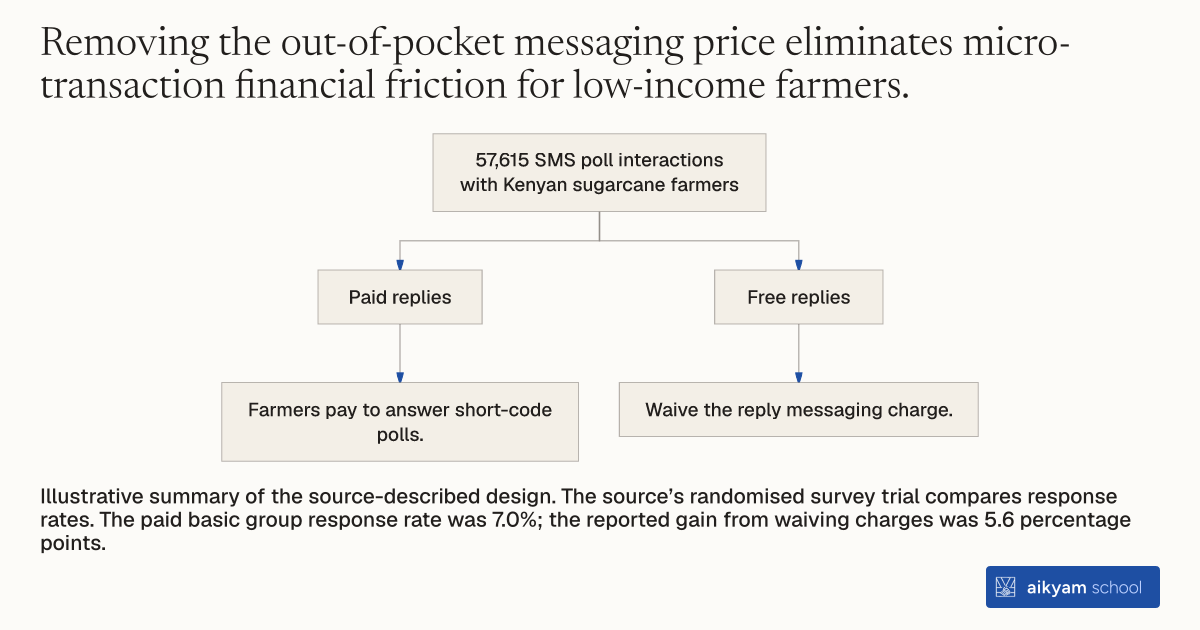
57,615 SMS poll interactions with Kenyan sugarcane farmers
- Paid replies
- Farmers pay to answer short-code polls.
- Free replies
- Waive the reply messaging charge.
Illustrative summary of the source-described design. The source’s randomised survey trial compares response rates. The paid basic group response rate was 7.0%; the reported gain from waiving charges was 5.6 percentage points.
See source →How
When to use
Organizations seeking operational or feedback data from smallholders via mobile polls face low engagement when respondents pay messaging fees. Out-of-pocket transaction costs create financial friction that suppresses survey participation. Toll-free, zero-rated polling eliminates cost barriers to boost response rates from rural farmers.
Conduct mobile survey polls by waiving text messaging charges for smallholder respondents.
- Formulate concise survey questions regarding farmer preferences, practices, or characteristics.
- System administrators send text message poll queries to registered smallholder farmers via a dedicated short-code.
- Configure the telecom gateway so incoming reply text messages from farmers are zero-rated and free of charge to the sender.
- System servers log incoming text replies automatically to analyze smallholder feedback.
Why it works
Free messaging encourages prompt replies without requiring respondents to expend pre-paid phone airtime.
Example
Innovations for Poverty Action and Mumias Sugar Company evaluated survey response rates across 57,615 SMS poll interactions sent to smallholder sugarcane farmers in Western Kenya. Waiving the reply SMS cost increased farmer response rates from a 7.0% control baseline up to 12.6%, adding 5.6 percentage points to overall participation.
About the study
Participants
57,615 SMS poll interactions with smallholder sugarcane farmers in Western Kenya.
Study Design
Randomized survey trial comparing farmer response rates when reply messages required out-of-pocket farmer payment versus when reply messaging costs were waived.
Results
Waiving the SMS reply cost increased farmer survey response rates by 5.6 percentage points above the 7.0% basic group mean (p < 0.01), representing an 80% relative increase in participation.