In Simple Words
Think of a used car market where buyers cannot tell if a car is reliable or a broken "lemon," causing buyers to offer only low prices. Low-quality sellers flood the market with cheap, useless advice, making business owners suspicious of all cold calls. High-quality advisors cannot offer to work for a share of future profits because shop owners keep secret accounting books to avoid taxes, hiding true profitability.
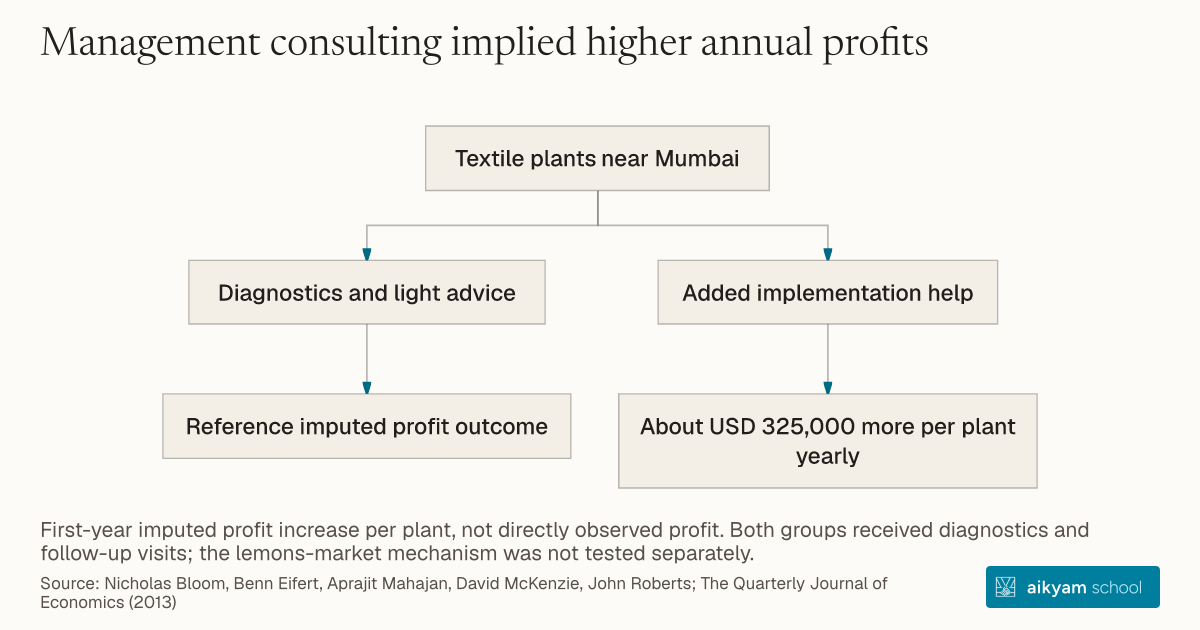
Textile plants near Mumbai
- Diagnostics and light advice
- Reference imputed profit outcome
- Added implementation help
- About USD 325,000 more per plant yearly
First-year imputed profit increase per plant, not directly observed profit. Both groups received diagnostics and follow-up visits; the lemons-market mechanism was not tested separately.
See source →Research question
High-quality management consulting services face severe market failure in developing nations because firm owners cannot distinguish effective advisors from low-quality solicitors, while consultancy profit-sharing contracts cannot be enforced due to unobserved financial accounting.
Participants
17 large multiplant Indian textile manufacturing firms with mean annual sales of $7.45 million.
Study Design
Structural market failure analysis examining consulting fee structures ($250,000 commercial cost vs. $0 project cost), firm solicitation response rates (26% initial take-up), and financial reporting transparency.
Results
100% of candidate firms regularly received low-quality unsolicited sales offers, leading directors to reject market-rate consulting despite an estimated 130% one-year return on investment ($325,000 annual profit increase on a $250,000 investment).
Takeaway
Utilize verified third-party research partnerships or government-backed demonstration projects to overcome trust and informational barriers when sourcing external management advice.