In simple words
Worry is one of the things that pushes people to protest or volunteer. When counselling or other mental health support eases that worry, some of the push goes with it. Both are good for a society, and this study finds they can pull against each other.
Adults in a large national panel survey
- Saw a mental health counsellor
- 34% to 39% less likely to protest in the weeks after
- Did not see a counsellor
- Comparison group
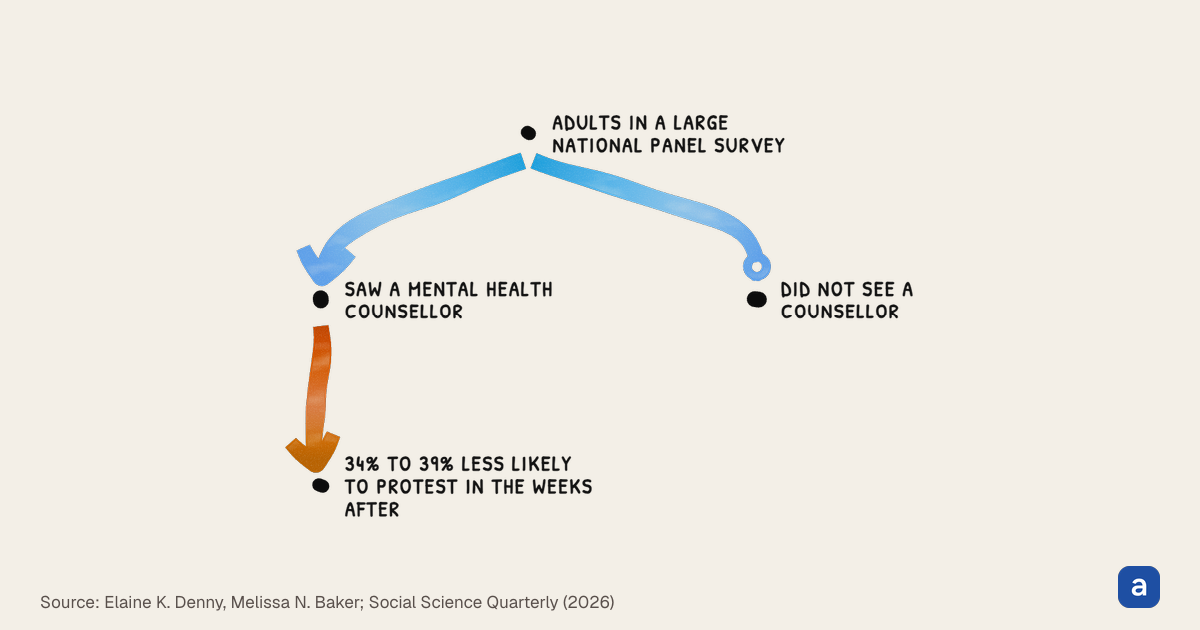
National panel survey. Adults who saw a mental health counsellor were 34% to 39% less likely to protest in the weeks after than adults who did not. The comparison group’s protest rate is not given.
See source →Research question
Does access to mental health support change how much people take part in politics?
About the study
Study design
Three parts: a large national panel survey, a field experiment that offered mental health outreach, and a survey experiment.
Results and takeaway
Results
People who received counselling from a mental health professional were 34% to 39% less likely to protest in the weeks after. In the field experiment, outreach lowered anxiety by 11% on average (effect size d = 0.41), and lower anxiety went with less interest in political engagement. In the survey experiment, higher anxiety went with greater odds of volunteering.
Takeaway
Groups that run mental health programmes, and groups that organise civic action, should expect calmer people to be less drawn to protest and volunteering, and plan for that.