In Simple Words
Imagine a shift from heavy physical construction work requiring raw lifting power to customer support centers requiring friendly tone and high trust. Because employers perceive female workers as having better interpersonal skills and higher integrity, women become the preferred choice for these new roles.
Reported wages for similar education
- Non-BPO average pay
- Pay used for comparison
- Starting BPO pay
- Twice the comparison pay
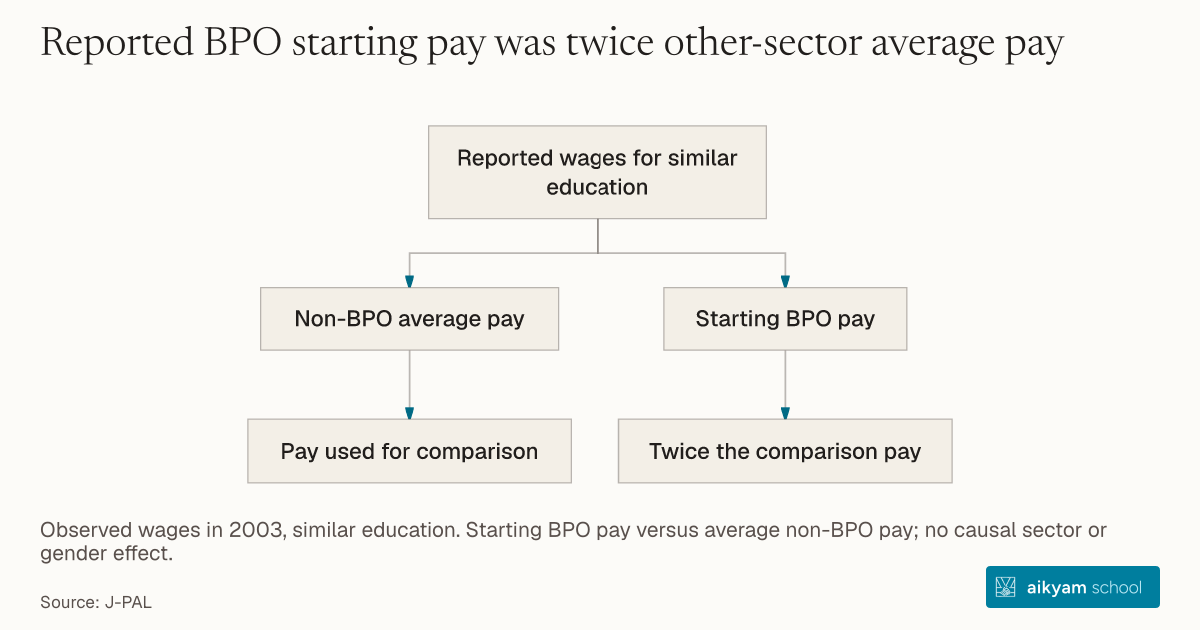
The card states the wage comparison: starting business-process-outsourcing pay was twice non-BPO average pay for similar education. This is context, not a causal female-hiring preference effect. Observed wages in 2003, similar education. Starting BPO pay versus average non-BPO pay; no causal sector or gender effect.
See source →Research question
Traditional manufacturing and agricultural industries prioritize male physical labor, resulting in persistent gender discrimination and low demand for female workers.
Participants
Business Process Outsourcing (BPO) sector employers and workers across major urban hubs and 160 rural hinterland villages in North India.
Study Design
Industry survey and labor market evaluation examining sector gender ratios, starting salary premiums, and employer hiring preferences in the Indian BPO market (2003-2006).
Results
Women hold approximately 45 percent of all BPO jobs in India—substantially higher than in most other industries—with starting salaries ranging from 5,000 to 10,000 INR (US$110-220) per month, which was twice the average pay of non-BPO jobs for similar education levels.
Takeaway
Promote modern service-sector industries (such as call centers and digital support) in emerging economies to leverage employer preferences for female labor and boost women's workforce participation.