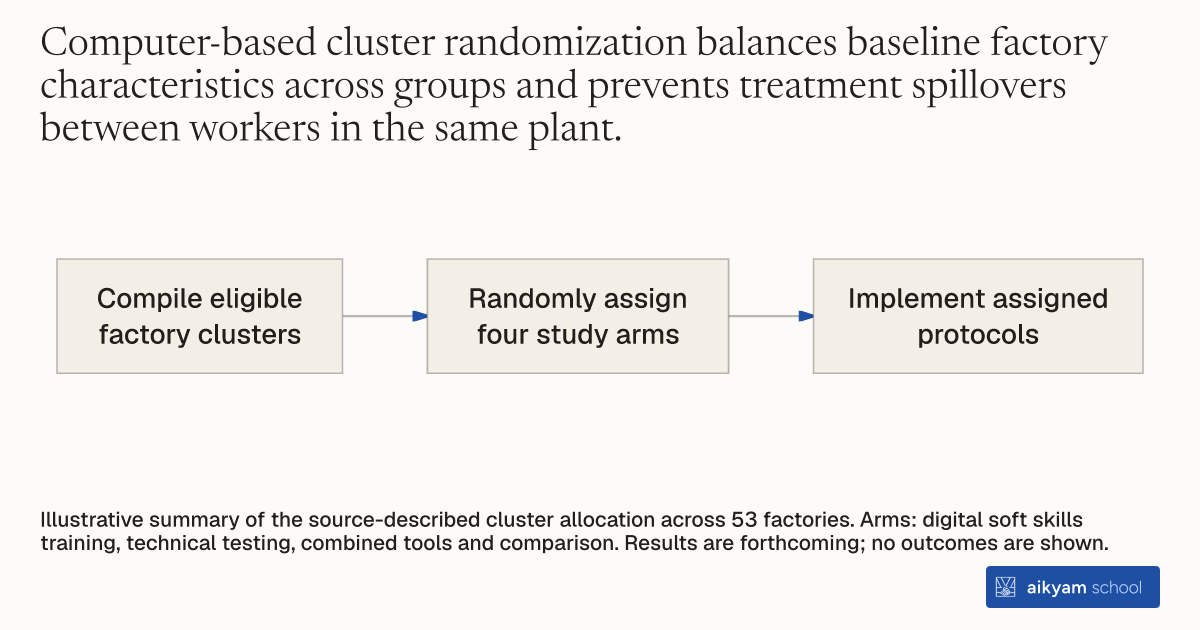
Research steps
Randomize factories by computer
- Compile eligible factory clusters
- Randomly assign four study arms
- Implement assigned protocols
Illustrative summary of the source-described cluster allocation across 53 factories. Arms: digital soft skills training, technical testing, combined tools and comparison. Results are forthcoming; no outcomes are shown.
See source →How
When to use
Labor-intensive manufacturing firms evaluating managerial interventions face confounding factors across factory plants. Uncontrolled rollouts make it difficult to isolate the true causal impacts of soft skills screening versus technical testing. Randomizing interventions at the factory cluster level enables clear impact evaluation across distinct treatment arms.
Randomly assign factory clusters to treatment and comparison arms using a computer-based randomization procedure to evaluate intervention impacts.
- Evaluators compile a complete pool of eligible garment manufacturing factories and supervisory personnel.
- Evaluators define distinct treatment arms, including digital soft skills training, technical testing, combined tools, and standard comparison groups.
- Evaluators run a computer-based randomization process to assign each factory cluster to one of the four experimental groups.
- Program managers implement the assigned screening, testing, or training protocols across all supervisors within each randomized factory.
Why it works
This design isolates the specific economic and well-being returns of each managerial tool combination.
Example
Researchers partnered with Shahi Exports in India to randomly assign 53 garment factories employing over 90,000 workers and 1,200 supervisors into four experimental groups using a computer-based process.
About the study
Participants
53 garment factories, 1,200 supervisors, and over 90,000 workers (mostly women from lower-income backgrounds) in Karnataka, Delhi, and Haryana, India.
Study Design
Cluster randomized controlled trial with computer-based factory assignment across four treatment arms.
Results
Research is ongoing with results forthcoming on hiring rates, retention, productivity, and promotion equity.