Research steps
Describe the fixed deposit contract
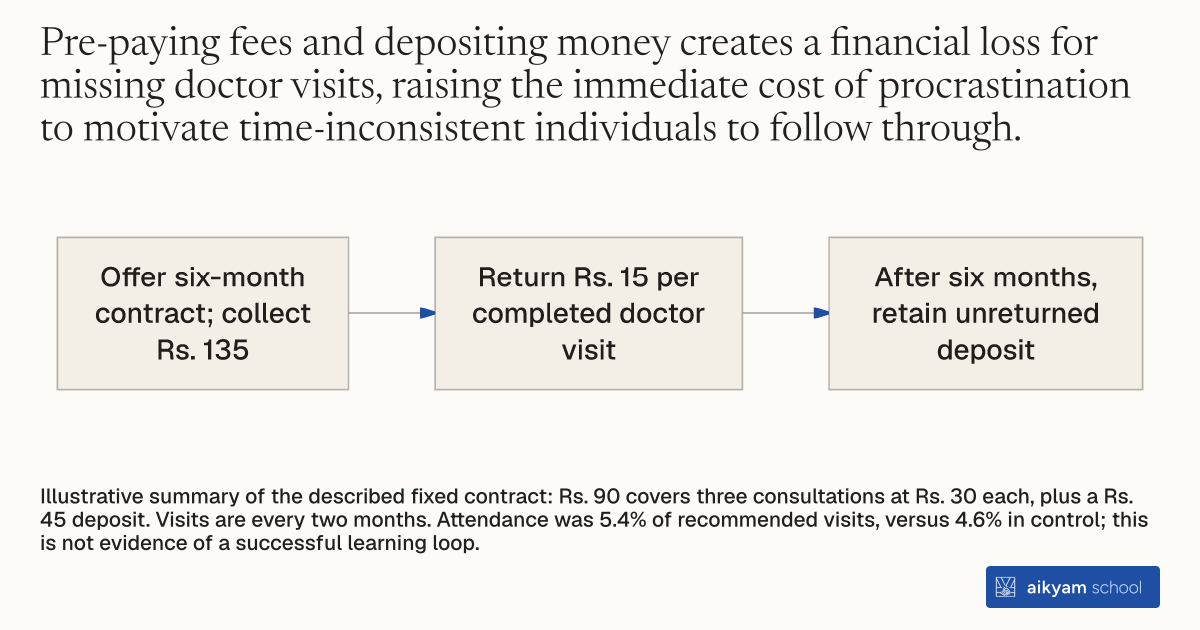
- Offer six-month contract; collect Rs. 135
- Return Rs. 15 per completed doctor visit
- After six months, retain unreturned deposit
Illustrative summary of the described fixed contract: Rs. 90 covers three consultations at Rs. 30 each, plus a Rs. 45 deposit. Visits are every two months. Attendance was 5.4% of recommended visits, versus 4.6% in control; this is not evidence of a successful learning loop.
See source →How
When to use
Present bias causes individuals to procrastinate on preventive healthcare like hypertension management, despite recognizing long-run health benefits. Health providers need a commitment mechanism to incentivize regular clinic attendance among at-risk rural populations. This method offers patients a fixed upfront deposit contract that returns money upon completing scheduled doctor visits.
Require patients to pre-pay consultation fees and an additional commitment deposit upfront, returning the deposit in equal installments as each scheduled visit is completed.
- Enumerators offer eligible hypertensive or high-risk adults a fixed 6-month commitment contract during home visits.
- Enumerators collect an upfront payment of Rs. 135, covering Rs. 90 for 3 consultation fees at Rs. 30 per visit plus a fixed Rs. 45 commitment deposit.
- Village health workers and coordinators conduct follow-up door visits 3 to 4 days later to offer signup opportunities to interested respondents who did not enroll immediately.
- Patients attend bi-monthly village health camps conducted by a licensed doctor over a 6-month period.
- Clinic staff return Rs. 15 to the patient at each completed doctor visit, reimbursing the Rs. 45 commitment deposit across the 3 visits.
- Clinic staff retain any remaining unreturned deposit funds if the patient fails to complete the scheduled visits within six months.
Example
In four rural villages in Punjab, India, enumerators offered 286 hypertensive and high-risk respondents a fixed contract requiring Rs. 135 upfront, resulting in 13.6% take-up, but participants completed only 5.4% of recommended visits and 62% to 77% of buyers failed to make even one doctor visit.
About the study
Participants
286 enrolled hypertensive and high-risk respondents in the fixed commitment contract group across 4 rural villages in Punjab, India (59% female, average age 53.7 years).
Study Design
Randomized controlled trial evaluating a fixed commitment contract requiring Rs. 135 upfront (Rs. 90 consultation fees + Rs. 45 deposit returned at Rs. 15 per visit over 3 bi-monthly visits in 6 months).
Results
Contract take-up was 13.6% (39 of 286); attendance was 5.4% of recommended visits compared to 4.6% in control; between 62% and 77% of purchasers failed to visit the doctor at least once, forfeiting their deposit; endline systolic blood pressure was 139.7 mmHg in control vs 139.4 mmHg in the treatment group.