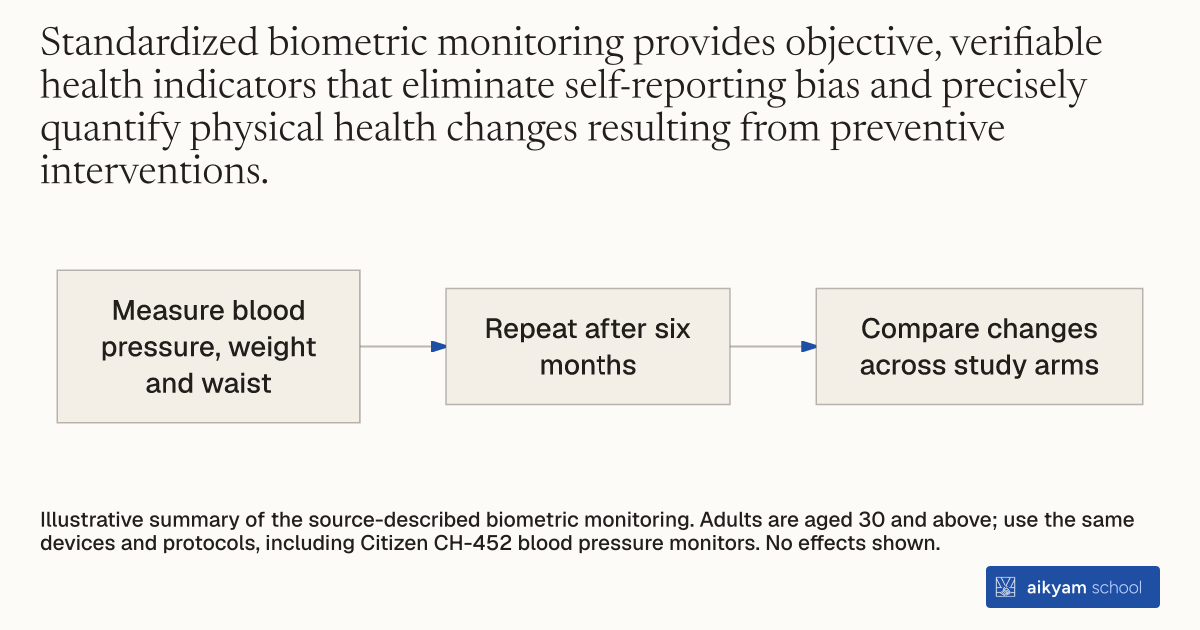
Research steps
Compare baseline and endline measurements
- Measure blood pressure, weight and waist
- Repeat after six months
- Compare changes across study arms
Illustrative summary of the source-described biometric monitoring. Adults are aged 30 and above; use the same devices and protocols, including Citizen CH-452 blood pressure monitors. No effects shown.
See source →How
When to use
Preventive health programs for chronic conditions like hypertension require reliable outcome measurement to evaluate clinical and behavioral impact. Health researchers need an objective, standardized tracking method to assess changes in blood pressure and health status over time without relying on self-reported data. This method measures baseline and endline biometric indicators for at-risk rural adults.
Measure objective biometric indicators for at-risk study participants at baseline enrollment and at six-month endline follow-up using calibrated measurement devices.
- Enumerators conduct baseline household visits across study villages to survey enrolled adults aged 30 and above.
- Enumerators take baseline biometric measurements including systolic and diastolic blood pressure using Citizen CH-452 automatic monitors, body weight in kilograms, and waist circumference.
- Enumerators re-visit study households six months later, immediately following the conclusion of the intervention period, to conduct the endline survey.
- Enumerators repeat biometric measurements of blood pressure, weight, and waist circumference using the same standardized devices and protocols.
- Researchers evaluate individual-level and group-level changes in blood pressure, pre-hypertension, hypertension, overweight, and obesity rates across treatment arms.
Example
Across four rural villages in Punjab, India, enumerators measured baseline blood pressure and weight for 1,718 respondents and completed six-month endline biometric evaluations for 1,481 participants, finding control group mean systolic blood pressure moved from 142.4 mmHg at baseline to 139.7 mmHg at endline.
About the study
Participants
1,718 respondents measured at baseline and 1,481 evaluated at endline across 4 rural villages in Punjab, India (59% female, average age 53.7 years).
Study Design
Biometric evaluation embedded in a randomized controlled trial comparing baseline and 6-month endline measurements of blood pressure, weight, and waist circumference across 6 treatment arms.
Results
Baseline systolic blood pressure averaged 142.4 mmHg and endline averaged 138.8 mmHg across the sample; endline hypertension incidence was 49% in control, 49% in discount, and 54% in personalized commitment contract group, showing no statistically significant treatment differences.