Try, learn and adjust
Check chlorine reaches homes and is used
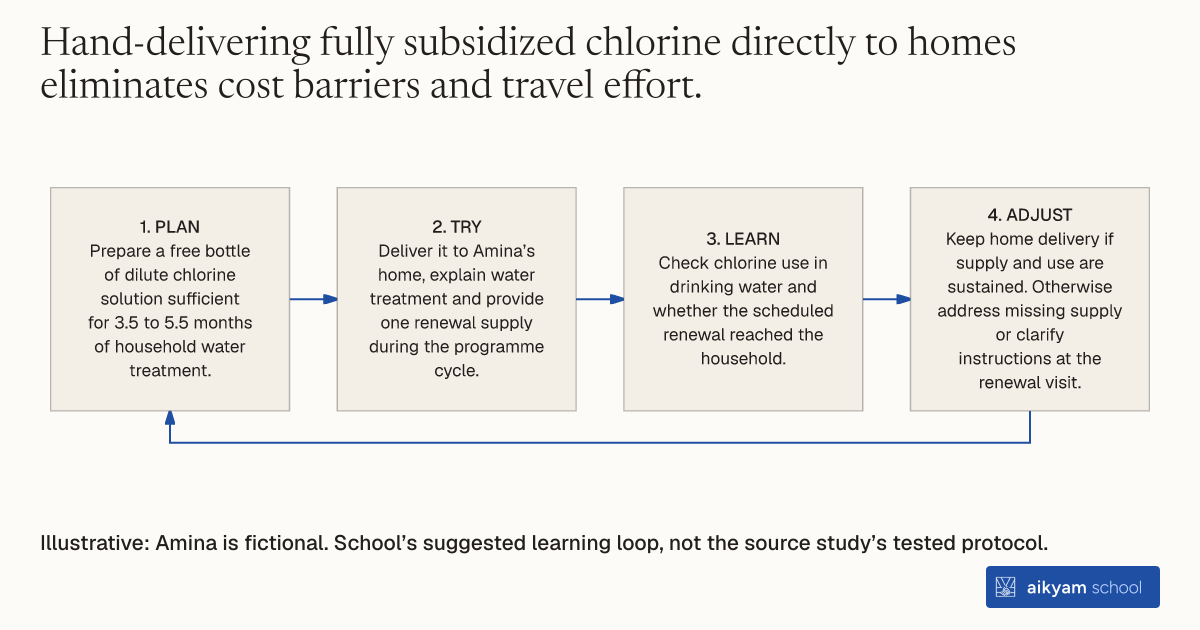
- Plan: Prepare a free bottle of dilute chlorine solution sufficient for 3.5 to 5.5 months of household water treatment.
- Try: Deliver it to Amina’s home, explain water treatment and provide one renewal supply during the programme cycle.
- Learn: Check chlorine use in drinking water and whether the scheduled renewal reached the household.
- Adjust: Keep home delivery if supply and use are sustained. Otherwise address missing supply or clarify instructions at the renewal visit.
Illustrative: Amina is fictional. School’s suggested learning loop, not the source study’s tested protocol.
See source →School’s suggested, untested loop: observe delivery, renewal and detectable chlorine in drinking water; do not invent a treatment dose.
How
When to use
Many households in low- and middle-income countries consume untreated drinking water that contains harmful pathogens. Financial costs and physical distance to suppliers prevent households from adopting water treatment products. Distributing free chlorine solution directly to homes provides point-of-use water purification without financial or travel barriers.
Hand-deliver fully subsidized chlorine solution directly to households to enable point-of-use water treatment.
- Supply targeted households with a large bottle of dilute chlorine solution sufficient for 3.5 to 5.5 months of water treatment.
- Hand-deliver the chlorine bottles directly to residents at their homes.
- Instruct residents to treat their collected drinking water with the chlorine solution at home.
- Return to homes to deliver a renewal supply of chlorine bottles once during the program cycle.
Why it works
Households receive the disinfectant without spending money or walking to local markets.
Example
In Kenya, hand-delivering large chlorine bottles at baseline with one home renewal raised the share of households with detectable chlorine in drinking water to 34 percent compared to 12 percent under partial subsidies. In Malawi, home delivery of fully subsidized chlorine raised usage to 30.3 percent from a 3.8 percent baseline, costing US\$10.62 to avert one child illness.