Research procedure
Present equal rights before hiring choices
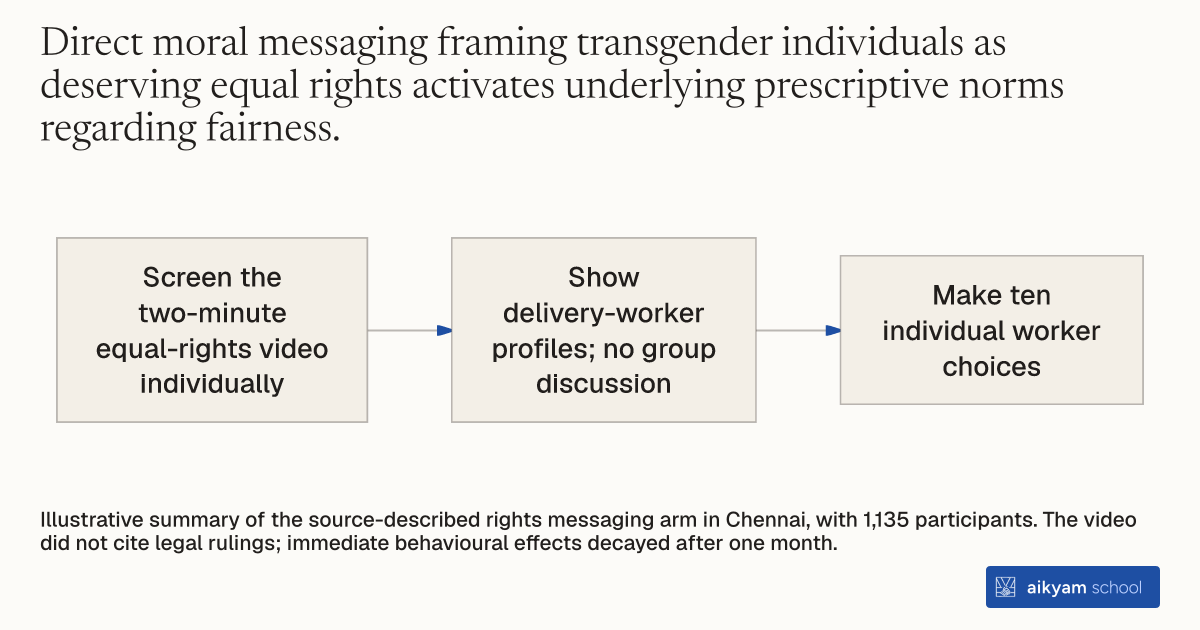
- Screen the two-minute equal-rights video individually
- Show delivery-worker profiles; no group discussion
- Make ten individual worker choices
Illustrative summary of the source-described rights messaging arm in Chennai, with 1,135 participants. The video did not cite legal rulings; immediate behavioural effects decayed after one month.
See source →How
When to use
Decision makers often hold discriminatory hiring practices against transgender workers despite sharing general values of human rights. Organizations frequently use brief normative video messaging to promote social inclusion without citing formal legal statutes. This method provides an informational approach for public agencies and employers to encourage equal treatment through values-based communication.
Screen a brief video emphasizing that transgender individuals should possess equal fundamental rights to decision makers before candidate selection.
- Gather hiring decision makers in individual screening sessions.
- Present a two-minute video stating that transgender individuals should have the same fundamental rights as others without referencing legal rulings.
- Require participants to watch the full video individually without group discussion.
- Display candidate profiles featuring cisgender and transgender workers for a delivery job immediately after screening.
- Have participants make ten individual worker selection choices.
Why it works
This normative framing encourages immediate alignment between stated values and selection behavior.
Example
In urban Chennai, India, 1,135 non-transgender individuals watched a two-minute rights messaging video before selecting grocery delivery workers. The video screening increased transgender worker selection by 5.8 percentage points immediately following exposure.
About the study
Participants
3,397 non-transgender urban residents in Chennai, India, with 1,135 individuals assigned to the rights messaging video screening arm.
Study Design
Randomized controlled trial framed as grocery delivery market research where participants viewed a two-minute video emphasizing equal rights without legal citations before making ten binary hiring choices.
Results
Participants offered the rights messaging video were 5.8 percentage points (a 13 percent increase) more likely to hire a transgender individual immediately post-treatment, but behavioral impacts decayed completely after one month.