Research procedure
Two discuss while a third listens
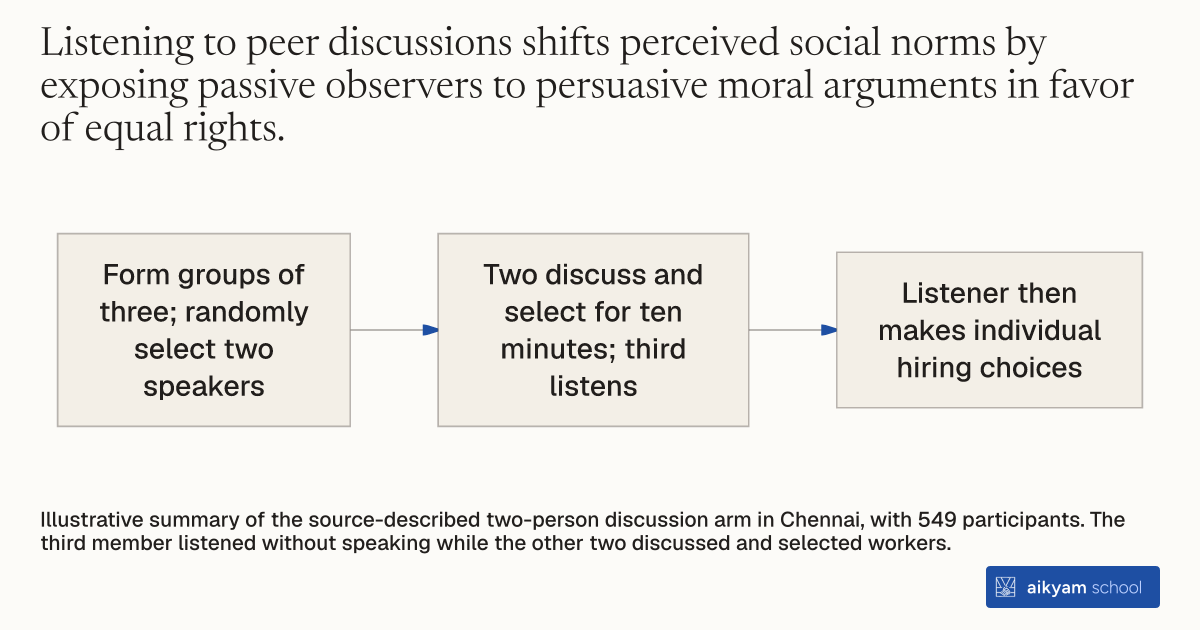
- Form groups of three; randomly select two speakers
- Two discuss and select for ten minutes; third listens
- Listener then makes individual hiring choices
Illustrative summary of the source-described two-person discussion arm in Chennai, with 549 participants. The third member listened without speaking while the other two discussed and selected workers.
See source →How
When to use
Organizations and employers often need to reduce hiring bias against transgender workers across large groups where not everyone can actively speak. Active three-person discussions require full verbal participation from every member, which can be logistically difficult or intimidating for some participants. Structuring discussions so two members converse while a third observes allows organizations to scale peer influence to passive listeners.
Arrange three-person groups where two participants discuss candidate choices while a third participant listens passively before making hiring decisions.
- Form groups of three non-transgender participants in a private meeting setting.
- Randomly select two participants in each group to discuss candidate choices and make collective selections for ten minutes.
- Assign the third participant to listen quietly to the ongoing discussion without contributing verbally.
- Have the two active discussants evaluate candidate profiles featuring cisgender and transgender workers for a delivery role.
- Permit the listening participant to make individual hiring decisions after observing the peer exchange.
Why it works
Hearing peers speak up increases the observer's estimate of community willingness to hire transgender individuals.
Example
In urban Chennai, India, 549 non-transgender individuals participated in a two-person discussion arm with a passive listener to choose grocery delivery workers. The passive listening treatment increased transgender worker selection by 13 percentage points compared to the comparison group.
About the study
Participants
3,397 non-transgender urban residents in Chennai, India, with 549 individuals in the two-person discussion arm.
Study Design
Randomized controlled trial framed as grocery delivery market research where two randomly selected group members discussed and selected delivery workers for ten minutes while a third member listened quietly.
Results
Participants in the two-person discussion arm were 13 percentage points more likely to select a transgender individual for their delivery compared to the comparison group.