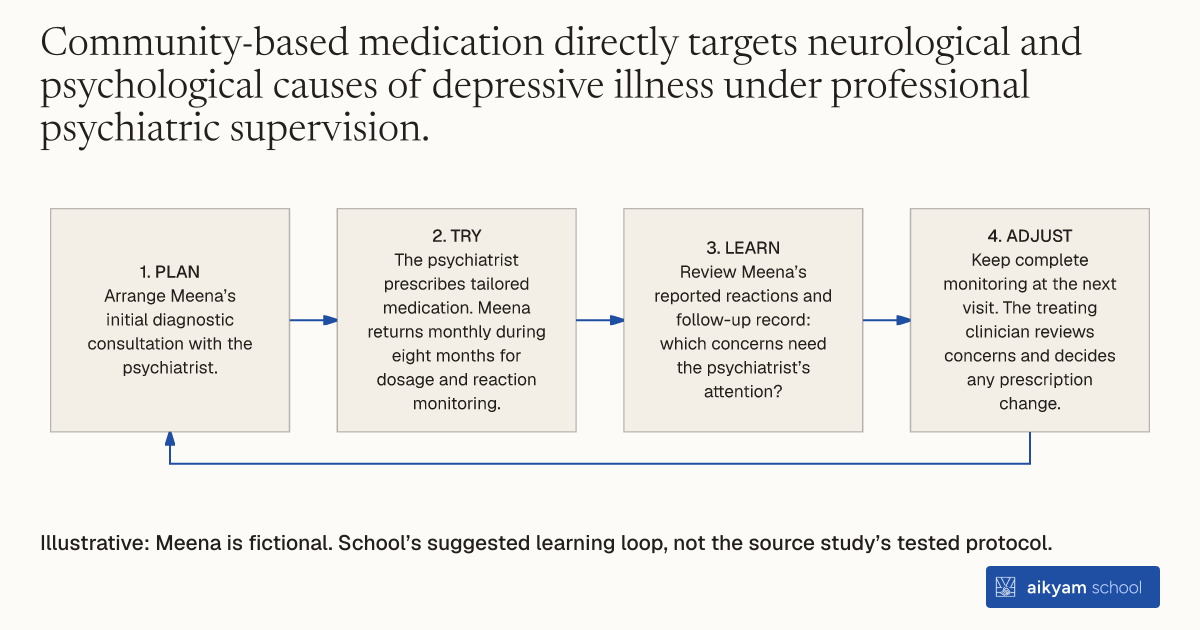
Try, learn and adjust
Check psychiatric follow-up and patient reactions
- Plan: Arrange Meena’s initial diagnostic consultation with the psychiatrist.
- Try: The psychiatrist prescribes tailored medication. Meena returns monthly during eight months for dosage and reaction monitoring.
- Learn: Review Meena’s reported reactions and follow-up record: which concerns need the psychiatrist’s attention?
- Adjust: Keep complete monitoring at the next visit. The treating clinician reviews concerns and decides any prescription change.
Illustrative: Meena is fictional. School’s suggested learning loop, not the source study’s tested protocol.
See source →School’s suggested, untested loop. Observe monthly follow-up and reactions; this is not a tested clinical protocol or a promise of improved work outcomes.
How
When to use
In low-income countries, depression is widespread and costly, but demand for treatment is unmet due to a shortage of providers. Pharmacotherapy provides medication to manage symptoms, but evidence on community-based provision remains scarce. Delivering personalized psychiatric medication helps low-income adults with mild or moderate depression manage psychological distress.
Provide eight months of personalized pharmacotherapy with oversight from a local psychiatrist to treat depressed adults in peri-urban communities.
- NGO staff partner with a private hospital psychiatrist to establish treatment pathways.
- Psychiatrists conduct initial visits to diagnose individuals screened for depression symptoms.
- Physicians prescribe tailored antidepressant medications to each participant based on diagnosis.
- Patients return for monthly follow-up visits over eight months to monitor medication dosage.
- Clinic staff evaluate patient reactions and adjust prescriptions throughout the eight-month treatment period.
Why it works
Access to tailored prescriptions and regular oversight helps patients reduce symptom severity over the intervention period.
Example
GASS and private hospital psychiatrists delivered eight months of pharmacotherapy to 207 adults with mild or moderate depression across villages near Bangalore, India. Participants attended initial diagnostic consultations followed by monthly follow-up visits to manage dosage and evaluate medication side effects.
About the study
Participants
207 adults with symptoms of mild or moderate depression (86 percent women) in peri-urban villages near Bangalore, India.
Study Design
Randomized controlled trial evaluating eight months of personalized pharmacotherapy delivered via a local private hospital psychiatrist against comparison and alternative intervention groups over 26 months.
Results
Personalized pharmacotherapy reduced depression symptoms by 0.14 standard deviations during active treatment, but reduced participants' weekly work time by 5.4 hours (a 10 percent decrease) without generating statistically significant earnings gains.