Research steps
Sample farmers before insurance introduction
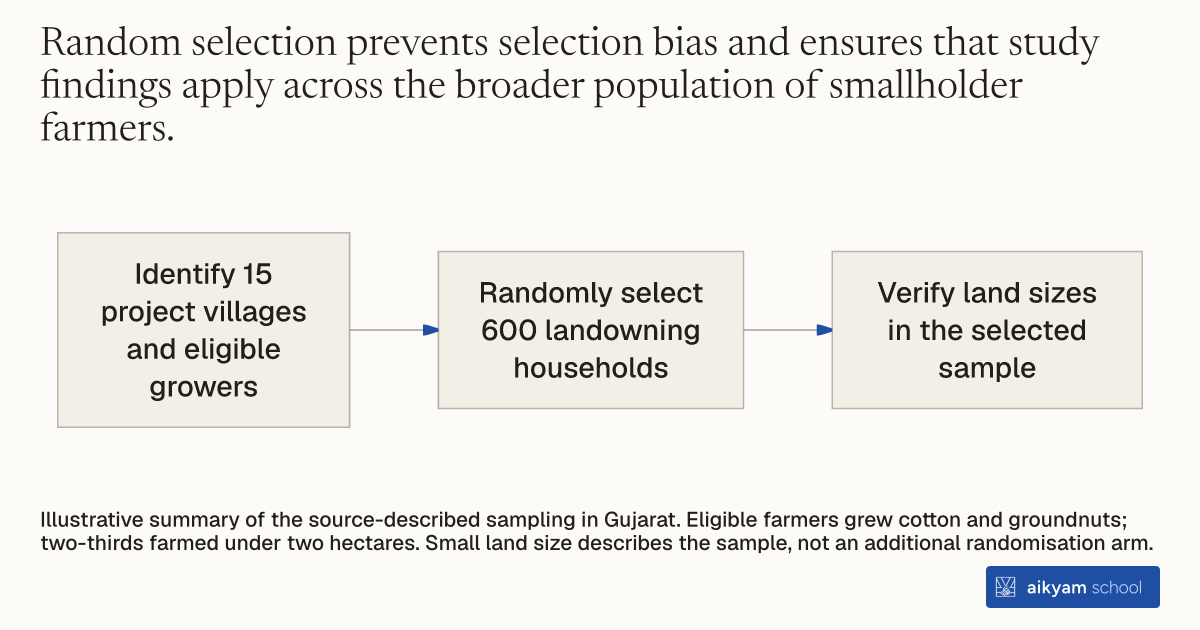
- Identify 15 project villages and eligible growers
- Randomly select 600 landowning households
- Verify land sizes in the selected sample
Illustrative summary of the source-described sampling in Gujarat. Eligible farmers grew cotton and groundnuts; two-thirds farmed under two hectares. Small land size describes the sample, not an additional randomisation arm.
See source →How
When to use
Smallholder farmers in rain-fed agricultural areas face high financial vulnerability from erratic weather patterns. Selecting a representative group of farmers helps organizations measure product demand and understand barriers to adopting new microinsurance coverage. This method works for agricultural development programs that want to target landowning cash-crop growers in rural communities.
Select a representative group of smallholder farmers from target villages using randomized sampling procedures.
- Identify target villages where a non-profit partner introduces new agricultural services.
- Define the eligible population to include landowning farmers cultivating local cash crops.
- Randomly select six hundred households from the eligible landowning farmers across the fifteen project villages.
- Verify landholding sizes to confirm that smallholder farmers farming under two hectares form the target audience.
Example
Researchers teamed up with Development Support Center in fifteen villages in Gujarat, India, randomly selecting six hundred landowning cotton and groundnut farmers, two-thirds of whom farmed less than two hectares.
About the study
Participants
600 farming households in 15 coastal villages across Amreli, Bharuch, and Bhavnagar districts in Gujarat, India, where two-thirds farmed under two hectares.
Study Design
Randomized selection of households from all landowning cotton and groundnut farmers in project villages prior to introducing rainfall insurance.
Results
Baseline insurance adoption among comparison households was 6.4 percent, with two-thirds of the sampled households owning less than two hectares of land.