Research steps
Complete the lead-in before treatment disclosure
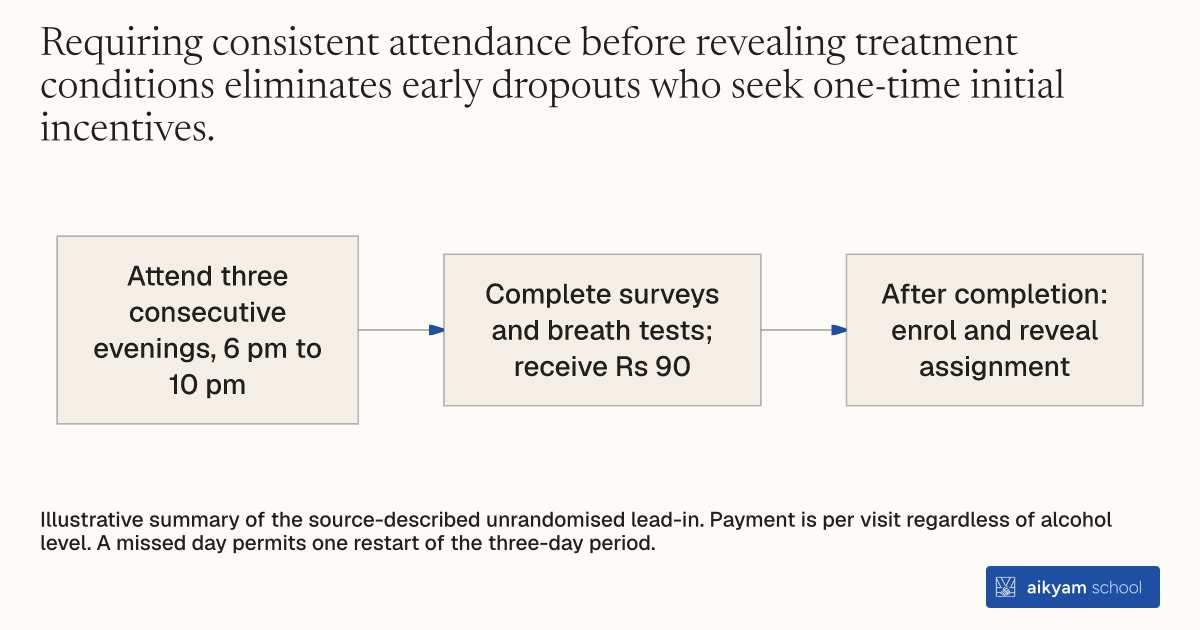
- Attend three consecutive evenings, 6 pm to 10 pm
- Complete surveys and breath tests; receive Rs 90
- After completion: enrol and reveal assignment
Illustrative summary of the source-described unrandomised lead-in. Payment is per visit regardless of alcohol level. A missed day permits one restart of the three-day period.
See source →How
When to use
Field trials with daily multi-week commitments face initial attrition from participants who collect upfront enrollment payments and drop out. This method screens out early dropouts before randomization by requiring short-term consecutive attendance. Use this approach to prevent differential attrition and ensure stable participant retention across study arms.
Require prospective trial participants to complete consecutive study office visits during an unrandomized lead-in period before full enrollment.
- Field staff instruct eligible candidates to visit the study office every evening between 6 pm and 10 pm for three consecutive days.
- Staff pay participants a fixed baseline rate of Rs 90 per visit regardless of their blood alcohol content.
- Surveyors administer baseline questionnaires and breathalyzer tests during each daily visit.
- Staff allow participants who miss a day to restart and repeat the three-day lead-in period once.
- Staff confirm full trial enrollment and reveal randomized treatment assignments only to participants who complete all three consecutive visits.
Why it works
It screens for participant reliability without introducing selection bias related to baseline alcohol consumption.
Example
In Chennai, cycle-rickshaw drivers who passed field and medical screening completed a three-day lead-in period paying Rs 90 per visit. Sixty-six percent of participants successfully passed the lead-in period and entered the randomized phase of the study, with attrition at this stage unrelated to baseline sobriety.
About the study
Participants
Male cycle-rickshaw drivers in Chennai who passed office medical screening.
Study Design
Unrandomized consecutive-day attendance lead-in period administered before treatment assignment with a single repeat allowance.
Results
66 percent of individuals passed the lead-in period and proceeded to randomization; participant dropouts during the lead-in were uncorrelated with initial sobriety scores.