Research steps
Inspect nets during surprise home visits
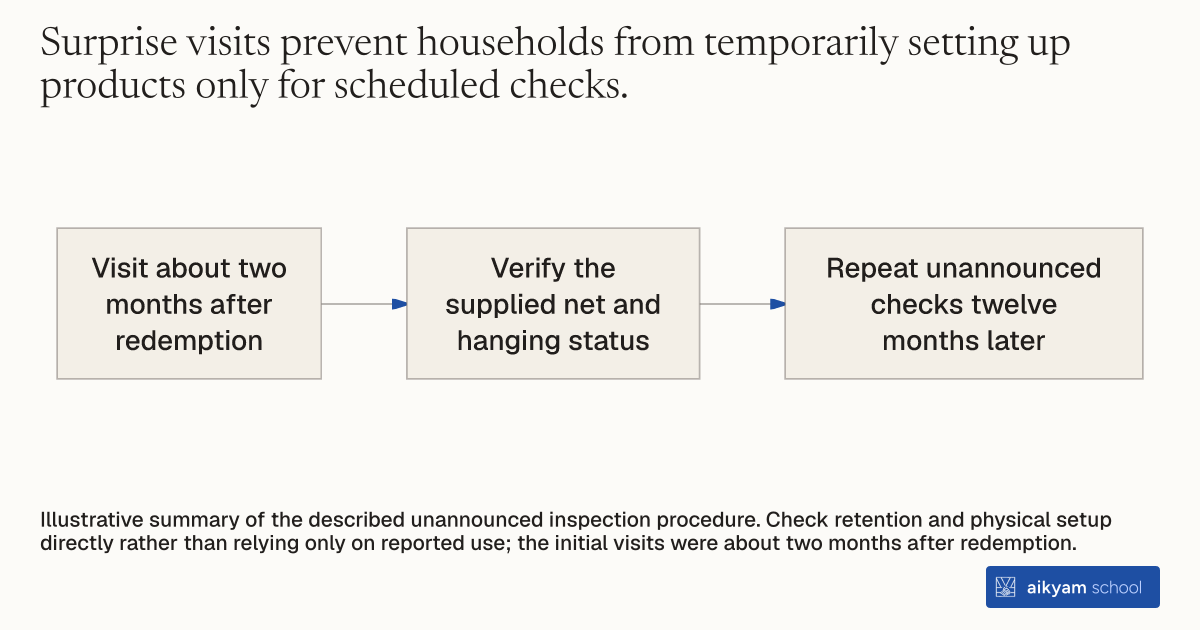
- Visit about two months after redemption
- Verify the supplied net and hanging status
- Repeat unannounced checks twelve months later
Illustrative summary of the described unannounced inspection procedure. Check retention and physical setup directly rather than relying only on reported use; the initial visits were about two months after redemption.
See source →How
When to use
Programs evaluating subsidized physical health products need to confirm actual household usage and prevent resale arbitrage. Relying on self-reported survey responses creates risk of reporting bias or social desirability bias. Conducting surprise spot checks allows field monitors to physically verify whether target households kept and actively set up their distributed items.
Conduct unannounced home visits to physically inspect product presence and active setup in target households.
- Schedule field enumerator visits without notifying sampled households in advance.
- Visit households approximately two months after voucher redemption during initial evaluation phases.
- Ask household respondents to present the specific distributed health product to verify ownership.
- Visually inspect the product to check if it matches study-supplied items and check for active usage by looking for setup over sleeping areas.
- Repeat unannounced home visits twelve months later to evaluate multi-year product retention and physical condition.
Why it works
Physical inspection eliminates self-reporting bias and detects whether recipients resold or transferred subsidized goods to non-eligible neighbors.
Example
In Busia District, Kenya, field enumerators conducted surprise visits to 479 households that redeemed bed net vouchers; spot checks revealed over 90 percent of households retained their study-supplied net, with observed hanging rates near 80 percent among full-subsidy recipients.
About the study
Participants
479 households in Busia District, Western Kenya, sampled across two-month and twelve-month follow-up rounds.
Study Design
Unannounced spot-check visits to verify product retention, detect resale, and observe physical hanging status above sleeping areas.
Results
More than 90 percent of redeeming households showed their study-supplied net during surprise visits, with observed usage reaching 90 percent under full subsidies compared to under 10 percent at full price.