Procedure
Observed tuberculosis treatment
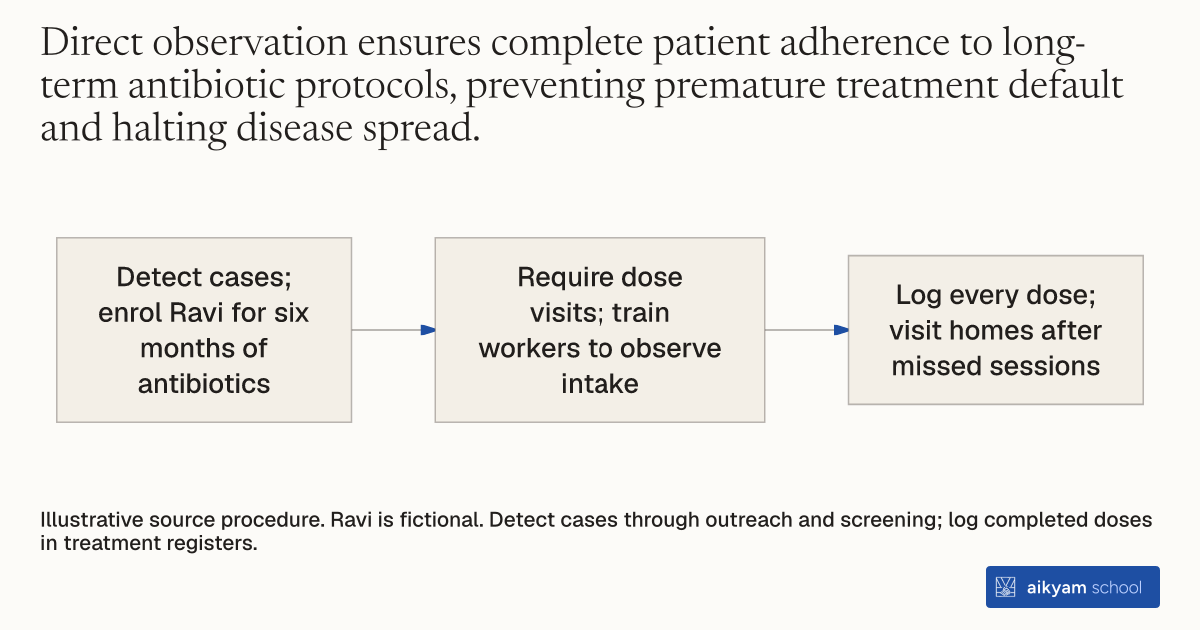
- Detect cases; enrol Ravi for six months of antibiotics
- Require dose visits; train workers to observe intake
- Log every dose; visit homes after missed sessions
Illustrative source procedure. Ravi is fictional. Detect cases through outreach and screening; log completed doses in treatment registers.
See source →How
When to use
In low-resource health settings where tuberculosis transmission is high, patients must complete a strict six-month antibiotic regime to recover and prevent drug resistance. Patients frequently stop taking medication when early symptoms subside or due to severe side effects. Delivering treatment through Directly Observed Therapy Short Course ensures patients consume each dose under direct provider supervision.
Deliver tuberculosis medication to patients through structured in-person observation by trained health workers at local care centers.
- Detect tuberculosis cases through health worker outreach and clinical screening in urban informal settlements.
- Enroll diagnosed patients in a standard six-month antibiotic treatment regimen.
- Require patients to visit a local care center for each prescribed dose.
- Train local health workers to directly observe patients ingesting their medication.
- Log each completed dose intake in official treatment registers.
- Dispatch health workers on home visits if a patient misses a scheduled treatment session.
Example
Operation ASHA delivered the WHO DOTS protocol through local health workers in urban informal settlements in India, achieving 54 percent in-person pill intake in standard centers and 68 percent in biometric-monitored centers.
About the study
Participants
65 catchment areas serving urban informal settlements across four states in Northern India, each serving nearly 40,000 individuals and managed by one health worker.
Study Design
Randomized controlled trial comparing 34 biometric-monitored DOTS centers against 31 standard paper-based DOTS centers over 12 to 14 months using patient surveys, official health registers, random clinic visits, and day-long observations.
Results
In standard comparison DOTS centers, in-person pill intake was 54 percent and treatment default was 7.3 percent; adding biometric tracking to DOTS increased in-person pill intake to 68 percent and reduced treatment default to 5.5 percent.