Research steps
Screen before inviting participants
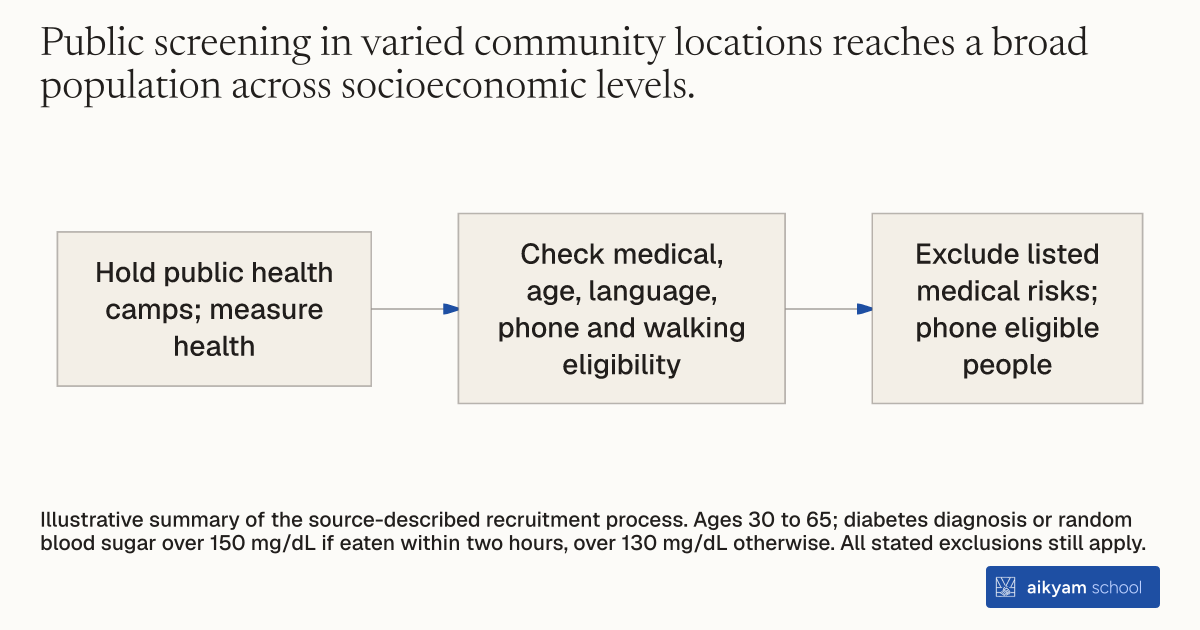
- Hold public health camps; measure health
- Check medical, age, language, phone and walking eligibility
- Exclude listed medical risks; phone eligible people
Illustrative summary of the source-described recruitment process. Ages 30 to 65; diabetes diagnosis or random blood sugar over 150 mg/dL if eaten within two hours, over 130 mg/dL otherwise. All stated exclusions still apply.
See source →How
When to use
Public health programs need to identify individuals with chronic conditions who can safely participate in exercise interventions. Community screening locates eligible participants across diverse socioeconomic groups while filtering out medical risks. This method serves adults with diabetes or elevated blood sugar in urban settings.
Screen community members at accessible public sites to recruit eligible individuals with diabetes for health interventions.
- Set up screening camps in public locations including government hospitals, markets, religious institutions, and parks.
- Direct trained surveyors to take health measurements and discuss diabetes and hypertension risks with visitors.
- Conduct an eligibility survey to evaluate blood sugar levels, age, mobile phone capacity, and medical history.
- Verify candidates have a diabetes diagnosis or elevated random blood sugar over 150 mg/dL if eaten in the previous two hours, or over 130 mg/dL otherwise.
- Confirm candidates are 30 to 65 years old, literate in Tamil, physically capable of walking 30 minutes, and reside in the target city.
- Exclude candidates who are pregnant, on insulin, or diagnosed with type 1 diabetes, blindness, kidney disease, foot ulcers, or prior major medical events like stroke or heart attack.
- Invite eligible individuals by phone to participate in the program.
Why it works
Systematic medical and technical screening criteria protect participant safety and confirm capability to comply with study protocols.
Example
Surveyors screened community members across Coimbatore, Tamil Nadu, to find adults with elevated blood sugar for a walking intervention. A final experimental sample of 3,192 individuals enrolled in the study, representing 41 percent of the screened, eligible population.
About the study
Participants
3,192 enrolled participants in Coimbatore, India, with an average age of 49.56 years, 42 percent female, 67 percent diagnosed diabetic, and an average monthly per capita income of 4,465 INR.
Study Design
Surveyors held public health camps across hospitals, markets, religious institutions, and parks from October 2016 to November 2017 to conduct health measurements and eligibility screening.
Results
Screening identified eligible community members and enrolled 3,192 participants, representing 41 percent of the screened eligible population.