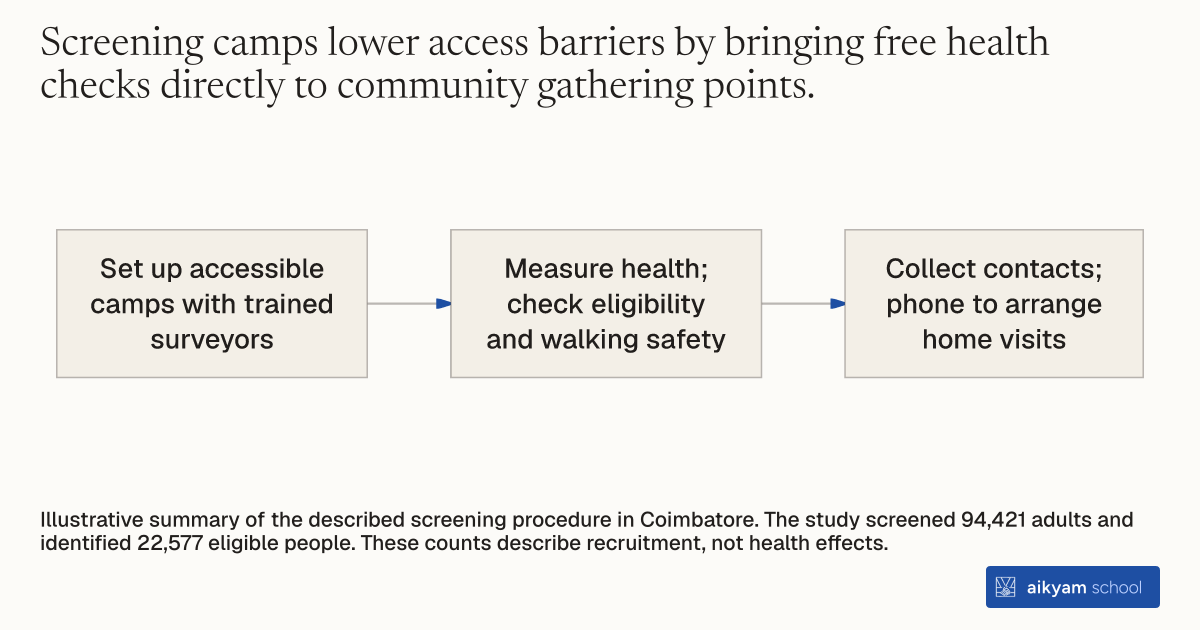
Research steps
Recruit through public screening camps
- Set up accessible camps with trained surveyors
- Measure health; check eligibility and walking safety
- Collect contacts; phone to arrange home visits
Illustrative summary of the described screening procedure in Coimbatore. The study screened 94,421 adults and identified 22,577 eligible people. These counts describe recruitment, not health effects.
See source →How
When to use
Health programs need to identify and enroll adults living with unmanaged chronic conditions like diabetes and hypertension. Standard clinic visits often miss individuals who do not routinely seek preventive care. Setting up public screening camps in everyday community spaces reaches a broad and diverse population.
Set up temporary public screening camps in high-foot-traffic community locations to identify and recruit eligible adults with chronic health conditions.
- Select accessible community locations ranging from local markets to religious institutions.
- Station trained surveyors at the camps to take basic anthropometric measurements, including blood pressure and blood sugar.
- Administer a brief eligibility survey to screen for self-reported or measured diabetes, hypertension, and walking safety.
- Collect contact details and prepaid mobile phone numbers from eligible participants.
- Follow up with eligible individuals by phone to invite them to participate in the health program and schedule home visits.
Why it works
Reaching people in familiar everyday settings identifies at-risk individuals who would otherwise go unscreened.
Example
Surveyors conducted public screening camps across Coimbatore, Tamil Nadu, India, screening 94,421 adults to identify 22,577 eligible individuals with diabetes or hypertension, ultimately enrolling 6,882 participants into a walking incentive program.
About the study
Participants
94,421 adults screened in urban Coimbatore, Tamil Nadu, India, yielding 6,882 enrolled participants aged 30 to 65 (mean age 49, 37% female, 31% diabetic, 32% hypertensive).
Study Design
Randomized controlled trial screening phase using public community camps in markets and religious sites followed by phone contact and home enrollment visits.
Results
Public screening camps identified 22,577 eligible individuals (24% of screened), successfully contacted 19,438 (86% of eligible), secured interest from 13,302 (59%), and completed baseline enrollment for 7,920 participants.