Skip to the findings
Menu
aikyam
school
Findings
Methods
Subjects
All cards
Read
Findings
Methods
Subjects
All cards
Findings
1,083 findings
Match newly hired migrant employees with language-compatible senior residential peers for bi-weekly structured peer-support meetings over eight weeks.
Streamline institutional onboarding and lower transaction processing latency before introducing specialized financial delivery channels to prevent consumer drop-off.
Adapt WHO PM+ cognitive behavioral training for lay peer delivery within industrial worker housing to expand access to scalable psychosocial care.
Sort, label, and establish computer-logged location tracking for raw material inventory while establishing strict reordering norms to eliminate dead stock.
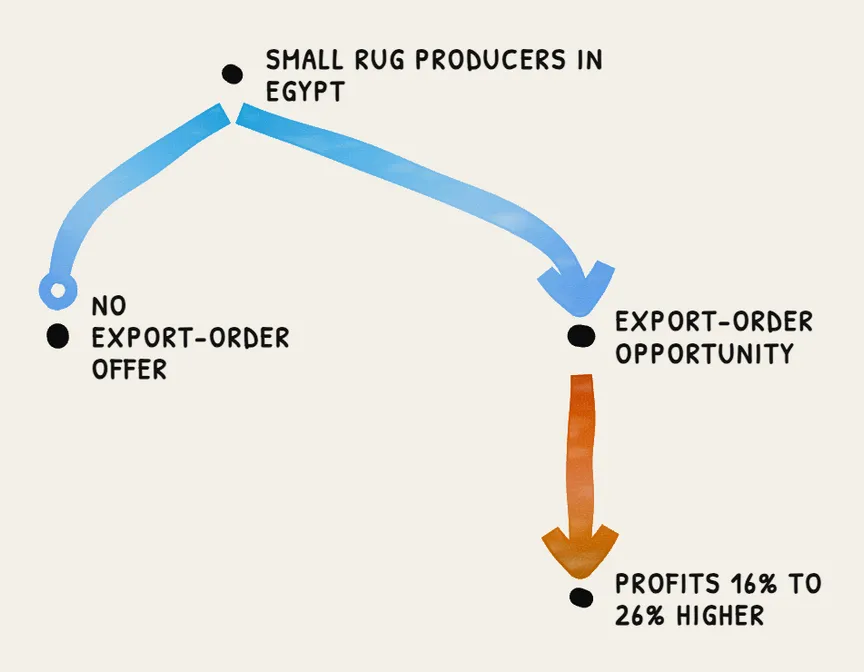
Establish structured export facilitation programs that pair small domestic manufacturers directly with foreign buyers who provide iterative technical feedback during contract fulfillment.
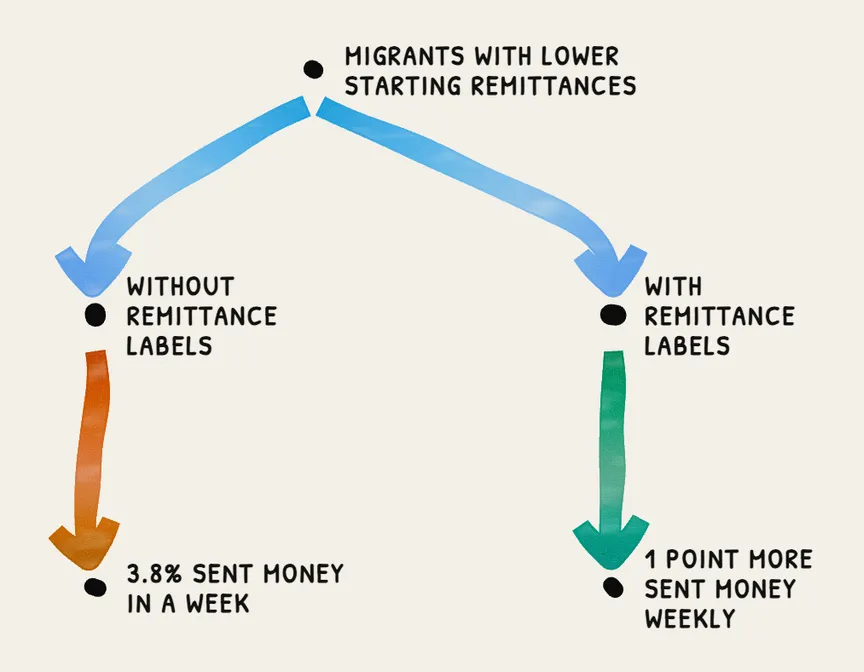
Track participant financial behavior across multi-year follow-up windows to determine whether novel remittance control features suffer from learning-driven decay.
Include non-pecuniary leisure time losses alongside pecuniary administration costs when calculating the total economic cost of mandatory job search activation policies.
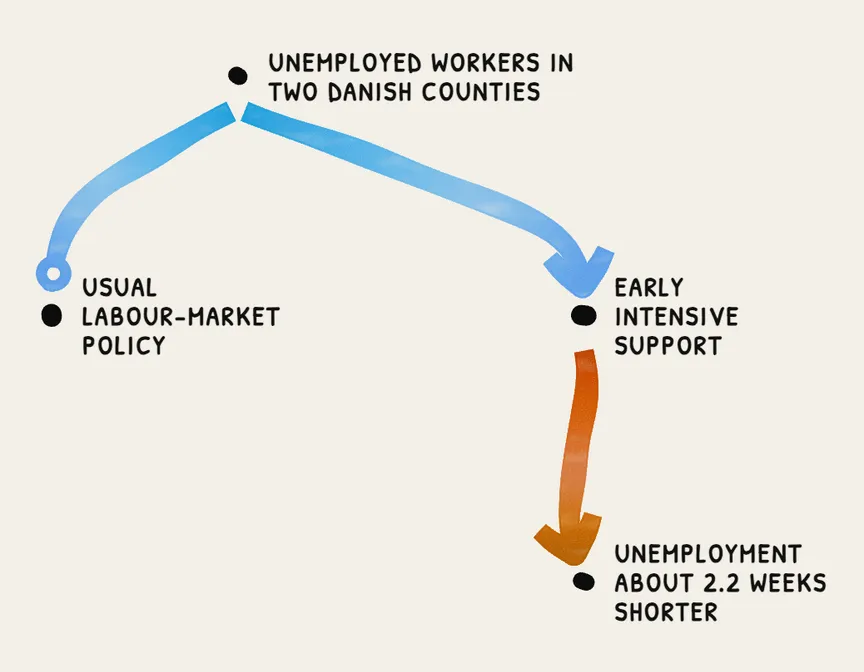
Introduce mandatory time-intensive check-ins early in unemployment benefits to reduce the non-monetary utility of remaining on public transfers.
Publish regression-adjusted value-added metrics alongside raw test scores in official school report cards to shift parental demand toward institutional productivity.
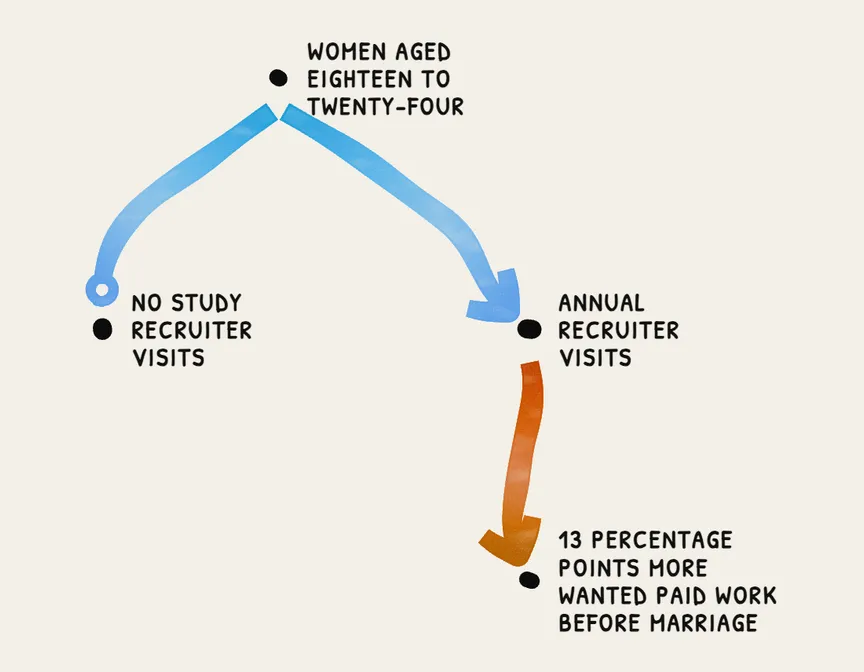
Design youth economic empowerment initiatives that explicitly emphasize long-term career progression and post-maternity workforce re-entry.
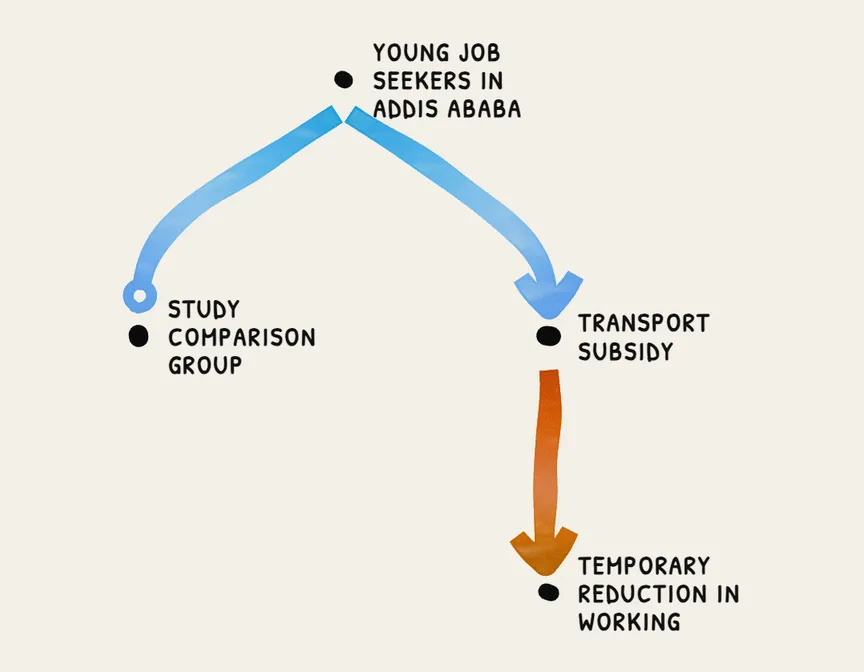
Evaluate pre-benefit waiting periods in social programs to capture temporary intertemporal labor supply increases prior to program enrollment.
Incorporate a direct productive coefficient alongside baseline peer averages when evaluating the aggregate social welfare impact of school choice policies.
Provide targeted cash liquidity transfers during active job hunting periods to prevent credit-constrained job-seekers from accepting sub-optimal, low-wage stopgap jobs.
Reallocate financial resources from broad secondary student scholarships toward targeted academic remediation and structural dropout prevention.
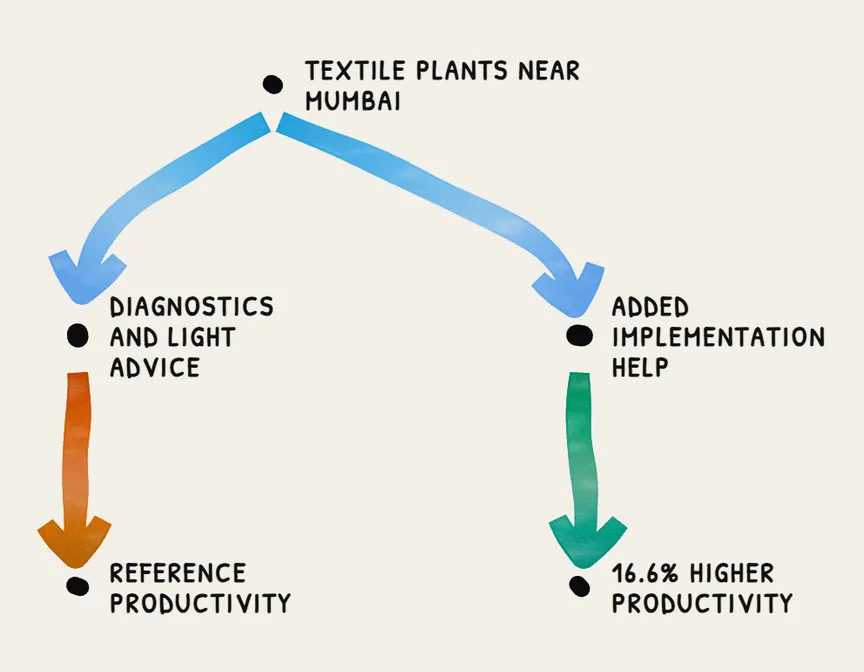
Deploy digital, low-cost screening and training platforms to reduce financial barriers to management training in thin-margin manufacturing settings.
Implement structured workplace support mechanisms targeting newly hired migrant operators to mitigate high annual attrition in low-tech manufacturing.
Include loan officer fixed effects and process logs in credit evaluations to ensure operational monitoring differences do not confound contract design impacts.
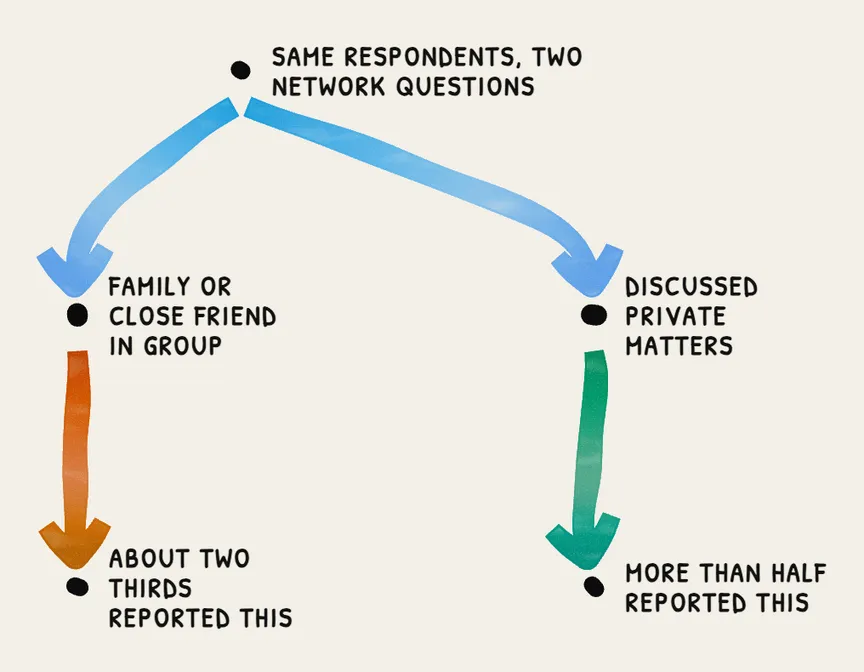
Form geographical peer clusters of neighboring business owners during baseline mapping to tap into pre-existing social information density before gathering evaluation data.
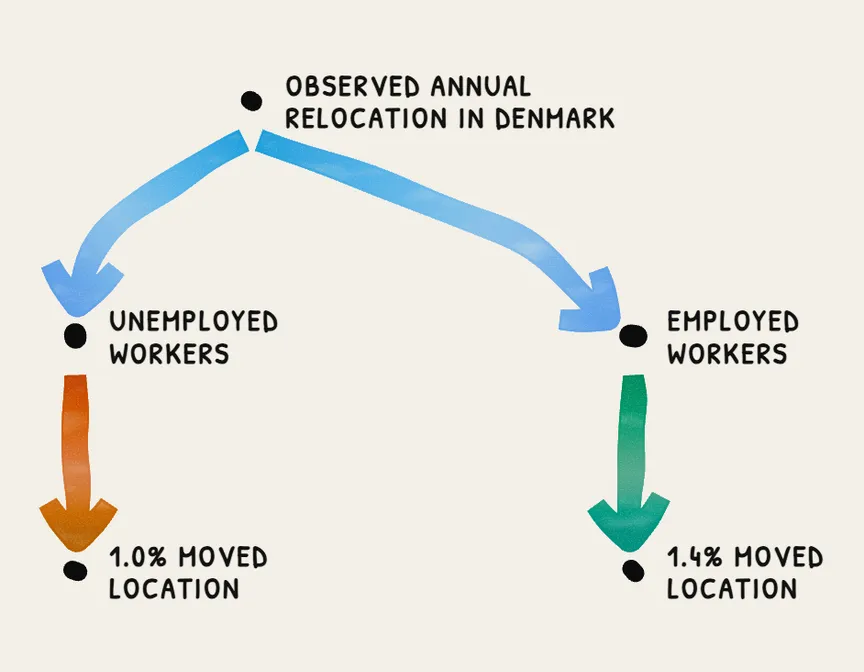
Verify that regional mobility rates across experimental administrative borders are sufficiently low before treating local geographic units as self-contained labor markets.
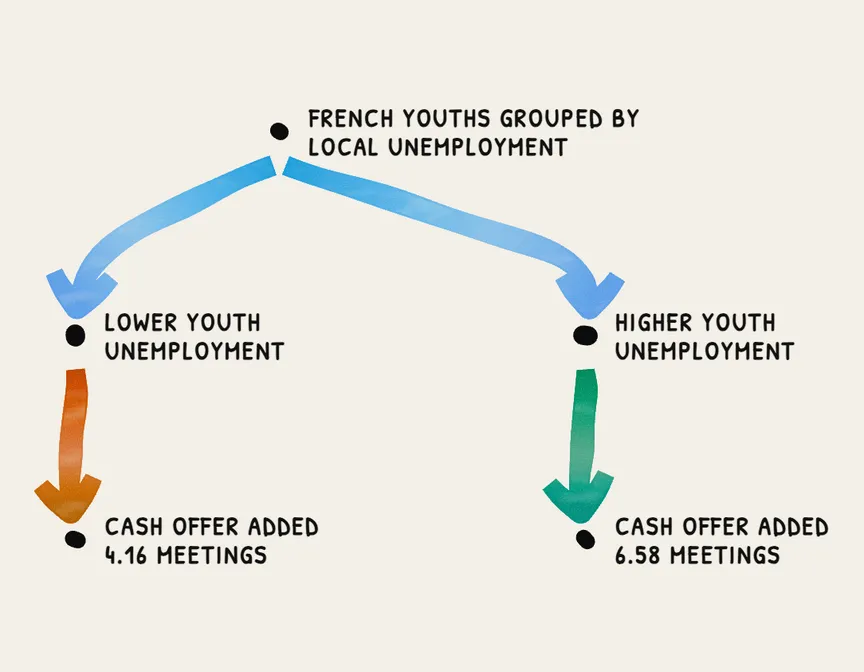
Scale financial assistance budgets for youth guidance programs based on local labor market tightness to support jobseekers in economically depressed regions.
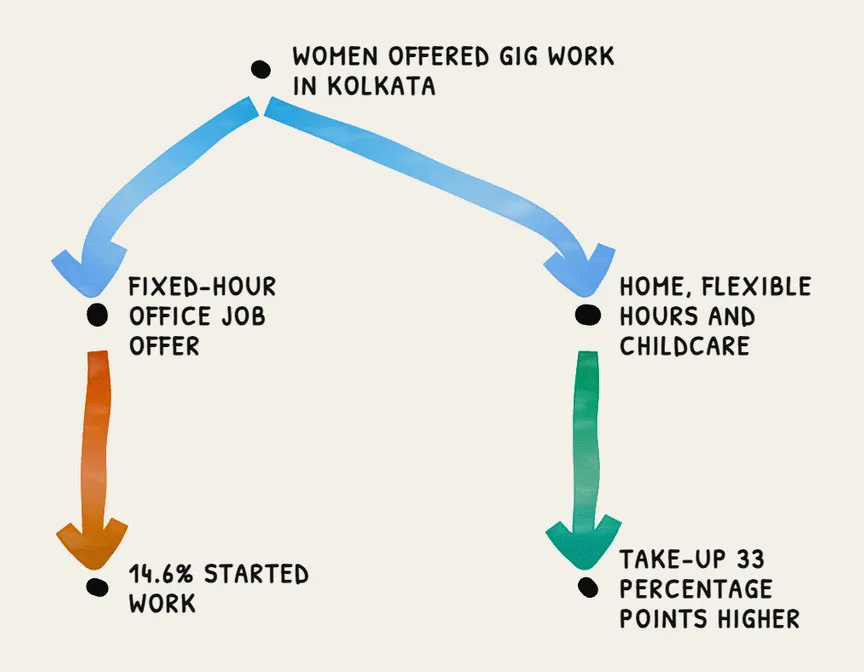
Prioritize remote home-based work location options over schedule variance when designing employment programs for women burdened by domestic caregiving.
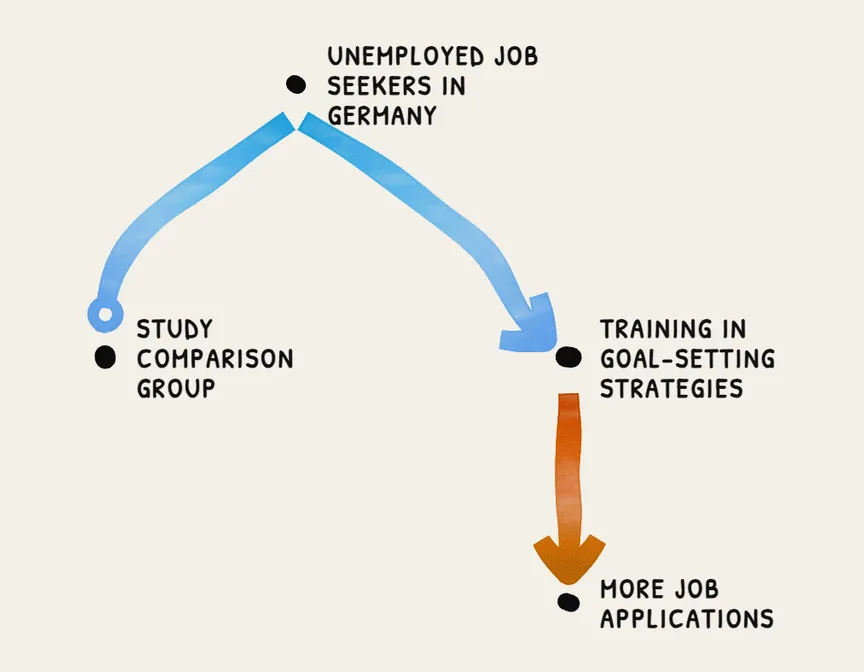
Embed psychological goal-setting exercises into job counseling sessions to help unemployed individuals build structured search routines and counteract discouragement.
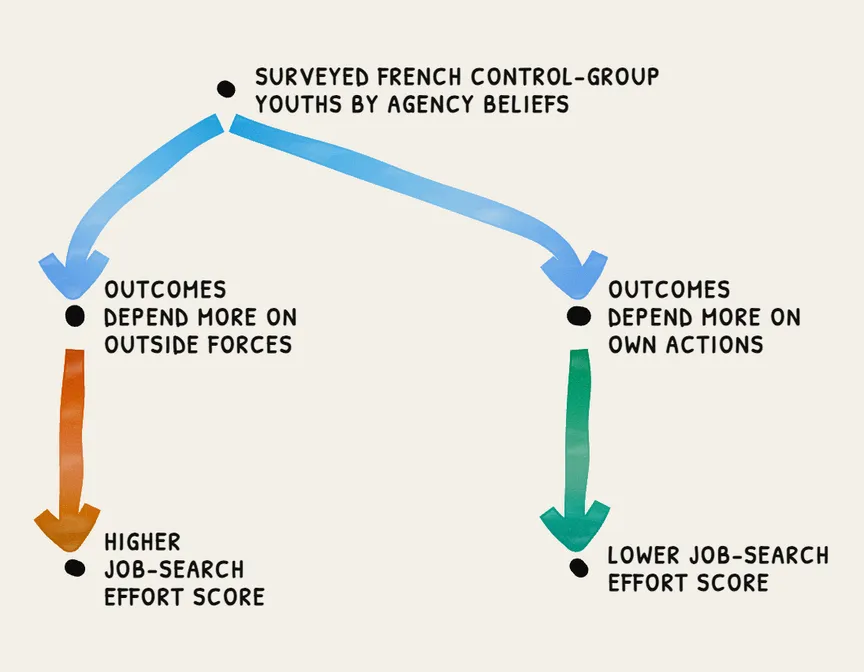
Assess client locus of control prior to counseling to pair external locus individuals with structured guidance and direct job matching while providing internal locus individuals with long-term skill acquisition tracks.
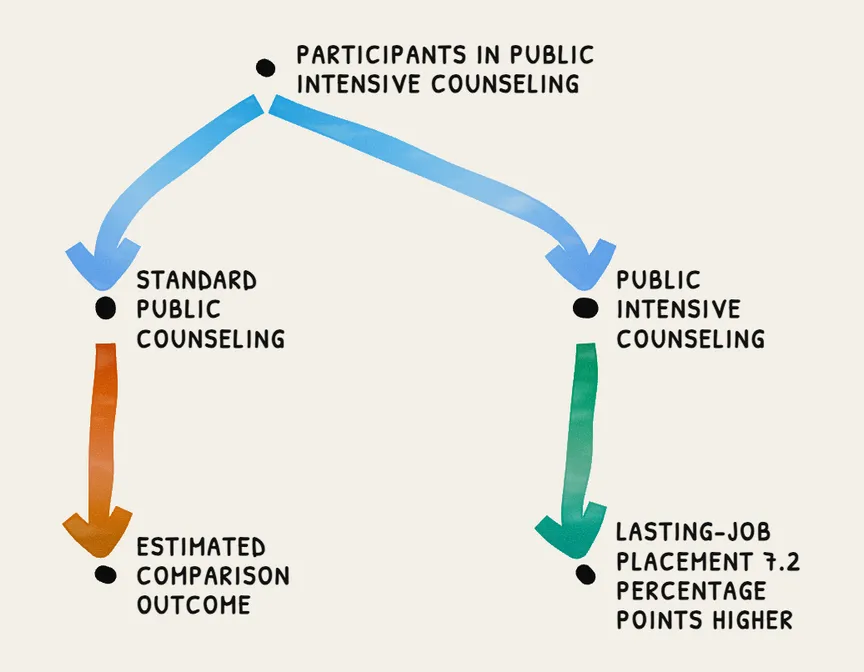
Evaluate job counseling policy interventions based on 6-month and 12-month job retention rates rather than short-term 30-day placement benchmarks.
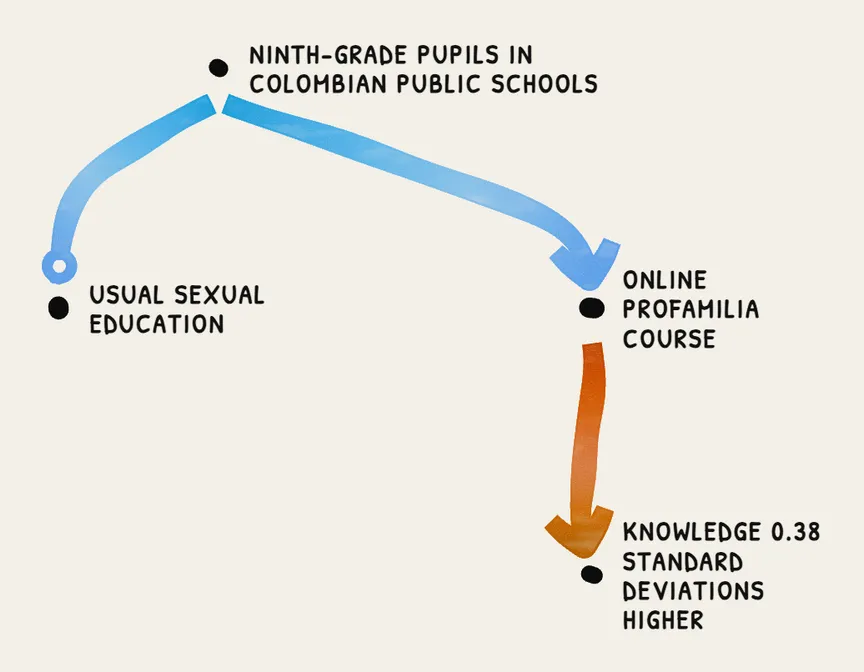
Utilize interactive, multi-week web modules with embedded self-testing to establish durable long-term knowledge retention without decay.
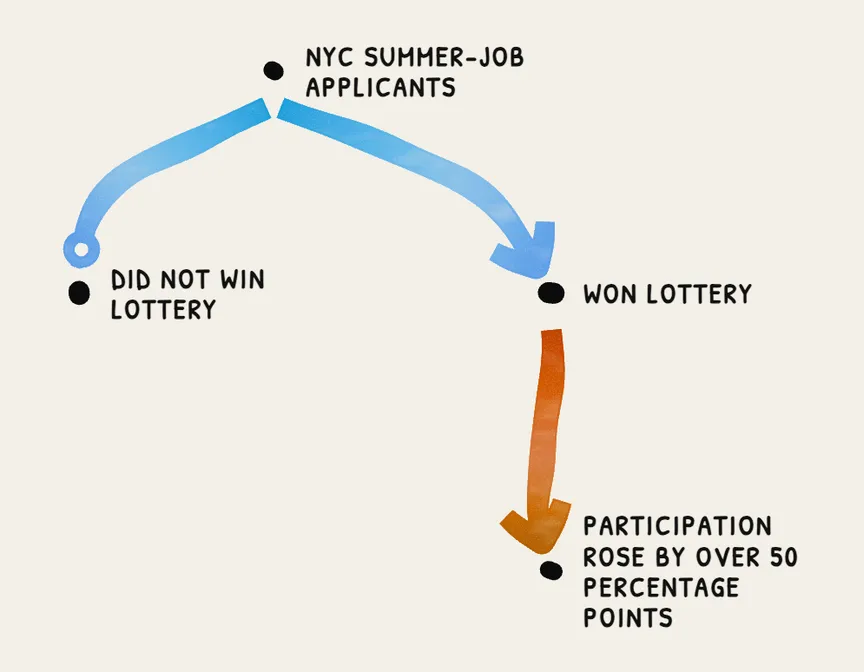
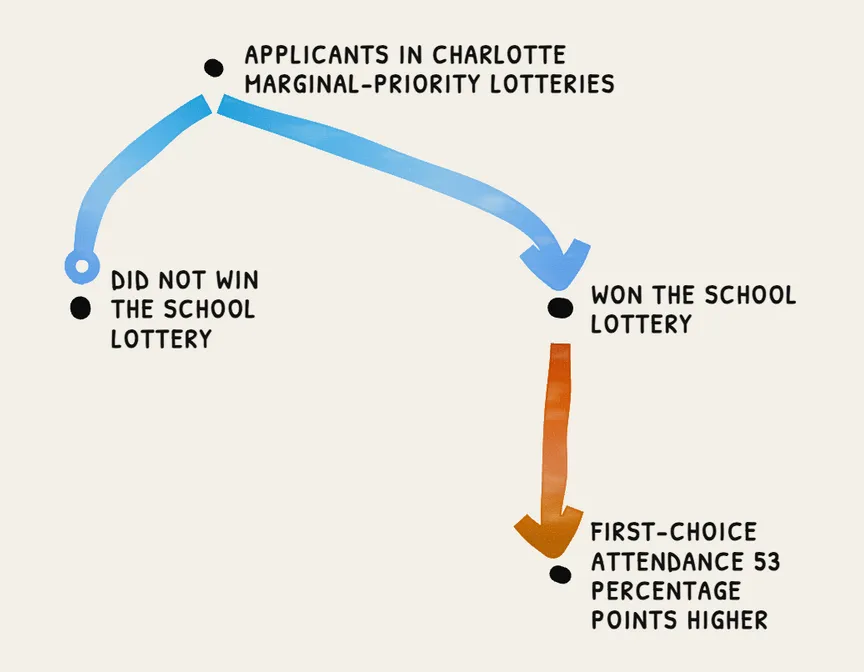
1. Utilize administrative randomized selection lotteries as instruments when evaluating oversubscribed public interventions to isolate unconfounded causal parameters.
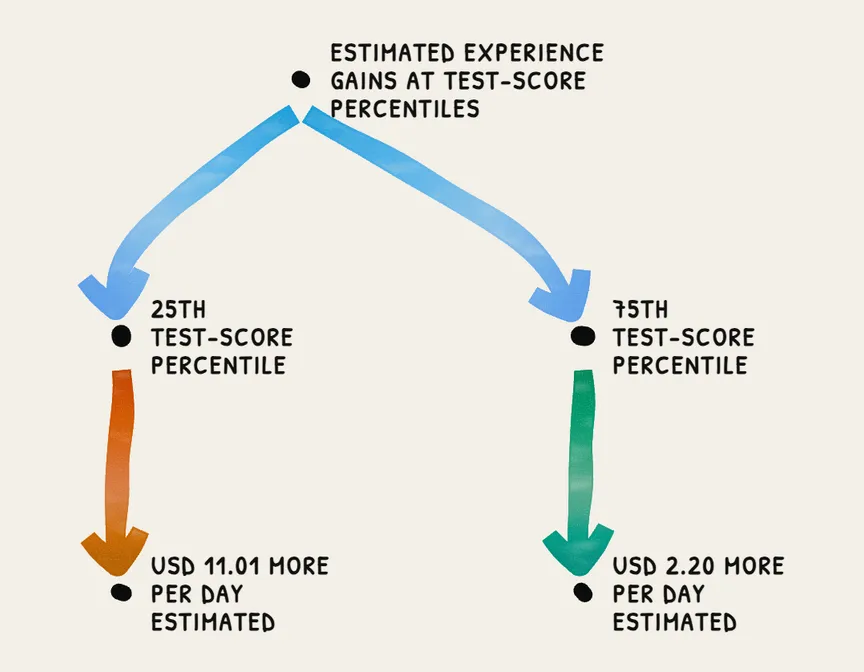
Prioritize low-scoring or lower-ability job applicants for short-term workplace exposure opportunities to maximize economic returns and overcome hiring screening barriers.
Calibrate macroeconomic tax revenue and welfare models using a Frisch elasticity between 0.10 and 0.15 rather than higher macroeconomic benchmark values exceeding 0.50.
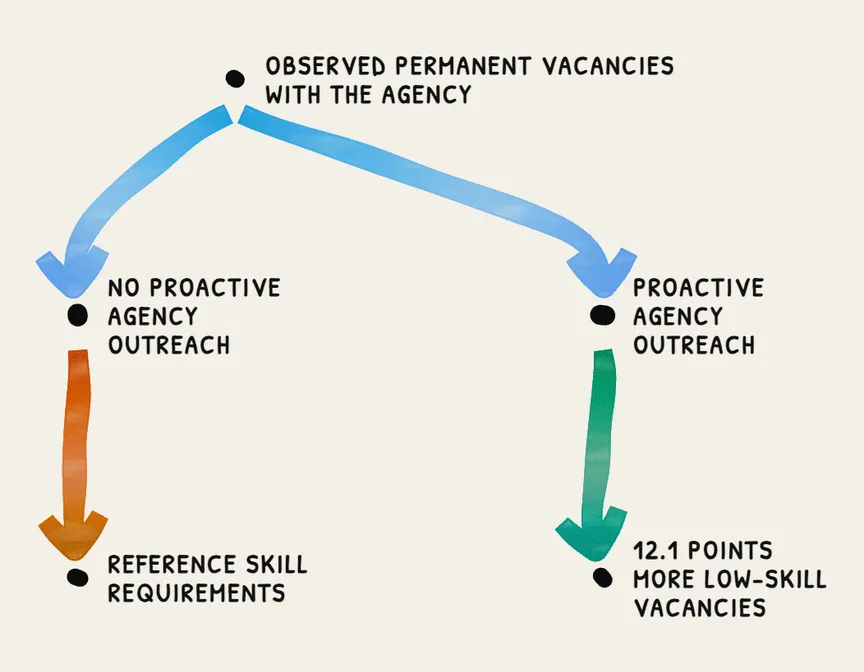
Offer public vacancy cost subsidies specifically tailored to low-qualification entry-level roles where upfront hiring expenses block marginal employment creation.
Evaluate local unemployment rates when measuring social assistance program disincentives, as tight labor markets amplify labor reductions while weak markets constrain them.
Expand short-duration certified vocational training programs tailored to employer-specified technical requirements.
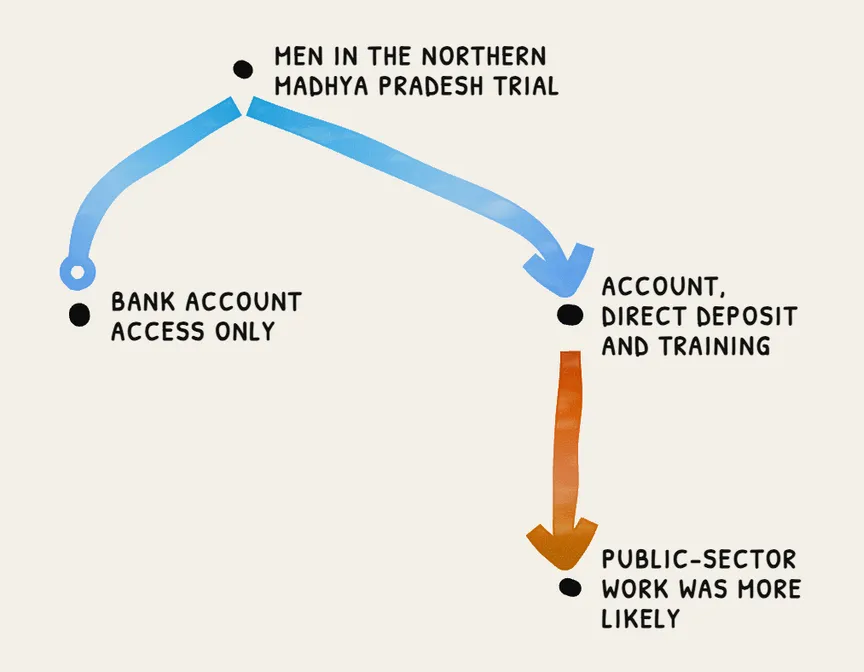
Incorporate intra-household behavioral spillover metrics—such as shifts in male labor supply—when evaluating the net economic impacts of female financial empowerment policies.
Measure baseline provider stigma among male decision-makers to design targeted communications that decouple female earnings from male breadwinner status.
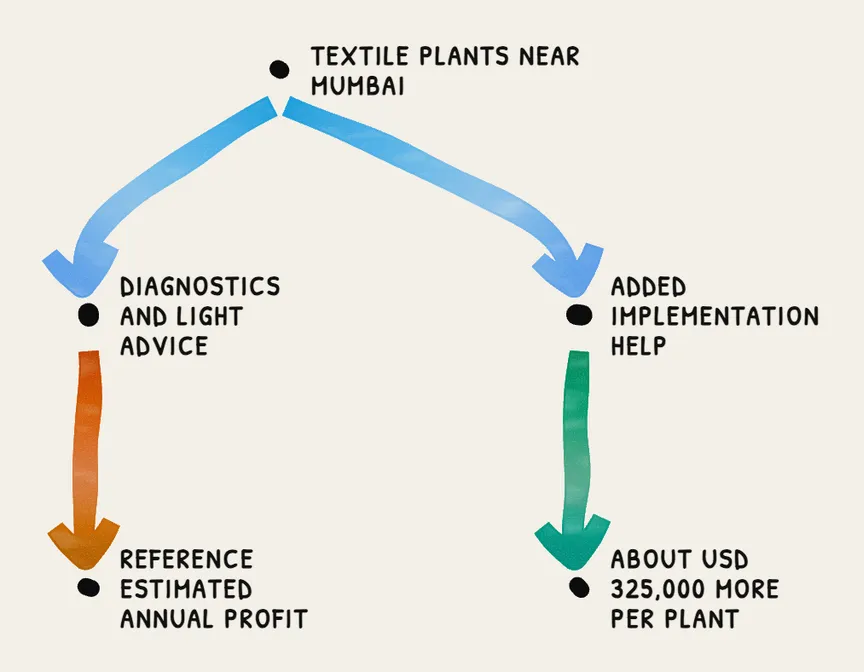
Calculate expected profit gains from quality defect reductions and machine downtime prevention before commissioning external operational consulting services.
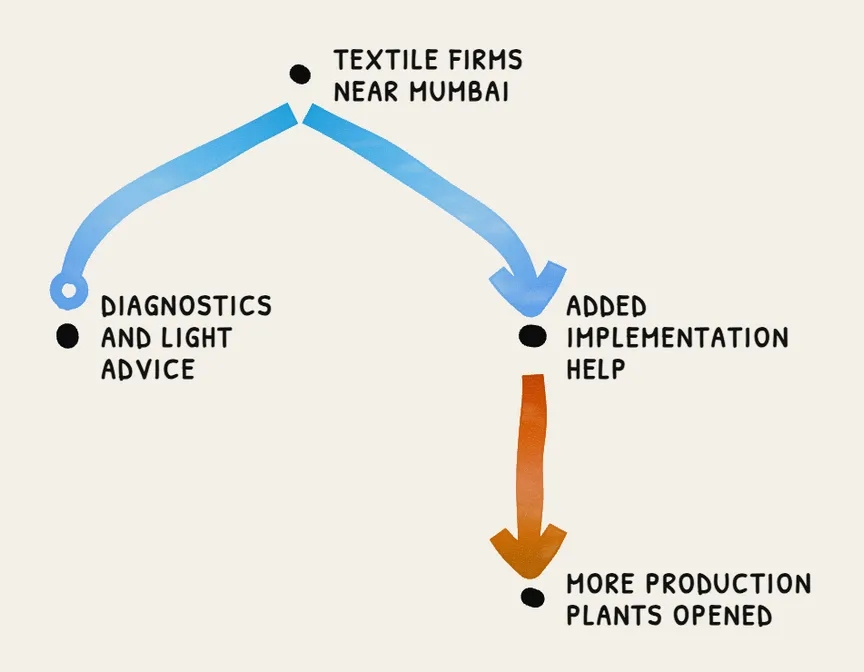
Implement standardized operational reporting protocols across core facilities to establish managerial delegation capacity prior to launching new production sites.
Instrument self-reported or observed management practice indices with exogenous random assignment variables when evaluating productivity impacts to avoid downward attenuation bias.
1. Allocate capital expenditure budgets to include standard operating procedure (SOP) design and operational tracking software alongside physical hardware purchases to ensure full asset productivity.
Pair all data tracking systems with daily review meetings and formal action plans to ensure collected operational metrics drive corrective interventions.
Embed newly introduced operational standard operating procedures into daily supervisor routines and visual tracking templates to ensure long-term persistence without continuous external oversight.
Implement systematic daily defect recording and root-cause analysis protocols on manufacturing production lines.
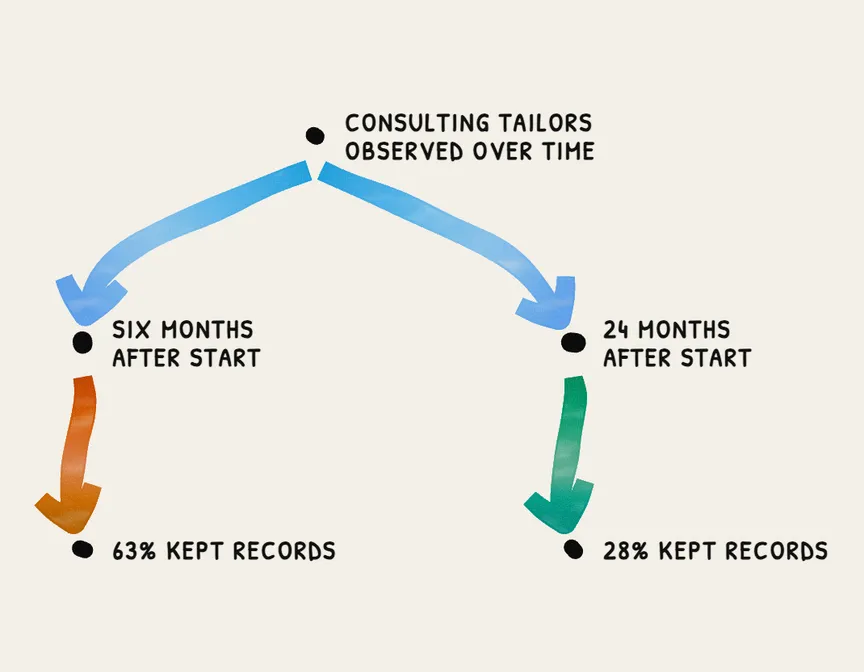
Audit microenterprise management practice retention at 12 and 24 months post-intervention to confirm whether operational changes persist after active advisory support concludes.
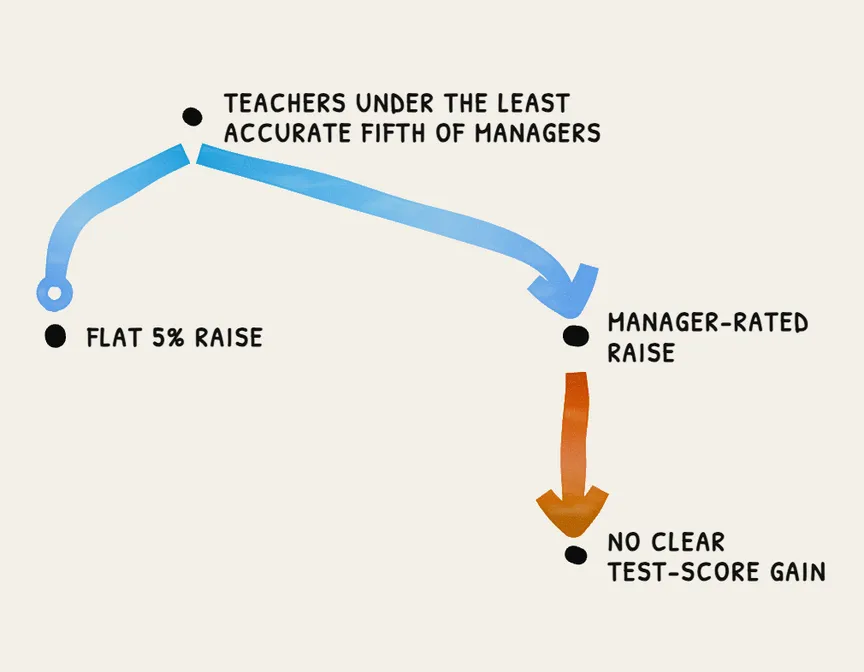
Assess evaluator accuracy using peer-appraisal cross-checks before deploying discretionary subjective incentive schemes, ensuring managerial evaluation error remains low.
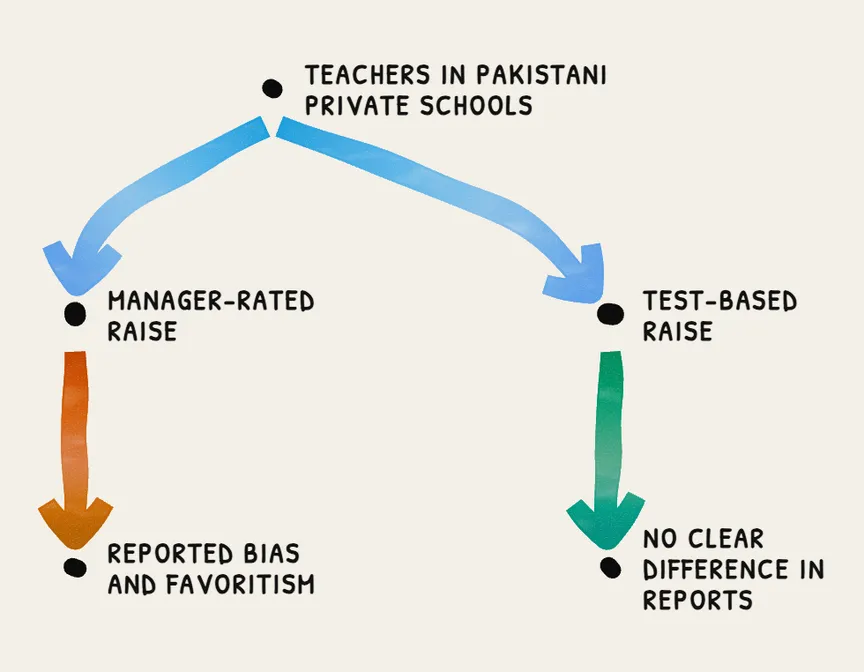
Implement subjective performance evaluation frameworks where managers set explicit effort-based goals annually and conduct frequent direct observations to align raises with multidimensional productivity.
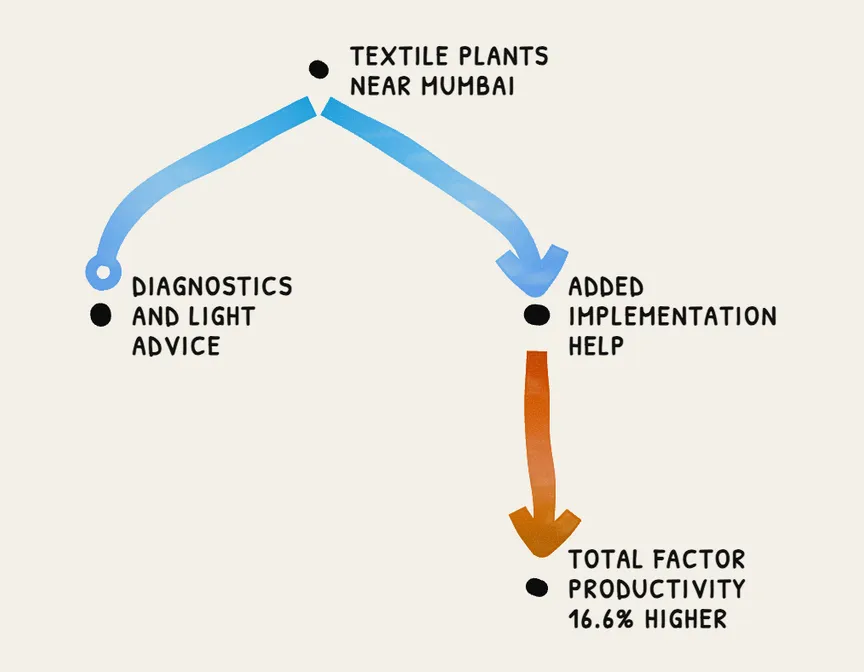
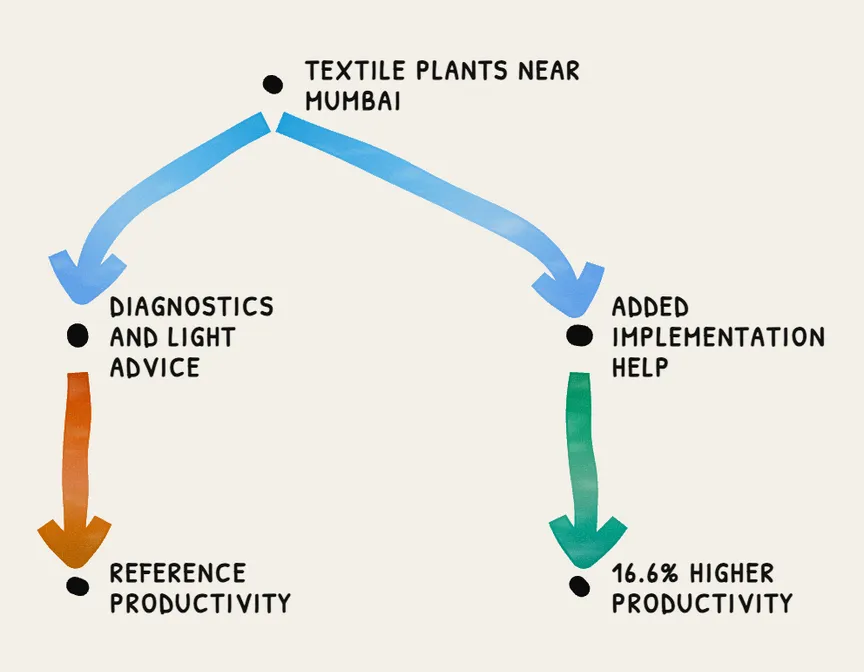
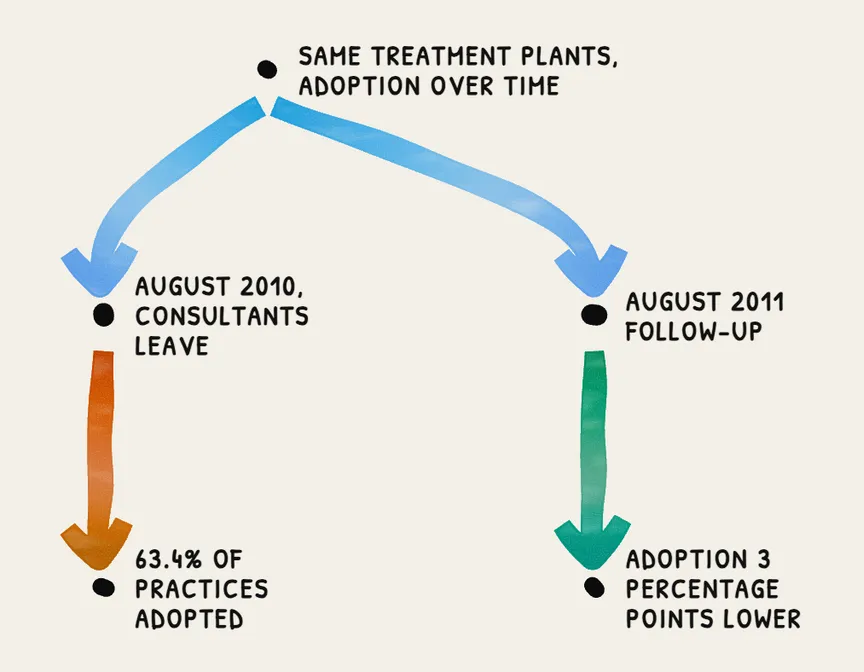
Conduct systematic audits of operational workflows against global industry benchmarks to identify unadopted management practices and train plant leaders.
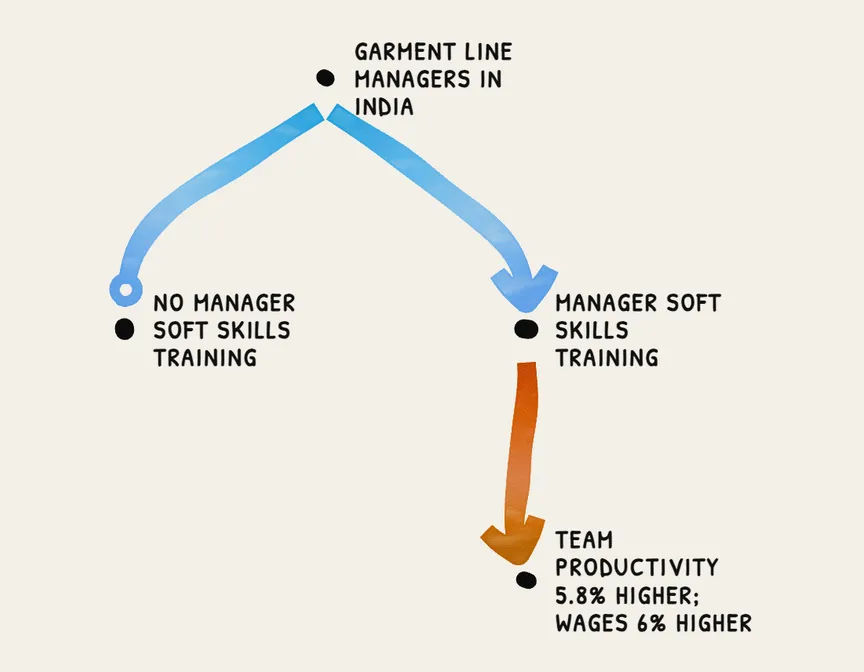
Implement structured soft skills and interpersonal communication training programs for first-line factory supervisors.
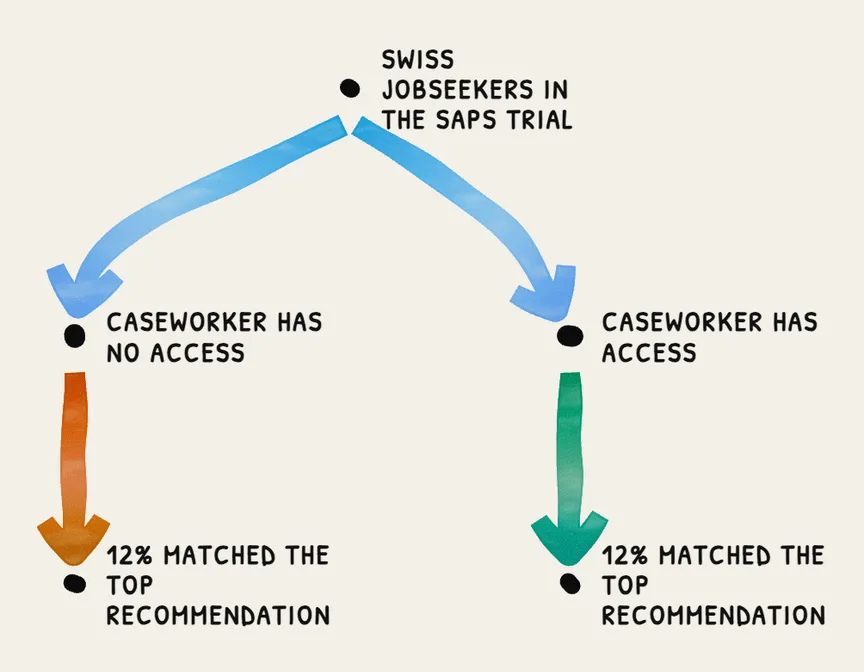
Define experimental treatment status using initial caseworker assignment while running sensitivity robustness checks on non-switcher cohorts to verify that administrative rotation rules do not bias impact estimates.
Hiring departments should adopt a mandatory 3-to-5 minute phone screening step for all candidates who meet baseline technical criteria prior to rejecting resumes based on language skill concerns.
Isolate lottery instrumental variables strictly to oversubscribed marginal priority groups where admission probabilities are strictly bounded between 0 and 1.
Page 12 of 23
Previous
1
…
11
12
13
…
23
Next