Skip to the findings
Menu
aikyam
school
Findings
Methods
Subjects
All cards
Read
Findings
Methods
Subjects
All cards
Findings
1,083 findings
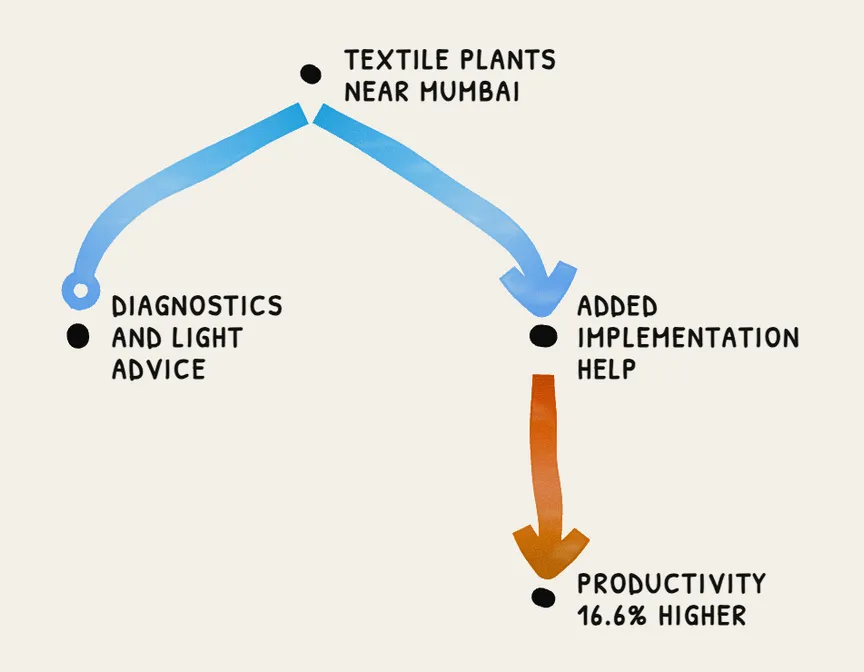
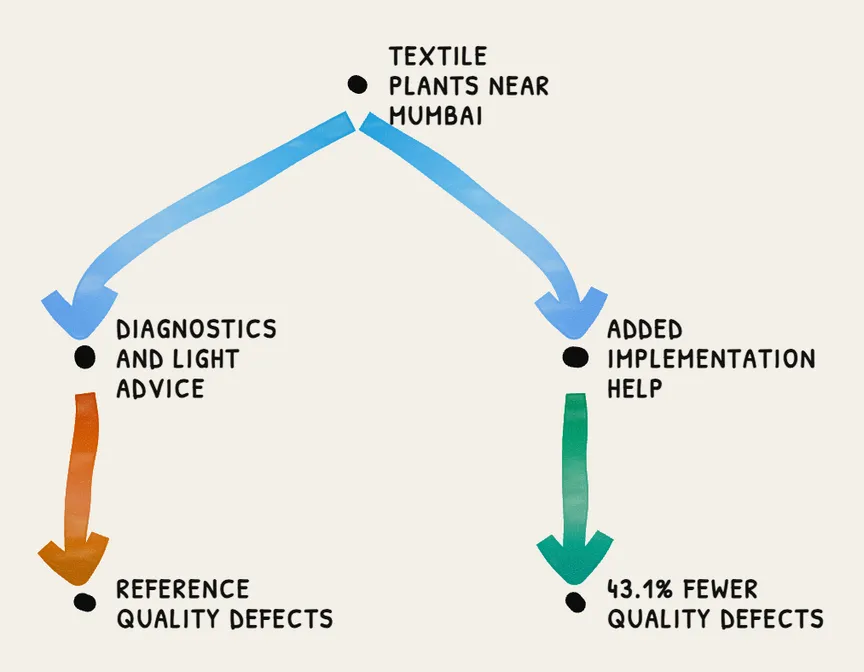
Conduct an intensive 15-day operational diagnostic across production facilities to evaluate current practices against international benchmarks and build a centralized baseline metrics database.
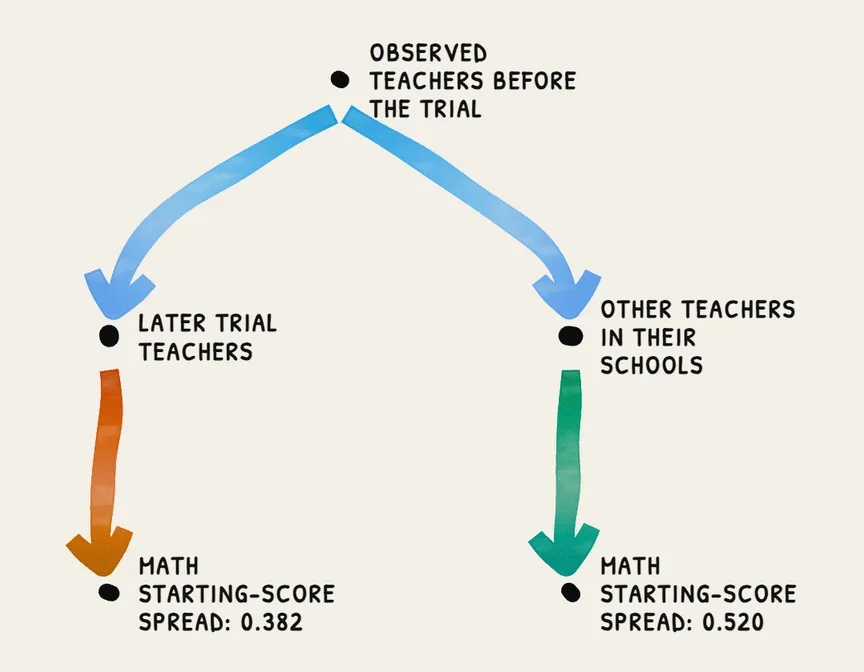
Control for prior baseline student achievement test scores in evaluation models to eliminate selection bias caused by classroom sorting.
Incorporate student perception surveys as a supporting component within a multi-measure evaluation composite rather than relying on surveys as a sole decision-making metric.
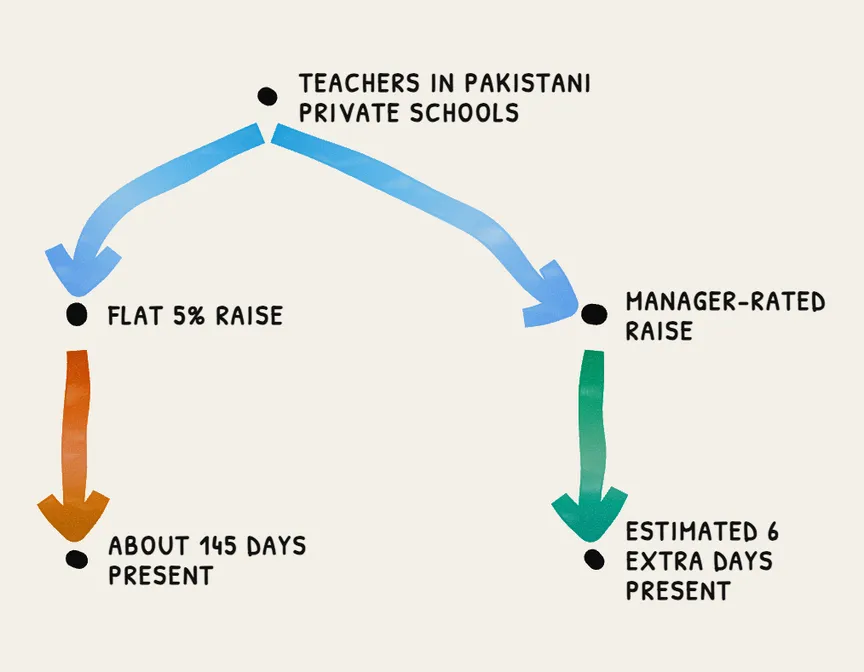
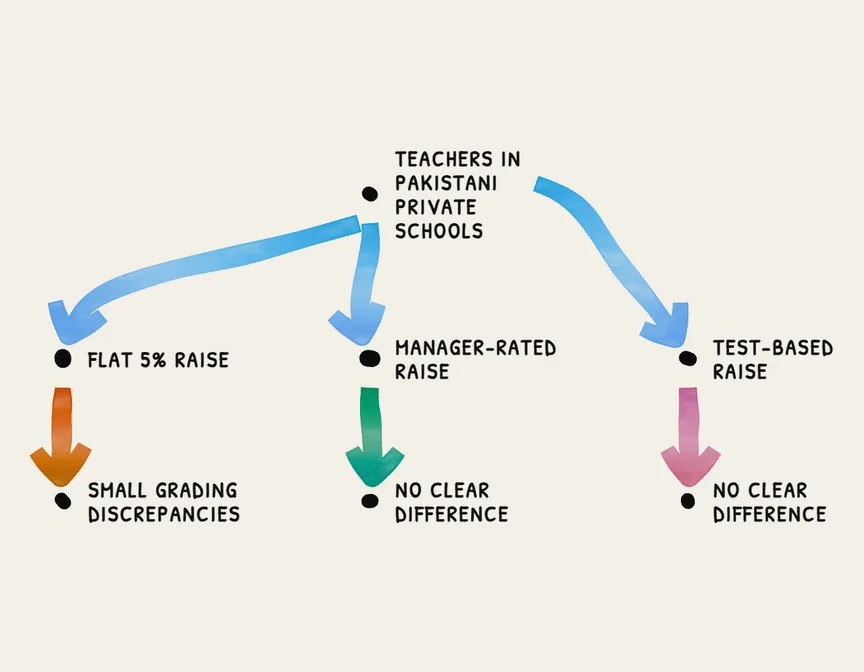
Deploy manager-discretionary subjective evaluations to directly incentivize fundamental baseline employee behaviors like physical workplace attendance.
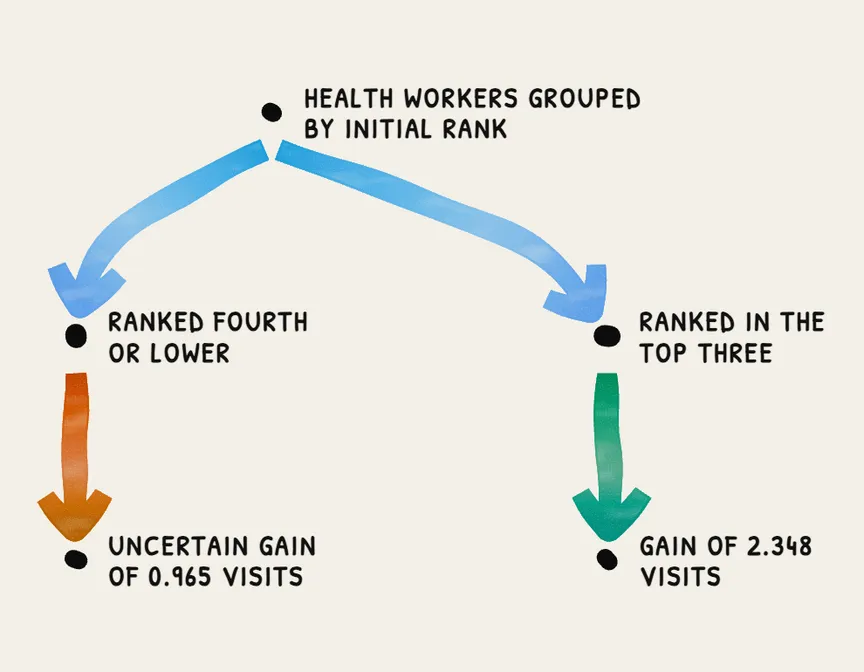
Incorporate subjective expectation assessments into health diagnostic evaluations to predict how population belief adjustments influence behavior under uncertainty.
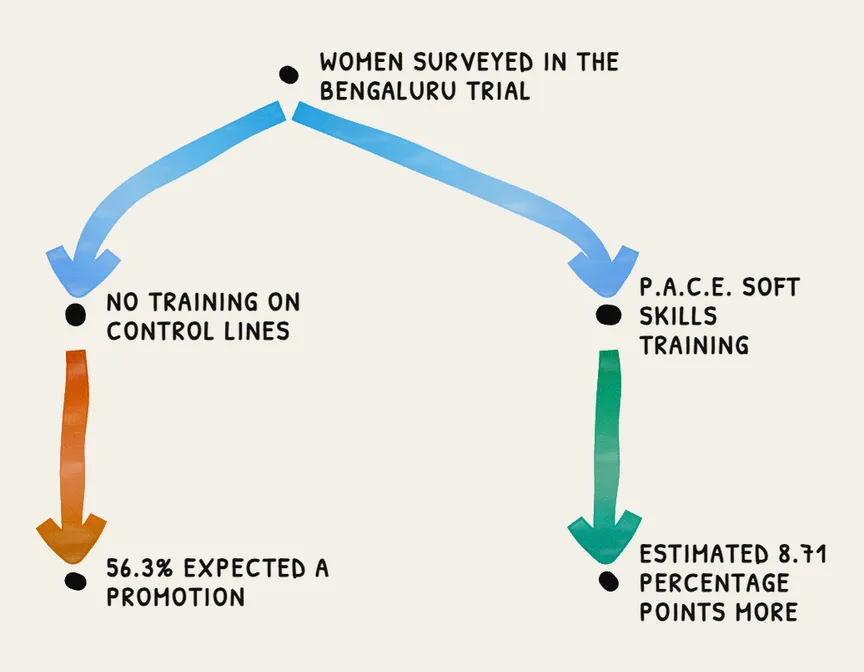
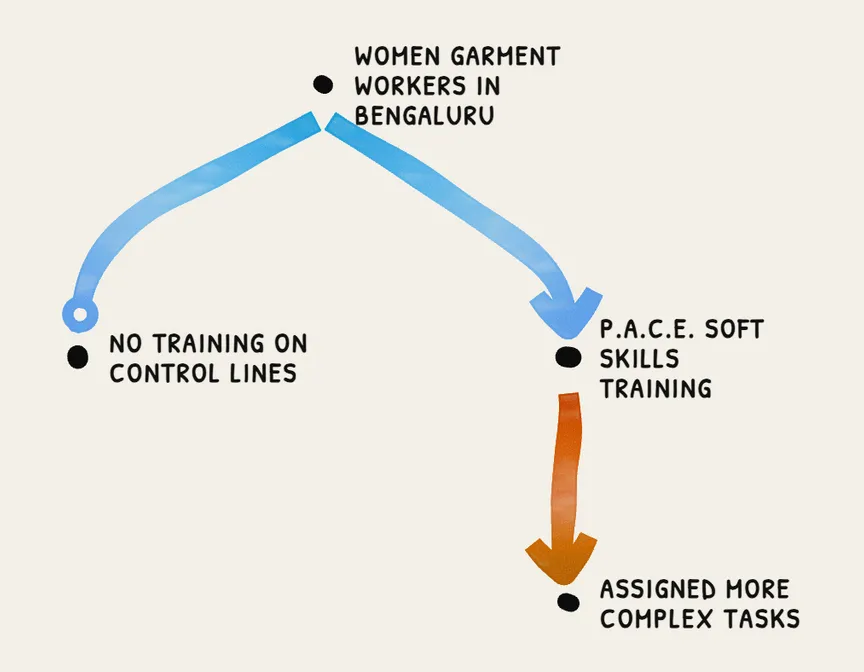
Implement workplace soft skills frameworks to raise frontline employee self-assessment and proactive expectations for institutional career advancement.
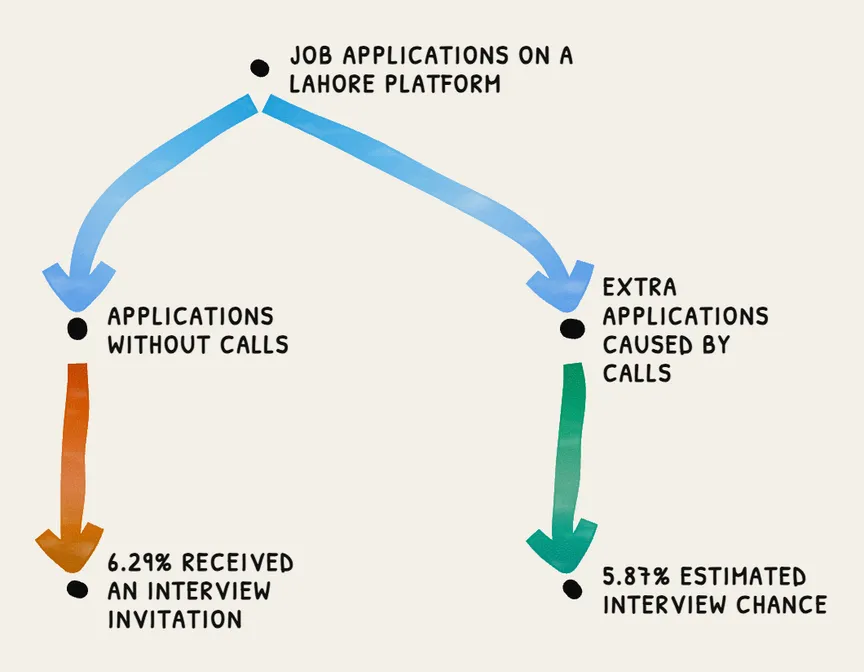
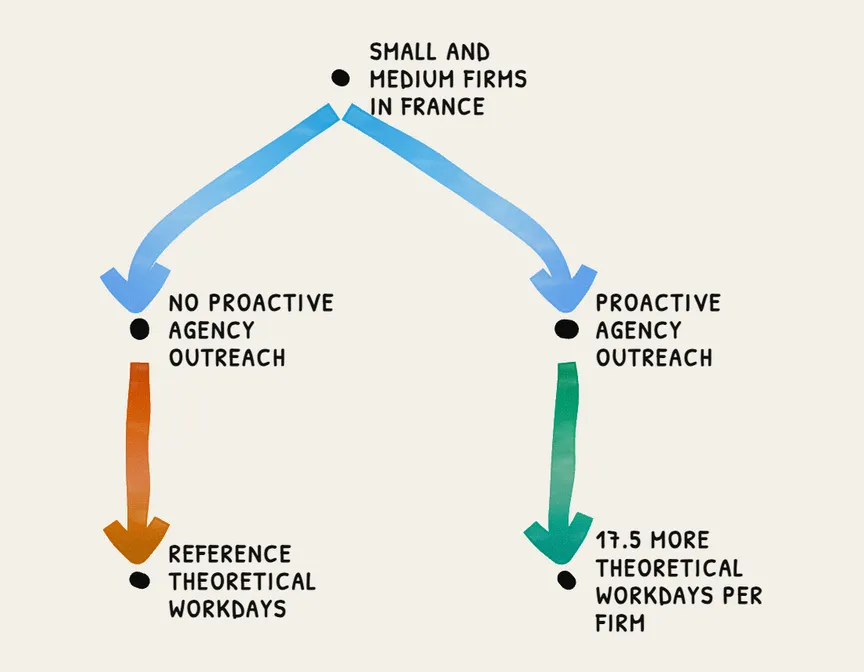
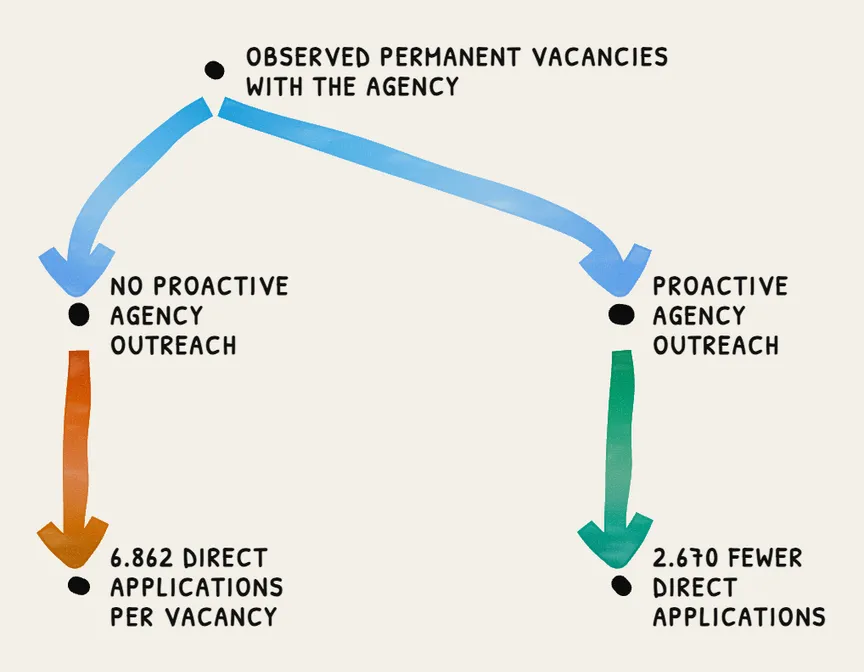
Implement active platform outreach and default opt-in application policies across public employment services to correct systematic under-searching without fear of depressing match returns.
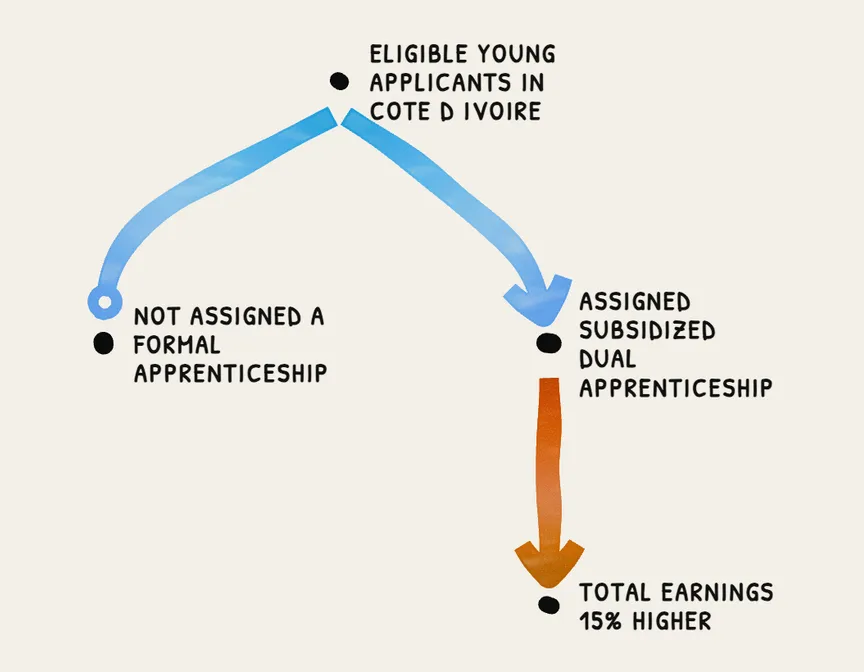
Combine direct monthly stipends to trainees with formal theoretical instruction and standardized skill certification to overcome capital constraints and firm commitment failures.
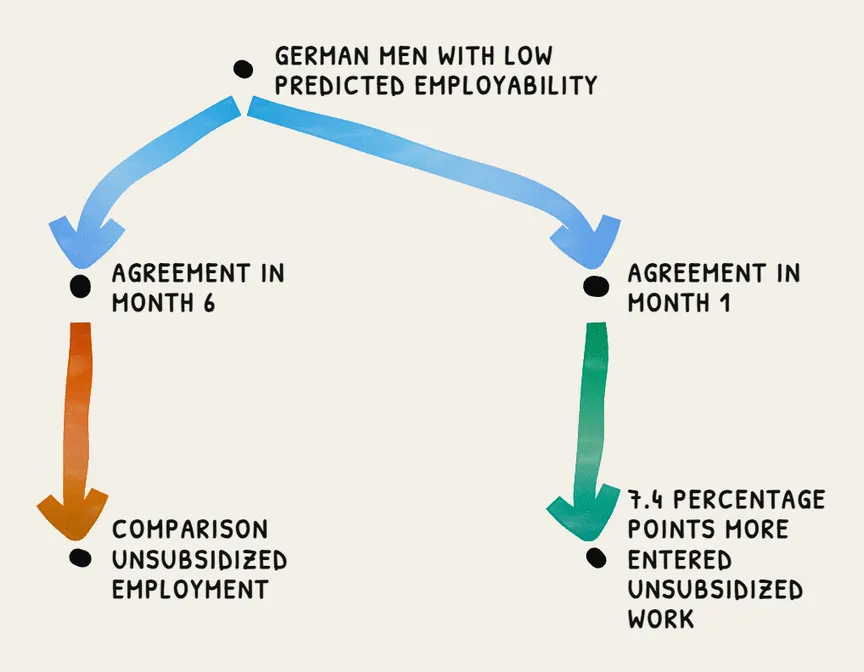
Include subsidized job placements and targeted entrepreneurship grants in early integration agreements for low-employability job seekers to jumpstart re-entry into active work.
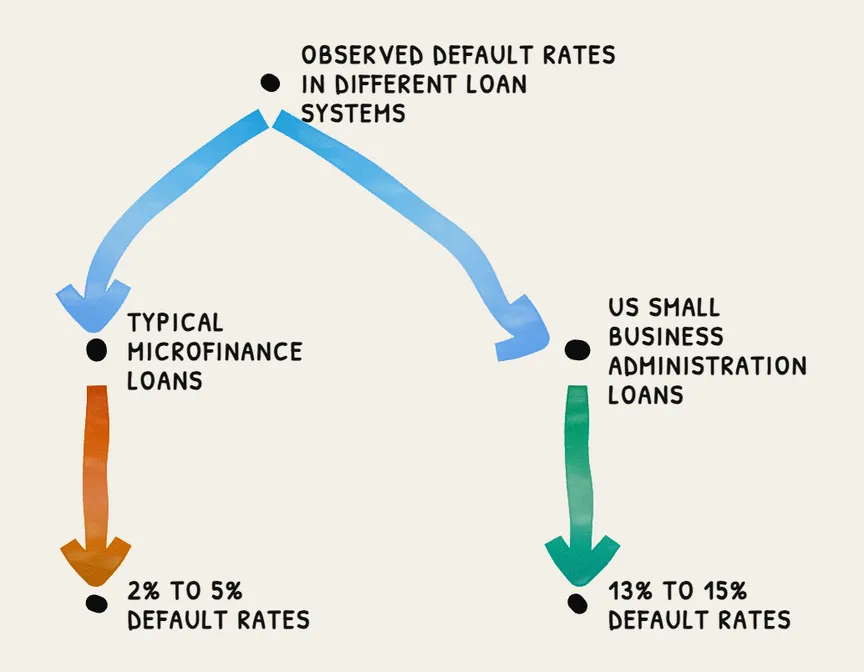
Implement government credit guarantees for small business lenders to absorb default risk premiums and unlock flexible loan terms for high-growth micro-entrepreneurs.
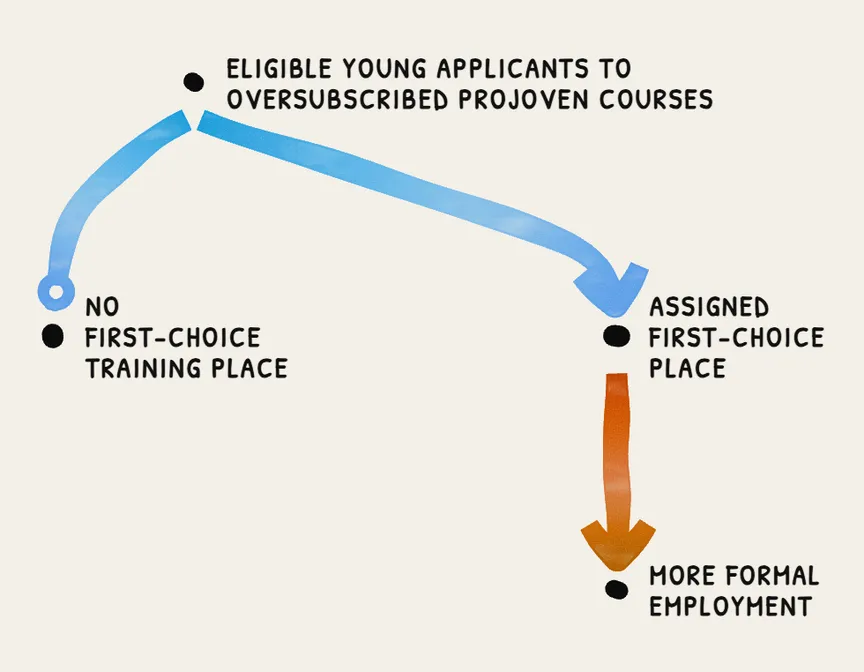
Implement subsidized technical and vocational training curricula aligned directly with high-demand formal sector occupations.
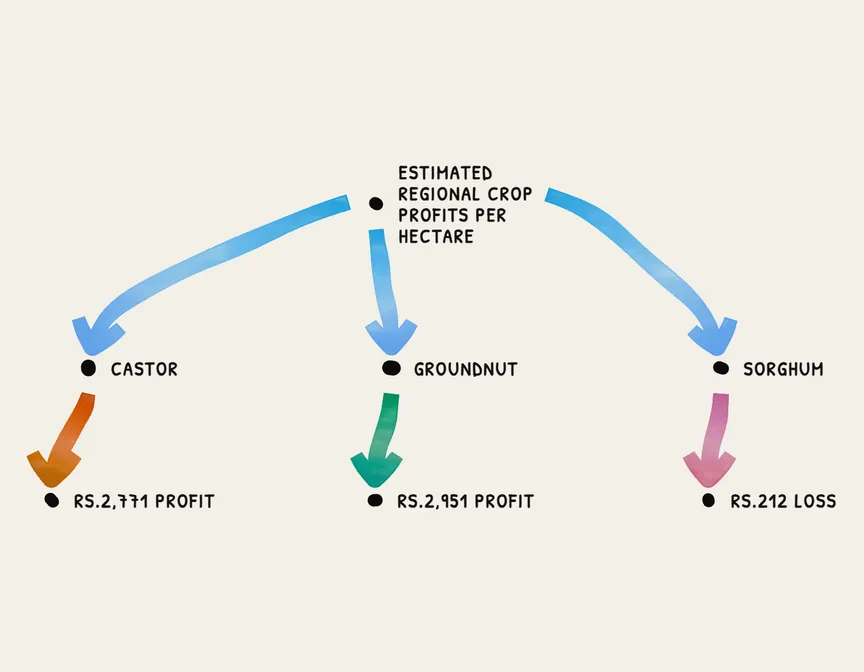
Establish targeted rainfall index insurance to buffer weather shocks, enabling farmers to transition away from loss-making subsistence crops to high-return cash crops.
Mandate direct supervisors to conduct mid-week 5-minute performance check-ins using visual progress tracking reports to remind employees of short-term weekly milestones.
Design workforce productivity scoring metrics that incorporate supervisor assistance frequency and error correction attempts alongside completion speed to capture the true operational cost of a worker.
Incorporate supervisor error-correction frequency and time-to-completion into performance metrics rather than relying exclusively on total output volume.
Administer conceptual and open-ended supplemental assessments to verify that value-added achievement gains reflect transferable higher-order problem-solving skills rather than narrow test-preparation effects.
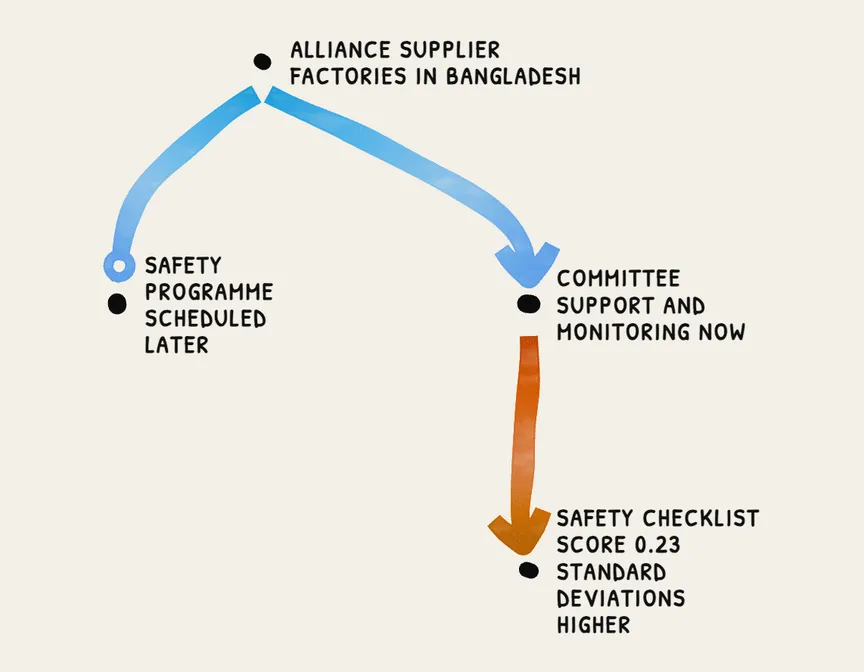
Mandate the formation of joint worker-management Occupational Safety and Health (OSH) committees paired with required third-party compliance audits across supplier factories.
Guarantee long-term voucher program funding commitments to incentivize private market entry and expand school supply capacity.
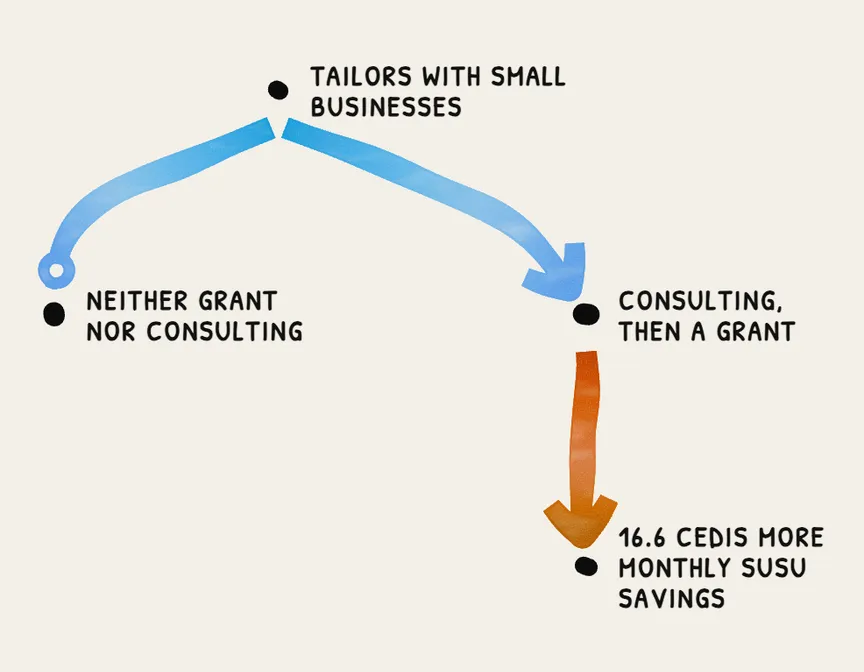
Pair liquidity grants with structured daily micro-savings collection mechanisms and advisory goal-setting to help entrepreneurs accumulate asset reserves.
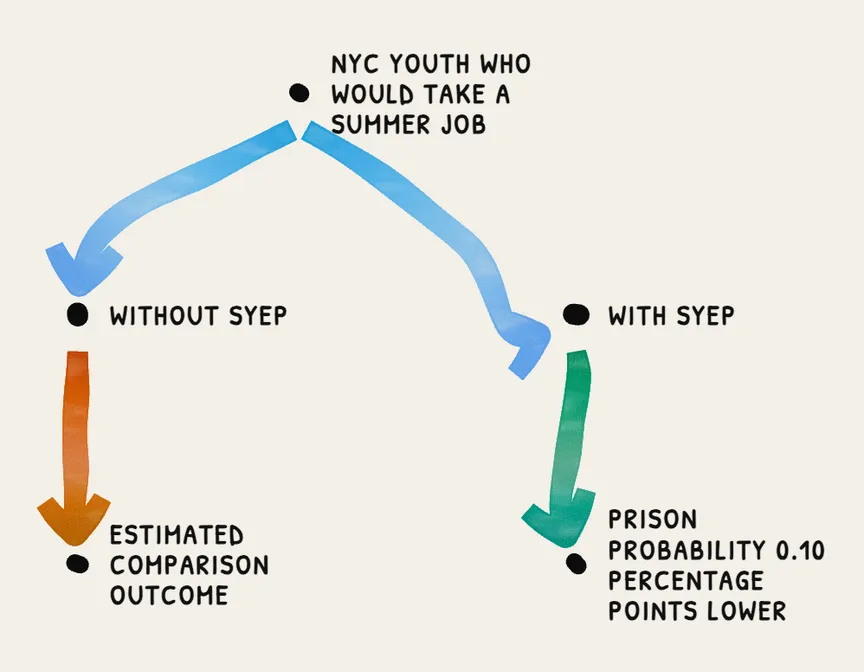
Implement large-scale lottery-allocated summer youth jobs programs to reduce long-term mortality and incarceration among economically disadvantaged teenagers.
Implement a multi-tiered random sampling audit system with escalation triggers to deter employee gaming while maintaining decentralized grading efficiency.
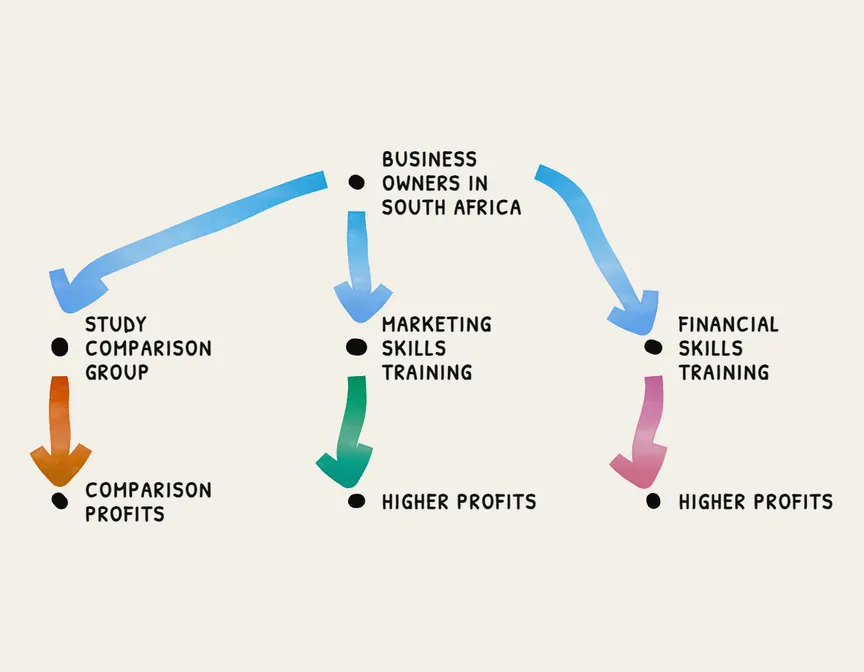
Assess firm maturity and prior owner experience prior to course enrollment to direct novice owners into marketing-focused tracks and established owners into finance-focused tracks.
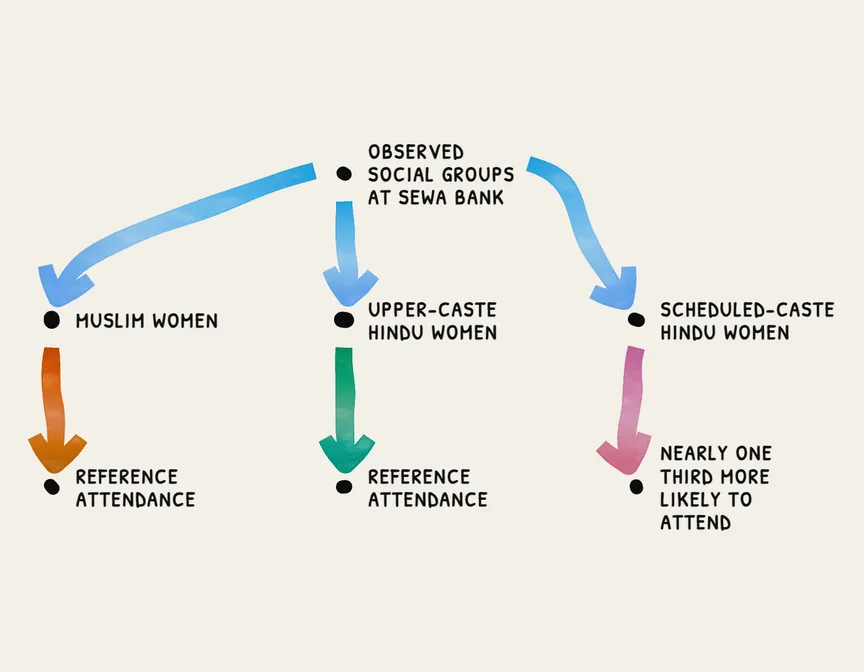
Incorporate session-clustered instrumental variable specifications and non-monetary attendance support when evaluating interventions in communities with heterogeneous social mobility barriers.
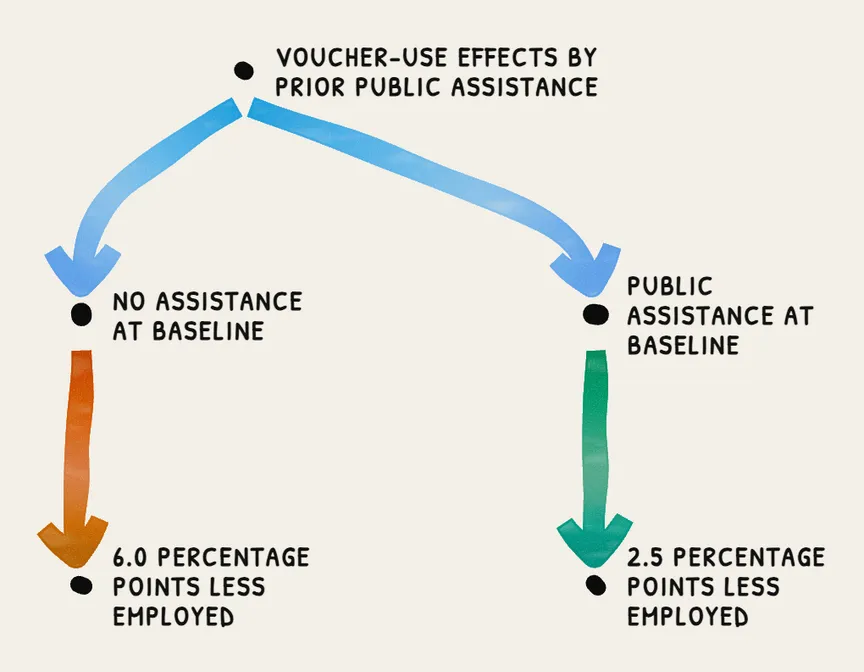
Account for overlapping welfare program phase-outs when calculating effective marginal tax rates to accurately predict behavioral responses to new housing subsidies.
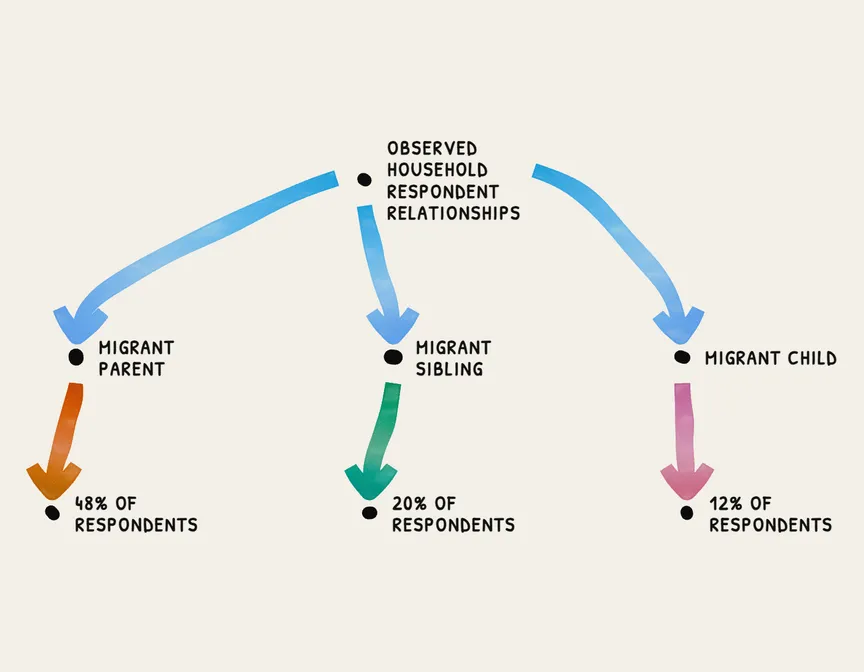
Use conditional prize nomination protocols during baseline migrant surveys to objectively pinpoint primary recipient households for downstream evaluation.
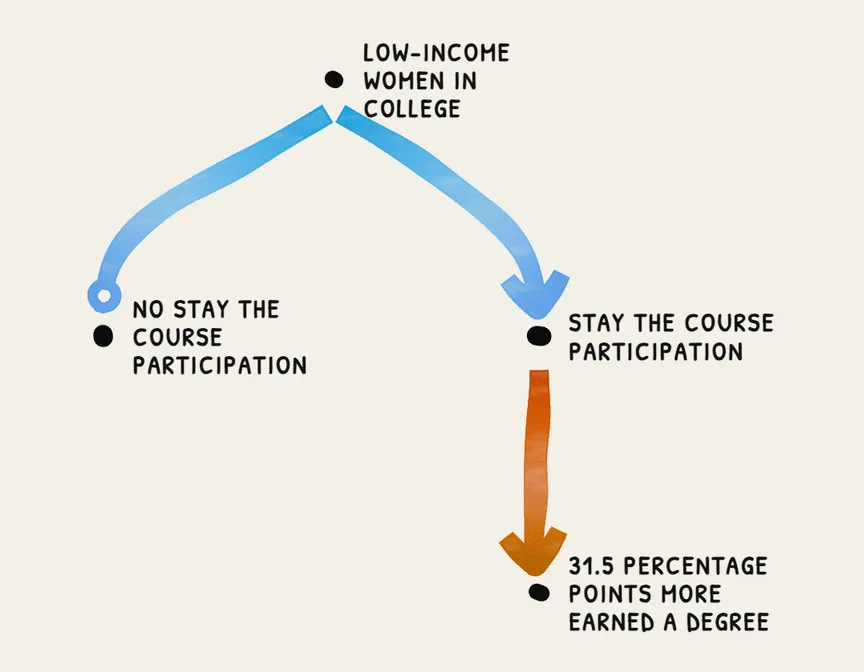
Enforce a 30-credit upper limit during recruitment to focus intensive case management resources on students who remain at high risk of dropping out.
Evaluate liquidity constraint interventions by distinguishing initial asset acquisition spurts from self-sustaining long-term investment flows funded by business earnings.
Restrict high-value formalization subsidies and business development grants to informal firms meeting baseline revenue, worker headcount, or banking asset thresholds.
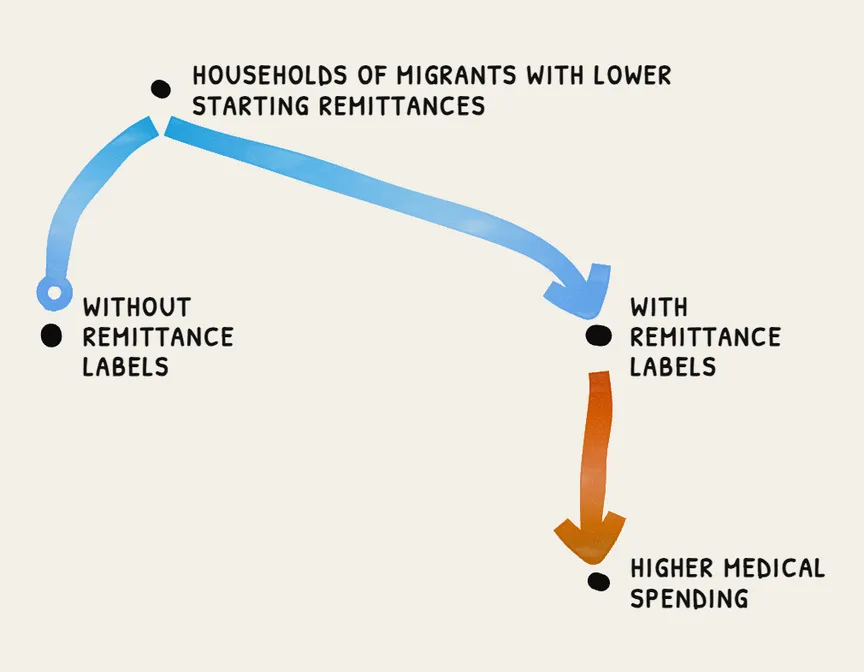
Direct soft remittance labeling towards health and medical spending categories when working with low-baseline remitting migrant populations.
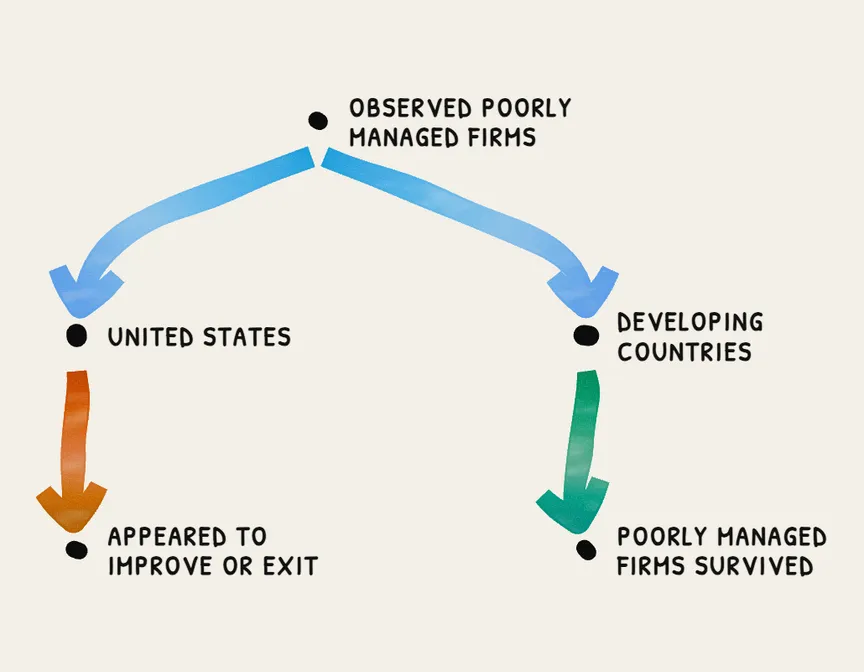
Lower import barriers and non-tariff trade restrictions to foster competitive pressures that encourage firms to upgrade operational practices.
Adjust worker productivity evaluations by controlling for task-level Standard Allowable Minutes (SAM) to isolate true efficiency gains from task complexity reassignments.
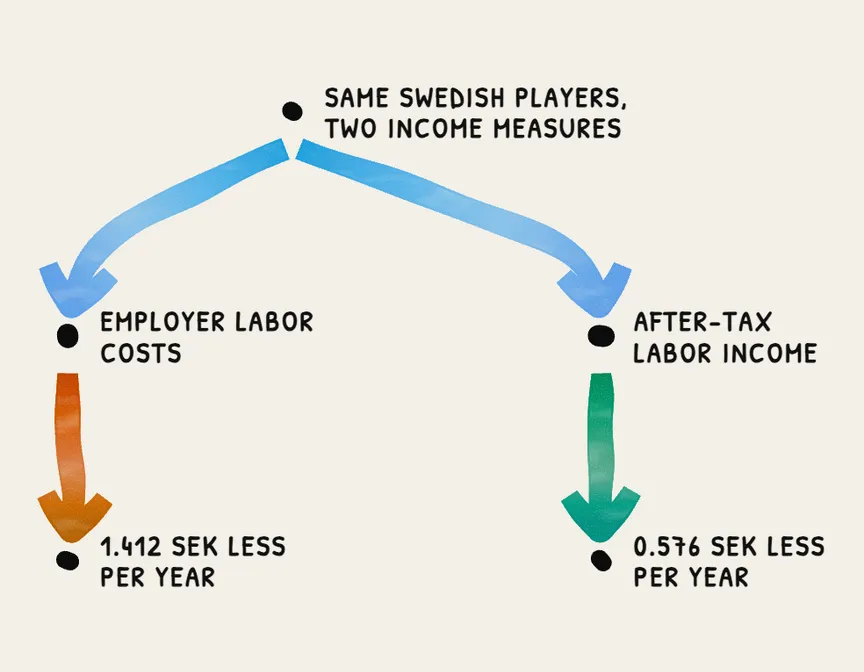
Model the fiscal footprint of unearned wealth transfers by accounting for employer payroll tax cushions that cause gross economic production losses to exceed individual disposable income losses by over two to one.
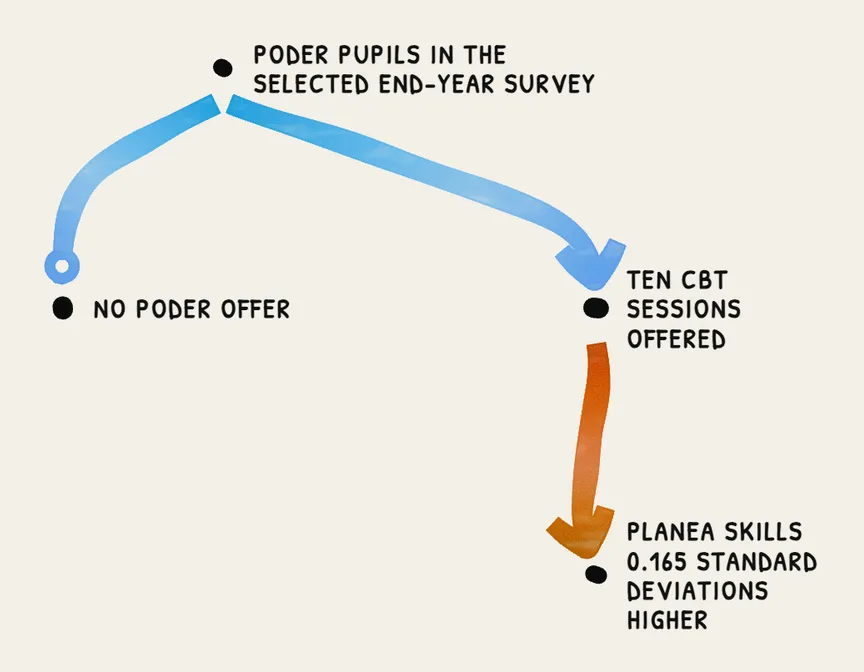
Train existing teaching staff in standardized cognitive behavioral therapy modules and student engagement techniques to deploy scalable socio-emotional workshops across public school networks.
Direct public education investments toward high-skill human capital and structural classroom organization rather than easily substitutable consumer materials.
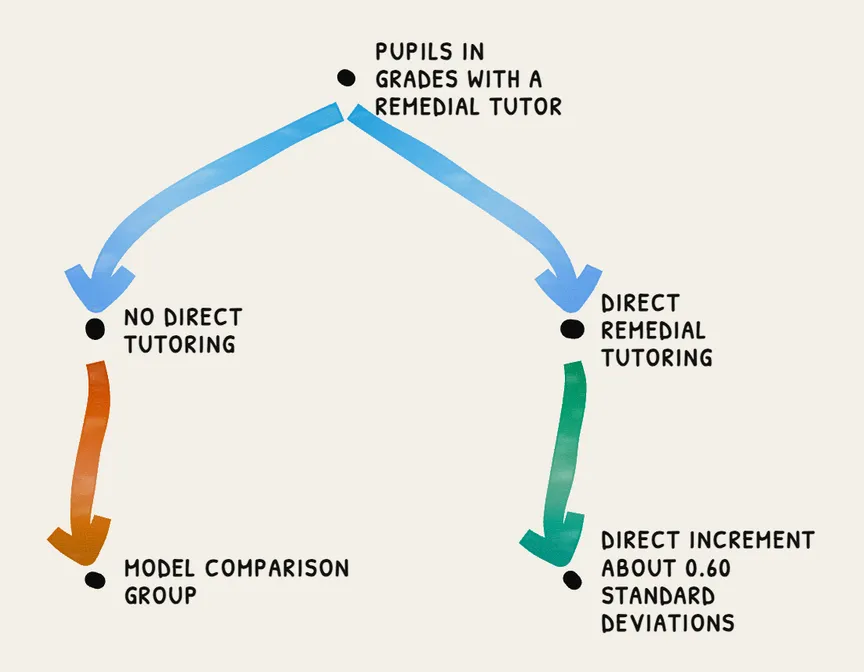
Recruit local educational aides or paraprofessionals who share community and social backgrounds with students to eliminate social distance in foundational learning.
Establish robust operational monitoring and preventive maintenance protocols prior to investing in advanced manufacturing equipment to protect capital expenditure returns.
Set the mixing parameter gamma in a multi-armed bandit algorithm to enforce a lower bound gamma/k on assignment probabilities for all k treatment arms to balance participant welfare and frequentist inference bounds.
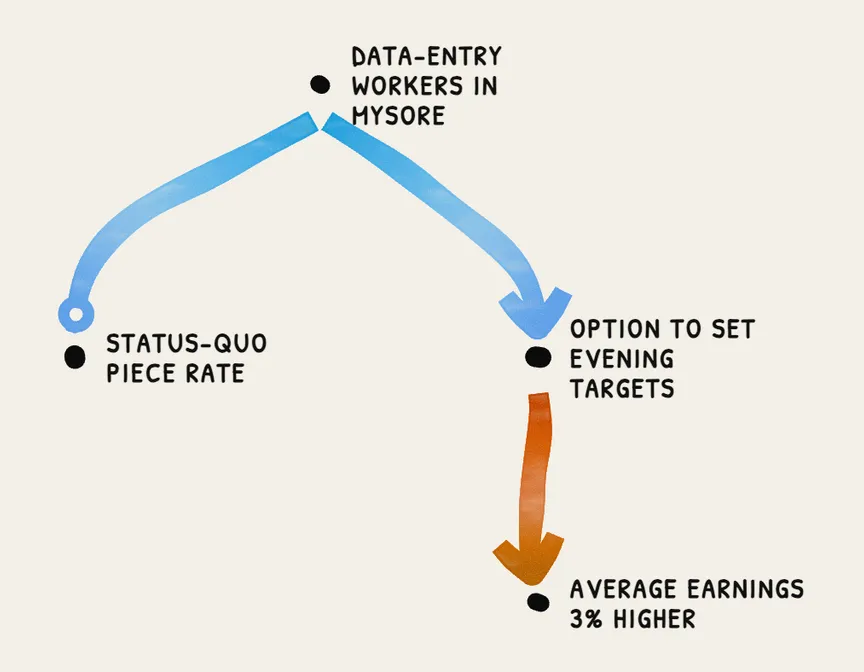
Require workers to select and lock in their daily production targets at the end of the preceding workday rather than at the beginning of the morning shift.
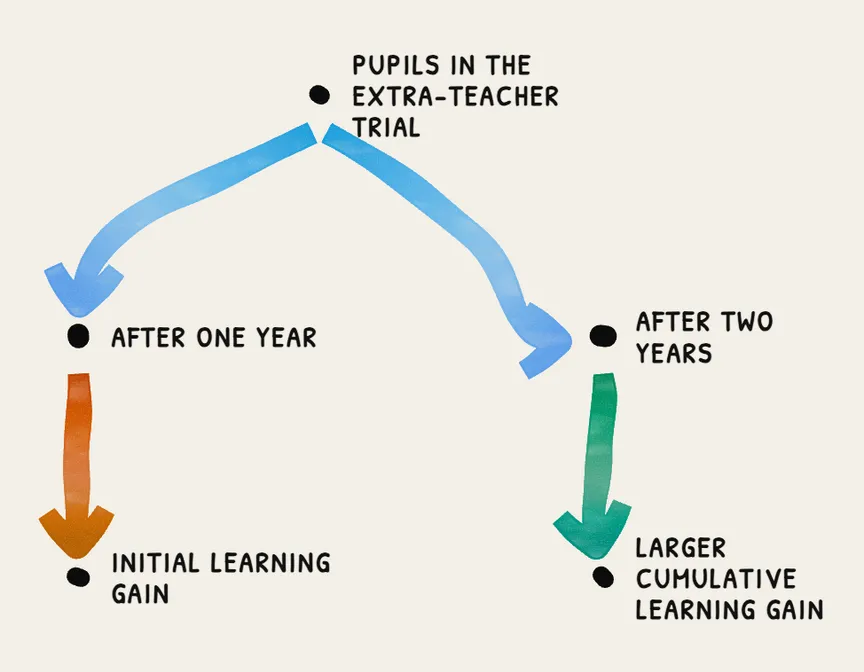
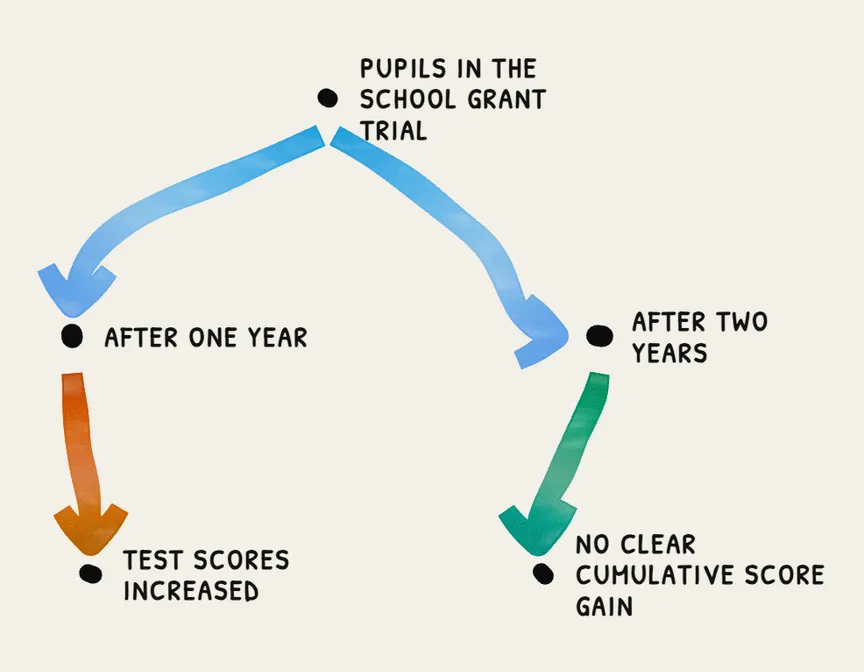
Account for empirical decay rates when modeling multi-year returns on educational investments to avoid overestimating long-term impact from short-term baseline gains.
Convert disparate contract hiring flows into standardized cumulative workday metrics before evaluating the aggregate impact of employment interventions.
Reduce import tariffs and trade barriers to expose domestic manufacturing sectors to international product market competition.
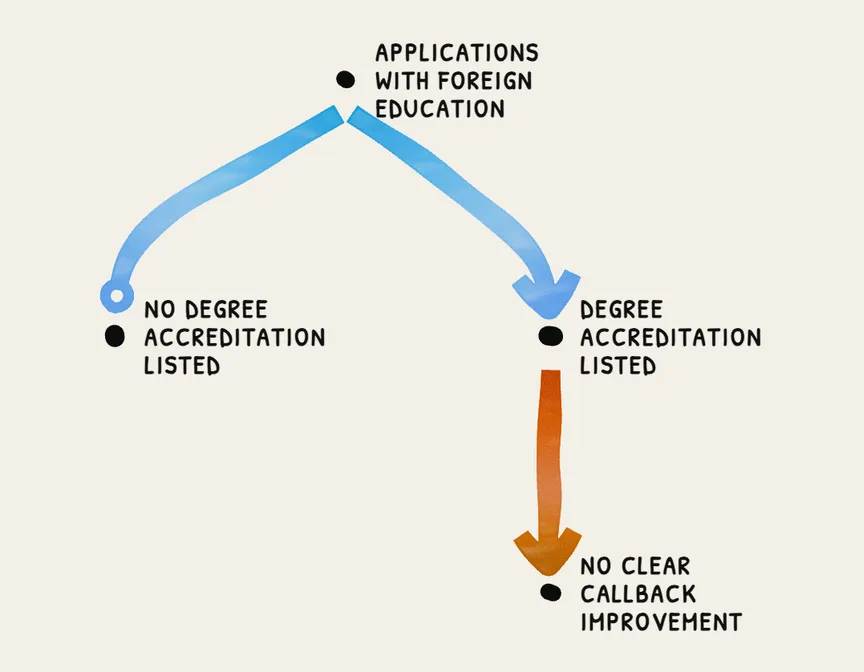
Policy makers should reallocate public funding from formal foreign credential evaluation agencies toward direct local workplace bridge programs that provide newcomers with verifiable host-country experience.
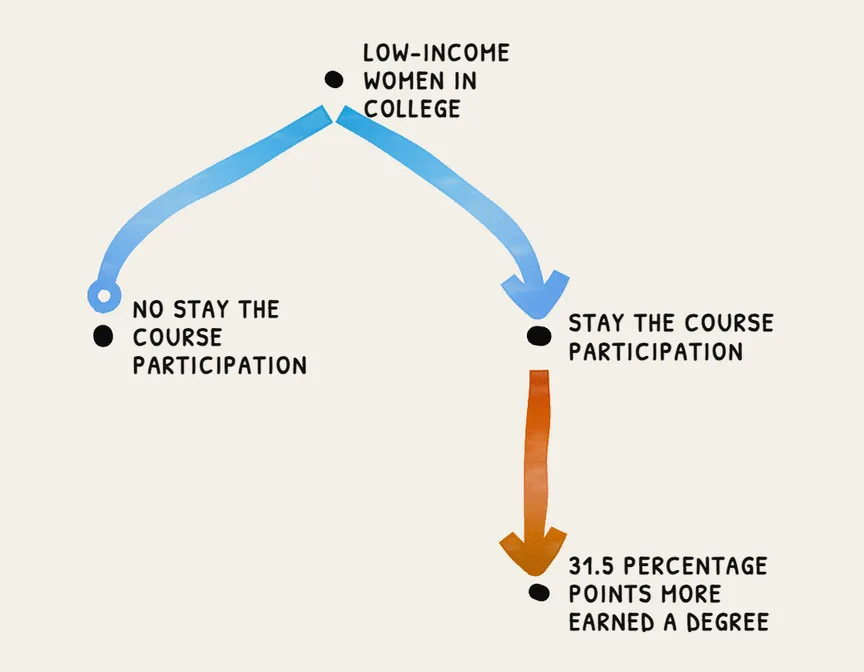
Establish formal institutional partnerships with external social service non-profits to embed certified social workers directly on college campuses for student support.
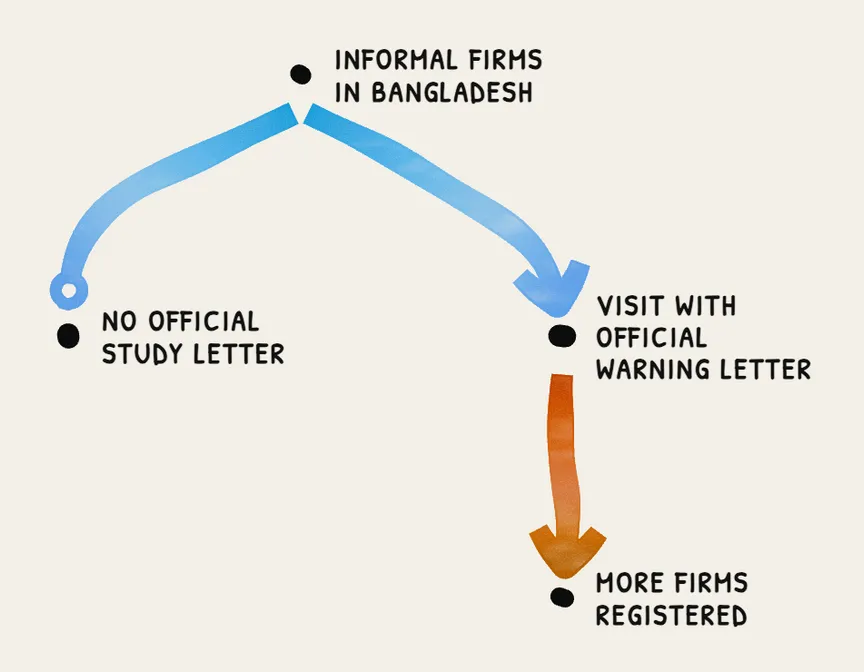
Issue official, targeted written notifications to unregistered enterprises explicitly outlining legal registration mandates and non-compliance penalties.
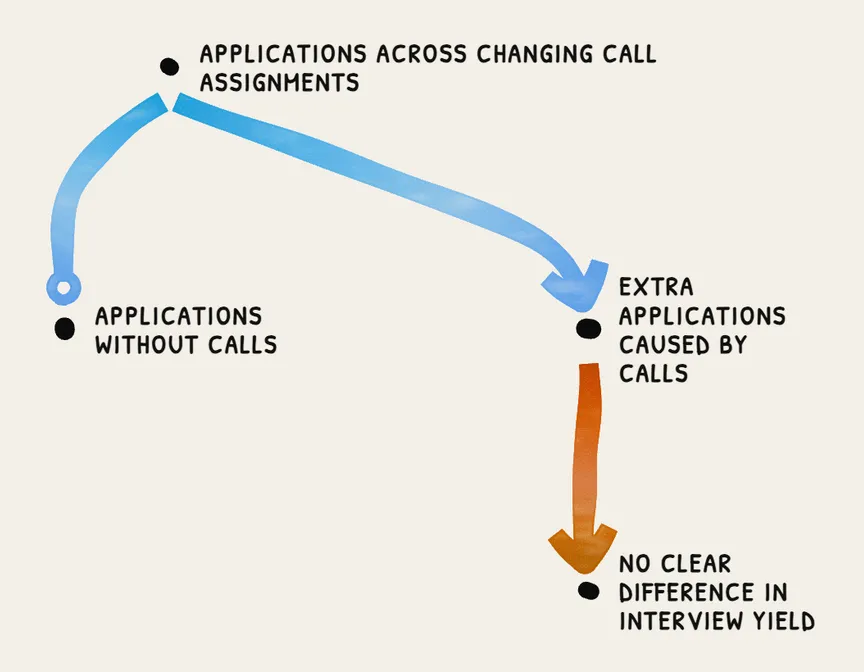
Track applicant generation separately across caseworker-initiated, employer-initiated, and jobseeker-initiated channels to isolate search effort substitution.
Structure platform notifications to provide immediate, one-click execution channels timed during moments of low cognitive burden or immediately preceding hard deadlines.
Calibrate macroeconomic search and matching models by setting the opportunity cost parameter $z$ to 0.72 for unemployed workers when factoring in fixed employment costs and taxes.
Structure promotion tournaments with intermediate progression tiers or targeted incentives for workers outside immediate promotion eligibility windows to maintain broad-based workforce effort.
Page 21 of 23
Previous
1
…
20
21
22
23
Next