Skip to the methods
Menu
aikyam
school
Findings
Methods
Subjects
All cards
Read
Findings
Methods
Subjects
All cards
Methods
2,124 methods
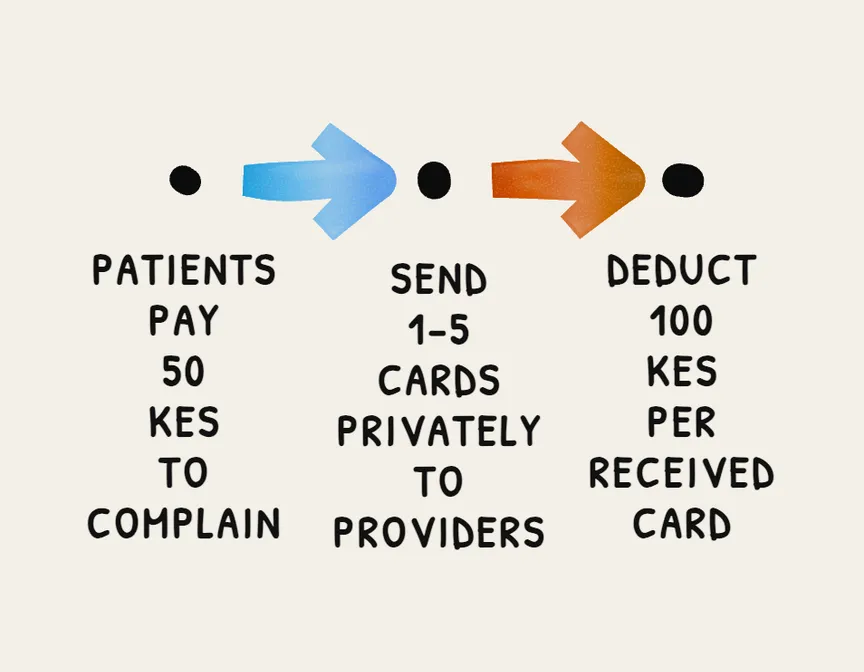
Direct financial deductions increase the material cost of underperformance for service providers.
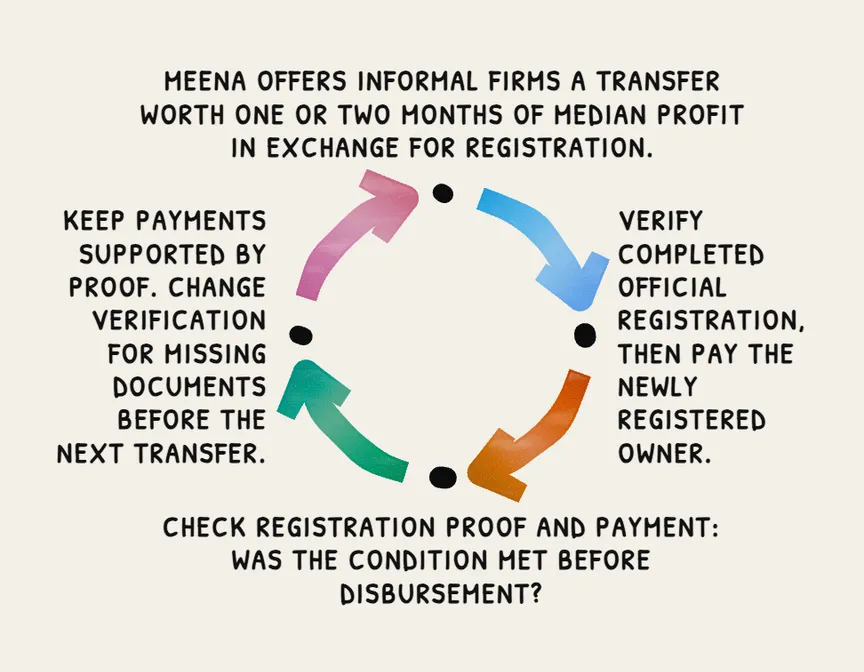
Direct financial compensation directly offsets the immediate upfront costs and uncertainty associated with entering the formal system.
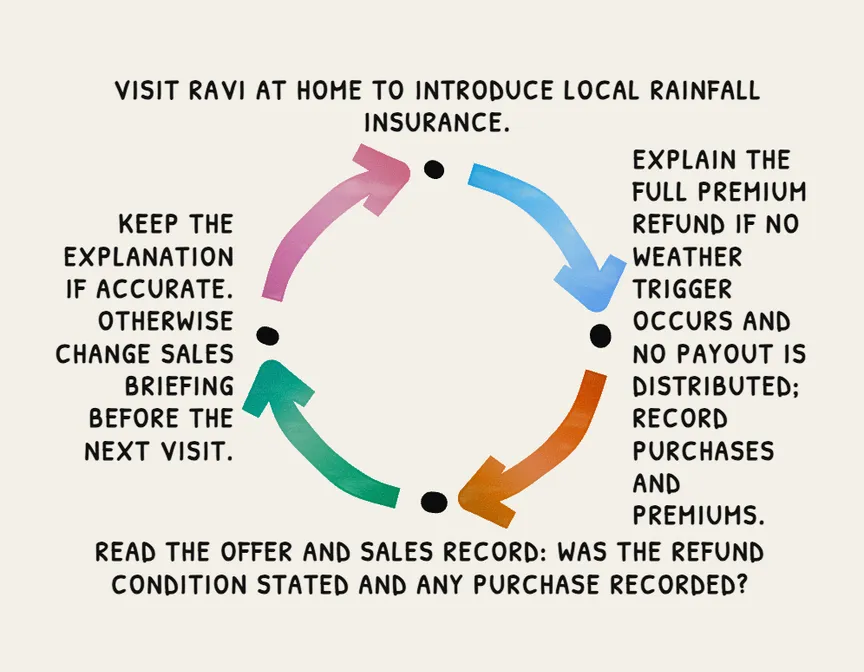
A money-back guarantee mitigates loss aversion by reassuring farmers that their premium money is not lost if adverse weather fails to materialize.
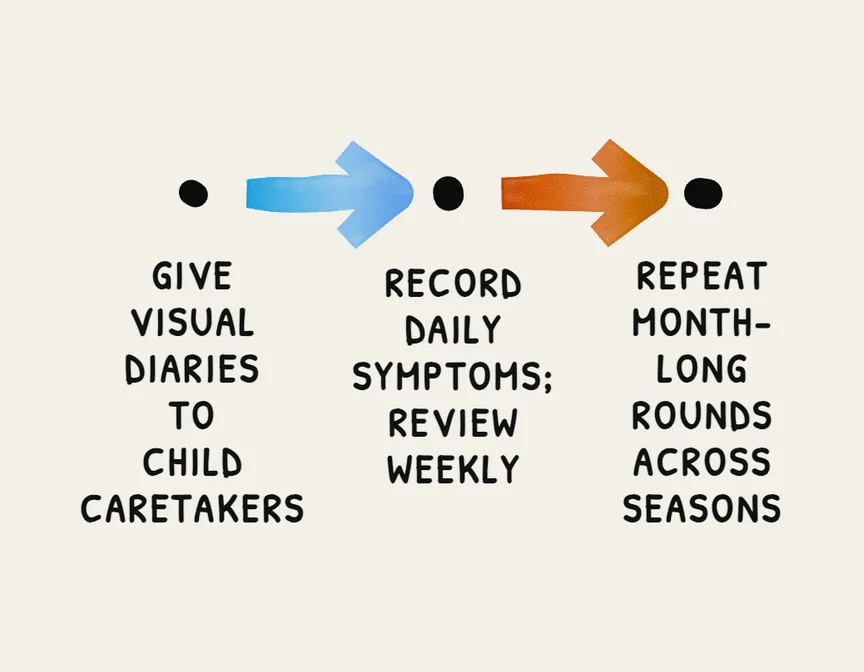
Daily caretakers can accurately log health symptoms in real time when provided with simple visual tools, avoiding recall decay over multi-month survey intervals.
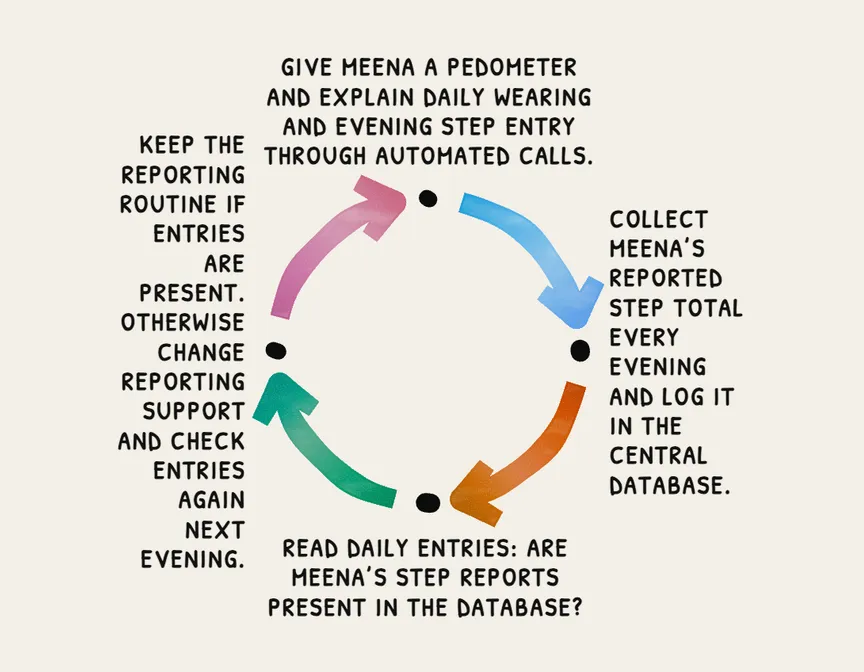
Automated calls establish a daily routine for participants to review and report their physical activity.
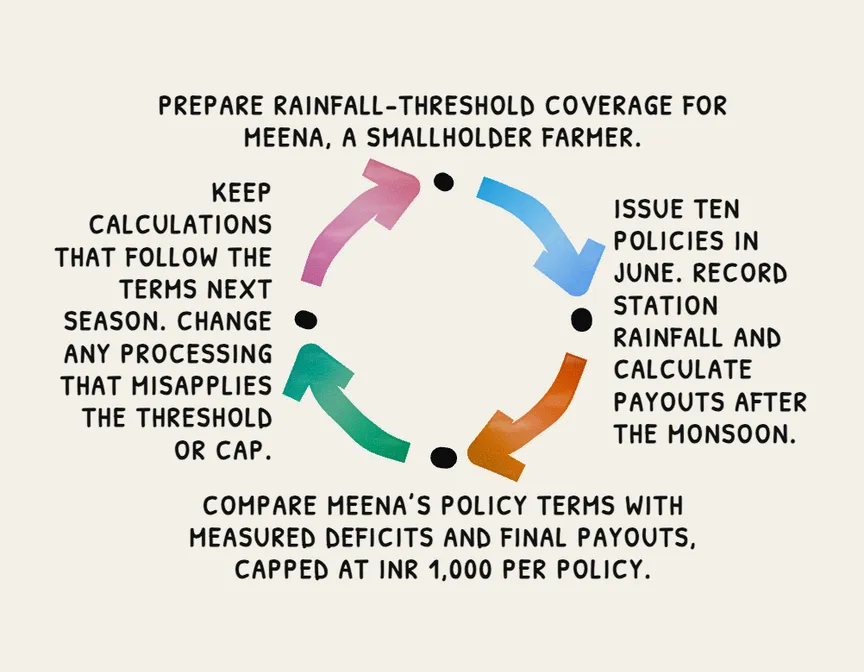
Index insurance protects farmers against disastrous weather losses without needing individual damage appraisals.
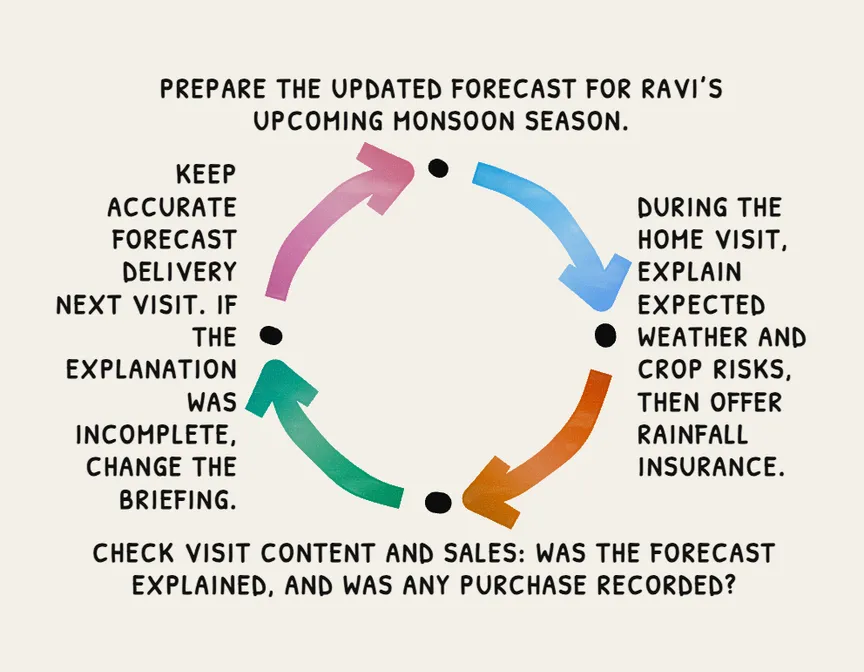
Providing weather predictions aims to lower informational uncertainty about monsoon quality, helping farmers recognize potential weather risks.
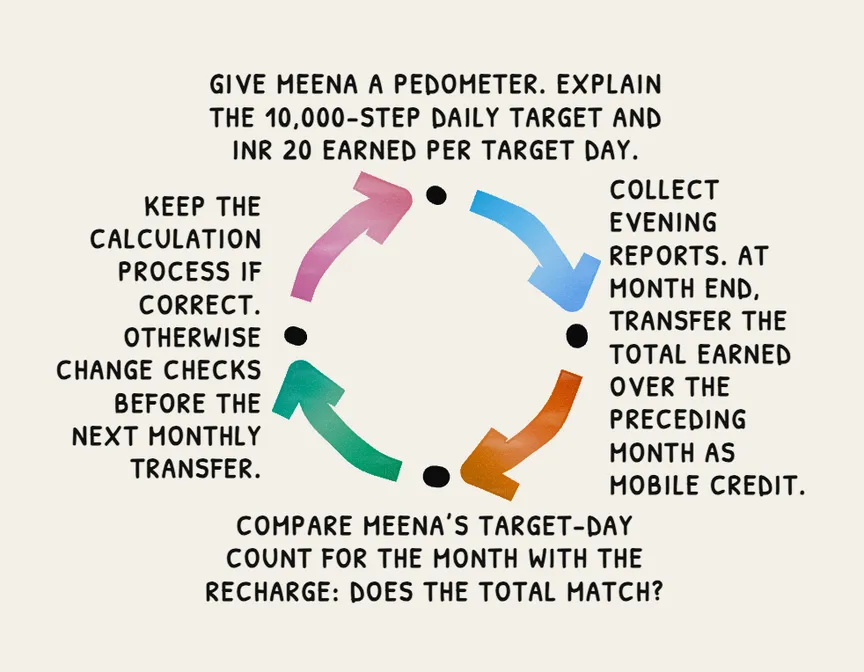
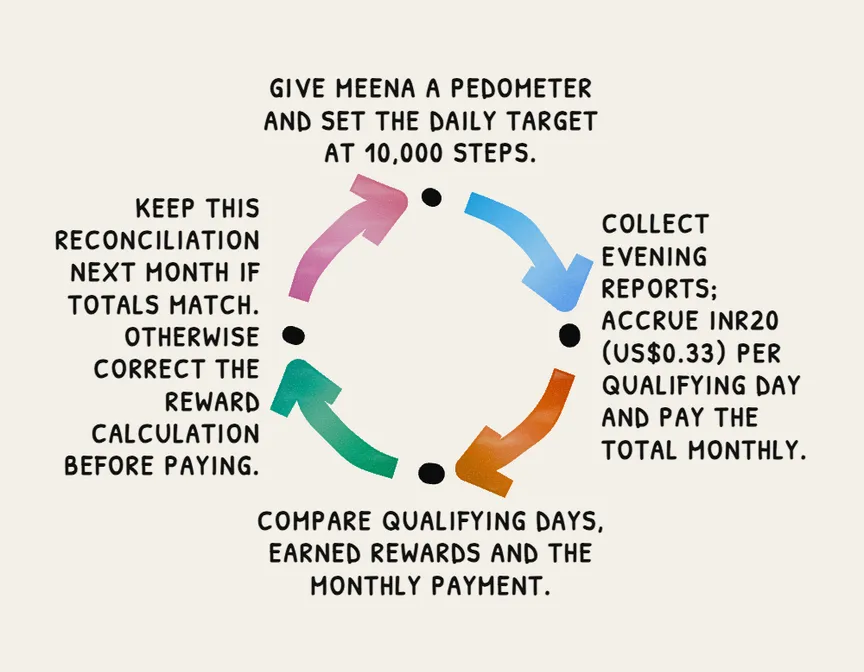
Monthly payment structures test whether accumulating daily earnings into a larger lump sum maintains motivation while reducing transfer frequency.
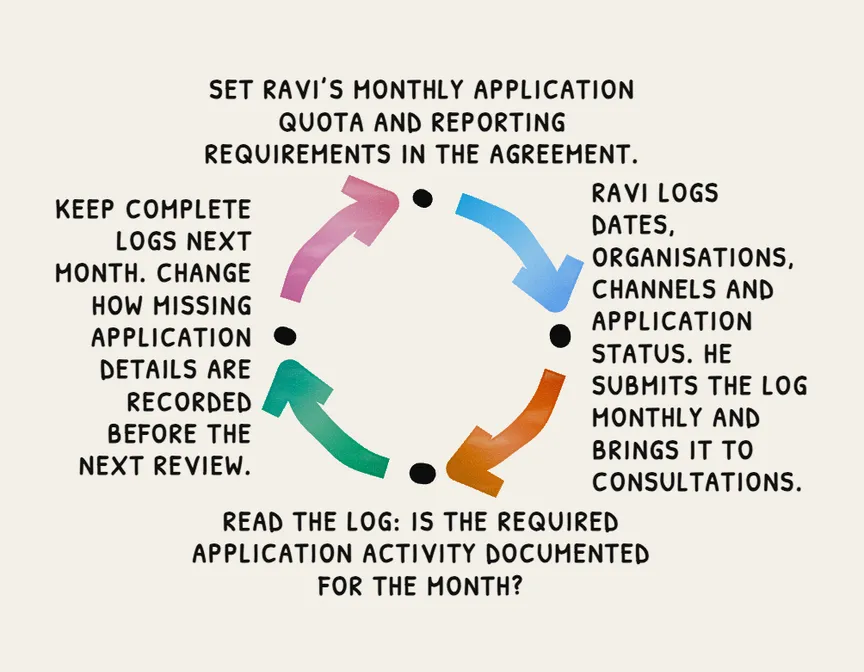
Logging applications creates a tangible monitoring trail that reinforces search discipline and reminds job seekers of statutory rules.
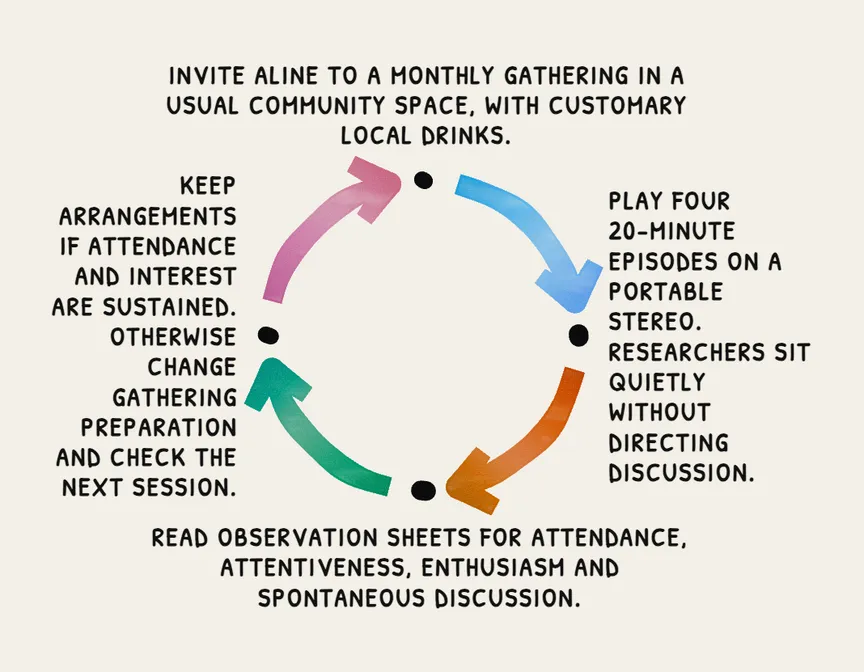
Group listening creates common knowledge and triggers horizontal peer discussions after broadcasts end.
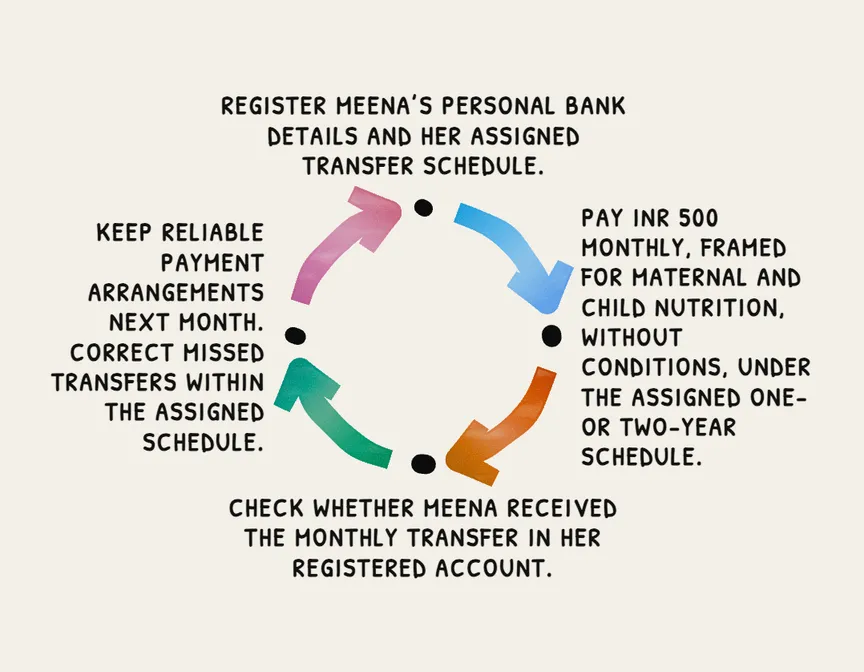
Direct bank transfers deliver funds straight to mothers without leakage or administrative delays from intermediate condition verification.
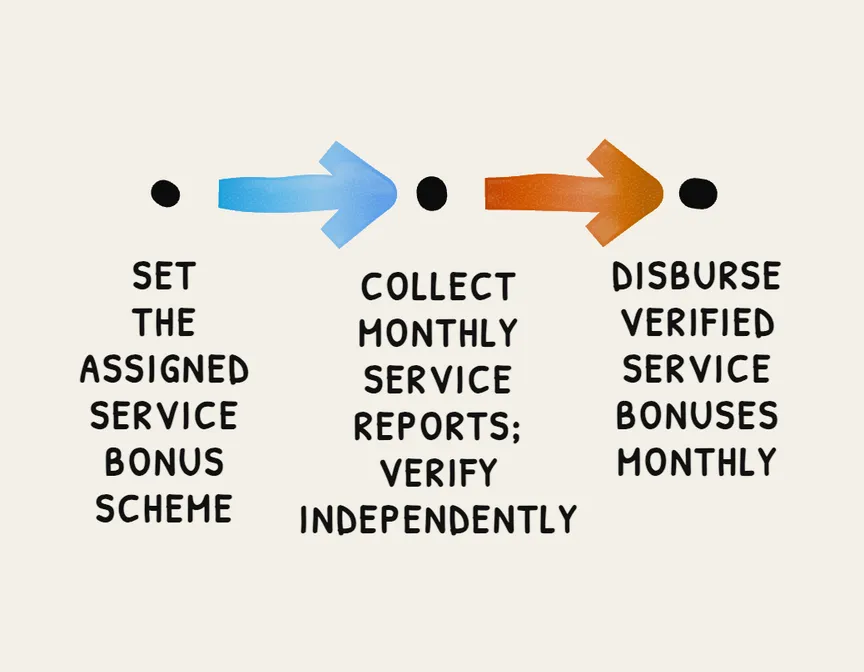
Monthly incentive disbursements reduce program administrative complexity and transaction costs while maintaining a predictable financial reward.
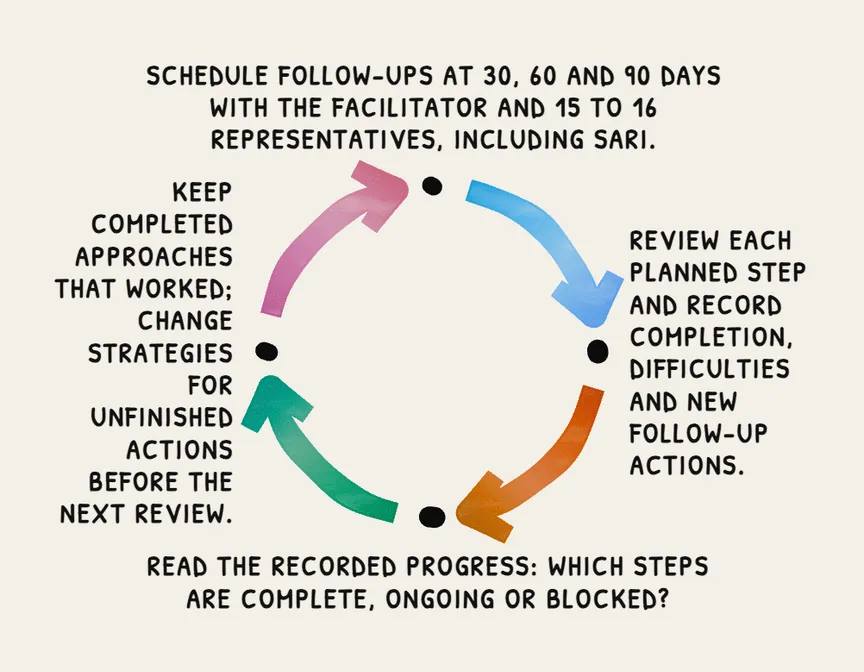
Regular follow-up sessions create ongoing mutual accountability among community representatives and provide a space to solve emerging implementation challenges.
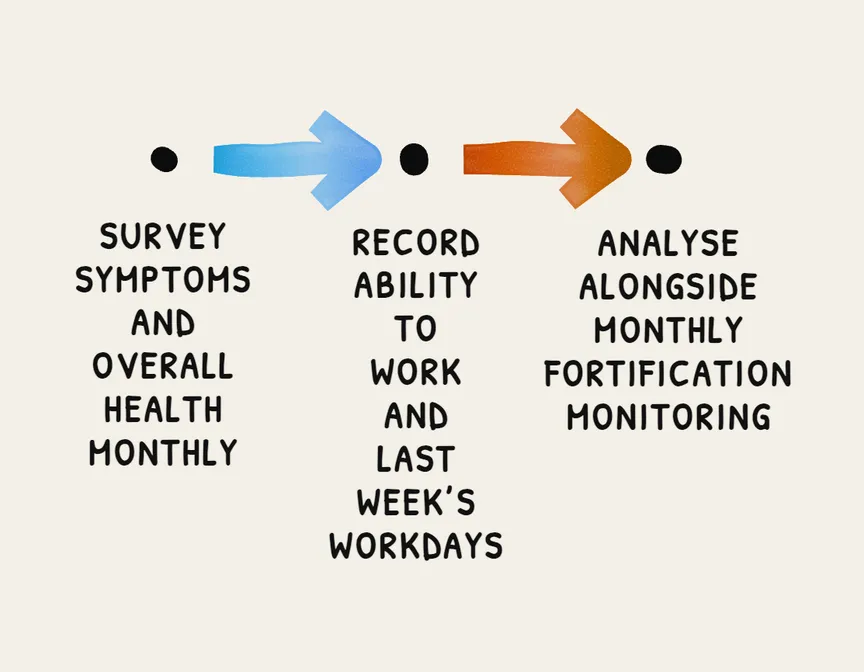
Frequent monthly monitoring captures real-time changes in physical health and work productivity alongside miller compliance.
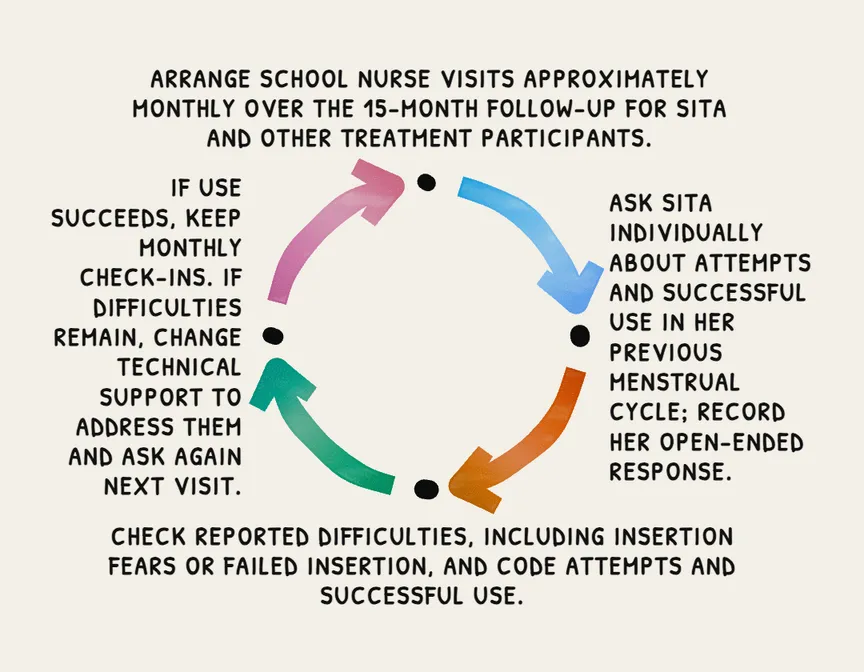
Regular nurse visits offer confidential opportunities for participants to report usage challenges and receive reassurance.
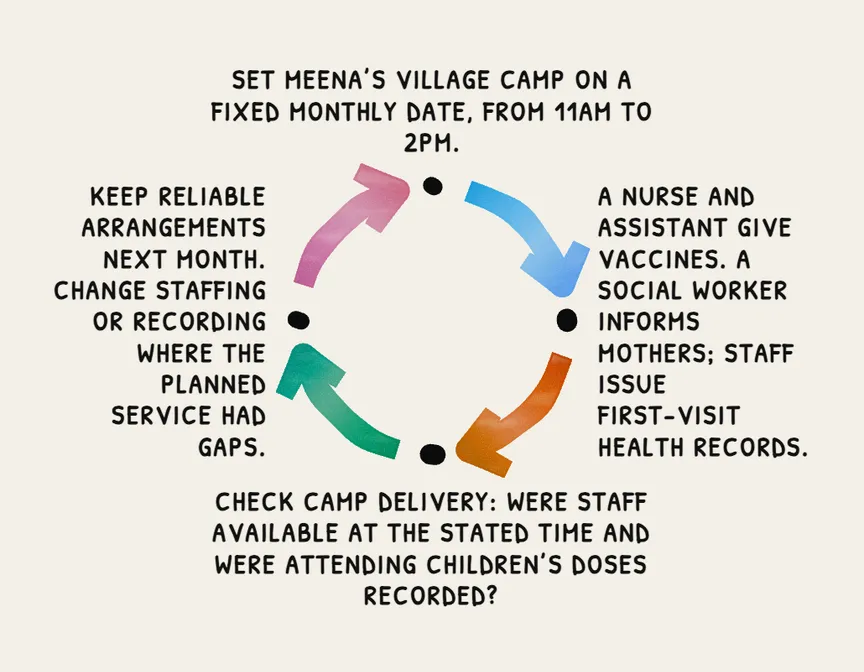
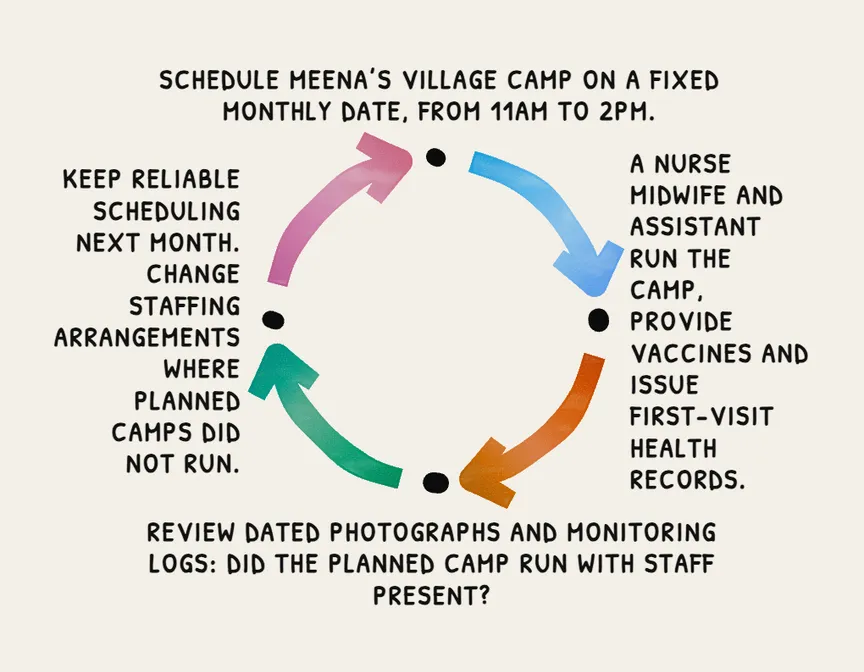
Replacing unpredictably closed health clinics with reliable village camps eliminates the risk of wasted travel time.
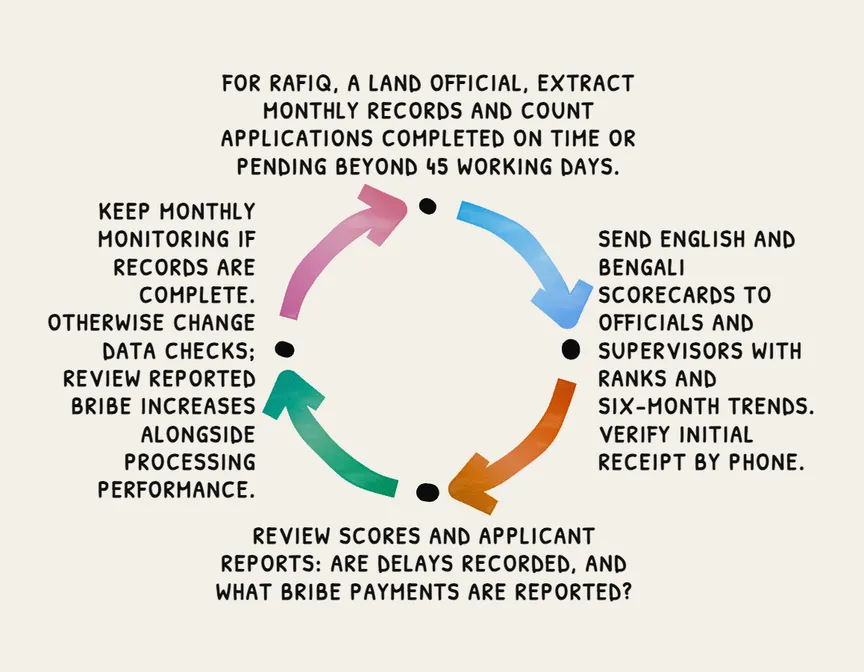
Regular performance feedback increases performance salience for bureaucrats, triggering intrinsic motivation or reputational concerns like pride and shame.
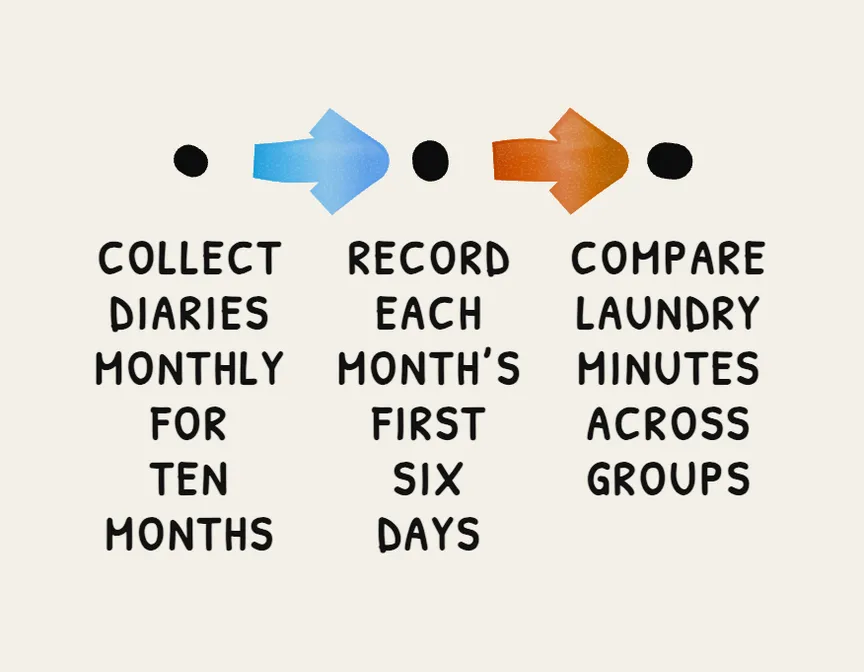
Time diaries capture concrete daily activities without directly prompting respondents about product usage.
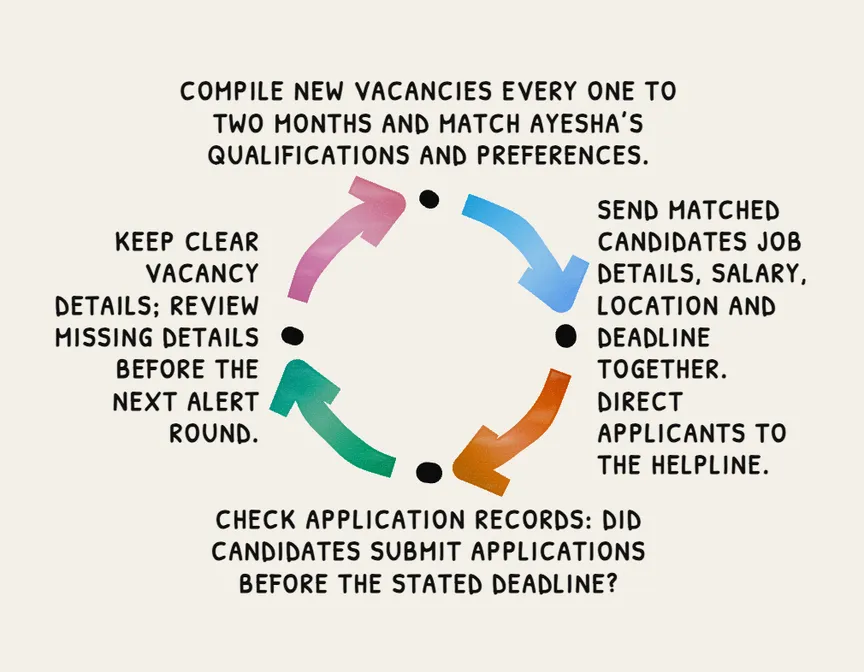
Batch text messages deliver zero-cost, actionable information directly to mobile phones, keeping jobseekers informed of new opportunities without requiring active web browsing or field search.
Holding clinics on predictable dates reduces the opportunity cost and effort required for parents to bring children for vaccination.
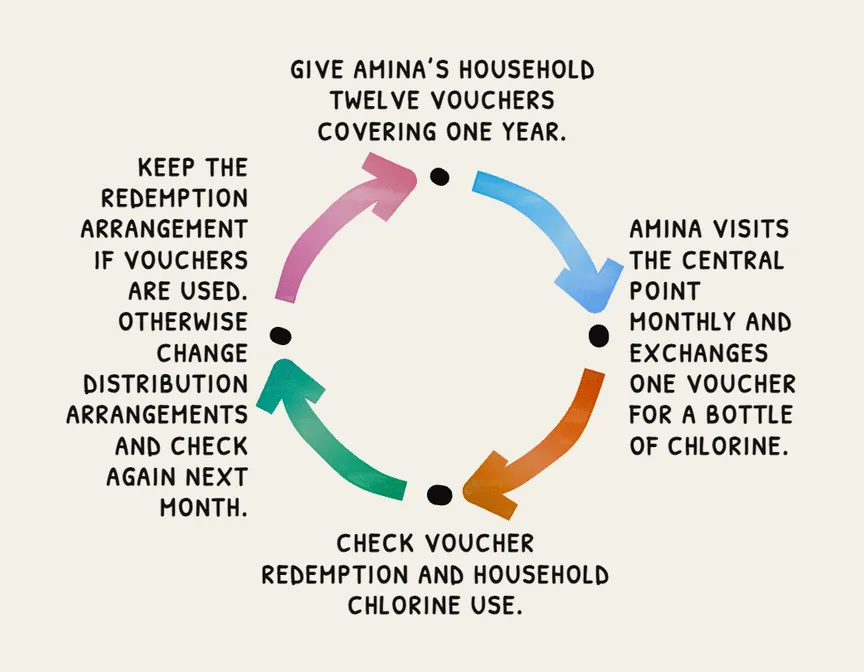
Requiring households to actively walk to a central location to redeem vouchers acts as a non-financial targeting mechanism.
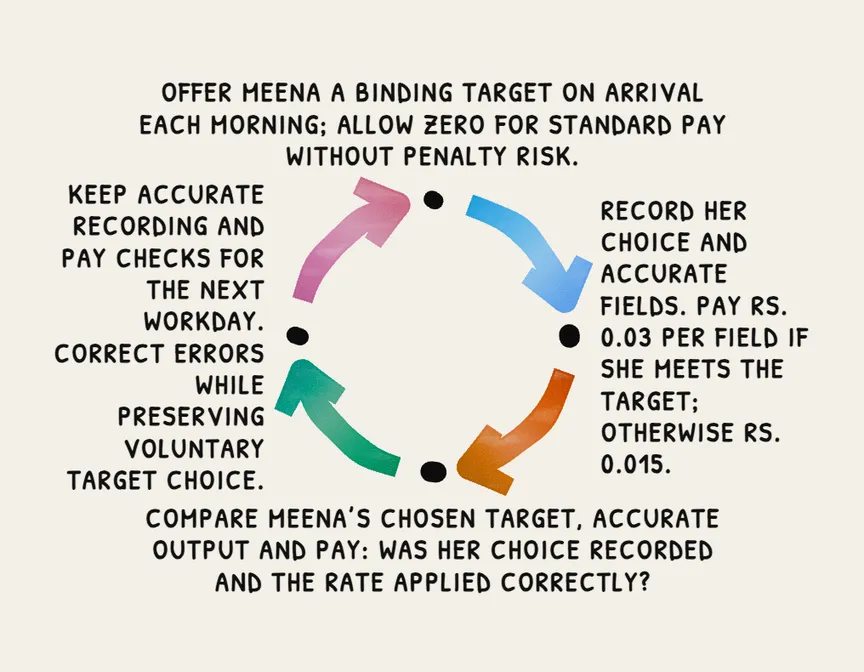
Voluntary target selection allows workers to use binding loss-aversion penalties to motivate themselves while tailoring goals to their daily capacity.
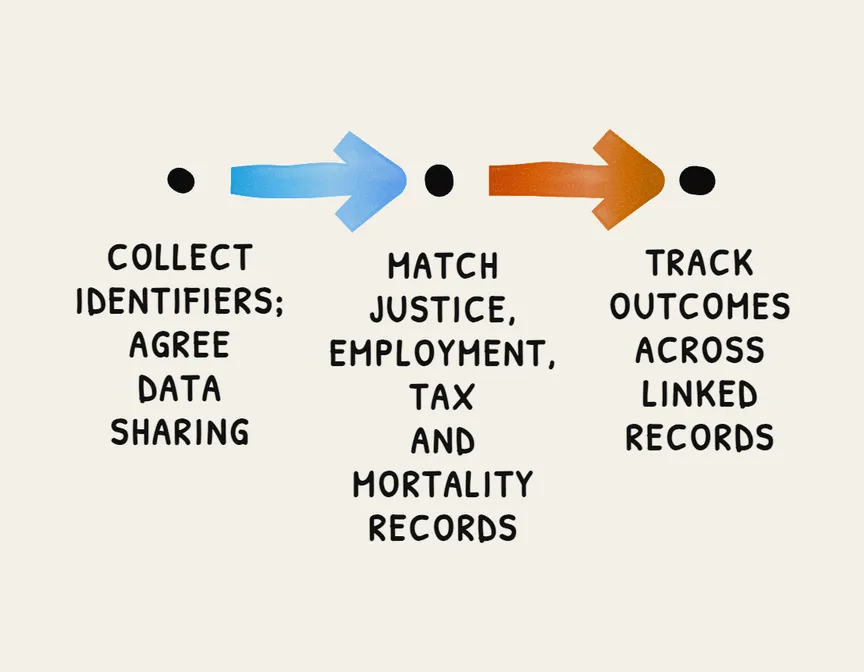
Administrative record matching eliminates survey non-response bias and costly loss to follow-up across long tracking windows.
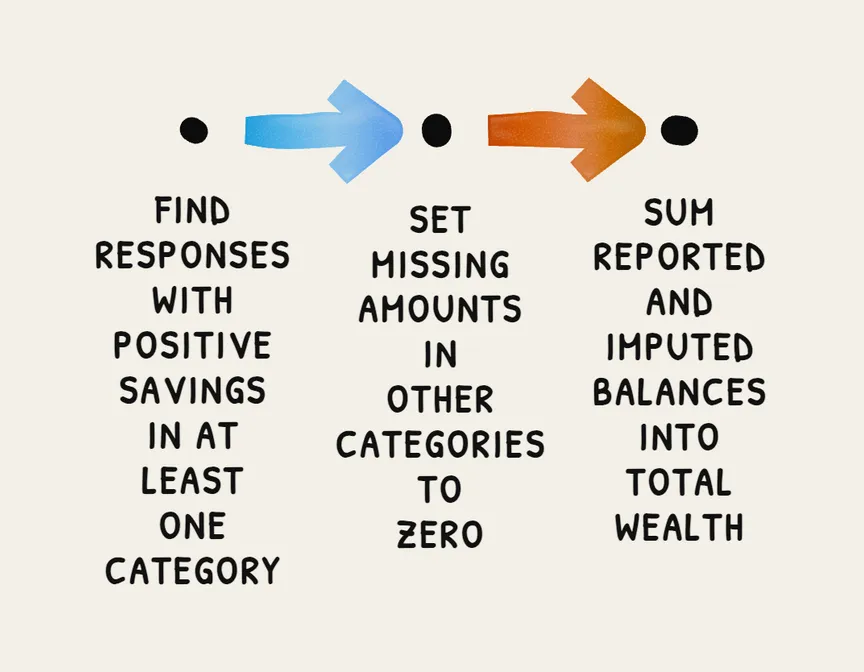
Imputing zeros for missing account categories prevents the unnecessary drop of valid partial responses.
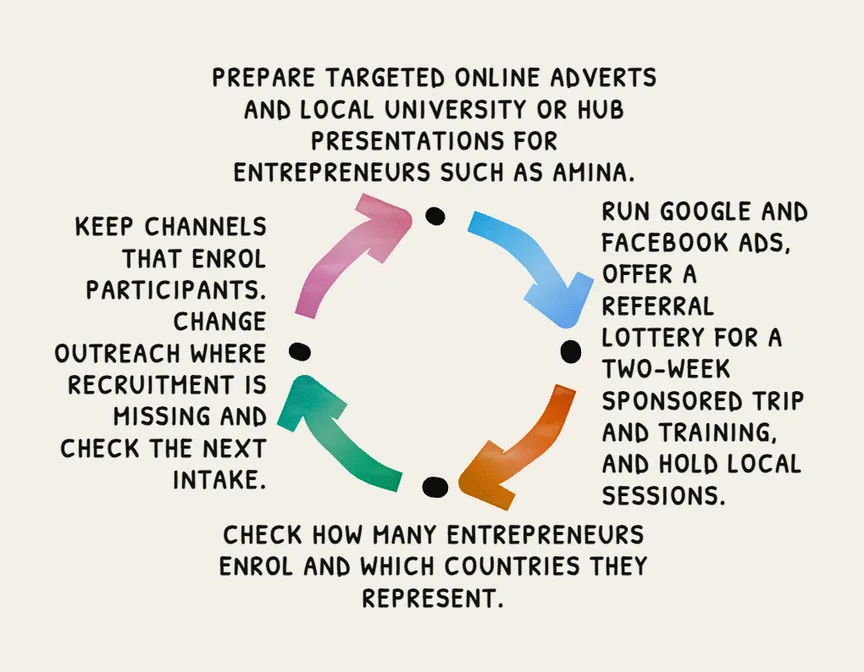
Combining digital reach with social incentives allows programs to rapidly scale across national borders while maintaining local trust.
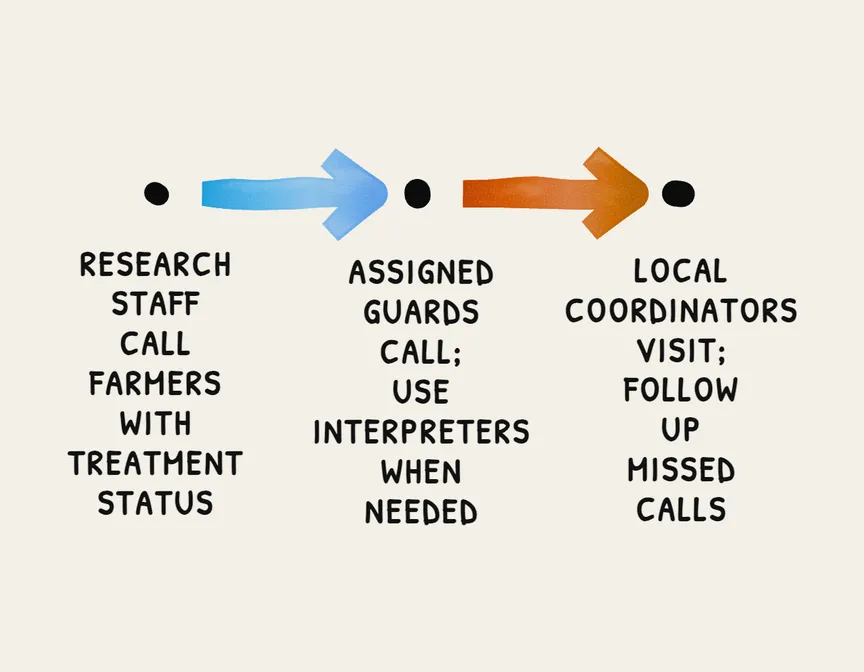
Triple-channel verification ensures all participants receive timely information before crop planning decisions lock in one month prior to planting.
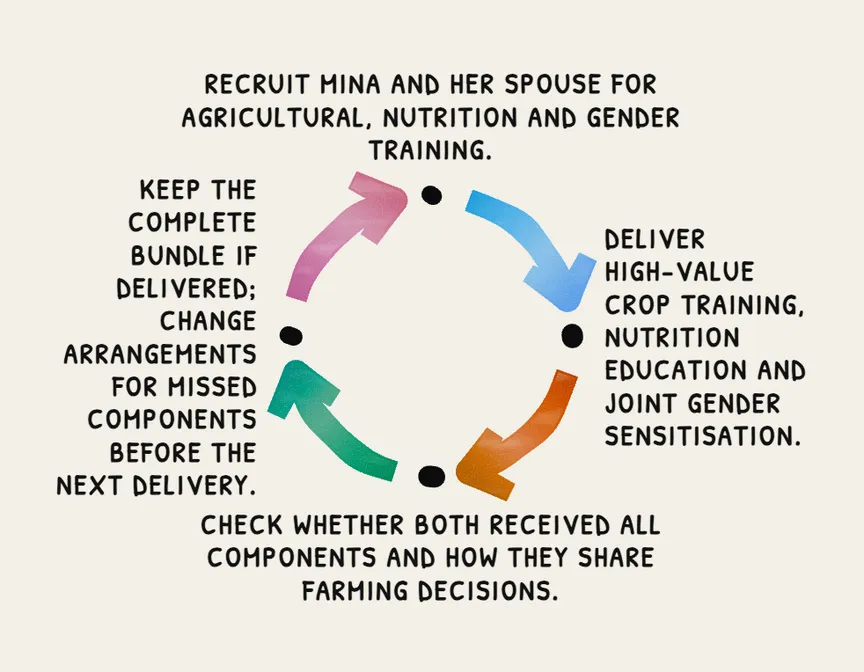
Delivering agricultural, nutrition, and gender sensitization training together addresses the compound economic and social constraints women face.
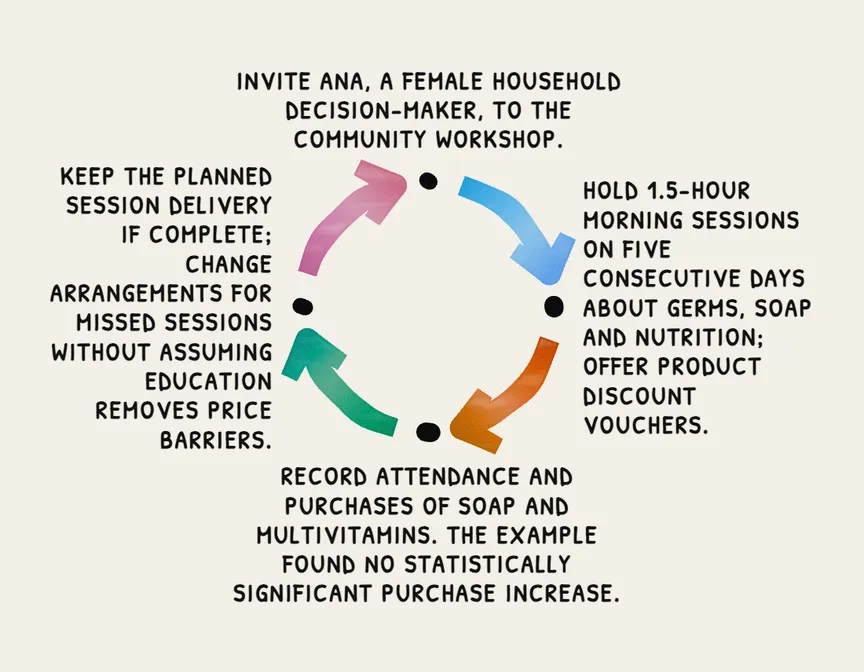
Group health seminars aim to improve health literacy by offering structured, repeated exposure to preventative health concepts.
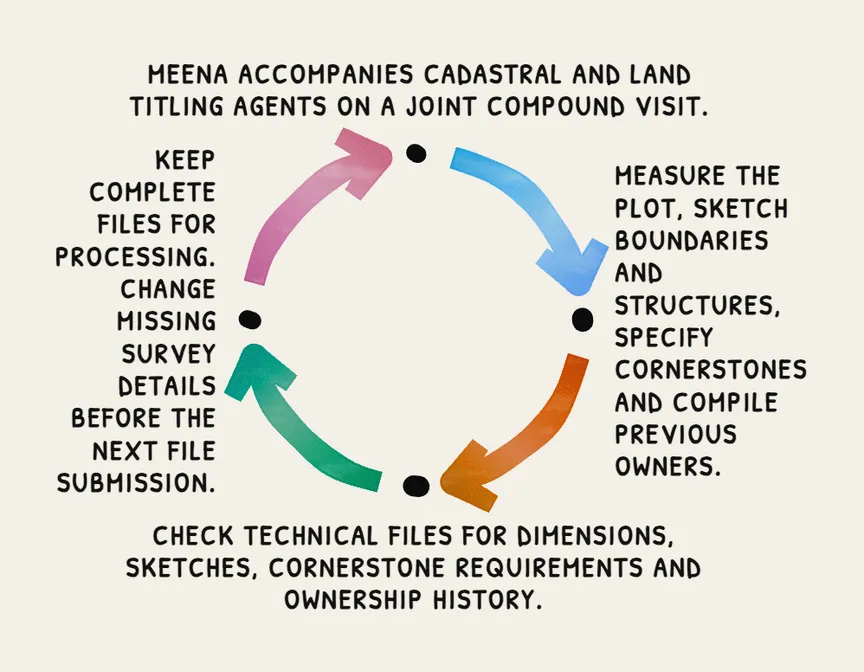
Joint field visits by cadastral and titling divisions create an authoritative technical baseline that verifies physical plot eligibility and legal ownership claims.
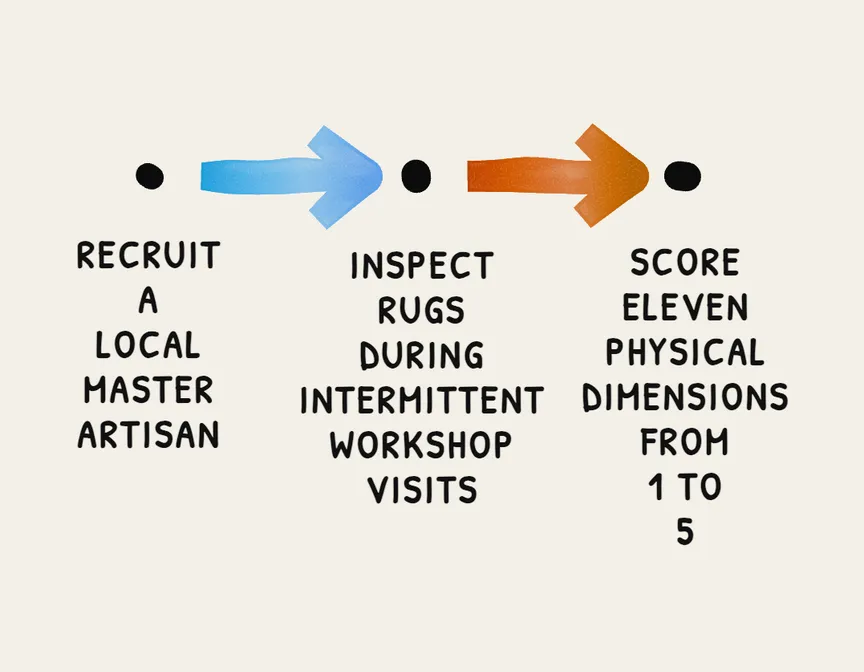
Relying on experienced master craftspeople provides consistent, objective measurements of physical quality.
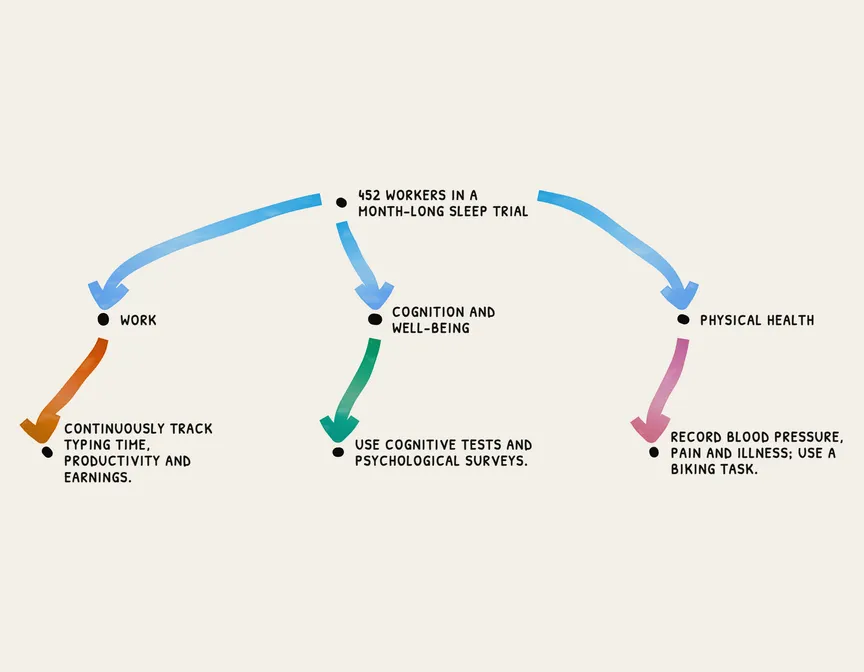
Single-metric evaluations miss broader trade-offs or multidimensional benefits across psychological, cognitive, and physical dimensions.
Direct financial piece-rates increase the immediate marginal return on worker effort for each service delivered.
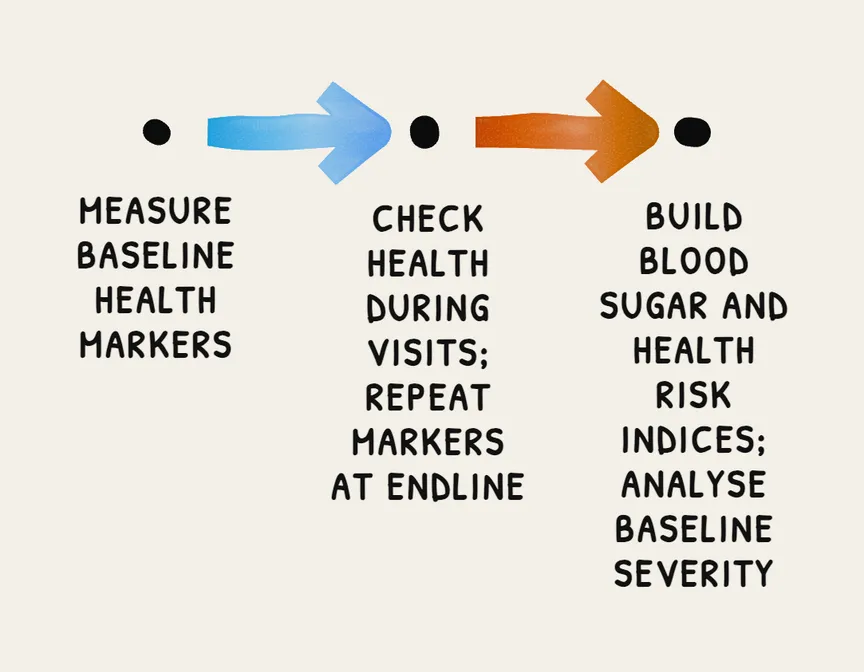
Combining long-term and short-term glycemic markers reduces laboratory measurement error while providing independent predictive power for blood sugar control.
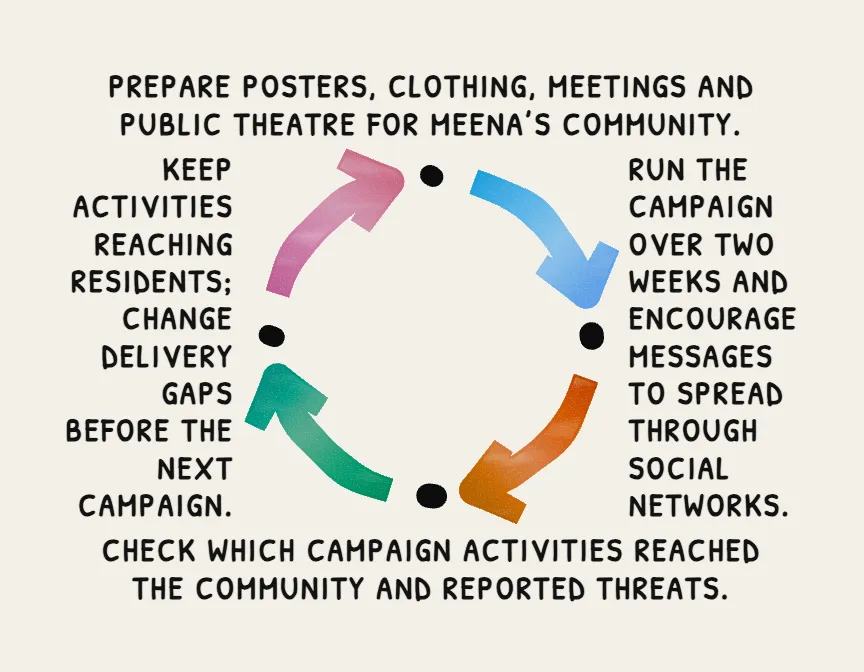
Combining visual slogans, community meetings, and public theater reduces the threat that voters perceive from election violence.
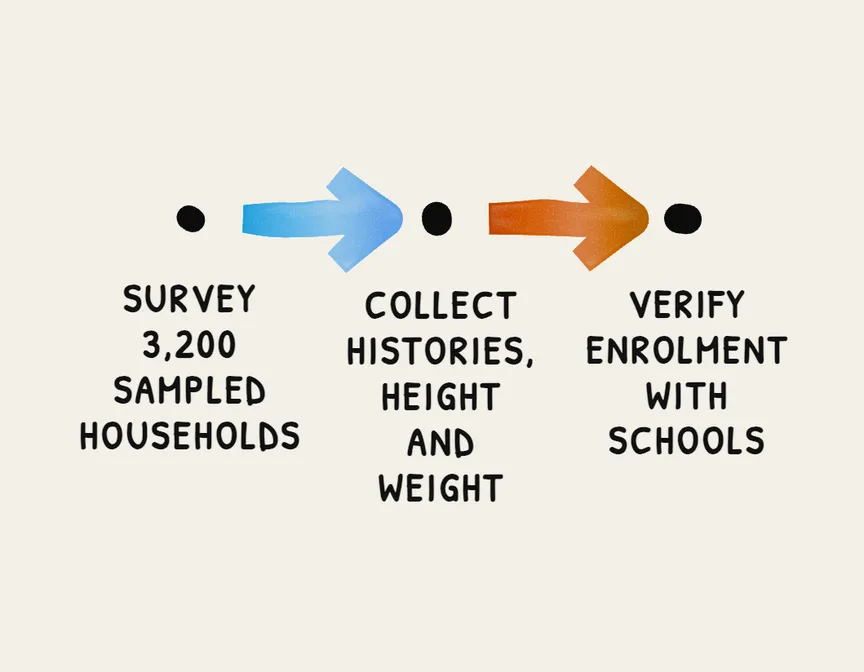
Direct institutional checks and physical anthropometric measurements eliminate social desirability and recall biases inherent in self-reported survey responses.
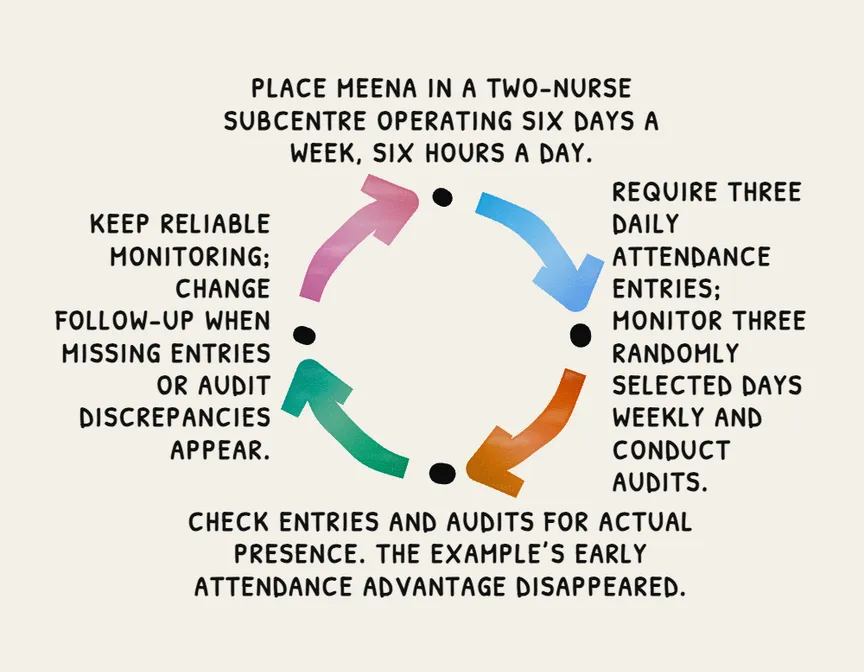
Deploying multiple nurses ensures continuous facility coverage while monitoring multiple days per week prevents staff from coordinating unauthorized shift rotation or systematic absenteeism.
Measuring employment across several distinct follow-up windows prevents policies from being mislabeled as successful based solely on short-lived temporary placements.
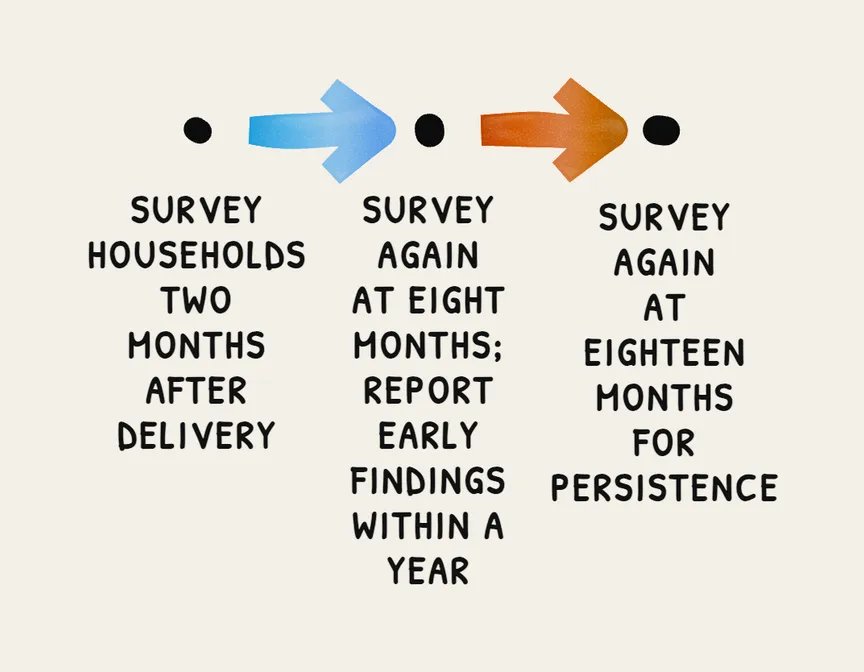
Timing surveys to match decision milestones gives government officials reliable data when they need it most.
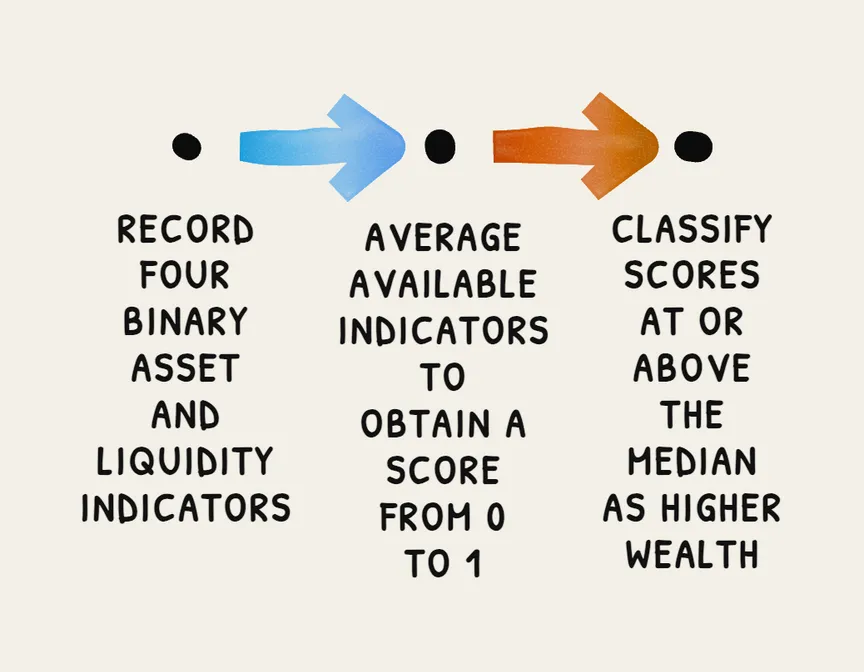
Combining long-term physical assets with immediate liquidity indicators captures broader financial strain than single income metrics.
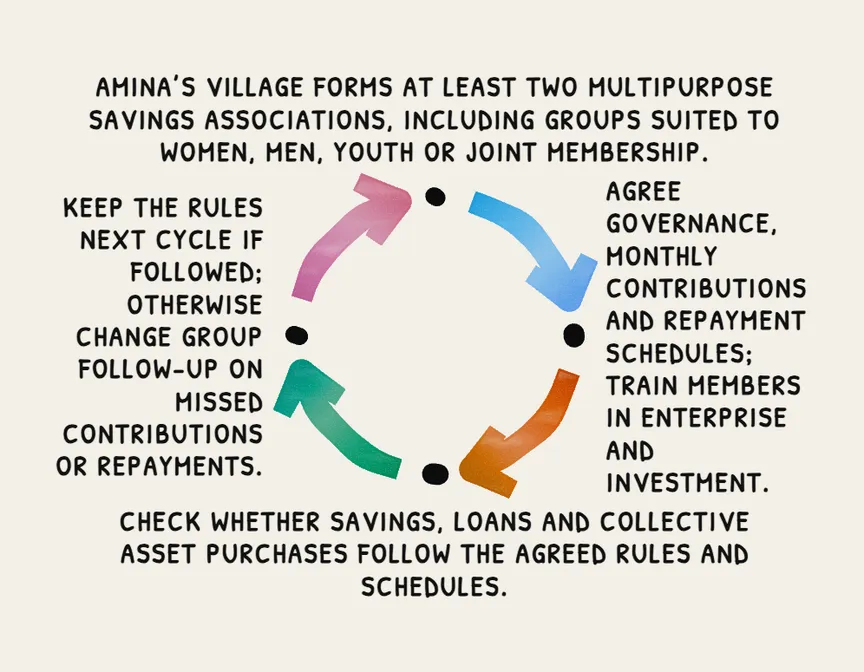
Creating dedicated savings groups with structured contribution schedules enables households to pool financial resources and access credit.
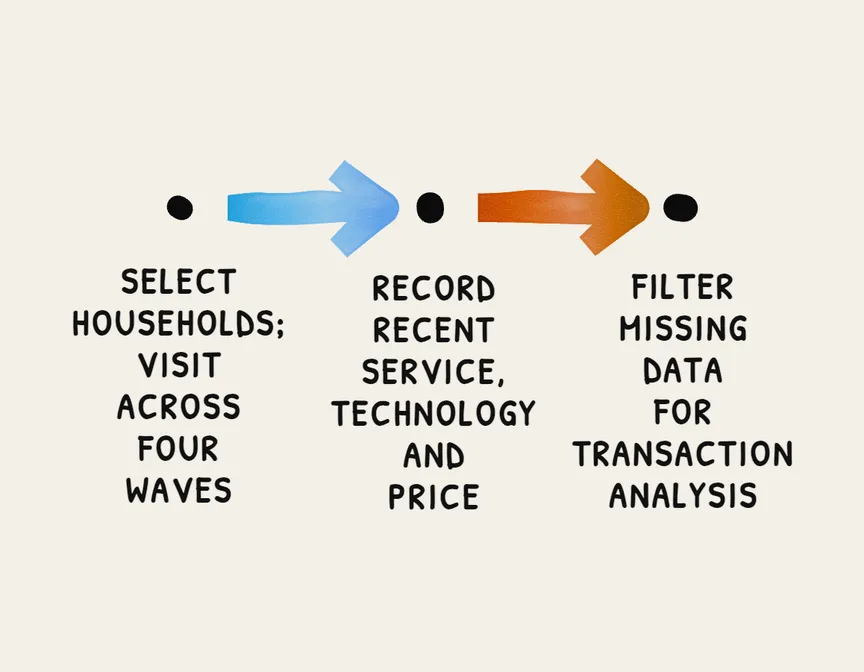
Repeated panel visits capture seasonal variations and long-term changes in household desludging frequency, pricing, and technology choices.
Repeated survey rounds reduce measurement noise caused by short-term seasonal fluctuations in informal business revenues.
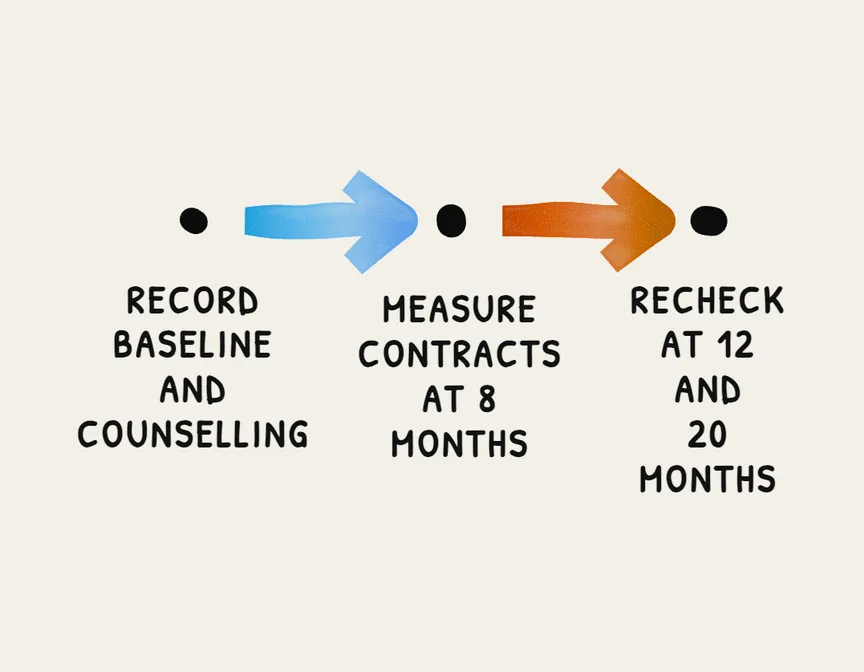
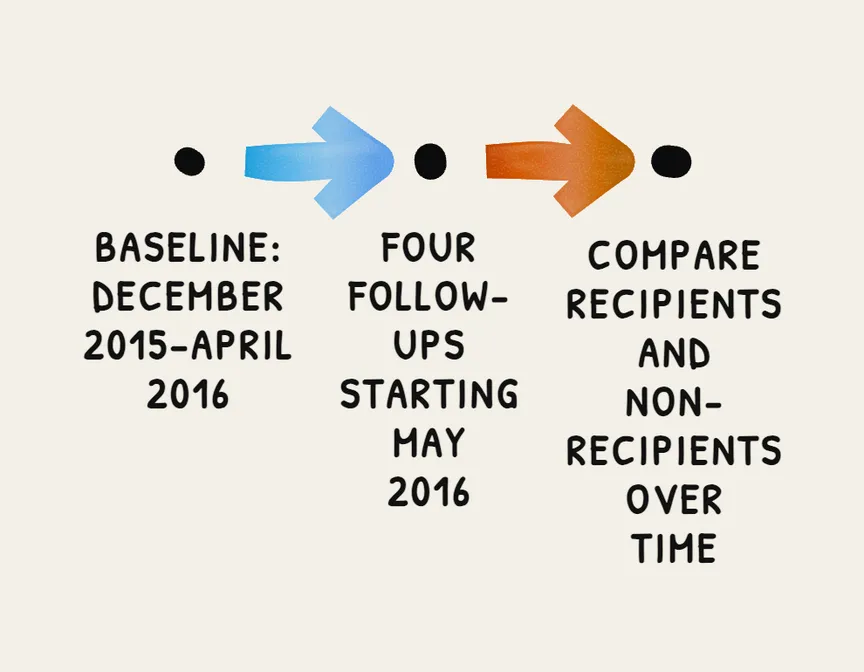
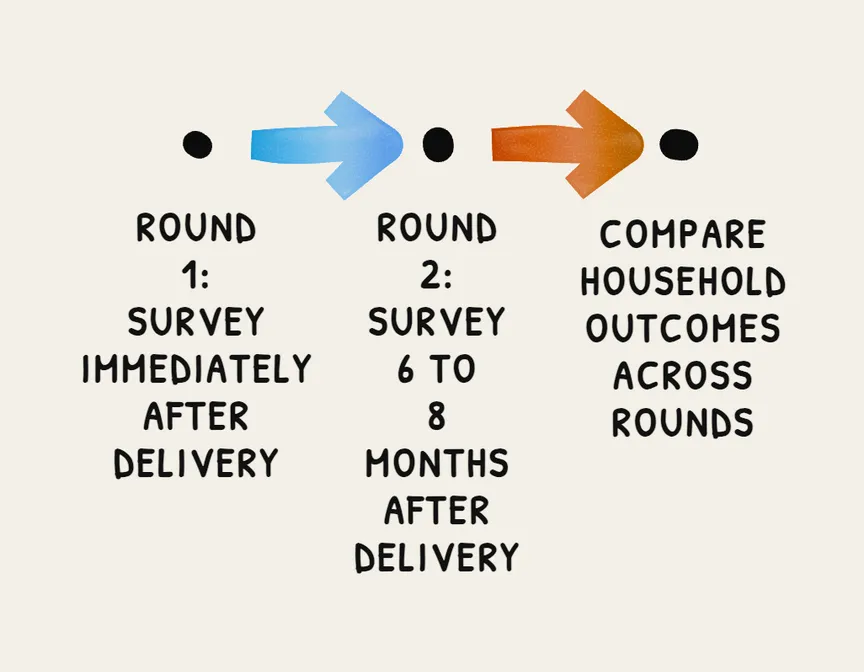
Conducting multiple follow-up survey rounds across distinct post-treatment time windows captures both immediate behavioral shifts and medium-term dynamics.
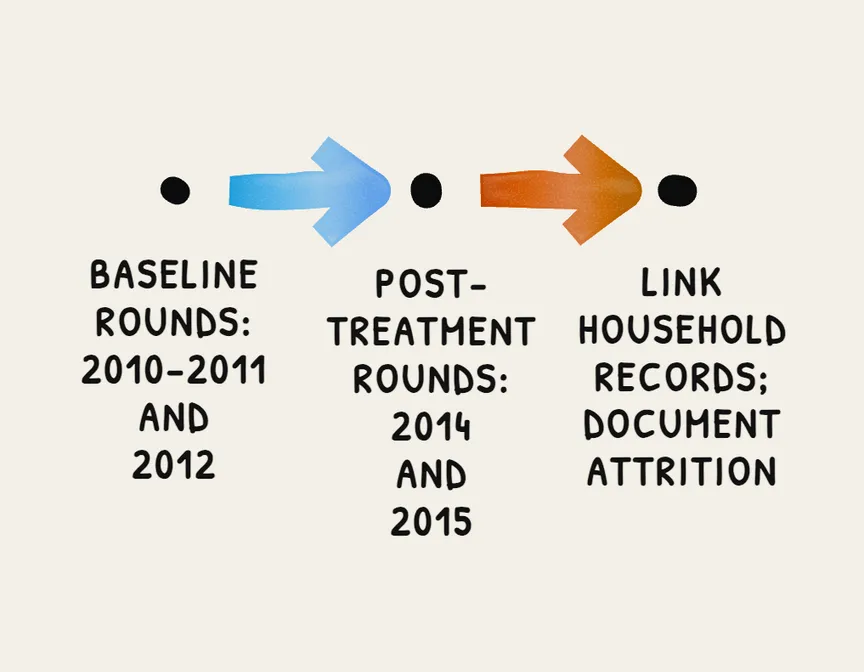
Collecting multiple baseline and post-treatment survey rounds controls for unobserved household-level fixed effects and increases statistical precision.
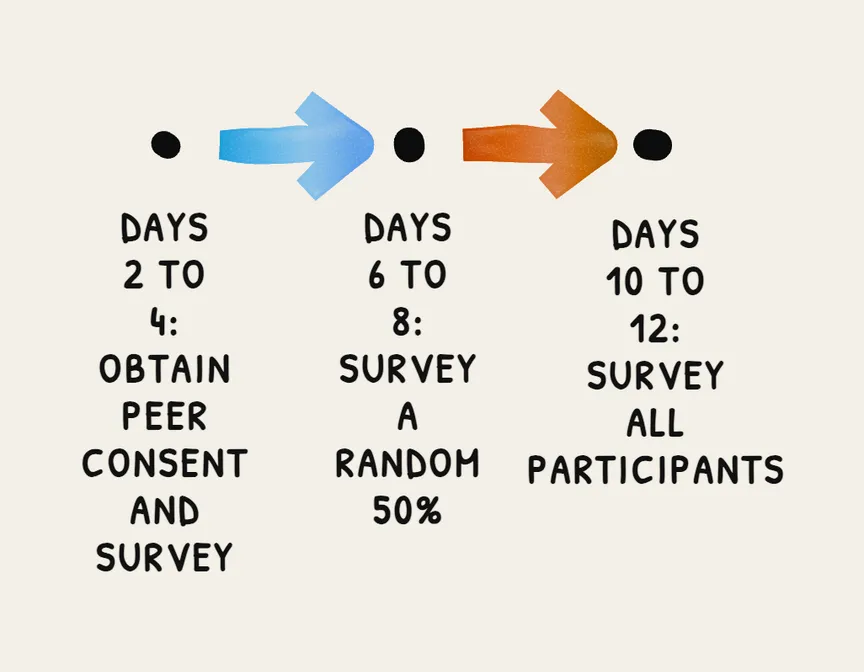
Frequent short phone surveys allow field teams to track rapid changes in health behaviors and message recall across intervention arms.
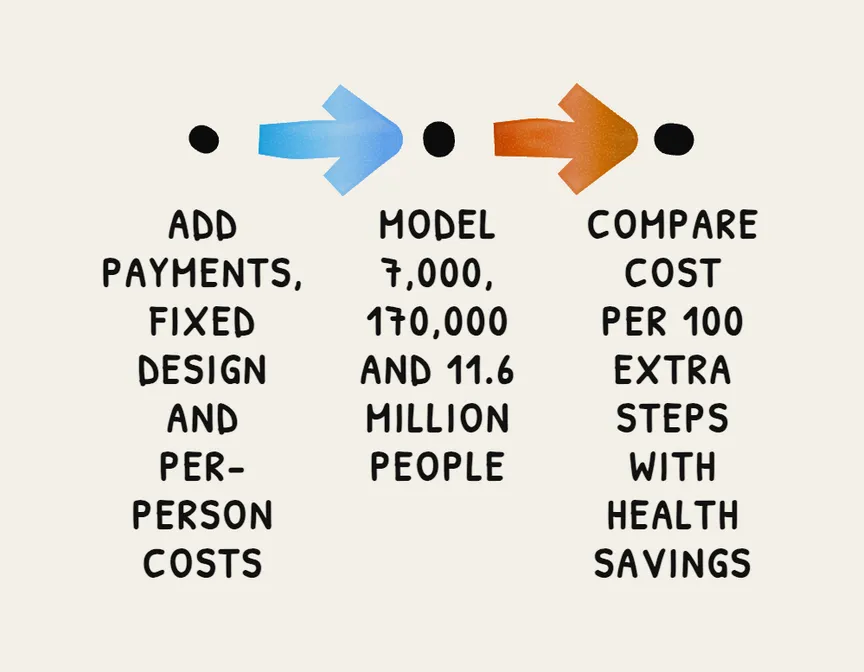
Factoring fixed design and variable implementation costs into cost-per-benefit calculations prevents underestimating the real-world operational expenses of complex targeting schemes.
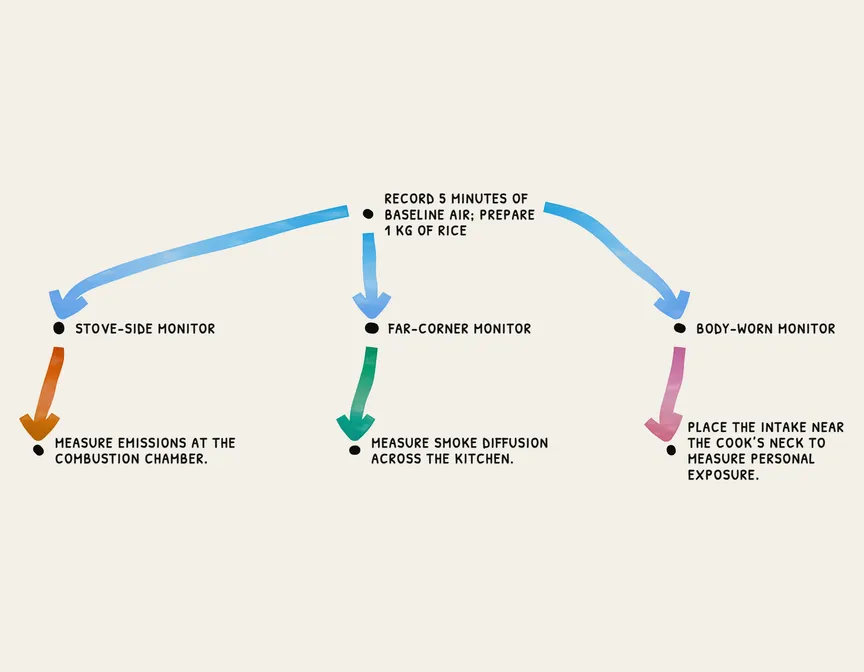
Simultaneous spatial and body-worn monitoring disentangles emission reductions caused by stove architecture from exposure changes driven by user proximity and cooking behavior.
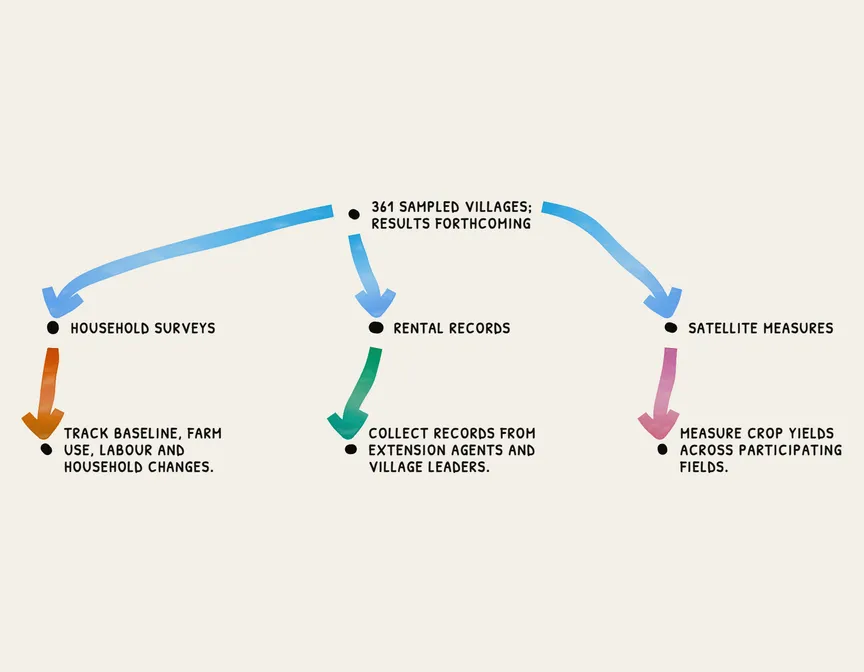
Combining primary household surveys with remote sensing and administrative data validates self-reported findings against objective physical measures.
Page 23 of 45
Previous
1
…
22
23
24
…
45
Next