Skip to the methods
Menu
aikyam
school
Findings
Methods
Subjects
All cards
Read
Findings
Methods
Subjects
All cards
Methods
2,124 methods
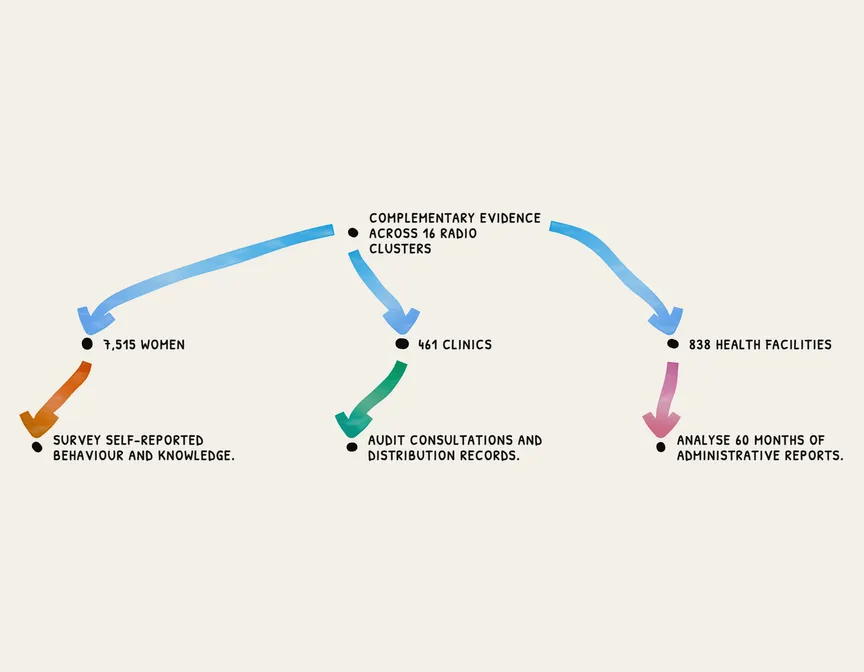
Combining household survey responses with facility records checks whether reported personal behavior changes match actual service utilization and product distribution.
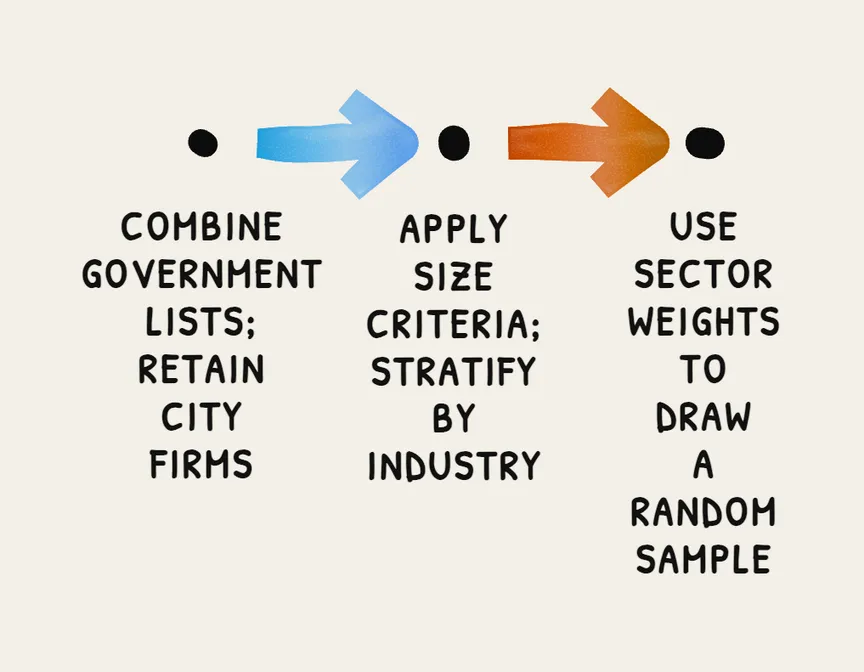
Combining administrative lists across multiple government bodies prevents systemic coverage gaps inherent in single-agency business registers.
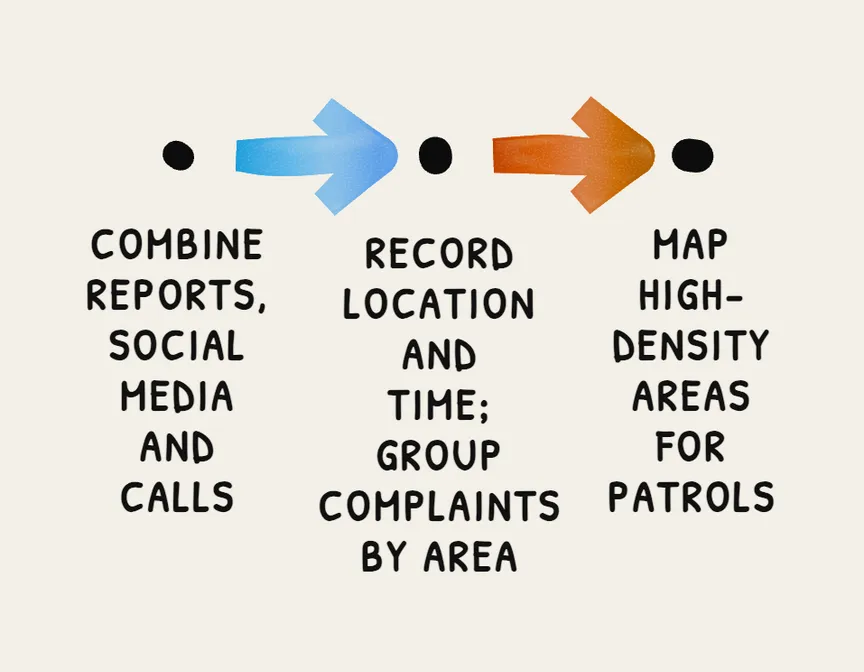
Combining multiple reporting streams captures harassment incidents that never lead to official police reports.
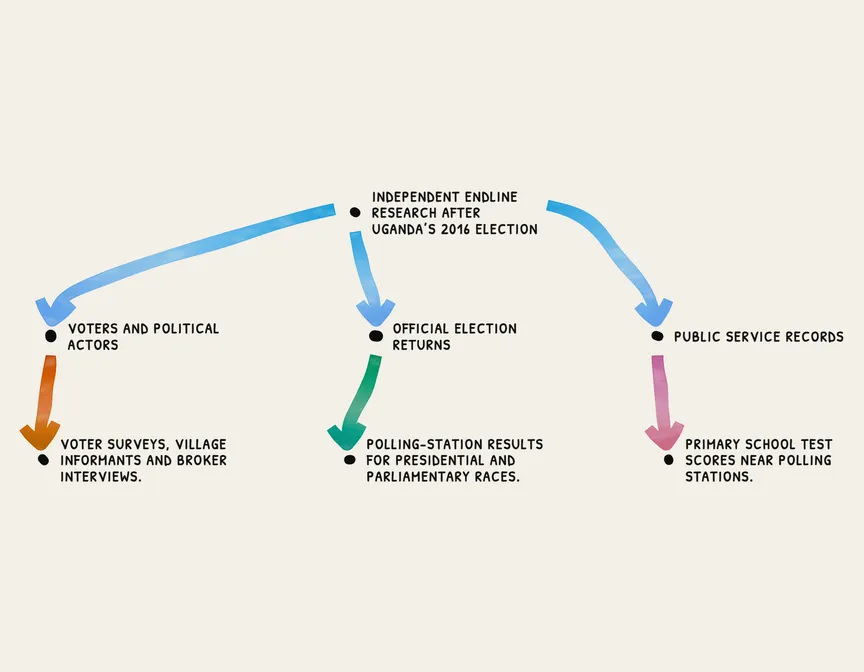
Triangulating data across voters, political brokers, official election tallies, and administrative records prevents social desirability bias from distorting findings and allows researchers to track strategic market-level responses.
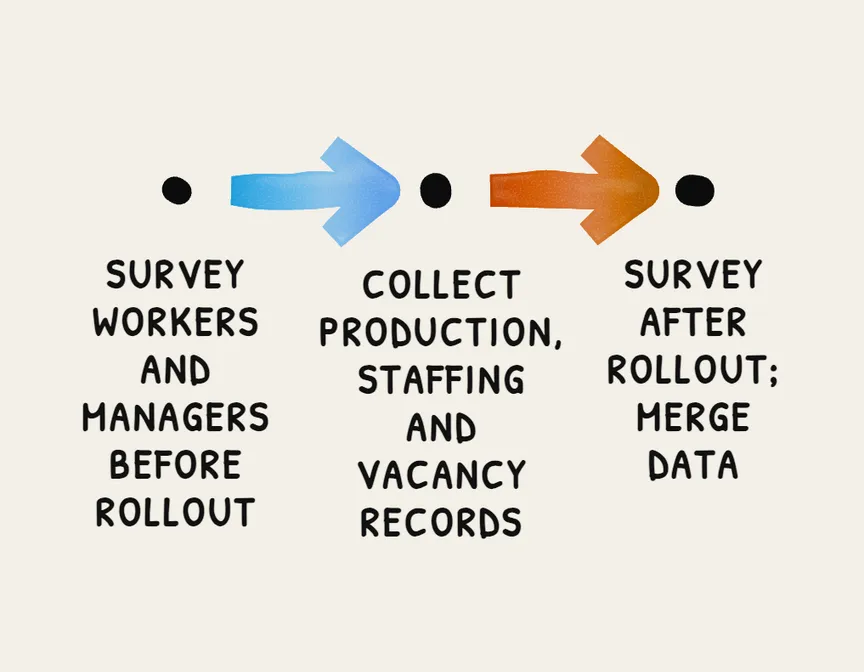
Combining worker and manager survey responses with firm administrative records cross-validates self-reported workplace improvements against objective production data.
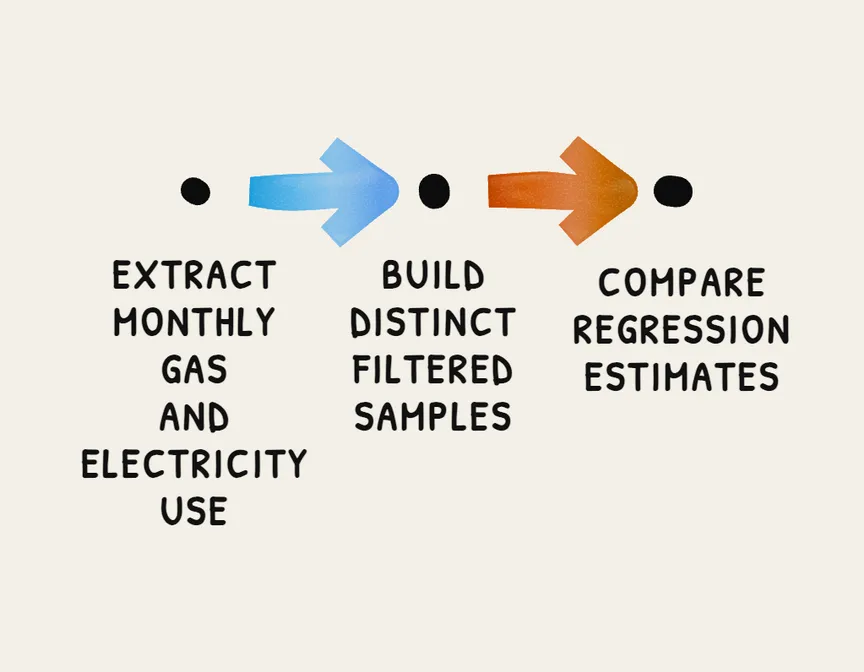
Trimming statistical tail extreme values prevents unrepresentative billing errors or temporary usage spikes from skewing regression coefficients.
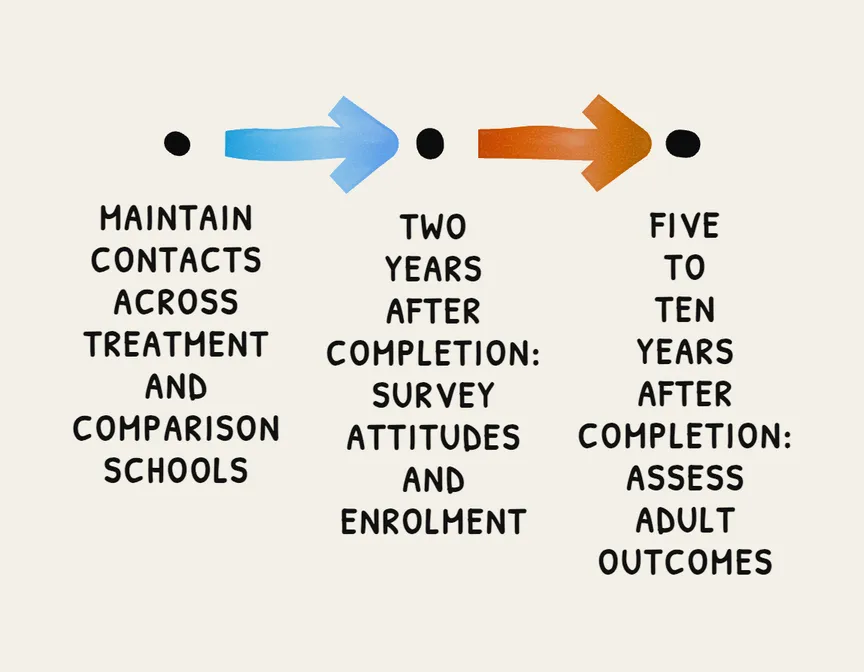
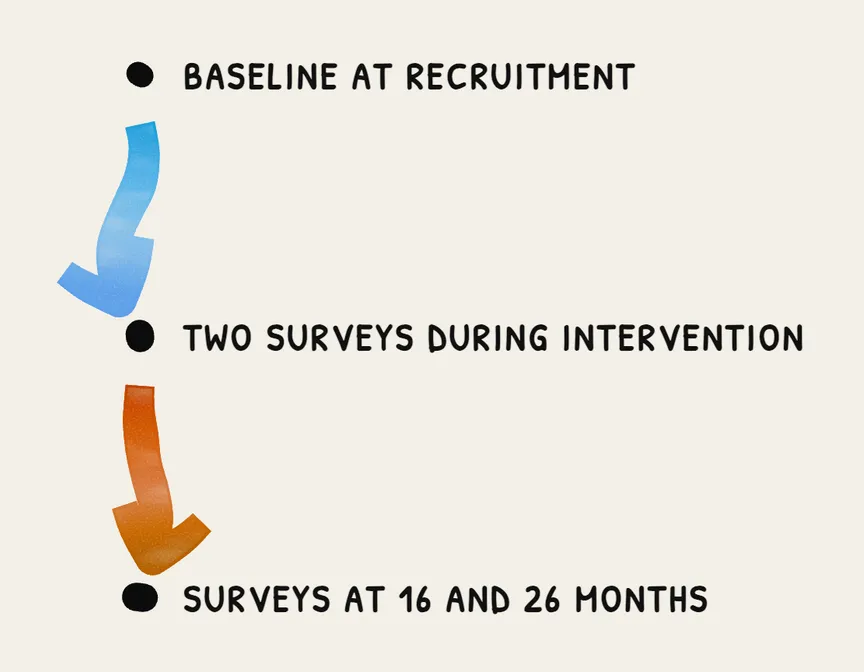
Longitudinal tracking reveals whether early social norm interventions produce lasting impacts on major life choices or decay over time.
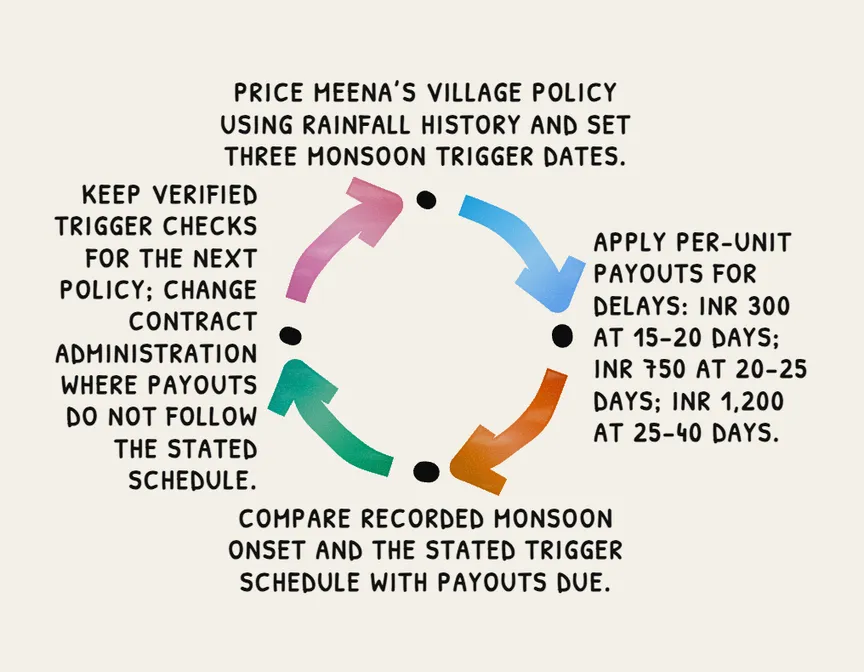
Index-based insurance relies on publicly observable weather events to deliver automatic payouts cheaply without inspecting individual fields.
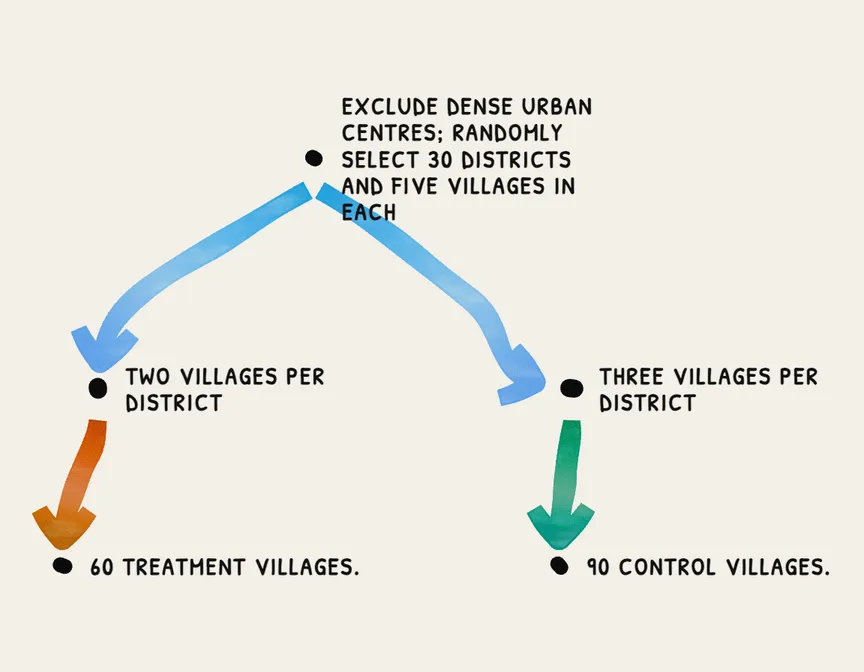
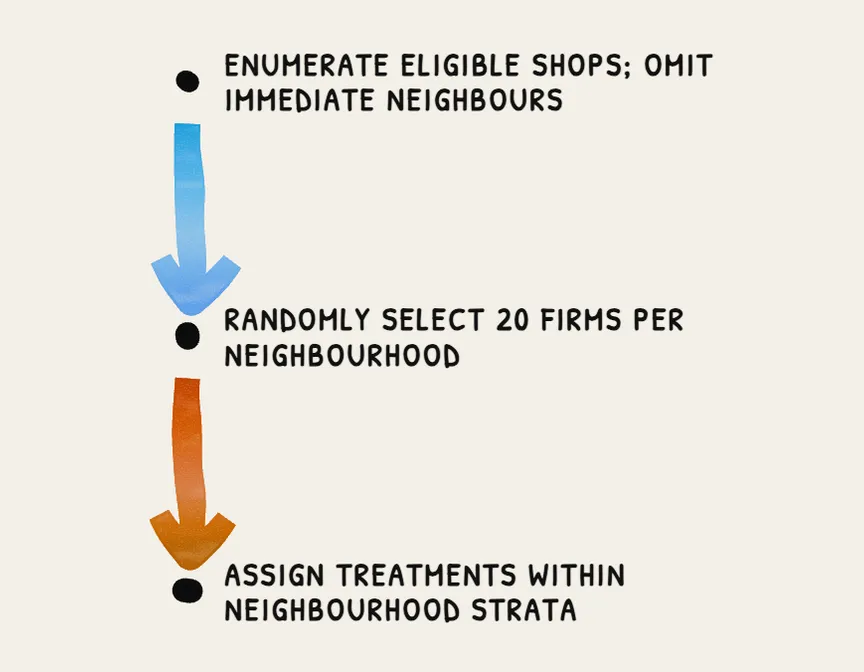
Multi-stage randomized block assignment ensures geographic balance across provinces and statistical balance across baseline covariates.
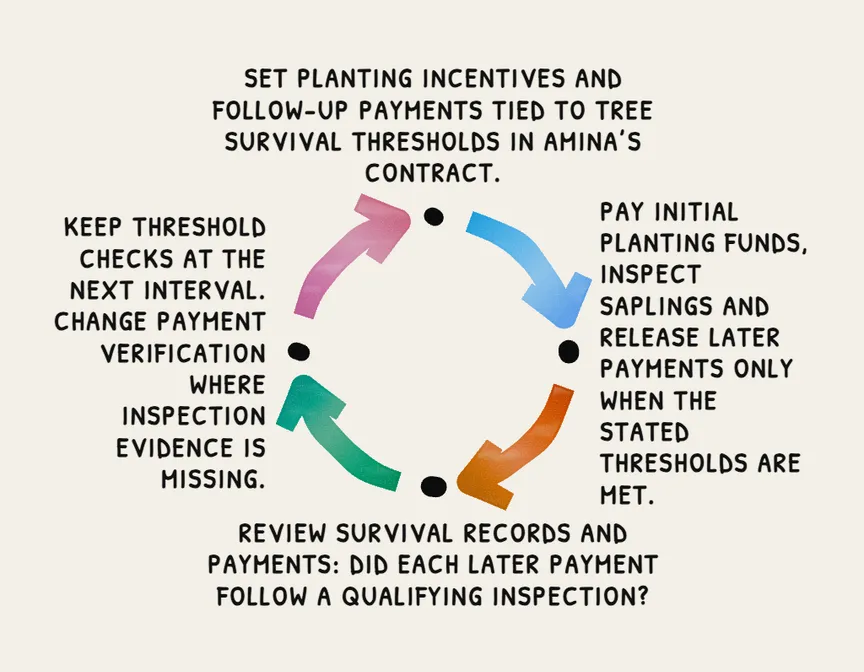
Tying incentives directly to conservation outcomes through conditional payments keeps landholders responsive to contract requirements over time.
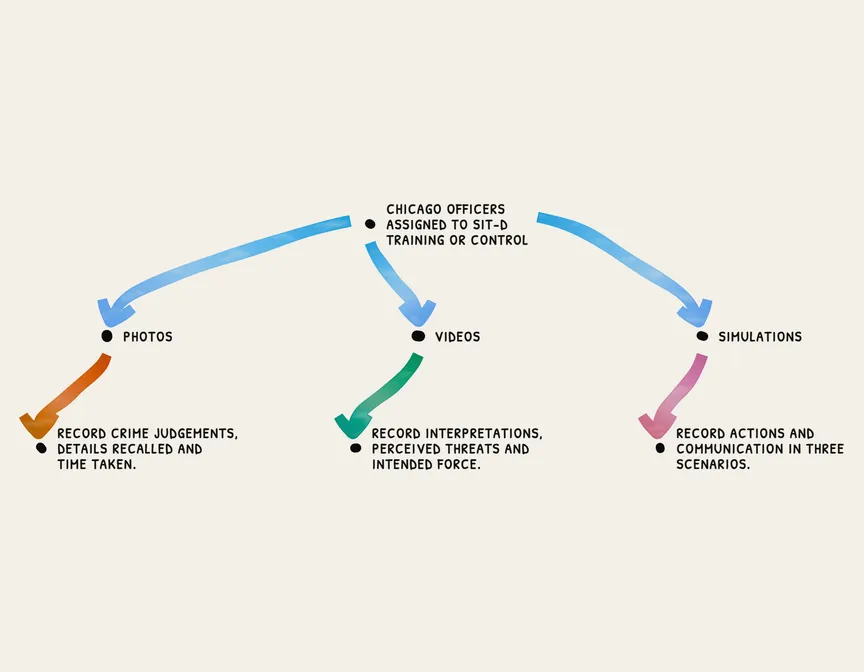
Standardized lab tasks isolate specific cognitive steps such as perspective generation, detail recall, and threat calibration under controlled conditions.
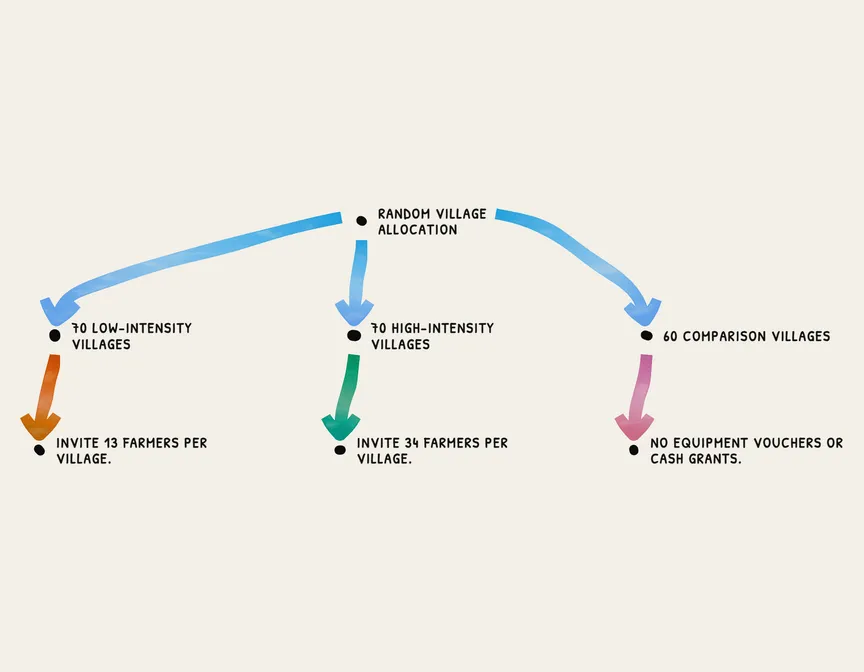
Testing different village-level saturation rates shows whether cluster density alters service availability or technology adoption.
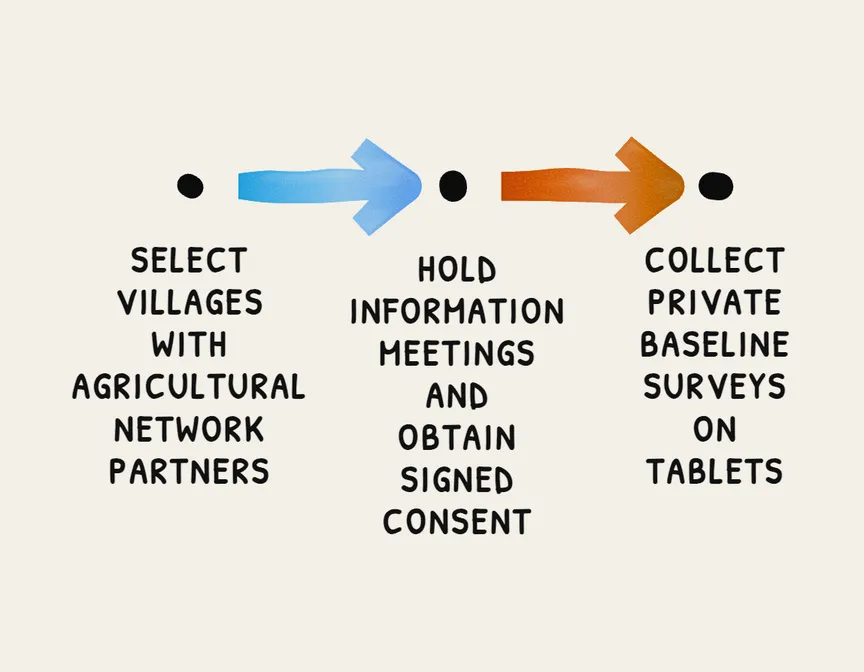
Mimicking standard agricultural extension mobilization prevents priming farmers about specific research hypotheses.
Repeated communication across multiple channels eliminates information friction, ensuring employees understand how their effort maps into financial rewards.
Multi-wave surveying tracks individual children and mothers across critical developmental windows, providing direct evidence on physical growth and dietary quality.
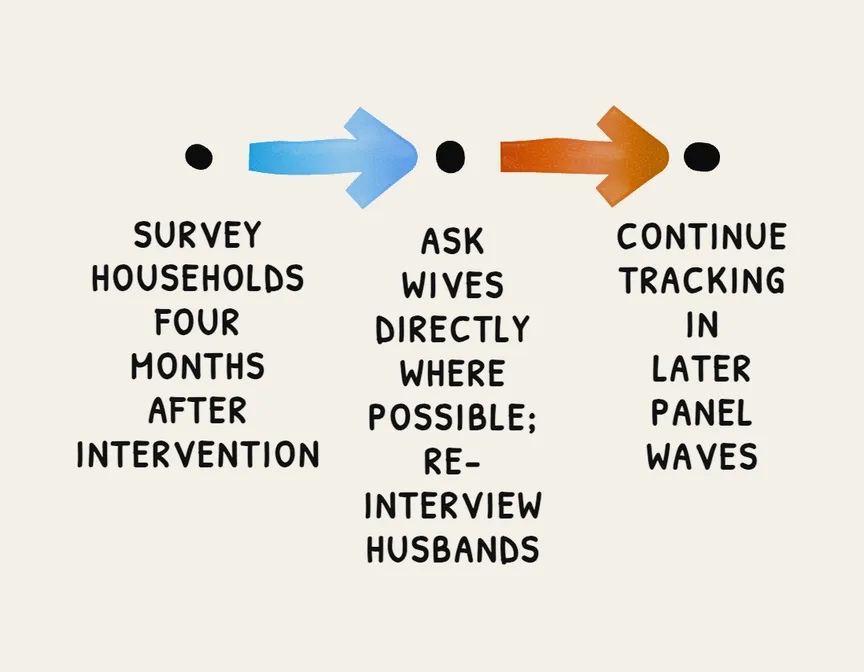
Collecting data directly from women and re-surveying men over time captures actual behavioral changes in time use and decision-making rather than temporary post-treatment survey responses.
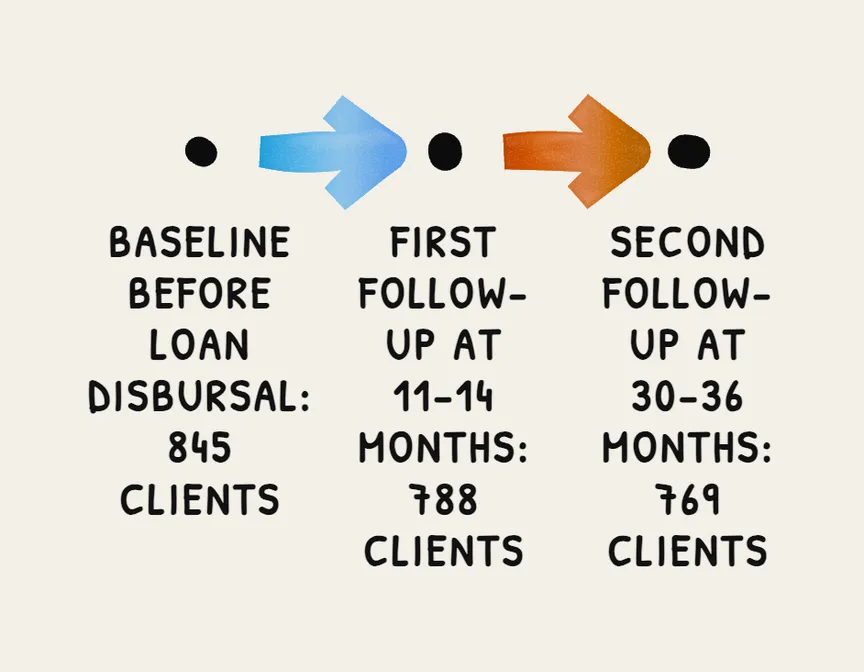
Longitudinal tracking across multiple survey rounds captures both immediate capital allocation decisions and long-run compounding returns to business investments.
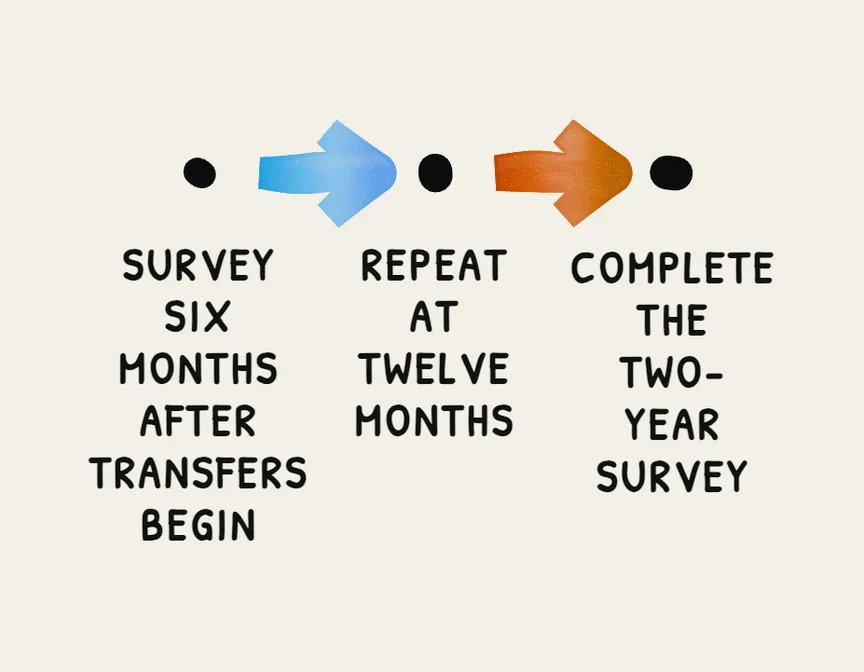
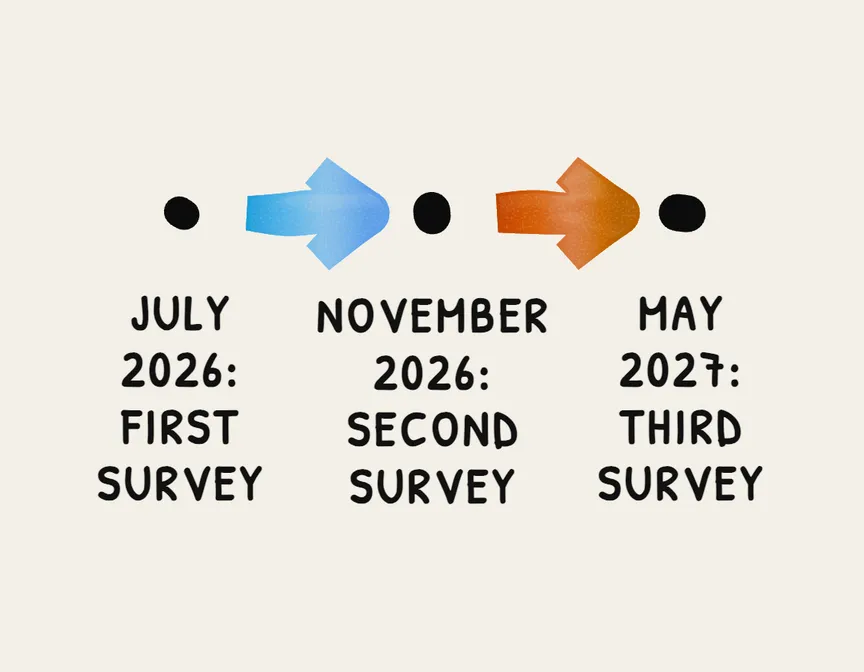
Repeated panel measurement detects short-term dynamics during active treatment as well as long-term persistence after support ends.
Repeated survey waves capture both immediate labor market entries and longer-term changes in household bargaining and reproductive decisions.
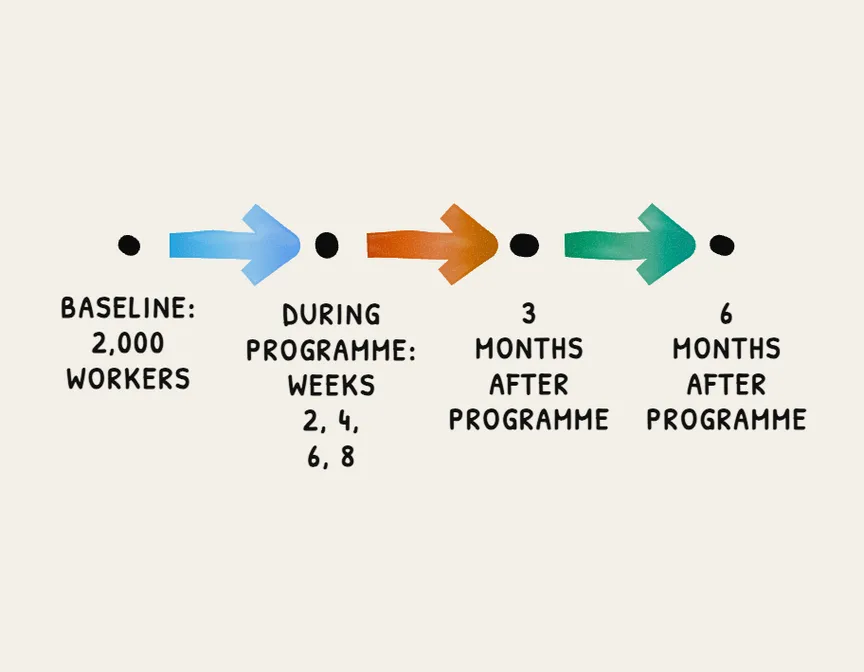
Repeated survey waves capture immediate psychological shifts during treatment while testing whether mental health gains and social connections persist months after formal activities end.
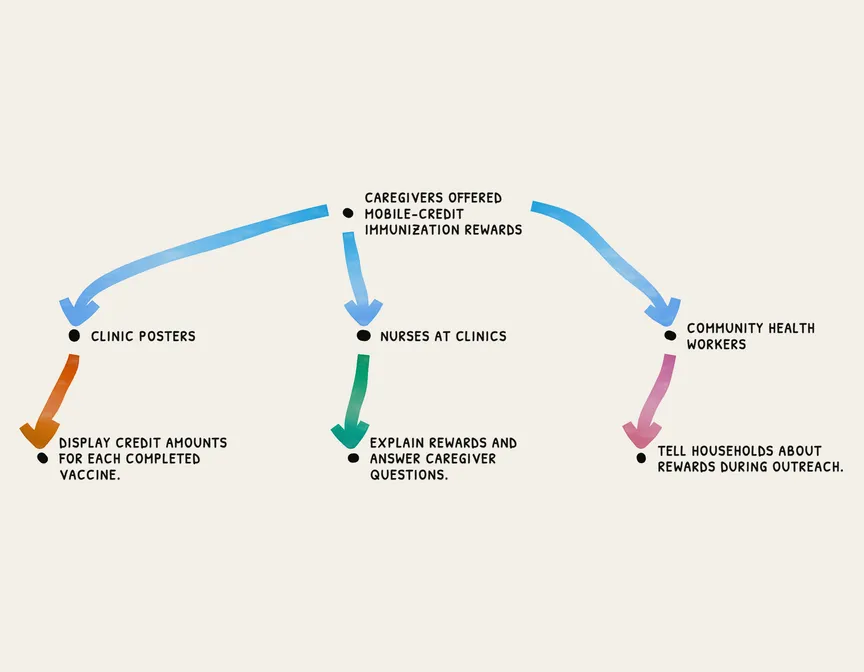
Using multiple communication channels ensures that both literate and illiterate caregivers receive clear information about financial incentives.
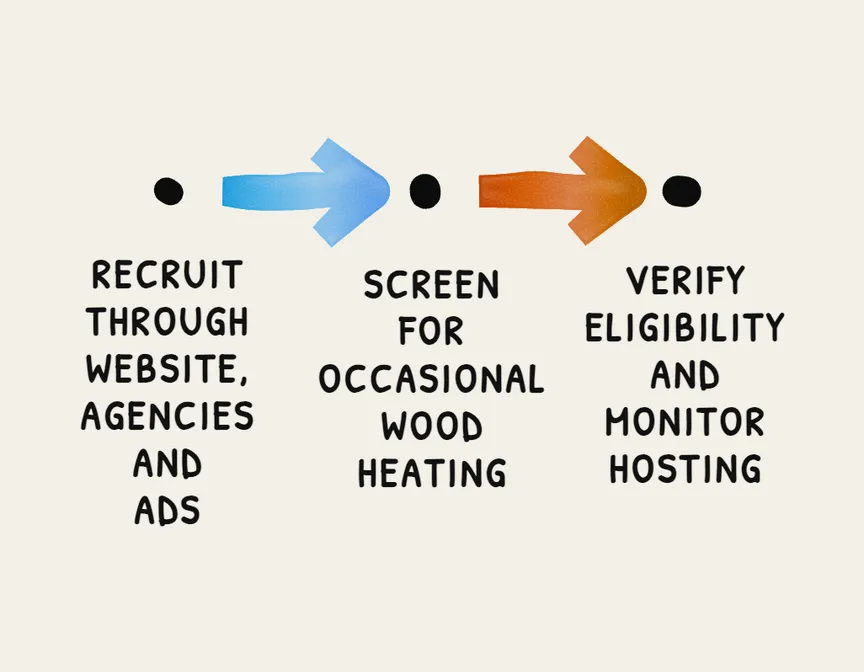
Combining institutional credibility with direct database messaging generates a large initial volunteer pool.
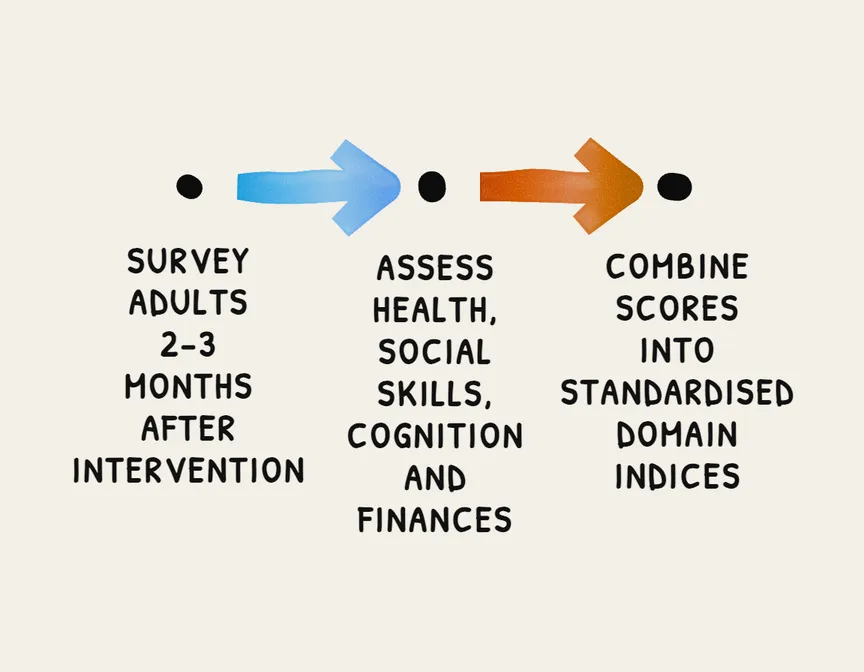
Standardized composite indices reduce statistical noise across individual task measurements and mitigate multiple hypothesis testing errors.
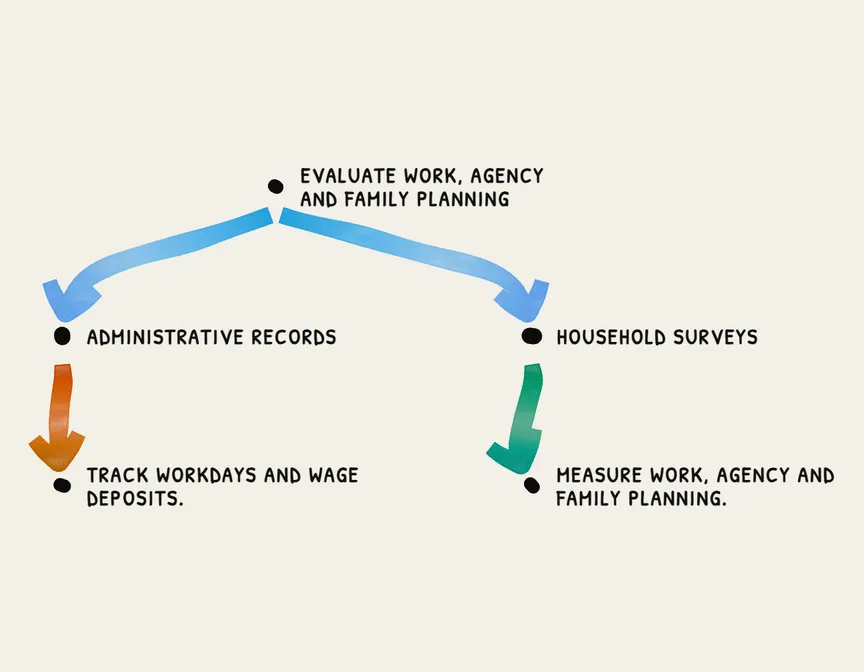
Combining official work program data with in-person household surveys captures both objective labor market participation and subtle shifts in intra-household bargaining power.
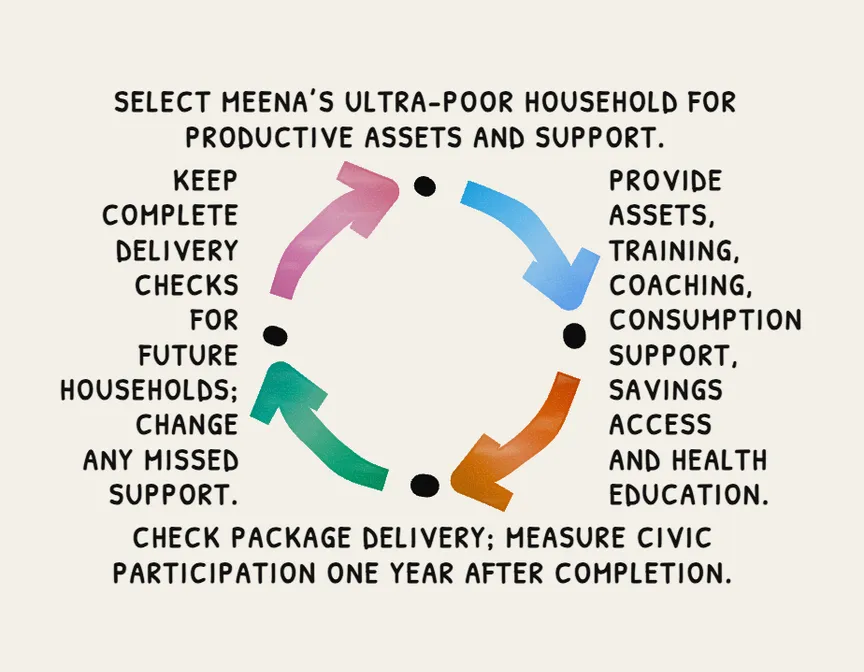
Providing productive assets, training, and financial stability reduces extreme economic vulnerability, enabling marginalized individuals to engage in local civic and political activities.
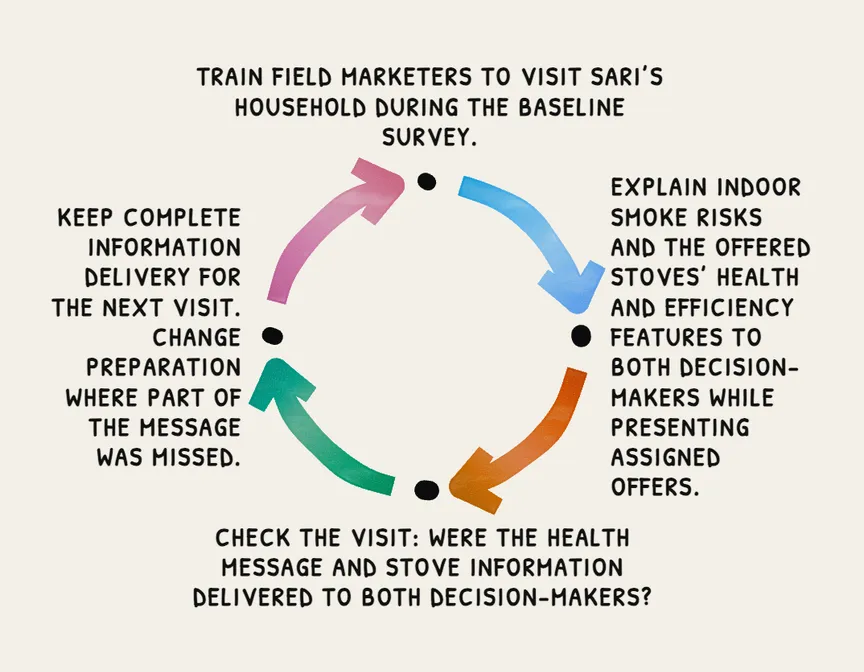
Combining verbal explanations with visual media ensures that low-literacy households understand the health risks of indoor smoke.
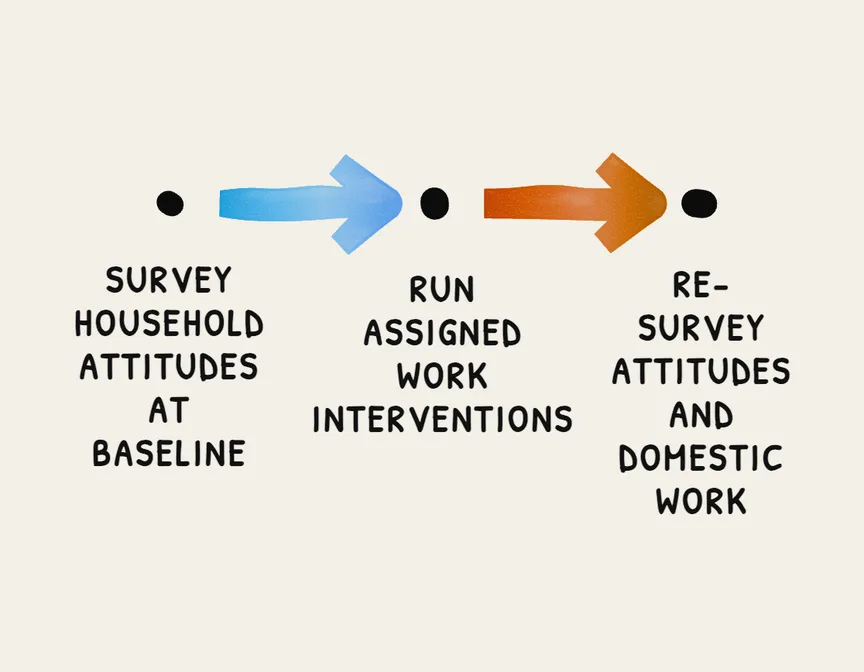
Surveying all household members captures intergenerational attitudinal shifts and domestic labor reallocation that direct participant surveys miss.
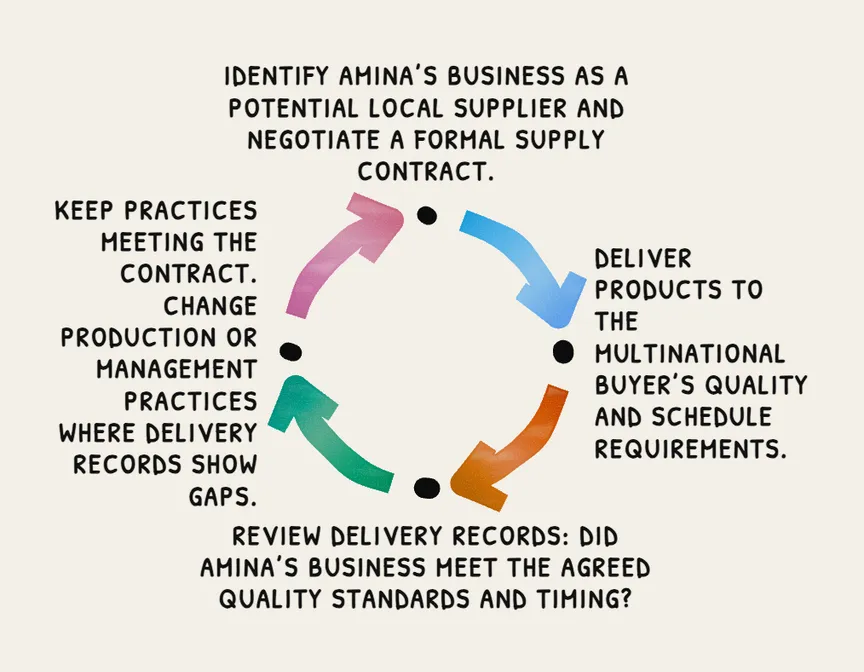
Vertical supply chain ties with large multinational buyers drive a process of growth and learning that increases smaller firms' sales and productivity.
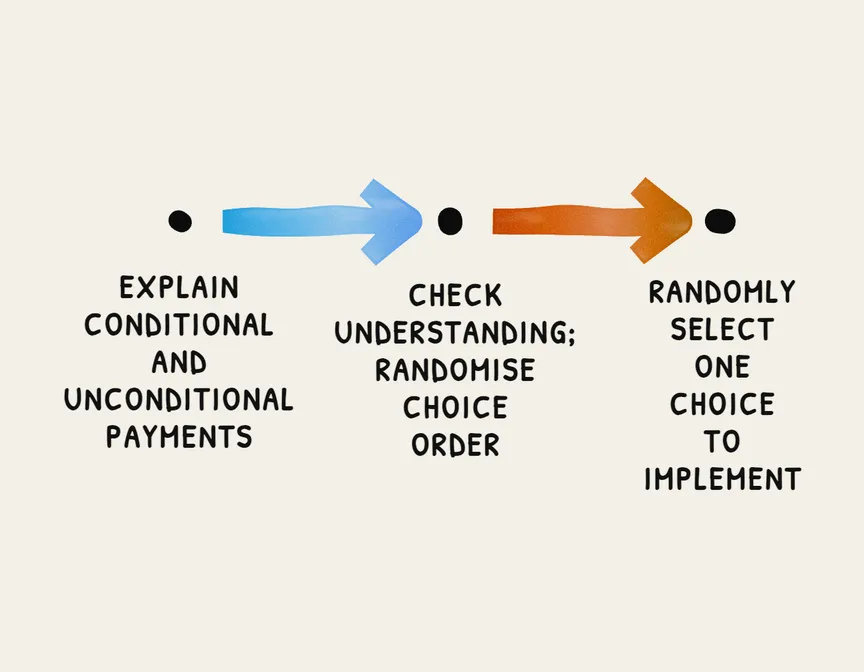
Offering decisions between conditional bonuses and higher unconditional payments forces sophisticated individuals to trade guaranteed money for self-imposed drinking constraints.
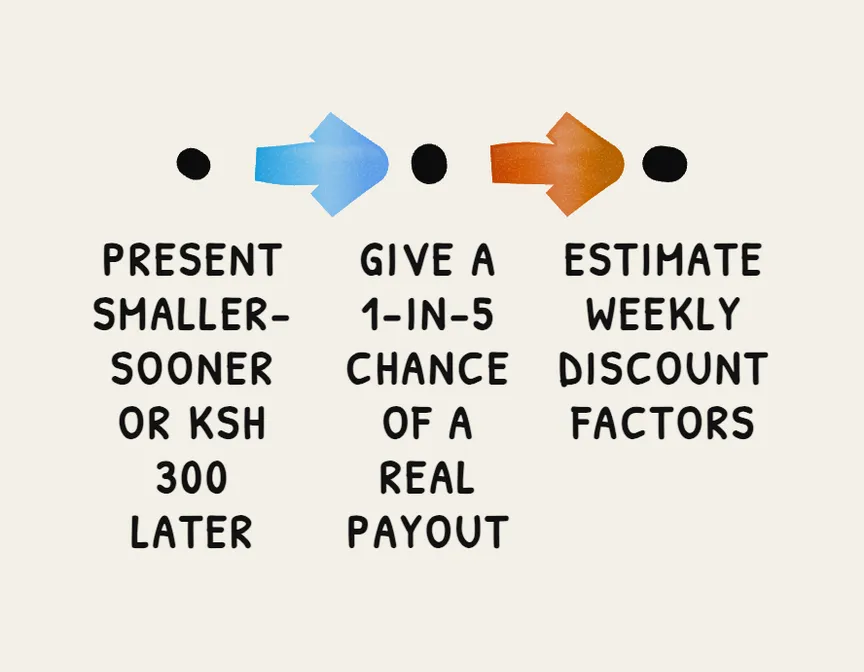
Framing choices with real monetary rewards and setting the nearest payment date to tomorrow isolates pure time discounting from immediate transaction costs or trust concerns.
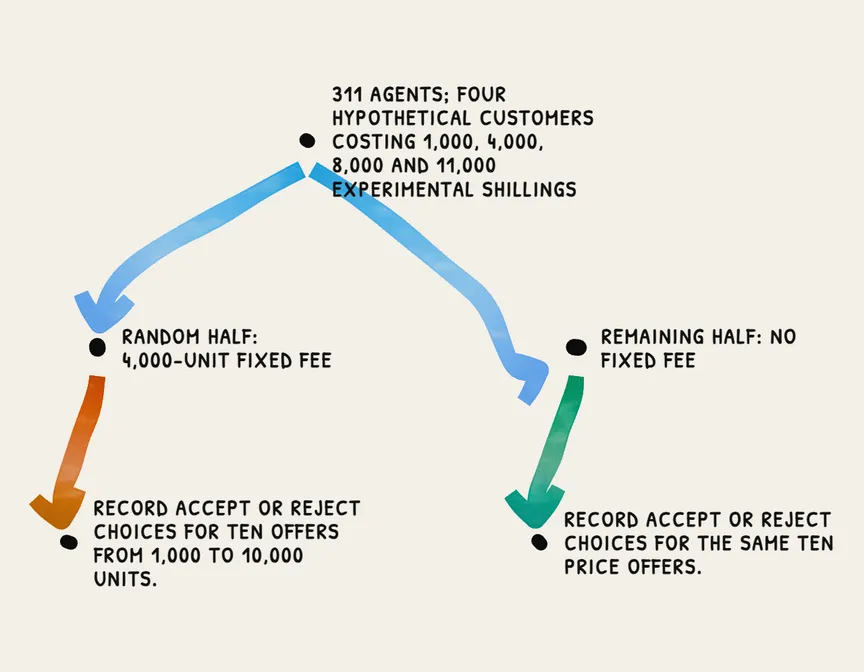
The multiple price list mechanism forces participants to reveal their true reservation price for each transaction.
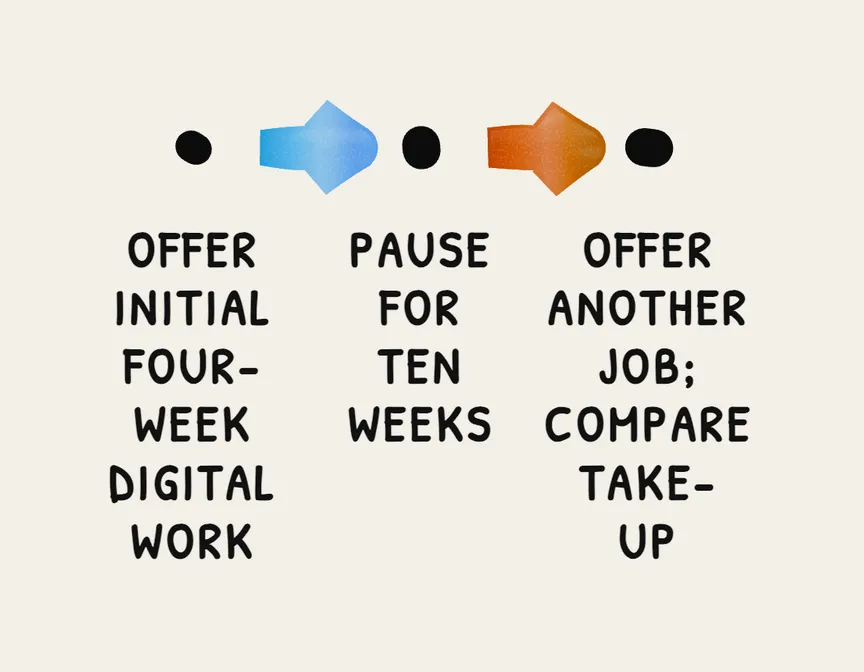
Initial flexible work experience builds confidence and relaxes household constraints, lowering barriers to accepting future job offers.
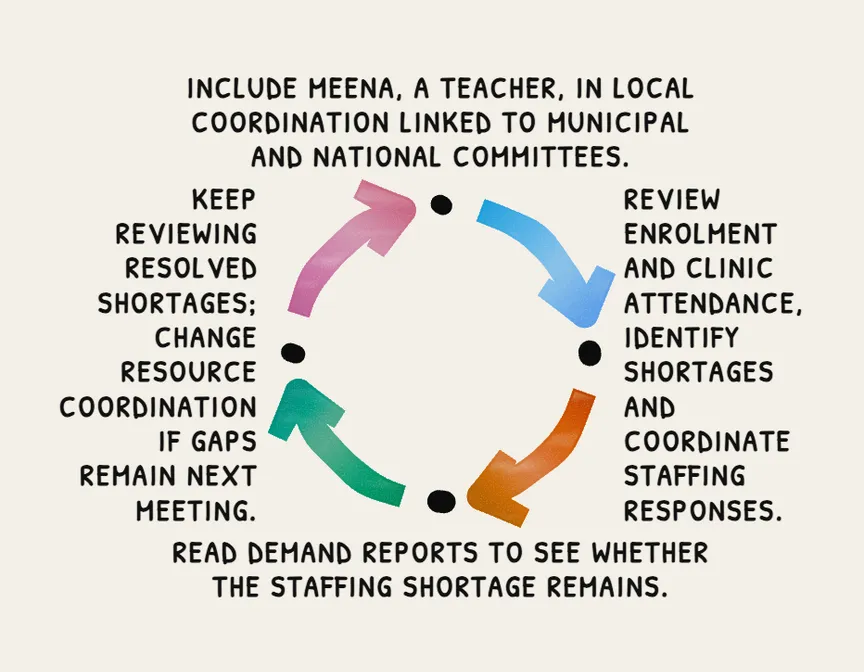
Bringing representatives from education, health, and local governance into unified committees breaks down institutional barriers and aligns supply investments with program demand.
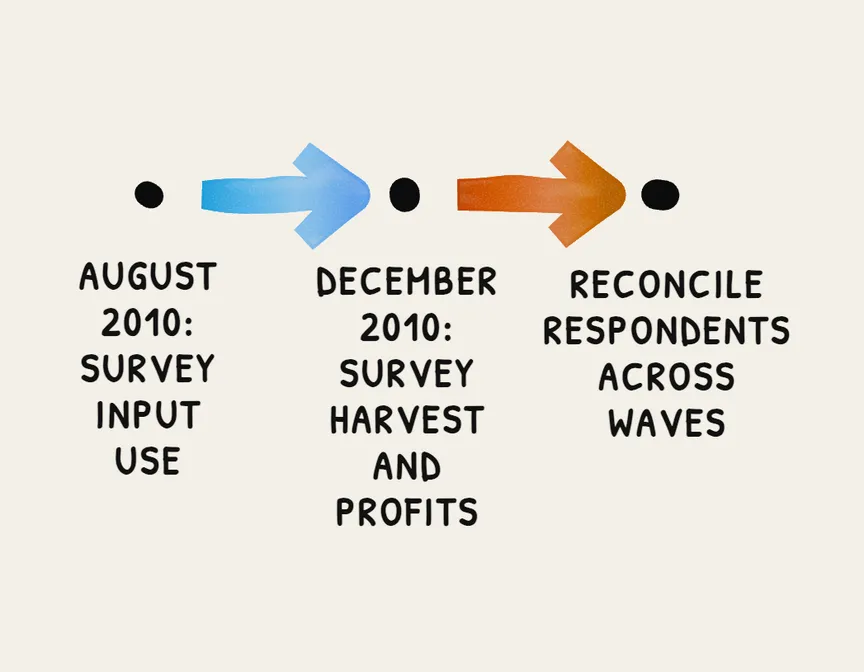
Separating input data collection from harvest measurement reduces recall errors for intermediate seasonal investments like labor and weed control.
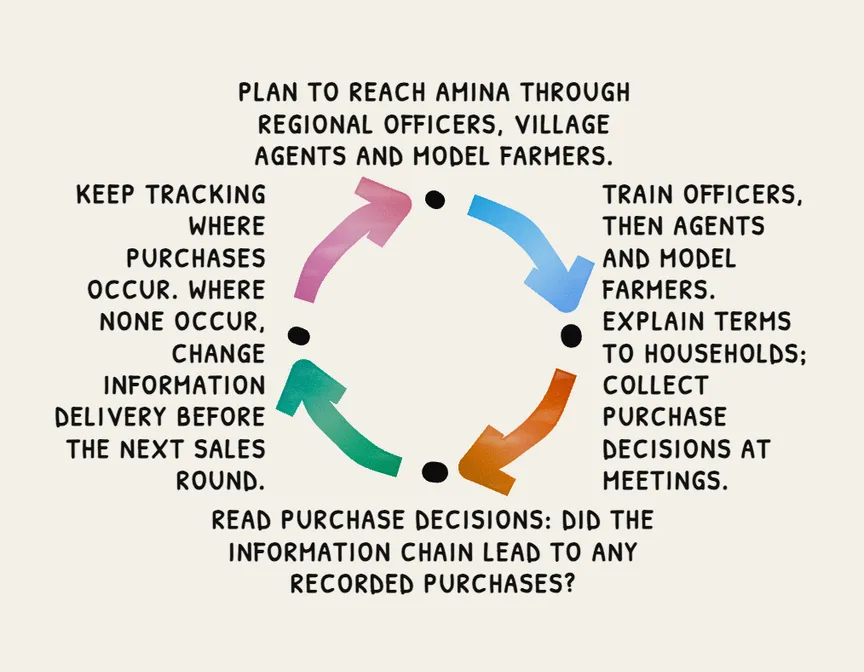
Utilizing established public extension hierarchies allows project teams to cover vast geographic areas quickly without building new sales infrastructure.
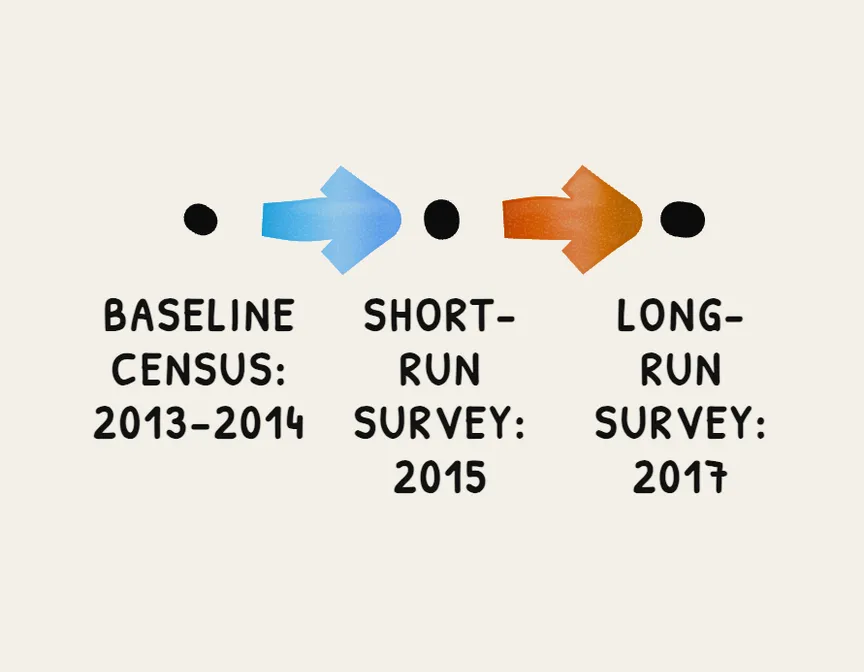
Tracking participants across baseline, short-run, and long-run waves allows evaluators to separate immediate account adoption from long-term social norm liberalization.
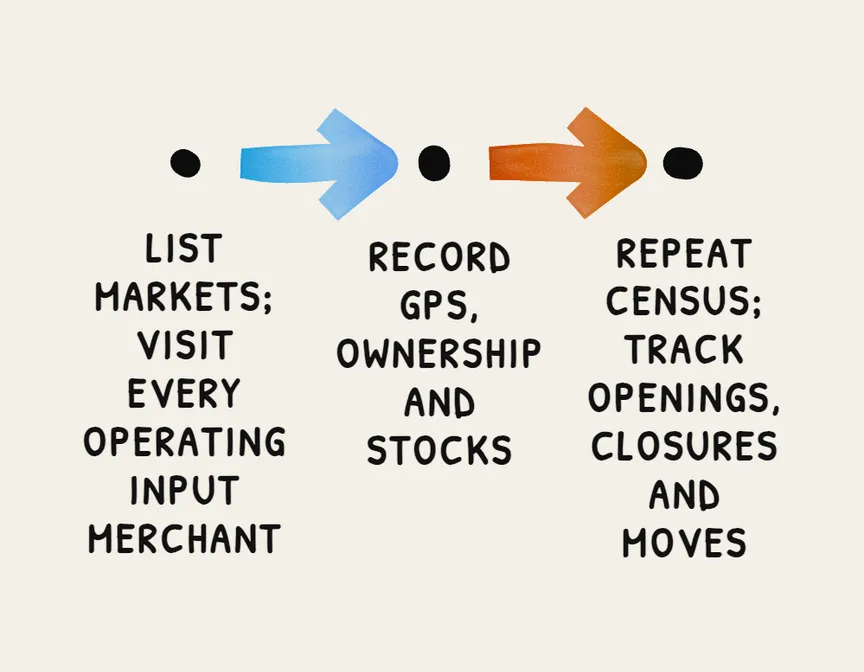
Repeated multi-wave census mapping accounts for high market turnover, store relocations, and seasonal business entry or exit that sample surveys miss.
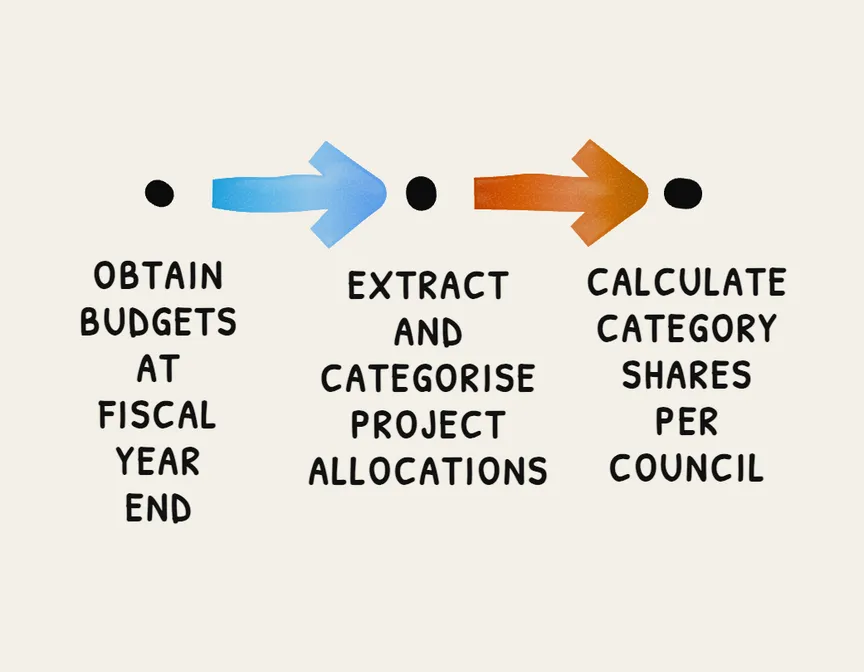
Standardizing raw local budget line items into consistent policy domains enables rigorous comparison across local councils.
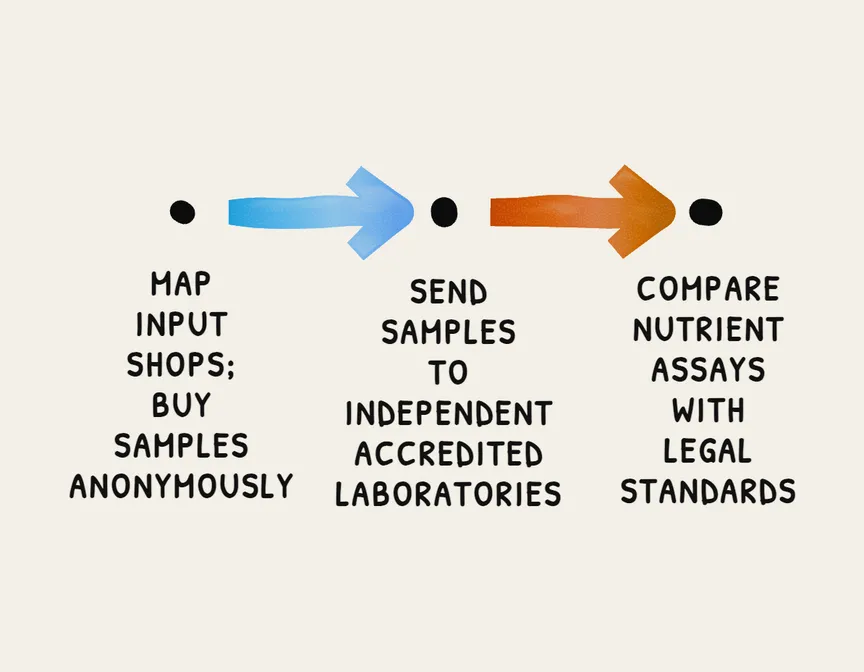
Unannounced mystery purchases prevent sellers from hiding poor stock during sampling visits.
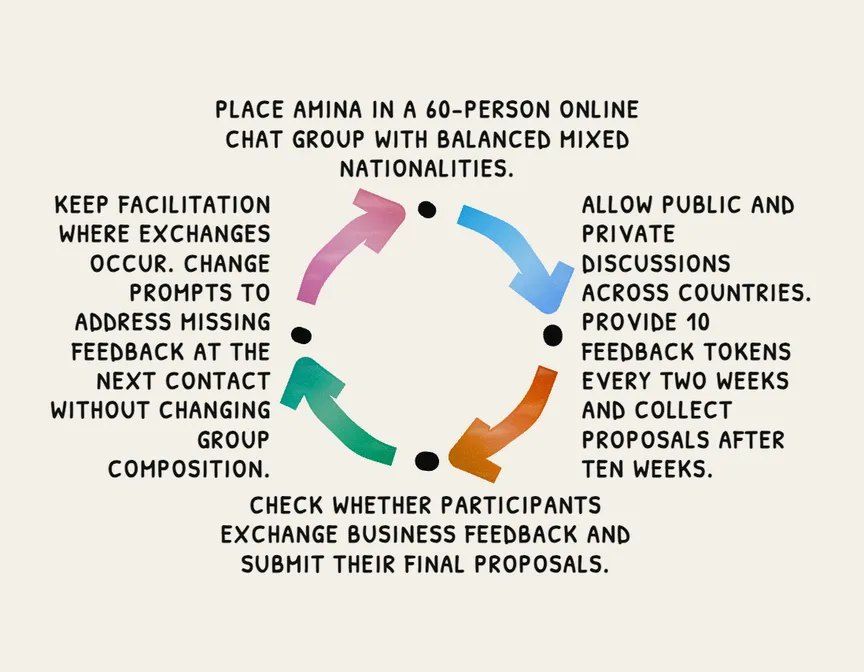
Exposure to cross-country peer diversity provides novel perspectives and non-redundant market information that enhances the intensive business quality of proposals.
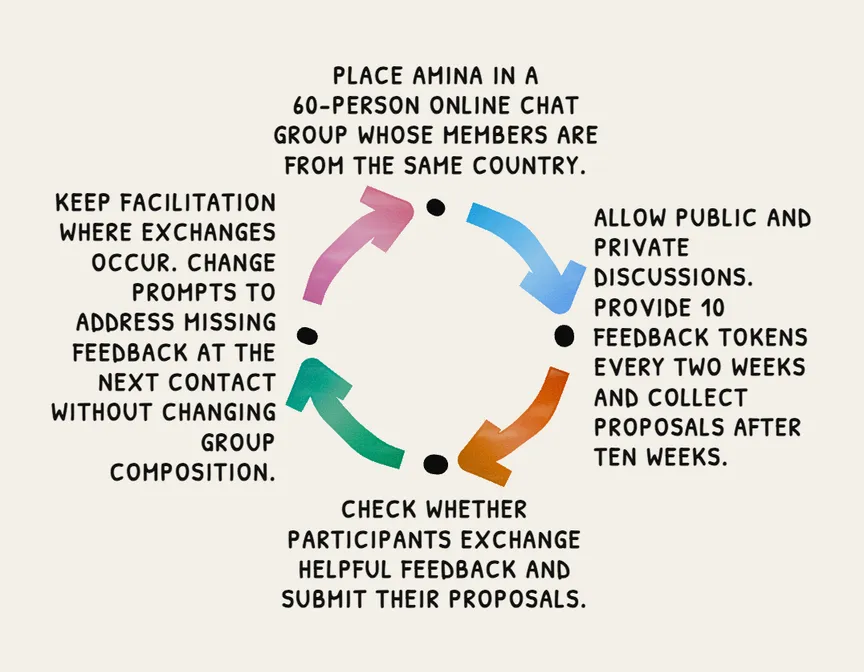
National homogeneity provides a shared cultural foundation and familiar social context that fosters trust and encouragement.
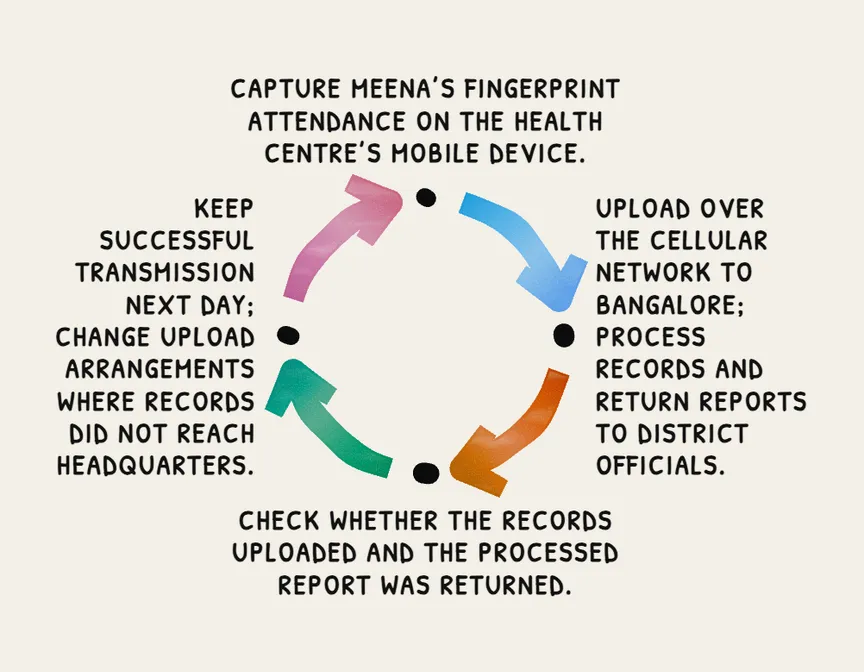
Wireless transmission bypasses local supervisor discretion and provides central authorities with objective, timely attendance records.
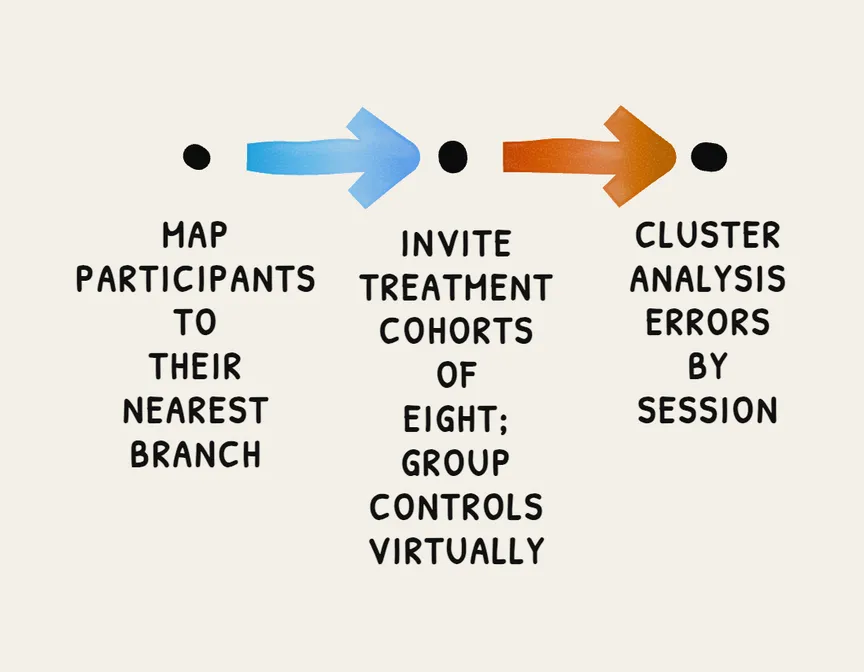
Recruiting at the nearest branch reduces travel burden for participants and improves attendance.
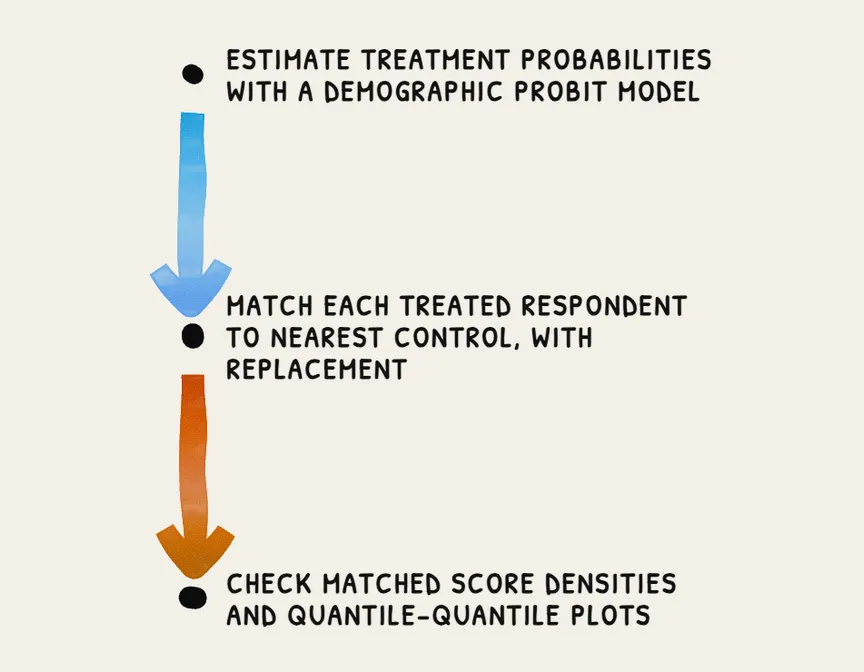
Matching treated and control respondents on propensity scores creates balanced sub-samples that mimic a randomized individual design.
Focusing on a single industry enables consultants and surveyors to develop specialized sector expertise while controlling for industry-specific shocks.
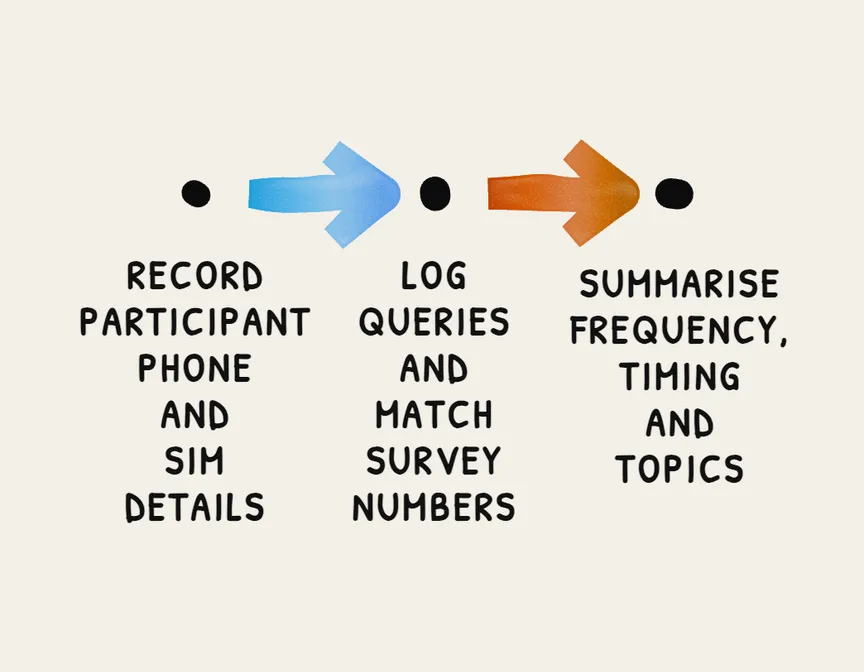
Automated telecom metadata provides an objective record of actual service usage without relying on memory or self-reporting.
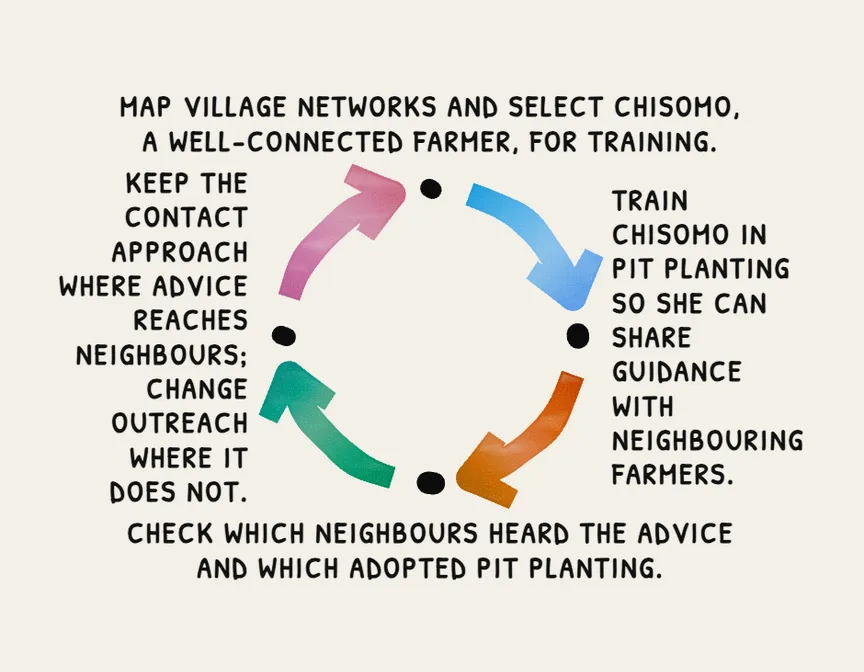
Farmer social networks lend credibility to extension programs and encourage information to pass from neighbor to neighbor.
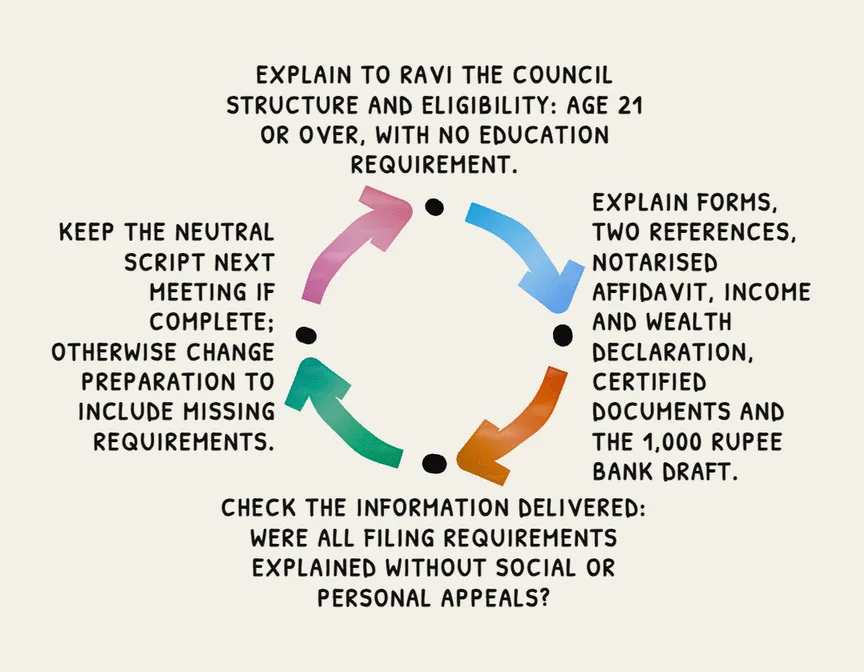
Clear procedural details lower the administrative barrier to entering politics by showing eligible citizens the exact steps required to declare candidacy.
Page 24 of 45
Previous
1
…
23
24
25
…
45
Next