Skip to the methods
Menu
aikyam
school
Findings
Methods
Subjects
All cards
Read
Findings
Methods
Subjects
All cards
Methods
2,124 methods
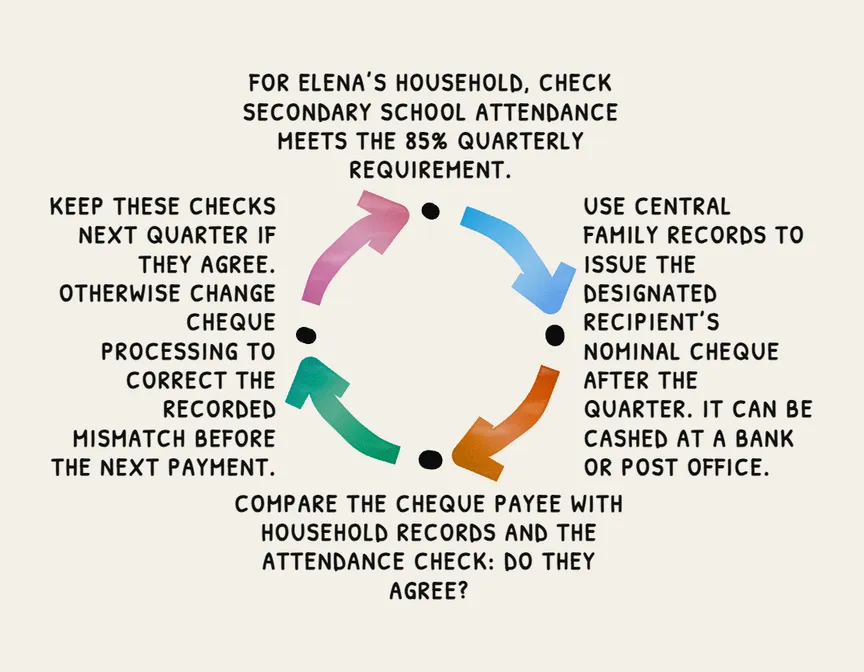
Issuing nominal cheques through a computerized system prevents unauthorized individuals from cashing the payments.
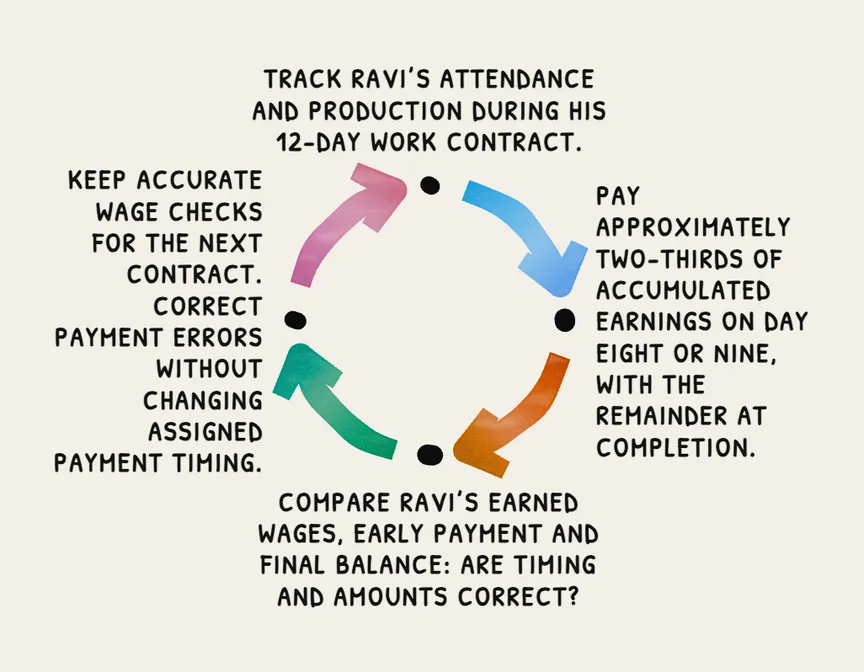
Early pay enables workers to pay off urgent debts and buy essential food immediately.
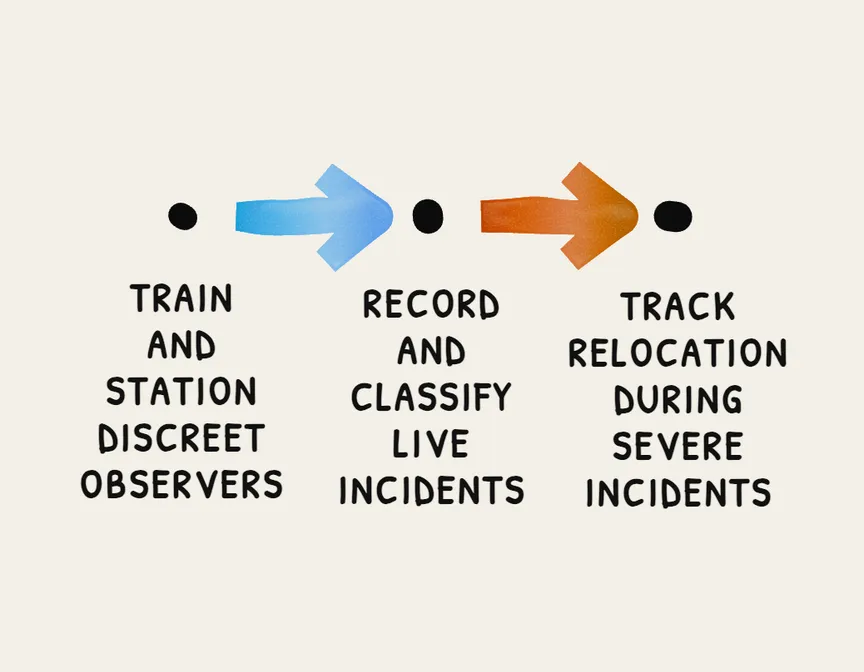
Discreet real-time observation overcomes underreporting and stigma associated with official crime reporting.
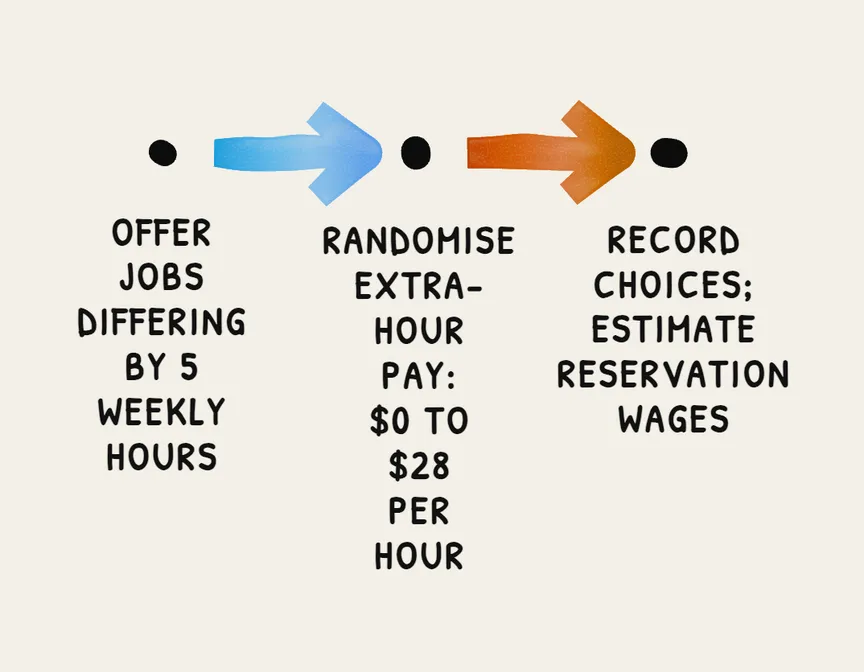
Varying the effective wage while holding job characteristics constant isolates the substitution effect of working additional hours.
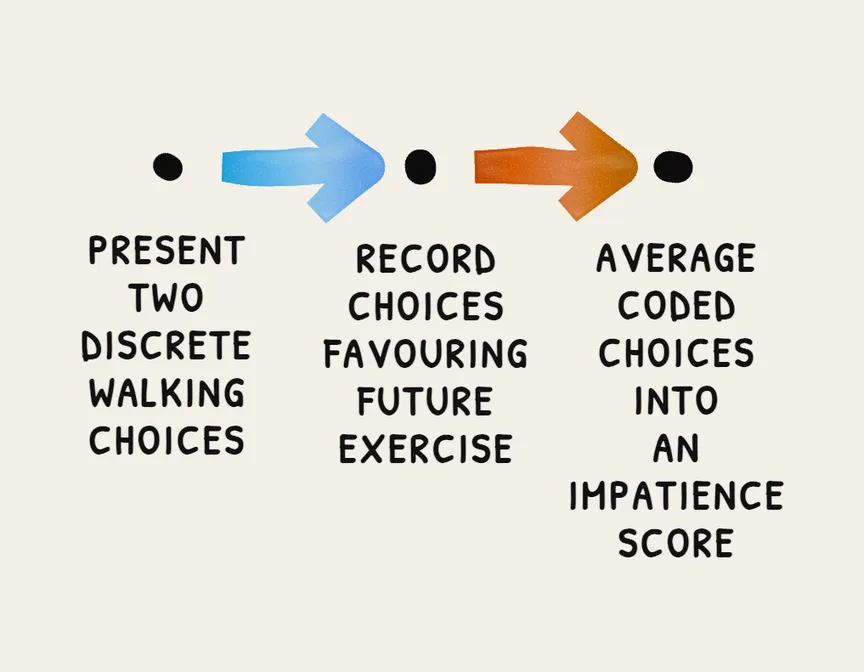
Simplifying continuous CTB allocations into binary choices between two discrete budget points reduces cognitive burden and comprehension errors.
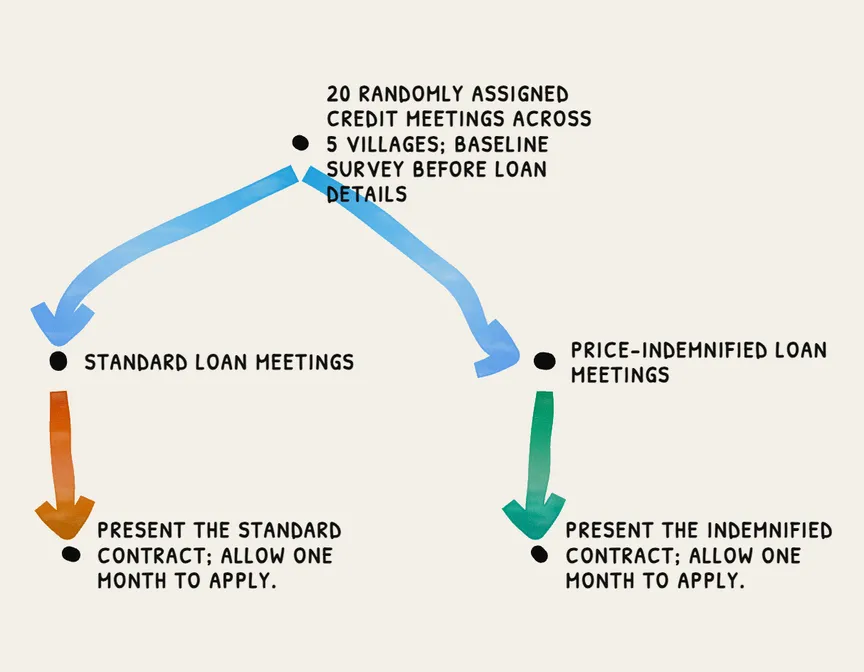
Framing meetings as standard commercial bank outreach rather than an experimental study ensures clients interact naturally without study-induced selection bias.
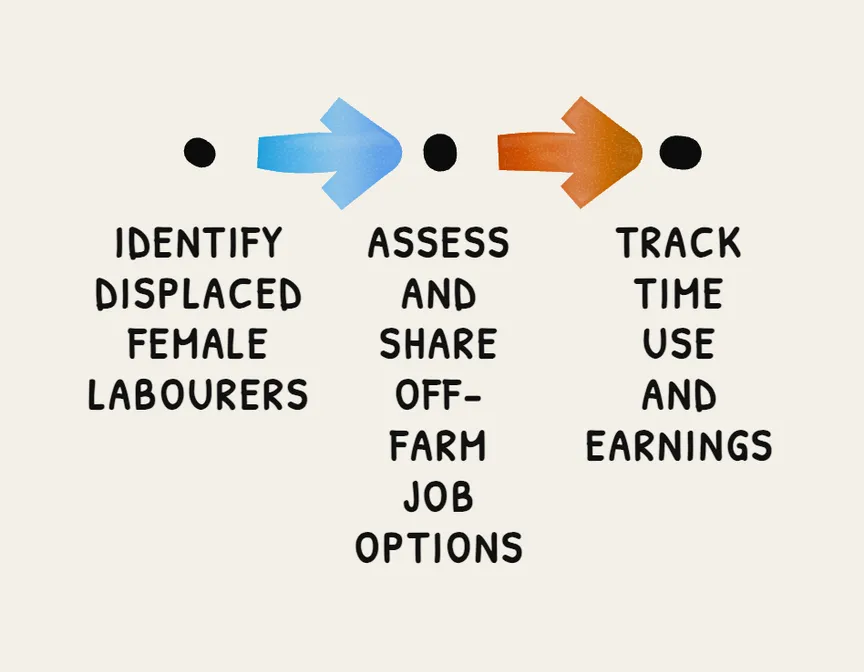
Providing job search information reduces search frictions and informs landless laborers about alternative employment options when farm mechanization cuts traditional agricultural labor demand.
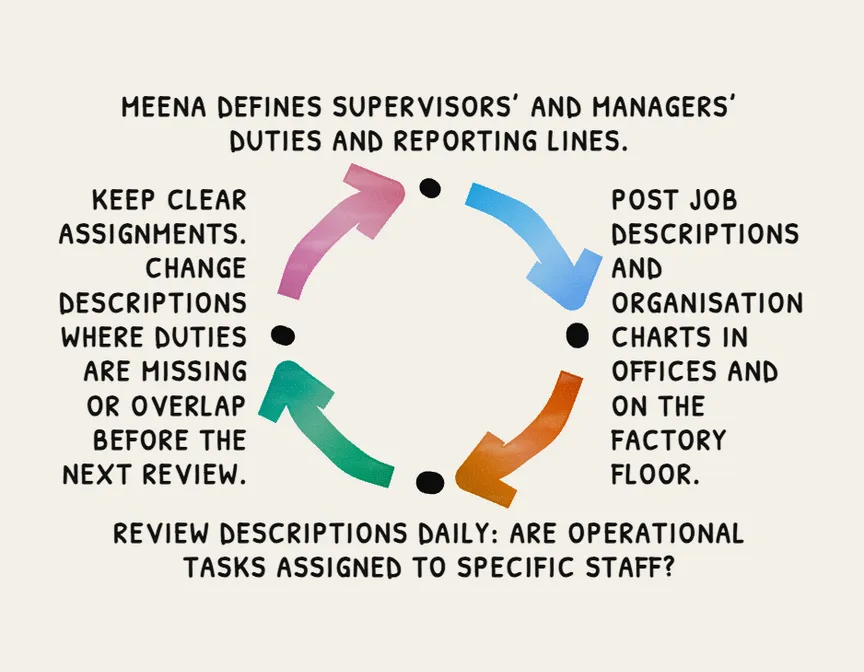
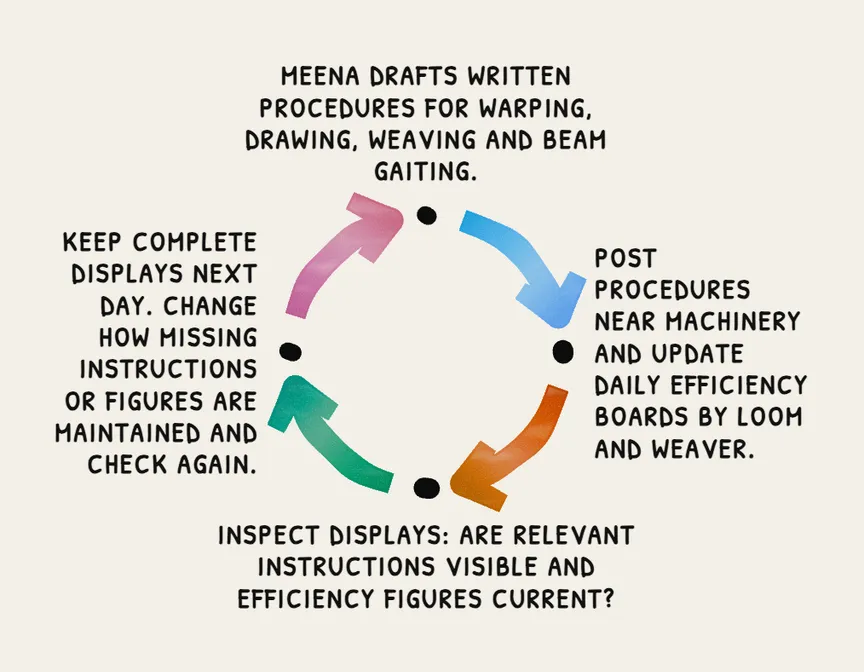
Displaying explicit roles and responsibilities creates clear operational accountability and prevents critical supervisory tasks from being overlooked.
Posting clear operating instructions reduces worker errors during complex machine setup tasks.
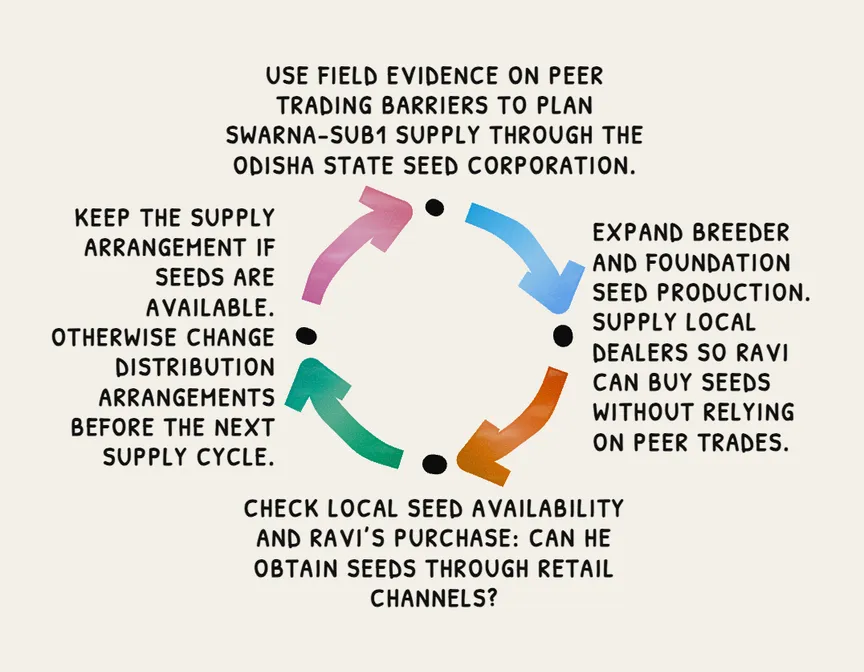
State seed corporations have established distribution networks and retail outlets.
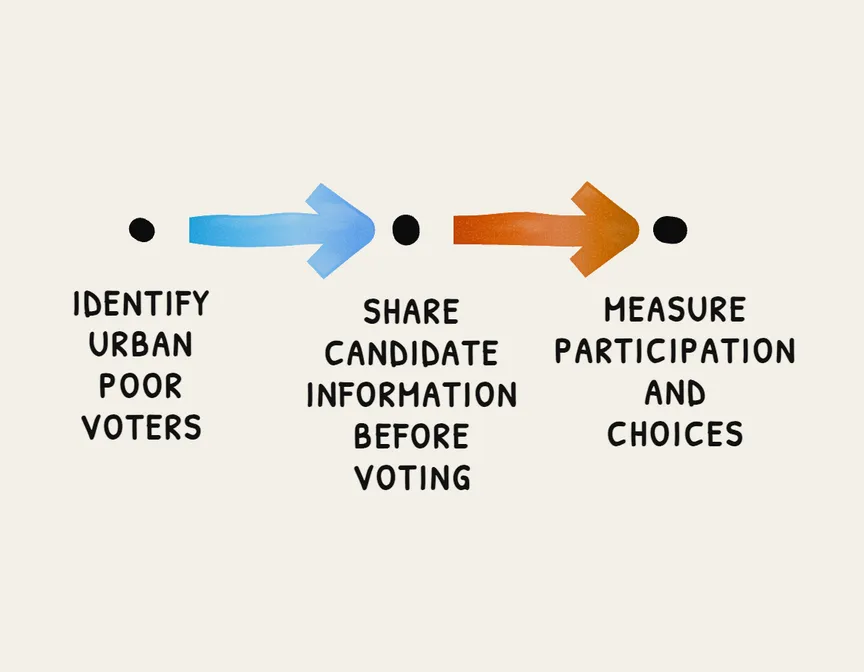
Providing voters with structured information about candidate performance reduces information barriers.
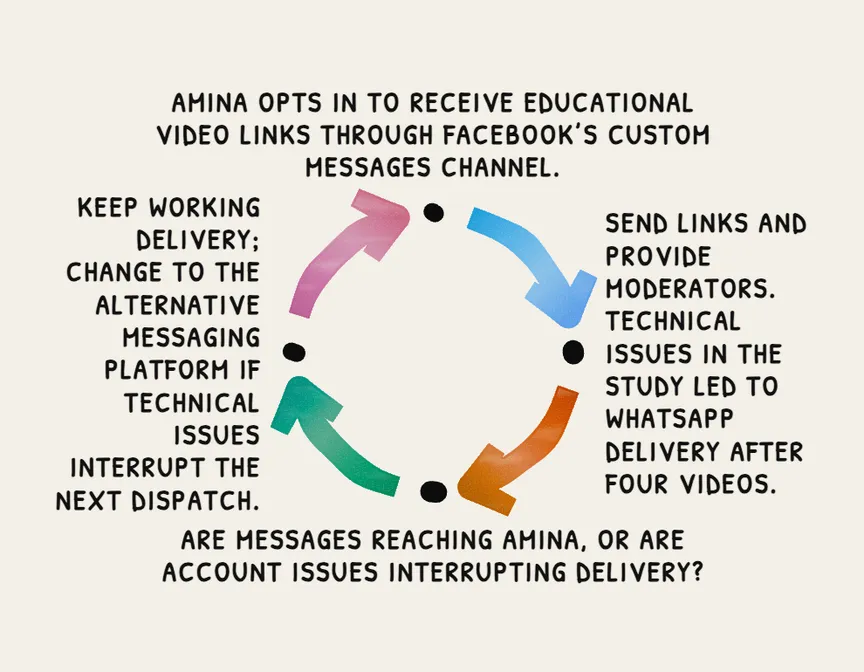
Custom messaging delivers video content directly into individual private inbox feeds on widely used social media networks.
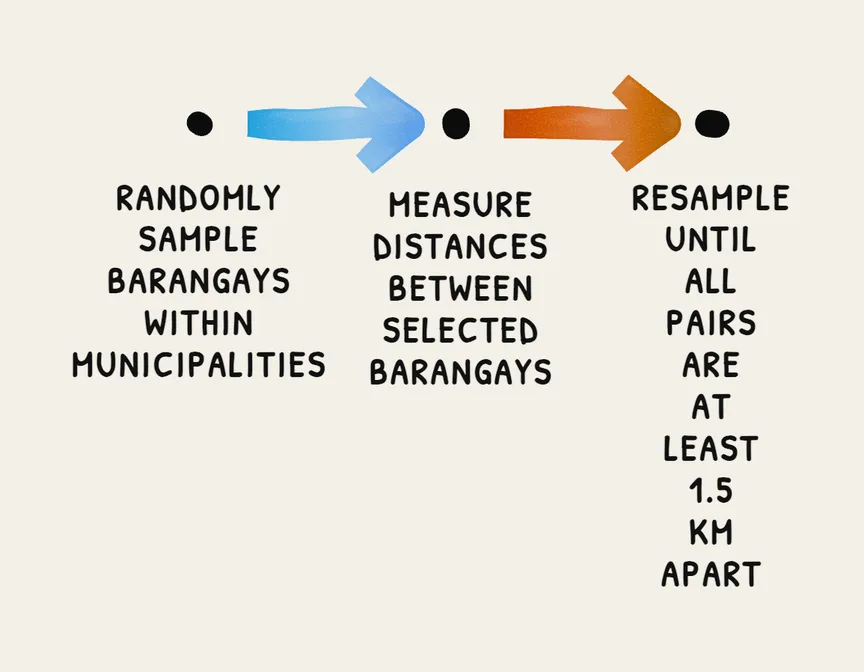
Enforcing a physical distance buffer between experimental units prevents physical movement, communication, and campaign spillover from treatment sites into control areas.
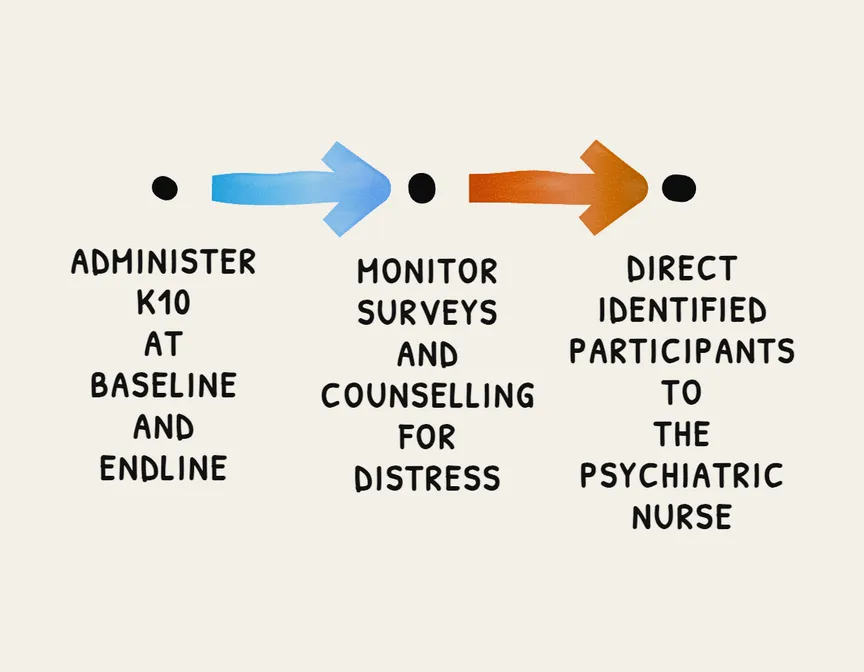
Integrating standardized distress screening into routine field surveys ensures systematic identification of severe mental illness.
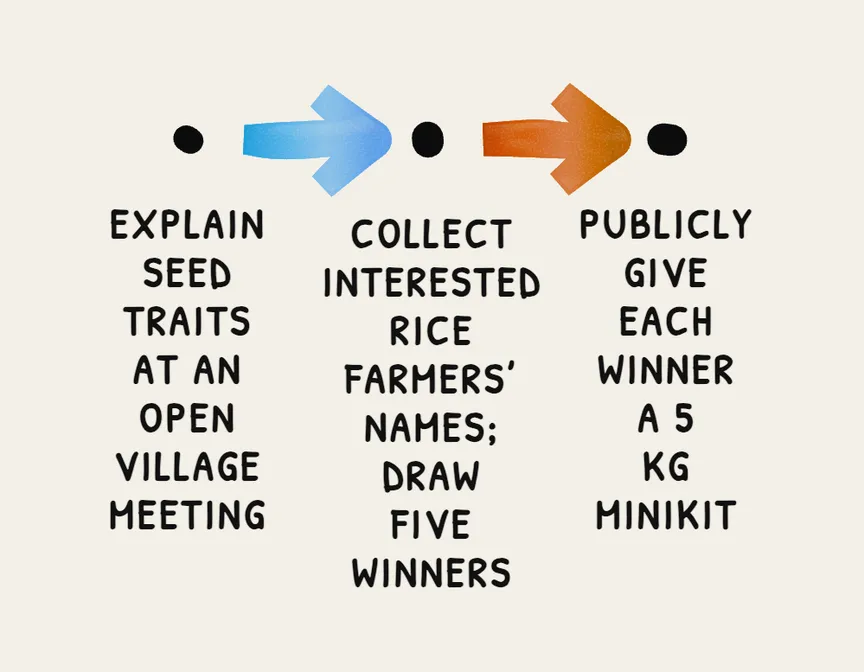
Public drawings ensure random allocation and create community-wide awareness of seed holders.
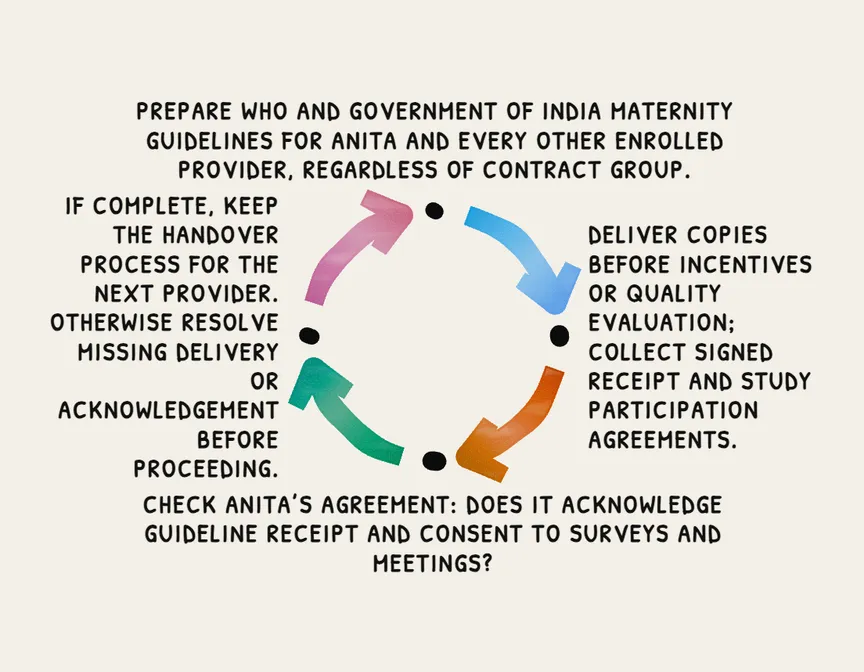
Providing standard clinical guidelines ensures all participating providers share a common understanding of recommended obstetric protocols.
Household surveys capture data on illness episodes where individuals did not seek formal care or bought non-subsidized medications.
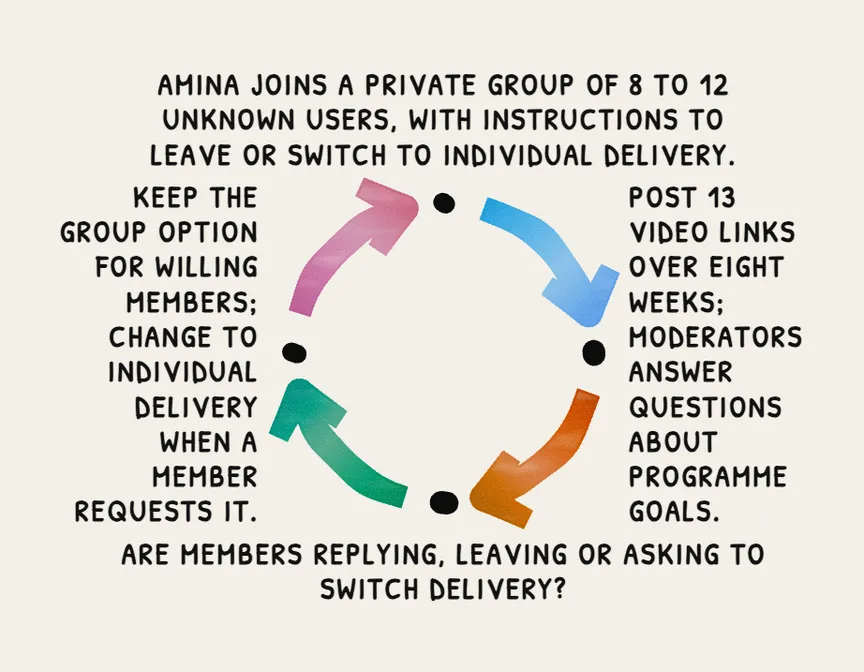
Group delivery aims to trigger peer effects and communal discussion around educational content, helping participants perceive shifts in social norms within a shared digital space.
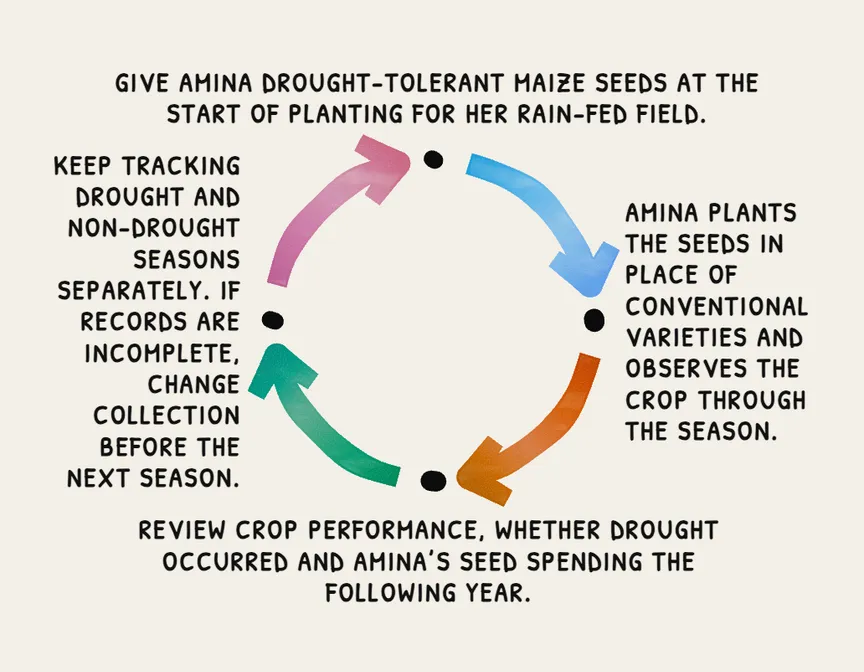
Experiencing a drought while trying drought-tolerant seeds allows farmers to observe the protective benefits firsthand during crop failure.
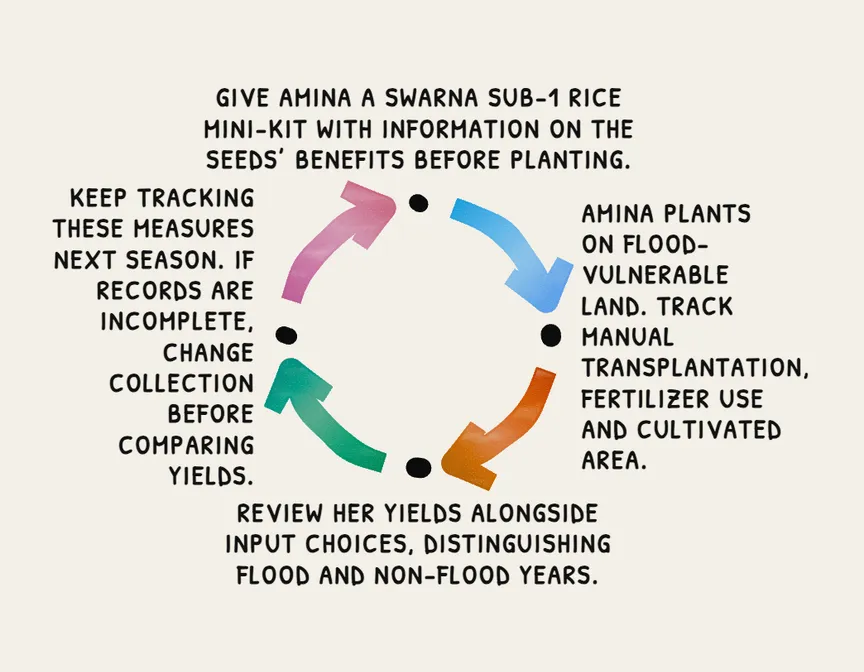
Protecting harvests against submergence reduces downside risk for farmers.
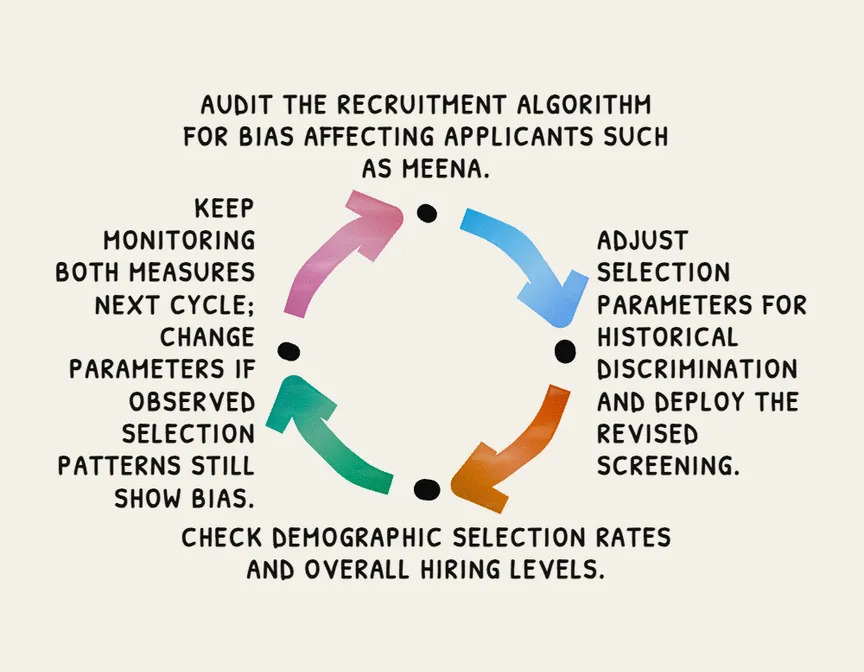
Recalibrating selection algorithms prevents automated systems from reproducing past discrimination patterns.
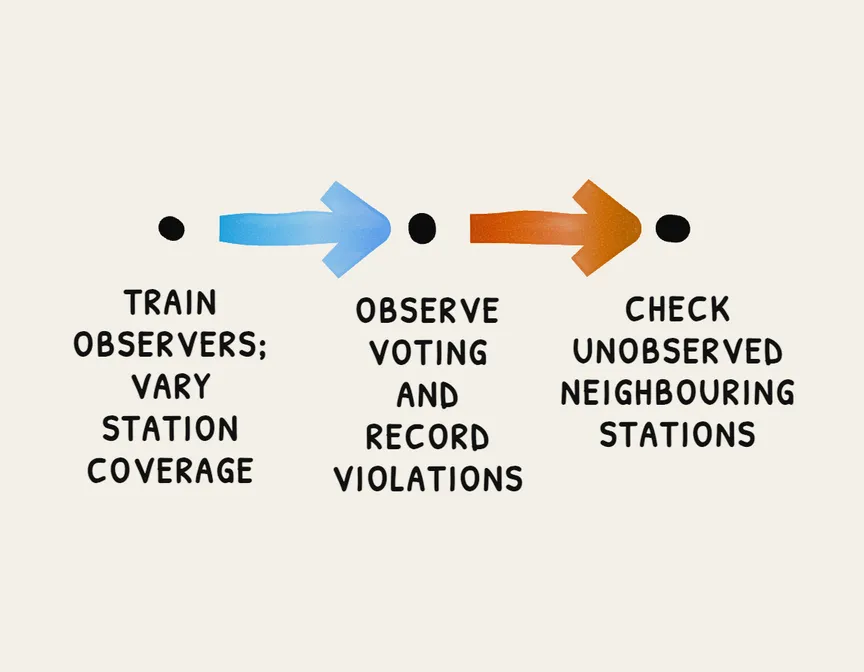
The presence of domestic observers deters party brokers from executing voter intimidation and ballot manipulation at monitored polling stations.
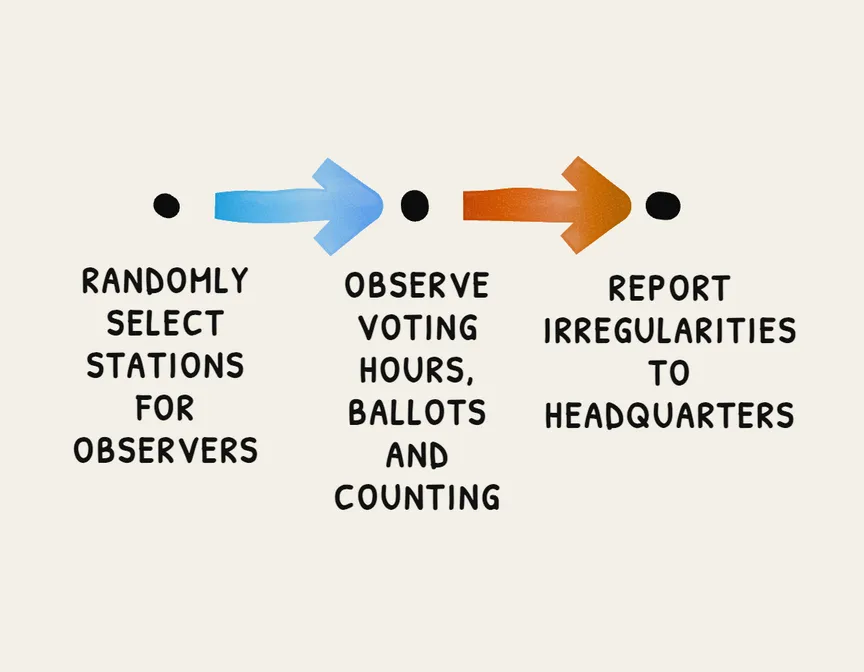
The visible presence of independent observers creates a deterrent effect against election malpractice and ensures polling stations remain open for their full statutory operating hours.
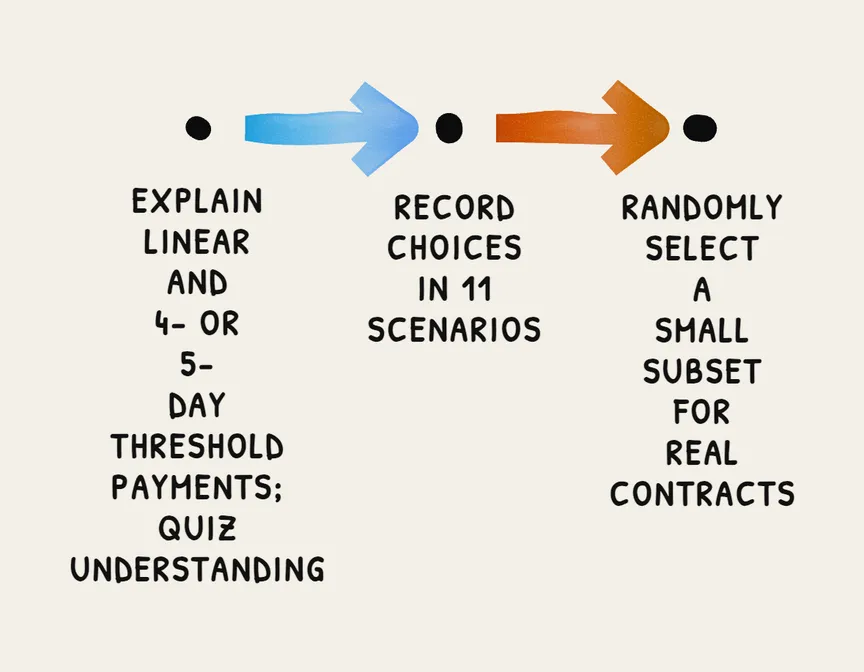
Choosing a financially dominated threshold contract over a linear contract demonstrates an explicit willingness to restrict future payout options to motivate effort.
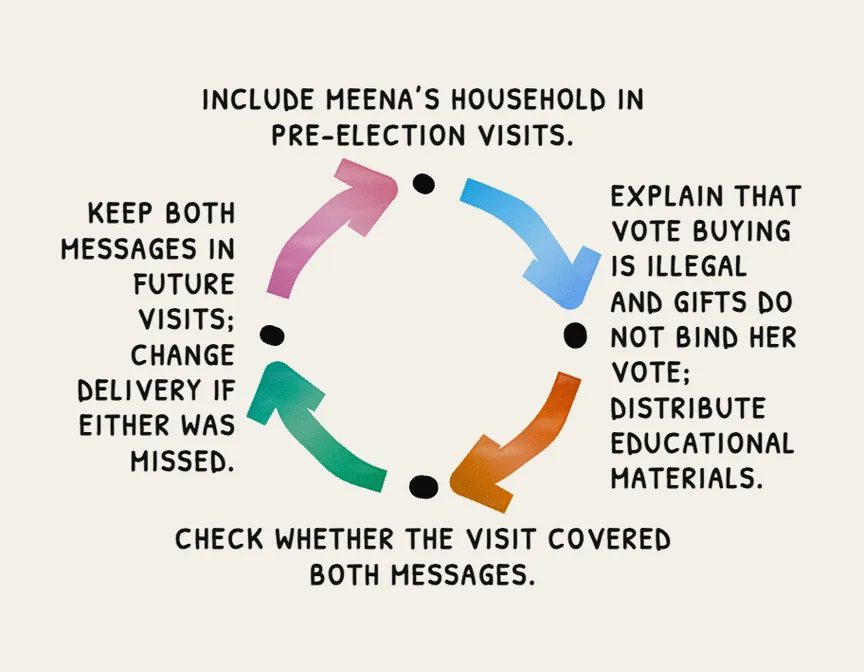
The leaflets inform voters that accepting gifts in exchange for votes weakens their ability to demand public services from elected officials after the election.
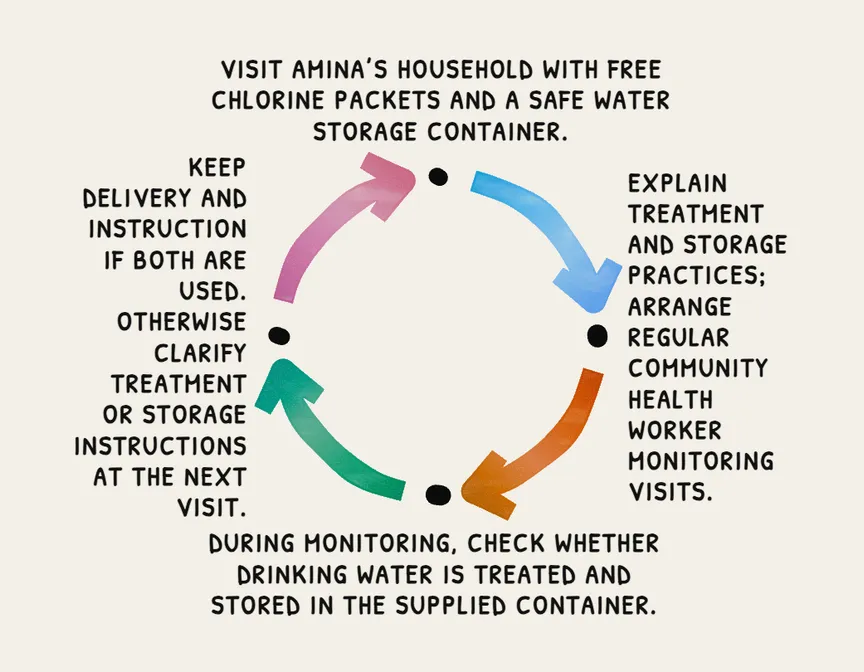
Distributing chlorine packets directly to homes with health education and community health worker monitoring removes access barriers, while modified storage containers physically block recontamination during daily use.
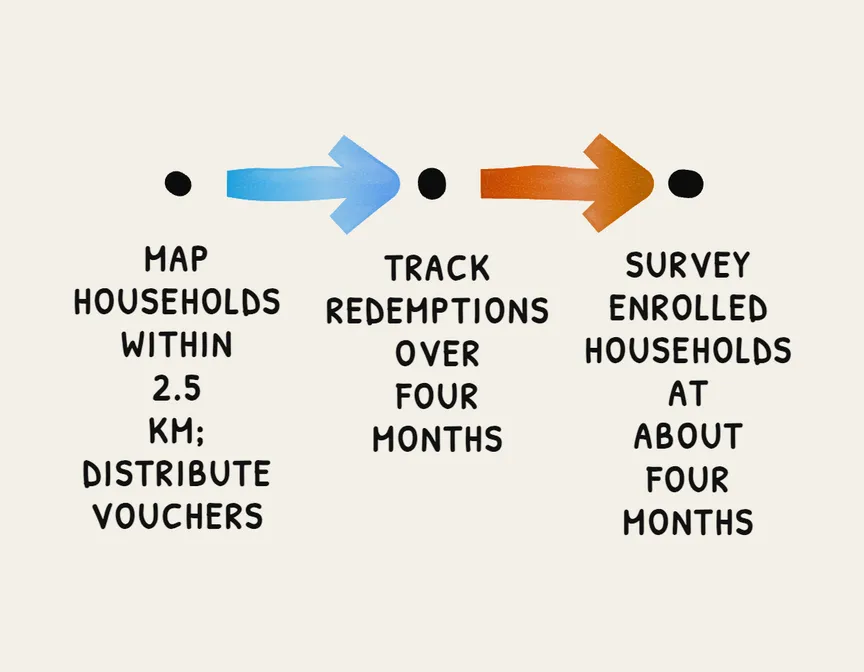
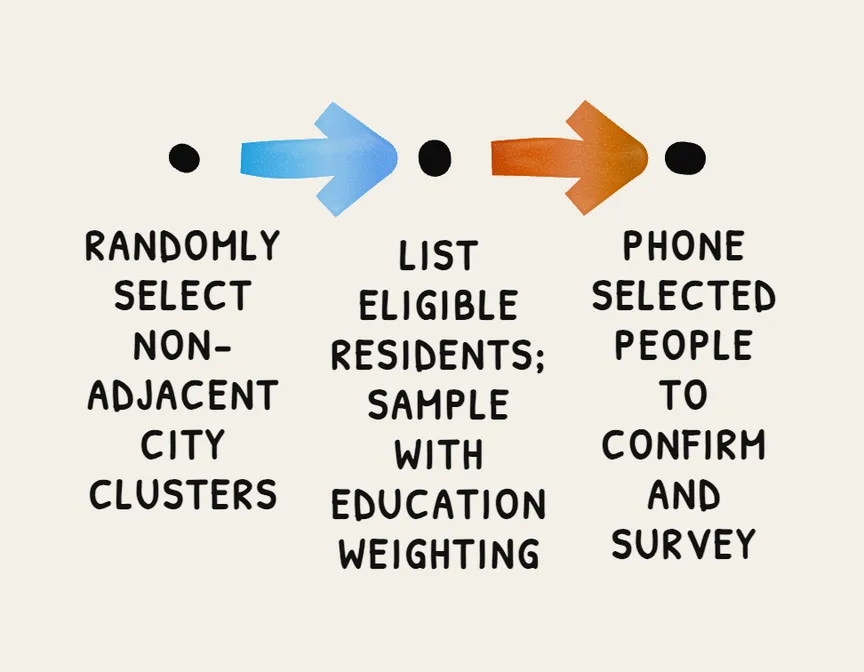
Cluster-based enumeration ensures broad geographic coverage while preventing spatial spillovers between treatment and control groups.
Informing voters that vote buying is illegal and reminding them that gifts do not bind their choice breaks the norm of reciprocity between candidates and voters.
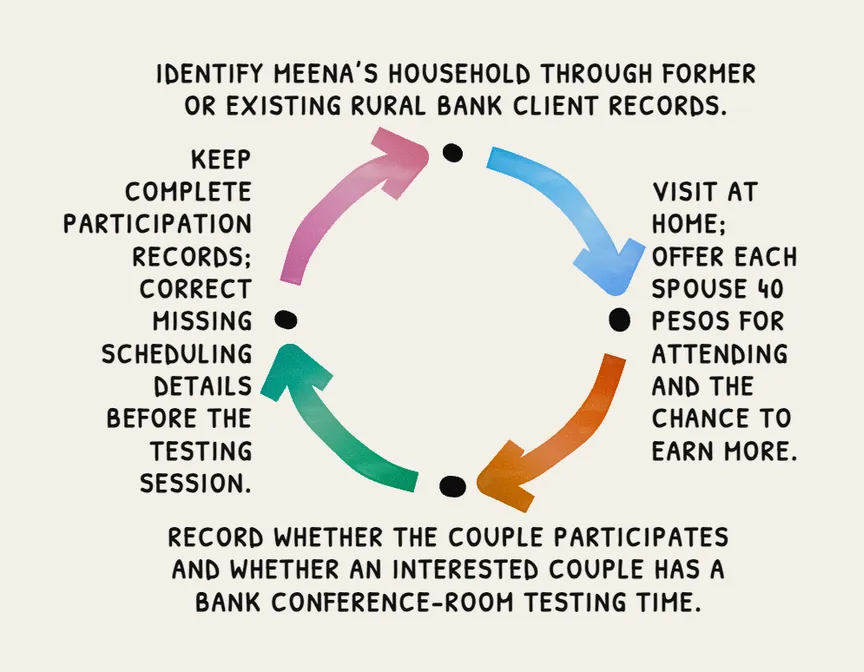
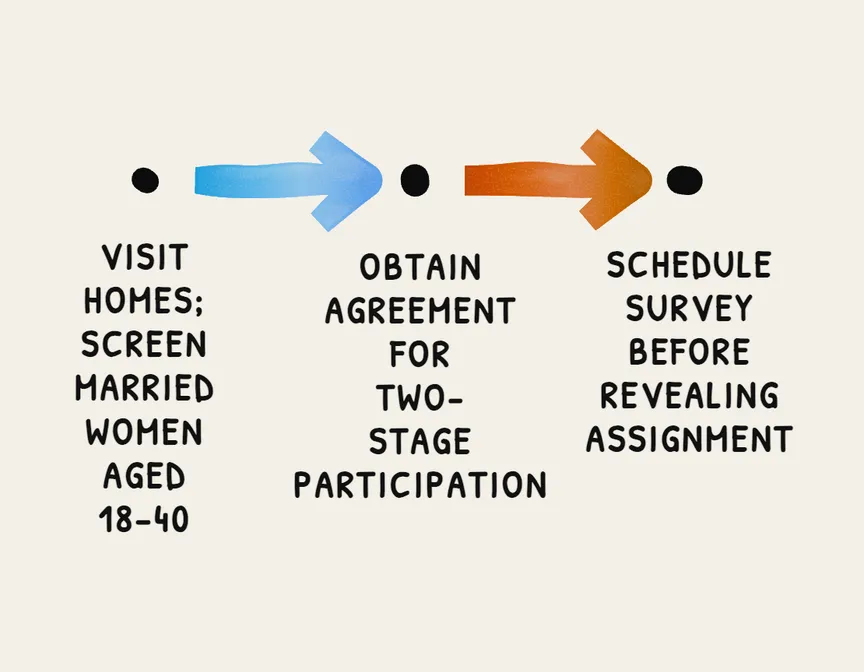
Direct home visits reach both spouses simultaneously, reducing selection bias and ensuring both partners understand the study incentive.
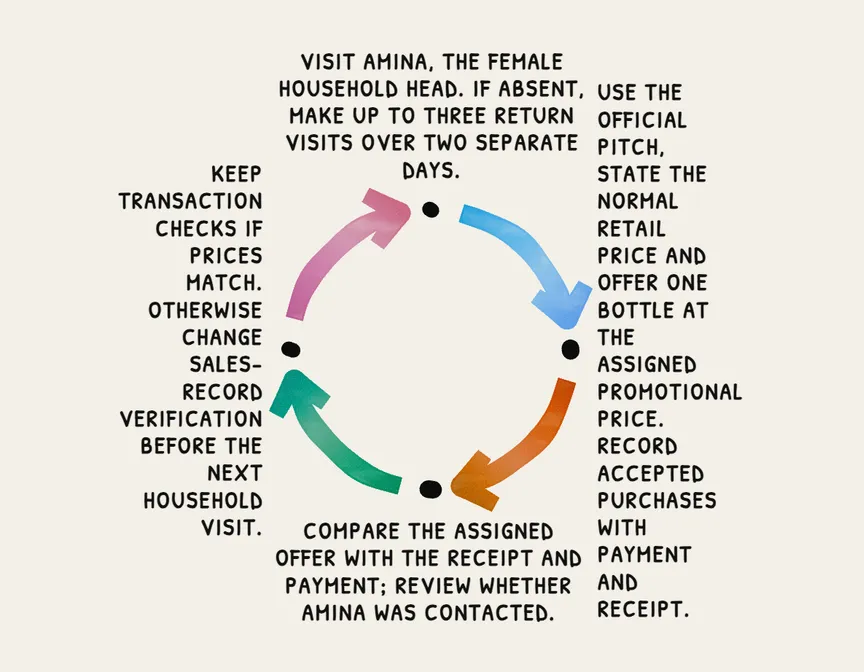
Targeting the primary domestic caretaker directly ensures the sales offer reaches the decision-maker responsible for water treatment and household sanitation.
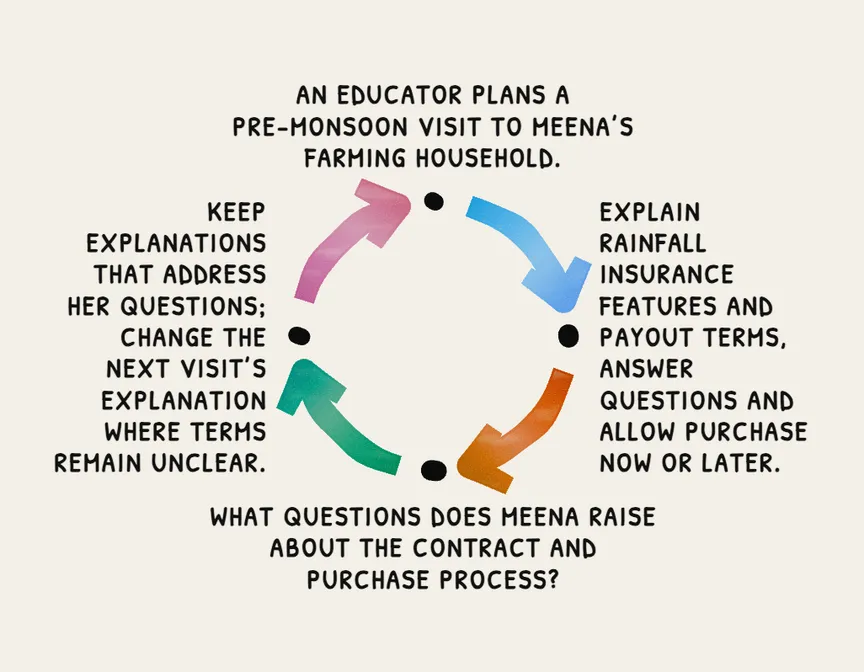
Personalized face-to-face explanations overcome confusion about complex financial terms and reduce household hesitation.
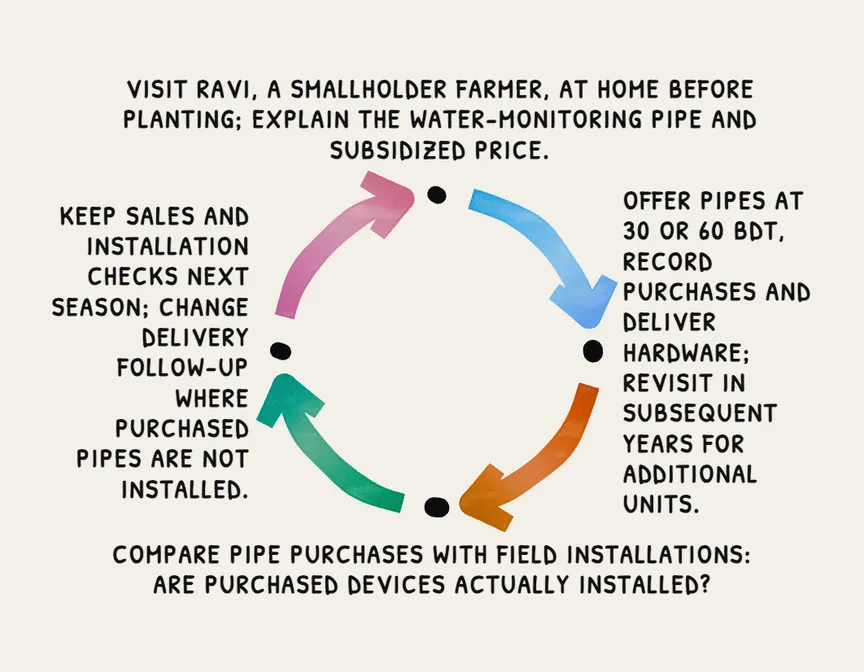
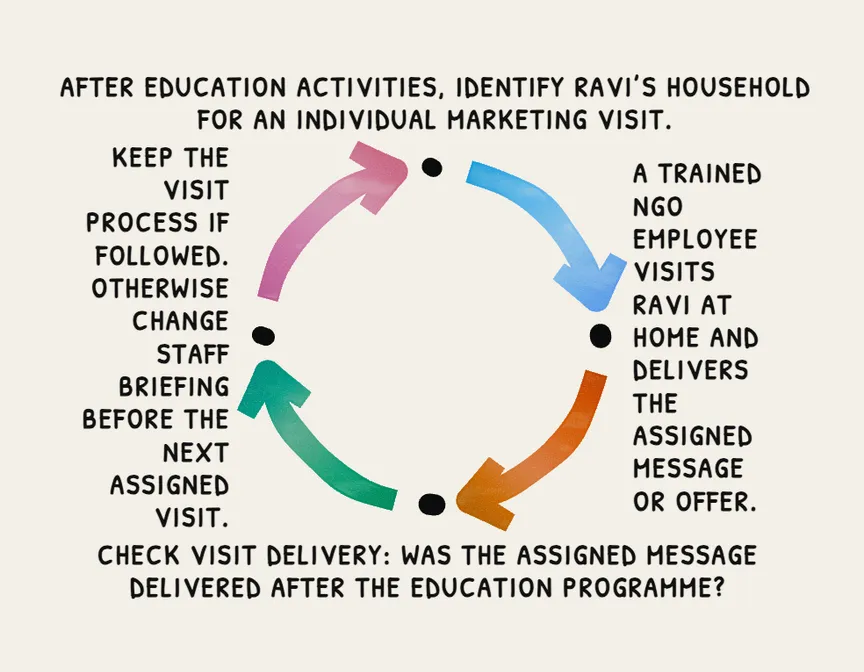
Direct door-to-door extension visits eliminate information barriers and lower upfront purchasing costs for individual farmers.
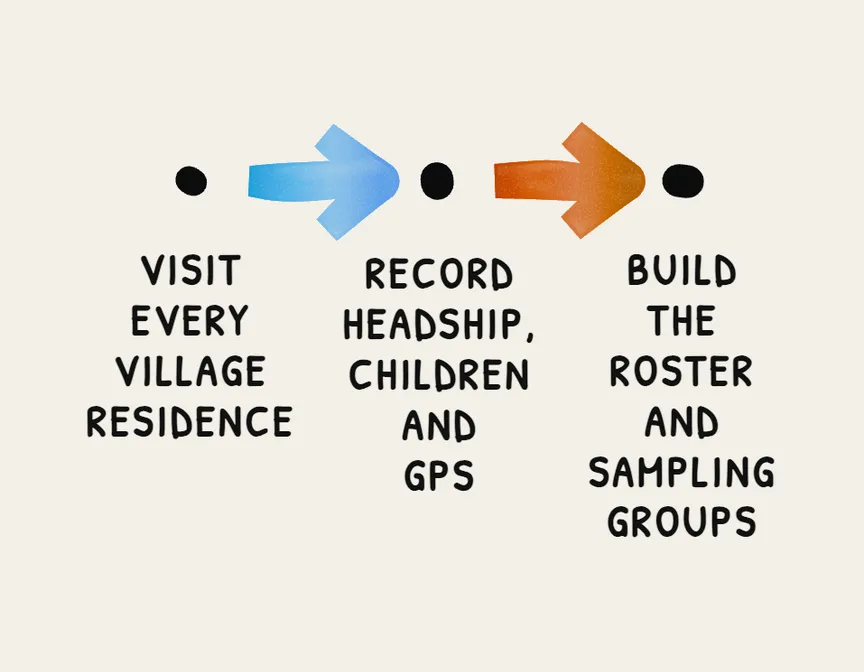
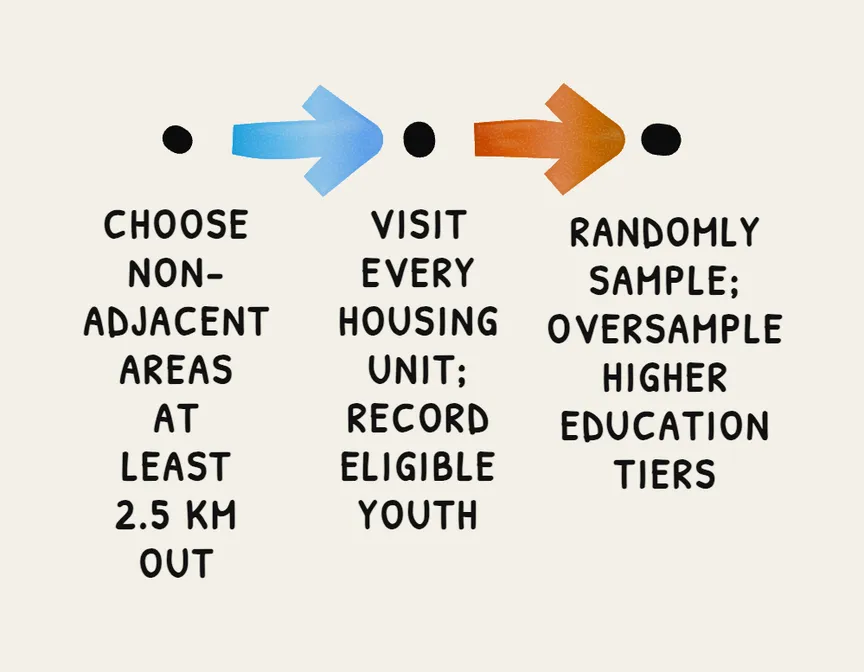
Collecting door-to-door census data directly from every village residence creates a complete, unbiased sampling frame that eliminates self-selection and non-response bias.
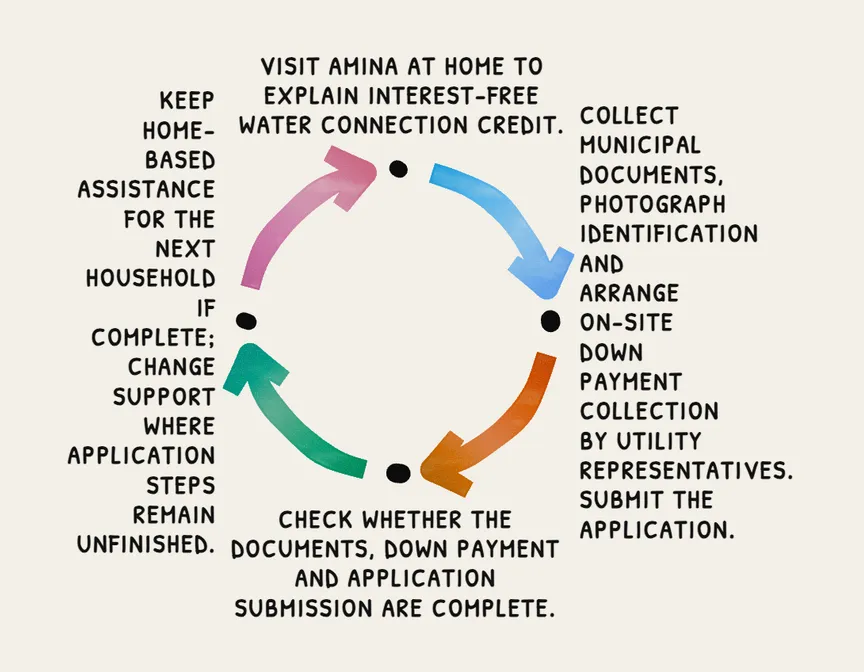
Complex red tape and procedural friction create status-quo bias that deters eligible households from applying on their own.
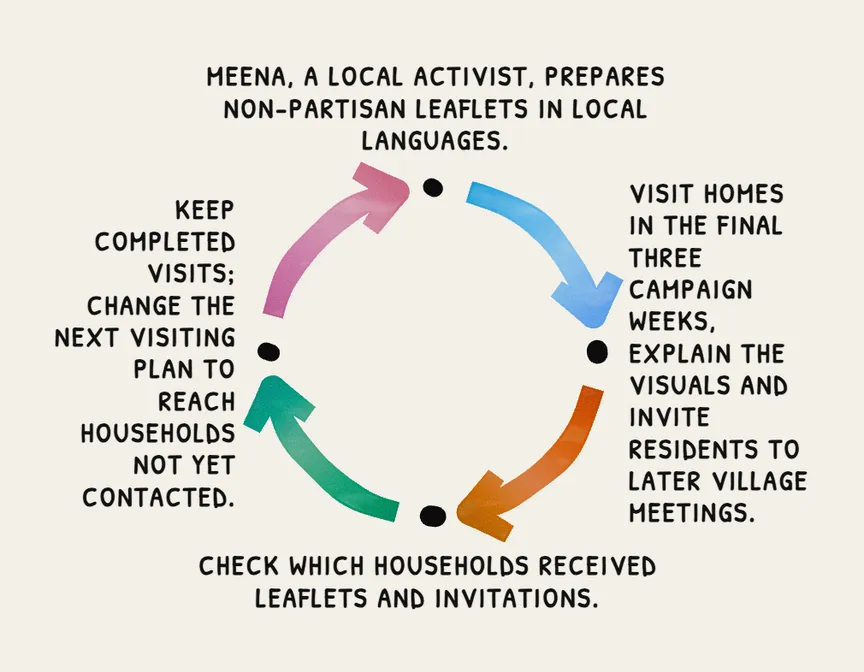
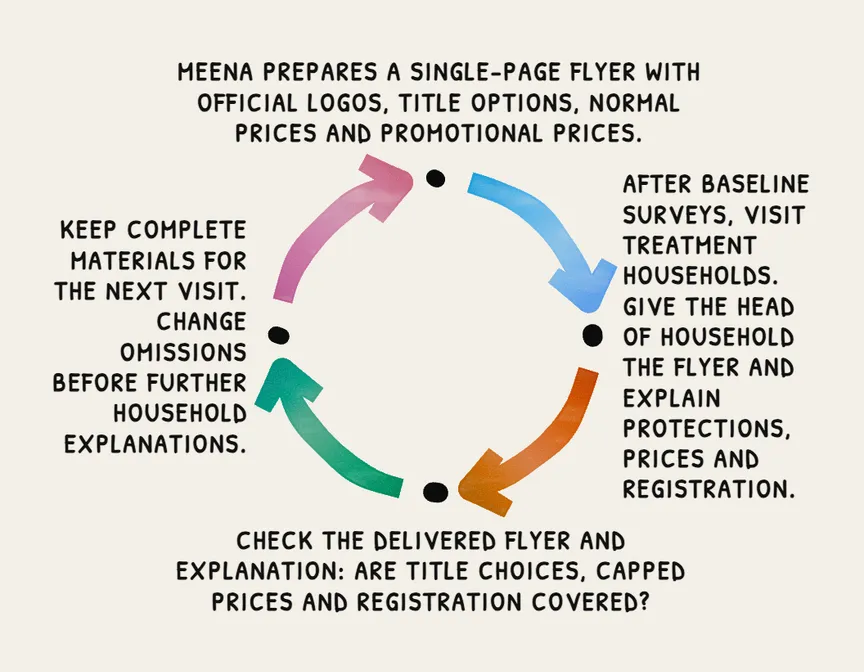
Distributing printed flyers directly to residents resolves information asymmetries about state land laws and official costs.
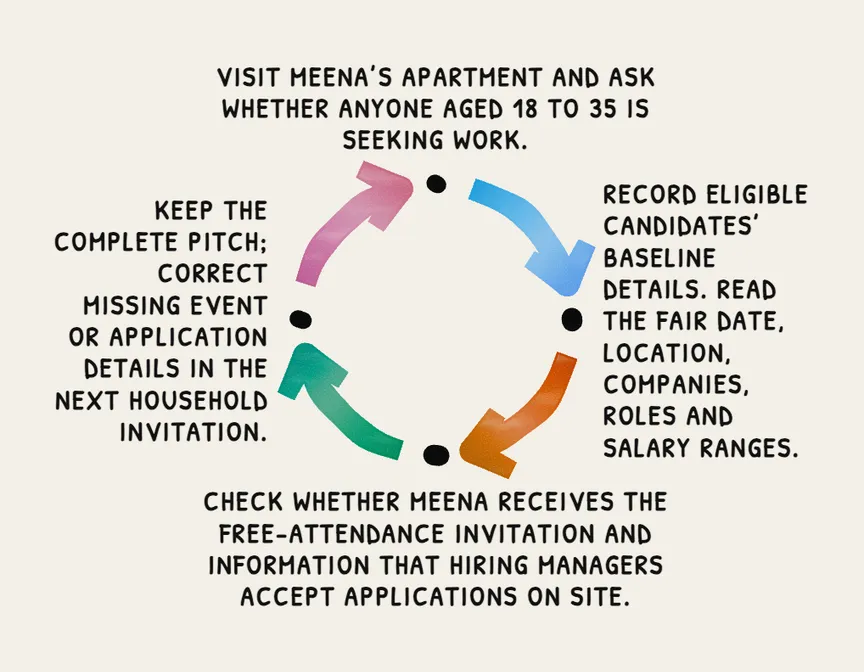
Direct residential outreach reduces information frictions by delivering specific event logistics directly to jobseekers in their homes.
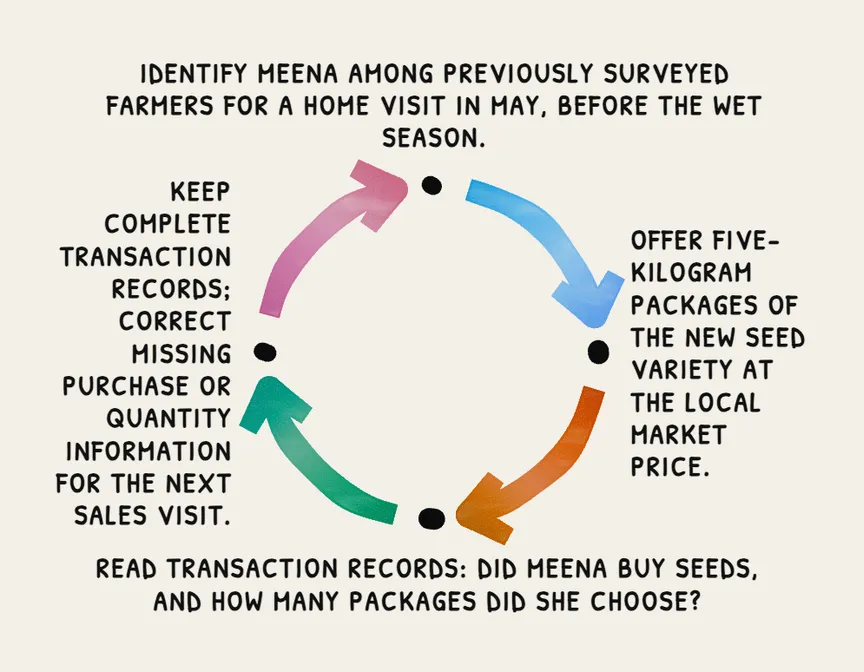
Offering seeds directly at home removes supply-chain access barriers while testing true willingness to pay.
Visiting farmers directly in their homes creates an opportunity to deliver targeted sales offers that address specific hesitation factors.
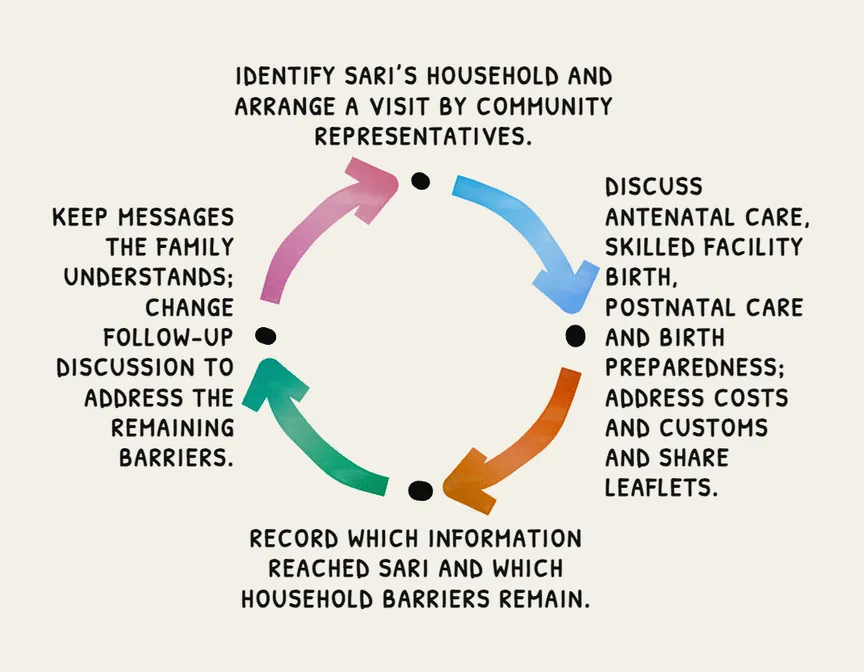
Direct face-to-face visits allow community representatives to address individual household hesitation and overcome specific social or cultural barriers to care.
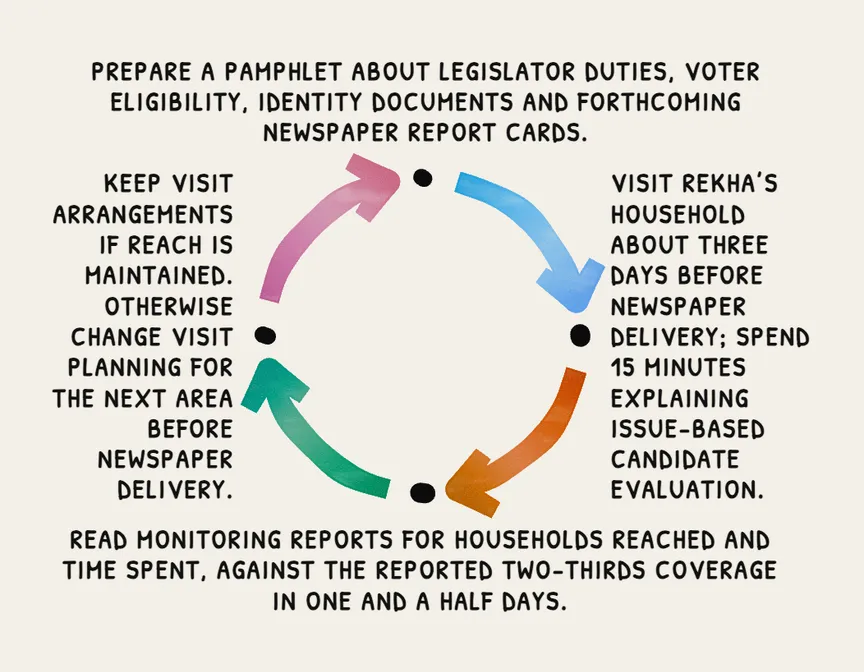
Priming households on legislator responsibilities and upcoming disclosures prepares citizens to interpret report card data and reduces reliance on identity-based voting.
Hiring local community health workers builds immediate trust and lowers household refusal rates.
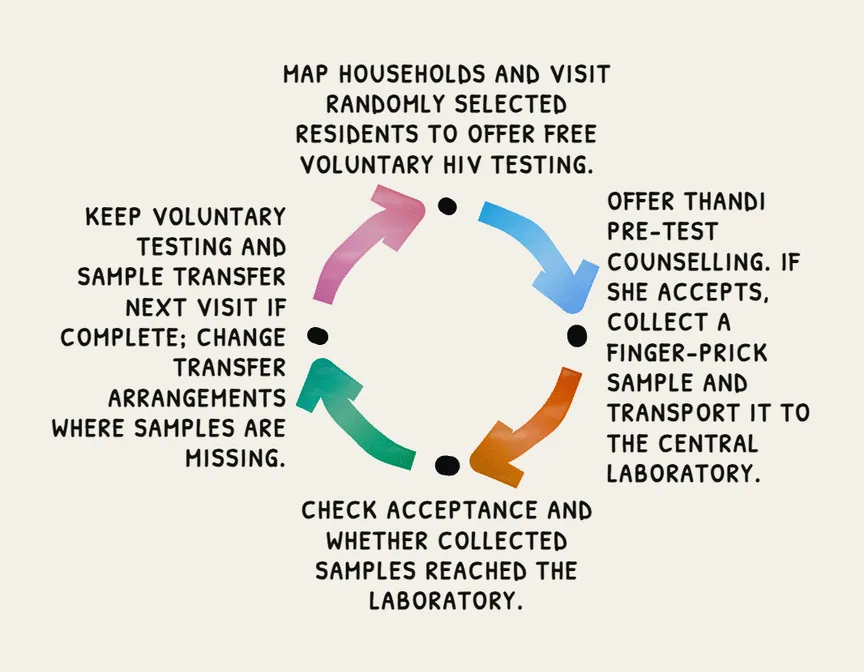
Bringing healthcare services directly to households removes travel costs and time barriers that prevent rural residents from seeking testing.
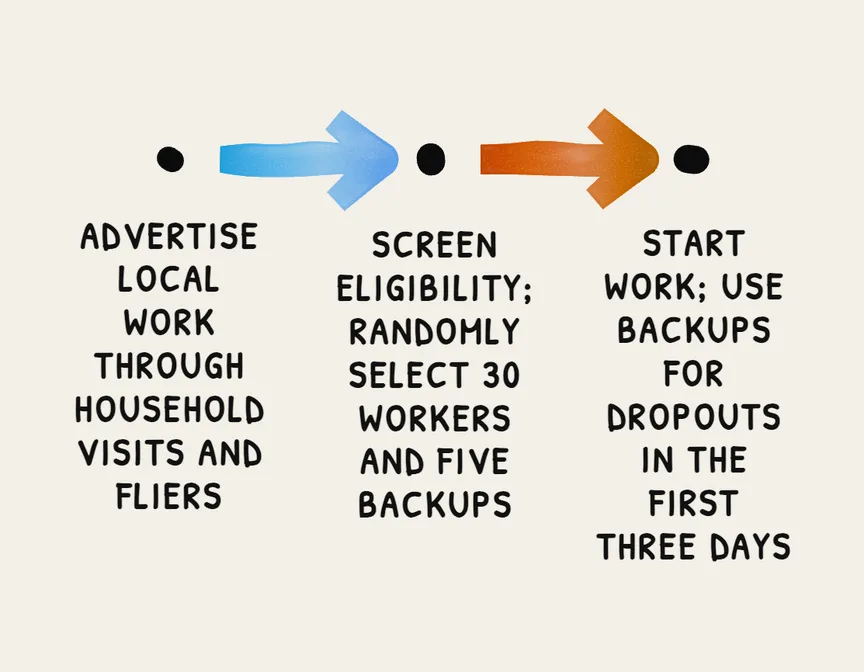
Direct household enumeration eliminates self-selection bias associated with public advertisements.
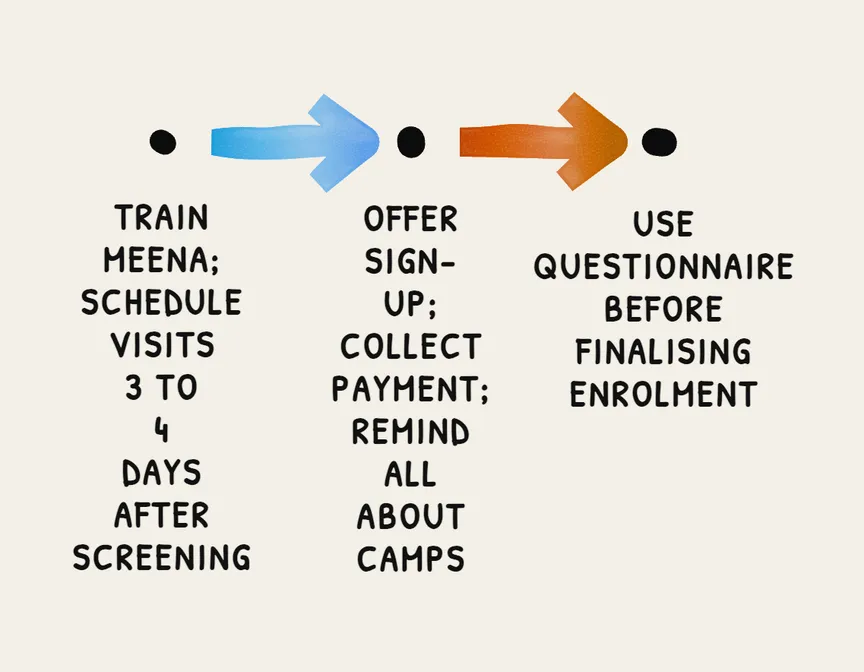
Leveraging familiar, trusted local health workers lowers social and informational friction, ensuring respondents understand program schedules and can sign up at home without traveling to a clinic.
Door-to-door outreach directly reaches low-income laborers in their homes during agricultural lean seasons when local employment is scarce.
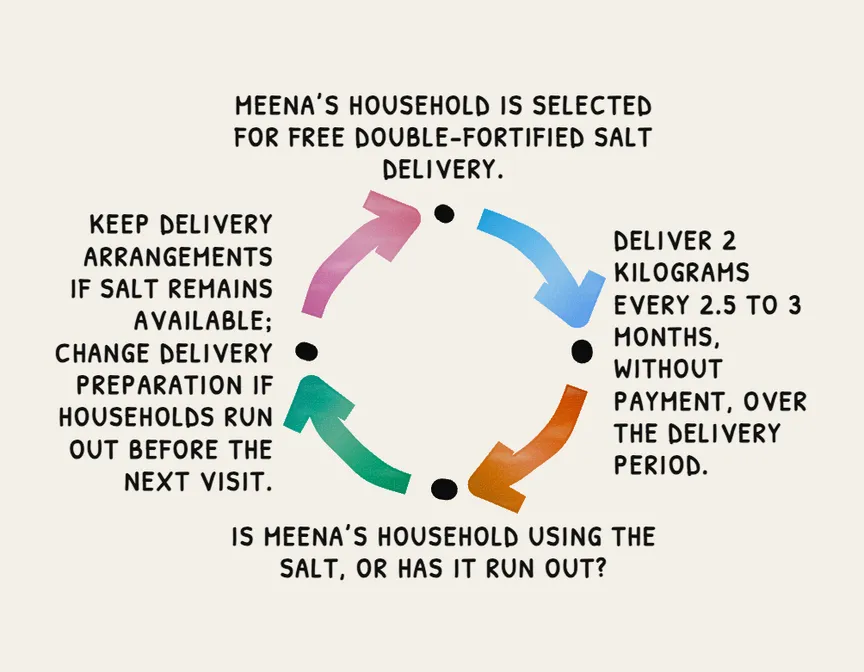
Free home delivery removes all financial cost and travel effort, ensuring salt is continuously available in the kitchen.
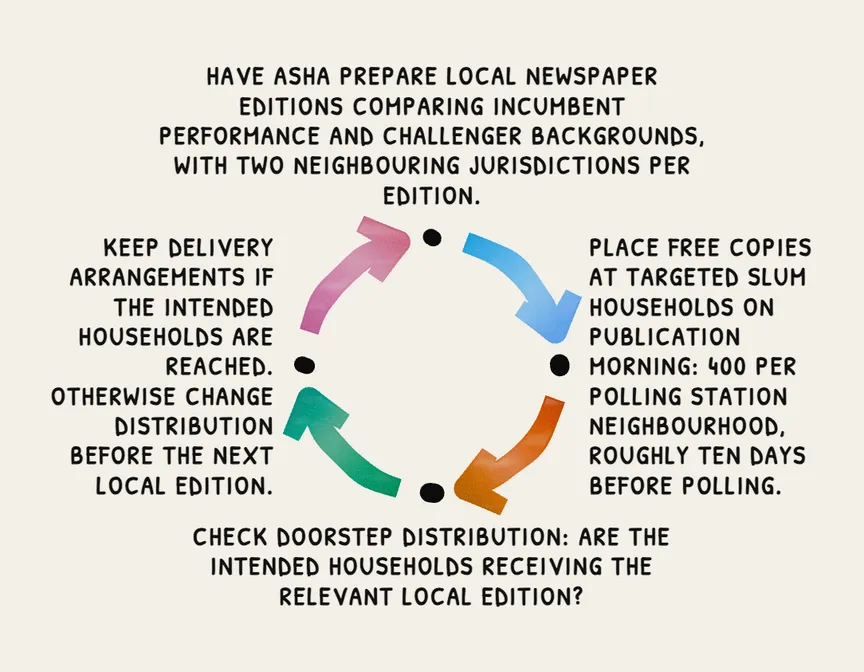
Doorstep delivery of daily newspapers delivers verified performance records directly to marginalized households that usually lack media access.
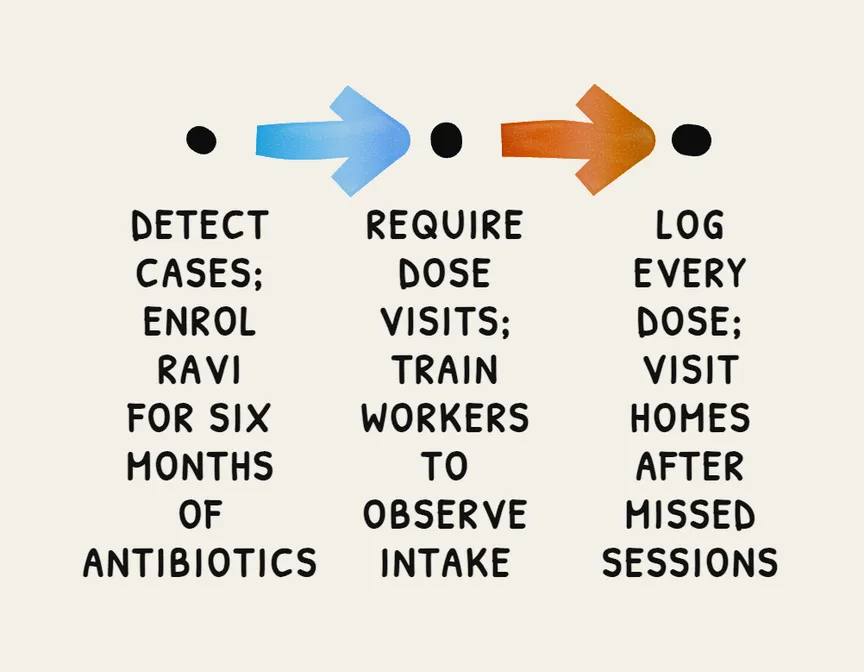
Direct observation ensures complete patient adherence to long-term antibiotic protocols, preventing premature treatment default and halting disease spread.
Page 10 of 45
Previous
1
…
9
10
11
…
45
Next