Skip to the methods
Menu
aikyam
school
Findings
Methods
Subjects
All cards
Read
Findings
Methods
Subjects
All cards
Methods
2,124 methods
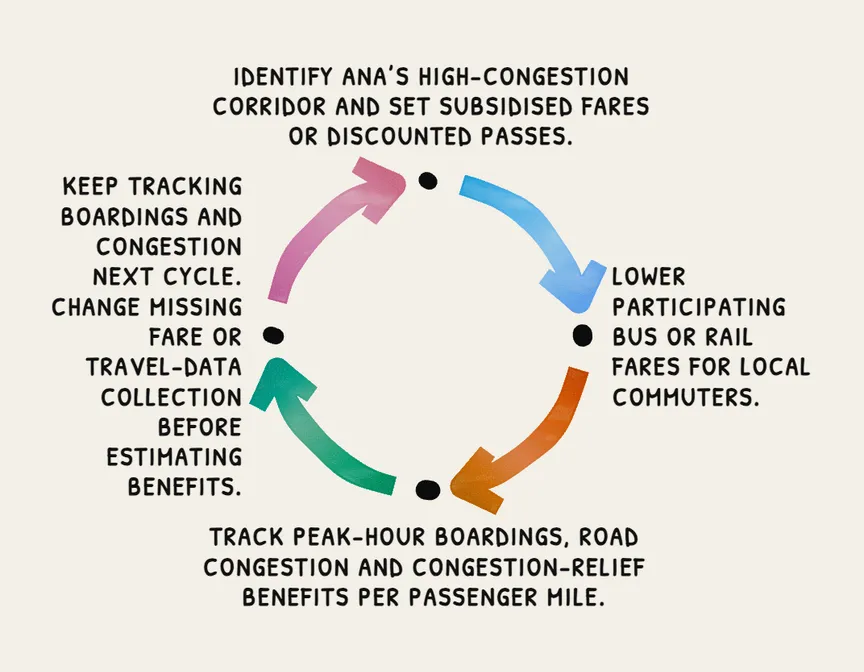
Lowering ticket prices reduces the financial cost of public transit relative to driving private vehicles.
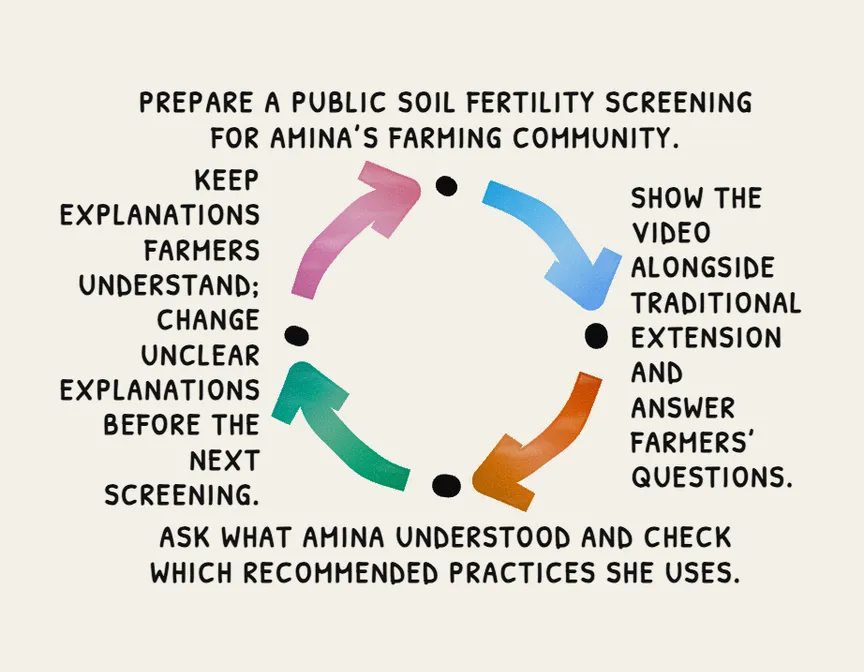
Instructional videos convey complex agricultural processes in a clear, digestible visual format.
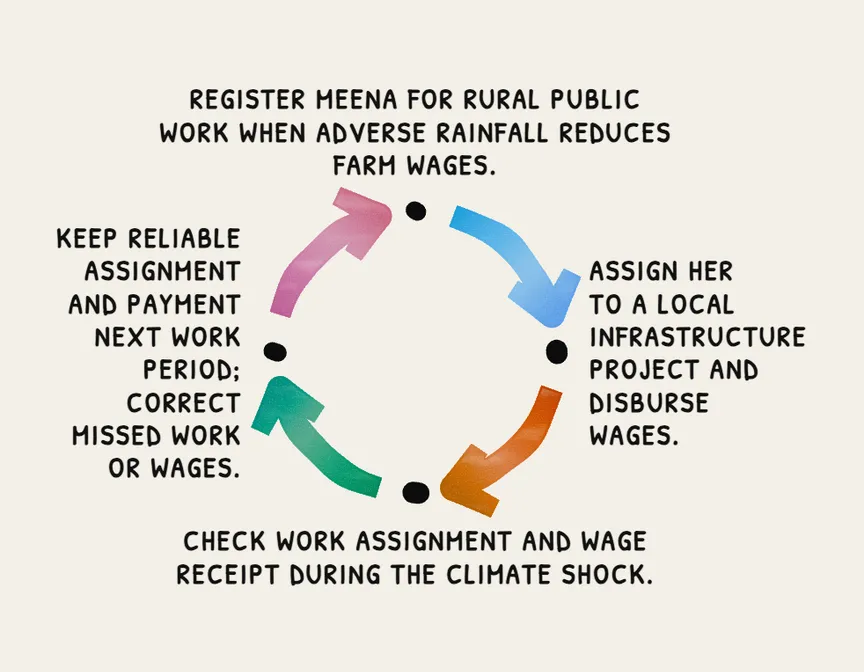
Guaranteed workfare employment buffers participants against agricultural income shocks caused by deficient rainfall.
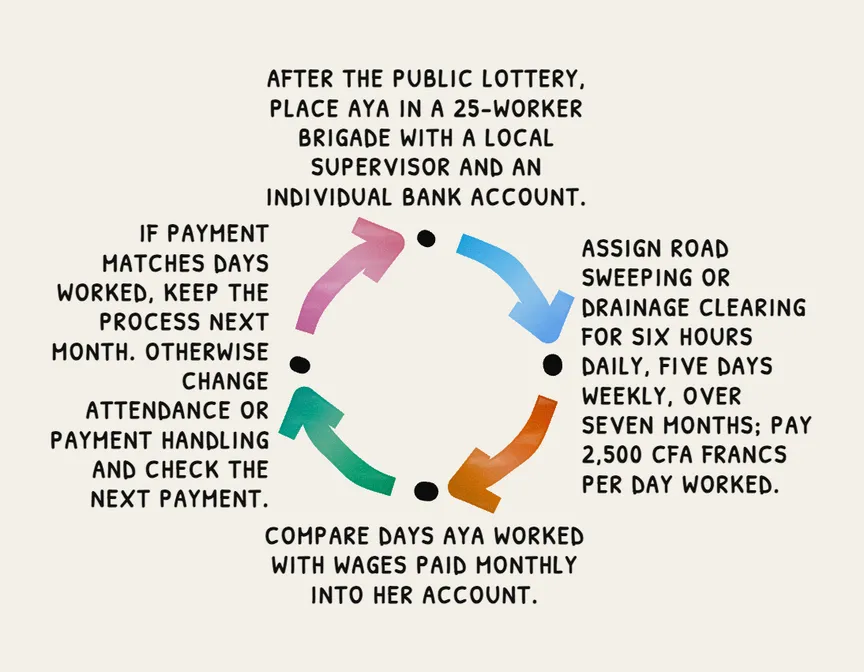
Providing predictable formal wage employment shifts youth away from low-paying informal work into structured daily schedules.
Transparent public information increases awareness of personal rights and the rights of others throughout the community.
Public recognition adds a prestige element that enhances employee motivation and social visibility among peers and family.
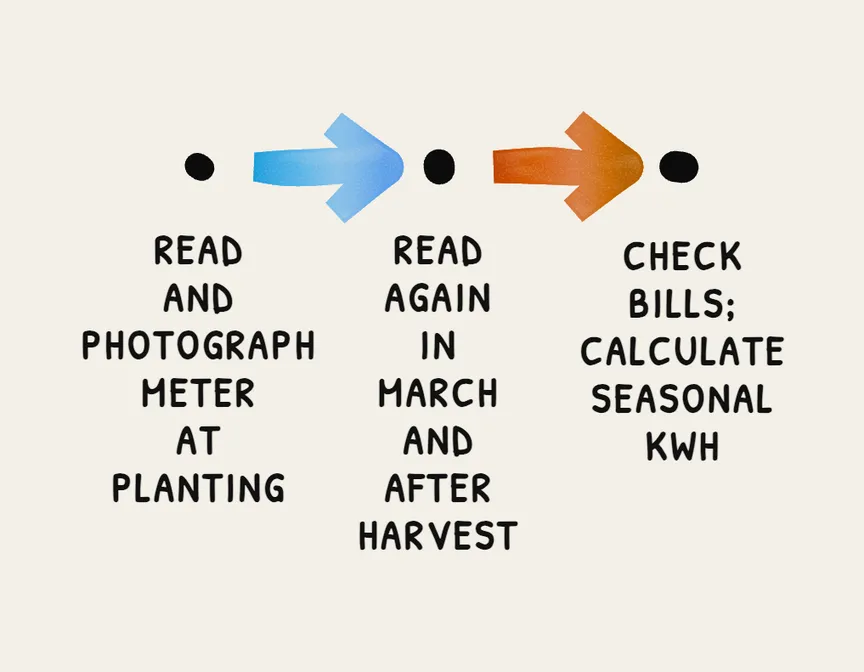
Physical meter readings paired with photographic verification provide objective, quantitative energy consumption data without relying on recall.
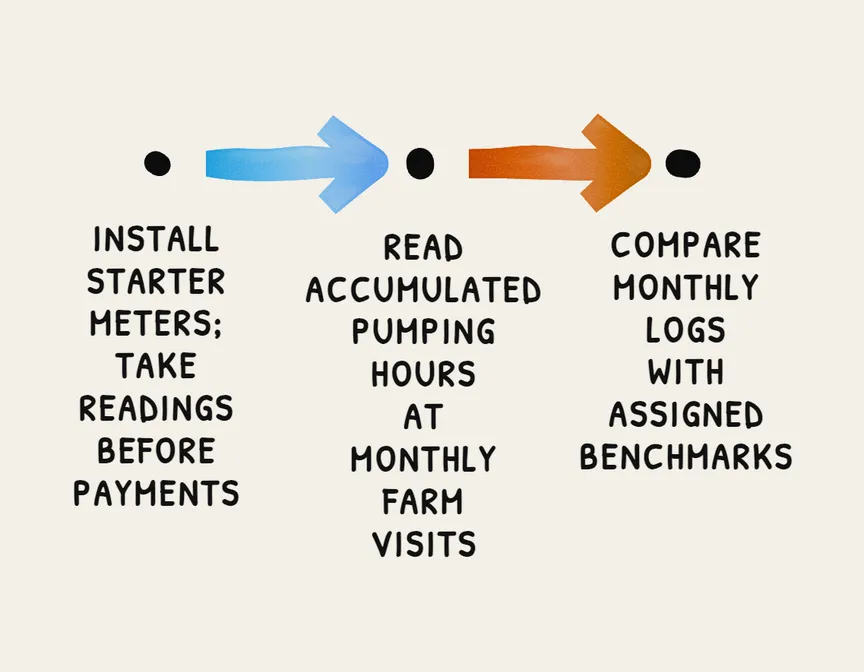
Measuring electrical starter operating time provides a reliable proxy for total irrigation duration without requiring expensive volumetric pipe flow meters.
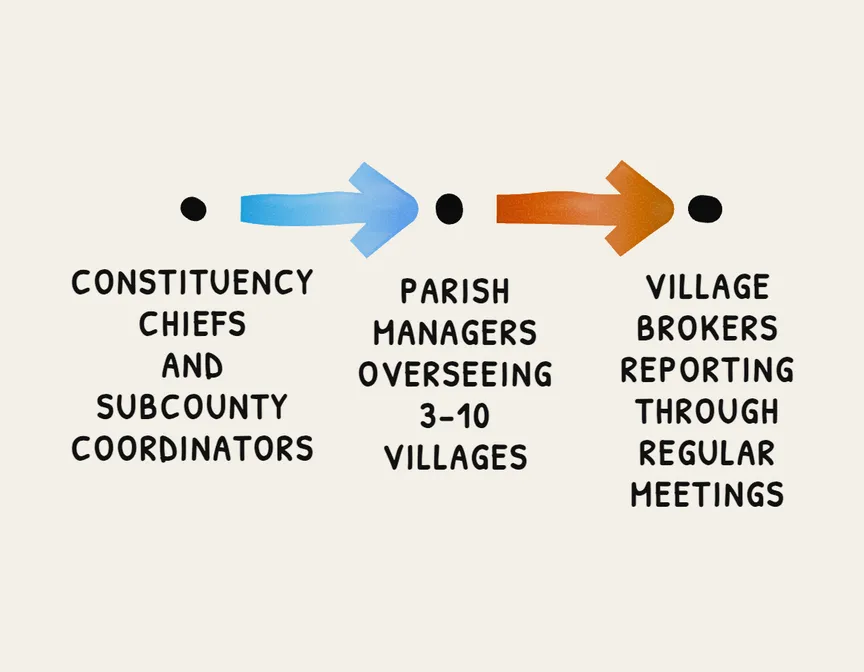
Hierarchical structures allow campaigns to delegate localized voter targeting to well-known community brokers who can monitor reciprocity.
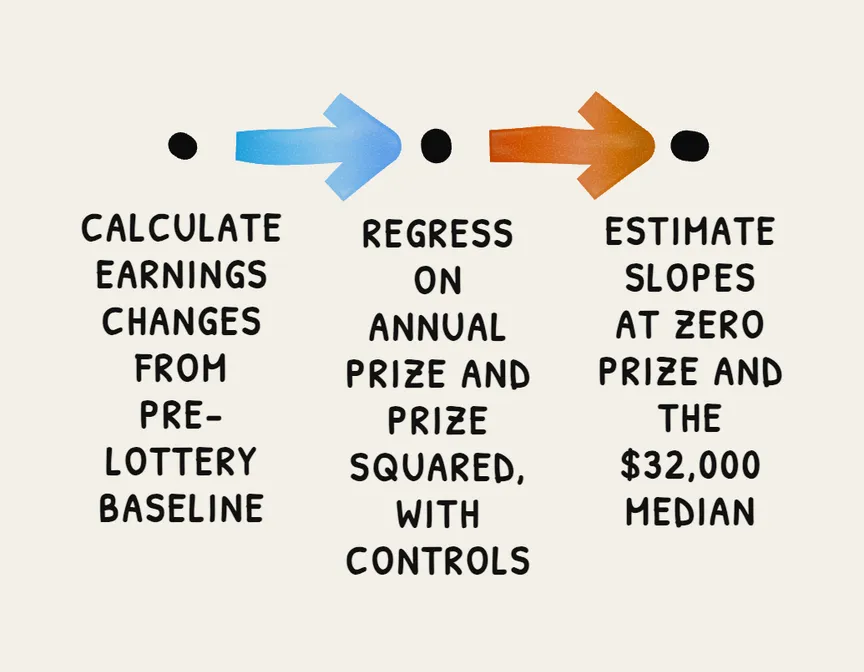
Linear regressions force a constant slope across all payment levels, allowing rare multi-million dollar jackpots to distort estimated labor responses.
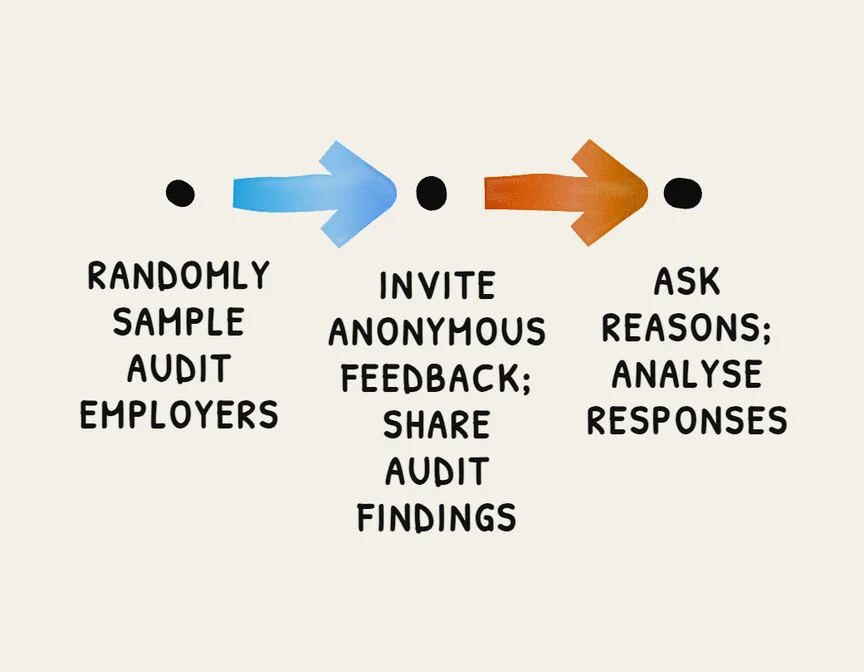
Direct feedback from employers reveals the explicit attitudes and unstated assumptions that influence candidate selection.
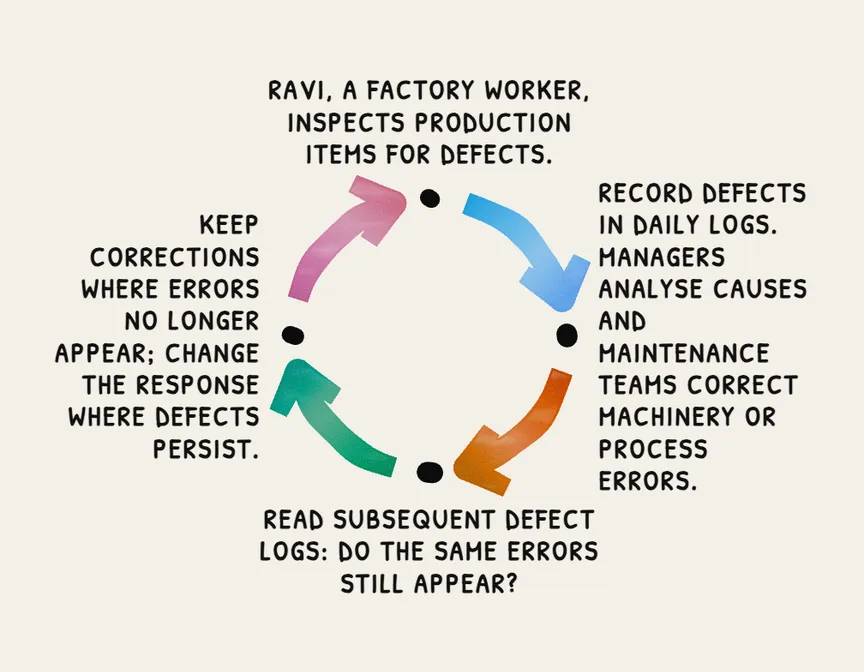
Measuring defects reveals where errors happen so managers can fix root causes quickly.
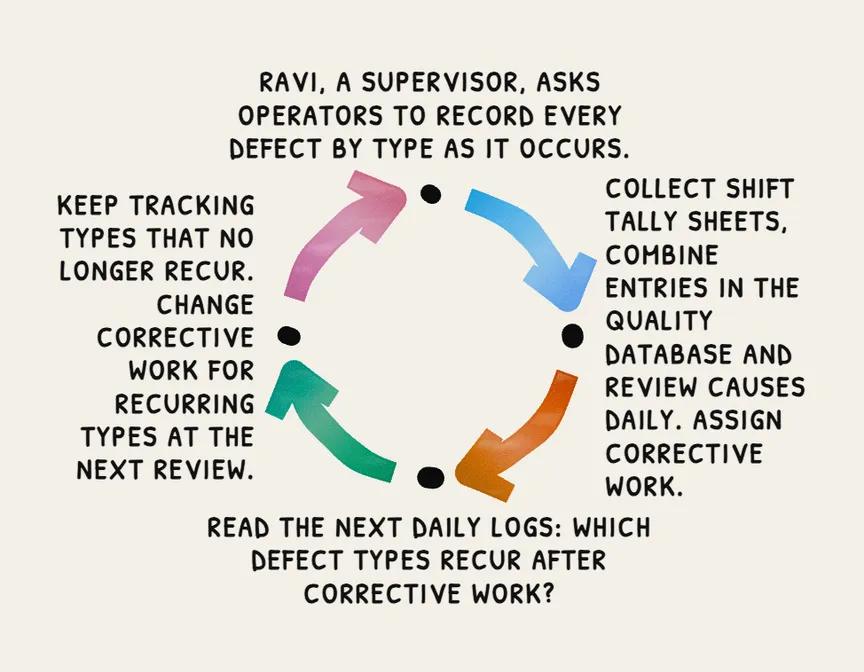
Tracking quality mistakes by specific category reveals the exact machine or process steps causing defects.
Measuring, classifying, and tracking defects allows factory managers to identify root causes and address quality problems rapidly.
Improving platform visibility and product quality signaling reduces search and information frictions between small exporters and foreign buyers.
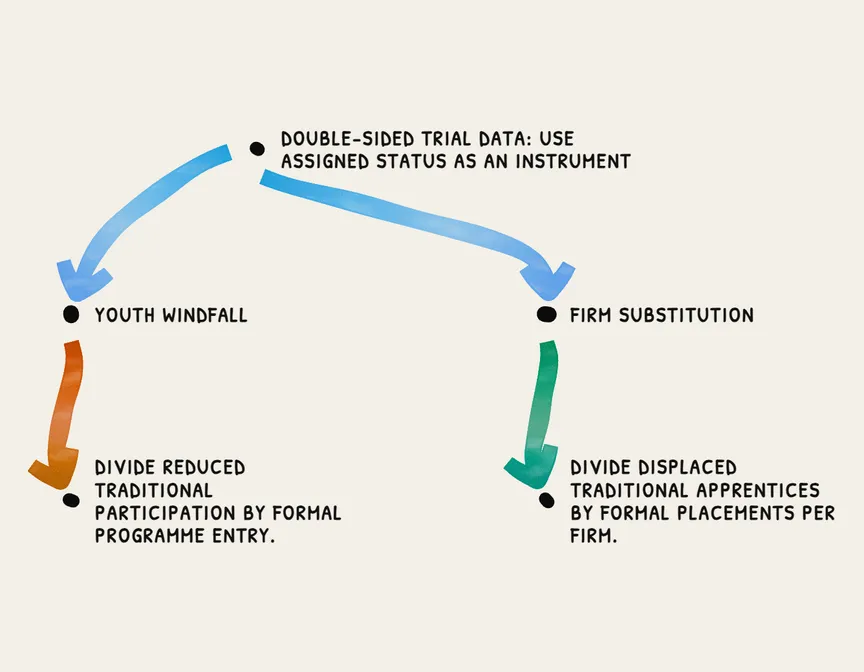
Youth windfall measures participants who would have entered traditional training absent subsidies, while firm substitution measures unsubsidized workers displaced by host employers.
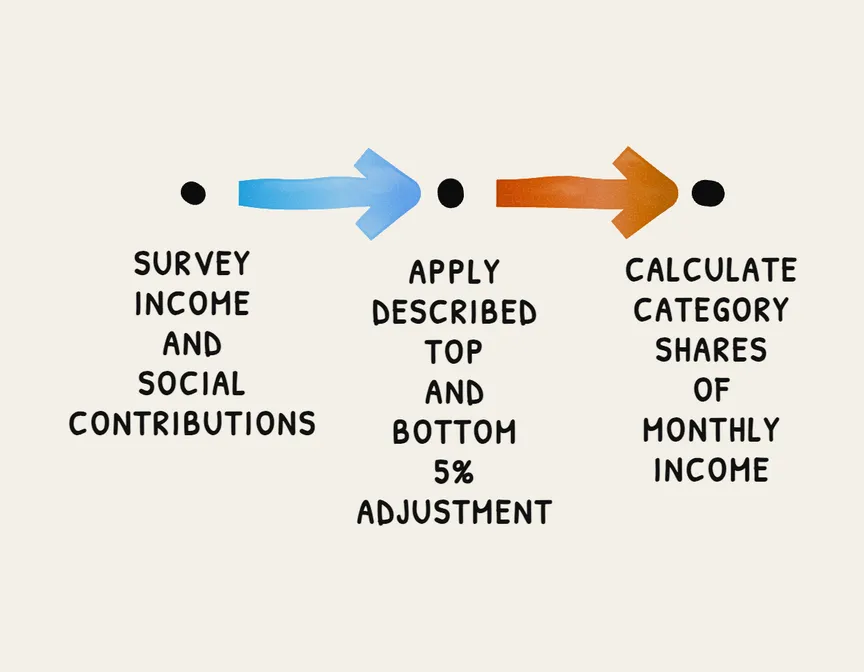
Trimming the top and bottom 5th percentiles removes extreme reporting errors and outlier values from expenditure data.
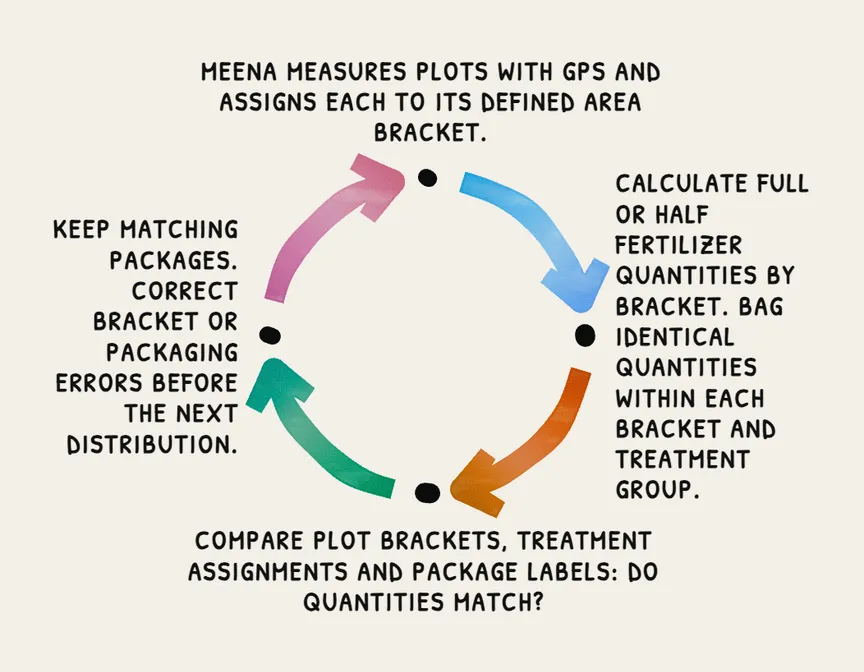
Grouping plot measurements into discrete size buckets simplifies pre-packaging and field distribution logistics.
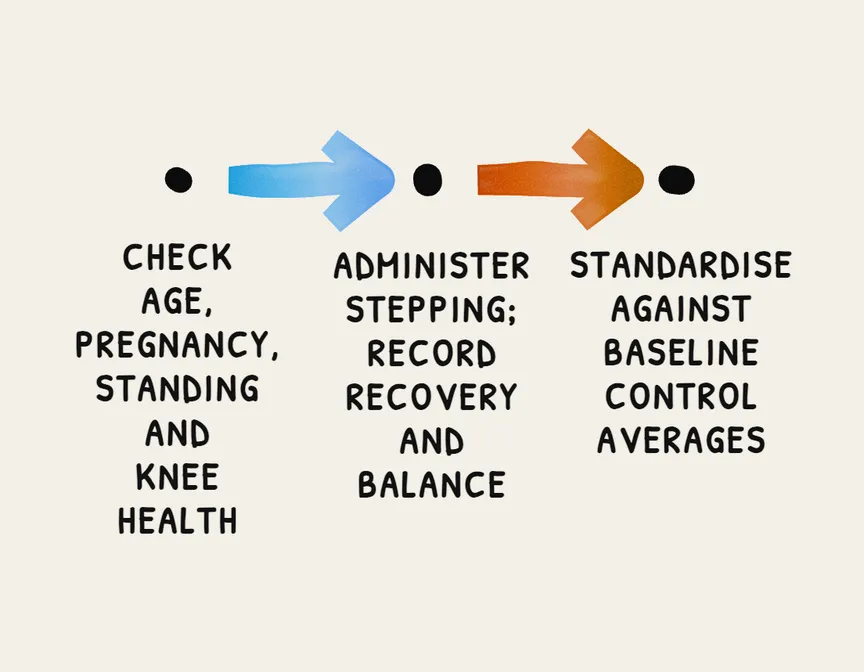
Stepping exercises elevate the heart rate under controlled exertion, allowing non-medical field staff to evaluate aerobic capacity without requiring expensive laboratory treadmills.
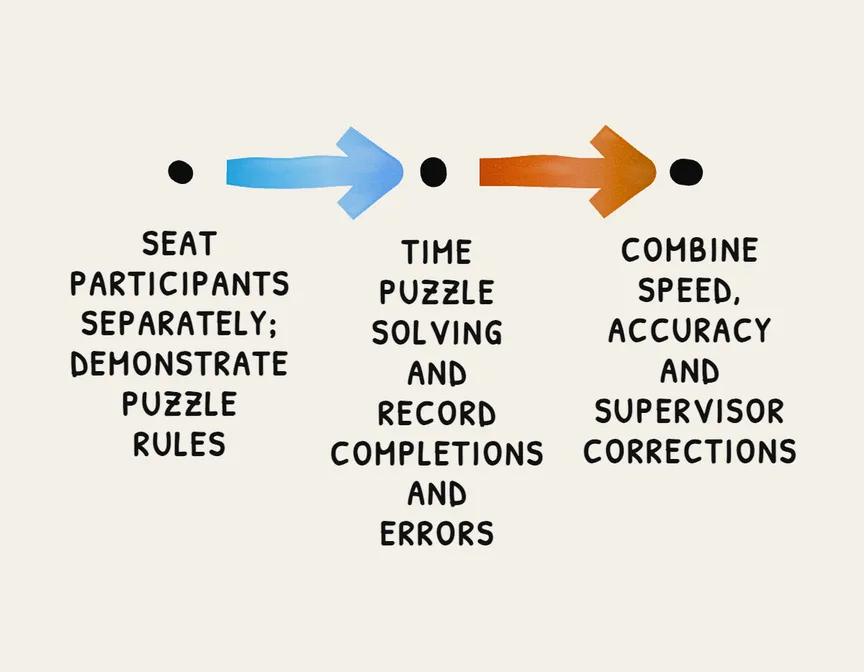
Non-verbal geometric puzzles capture raw fluid intelligence and cognitive processing speed without favoring individuals with formal schooling.
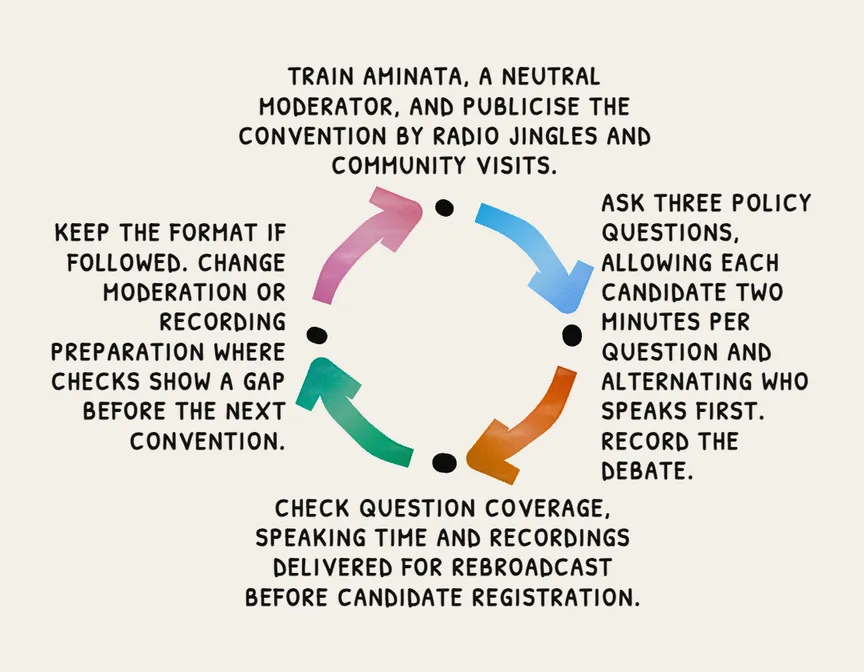
Candidate conventions and radio broadcasts reveal information about candidate competence and policy positions to both voters and party officials.
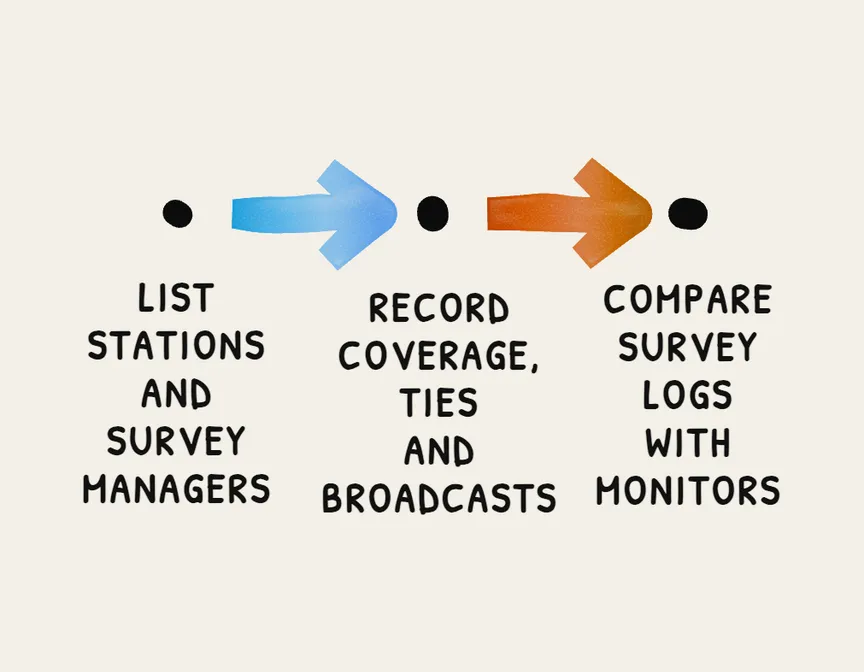
Surveying both contracted and non-contracted radio stations captures spontaneous rebroadcasts and media spillovers that direct monitoring misses.
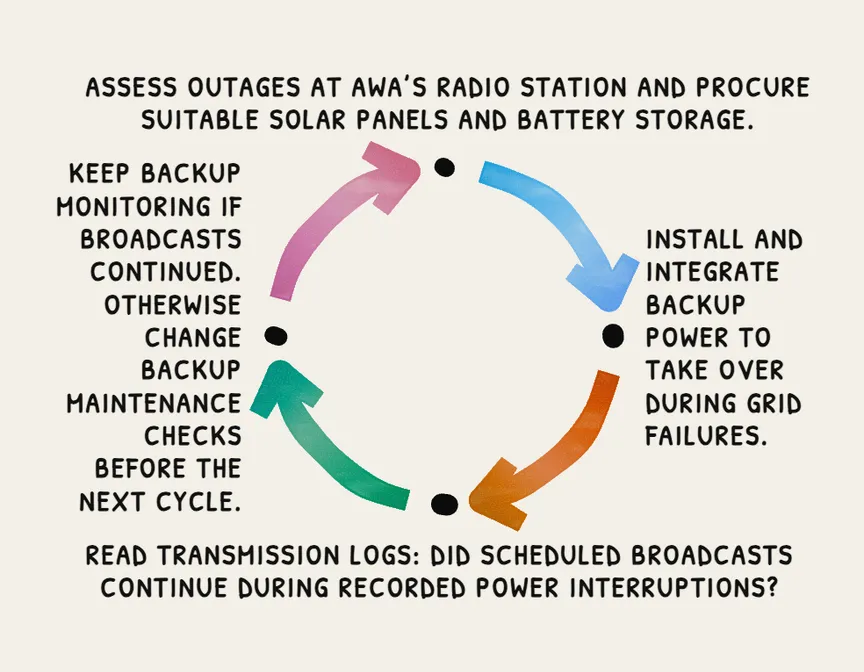
Dedicated solar power backup systems prevent local power grid disruptions from interrupting scheduled health broadcasts.
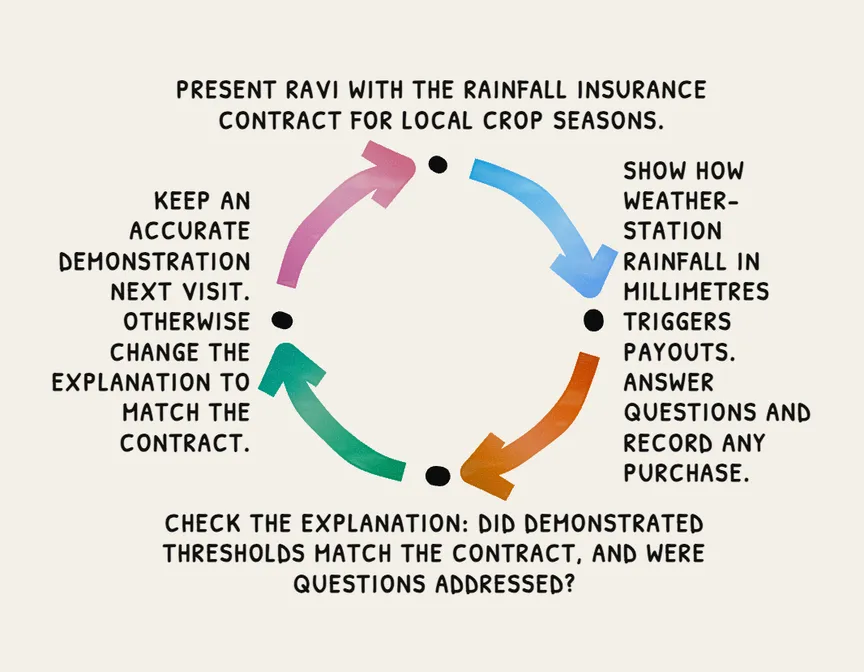
Showing visual demonstrations of rainfall millimeter triggers aims to make abstract index insurance mechanics concrete and understandable.
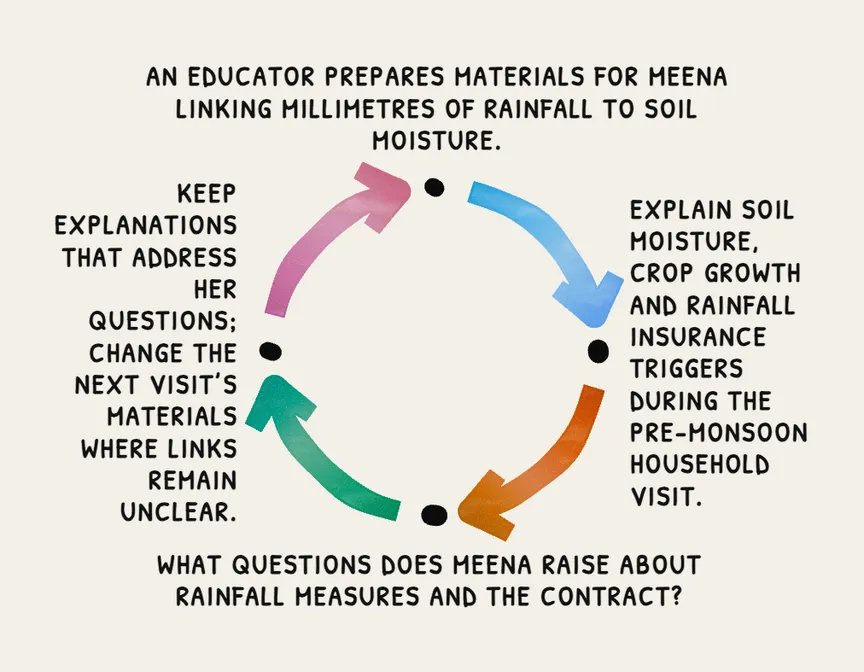
Explaining how rainfall depth relates to soil moisture clarifies how insurance payout triggers match real farm conditions.
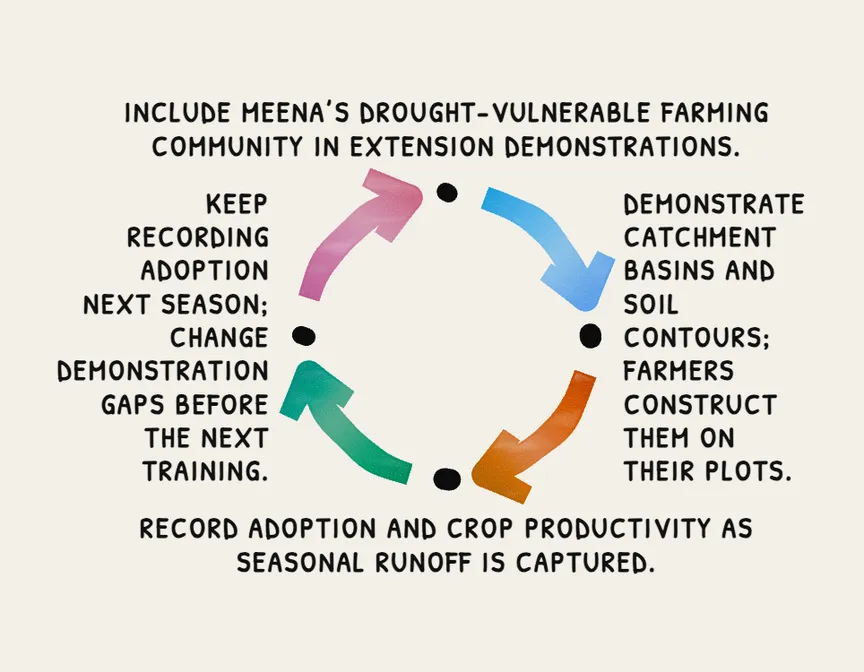
Collecting and retaining rainwater improves soil moisture and protects crops against extreme dry spells.
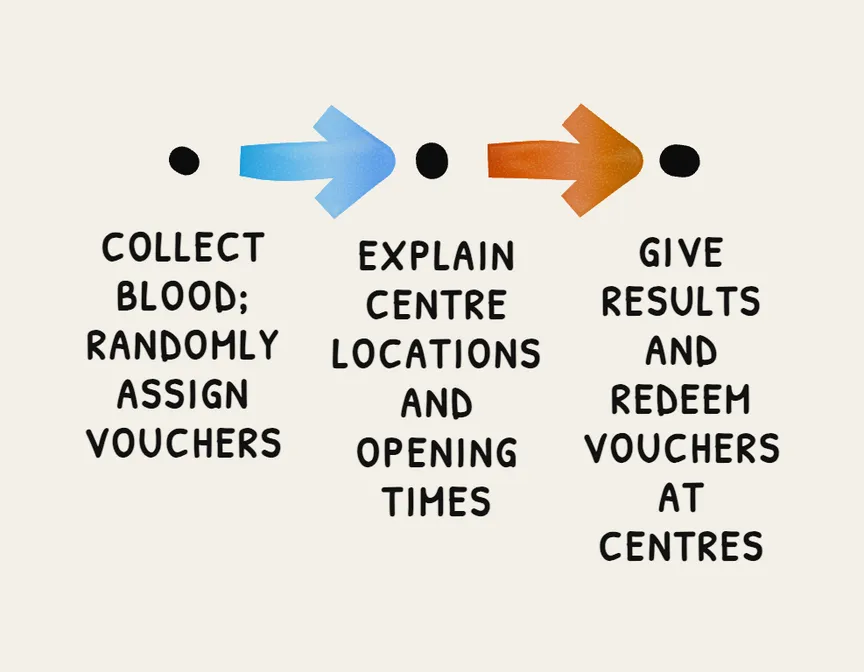
Monetary vouchers provide an immediate monetary incentive that offsets travel costs and opportunity costs.
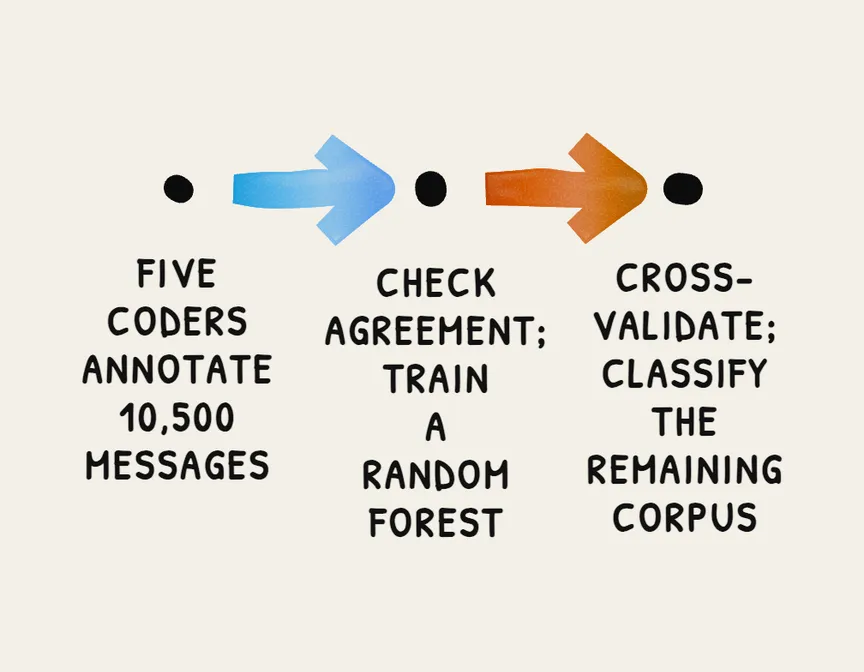
Random forest algorithms aggregate predictions across multiple decision trees to prevent overfitting on sparse text data.
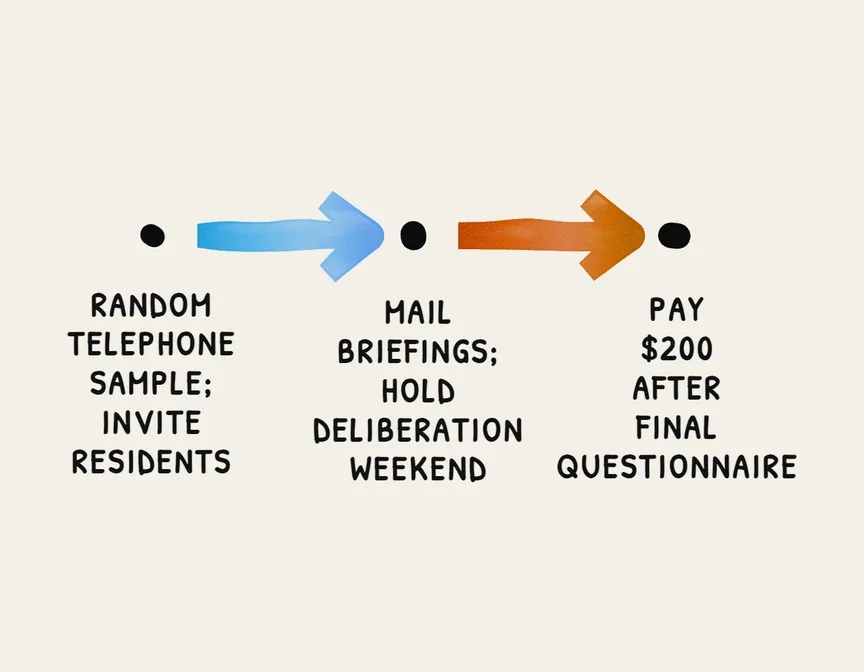
Combining random sampling with random assignment maximizes the demographic and attitudinal diversity of discussants.
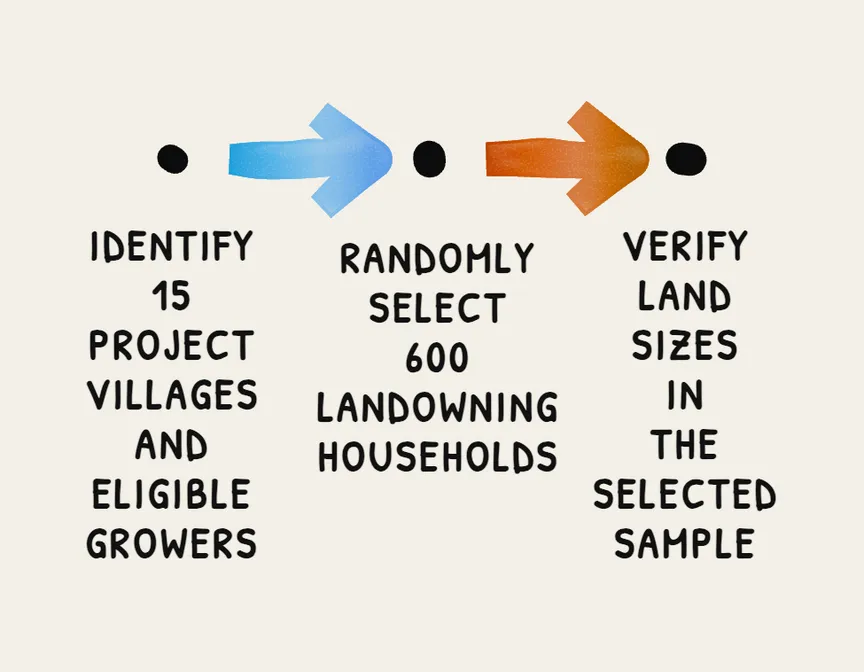
Random selection prevents selection bias and ensures that study findings apply across the broader population of smallholder farmers.
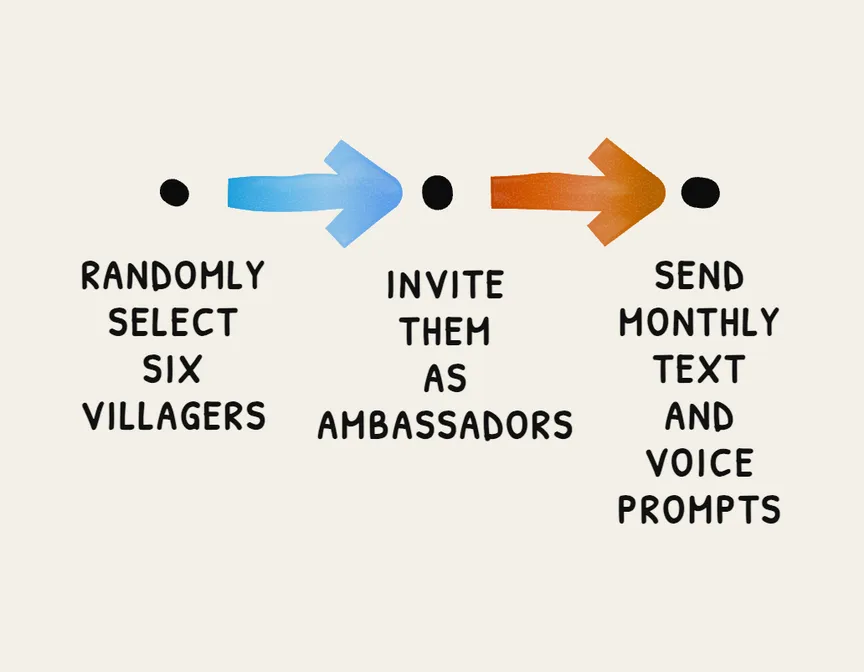
Random selection tests whether simple ambassador presence and automated mobile nudges suffice without network centrality or peer prestige.
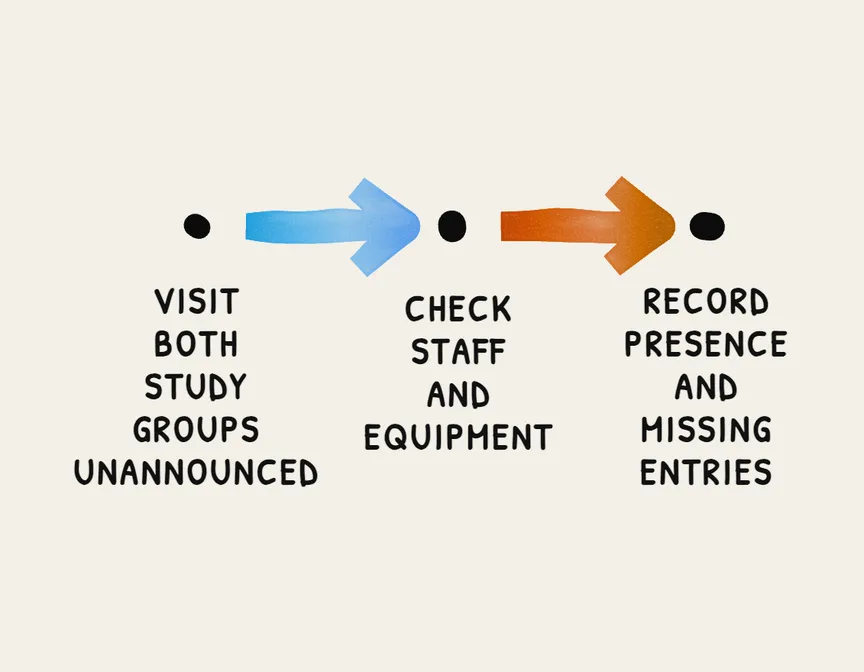
Random unannounced physical audits create an ongoing risk of detection, discouraging health workers from leaving clinics unstaffed or tampering with attendance hardware.
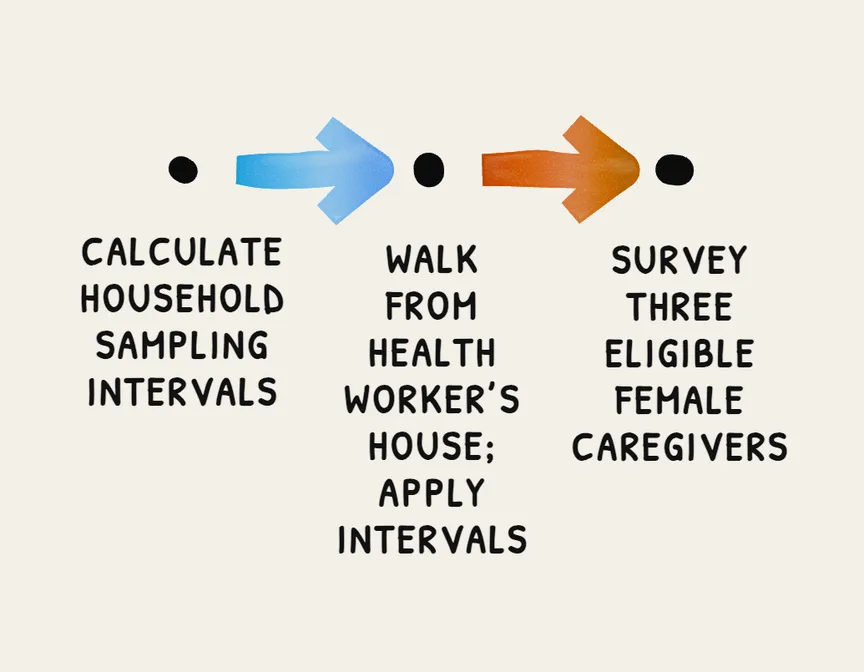
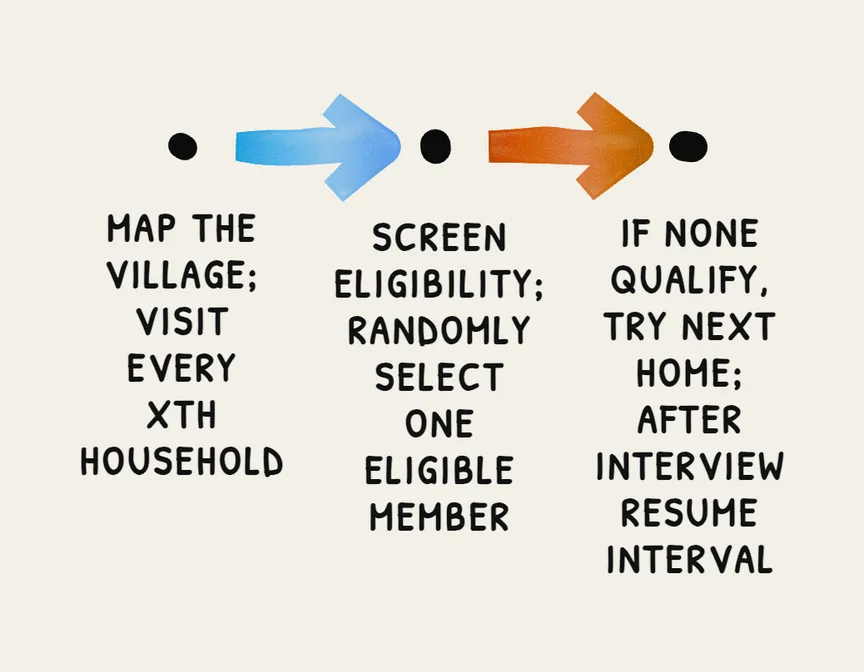
Pre-calculated sampling intervals force survey teams to traverse the entire geographic area of a village rather than surveying only nearby neighbors.
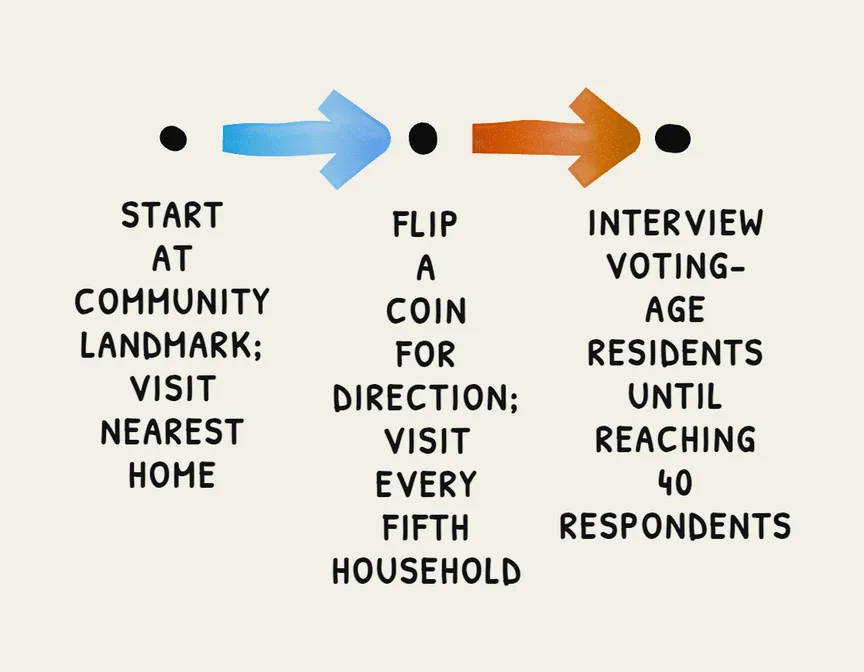
Standardized walking intervals and coin flips prevent field enumerators from picking respondents based on convenience or personal preference.
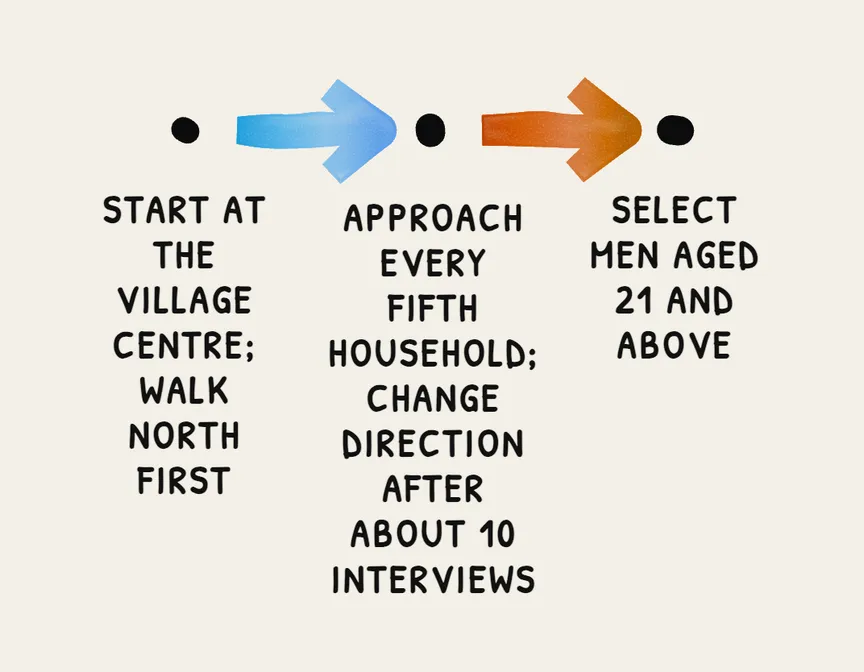
Starting at the geographic center and sampling systematically in cardinal directions ensures equal selection probability across geographic zones.
Systematic interval skipping combined with spatial village mapping ensures geographically balanced coverage across rural communities.
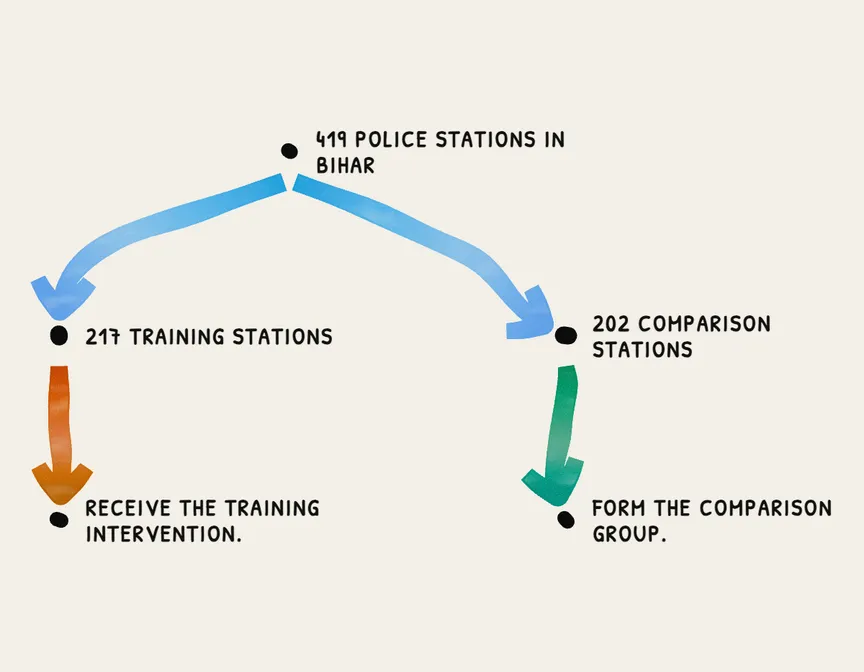
Randomizing at the police station level isolates trained officers from comparison personnel.
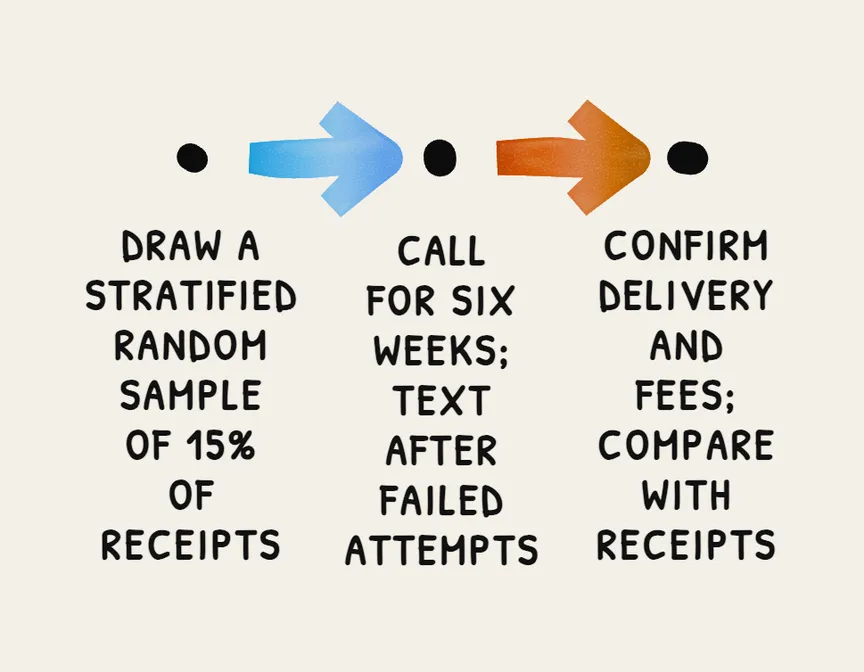
Phone audits create a credible detection threat that deters frontline agents from fabricating transaction receipts or charging illicit fees.
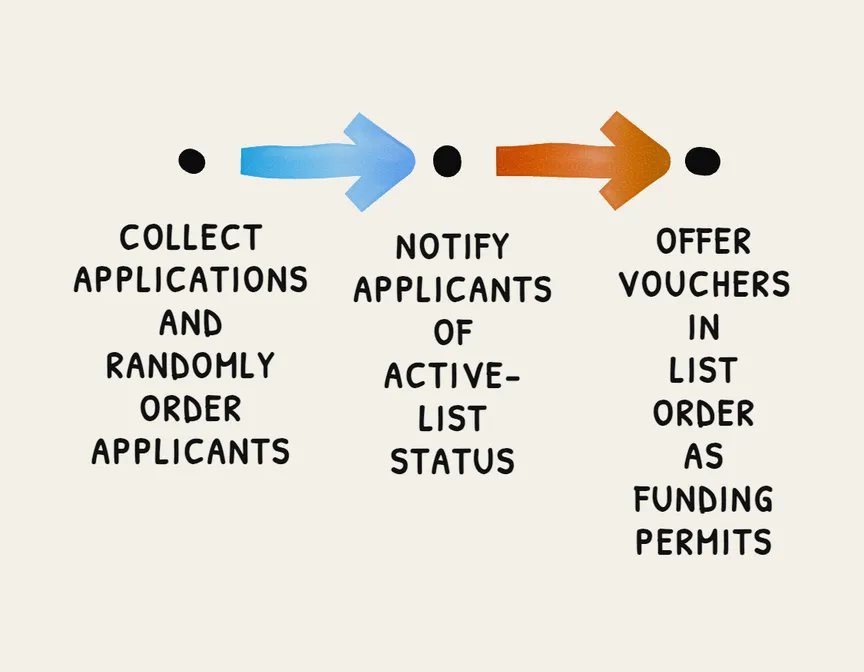
Randomized placement ensures every eligible applicant receives an equal chance of assistance regardless of individual background.
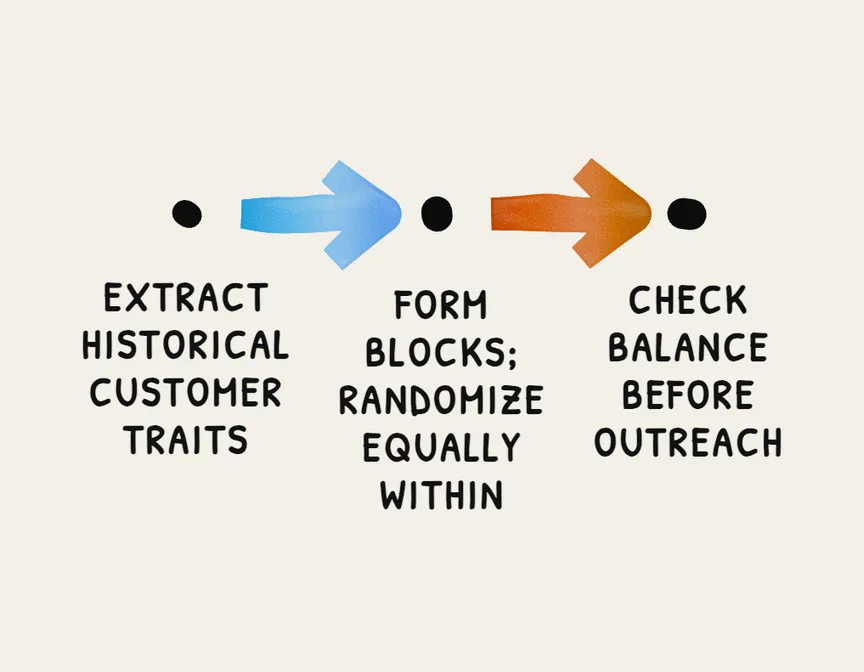
Stratifying randomization on key customer characteristics ensures that treatment and control groups are balanced across demographic and historical consumption dimensions.
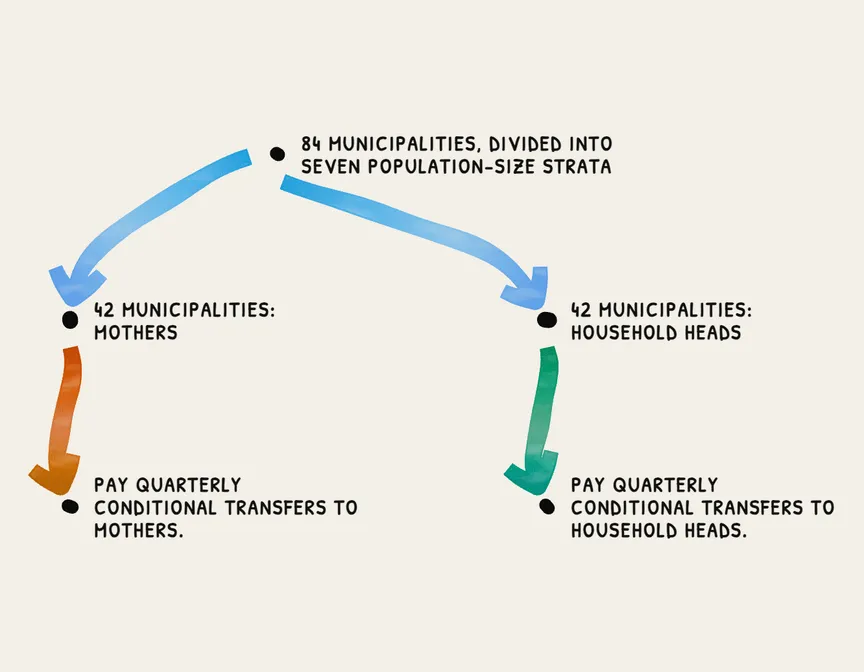
Randomizing recipient gender at the municipality level isolates the impact of recipient identity from household self-selection.
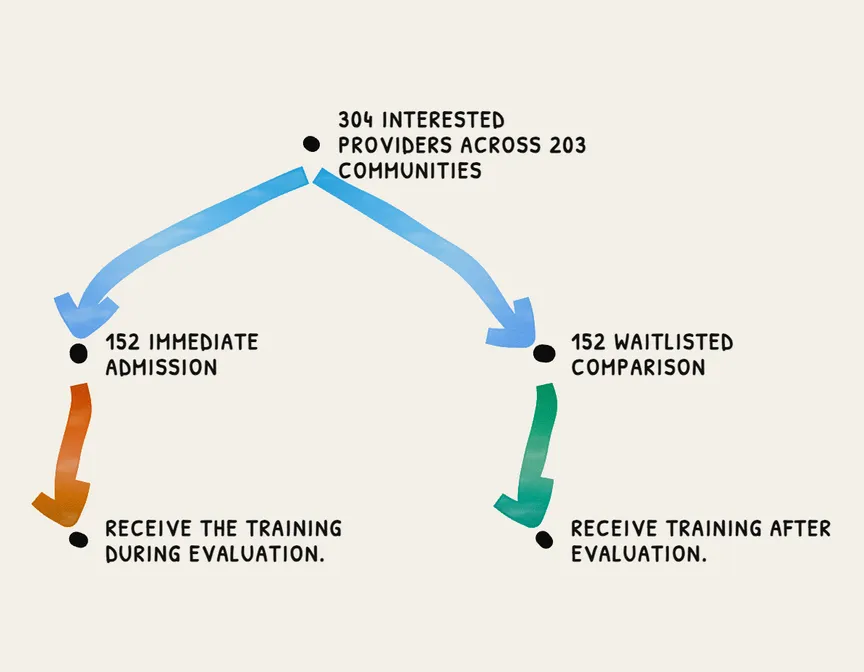
Random assignment balances baseline provider characteristics and motivation across both groups.
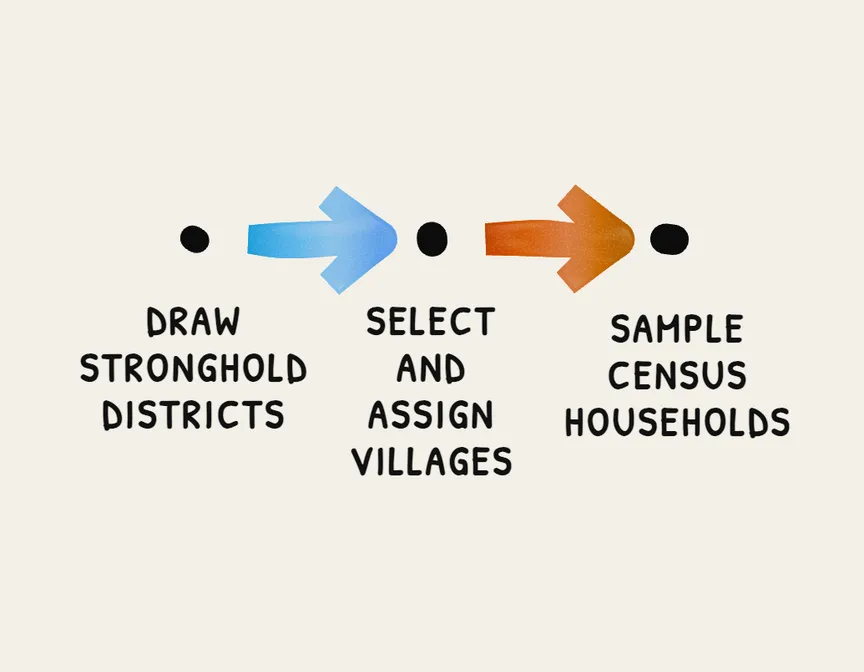
Randomization within candidate stronghold blocks balances unobserved candidate and regional factors across treatment assignments while mitigating spillovers between nearby treatment communities.
Random assignment ensures treatment and control groups are identical prior to intervention, allowing observed differences to be attributed to the program.
Random assignment ensures that treatment and comparison groups share identical baseline characteristics on average.
Randomly sorting applicants into treatment and control groups ensures both groups are balanced on average at the start of the study.
Slashing retail prices directly relieves severe household budget constraints and aligns product costs with low-income families' actual willingness to pay.
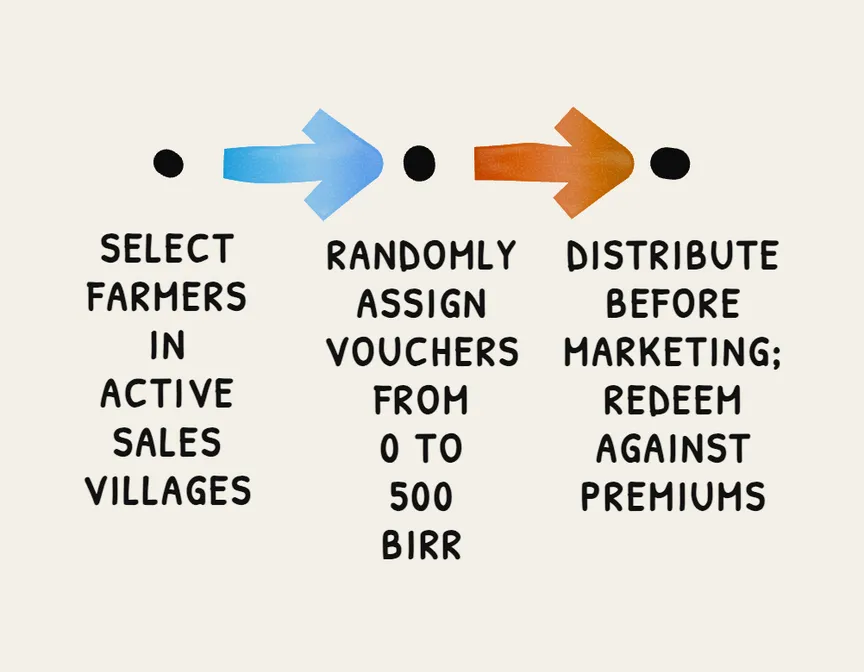
Randomized discount vouchers lower immediate liquidity barriers and incentivize trial adoption for unfamiliar microinsurance products.
Page 32 of 45
Previous
1
…
31
32
33
…
45
Next