Skip to the methods
Menu
aikyam
school
Findings
Methods
Subjects
All cards
Read
Findings
Methods
Subjects
All cards
Methods
2,124 methods
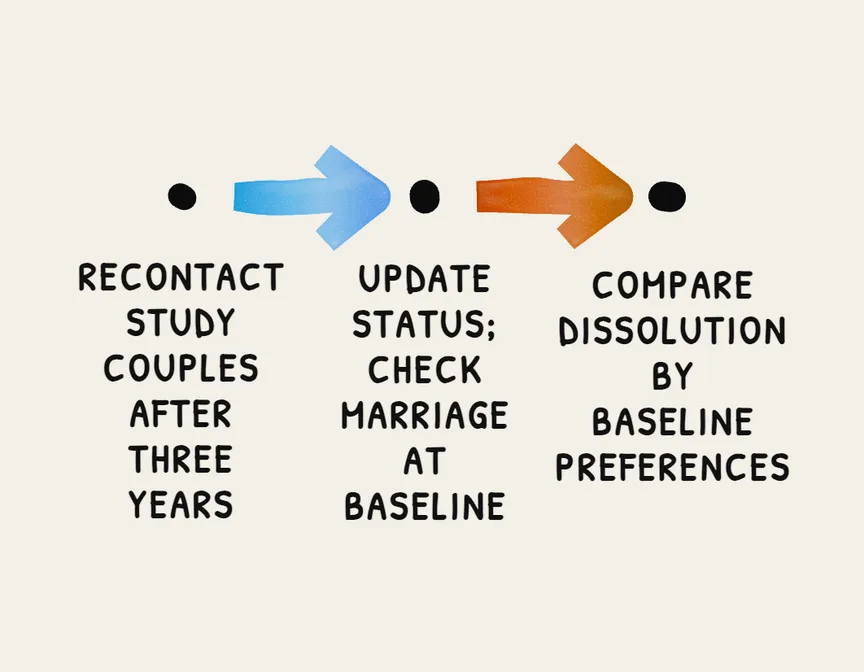
Verifying marital status in a multi-year follow-up purges unmarried couples who assort natively differently from core sample analysis.
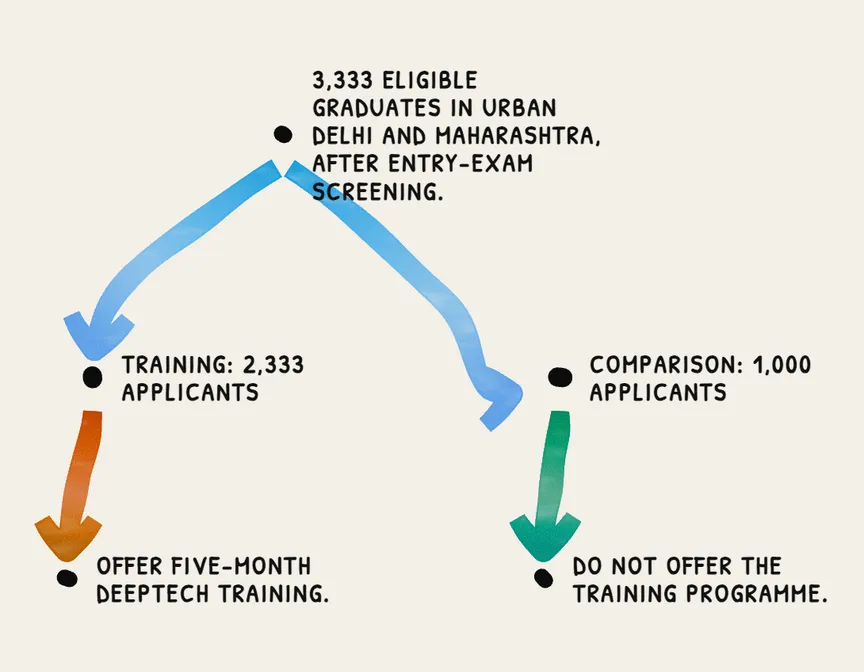
Random assignment ensures treatment and control groups have identical baseline characteristics on average.
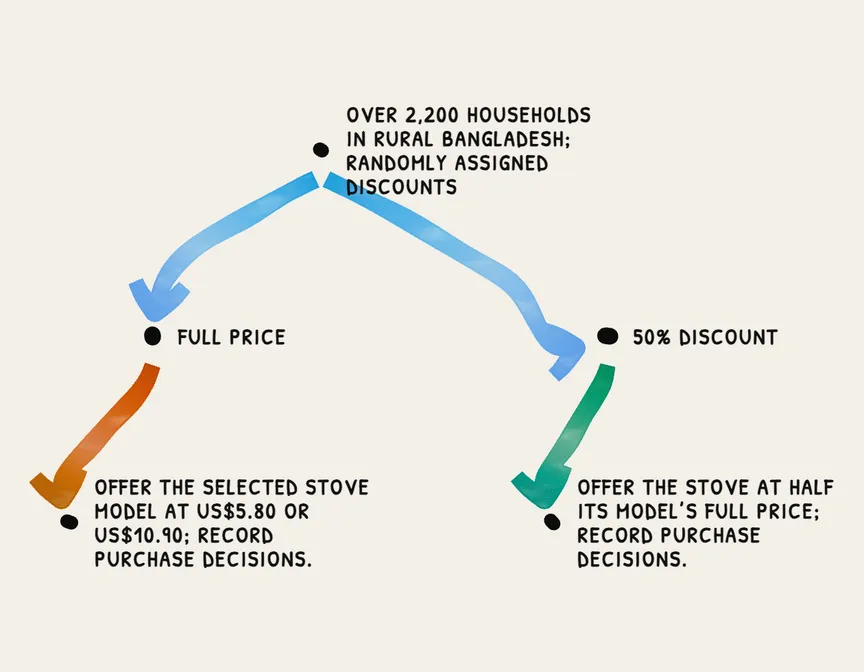
Testing multiple price tiers reveals price elasticity and consumer purchasing thresholds.
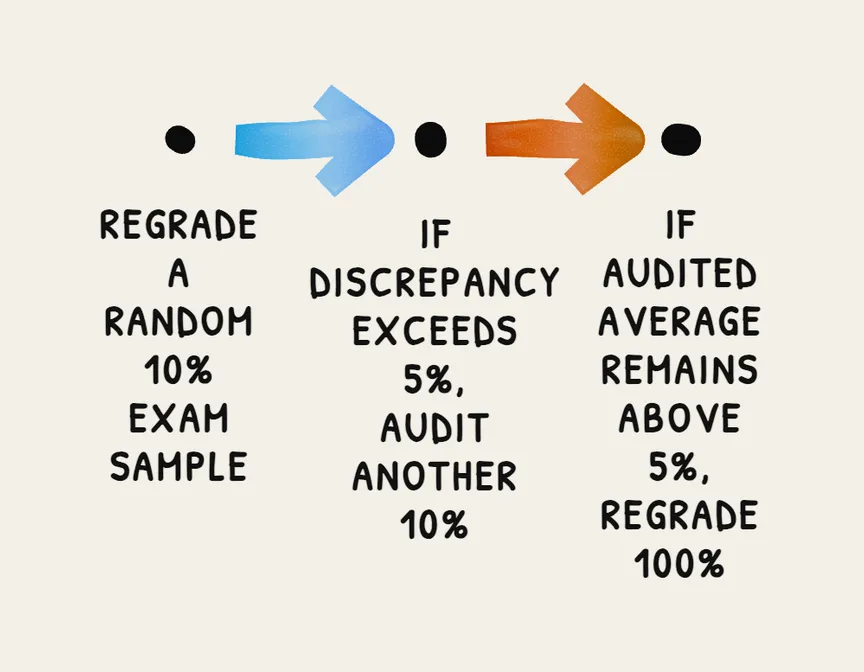
Randomized sampling creates a strong deterrent against grade inflation while keeping audit costs low.
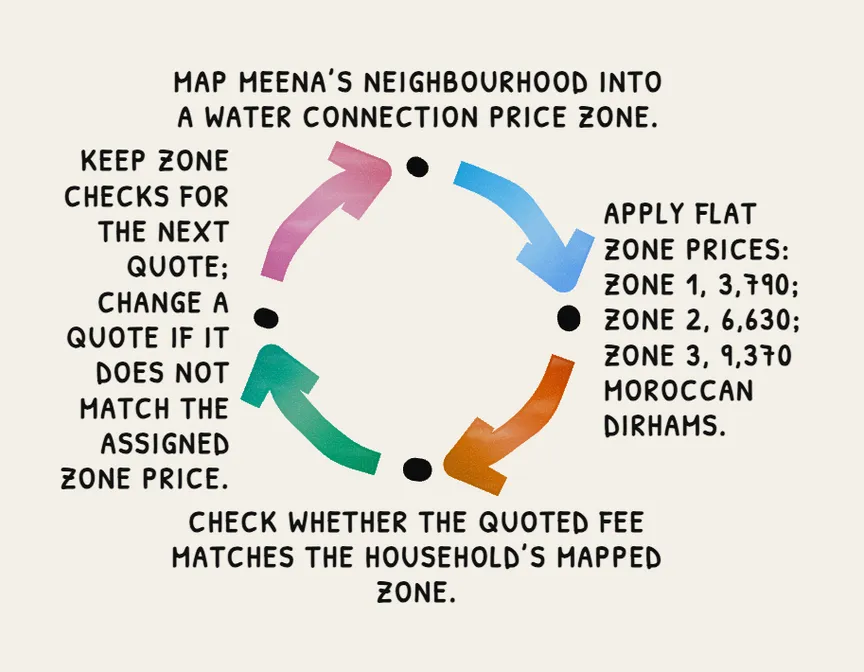
Categorizing connection fees into clear distance tiers simplifies fee calculation and avoids subjective cost estimates.
Time-bundled contracts make compensation for future effort dependent on current effort, allowing programs to purchase future effort at a discounted rate from individuals who discount future effort costs.
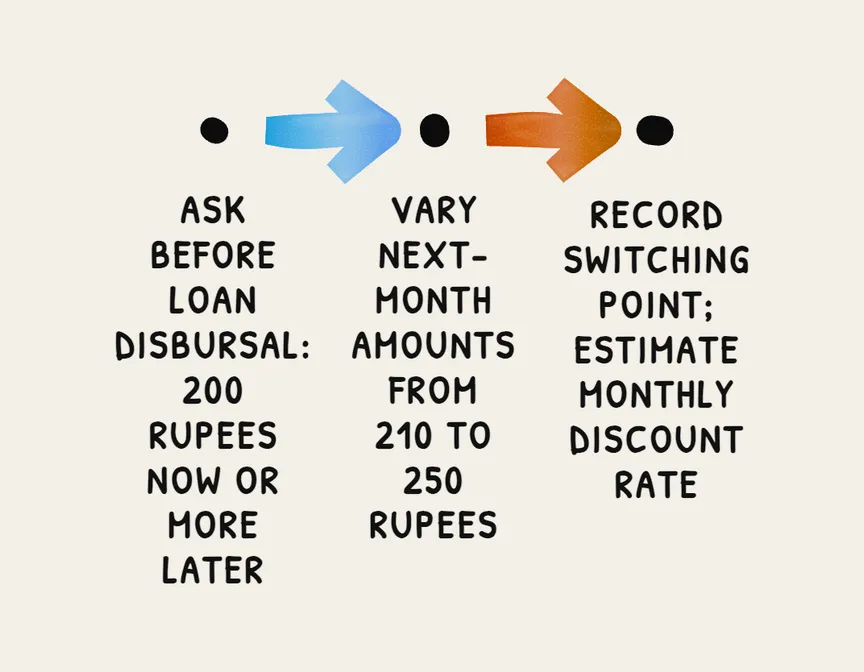
Asking respondents to choose between immediate money and escalating future sums reveals their marginal rate of time preference.
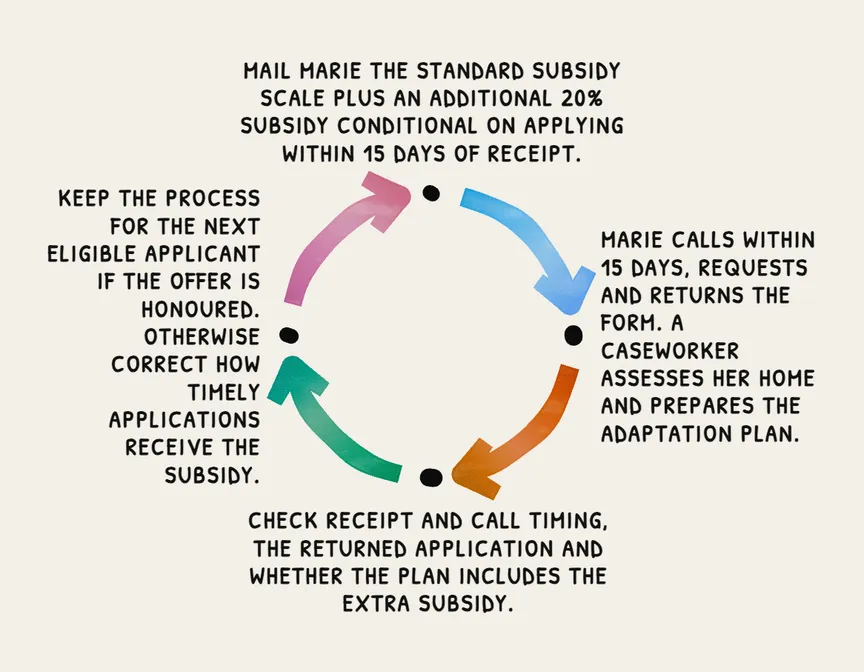
Imposing a short deadline creates urgency that counteracts procrastination and time inconsistency, prompting individuals who would otherwise postpone investment decisions to act immediately.
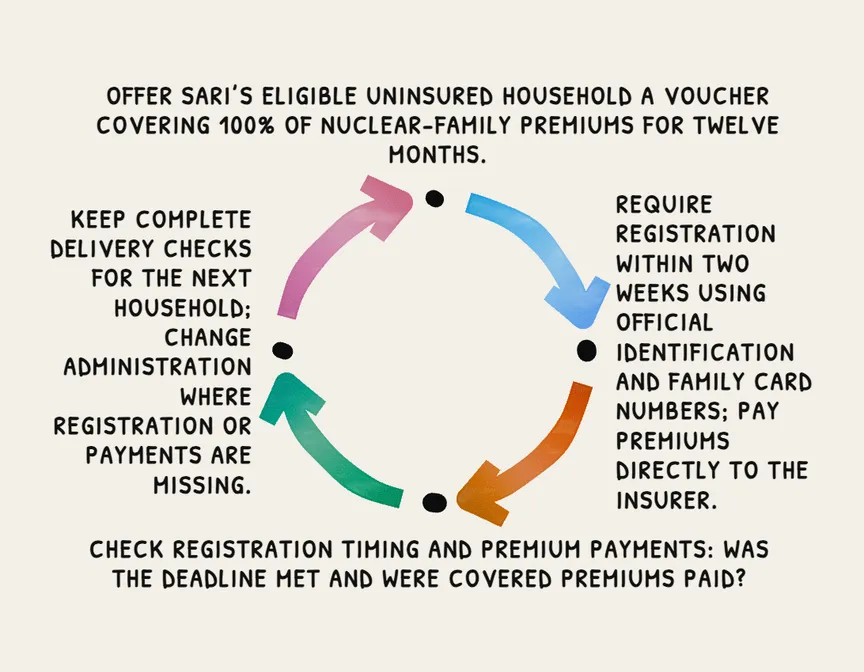
Waiving annual premiums removes immediate financial barriers to signing up for health coverage.
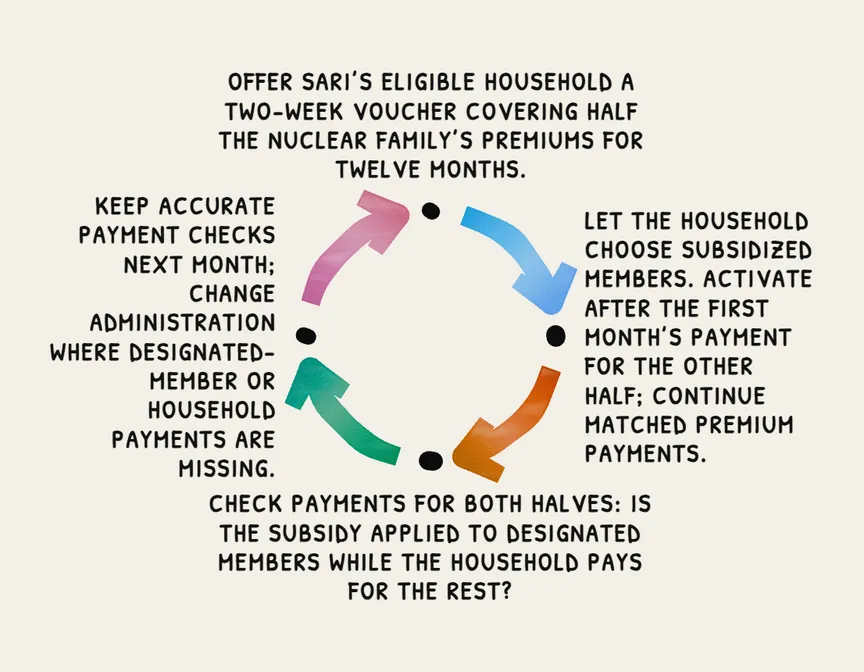
Matching family premium payments lowers immediate price barriers while encouraging households to co-finance their coverage.
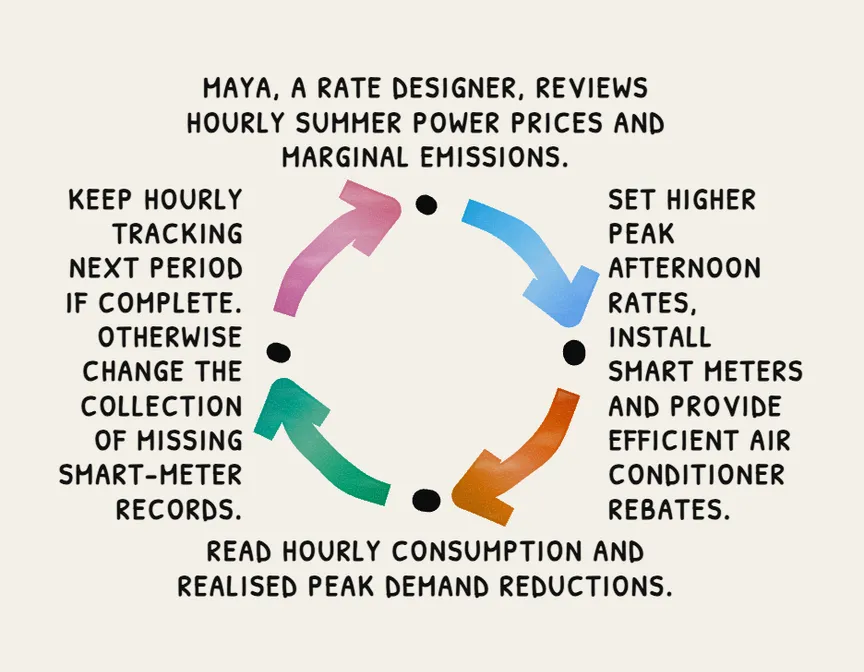
Time-varying electricity prices align private cooling costs with hourly wholesale power costs and grid capacity constraints.
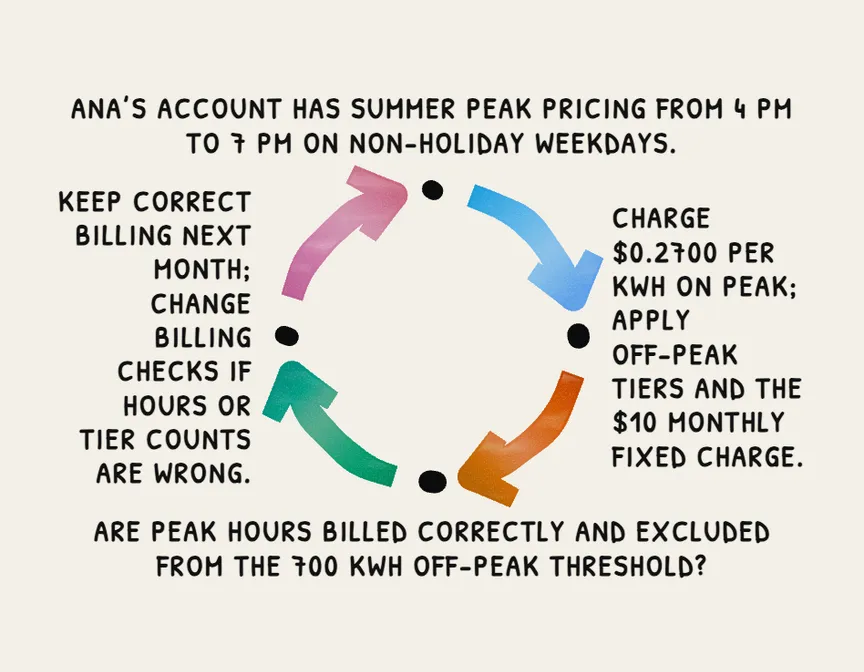
Higher on-peak prices directly increase the cost of energy during peak demand hours, creating a predictable price signal that motivates households to adjust thermostat settings and reschedule flexible energy activities to off-peak hours.
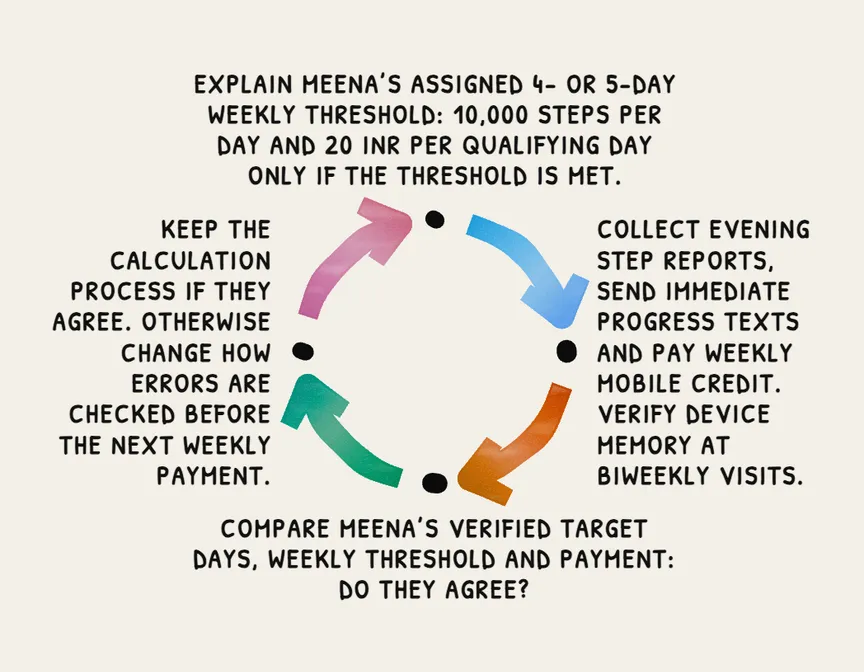
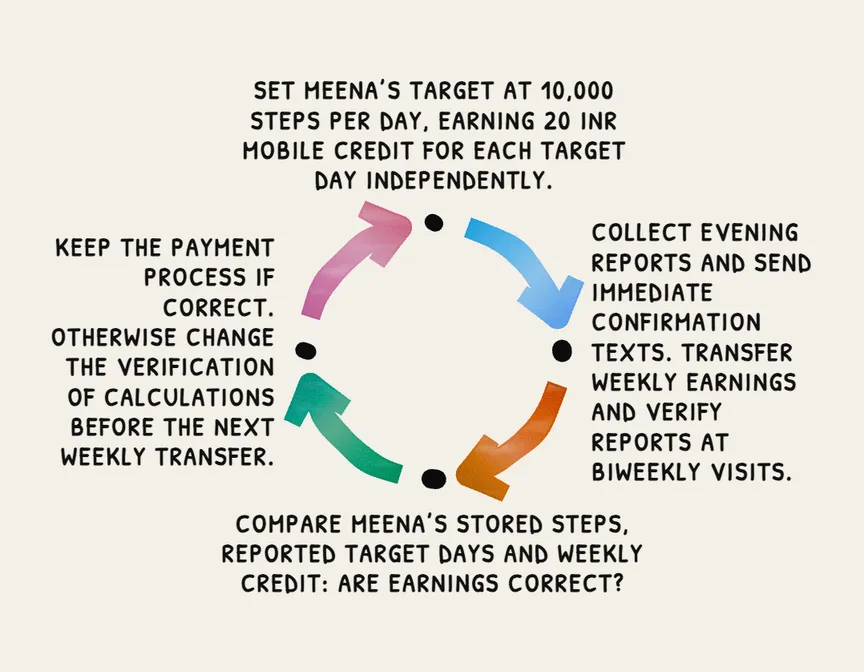
Linear time-separable incentives directly offset the immediate daily effort costs of physical activity by providing a constant marginal reward for each day of compliance.
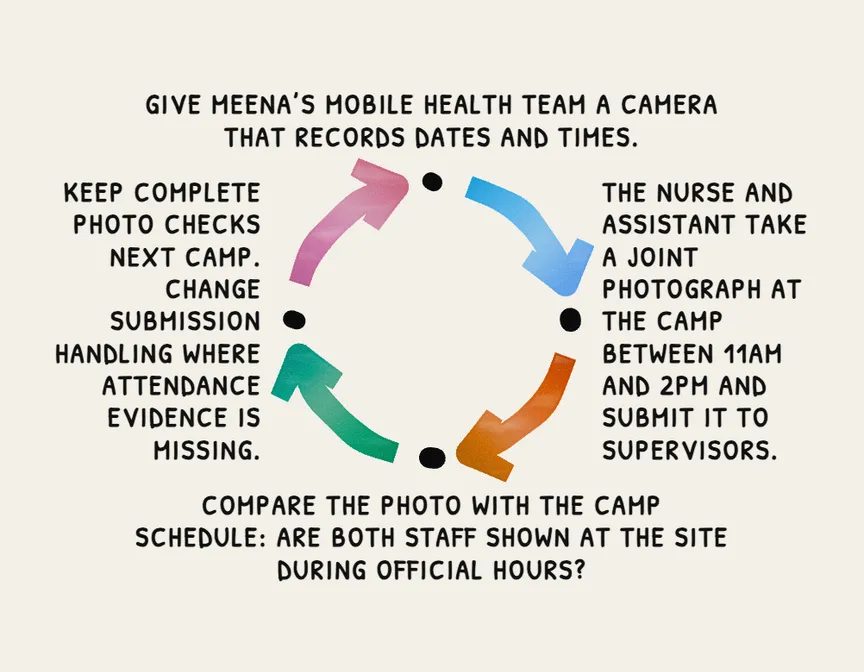
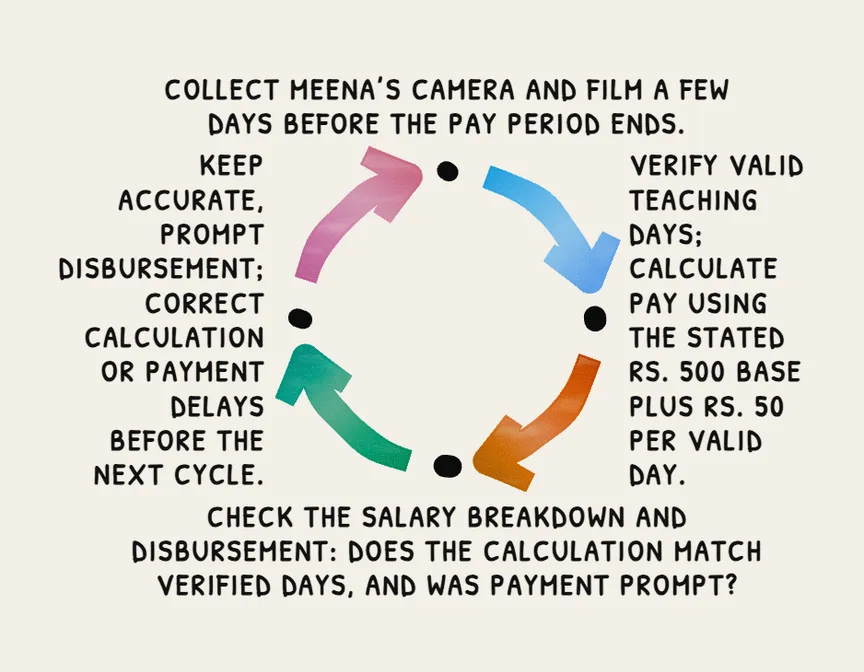
Requiring verifiable photographic proof ensures staff accountability and deters unannounced worker absenteeism.
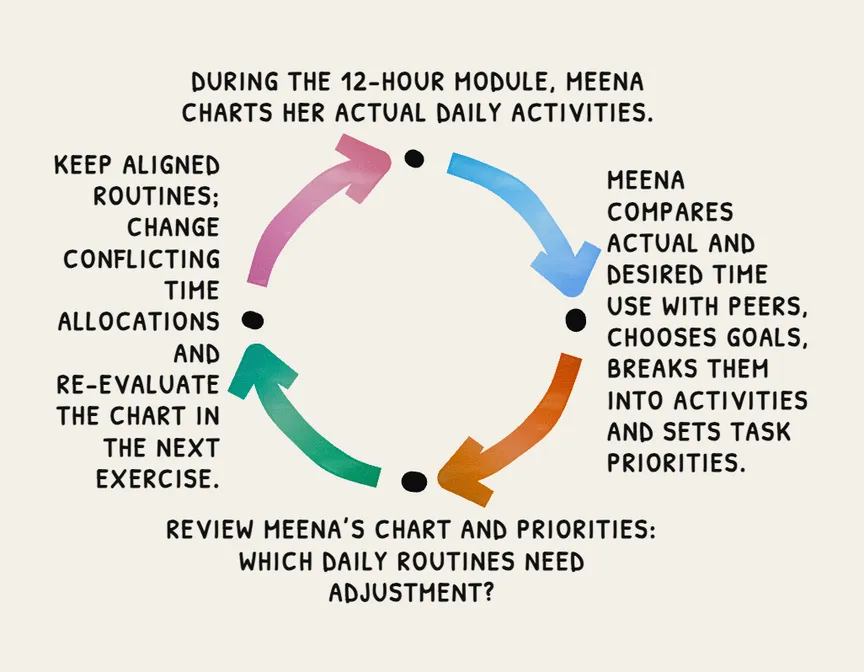
Analyzing time-use charts reveals time inefficiencies and empowers workers to reorganize daily habits.
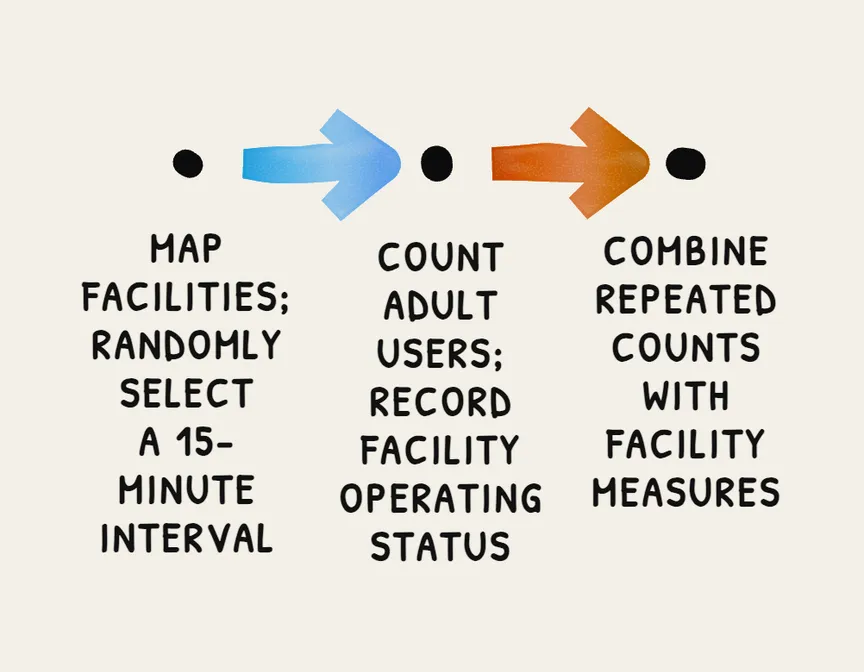
Direct observation in randomly selected short time windows avoids the high cost of continuous all-day monitoring while providing an unbiased sample of peak facility demand.
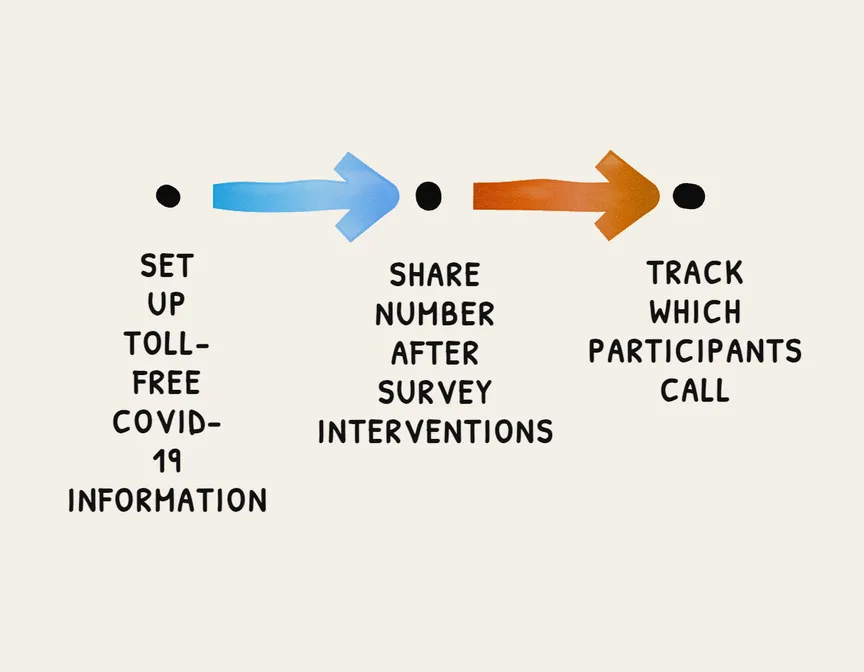
Call tracking provides an objective, direct metric of health information seeking behavior without relying on self-reported survey responses.
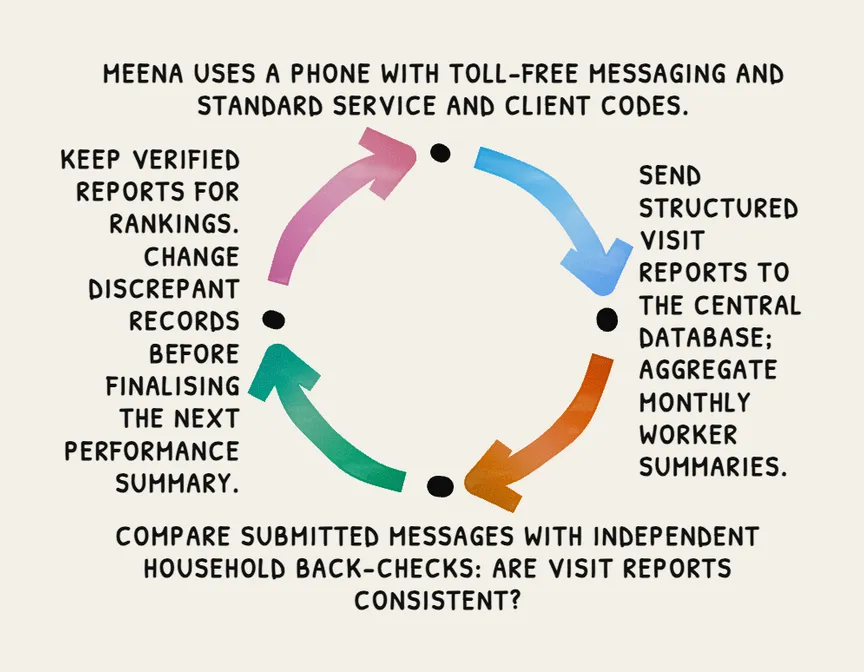
Toll-free mobile reporting eliminates physical paper transport delays and reduces data entry errors.
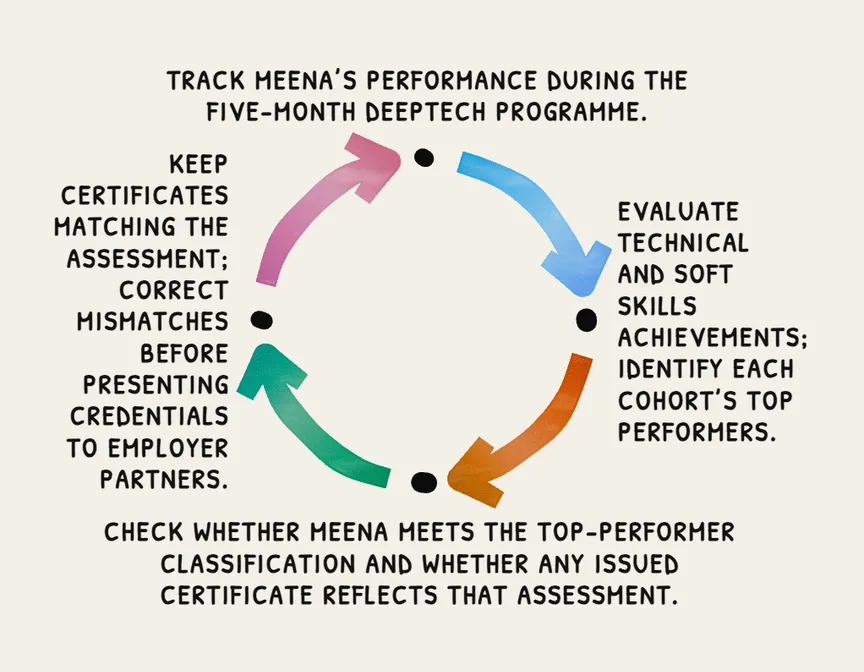
Certificates provide clear proof of competence that helps overcome employer uncertainty and signaling barriers.
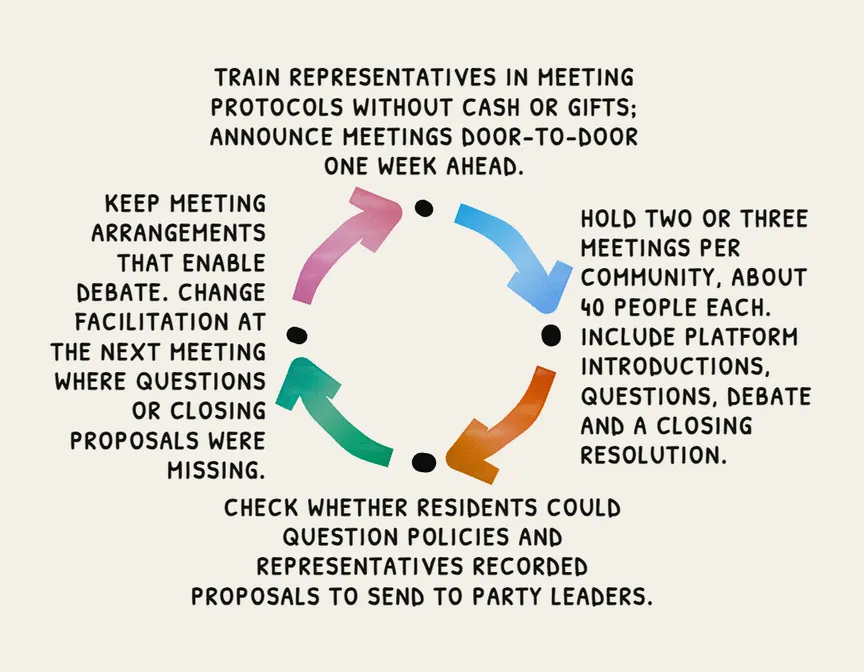
Interactive deliberation improves voter awareness about policy benefits and creates a clear benchmark for evaluating candidates.
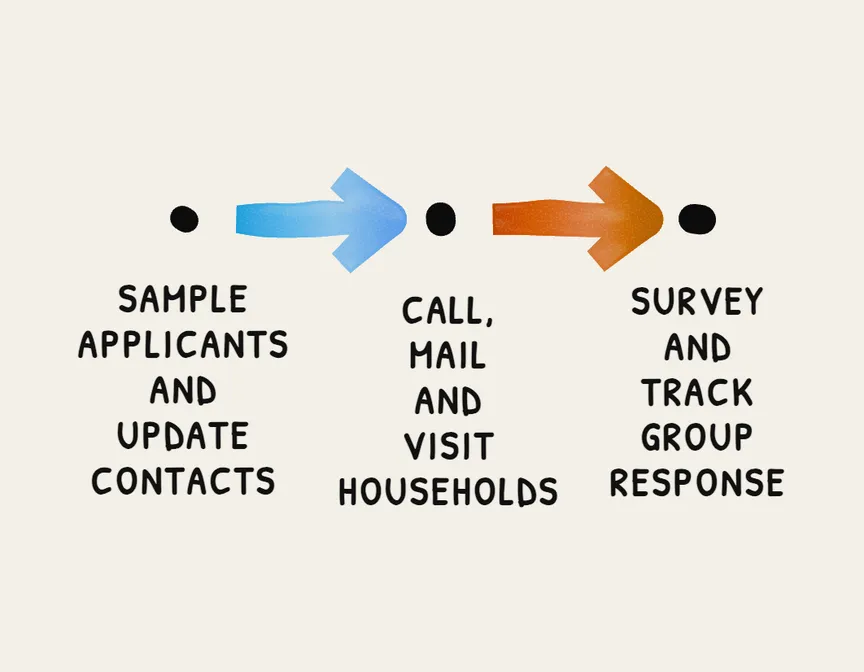
Combining phone calls, mailers, and home visits overcomes outdated contact records among mobile populations.
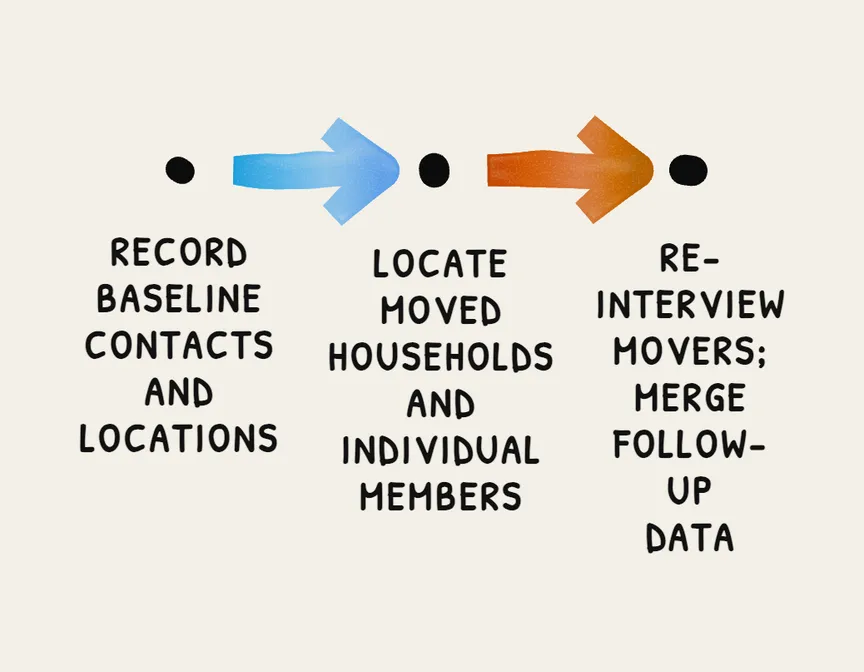
Locating relocated individuals prevents selective sample loss caused by adult male seasonal labor migration and household relocations.
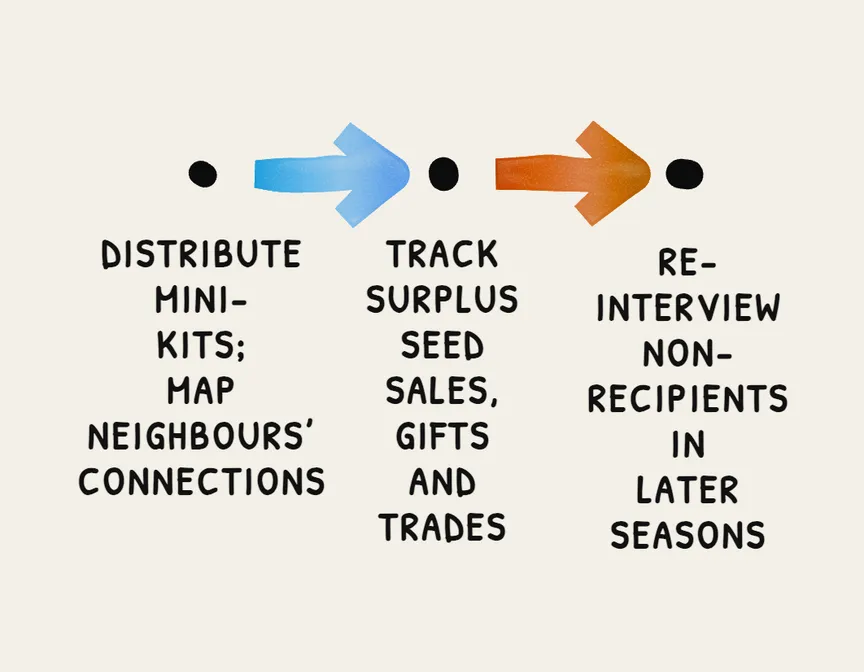
Observing successful crop performance on neighbors' fields reduces uncertainty and builds trust in new agricultural technologies.
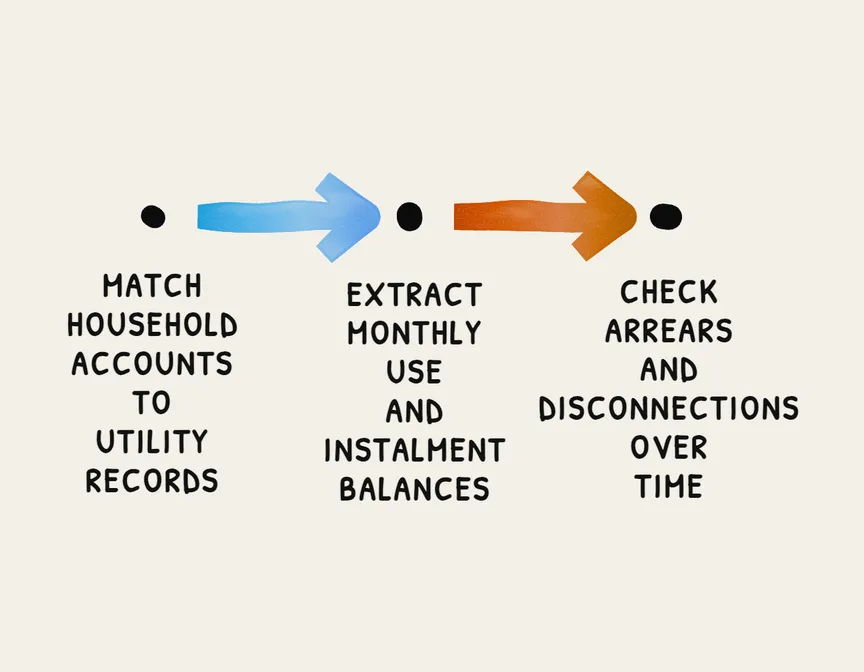
Utility administrative databases provide objective, continuous, and non-attriting records of household payment behavior and actual utility usage over multi-year horizons.
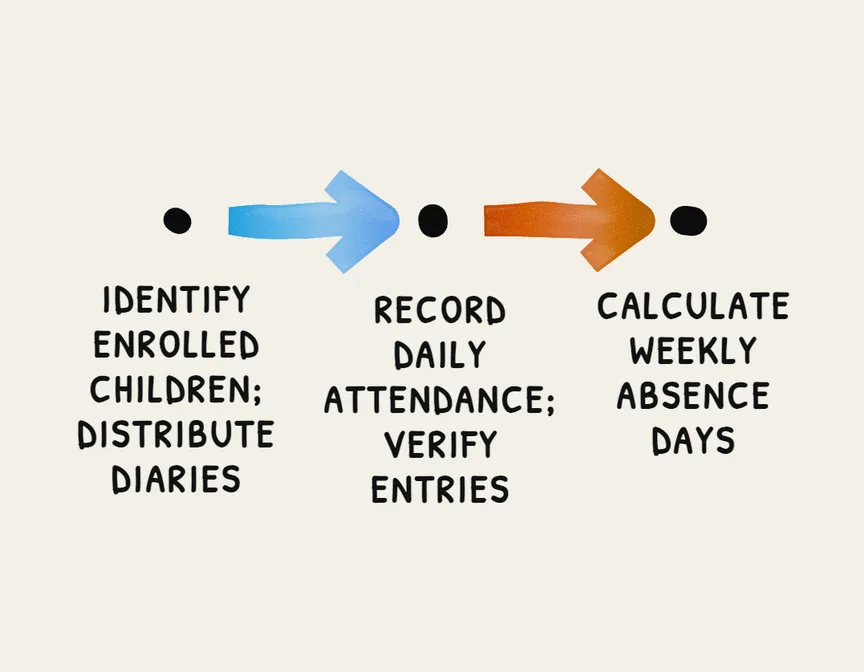
Daily student diaries reduce recall bias and yield precise, high-frequency attendance data across multi-week periods.
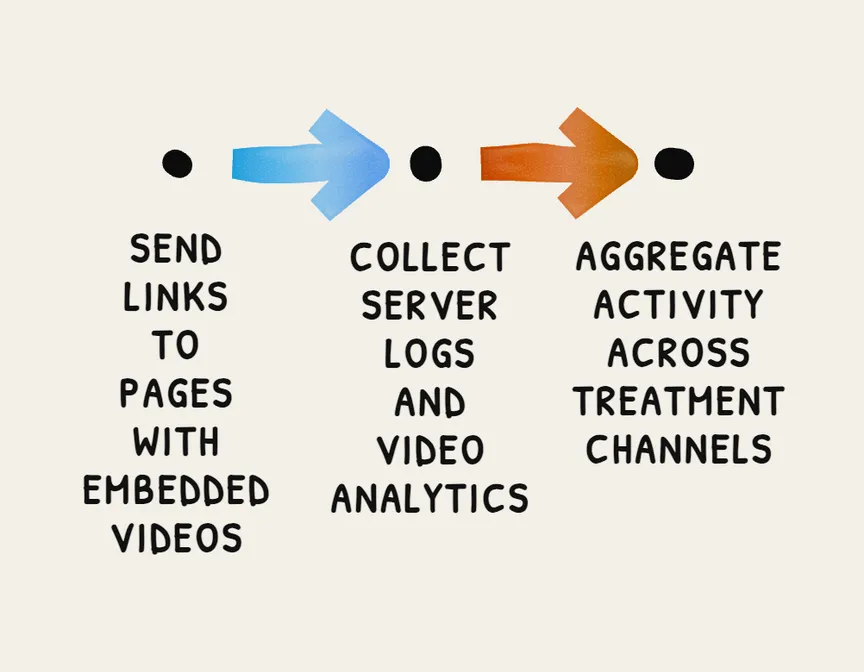
Server visit logs capture direct user activity at the time of access, providing objective behavioral data.
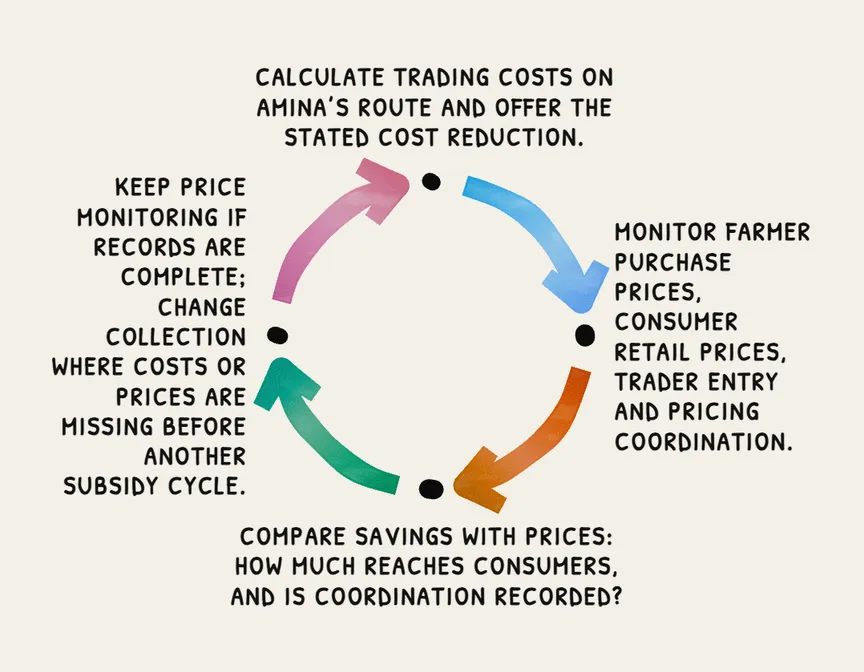
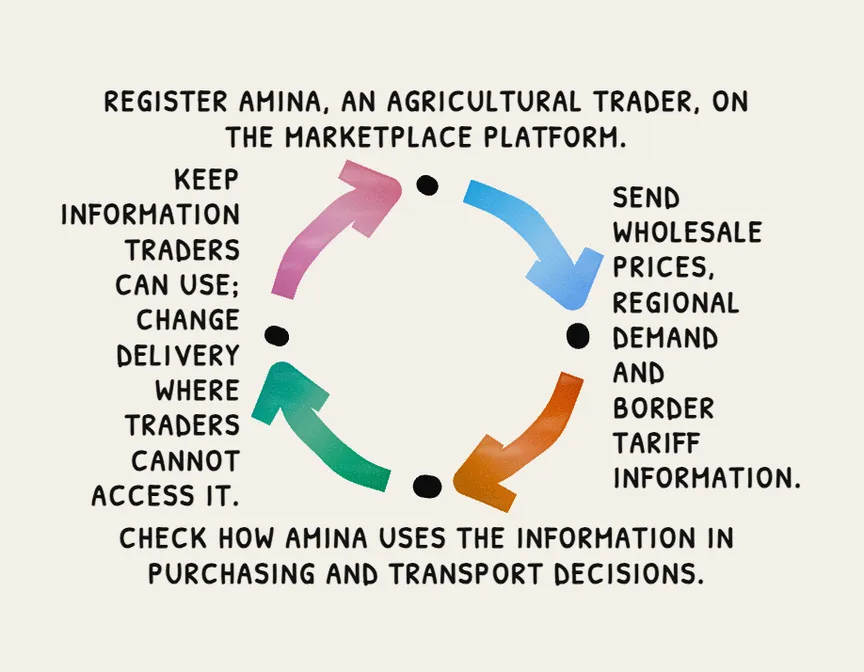
Lowering trading costs is intended to induce new traders to enter local markets and compete for crop volumes.
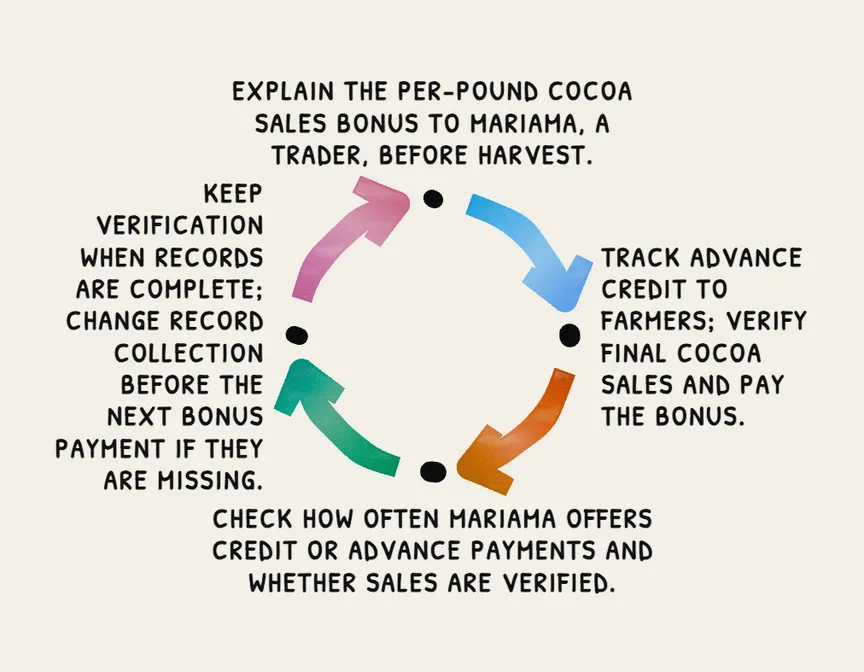
Offering traders a financial reward for higher sales volumes increases their incentive to secure reliable supply from farmers early.
Traders possess the transport capacity and capital required to act on price differentials across distant markets.
Classroom instruction introduces business owners to core concepts and recommended practices across multiple operational areas.
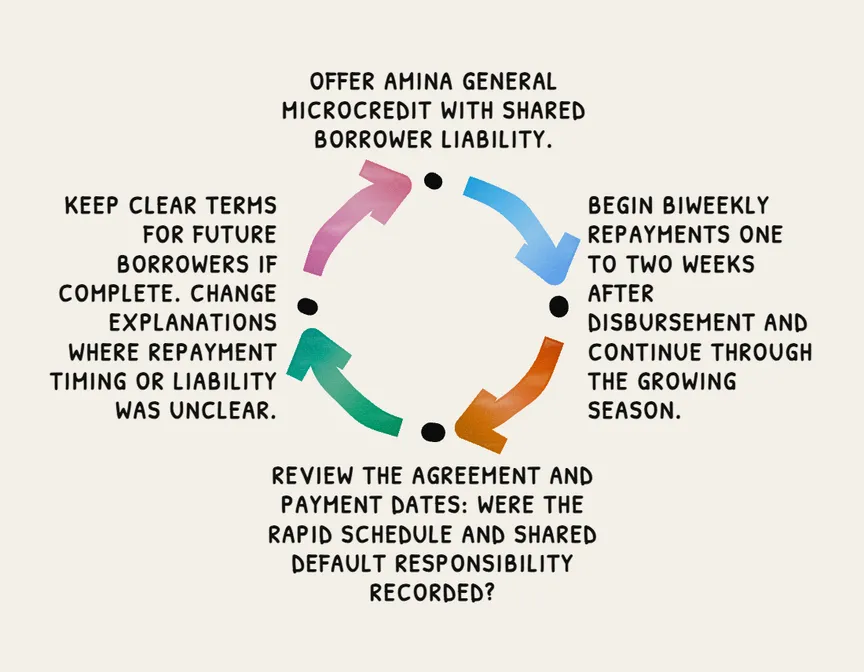
Frequent biweekly repayments and joint group guarantees reduce lender default risk by ensuring continuous enforcement.
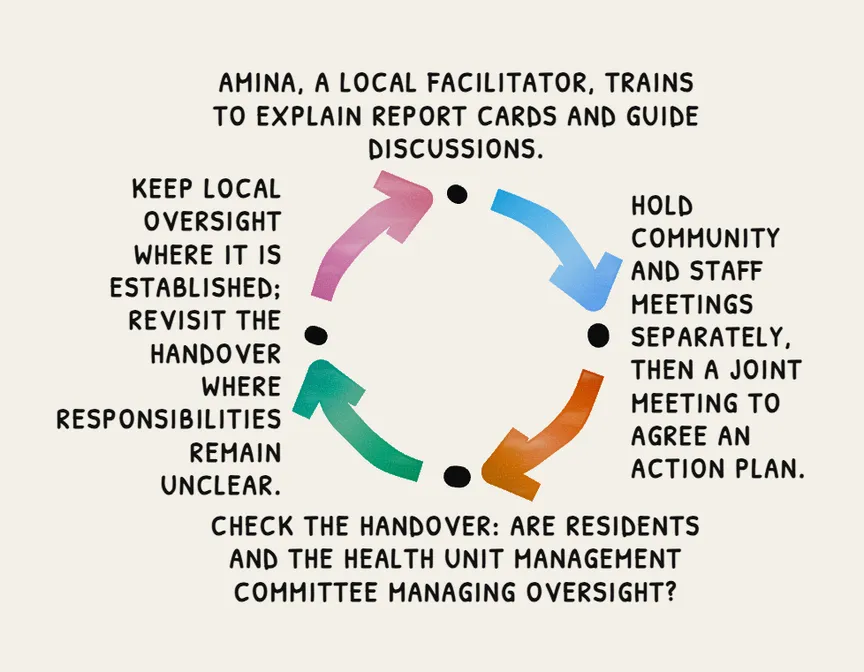
Local facilitators reduce information asymmetries and assist beneficiaries in coordinating expectations and actions regarding service provision.
Pre-intervention training establishes clear operational routines and ensures technical accuracy in self-reported data.
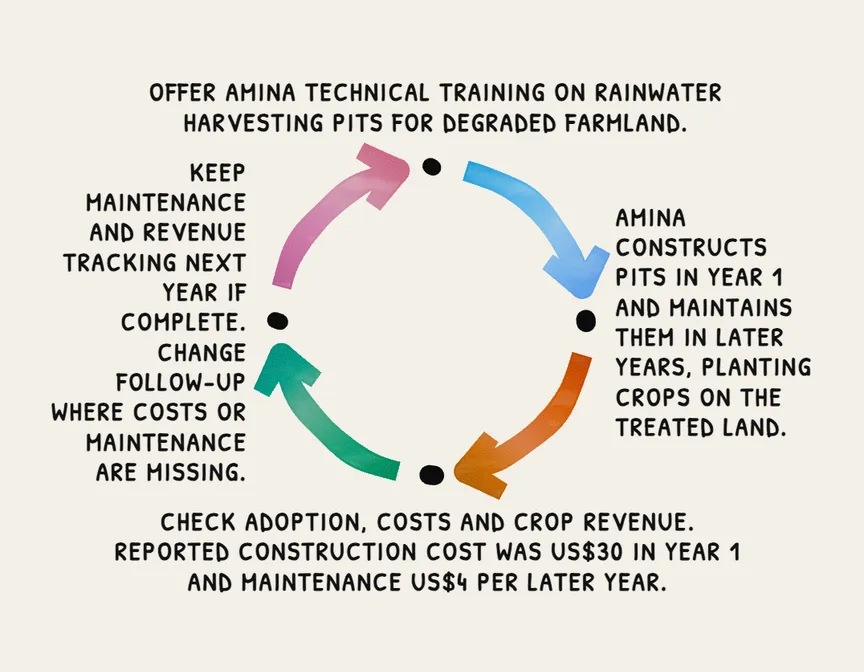
Technical training gives farmers the knowledge required to adopt soil conservation practices without requiring additional cash incentives.
Immediate non-negotiable pay minimizes delay between action and reward, reinforcing the connection between attendance and income.
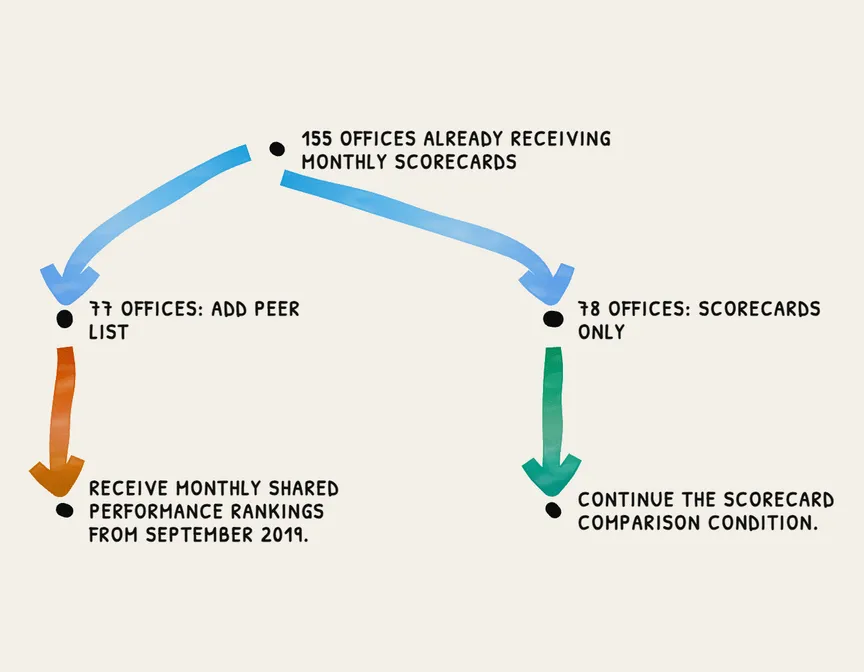
Horizontal information flows about performance between bureaucrats at the same level in an organizational hierarchy create peer visibility.
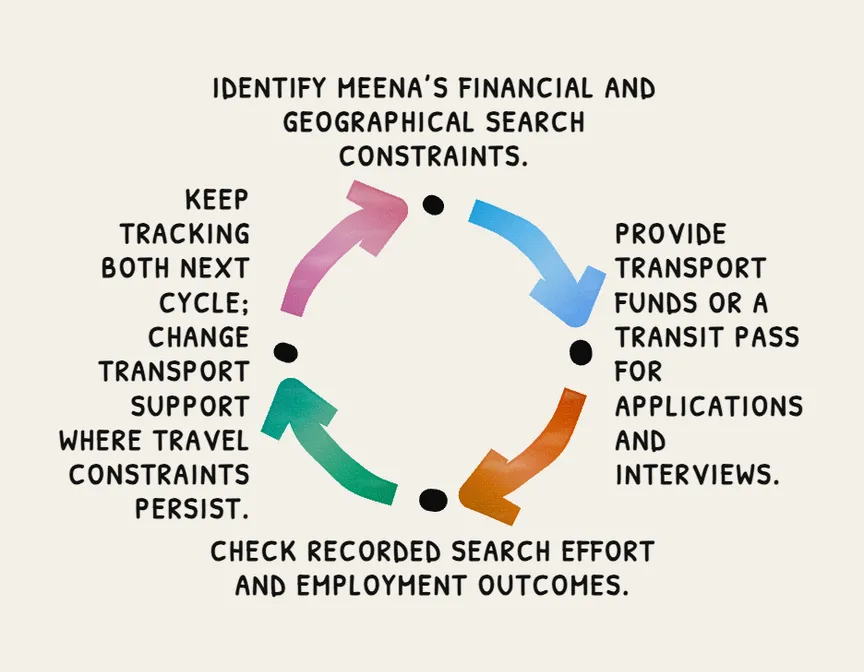
Covering travel costs lowers the immediate financial burden of searching for work across a wider geographic area.
Observed behavioral choices force households to incur real physical travel costs, revealing true preferences without hypothetical survey bias.
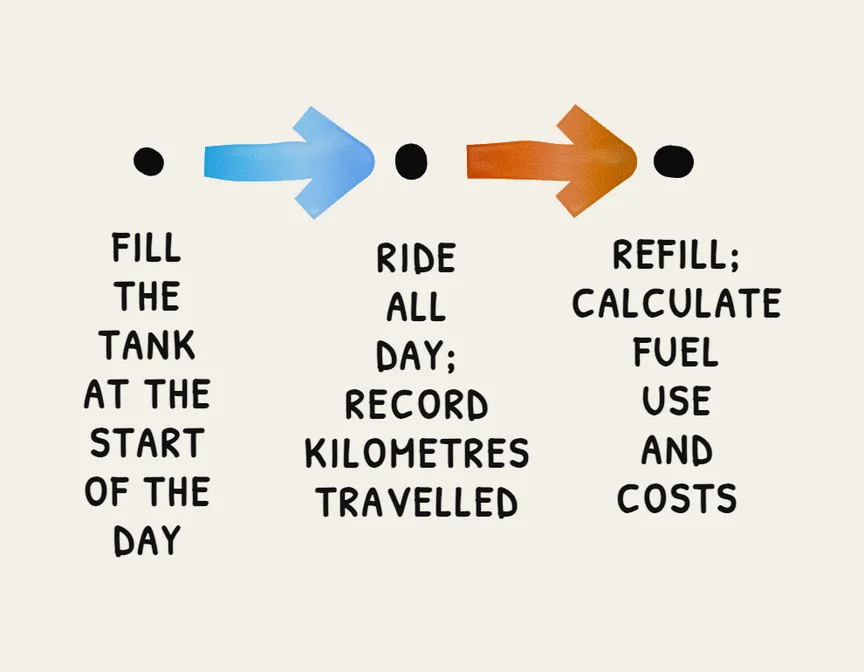
Full-day ride-alongs with fuel tank top-offs at start and finish provide direct physical measurement of fuel usage under real-world traffic and pumping conditions.
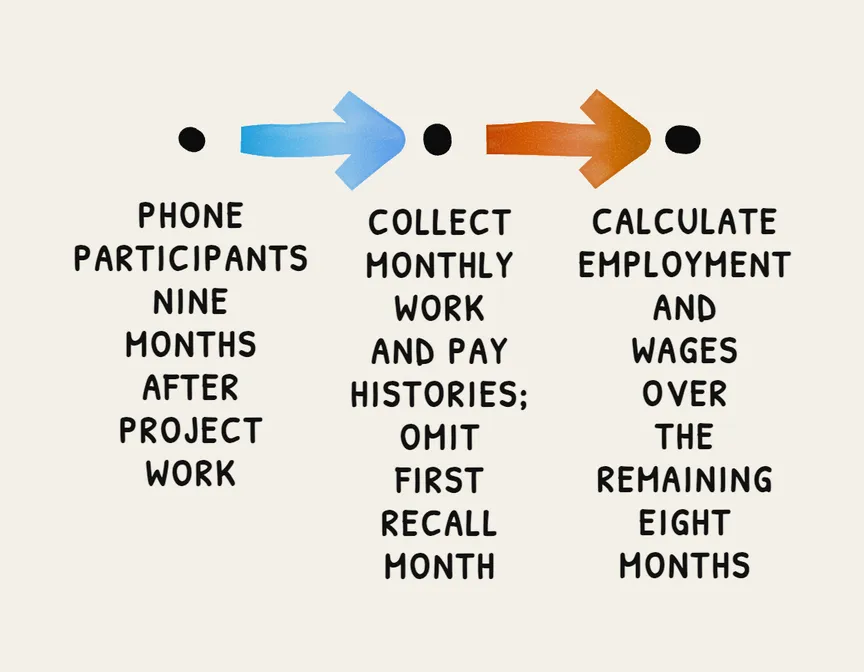
Excluding the immediate post-intervention month removes respondent confusion between experimental work assignments and independent labor market activity.
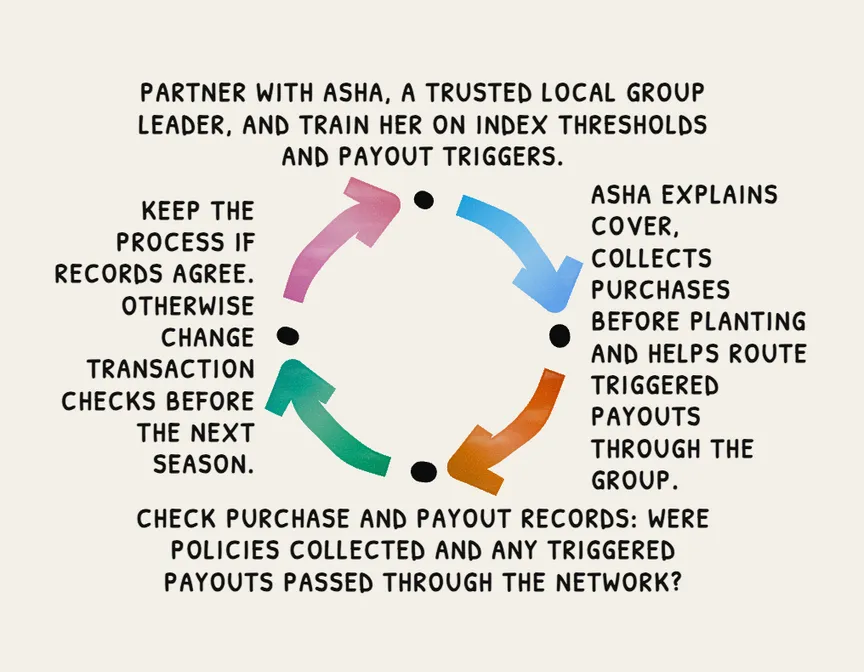
Leveraging established social networks builds local credibility for unfamiliar insurance products.
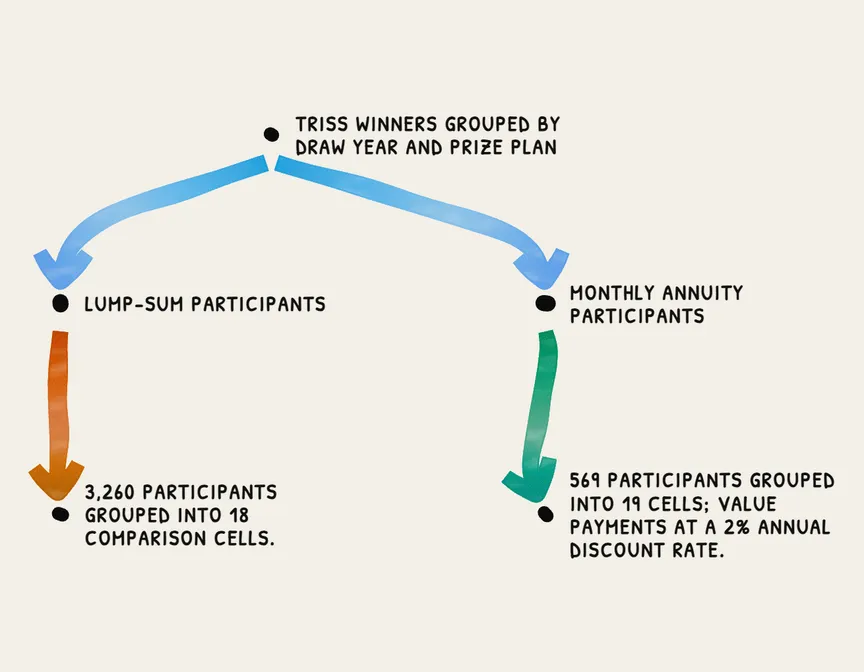
Conditional on qualifying for the televised draw, drawing a specific scratch ticket from the TV show stack yields a completely random prize amount under a fixed prize plan.
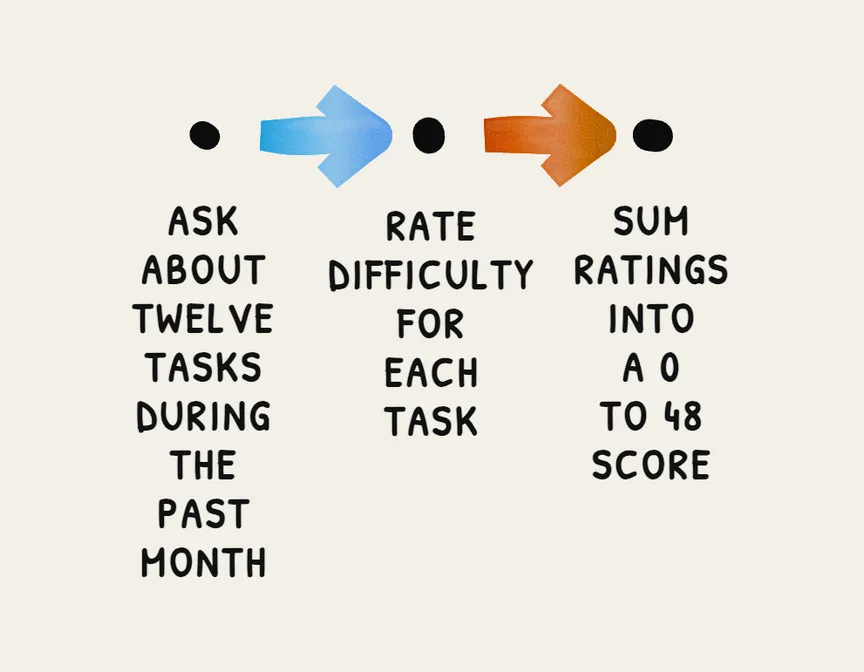
Asking standardized questions about essential daily routines captures changes in physical and psychological functioning.
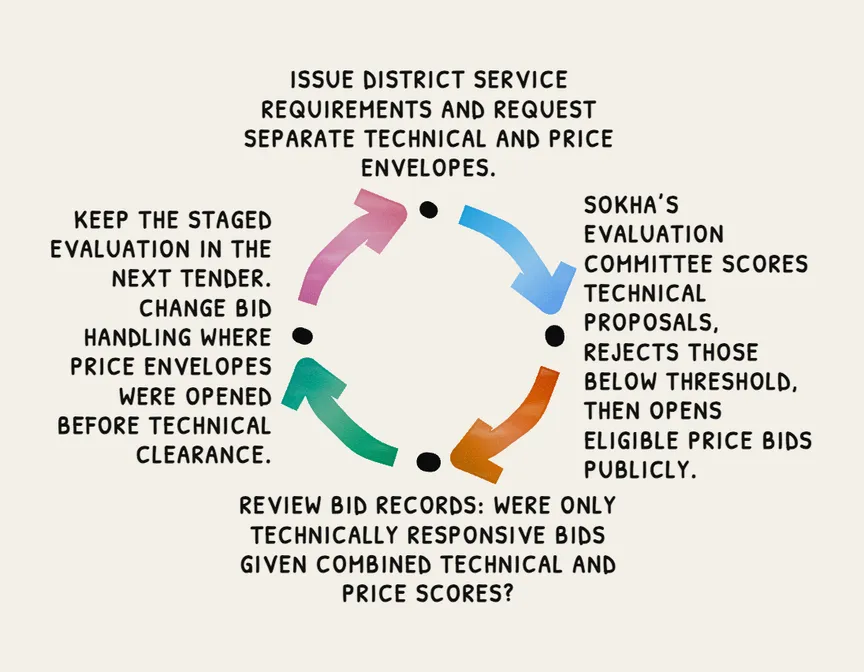
Evaluating technical proposals before opening financial bids ensures that only qualified organizations with proven management plans are considered.
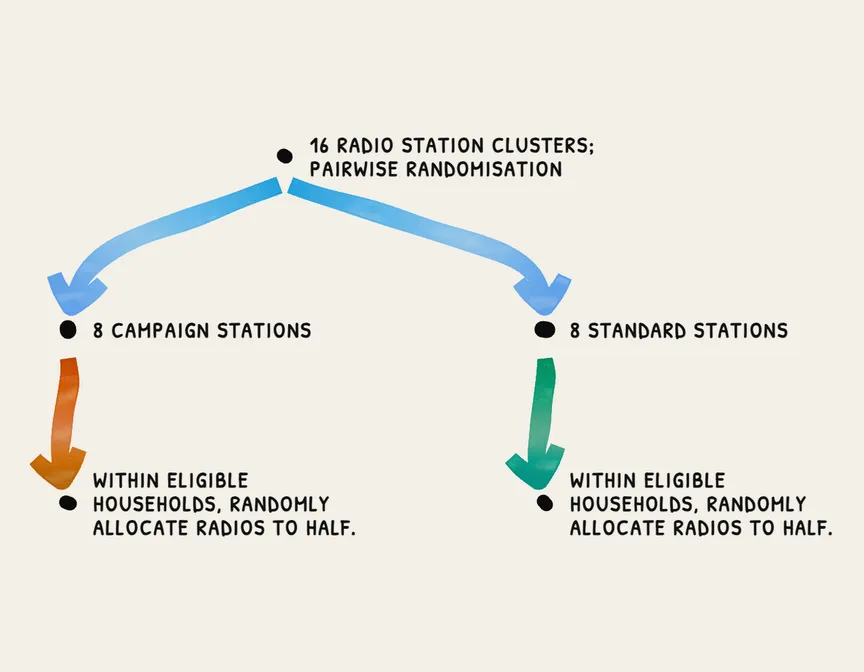
Varying media access at the household level isolates the baseline impact of media consumption, while cluster-level station assignment isolates campaign content effects.
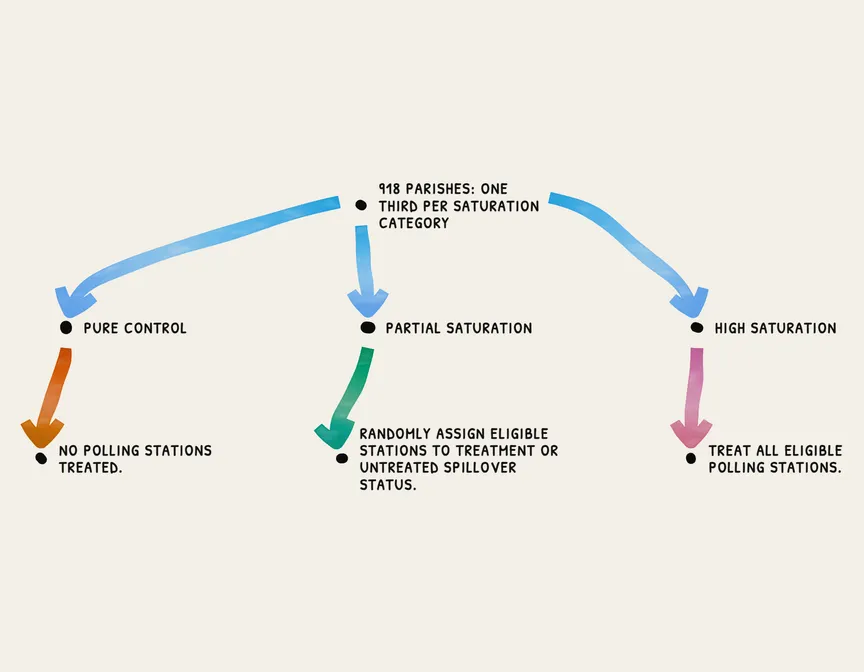
Varying the proportion of treated units across clusters creates distinct local treatment densities, enabling researchers to compare spillover units in treated clusters against pure control units in untreated clusters.
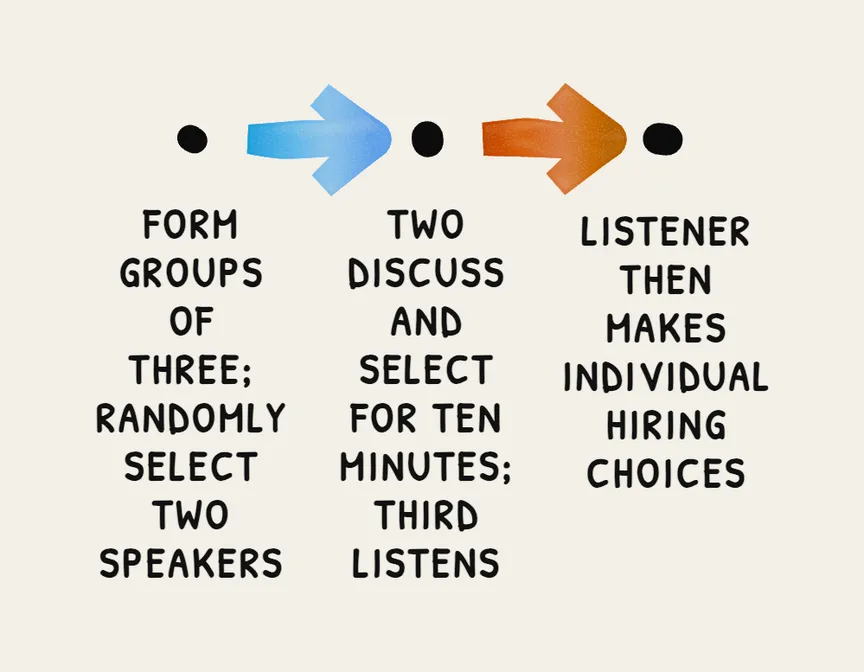
Listening to peer discussions shifts perceived social norms by exposing passive observers to persuasive moral arguments in favor of equal rights.
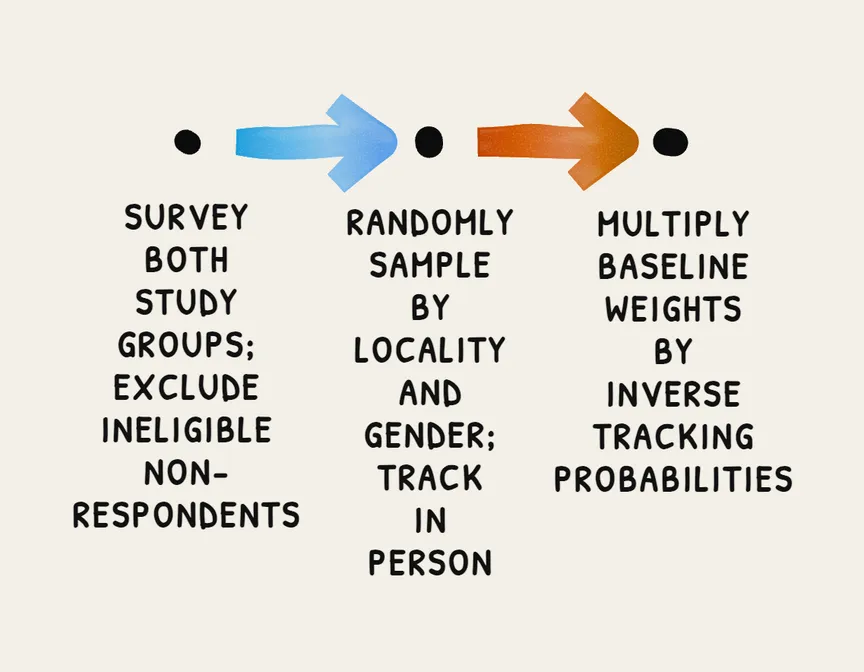
Intensive tracking focuses field resources on a randomly selected subset of mobile non-respondents rather than attempting costly full-sample follow-up.
Page 41 of 45
Previous
1
…
40
41
42
…
45
Next