Skip to the methods
Menu
aikyam
school
Findings
Methods
Subjects
All cards
Read
Findings
Methods
Subjects
All cards
Methods
2,124 methods
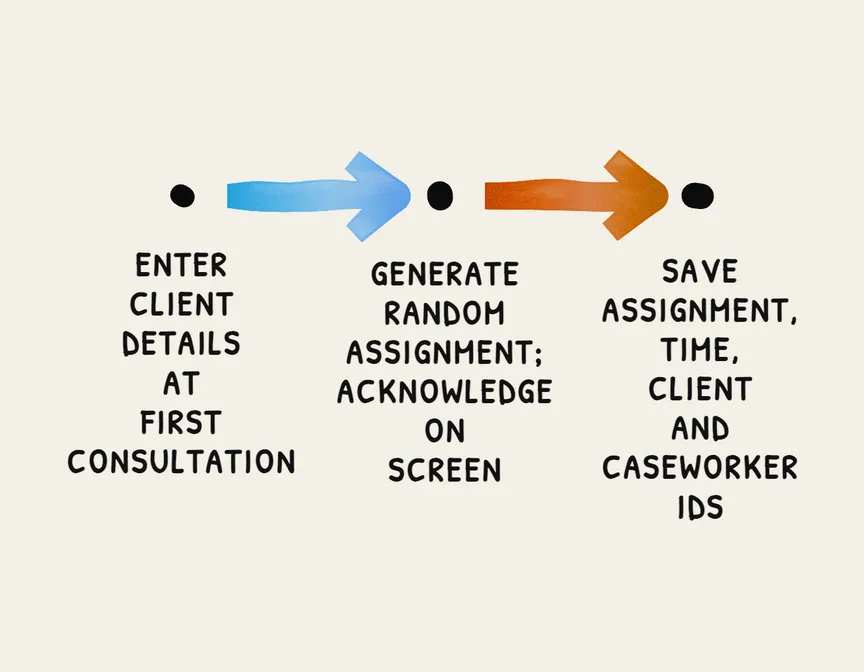
Automating group assignment within standard agency software prevents caseworkers from re-running or bypassing randomization based on subjective client impressions.
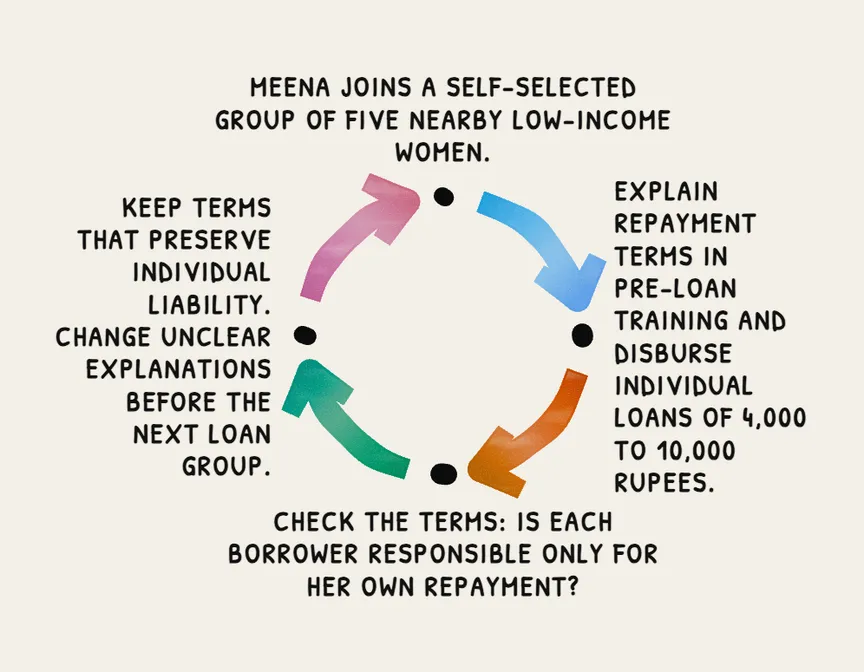
Group structure reduces administrative screening and loan collection costs for the microfinance institution.
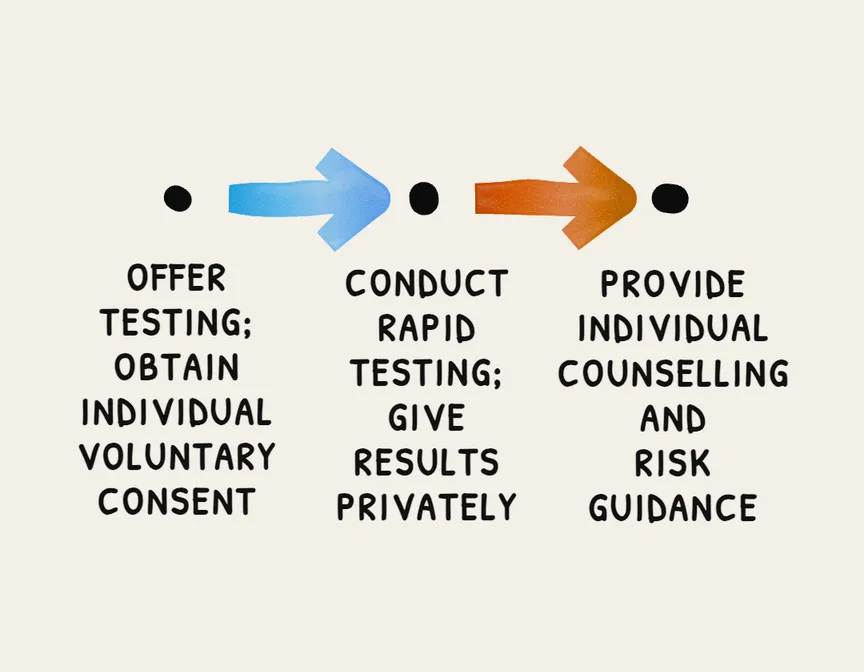
Individual testing provides exact personal health information while preserving personal privacy and disclosure control.
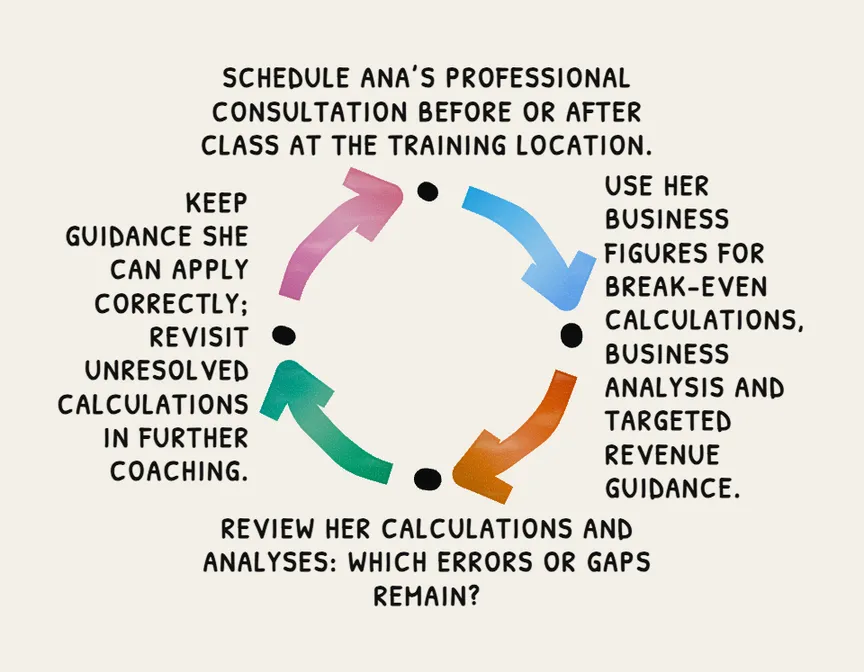
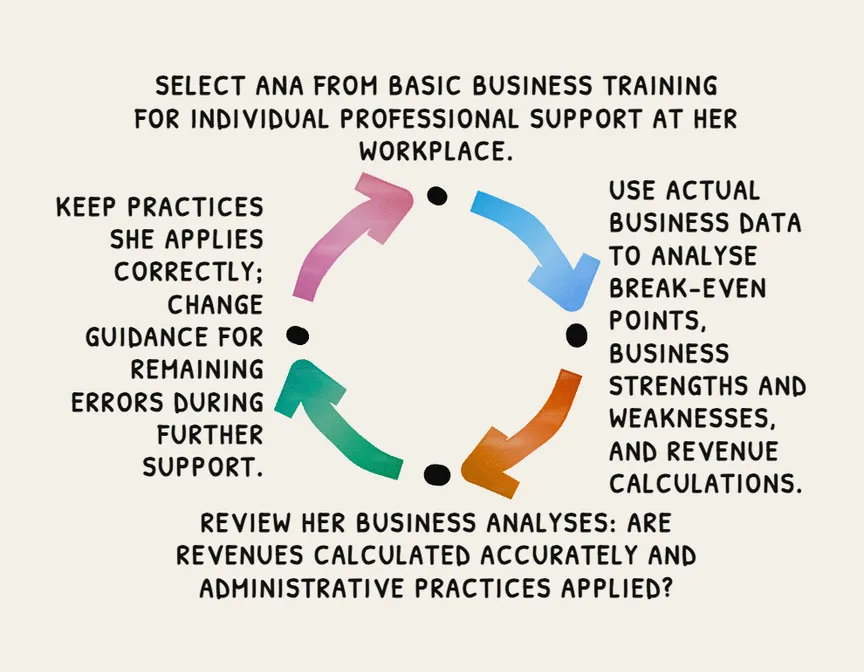
Individualized technical assistance improves business performance by strengthening administrative practices and expanding practical business knowledge.
Individualized technical assistance improves business knowledge and adoption of better administrative practices.
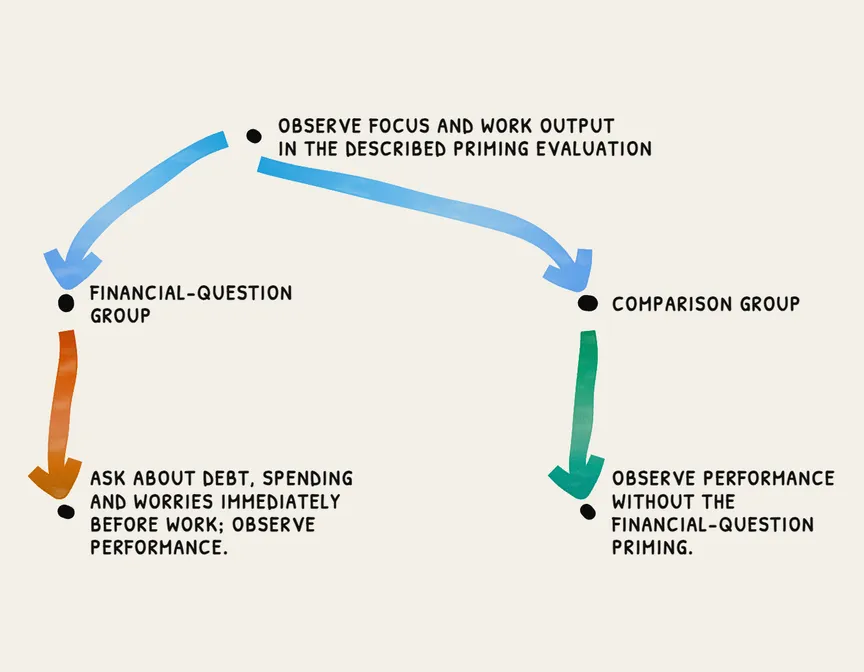
Asking targeted financial questions activates latent worries about debt and living expenses that workers already hold.
Credentials provide a clear signal to employers that job seekers possess specific technical capabilities.
Informal peer trading relies on existing interpersonal trust and local social connections to pass seed varieties between neighboring farmers.
Informal centers lower operational costs and institutional barriers by utilizing local non-formal instructors and flexible community spaces.
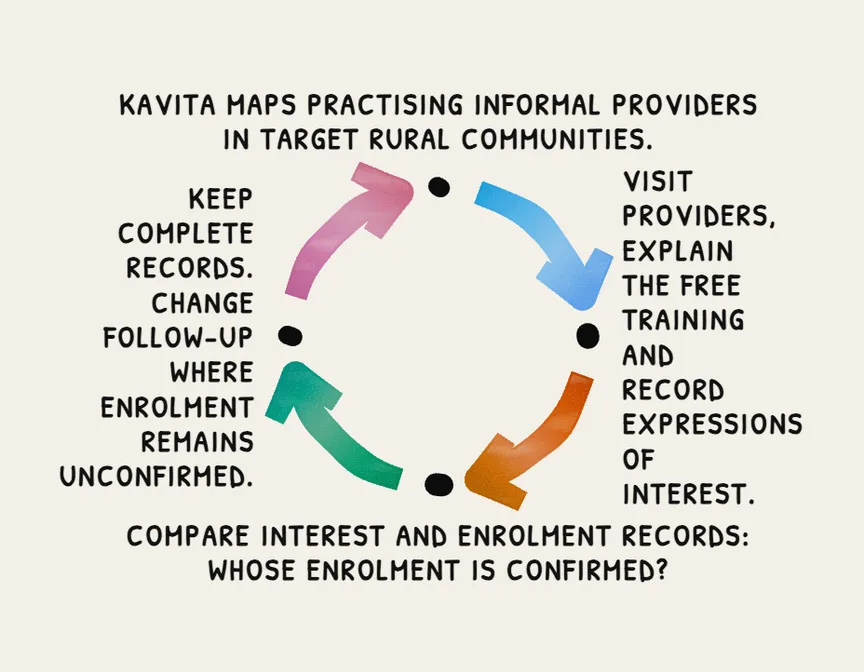
Reaching out directly to active practitioners helps training programs engage the specific workforce that provides most primary care in rural communities.
Targeting established microfinance clients ensures participants already possess commercial experience and access to financial services.
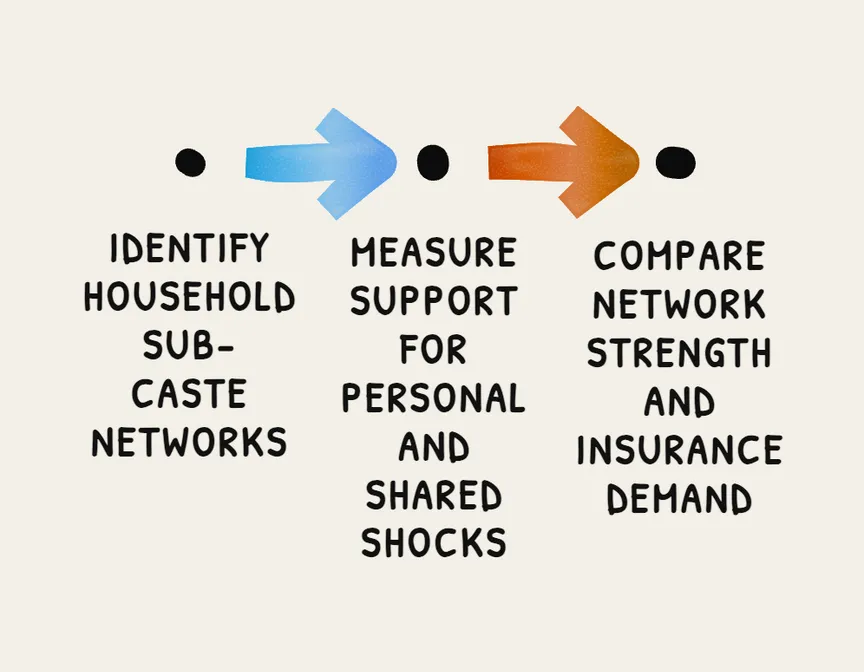
Sub-castes that effectively insure household-specific shocks value formal index insurance to protect against severe aggregate droughts.
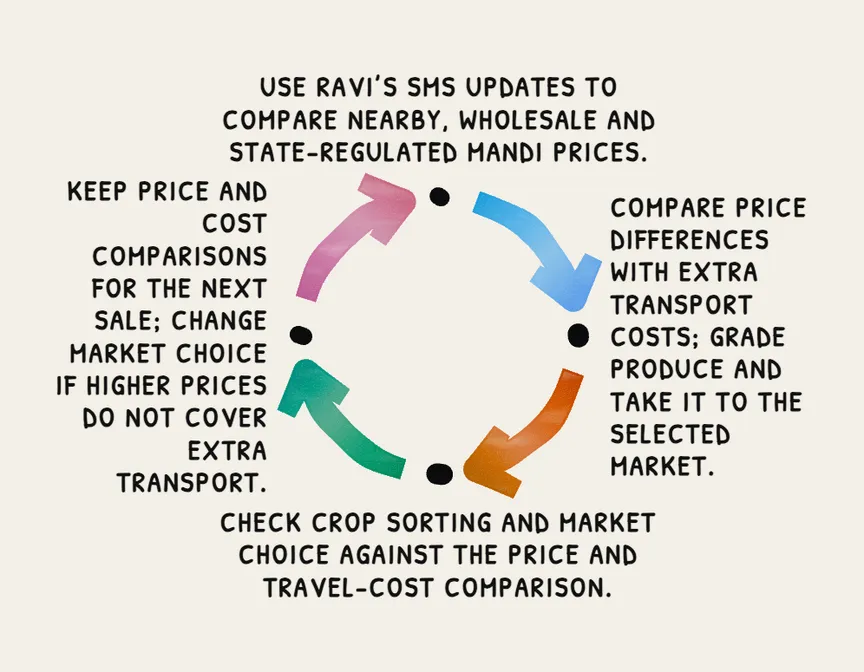
Receiving accurate price broadcasts reveals higher price opportunities in distant regulated markets that compensate for extra transport costs.
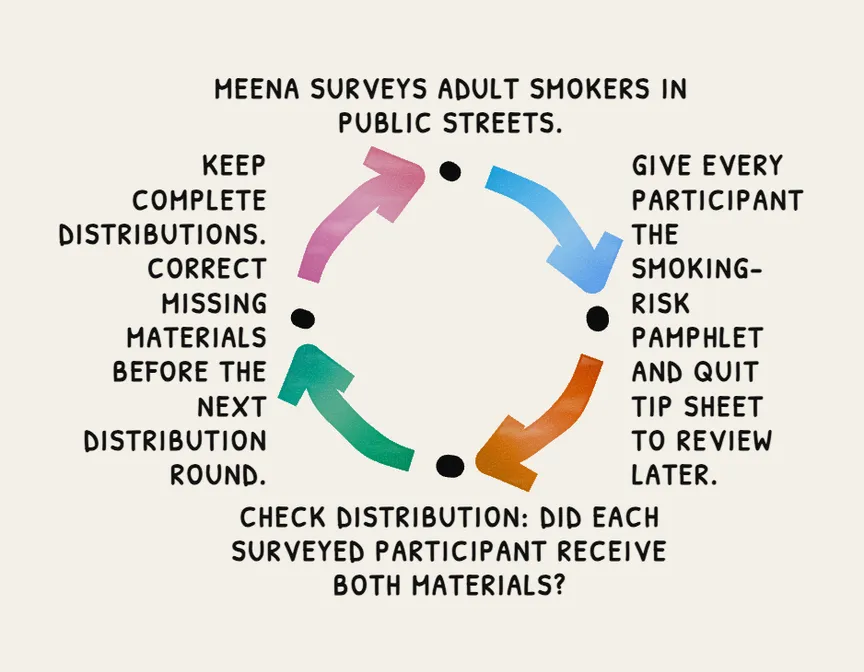
Providing direct written information highlights the physical dangers of tobacco and outlines simple steps to attempt quitting.
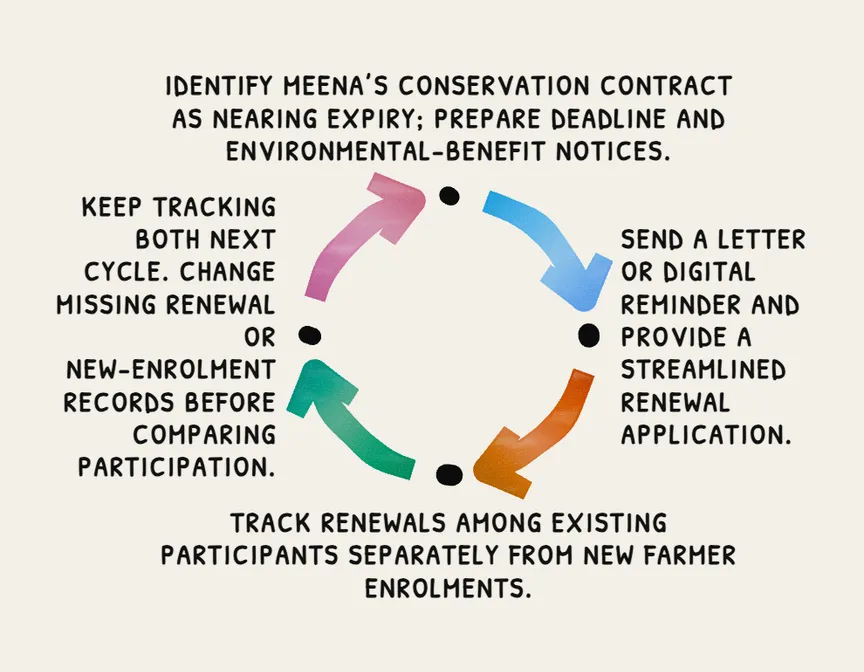
Direct informational prompts reduce cognitive friction and remind farmers of upcoming renewal deadlines.
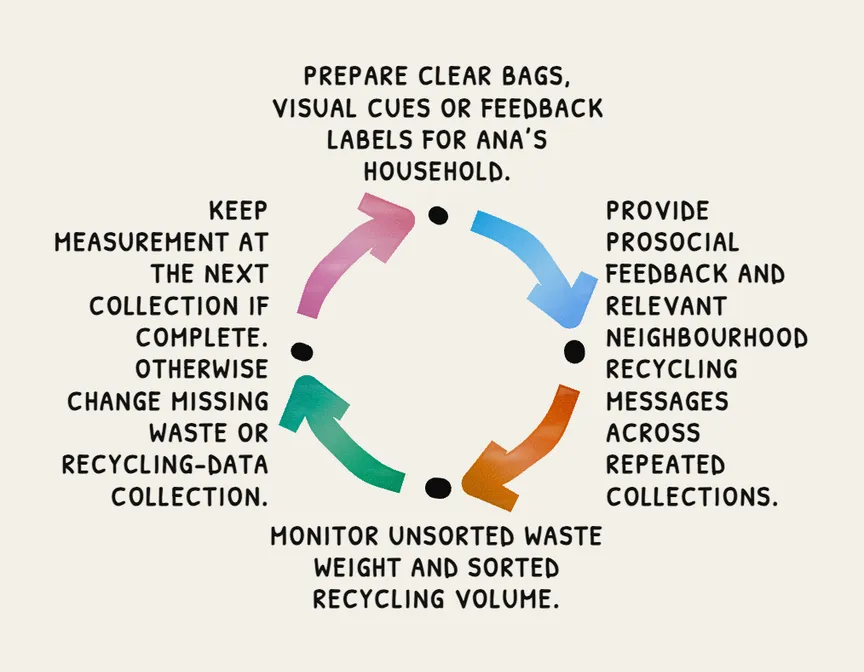
Visual cues make sorting habits salient at the moment of disposal.
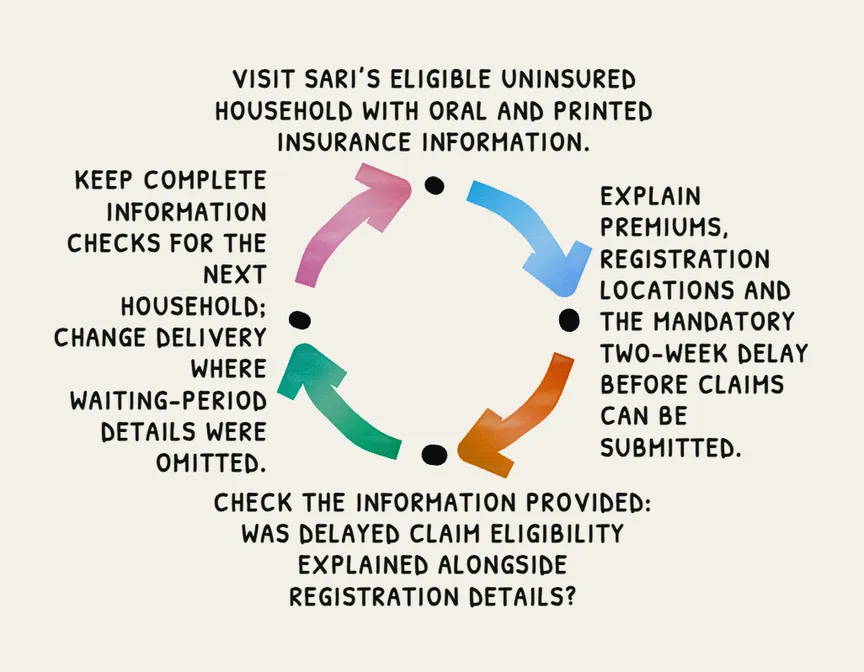
Notifying households that coverage does not start immediately upon registration removes the illusion of instant emergency enrollment.
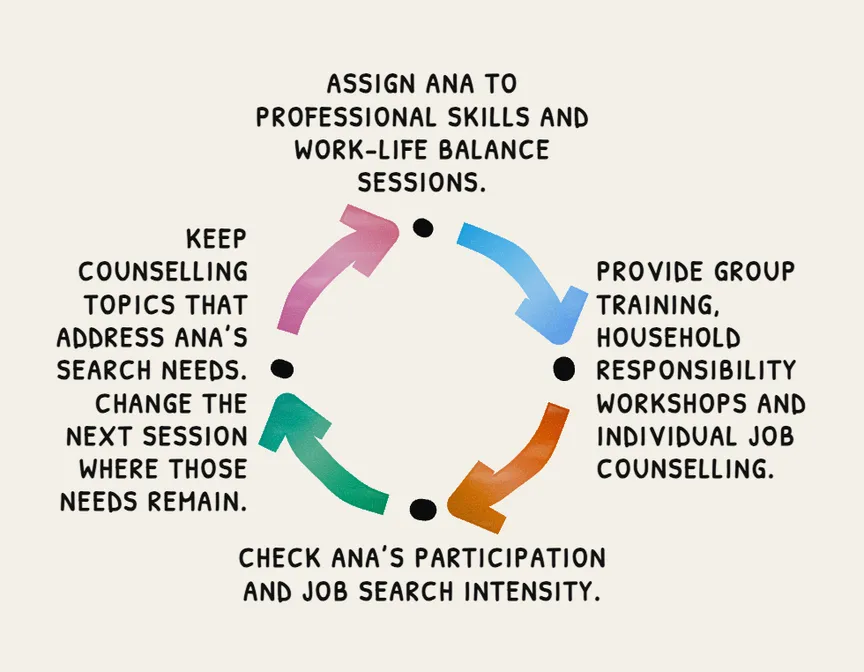
Combining peer group learning with individual career guidance builds practical job search competencies while helping participants overcome personal scheduling and family care barriers.
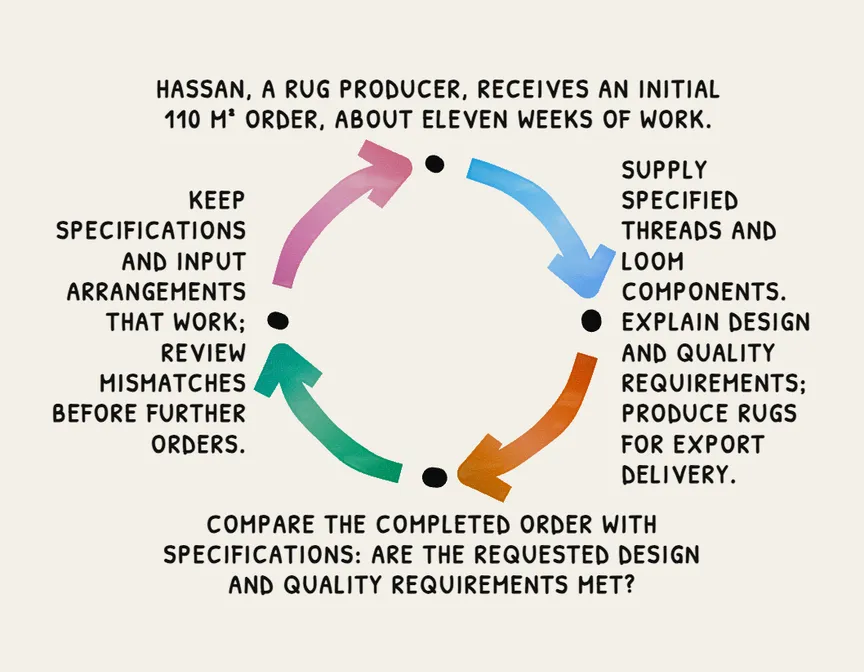
Directly supplying input threads and loom components eliminates raw material quality variations among small workshops.
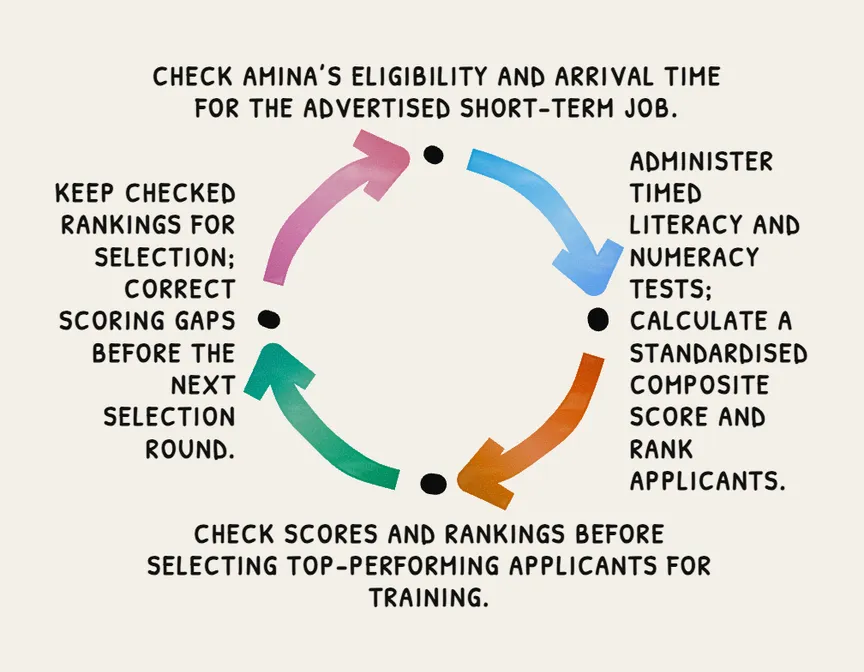
Written assessment tests evaluate baseline cognitive skills that predict candidate performance on workplace tasks.
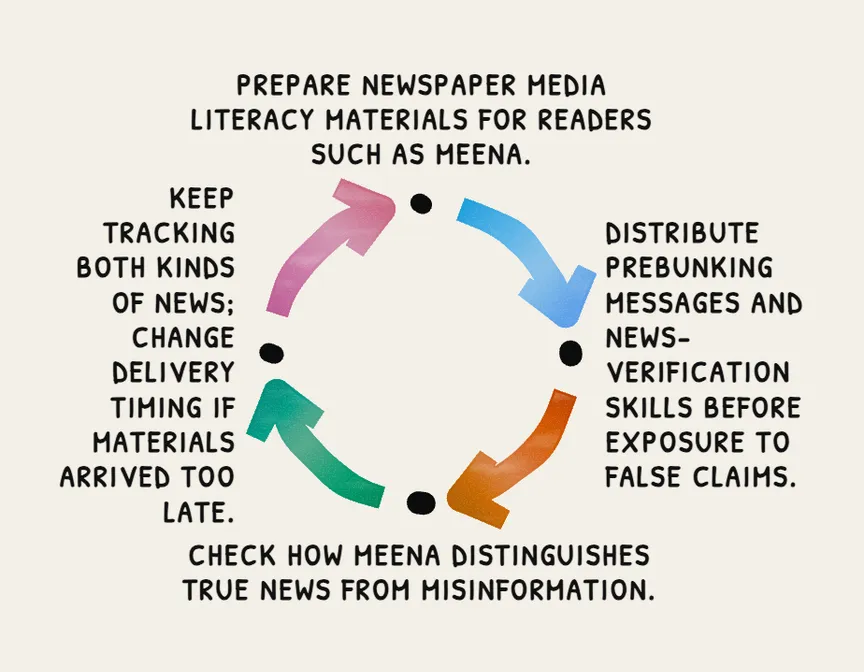
Delivering media literacy messages before individuals encounter misinformation inoculates readers against false claims.
Targeted input subsidies lower the marginal cost of chemical fertilizers, enabling credit-constrained farmers to increase nutrient application rates on high-value crops.
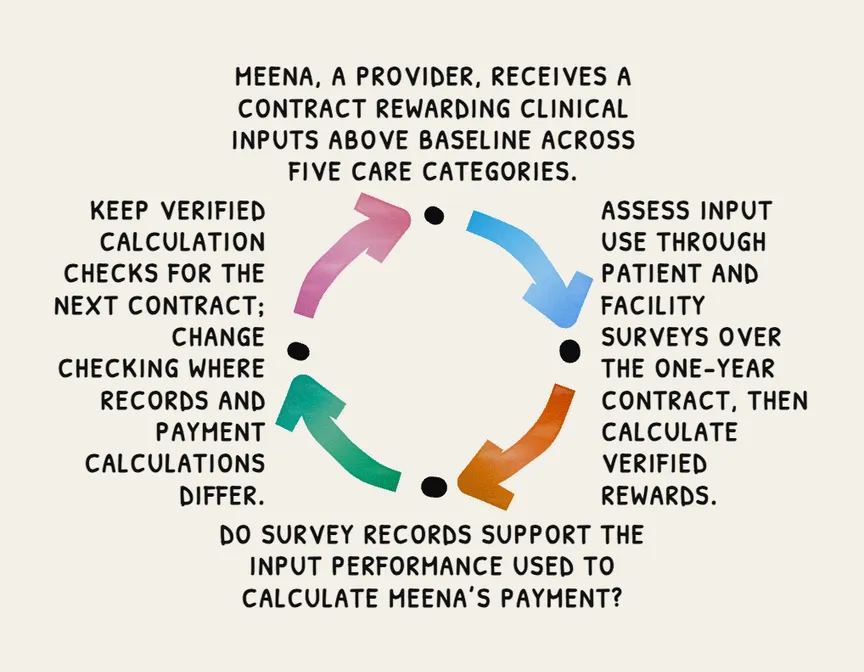
Rewarding specific clinical actions encourages providers to perform essential medical procedures regardless of their prior skill level or personality traits.
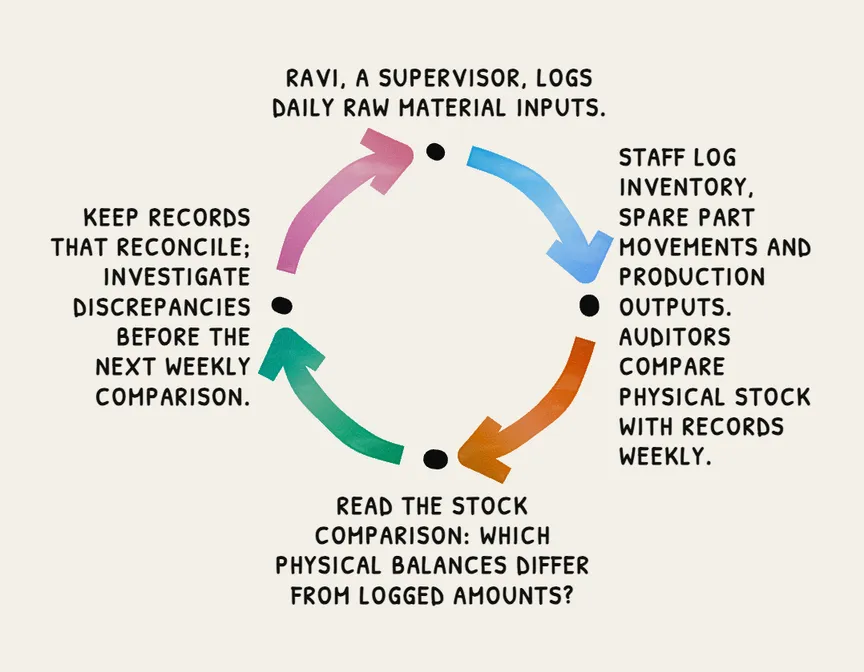
Establishing accurate measurement systems reduces opportunities for undetected theft and inventory loss.
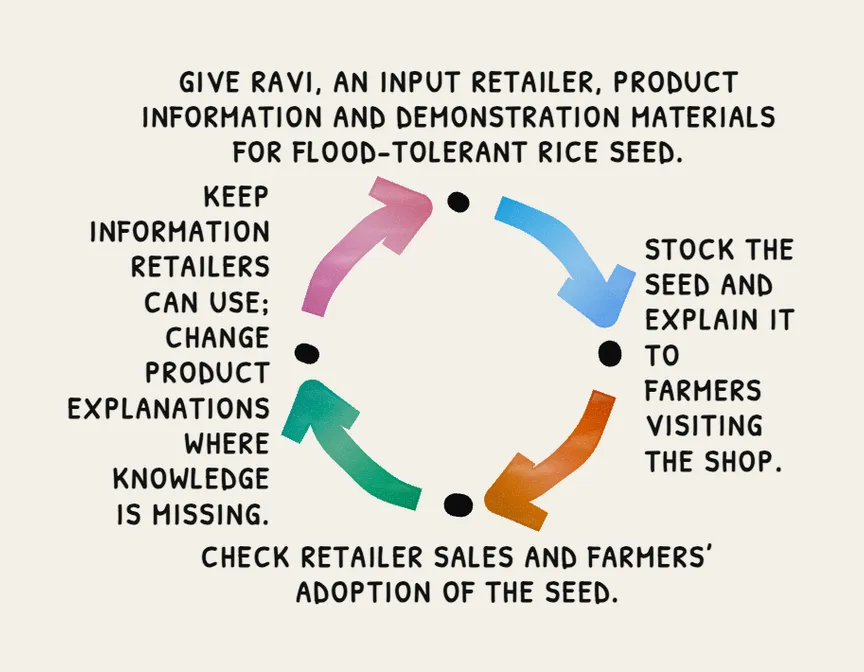
Improving supplier product knowledge and branding motivates retailers to market beneficial technologies actively to their existing client base.
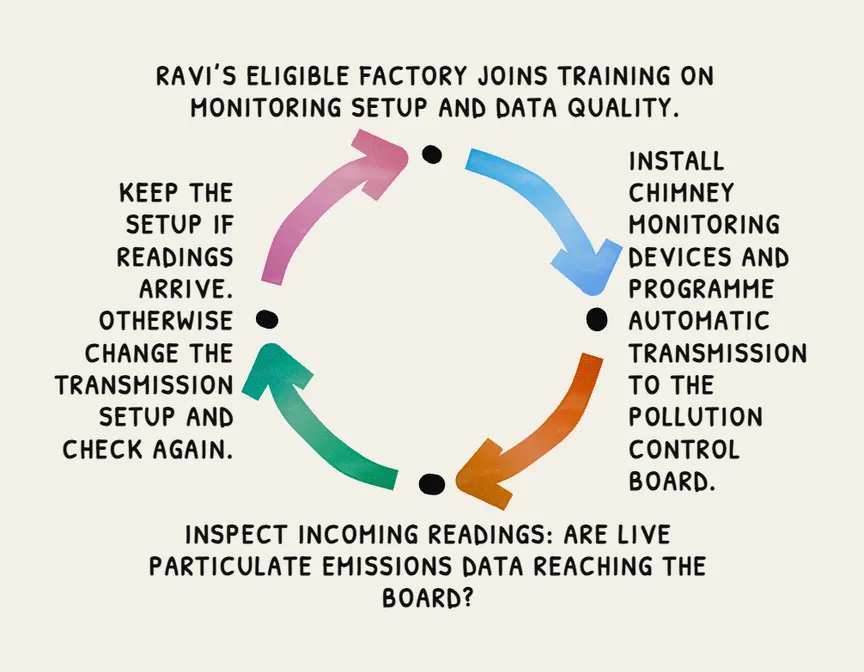
Continuous hardware readings eliminate manual reporting errors and provide regulators with real-time emissions visibility across industrial plants.
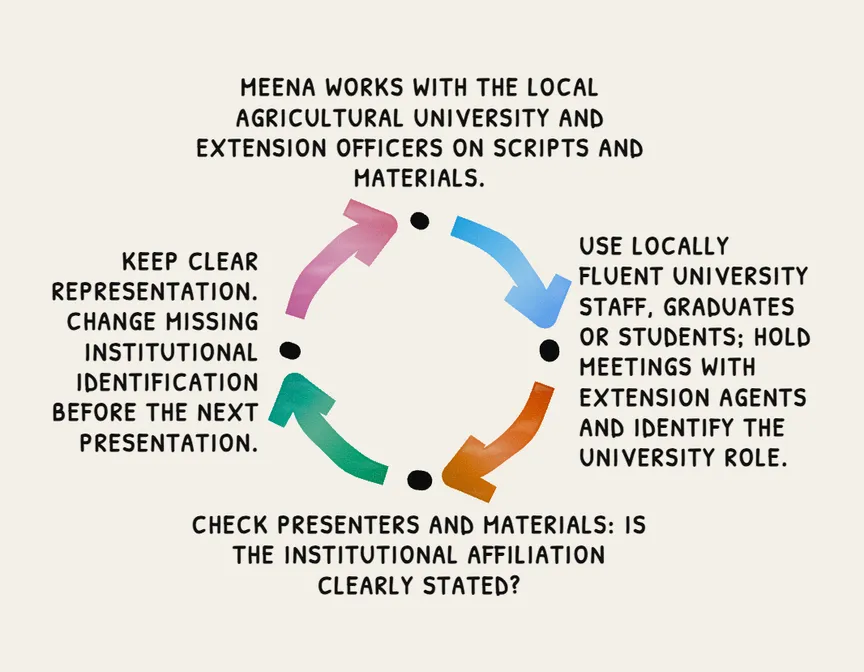
Villagers and retailers trust local public universities and extension officers more than external parties.
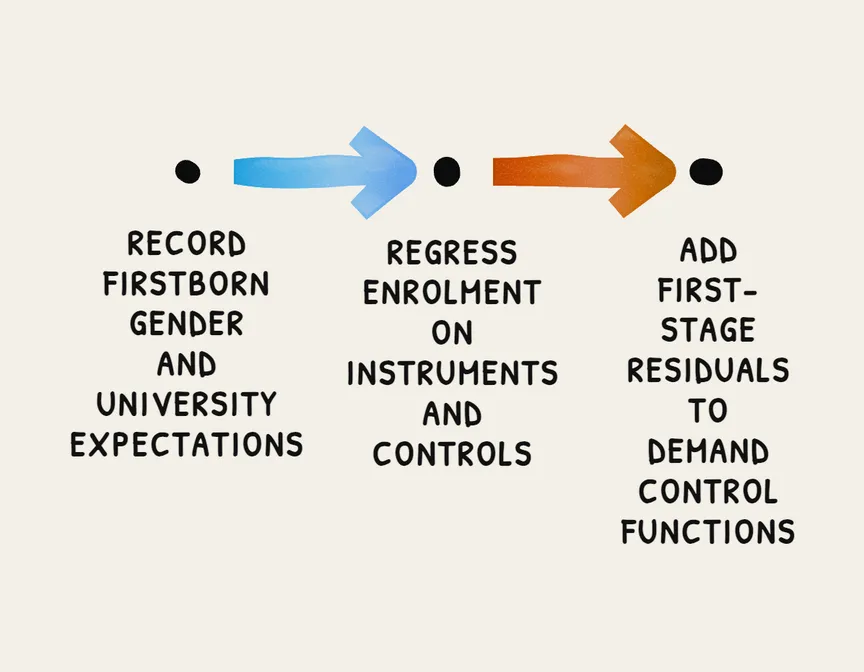
First-born male children in poor Macedonian households face lower secondary school enrollment rates, providing exogenous variation in total household schooling.
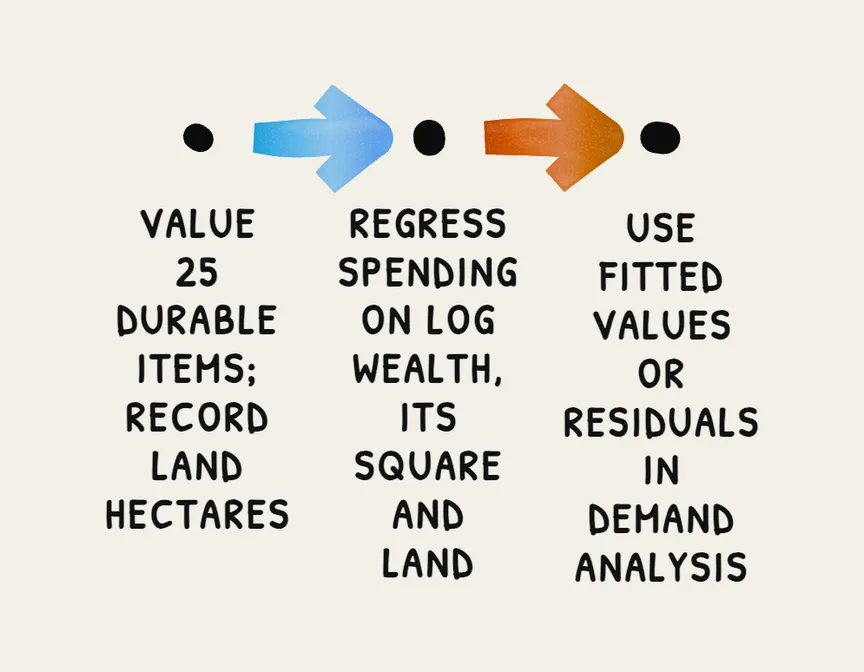
Wealth measures correlate strongly with total living standards but remain uncorrelated with short-term consumption measurement errors.
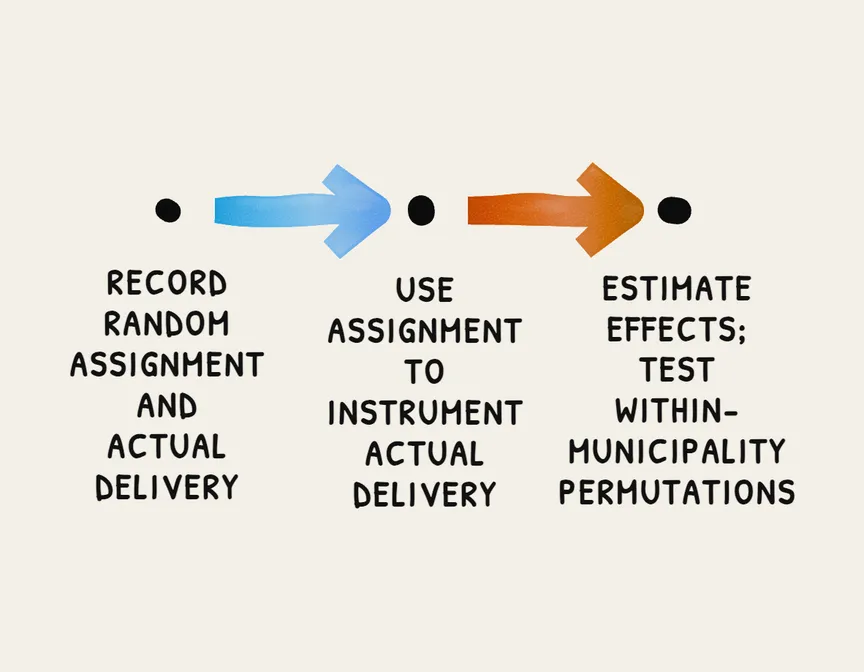
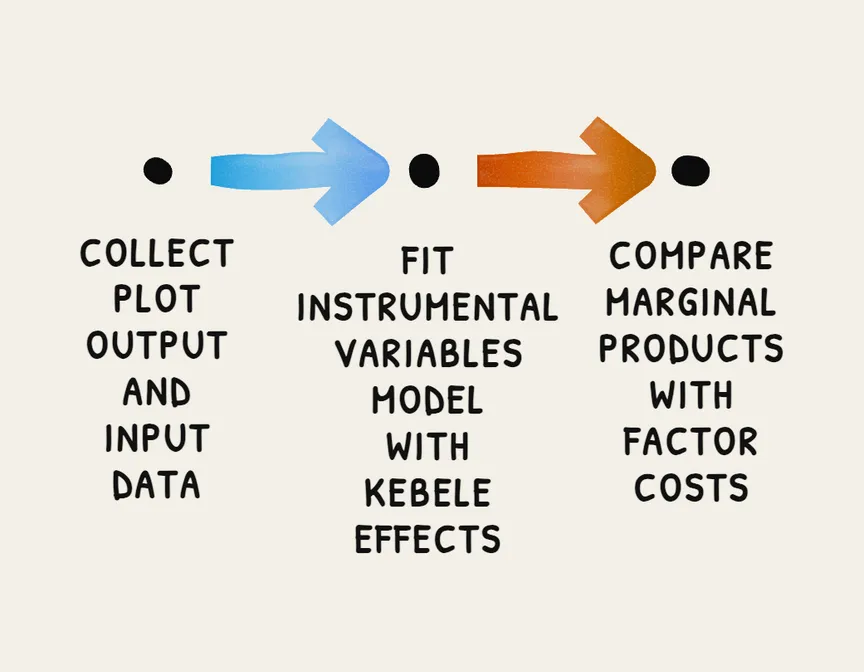
Instrumental variable estimation uses initial random assignment as an exogenous instrument to isolate variations in intervention status unconfounded by local compliance decisions.
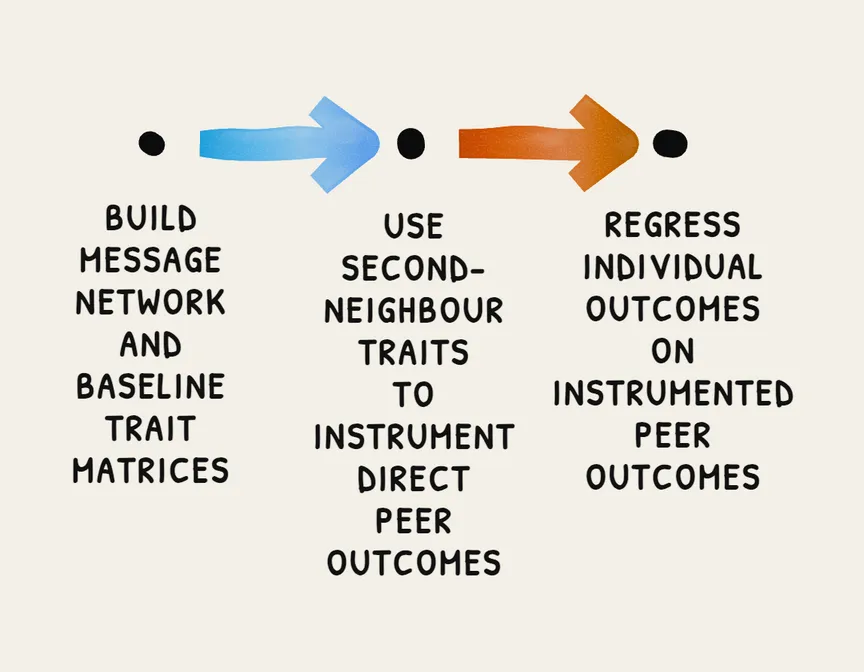
Second-degree neighbors influence an individual only indirectly through intermediate direct peers, satisfying the exclusion restriction.
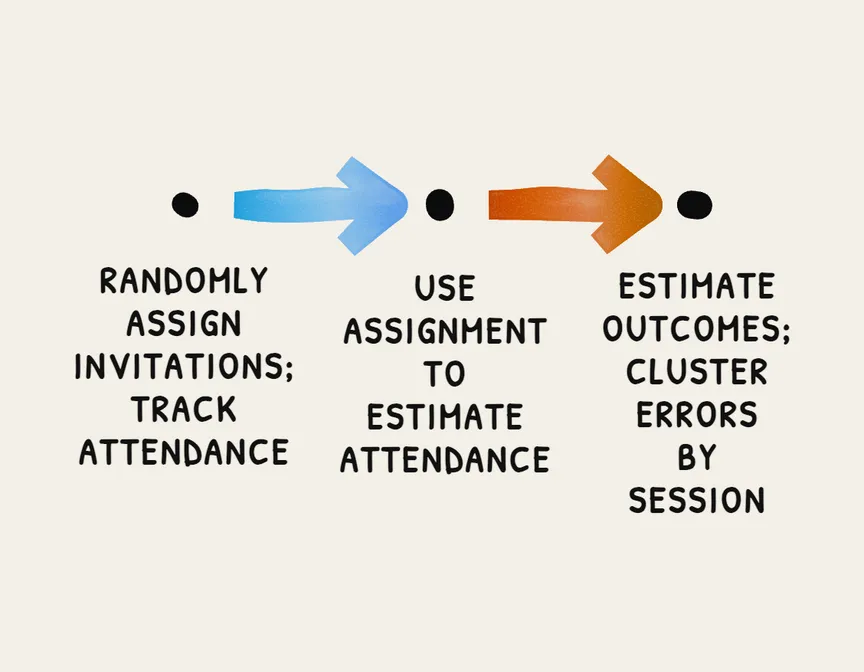
Random assignment serves as an unconfounded instrument because assignment increases attendance without directly altering financial outcomes.
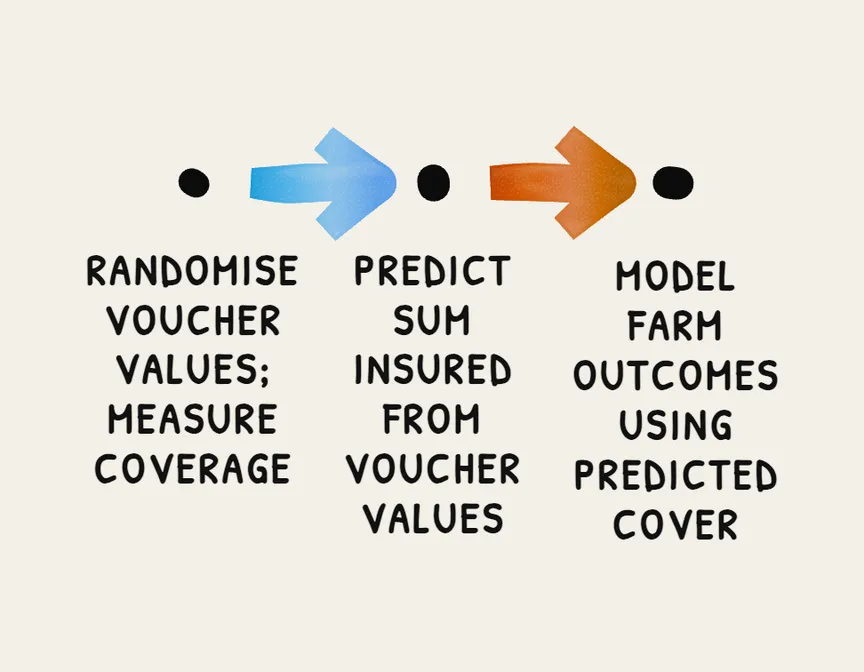
Randomized voucher face values directly alter individual purchasing power and coverage amounts without directly affecting agricultural decisions except through insurance uptake.
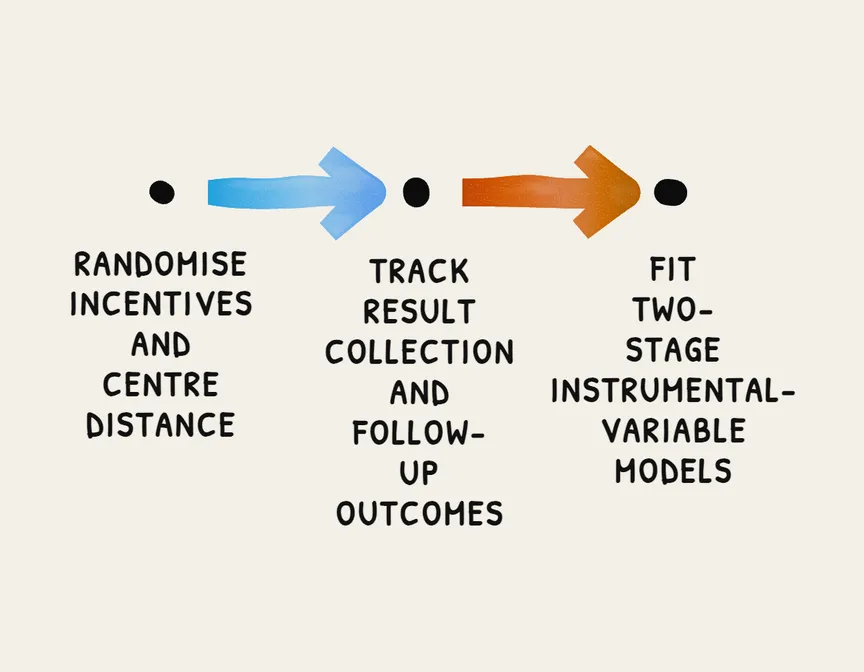
Exogenous variation in monetary vouchers and center proximity randomly drives test result pickup independent of individual unobserved traits.
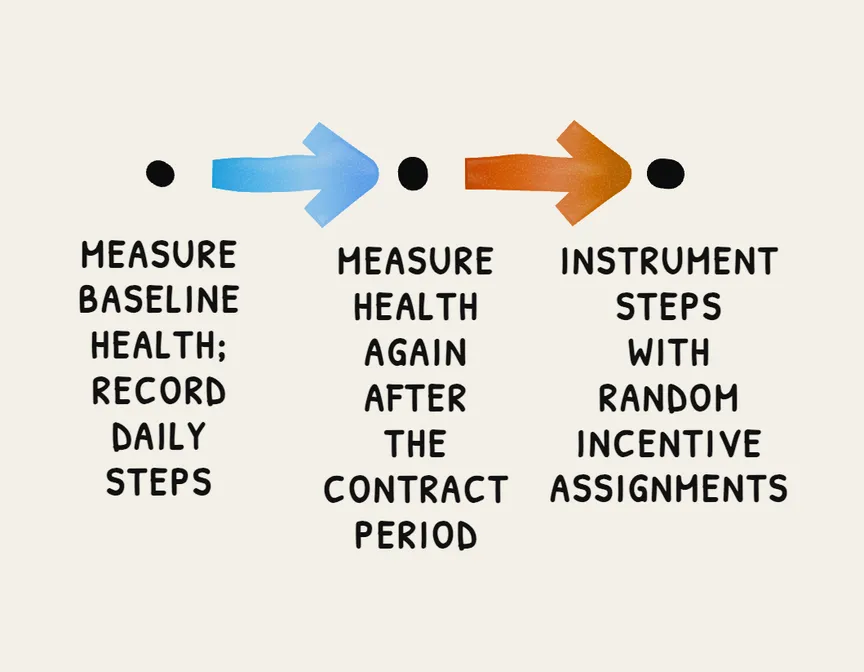
Randomized incentive group assignments create exogenous variations in walking effort that are independent of unobserved individual health behaviors.
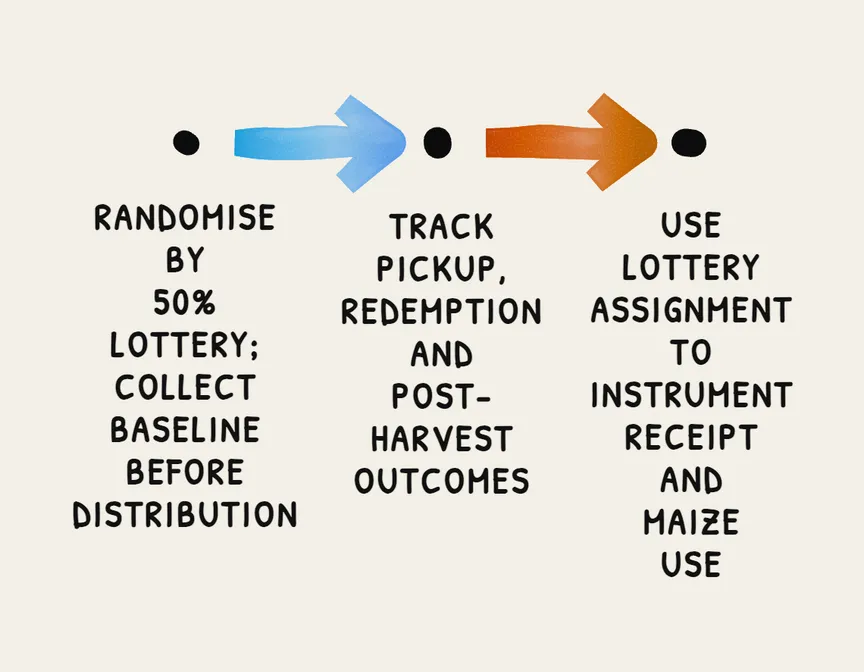
Random lottery assignment creates exogenous variation in voucher receipt without matching unobserved farmer ability.
Using instrumental variables eliminates endogeneity bias caused by unobserved farmer ability and simultaneous input choices.
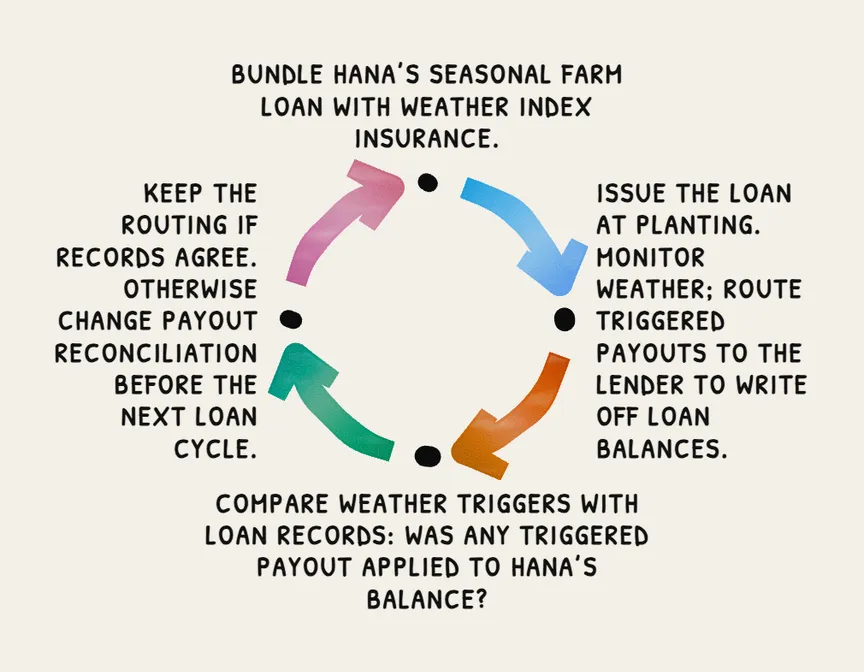
Combining credit with weather insurance reduces repayment default risks caused by climate shocks.
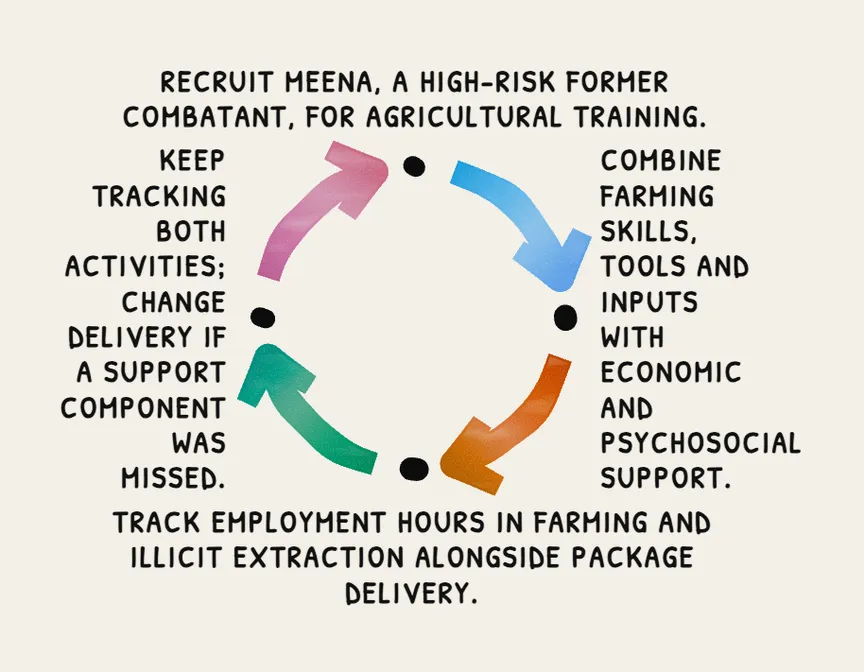
Combining farming inputs with vocational training and psychosocial support increases economic returns to licit agriculture.
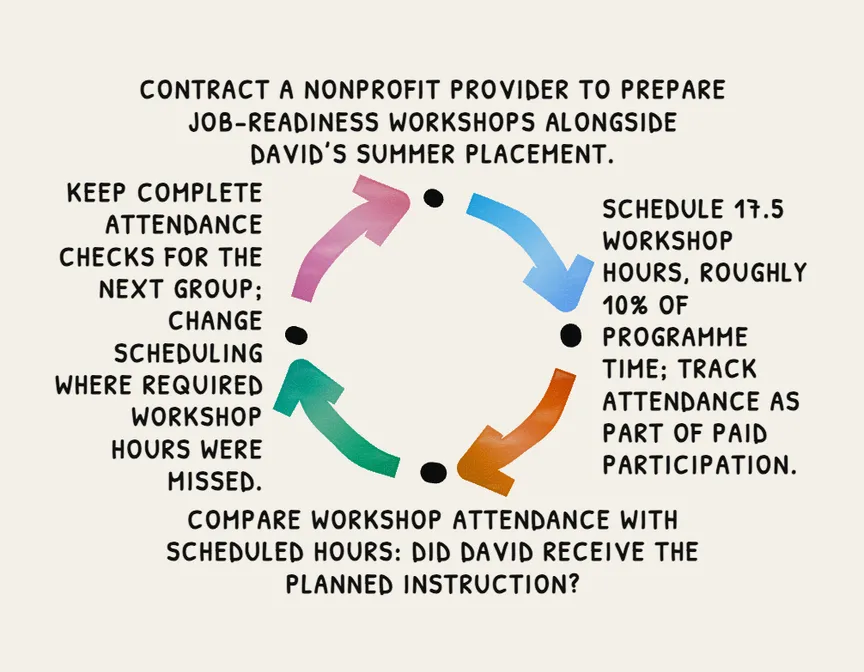
Attending job readiness workshops equips youth with workplace norms while occupying program hours in a structured learning environment.
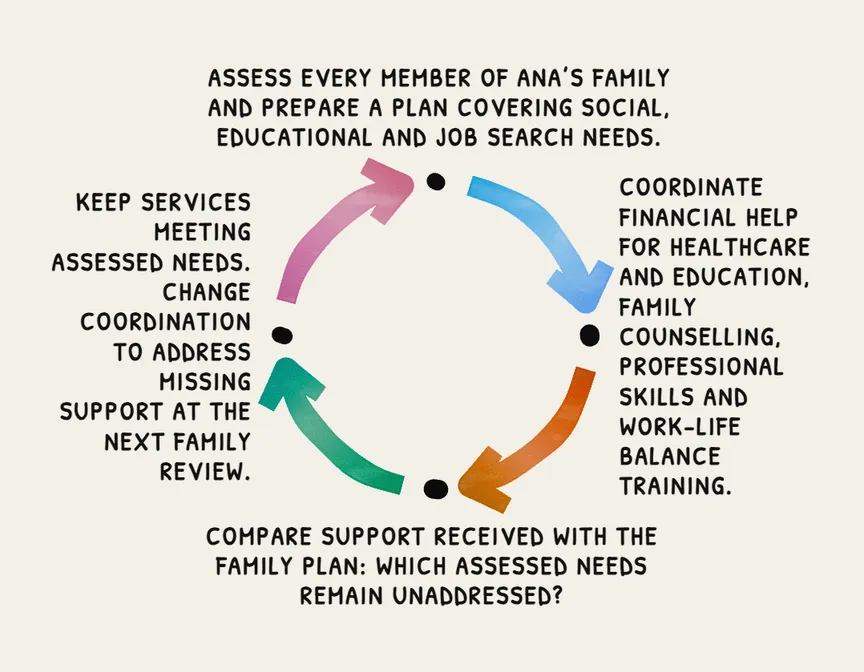
Addressing multiple family needs simultaneously removes underlying household stress and logistical barriers to social inclusion.
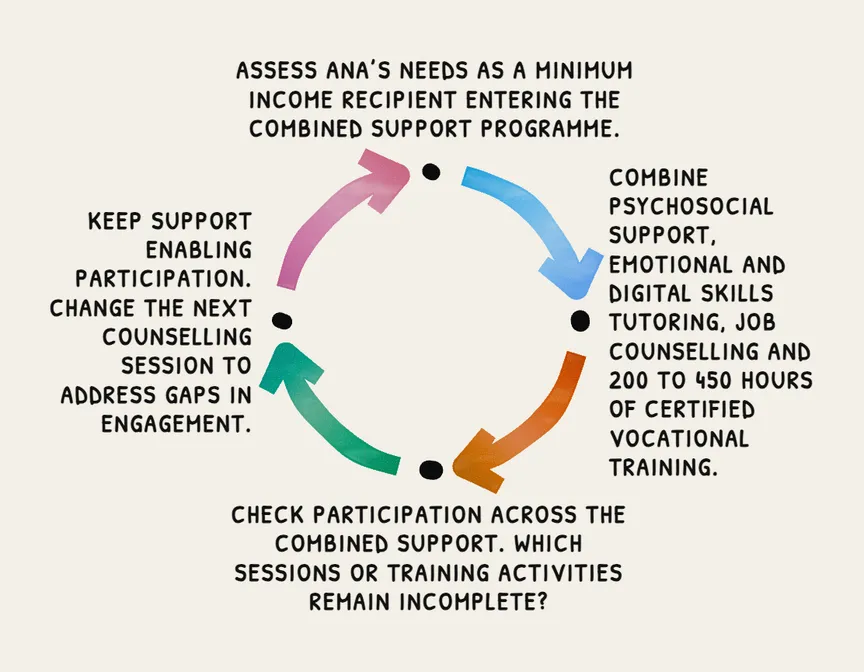
Combining psychosocial therapy with vocational retraining strengthens personal autonomy, frustration tolerance, and mental health.
Combining organic and inorganic inputs satisfies dual soil requirements for organic matter and concentrated nutrients.
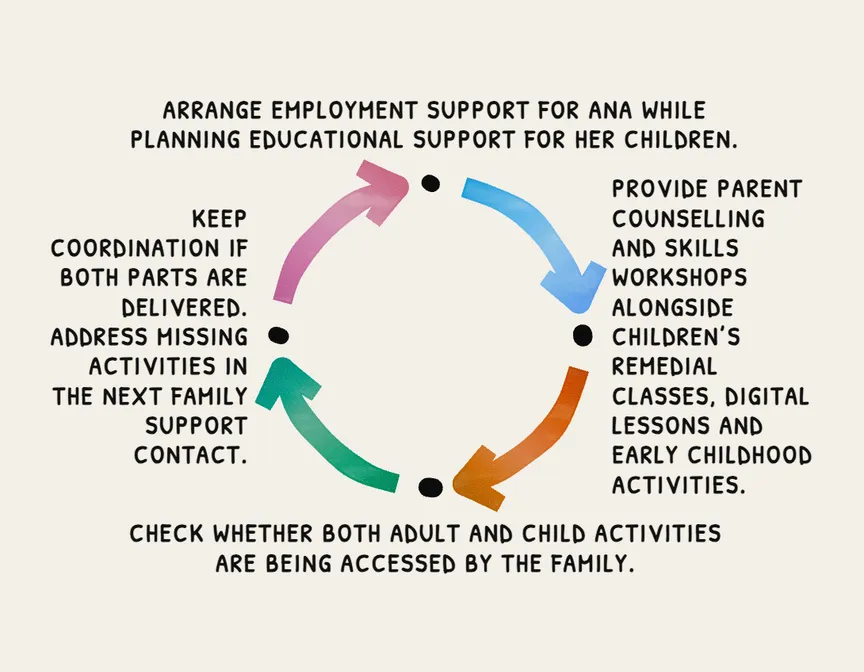
Addressing child learning needs alongside parent employment barriers removes household stress and raises academic expectations.
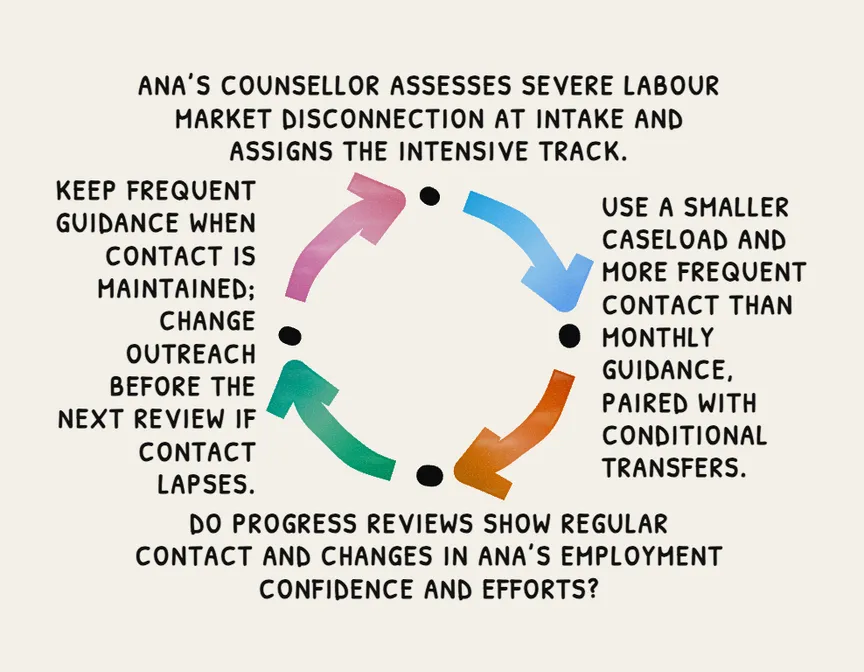
Smaller counselor caseloads enable personalized, continuous supervision that addresses deep integration hurdles.
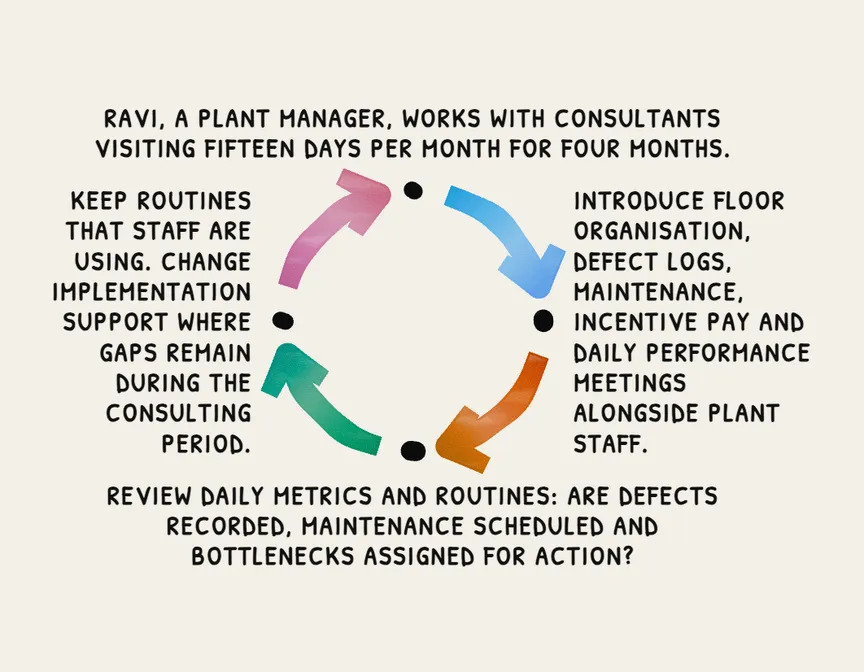
Working directly with managers on factory floors overcomes inertia and lack of implementation knowledge.
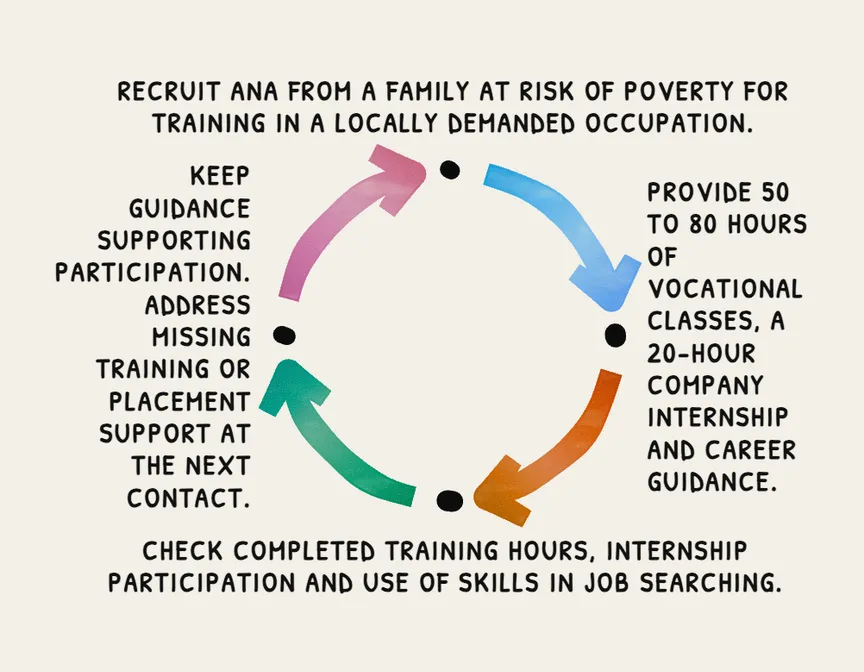
Providing certified training in growth sectors restores technical competencies and equips job seekers with skills local employers need.
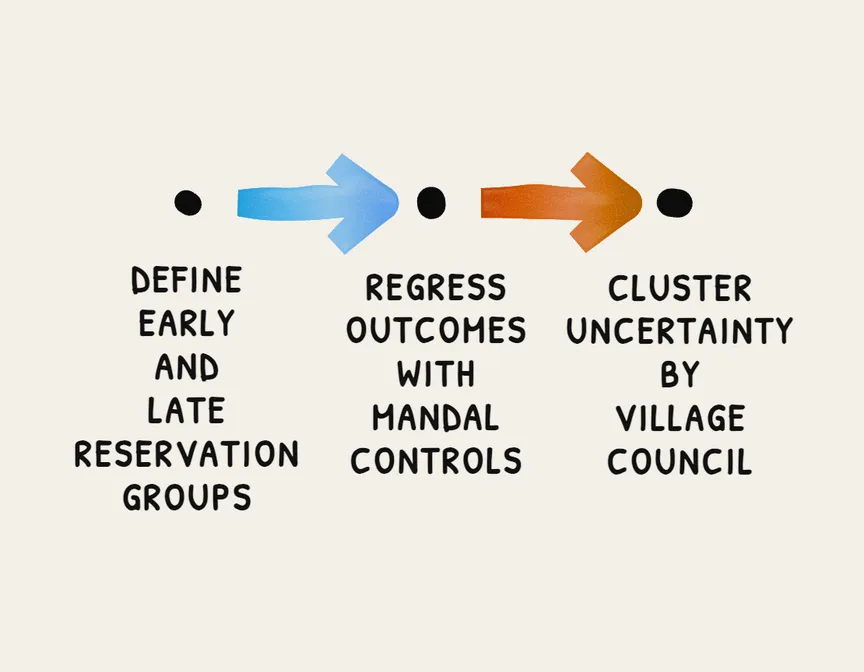
Mandal fixed effects absorb all unobserved geographic, socio-economic, and administrative factors shared within sub-districts.
Page 18 of 45
Previous
1
…
17
18
19
…
45
Next