Skip to the methods
Menu
aikyam
school
Findings
Methods
Subjects
All cards
Read
Findings
Methods
Subjects
All cards
Methods
2,124 methods
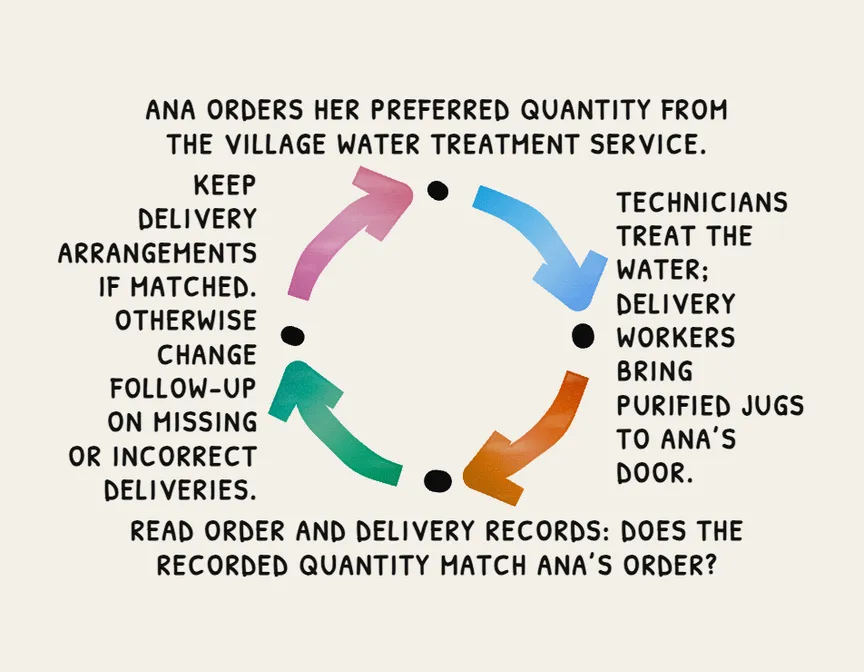
Centralized water purification removes health-threatening biological contaminants without altering taste like chlorine drops.
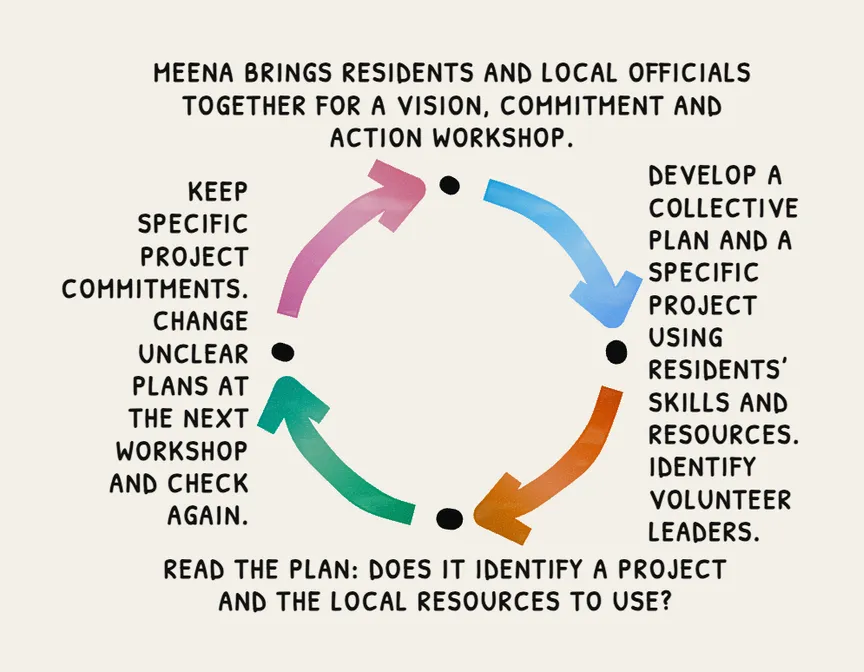
The workshops emphasize leadership skills, civic commitment, and community organization.
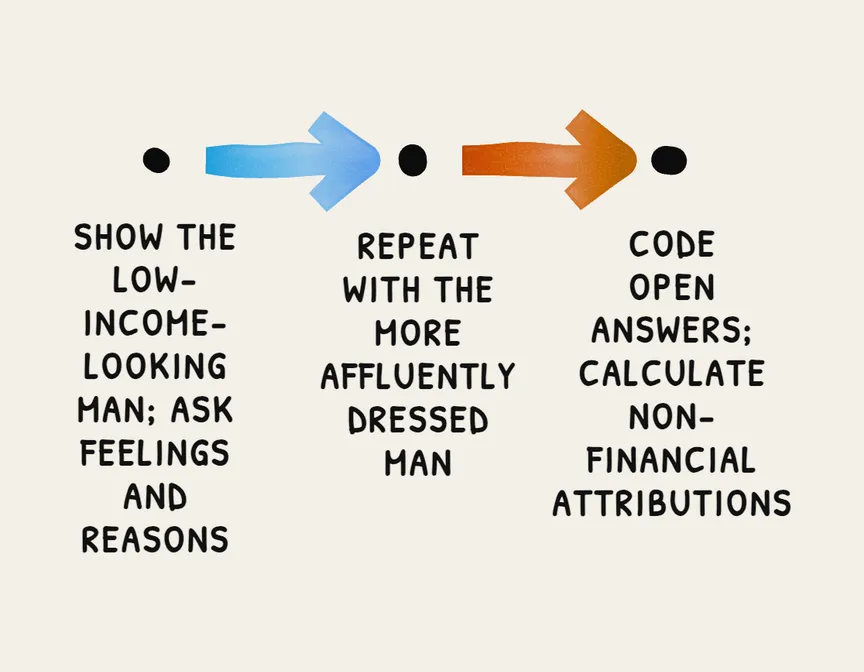
Asking participants to explain the emotions of strangers in photos reveals their own top-of-mind cognitive associations.
Youth tend to be less risk-averse and possess high capacity for innovation through social interactions.
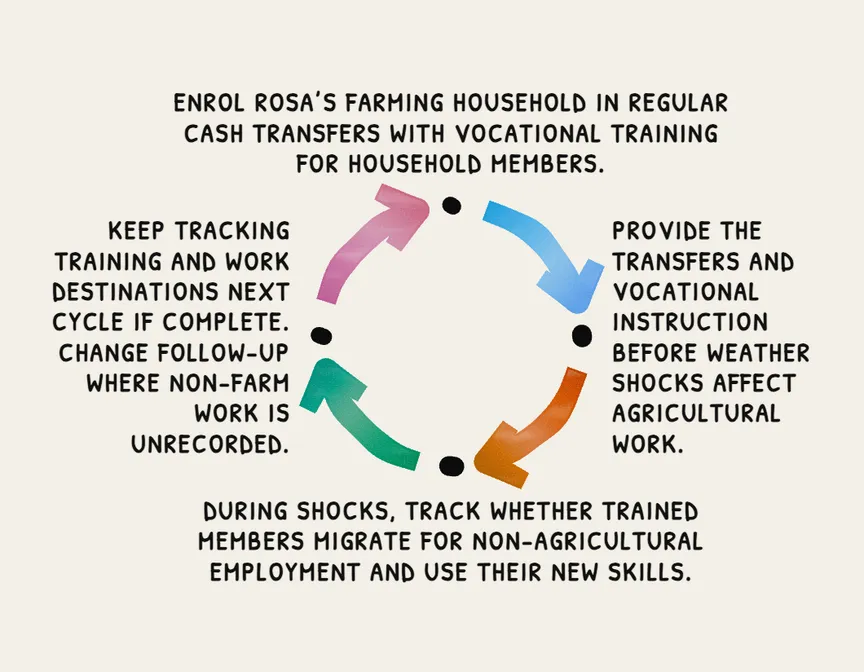
Combining cash assistance with technical skill building gives farmers the financial resources and practical qualifications needed to pursue off-farm work.
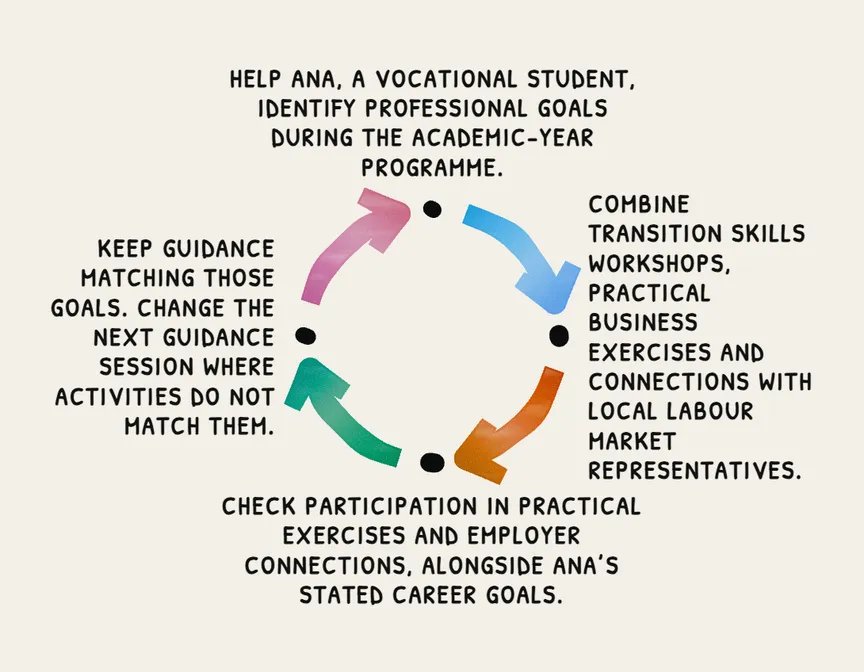
Vocational training builds practical labor market skills and exposes participants to skilled trade instructors.
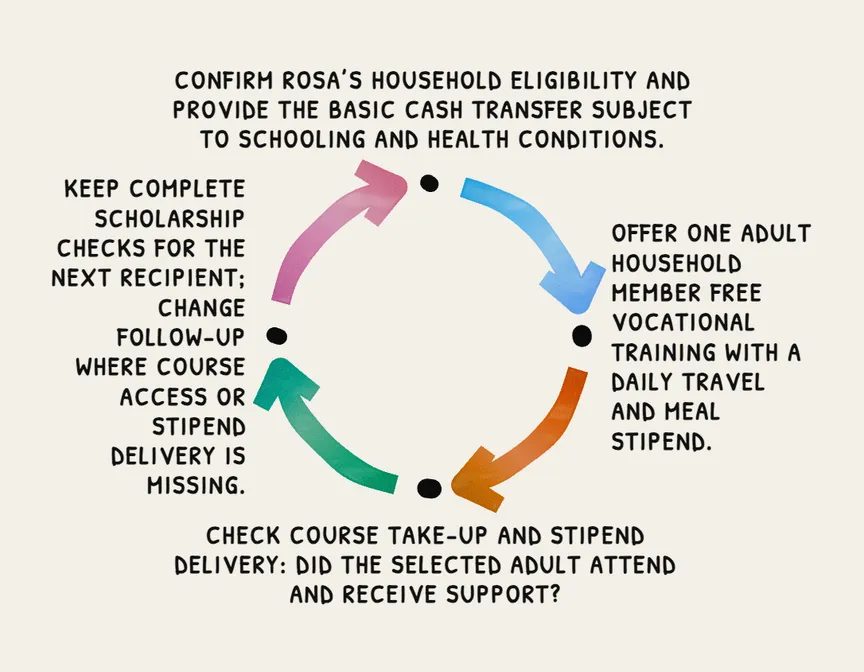
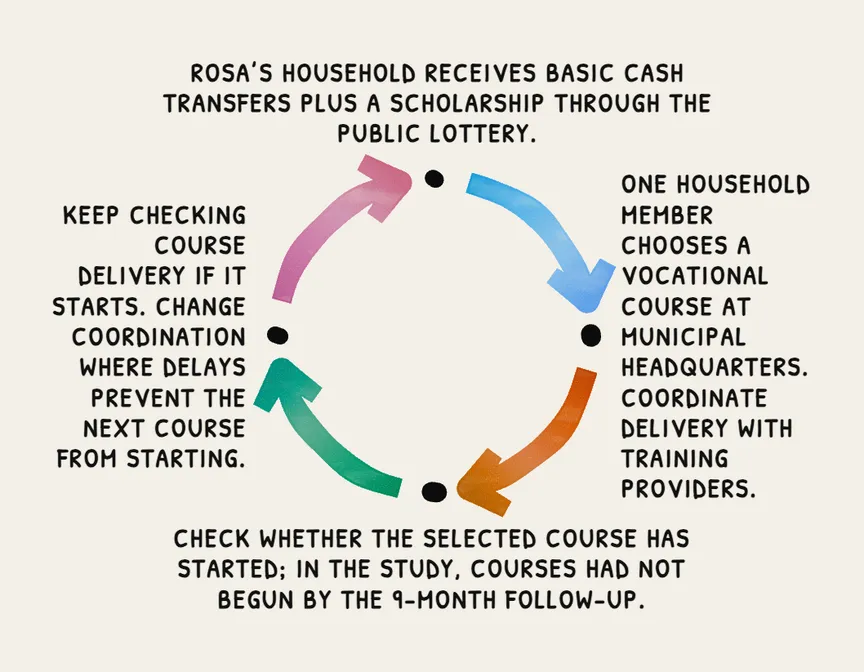
Providing vocational training scholarships expands technical skills beyond subsistence agriculture, encouraging income diversification and long-run upward mobility.
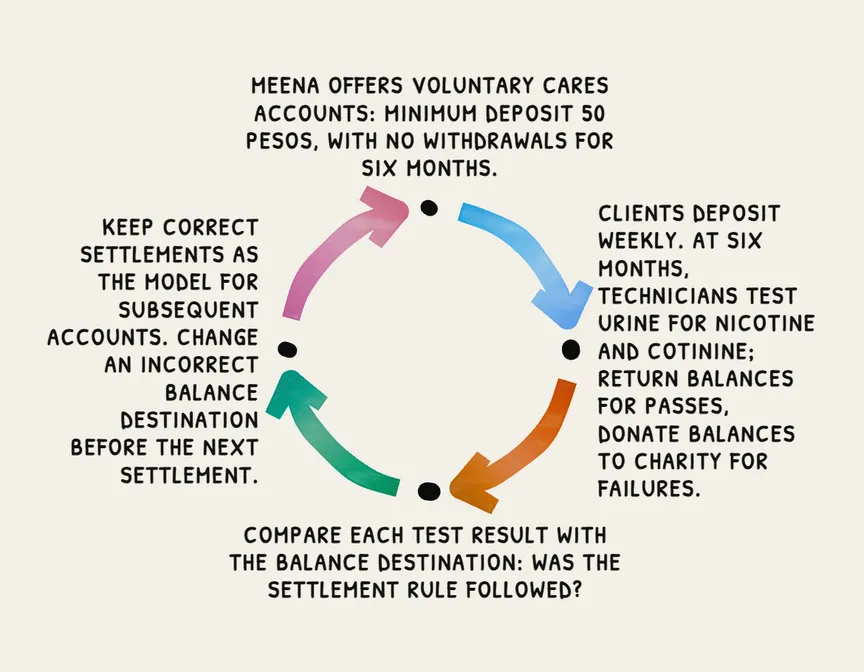
The commitment contract imposes a direct financial loss on future smoking, counteracting the short-term temptation to consume cigarettes.
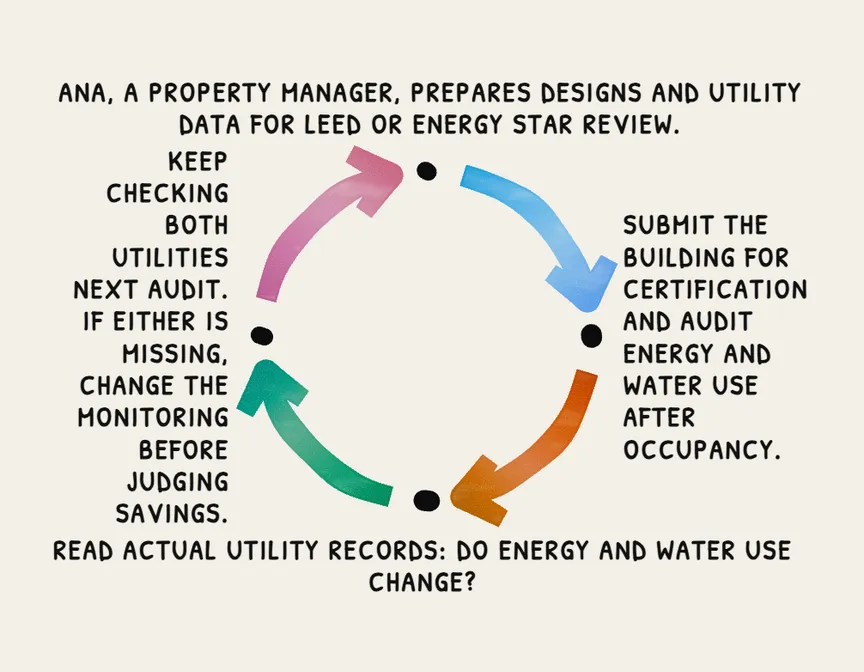
Earning public green building credentials incentivizes property developers to include efficiency features during design and construction.
Relying on direct financial rewards instead of penalties creates a voluntary incentive for farmers to eliminate unnecessary irrigation.
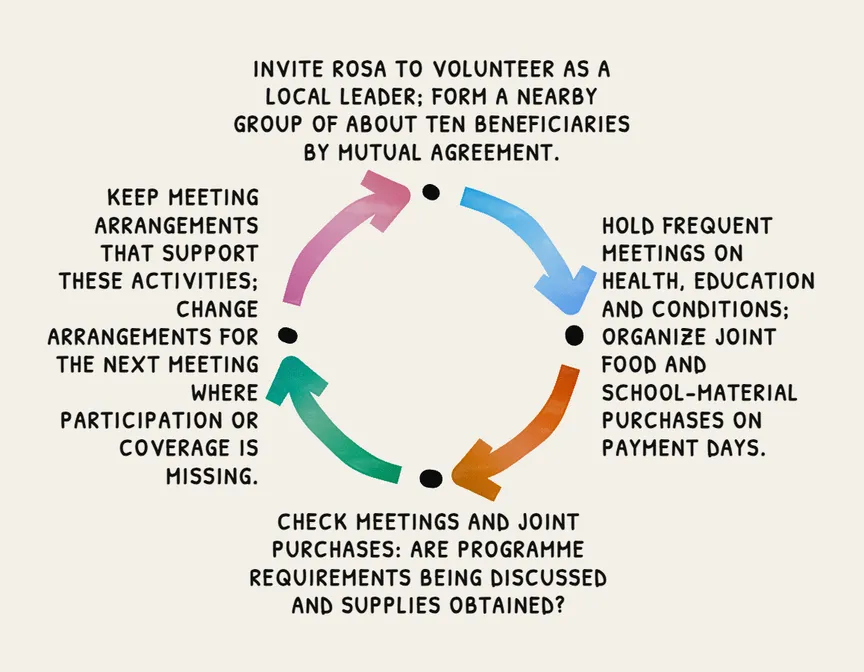
Local promotoras take strong ownership of program objectives, creating social multiplier effects that motivate peers and shift community norms.
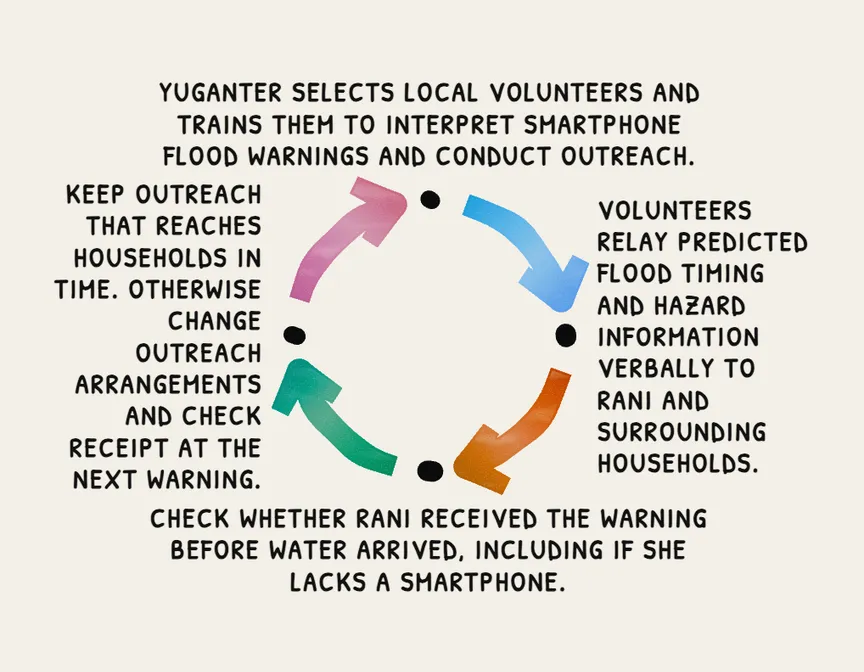
Trained volunteers overcome literacy and digital ownership constraints by converting technological alerts into direct, trusted, word-of-mouth warnings.
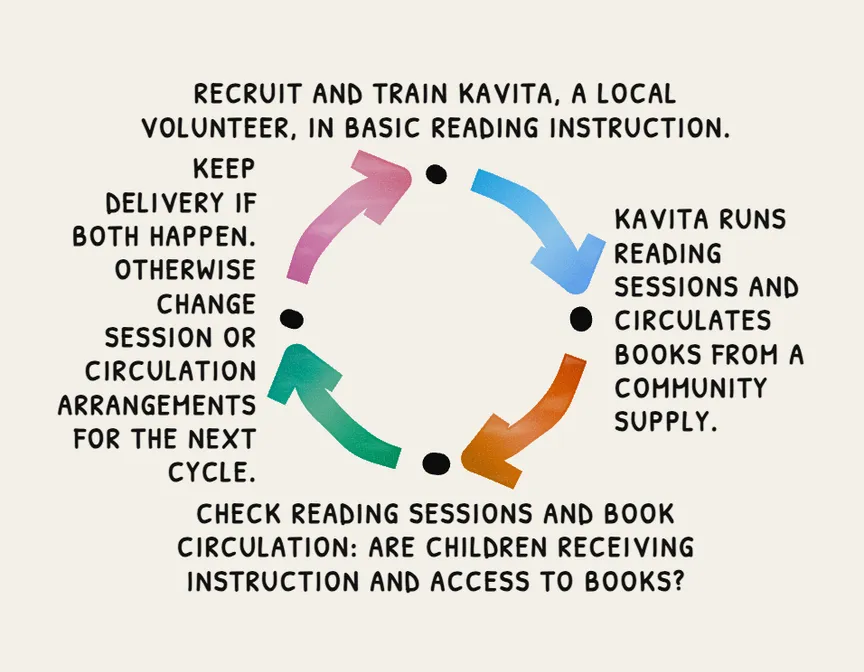
Engaging local volunteers provides accessible reading support directly within children's communities.
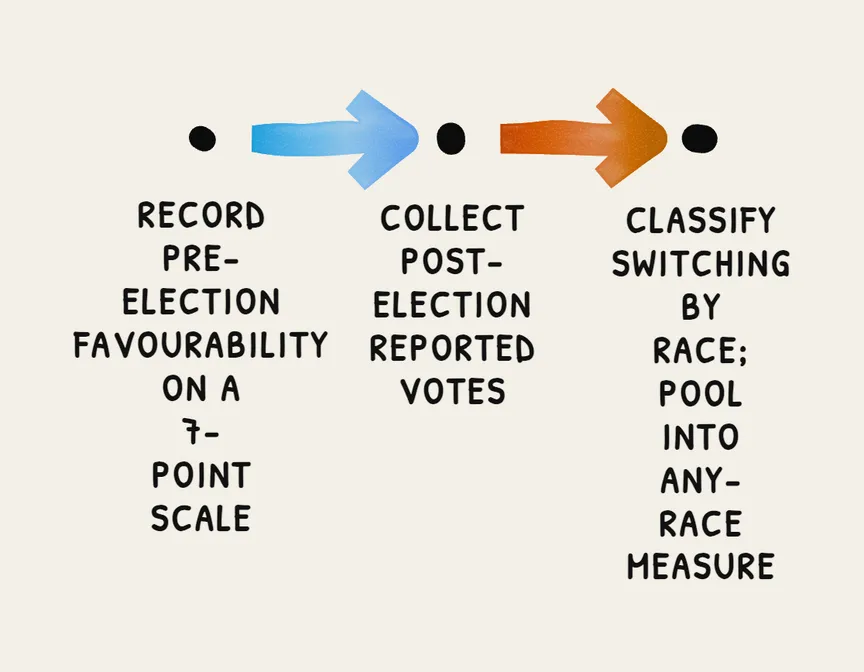
While individual vote-switching can stem from unobserved informational changes, randomized intervention assignment ensures non-vote-selling reasons are orthogonal across treatment groups.
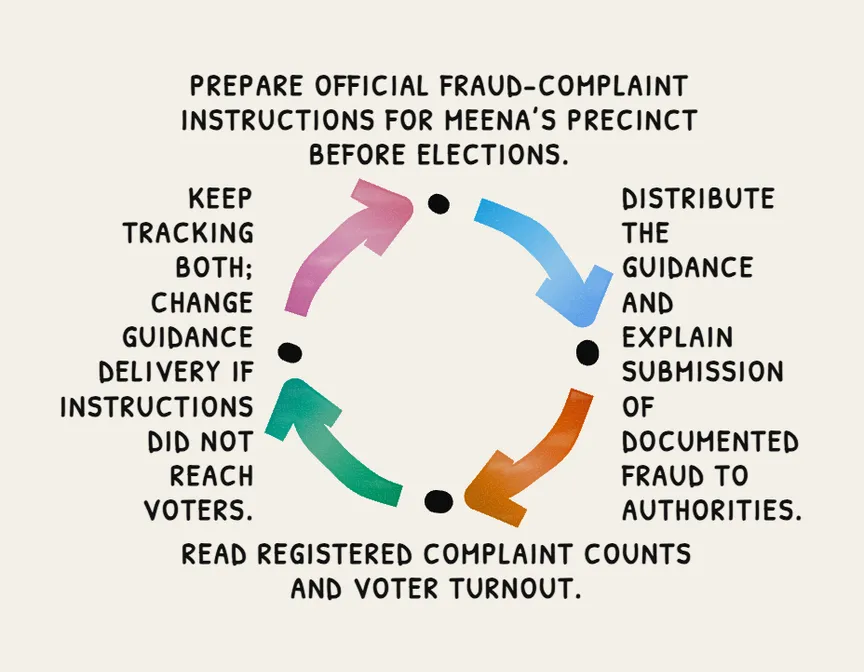
Clear procedural guidance lowers barriers to filing complaints, encouraging citizens to formally report observed fraud.
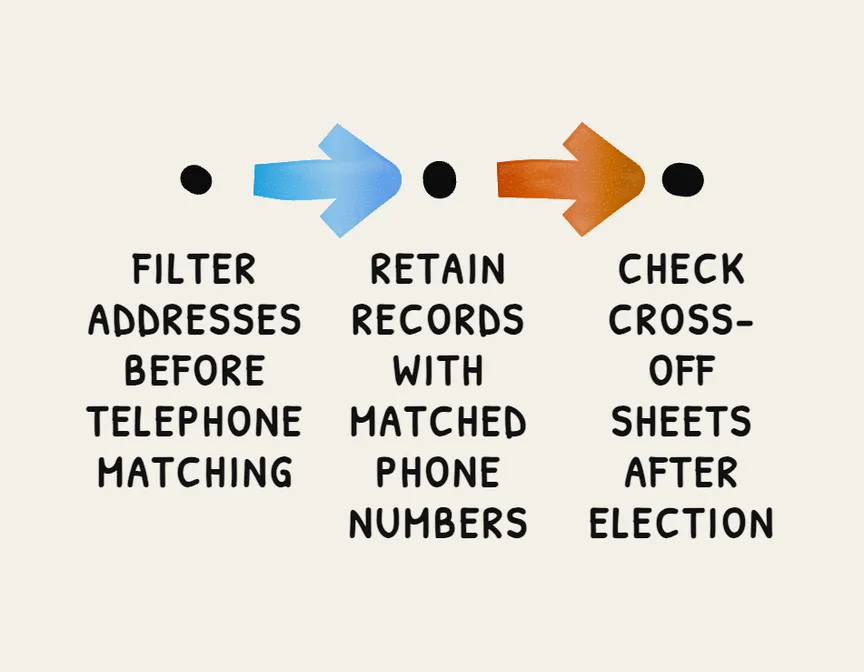
Filtering out post office boxes and large multi-voter households eliminates non-residential addresses and group living facilities that skew phone outreach.
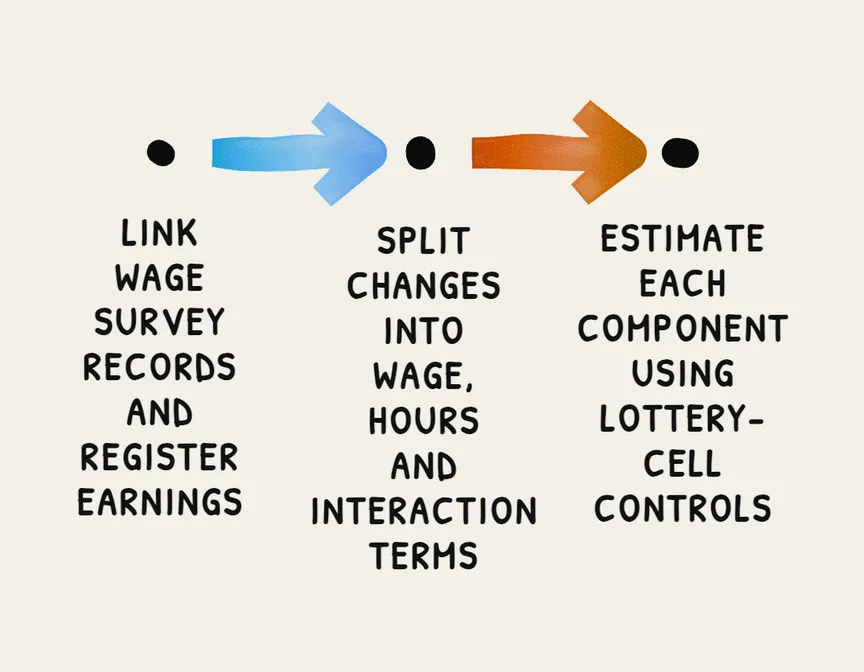
Mathematical decomposition of annual wage earnings isolates the exact proportion of labor income reduction caused by working fewer hours versus taking lower hourly wages.
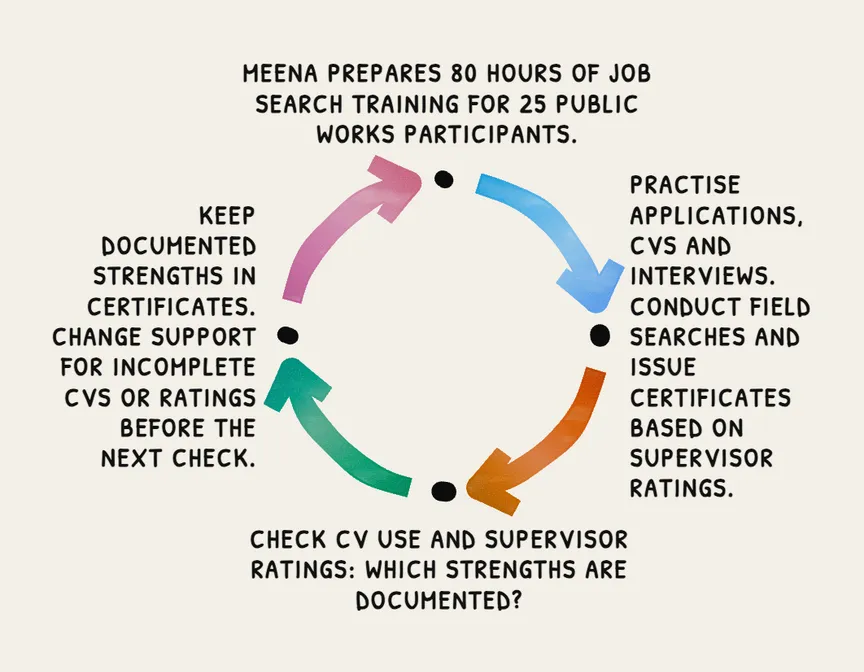
Structured search training and CV preparation lower the information and administrative barriers youth face when applying for formal wage jobs.
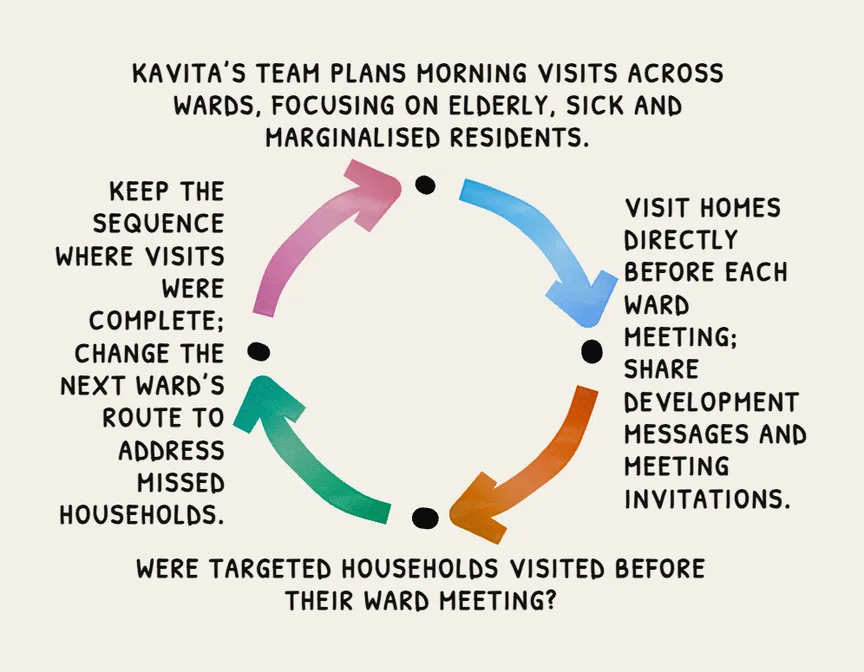
Personalized household contact reaches isolated voters who miss centralized events, reinforcing individual civic self-efficacy and reducing fear of retributive politicians.
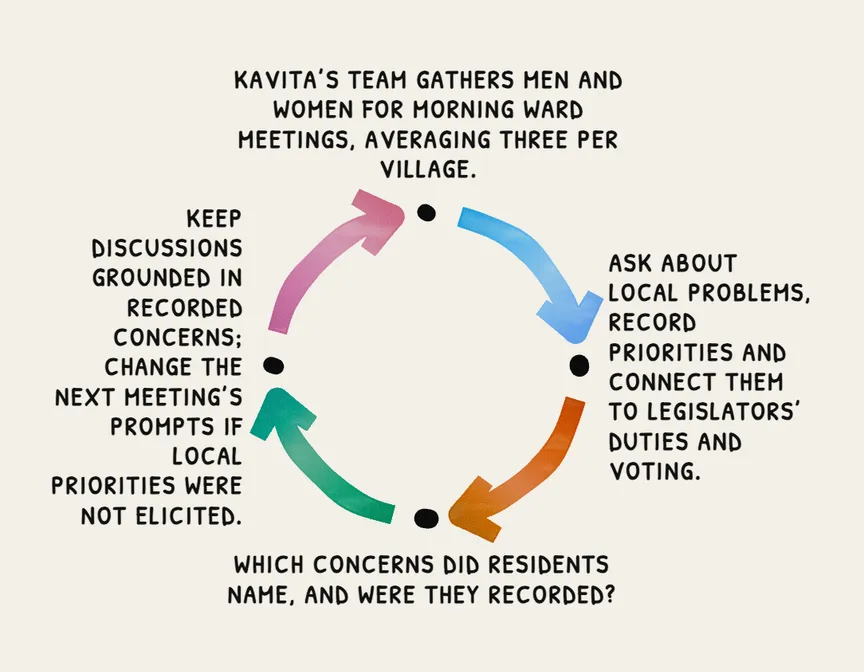
Prompting citizens to articulate concrete community grievances early in the day shifts their focus toward tangible public goods.
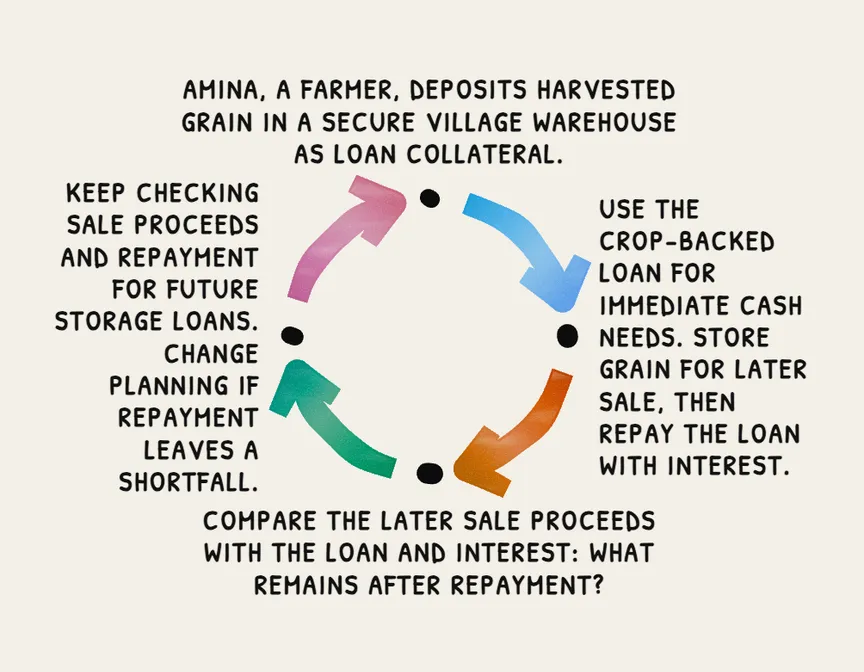
Receiving cash credit at harvest relieves immediate household liquidity pressure without requiring immediate crop sales.
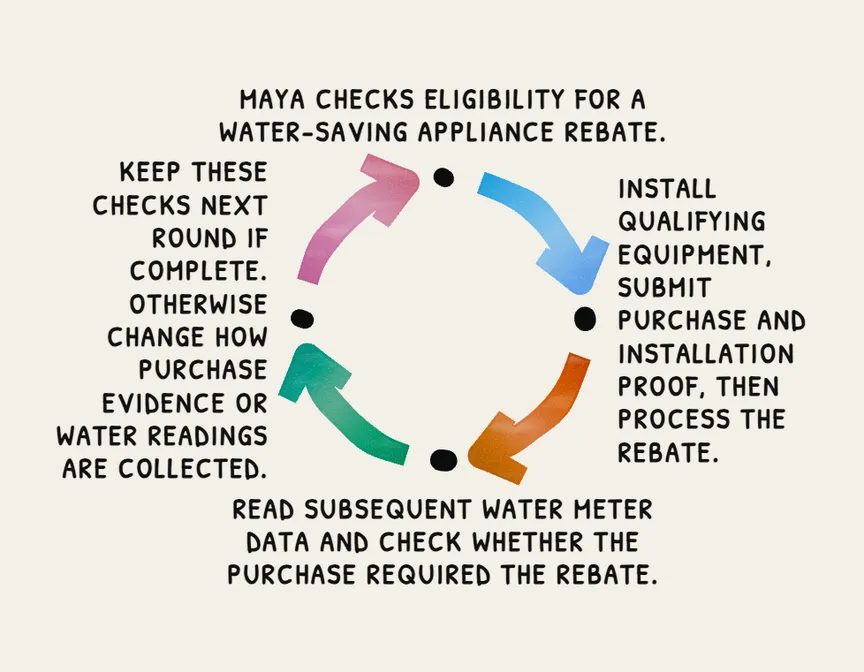
Direct financial rebates reduce upfront retail costs for water-efficient technologies.
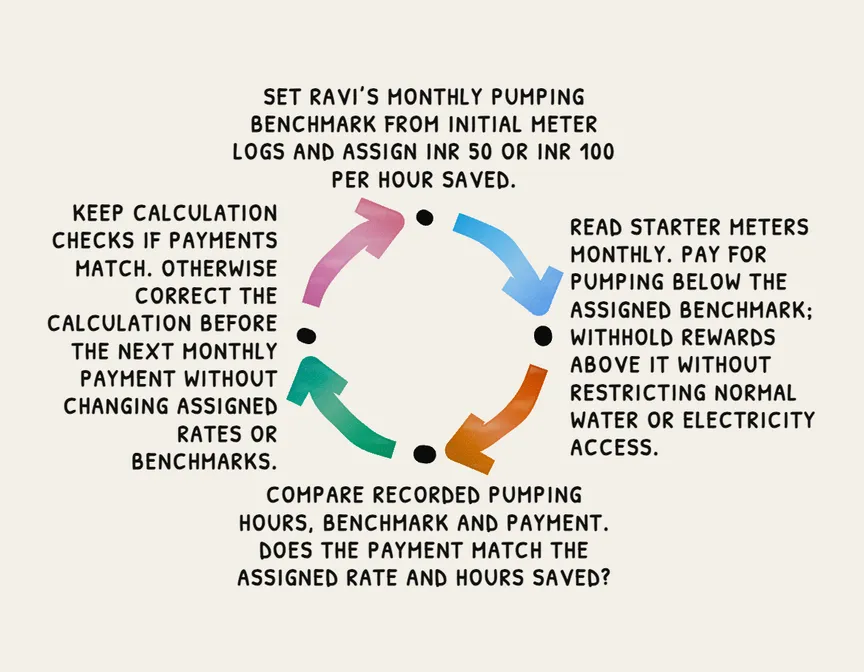
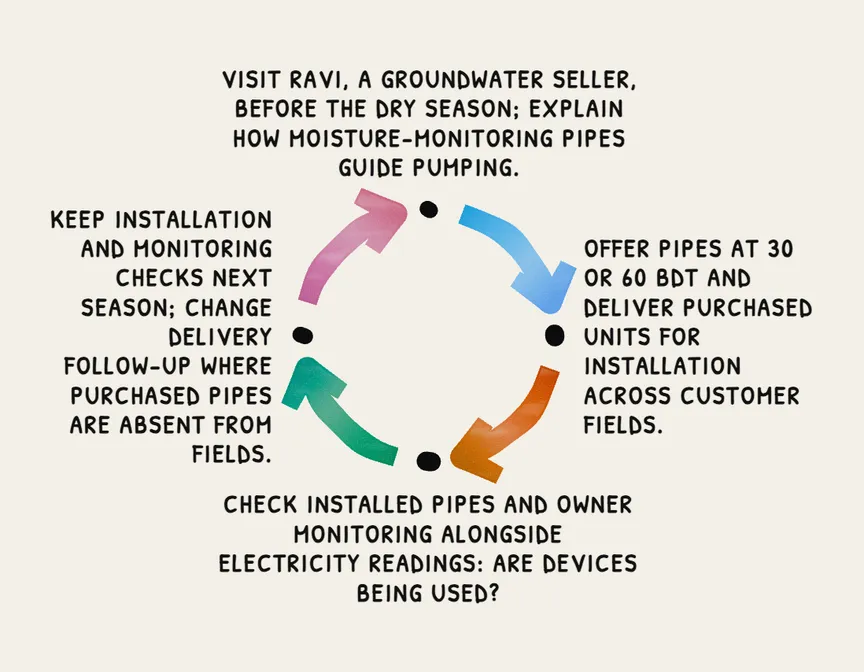
Tubewell owners pay for variable pumping electricity while charging farmers flat seasonal per-acre fees, giving owners a direct financial incentive to conserve fuel and electricity.
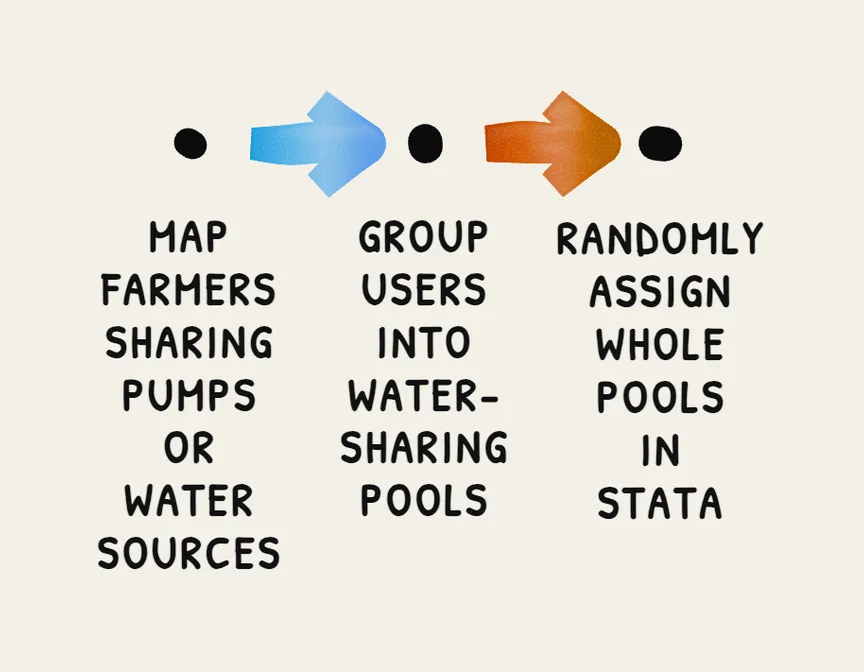
Assigning treatment at the shared infrastructure cluster level prevents intra-pool conflict over water access.
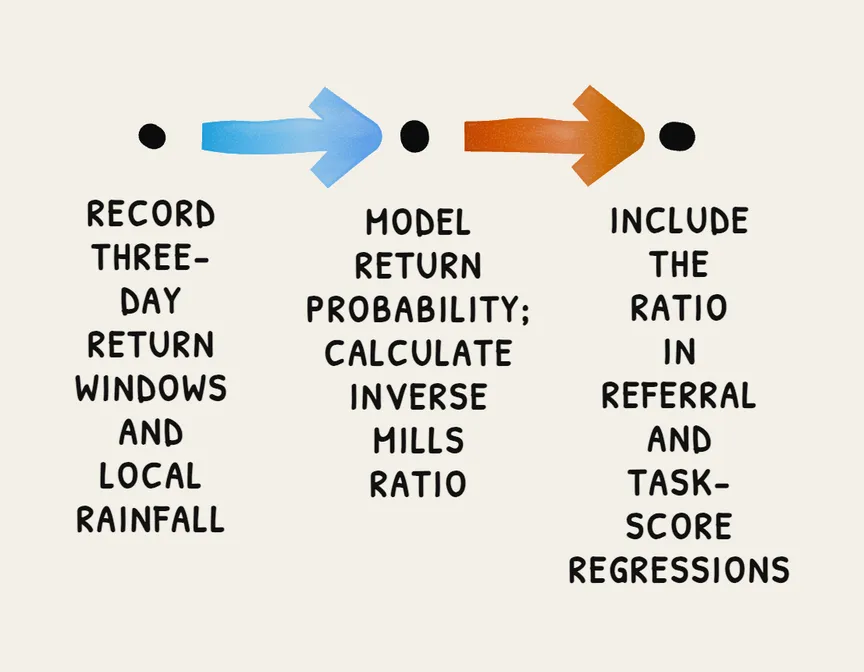
Rainfall increases travel friction and lowers the likelihood of returning to a field laboratory without affecting indoor cognitive task performance.
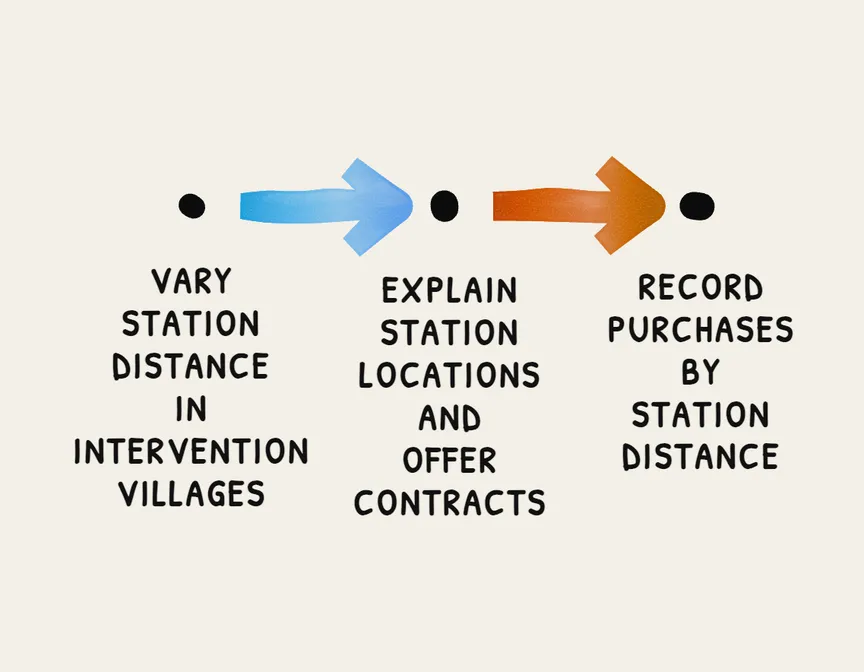
Informing farmers of weather station locations helps them assess the risk of geographic rainfall discrepancies before purchasing coverage.
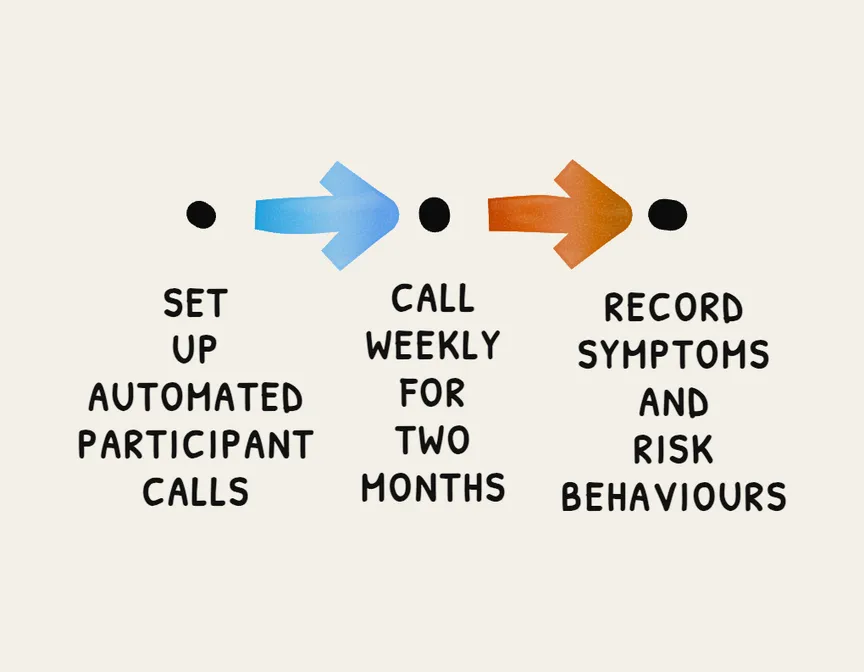
Short automated calls lower response burden while enabling regular data collection on health behaviors and disease symptoms during a pandemic.
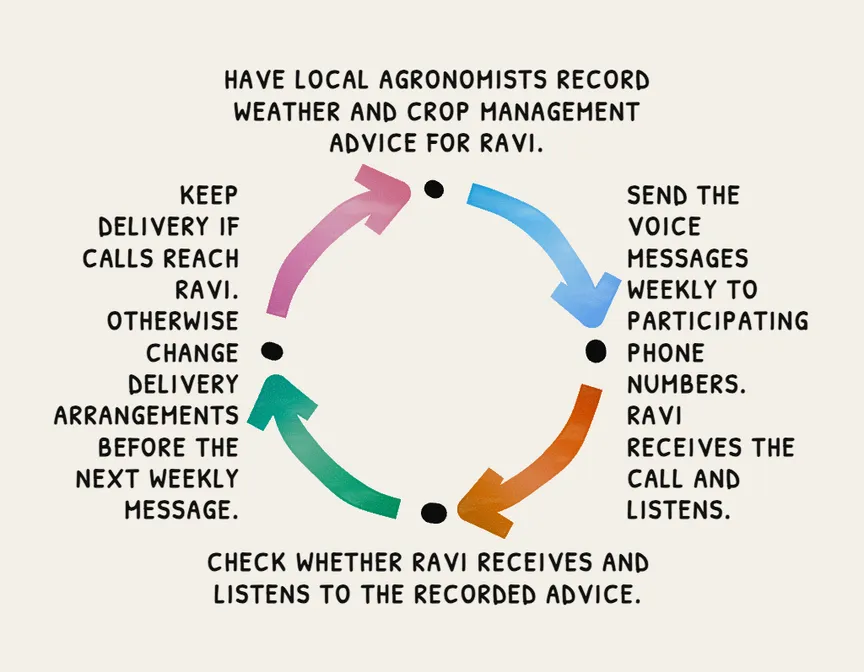
Automated push messages deliver proactive, timely agricultural information directly to smallholders without requiring them to initiate an inquiry.
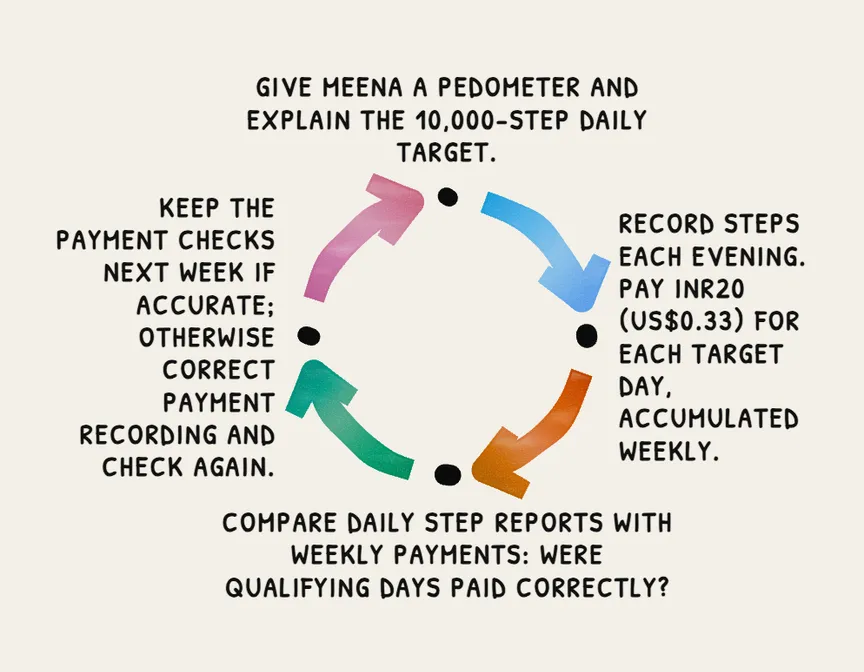
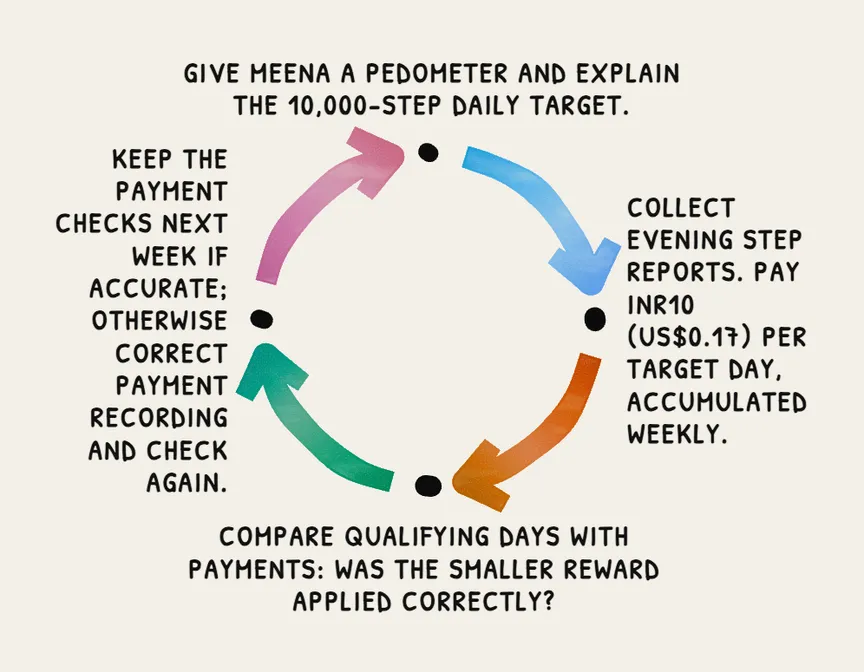
Daily financial rewards offset the immediate effort cost of walking by offering an immediate return.
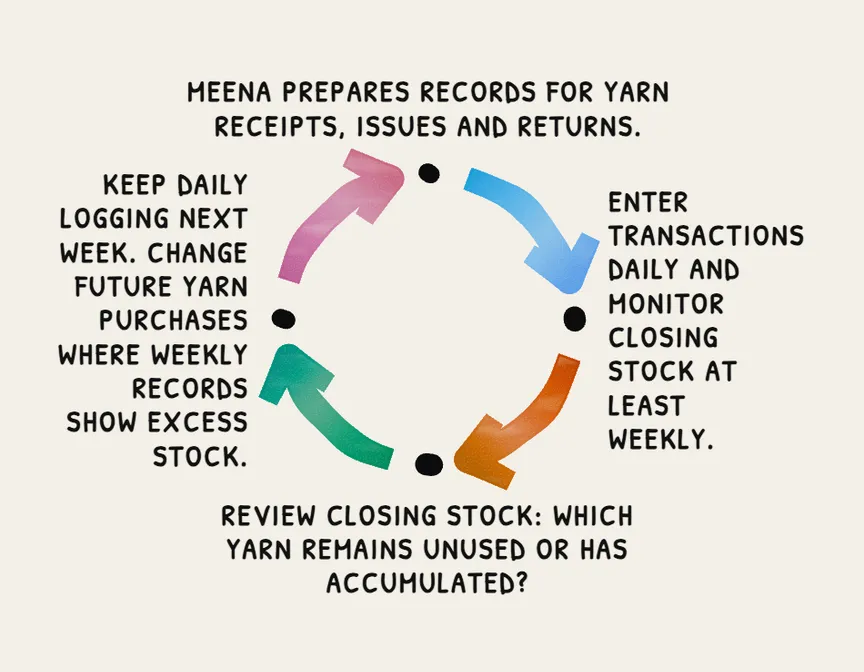
Tracking daily yarn transactions and monitoring weekly closing stock gives managers clear visibility into raw material quantities and prevents excess accumulation of dead stock.
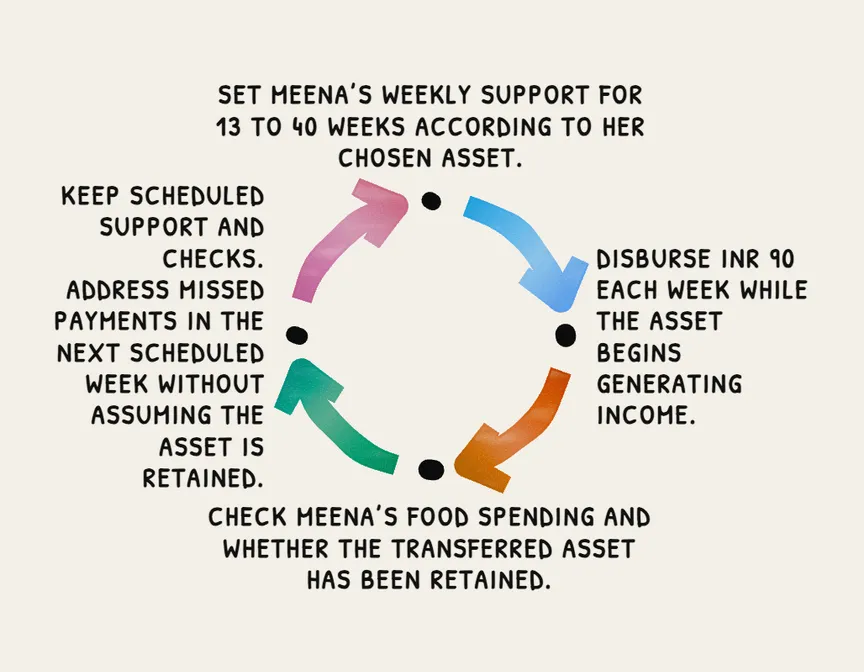
Regular weekly transfers protect vulnerable families against hunger while their microenterprises or livestock establish stable returns.
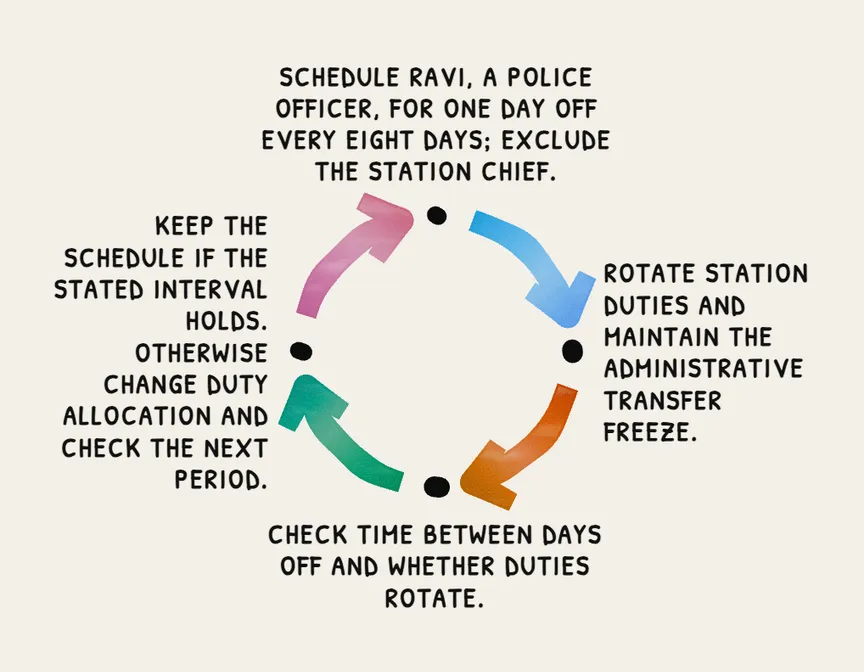
Providing predictable time off and rotating tasks reduces fatigue by distributing workload equally among station staff.
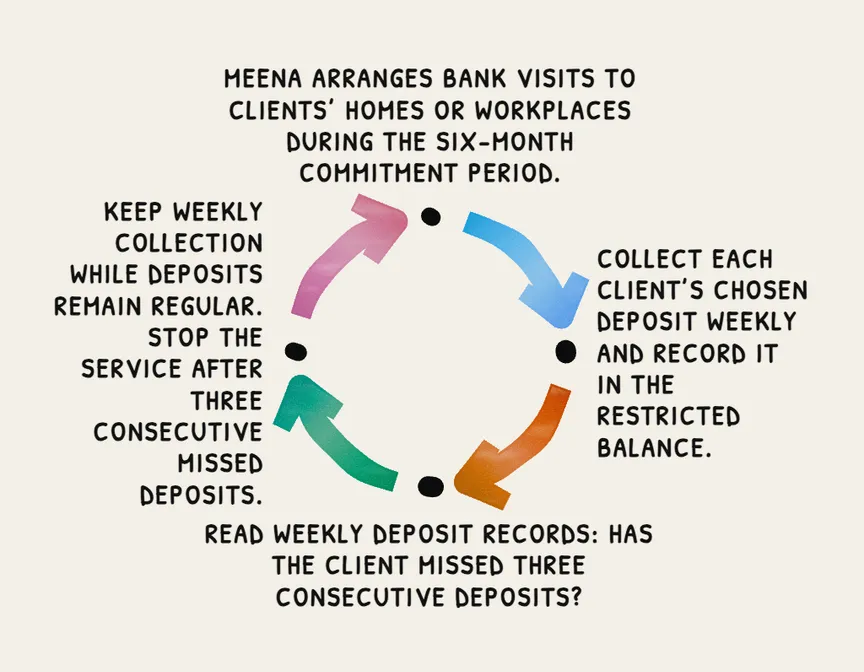
Doorstep collection reduces physical transaction costs while introducing subtle social pressure and regular salience.
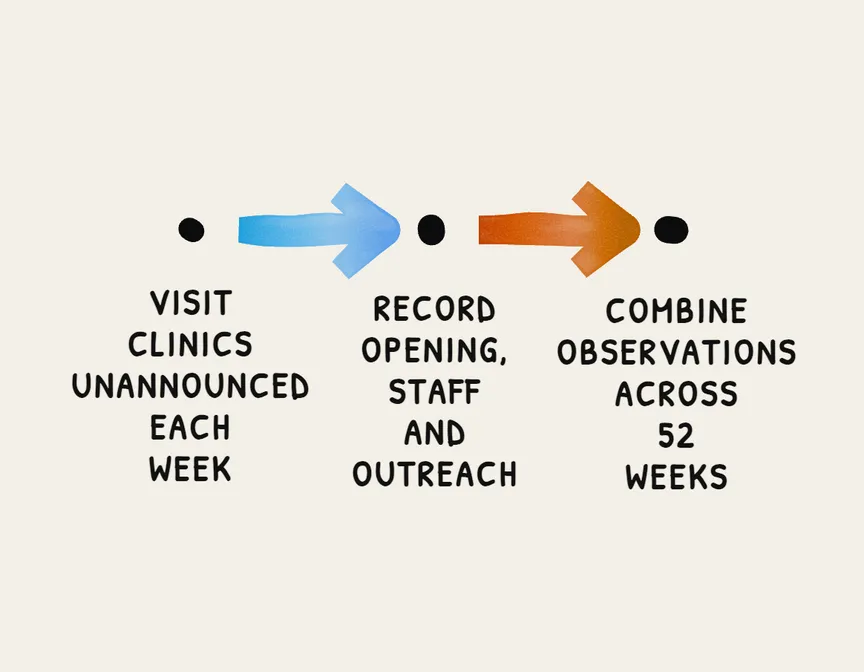
Infrequent or scheduled facility audits fail to capture chronic absenteeism because staff adjust behavior when monitored predictably.
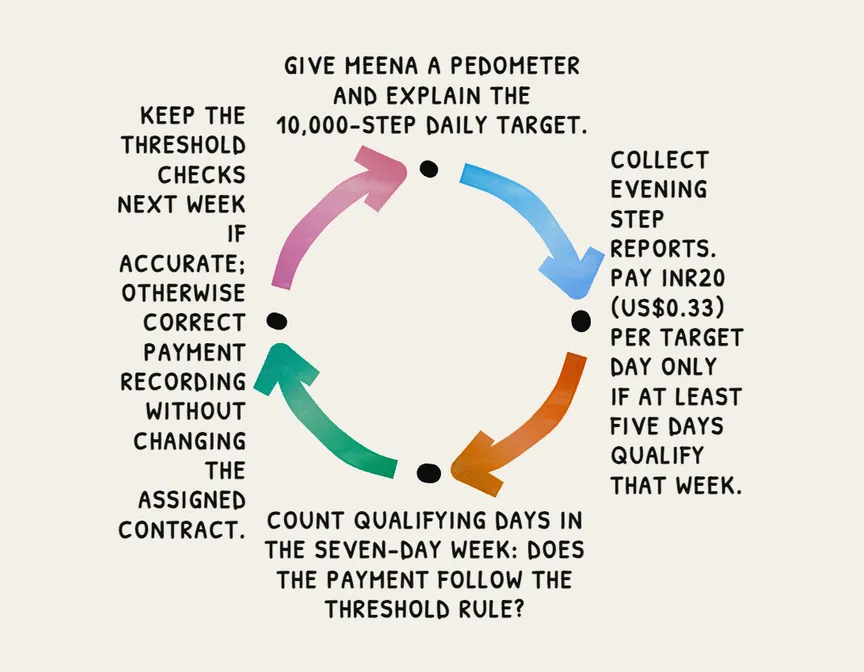
A five-day threshold contract bundles multiple daily goals into a single weekly requirement.
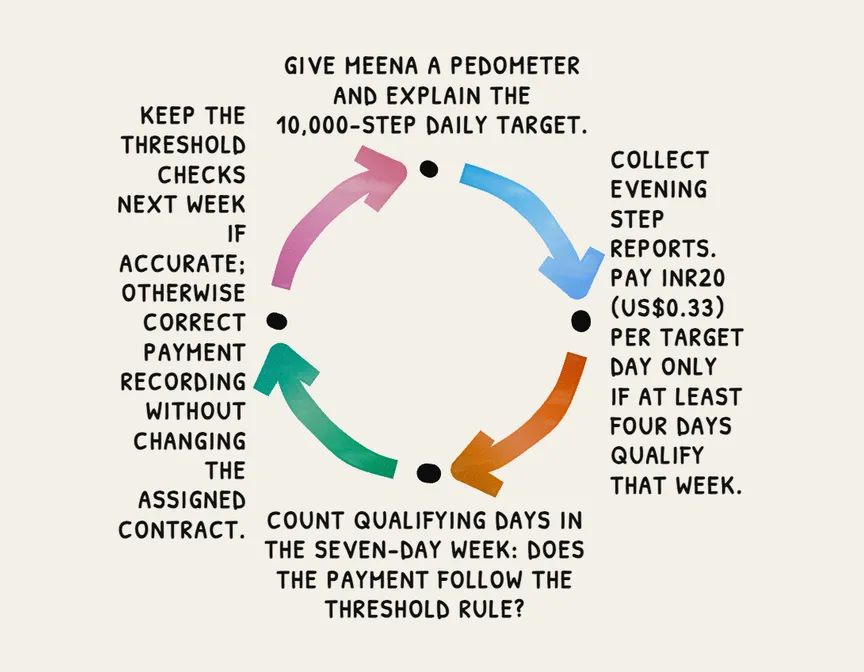
A four-day threshold bundles daily walking goals together, creating a forward-looking incentive where missing a goal today risks losing rewards for the entire week.
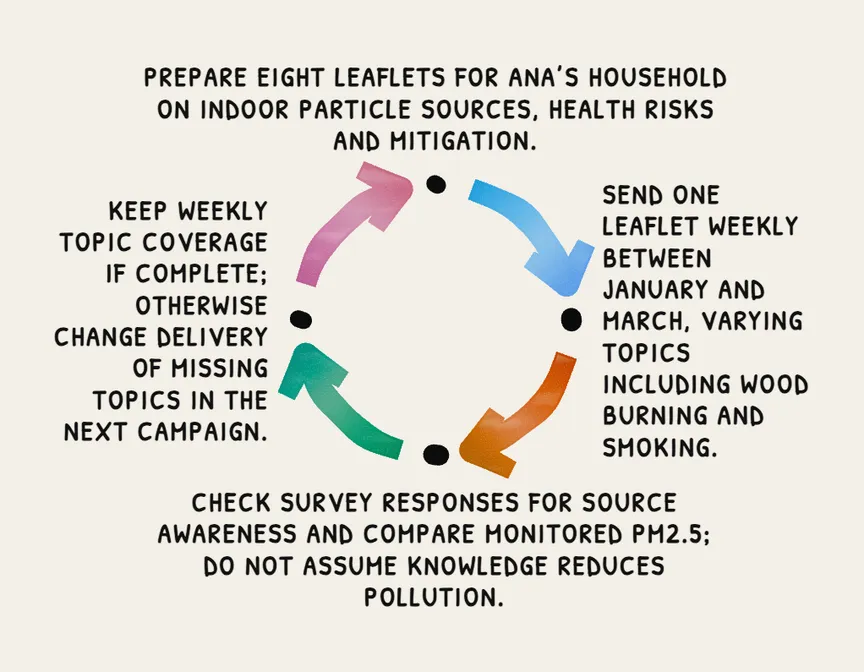
Providing structured educational leaflets improves general knowledge regarding emission sources and encourages households to reduce pollution-generating activities.
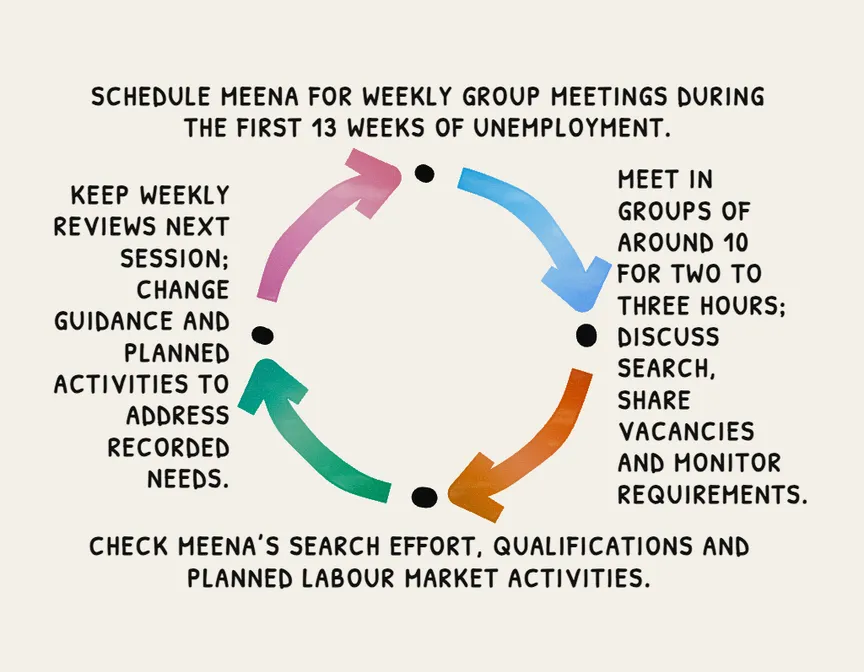
Group counselling provides low-cost peer interaction and regular guidance on job search strategies.
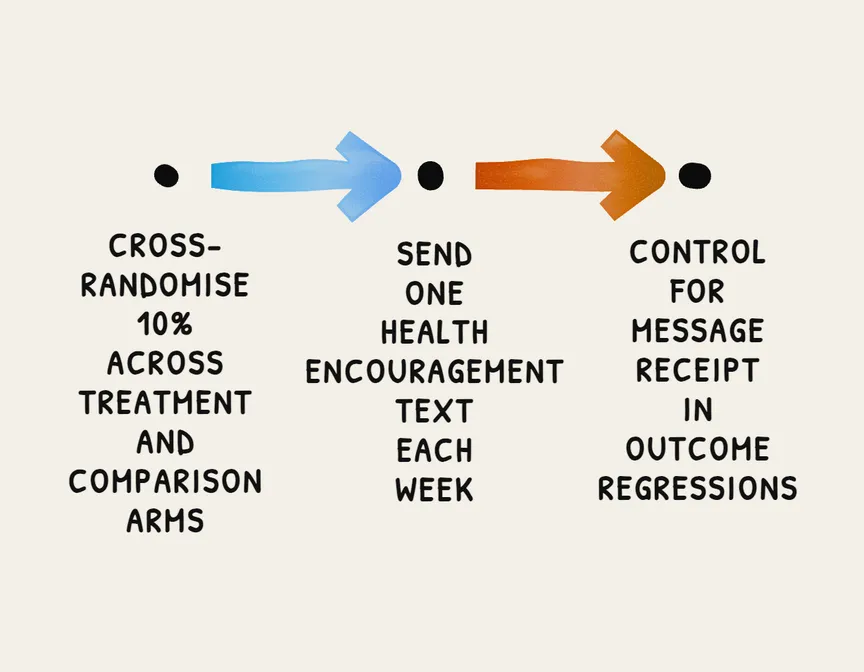
Weekly text messages increase the salience of health goals and keep preventative behaviors top of mind.
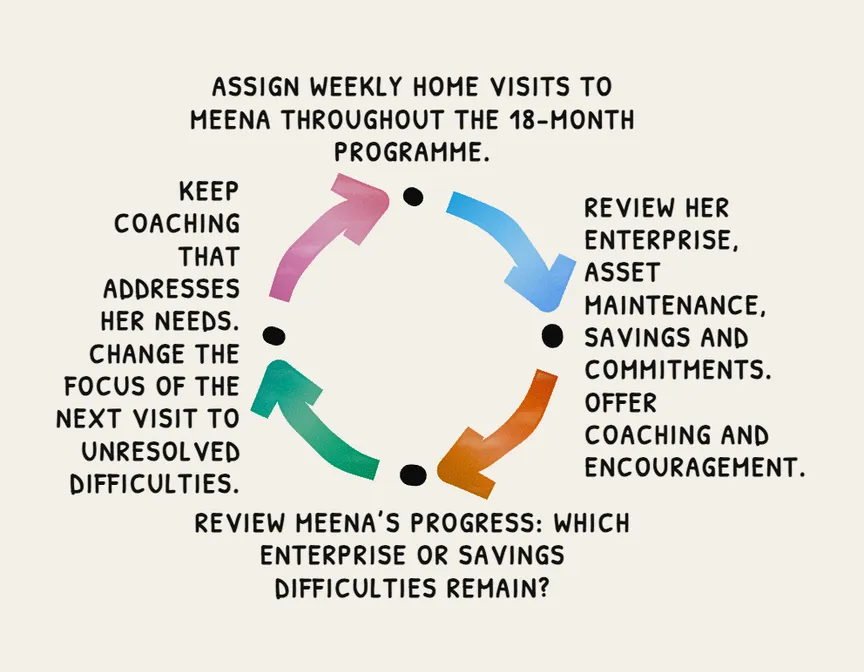
Regular face-to-face visits foster motivation and supply tailored guidance when operational challenges arise.
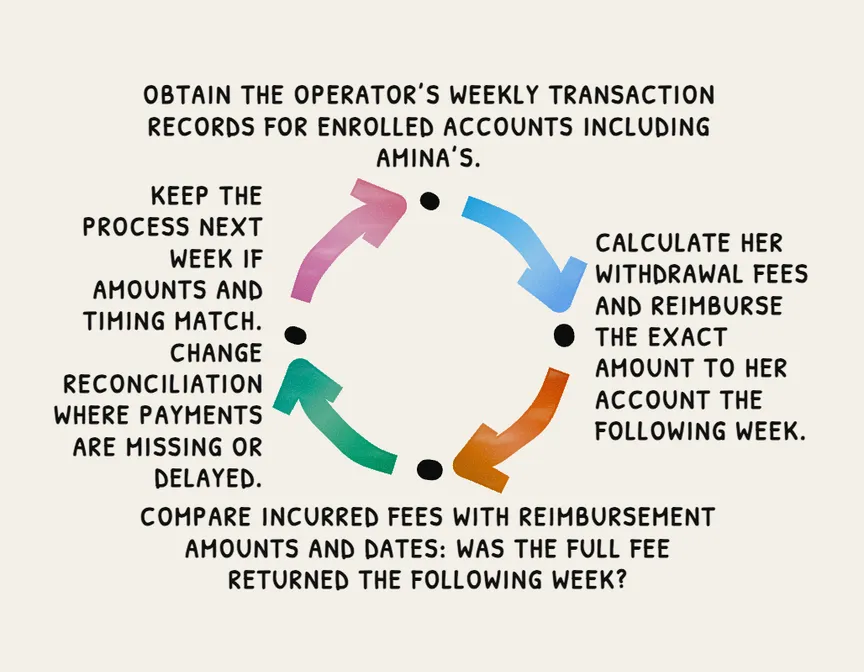
Eliminating withdrawal fees lowers the implicit tax on storing cash digitally, removing the fear of losing money when converting digital balances back to cash.
A small daily payment creates an immediate incentive that offsets the effort cost of walking.
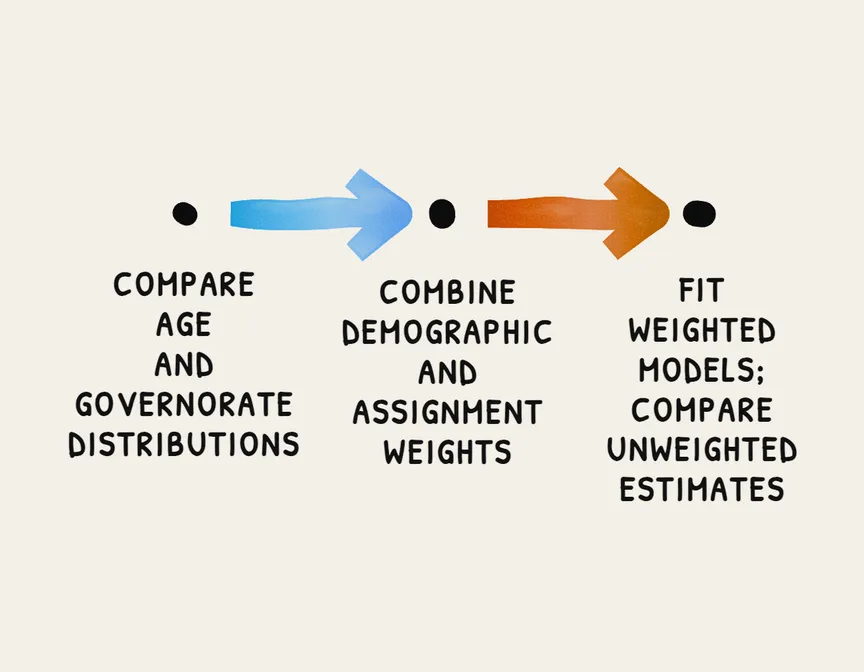
Weighting under-represented demographic strata increases their influence in statistical estimates to match actual platform demographics.
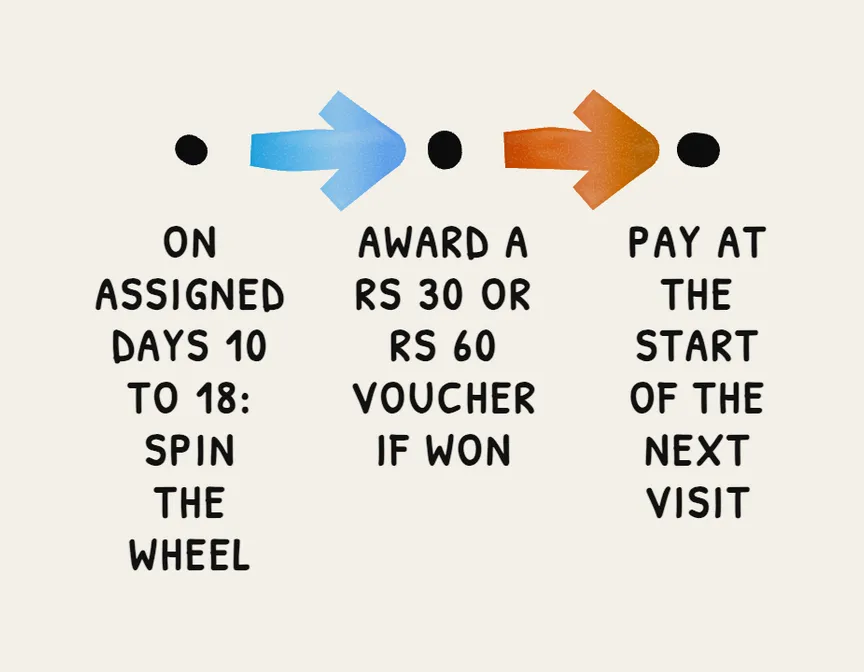
Randomizing small financial windfalls via a lottery game creates exogenous variation in study payments.
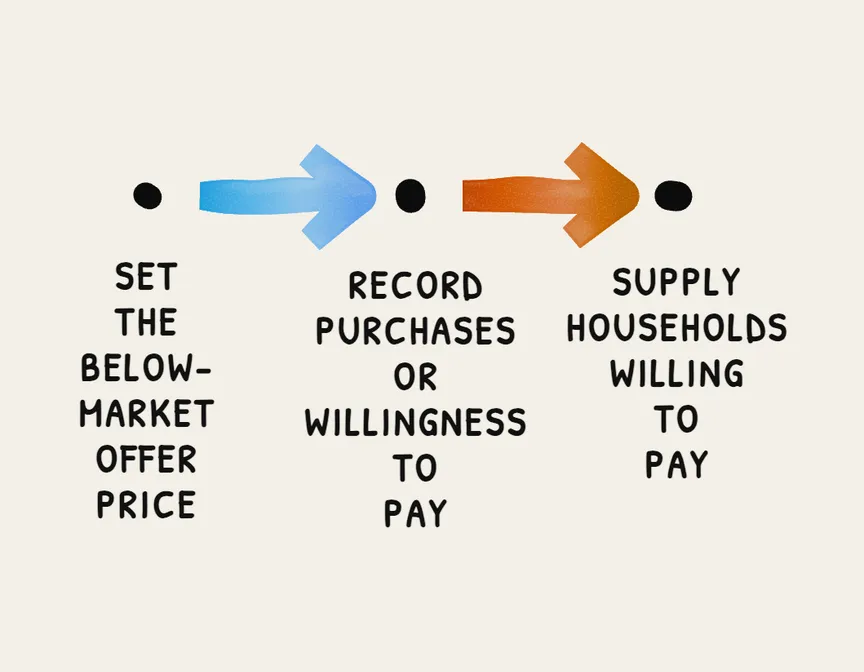
Charging a price screens for households with higher valuation and higher product utilization.
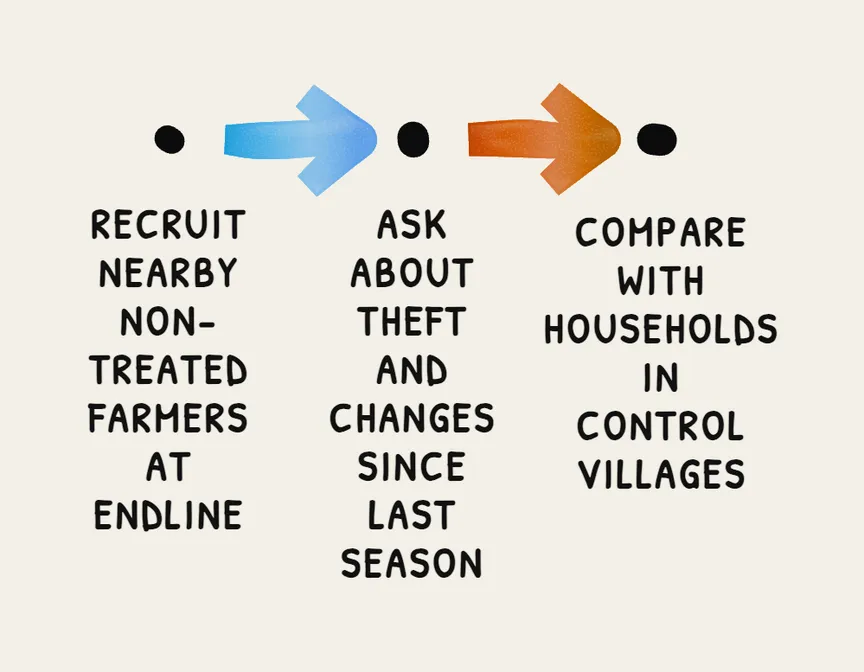
Convenience sampling while enumerators travel between core sample households lowers data collection costs while capturing immediate spatial externalities.
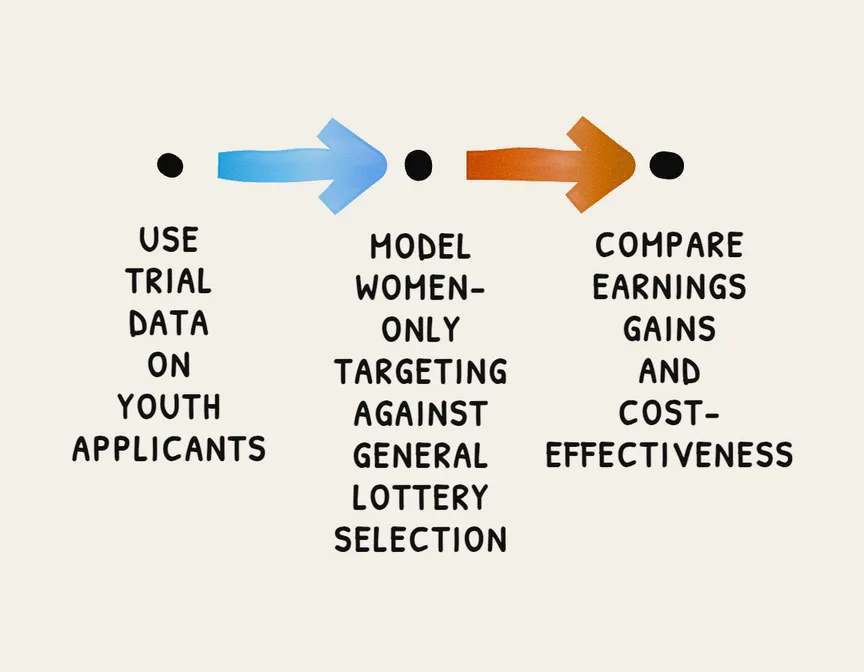
Female applicants face significantly lower baseline earnings and fewer formal employment opportunities than male applicants in informal labor markets.
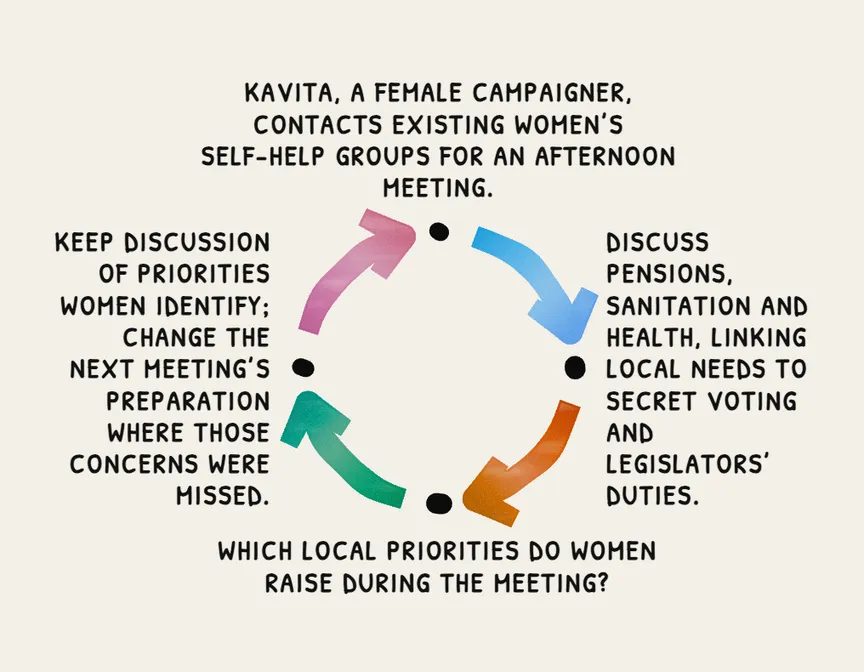
Utilizing pre-existing social infrastructure like self-help groups provides an established trust network where women discuss civic issues comfortably.
Page 44 of 45
Previous
1
…
43
44
45
Next