Skip to the methods
Menu
aikyam
school
Findings
Methods
Subjects
All cards
Read
Findings
Methods
Subjects
All cards
Methods
2,124 methods
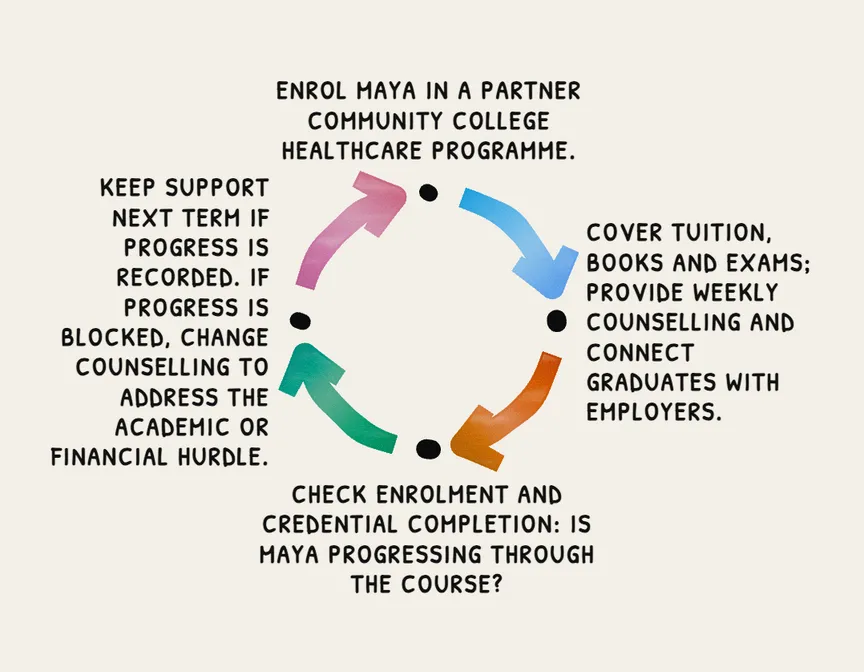
Partnering with community colleges allows programs to leverage established academic institutions without building independent classrooms.
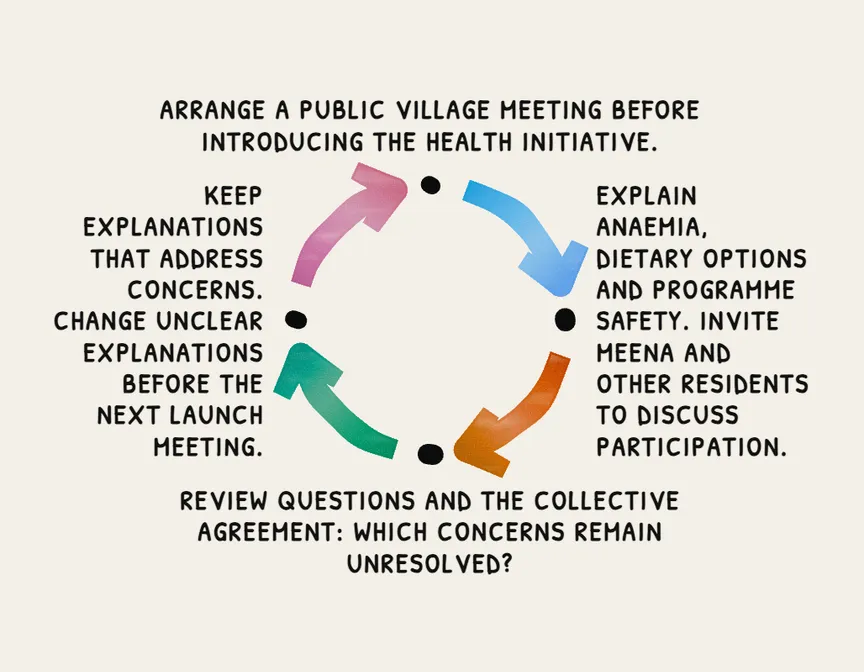
Engaging community members in open educational discussions addresses safety concerns and addresses misgivings prior to launch.
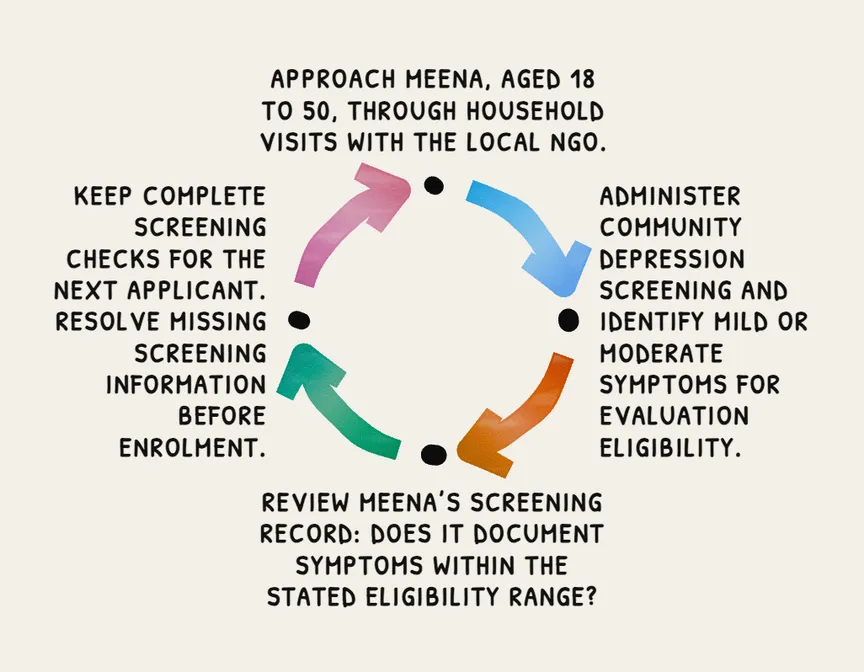
Direct community screening overcomes the dearth of mental health providers in low-income areas by actively identifying depressed individuals where they live.
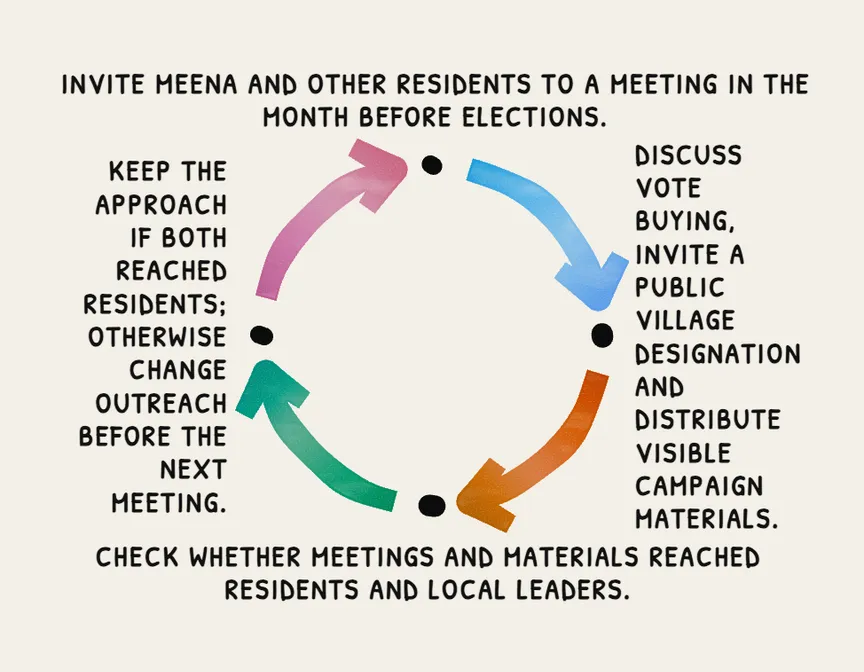
Publicly declaring a village as a no vote-buying community weakens social norms of reciprocity that obligate voters to vote for candidates who give them gifts.
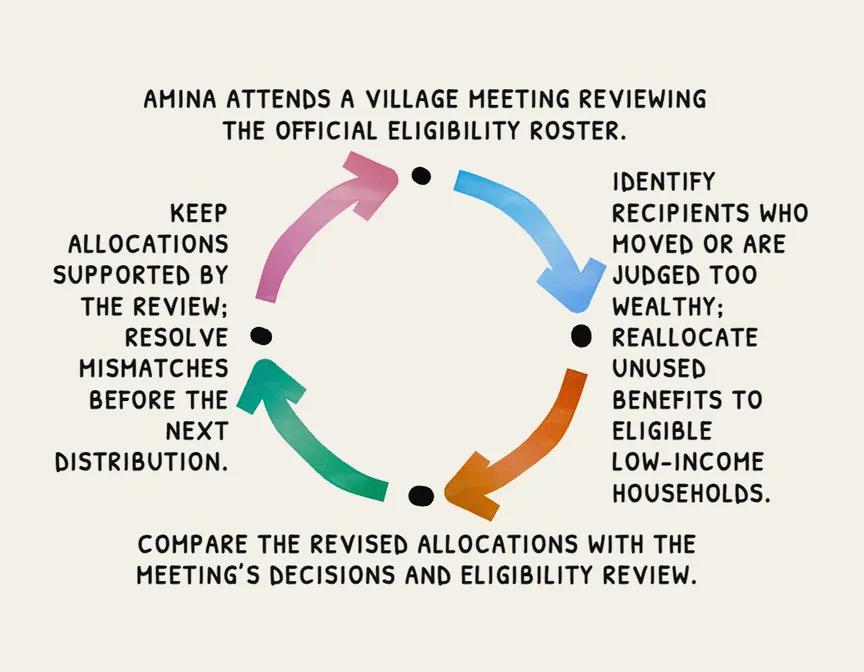
Involving community members directly in list adjustments leverages local knowledge about household wealth and residency changes.
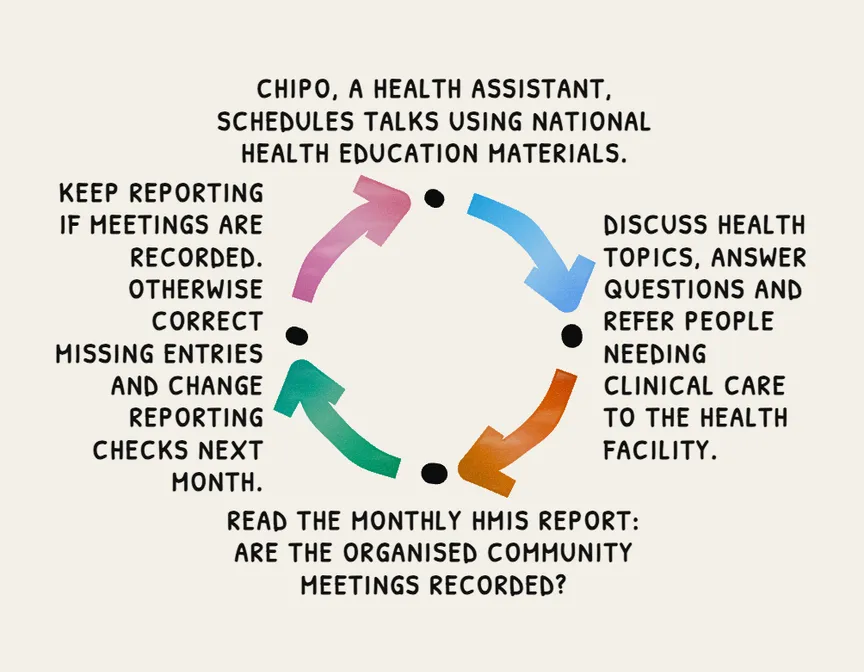
Group education talks foster collective awareness and peer support around positive health behaviors within rural communities.
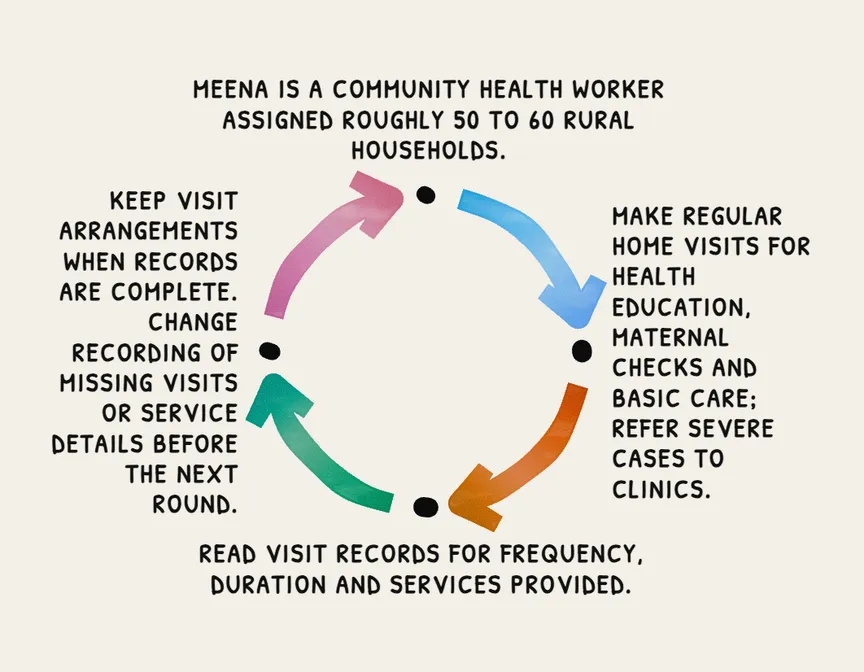
Door-to-door visits remove physical and financial travel barriers for vulnerable rural families who cannot easily visit healthcare clinics.
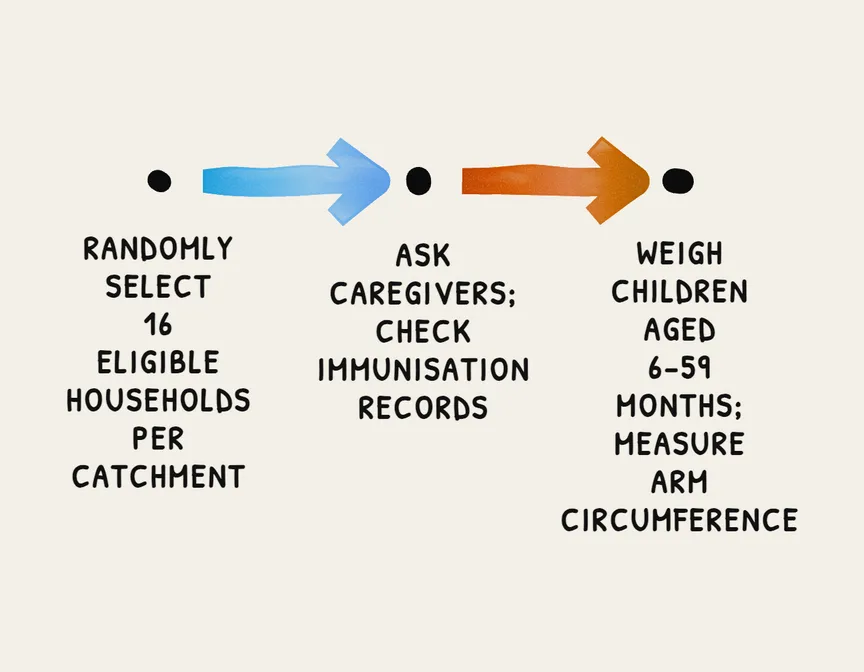
Collecting independent household data avoids reporting biases that affect administrative clinic records.
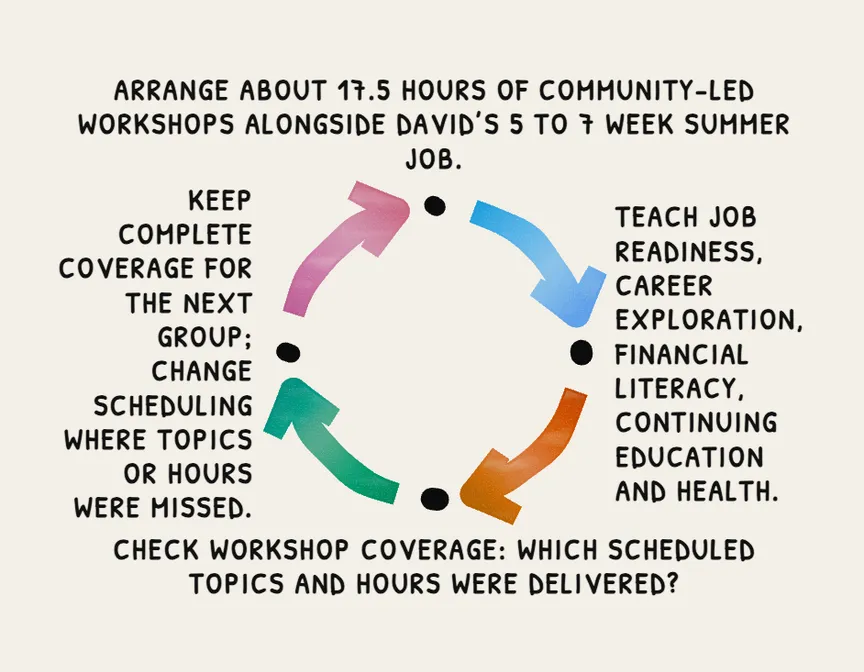
Integrating classroom instruction with practical work experience reinforces workplace norms while building essential financial and educational awareness.
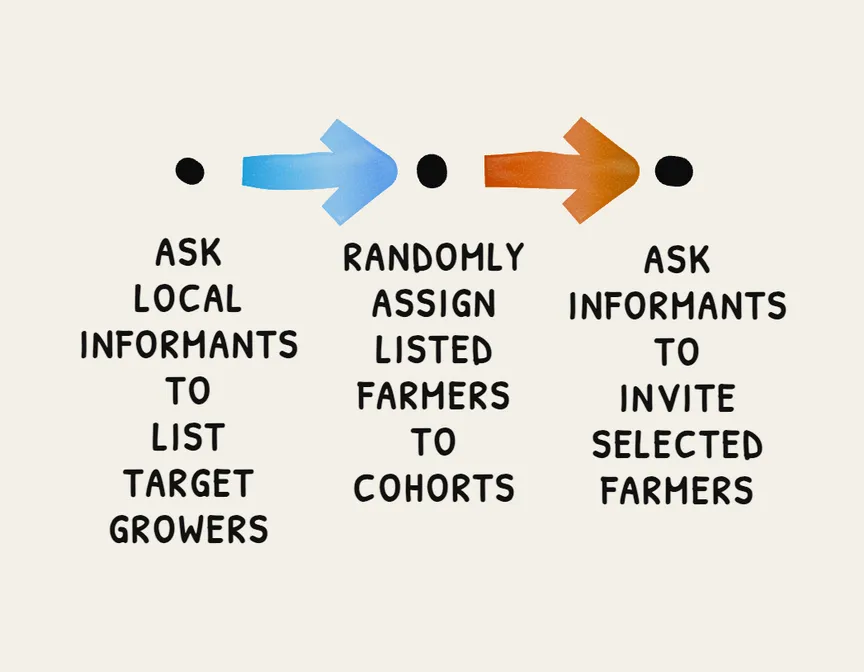
Community leaders hold accurate knowledge regarding local farm activities that external organizations lack.
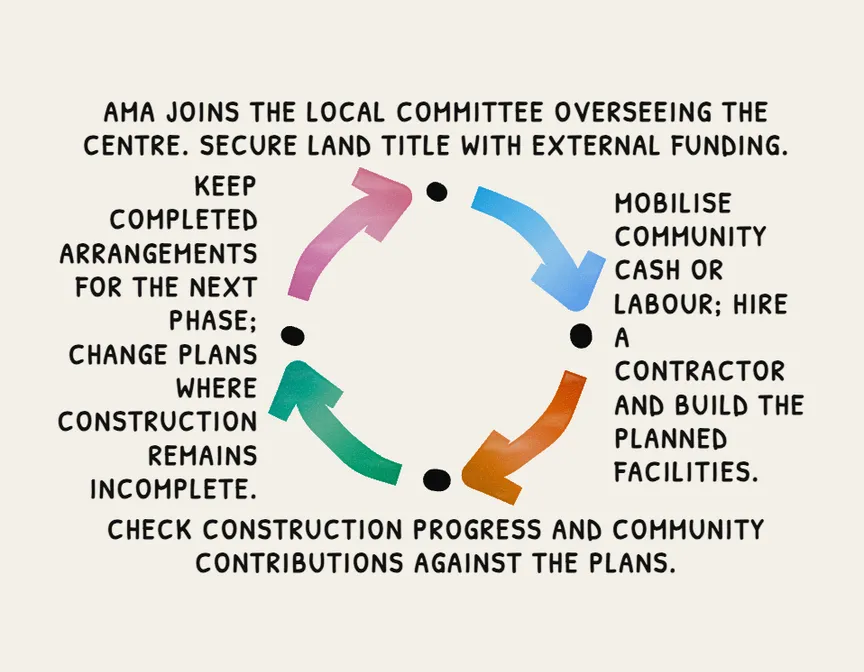
Centralizing services in an epicenter creates a physical hub for collective community action and local service delivery.
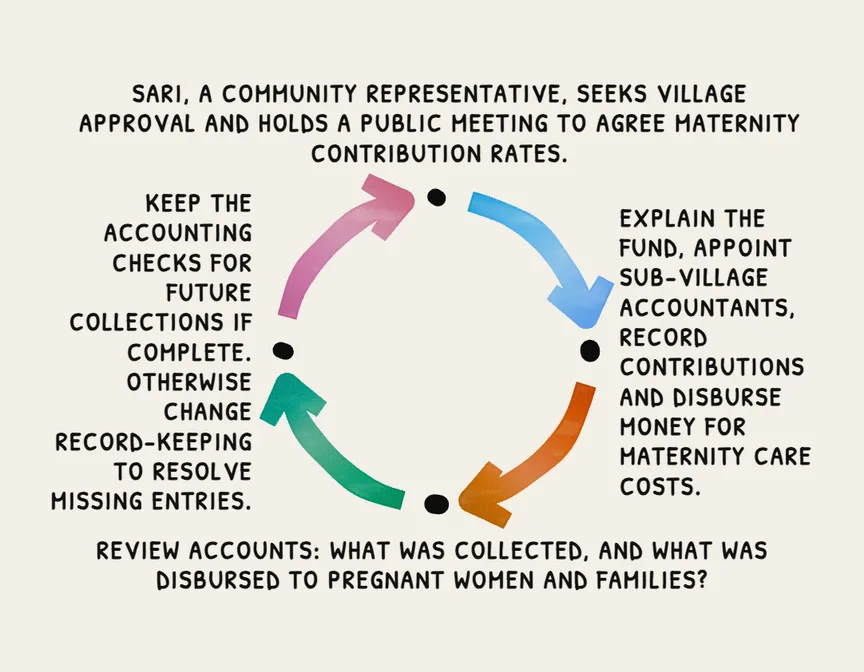
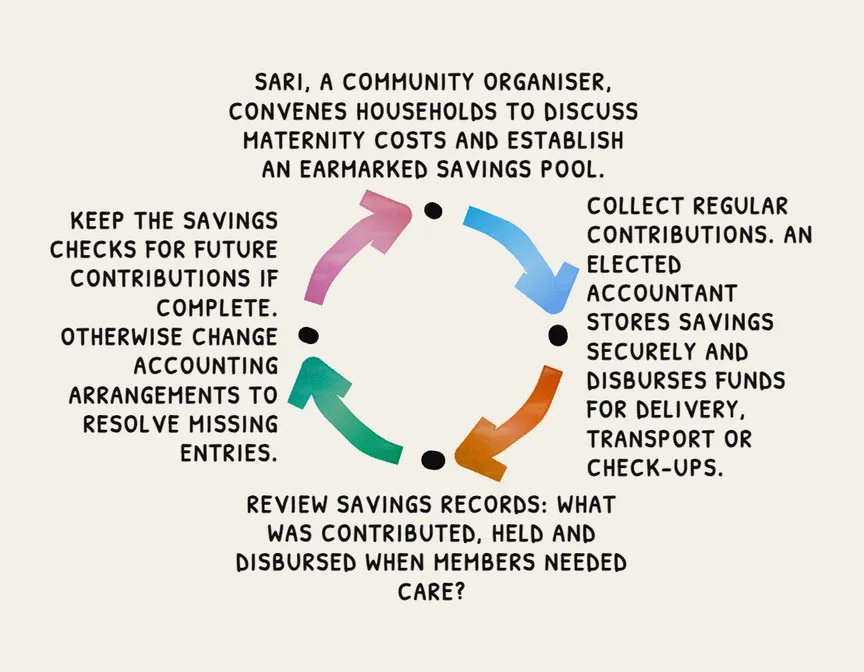
Raising funds collectively pools local financial resources to lower individual economic barriers to healthcare access.
Setting up dedicated savings groups provides a structured demand-side financial buffer for households facing expensive health facility fees.
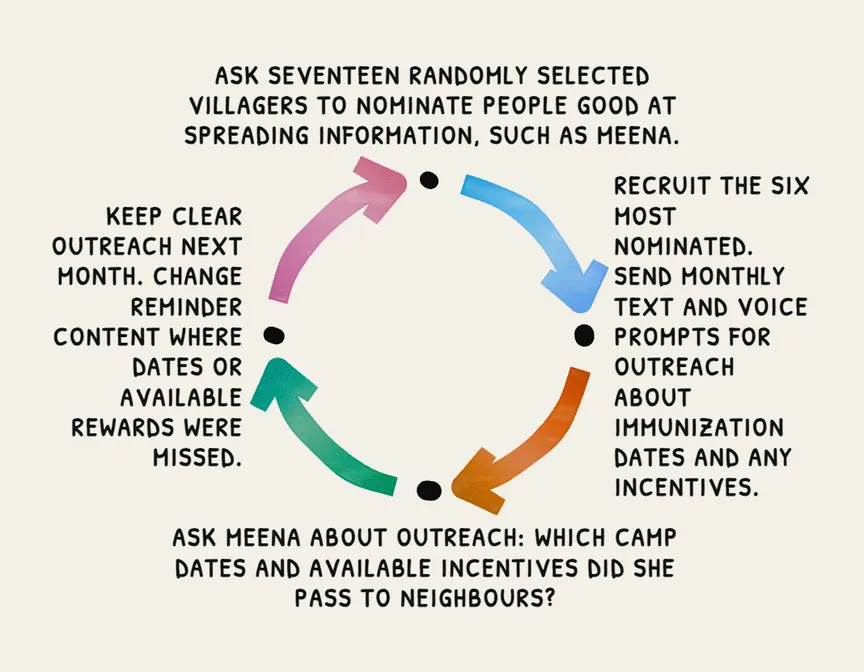
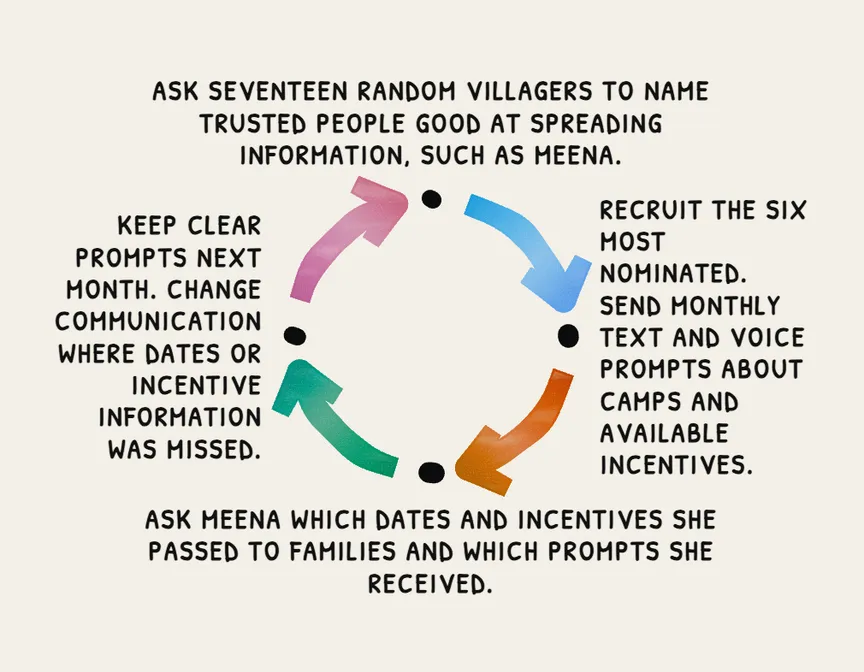
Information hubs occupy central positions in local social networks where they rapidly transmit health news to peers.
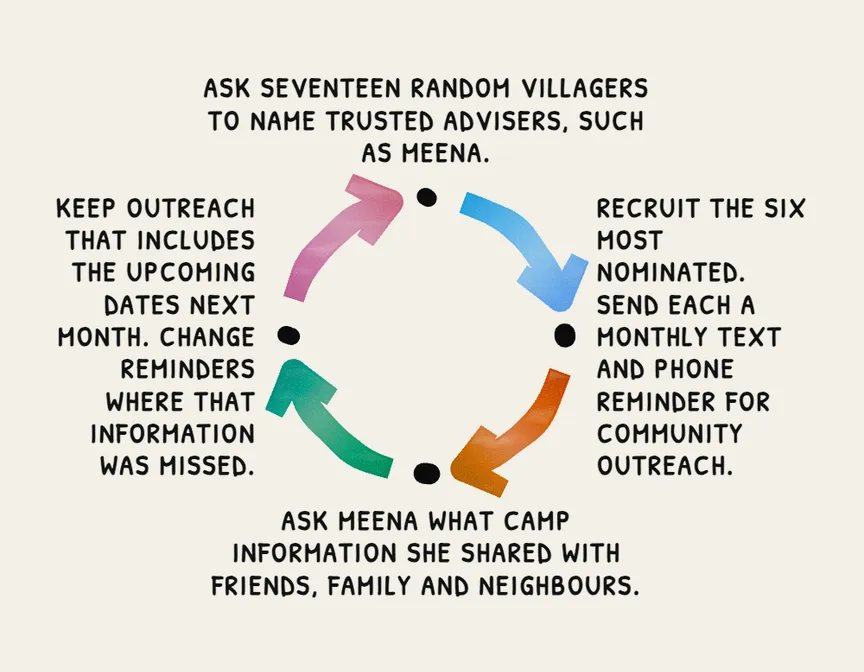
Trusted individuals possess social credibility and respect within local communities.
Combining trust with central network connectivity ensures that health messaging reaches a broad audience through a credible source.
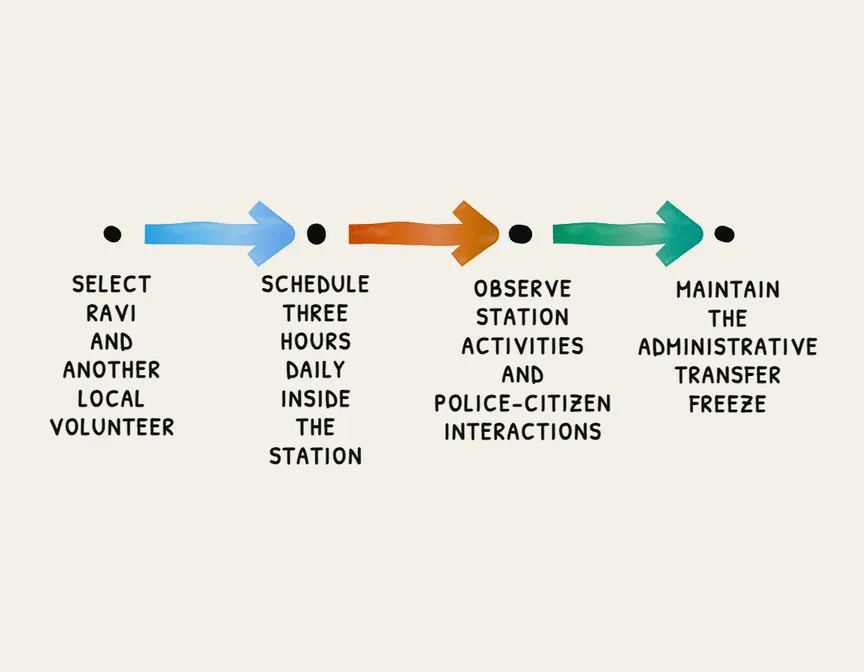
Informal monitoring by local citizens increases public awareness of police responsibilities and encourages better officer conduct.
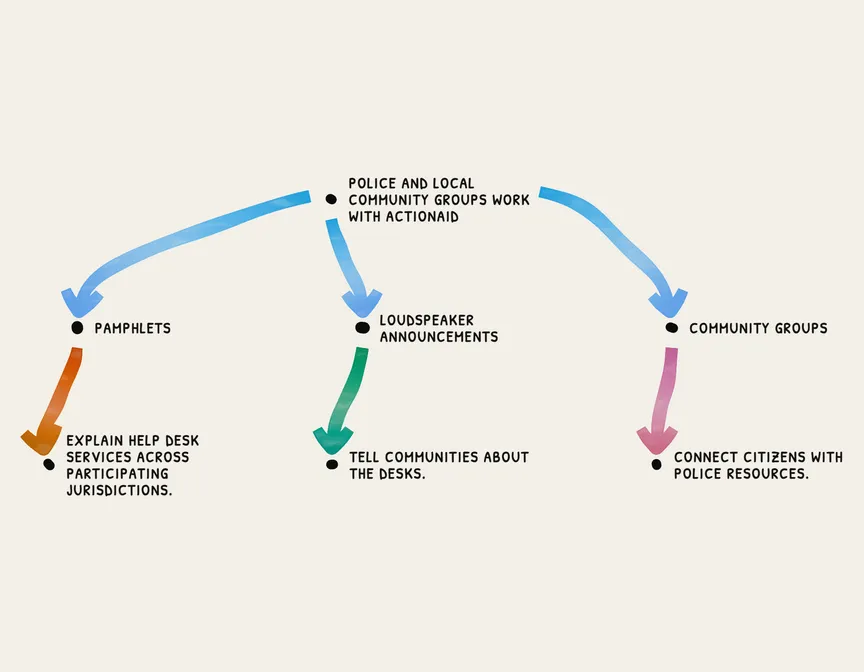
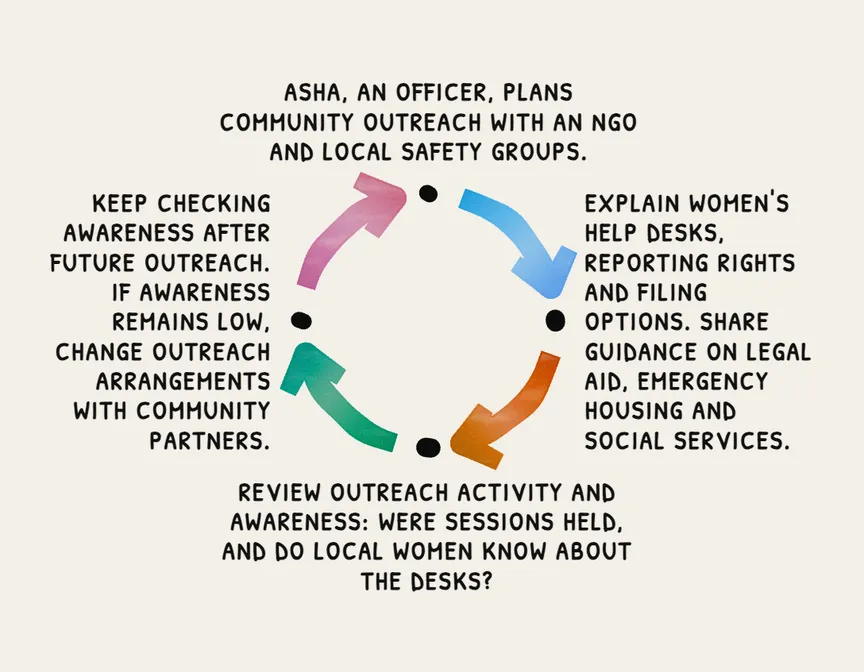
Outreach alerts community safety networks and women's groups to dedicated police help desks.
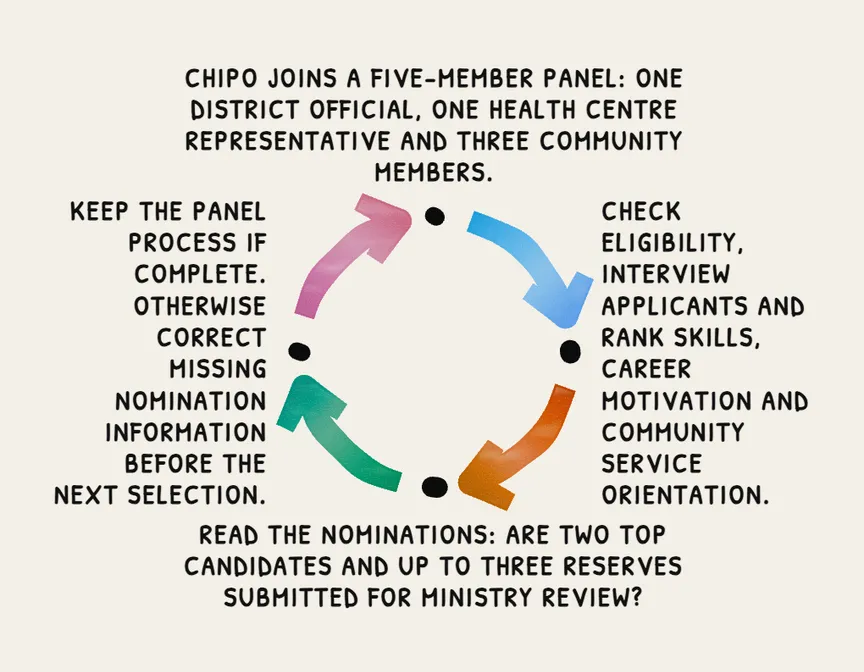
Selection panels place strong positive weight on talent, career motivation, and prosociality when evaluating candidates.
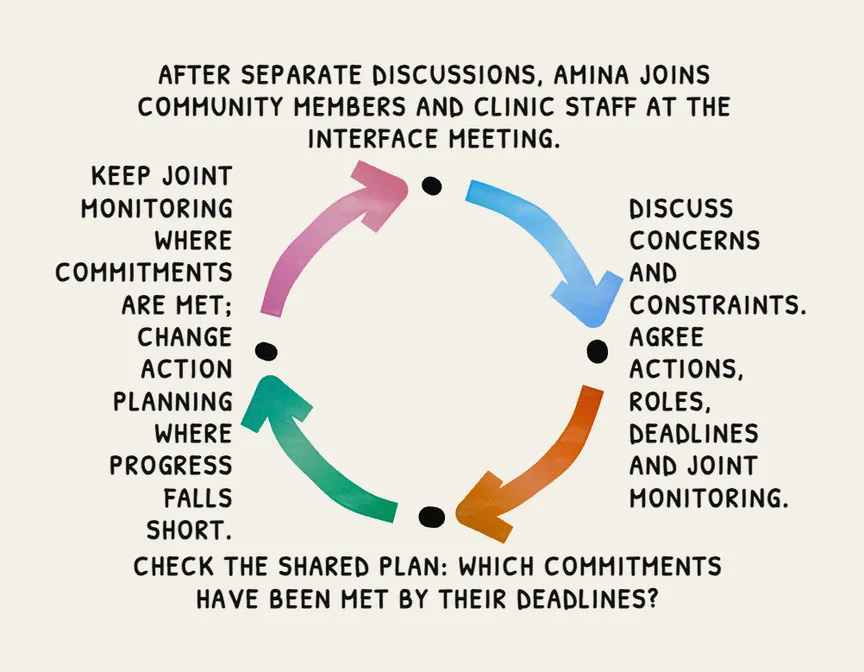
The interface meeting resolves coordination failures between community members and service providers by establishing shared expectations and clear commitments.
Partnering with established local groups and specialized non-governmental organizations builds community awareness and bridges information gaps between citizens and law enforcement.
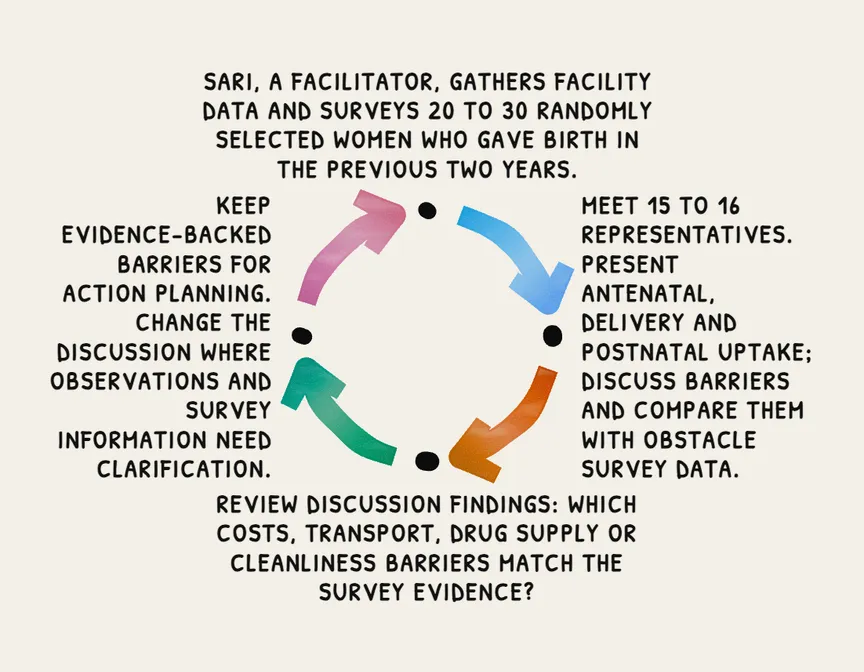
Presenting objective village health data creates transparent awareness of local service breakdowns.
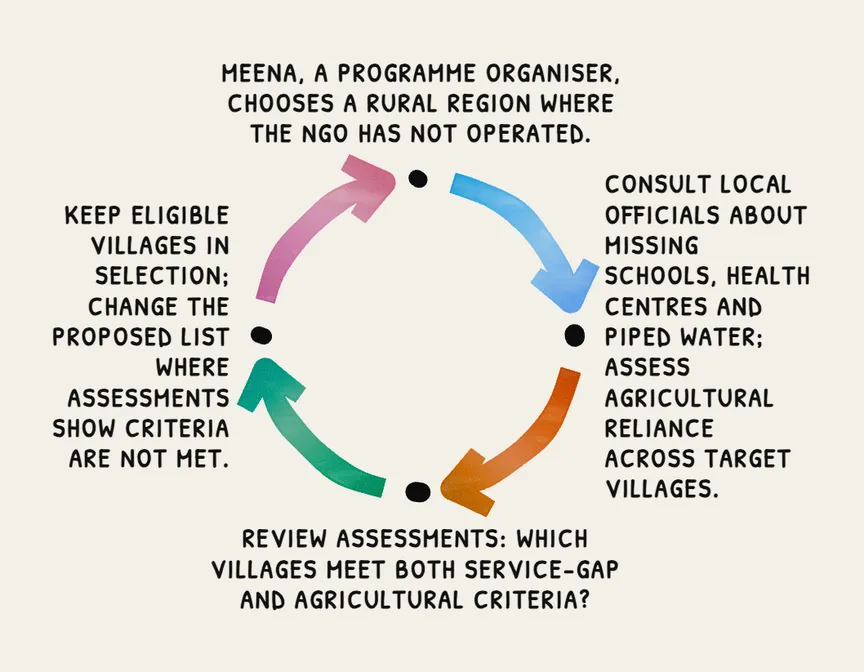
Consulting local government helps pinpoint remote areas with genuine infrastructural deficits.
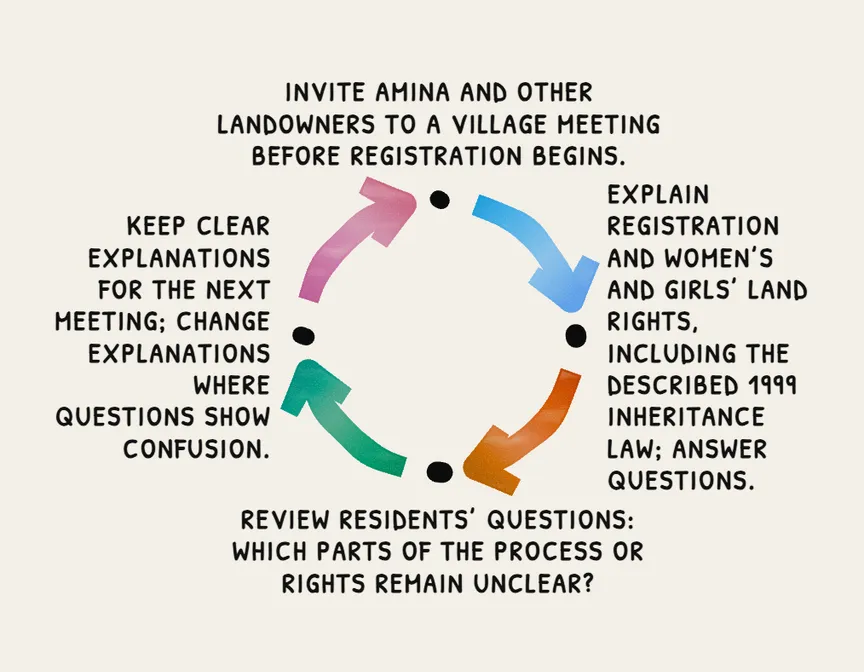
Intense public campaigns raise awareness of equal property rights so women and unregistered spouses claim legal land shares.
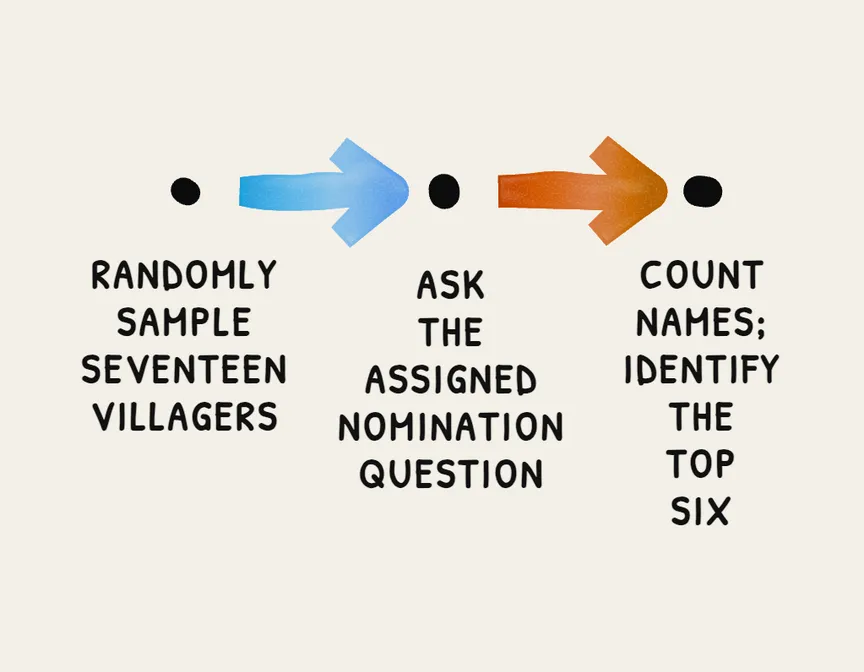
Asking a small random sample of villagers produces a reliable map of local social connections without full network census mapping.
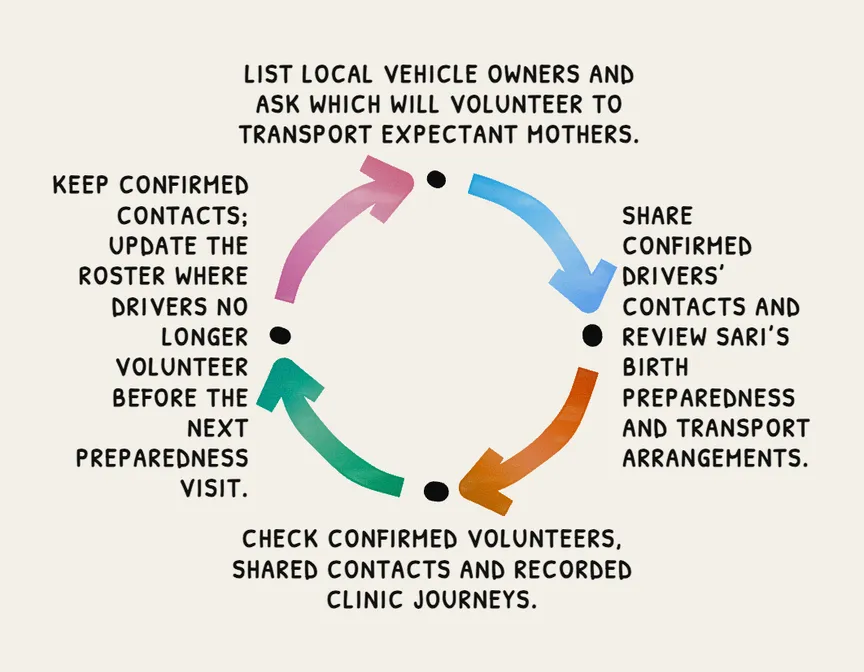
Mapping local vehicle owners creates an immediate, community-based alternative to formal ambulance services without requiring external financial resources.
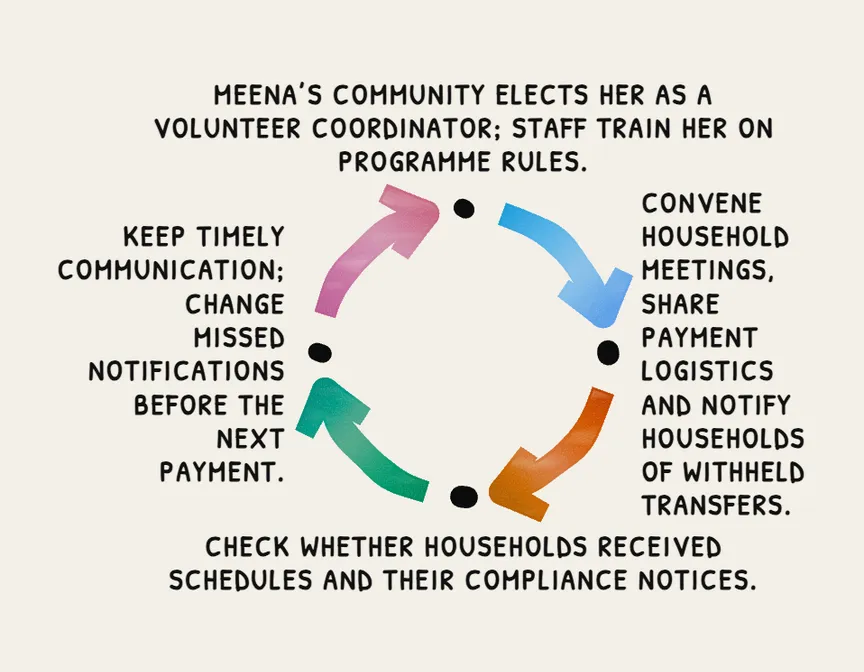
Local community volunteer coordinators possess strong peer trust and proximity, allowing rapid communication of requirements and payment logistics.
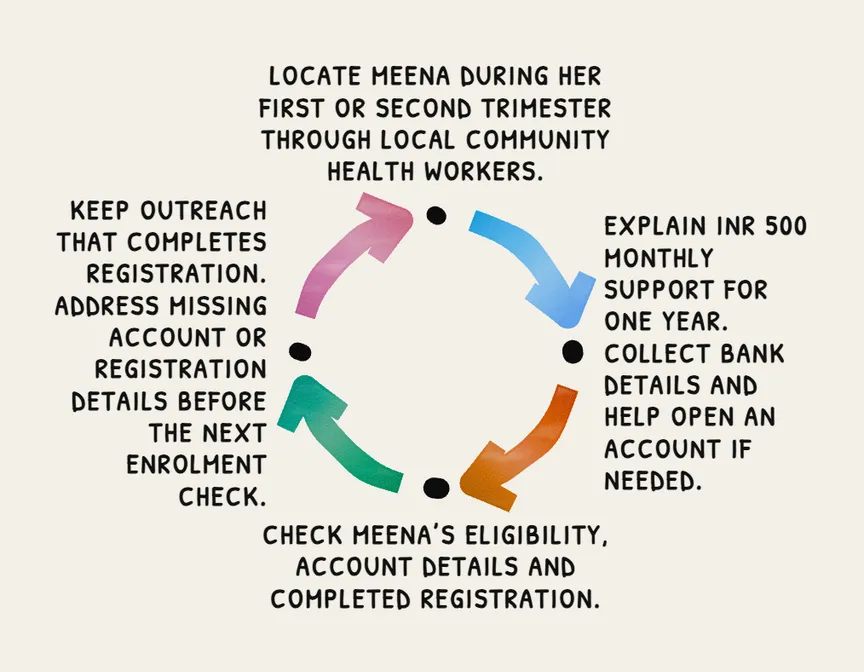
Community health workers live in target communities and maintain direct contact with local families.
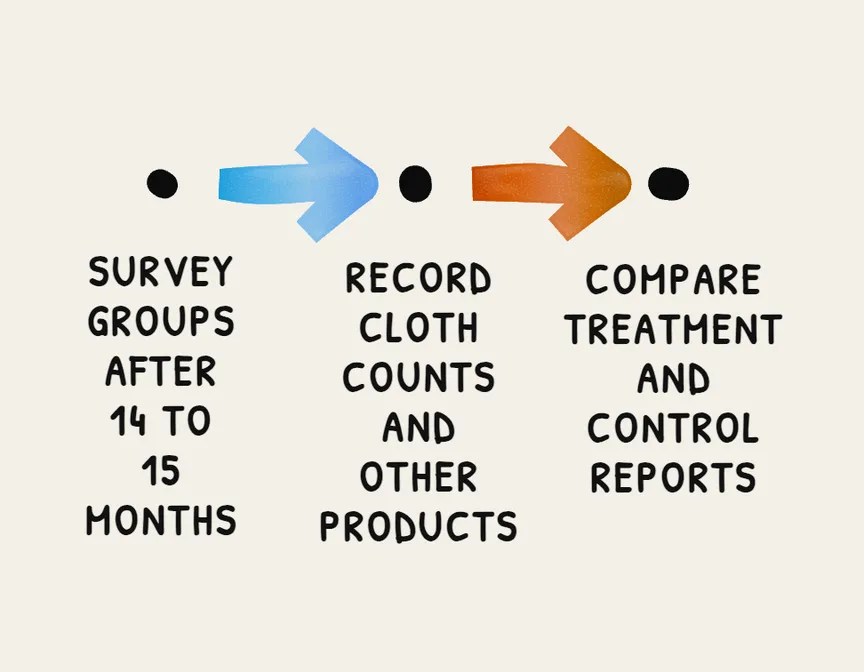
Comparing reported cloth usage between treatment and control participants isolates product substitution from overall changes in menstrual habits.
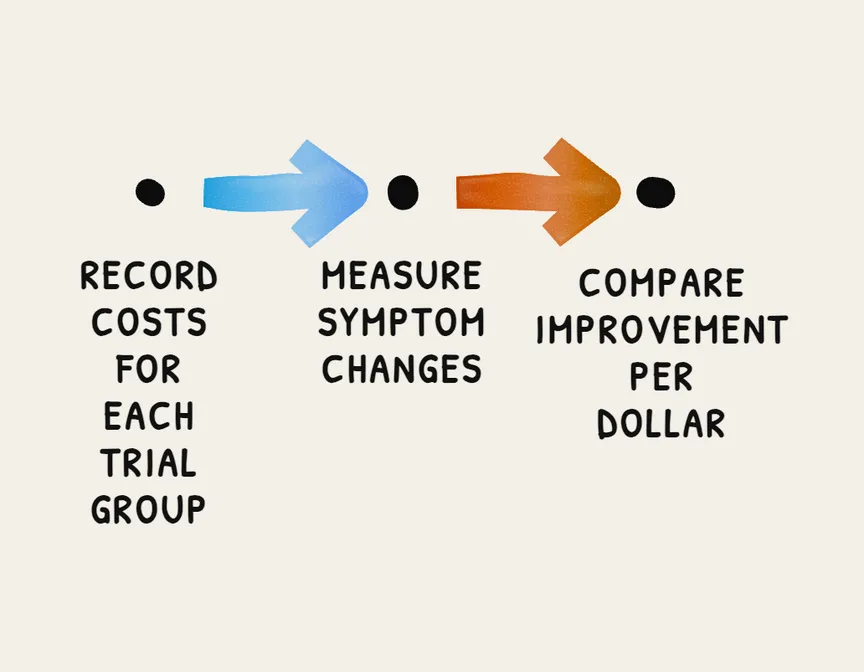
Comparing relative program costs directly against treatment impact prevents selecting low-cost interventions that yield weak outcomes.
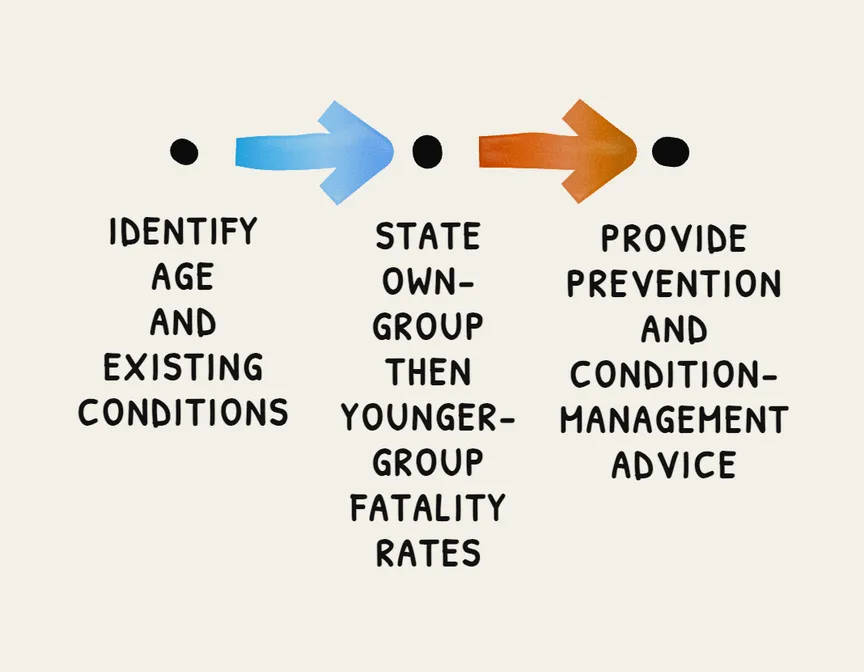
While individuals may rationalize that they are healthier than peers of their own age, it is much harder to justify being healthier than younger people with the same health conditions.
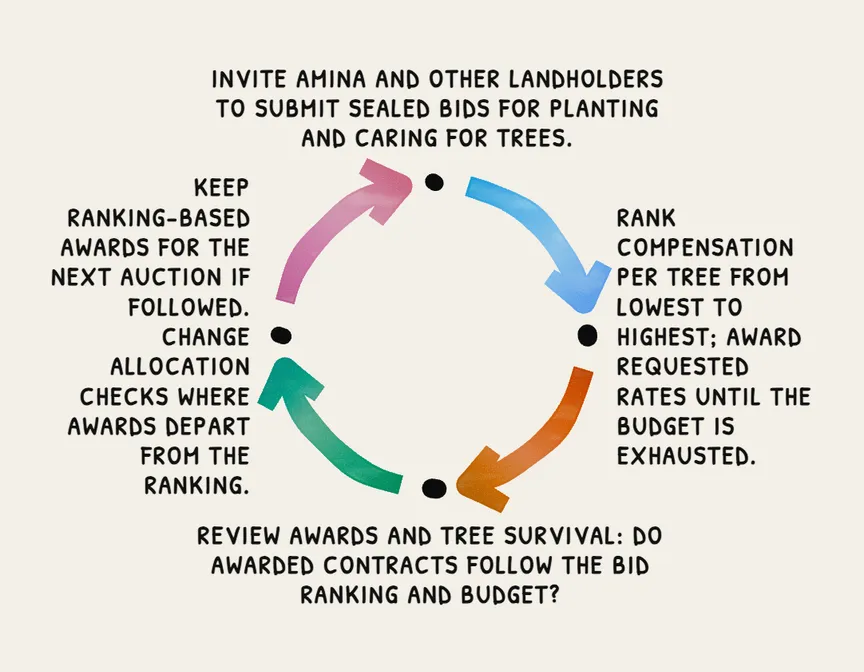
Competitive bidding creates an incentive for landholders to select into the program based on how much compensation they actually require.
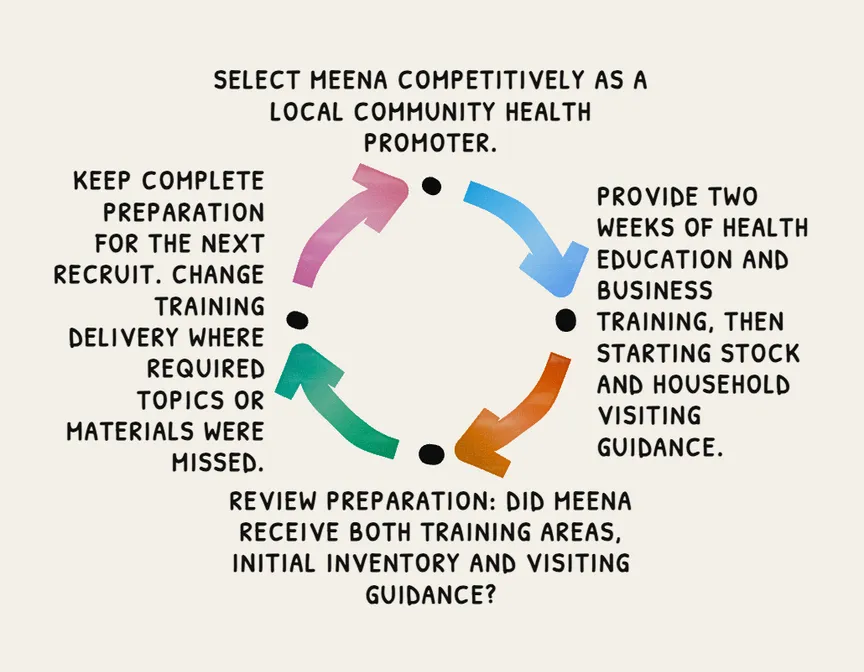
Competitive selection identifies motivated local candidates who command trust in their villages.
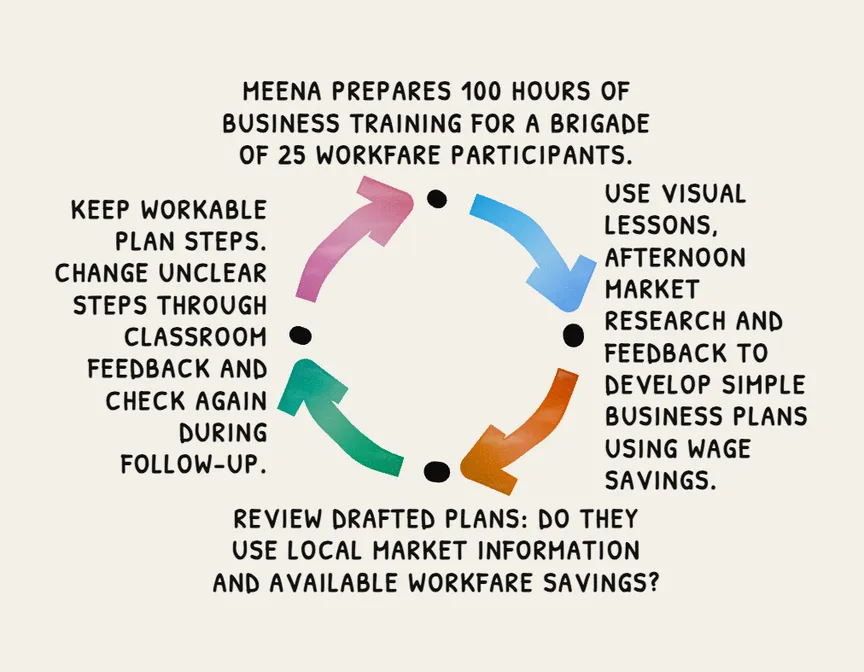
Combining workfare earnings with basic business planning helps youth overcome capital constraints and knowledge barriers to starting informal micro-enterprises.
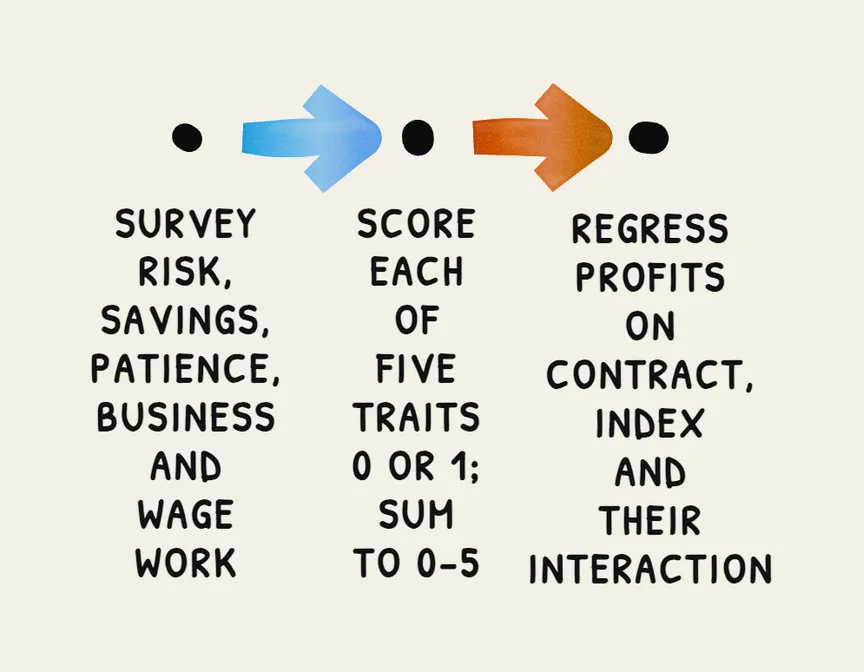
Summing non-responder traits aggregates multiple individual risk and liquidity indicators into a single metric of client responsiveness.
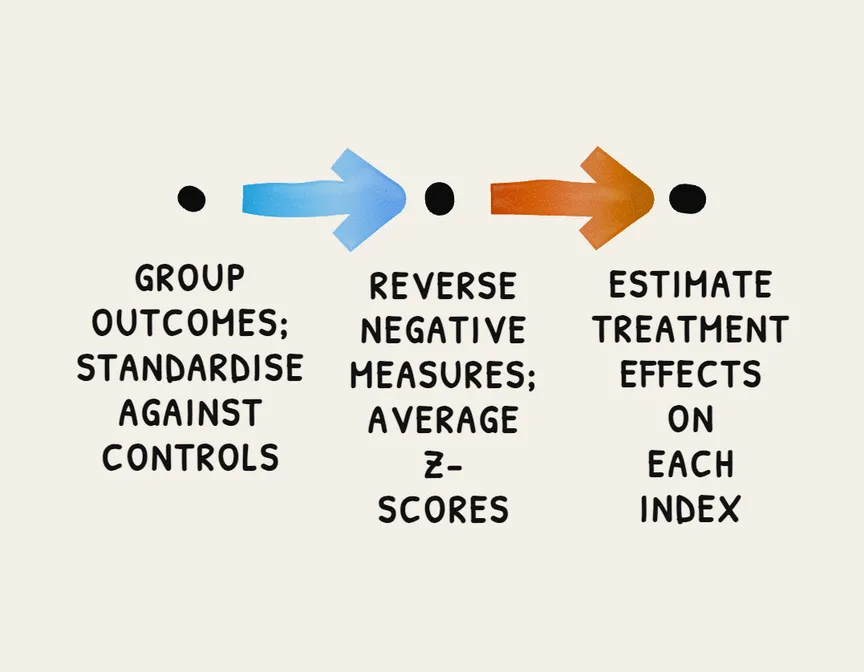
Averaging standardized z-scores across related indicators prevents false positive findings caused by testing multiple outcomes independently.
Explaining rigorous scientific evidence and underlying biological mechanisms corrects inaccurate baseline beliefs about transmission risk.
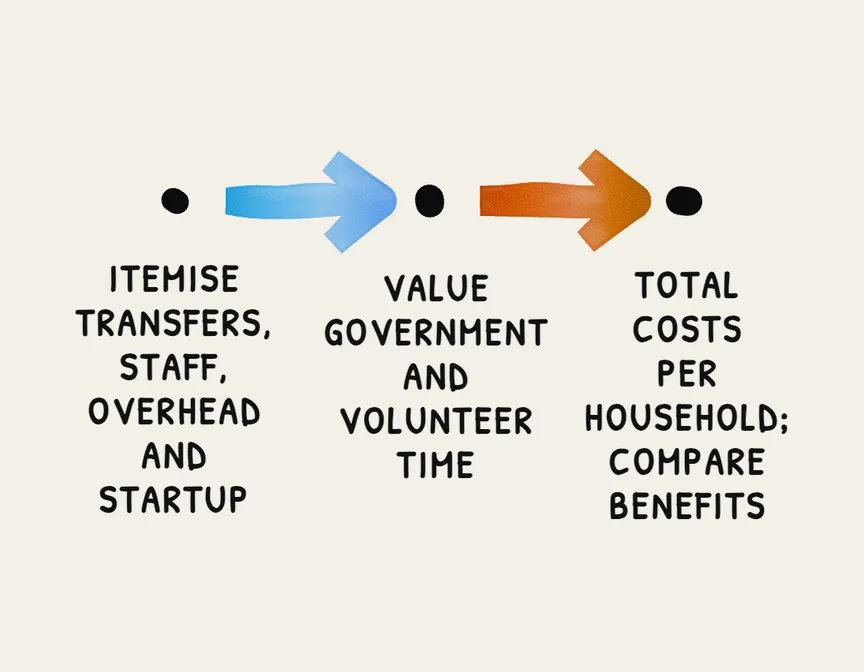
Including indirect overhead, government staff inputs, and community volunteer hours prevents underestimating true program costs.
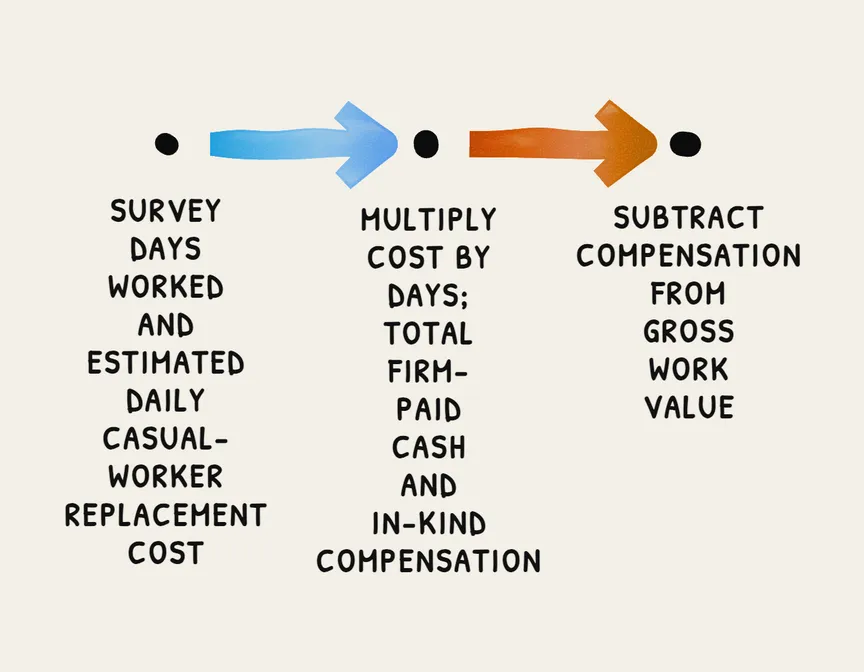
Estimating casual worker replacement costs captures the gross productive value generated by trainees independently of formal wage rates.
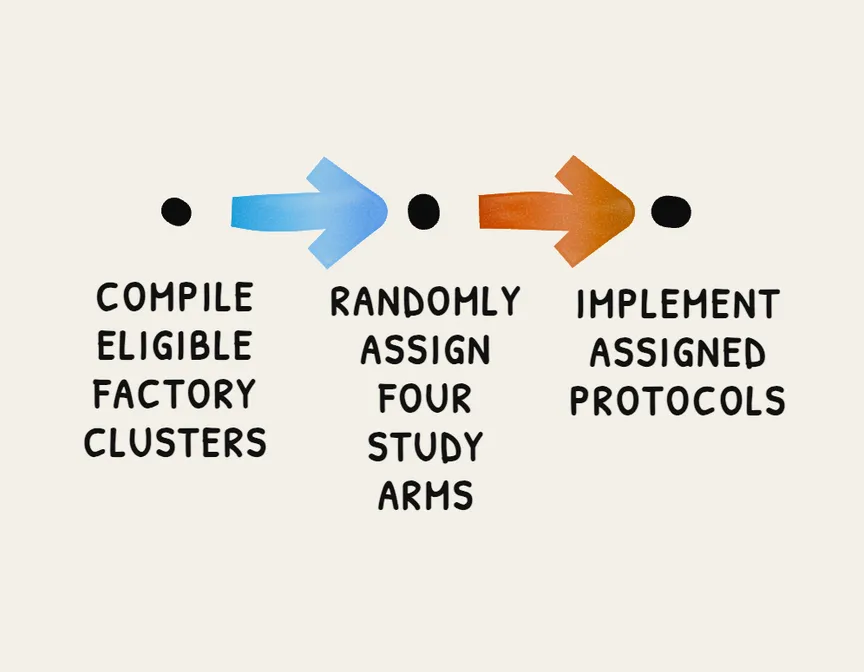
Computer-based cluster randomization balances baseline factory characteristics across groups and prevents treatment spillovers between workers in the same plant.
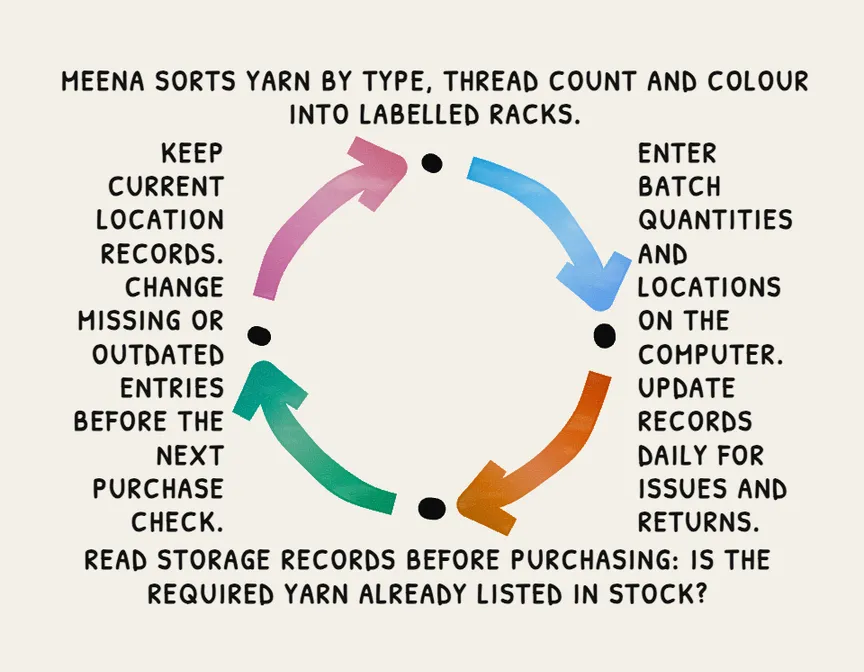
Logging location-wise yarn data onto a computer allows storekeepers to locate required yarn stock immediately during production setups.
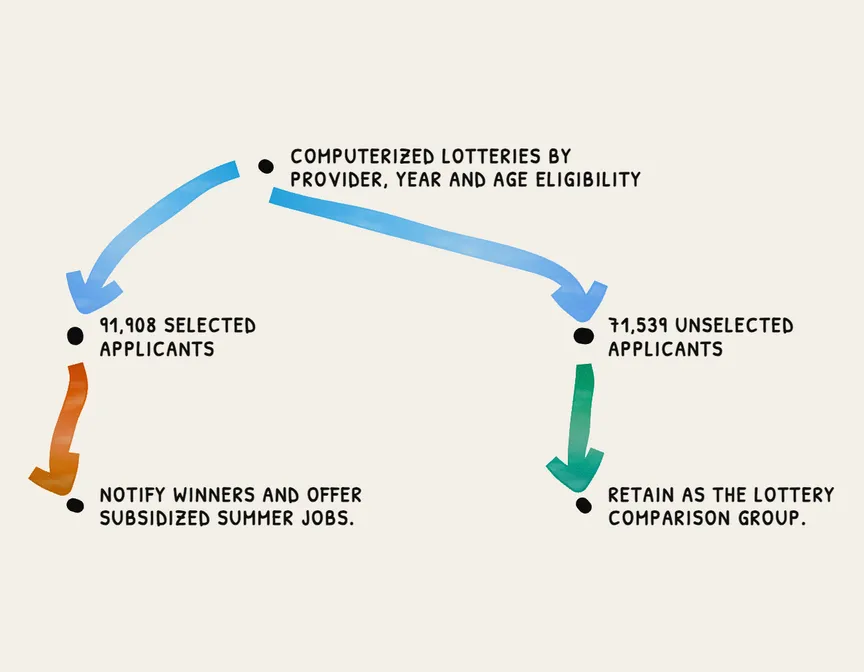
Randomized selection prevents favoritism and subjective screening in allocating scarce employment slots.
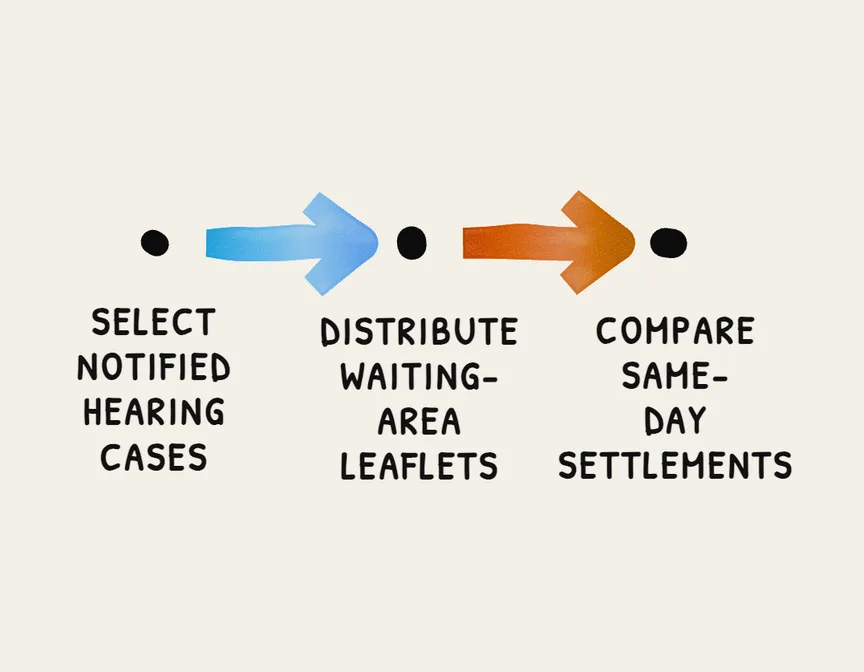
Providing general procedural awareness tests whether reminding litigants of conciliation services encourages dispute resolution without altering case-specific expectations.
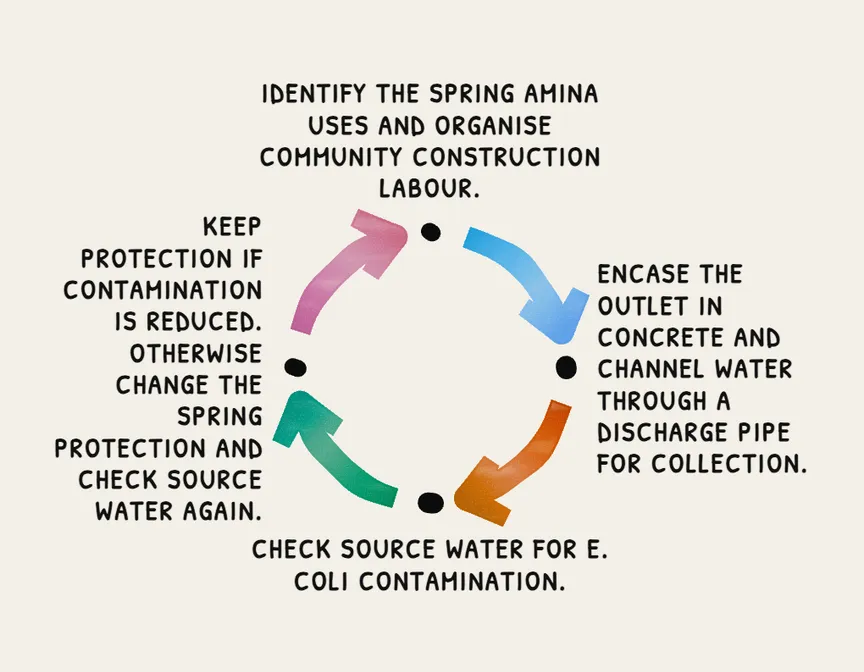
Encasing the spring head in concrete forces water through a clean pipe and blocks surface runoff from entering the source.
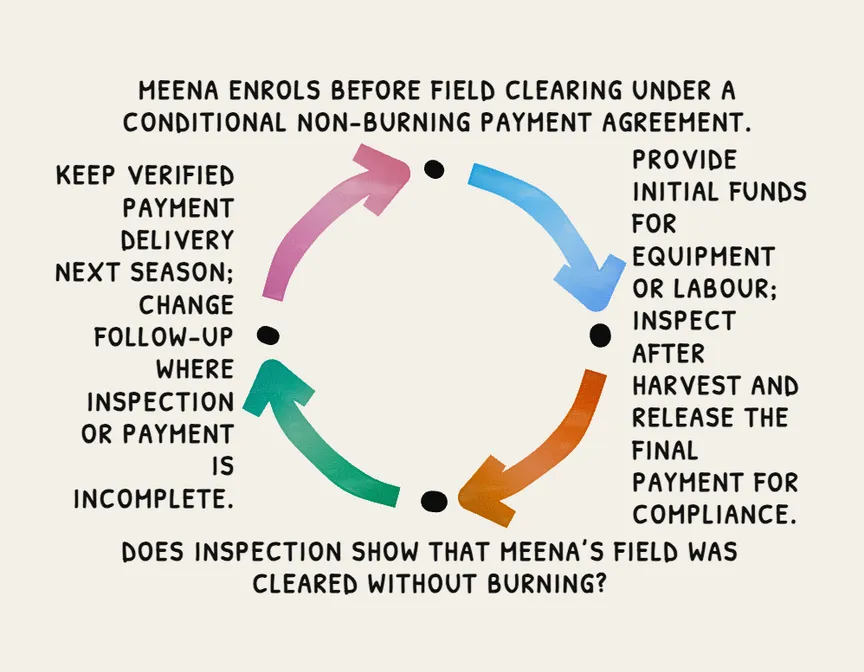
Financial compensation offsets the extra costs and effort required to clear post-harvest fields without burning.
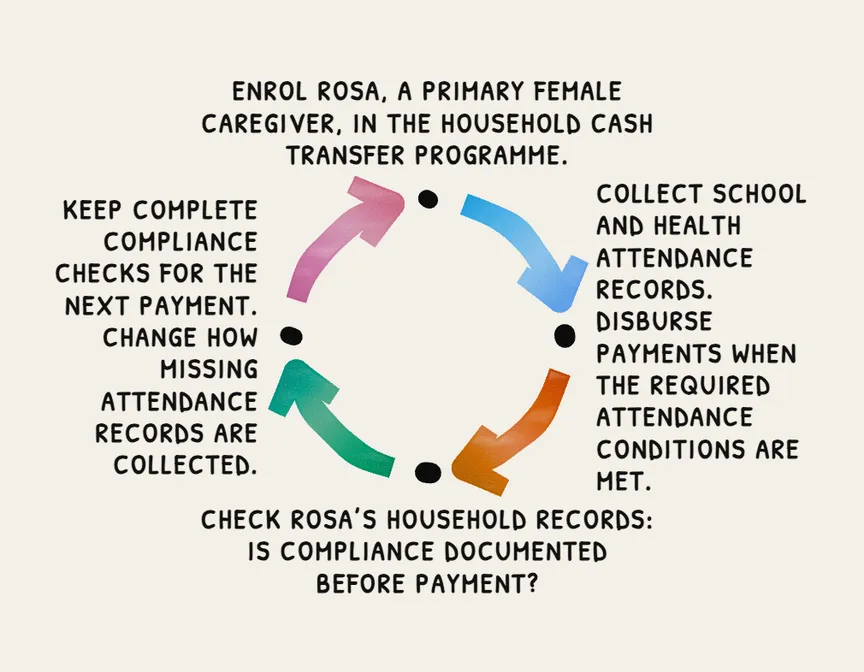
Cash transfers supplement household income beyond basic opportunity cost compensation.
Cash transfers relax household budget constraints and eliminate the need to use child labor as an adverse coping strategy during economic shocks.
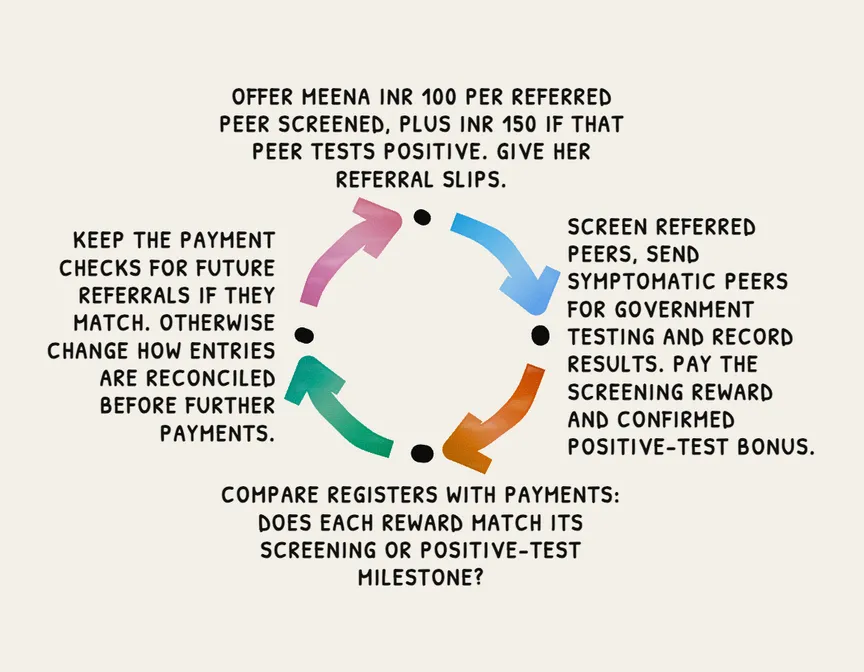
Conditioning part of the reward on test results provides the current patient a stronger incentive to make use of their knowledge about their contact's health.
Page 6 of 45
Previous
1
…
5
6
7
…
45
Next