Skip to the methods
Menu
aikyam
school
Findings
Methods
Subjects
All cards
Read
Findings
Methods
Subjects
All cards
Methods
2,124 methods
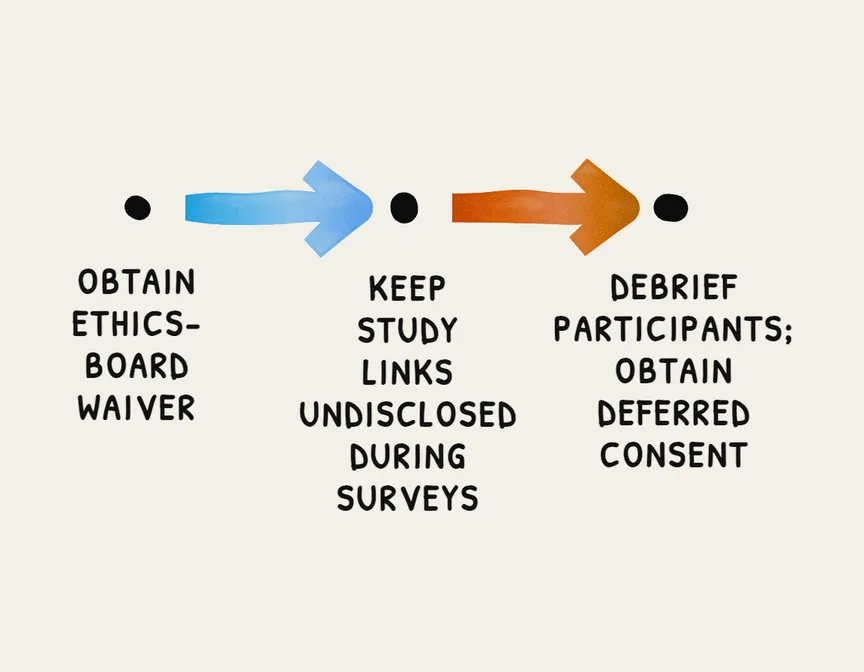
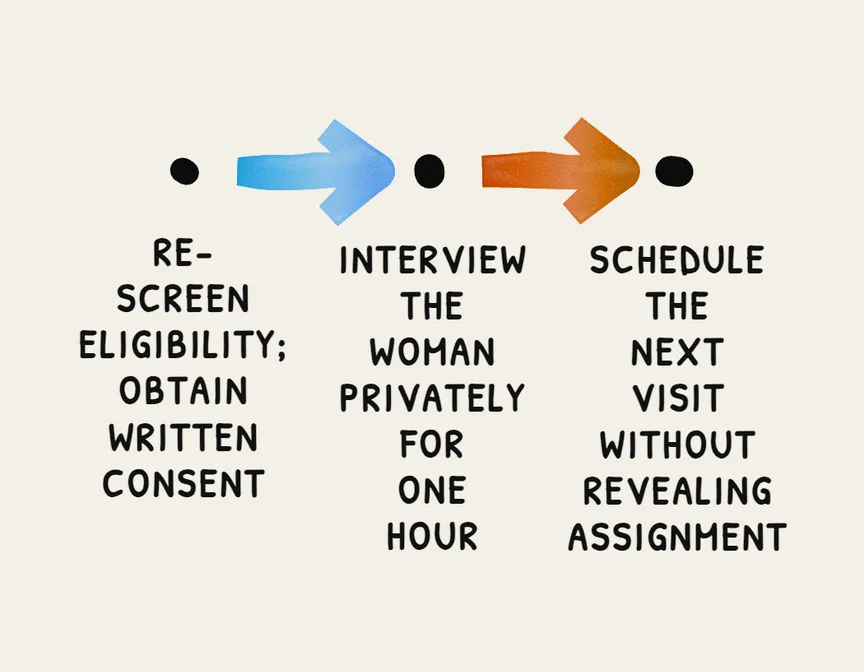
Deferring full experimental disclosure prevents participants and survey enumerators from altering their behavior or self-reported answers to align with research goals.
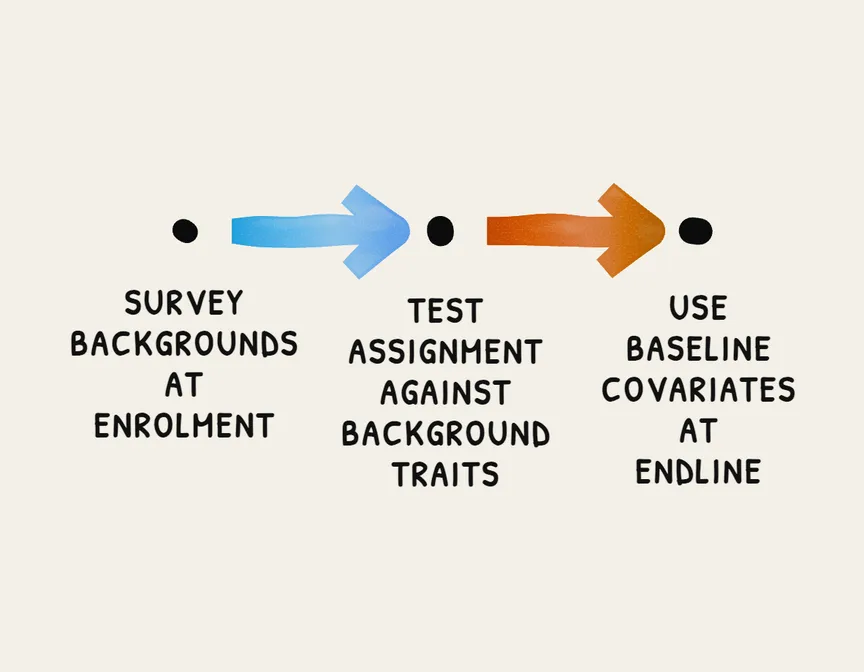
Pretest background measures verify that random assignment created balanced comparison groups across observable demographic traits.
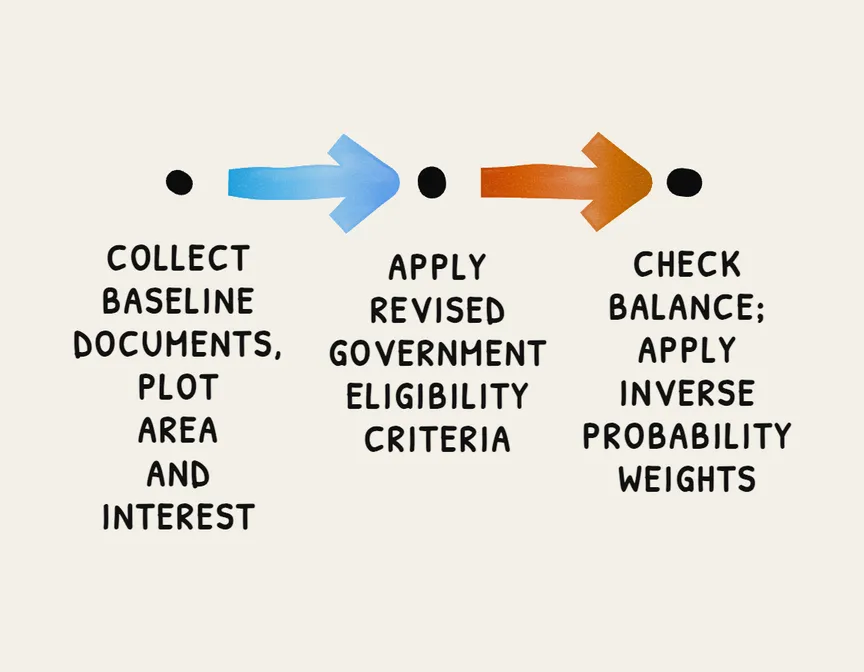
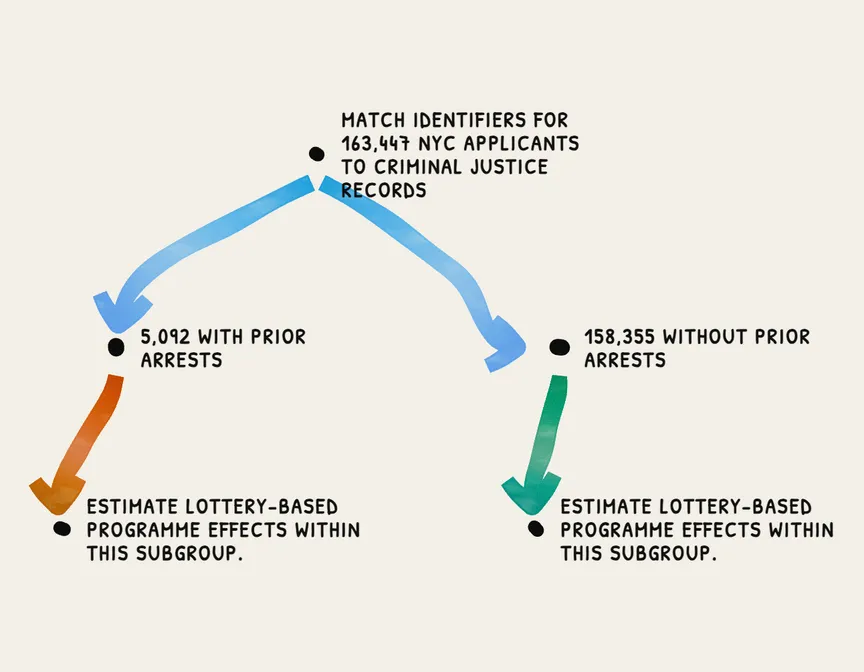
Filtering participants using pre-treatment baseline data ensures that program evaluation focuses exclusively on populations capable of receiving program benefits under revised government rules.
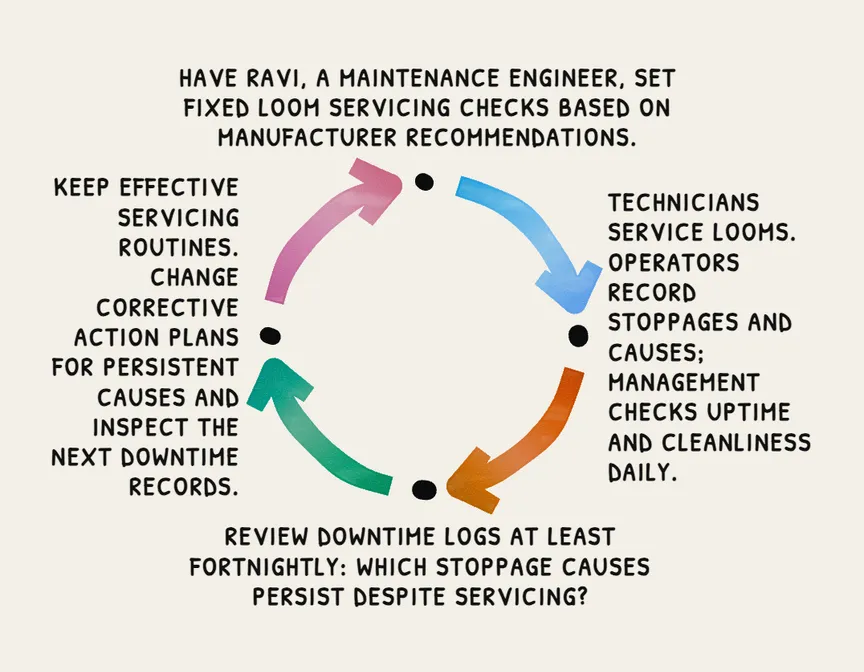
Routine loom maintenance and breakdown monitoring reduce unexpected equipment failures and keep factory spaces clean.
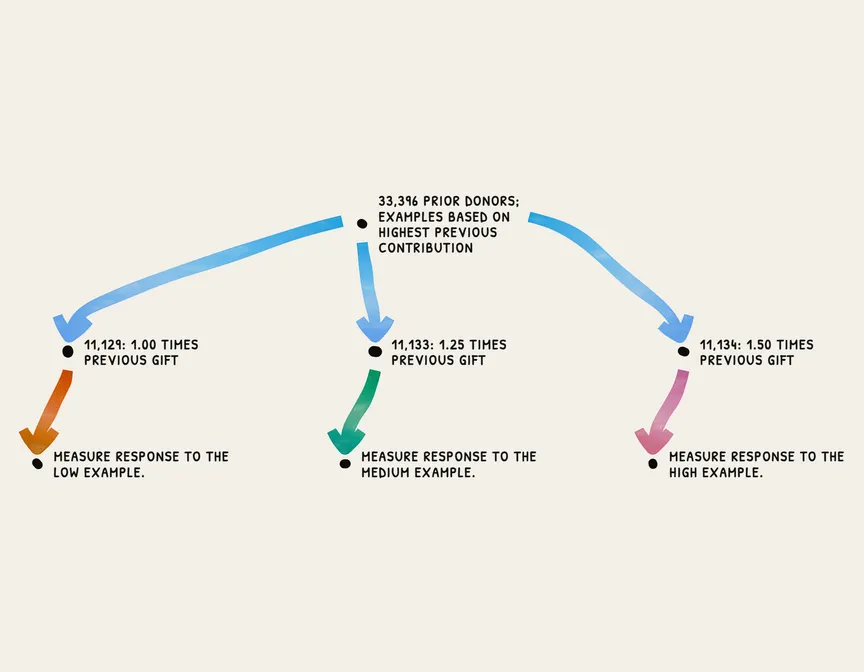
Donors base their contribution decisions on established personal giving habits and the general presence of the match rather than the specific example dollar amount illustrated in the text.
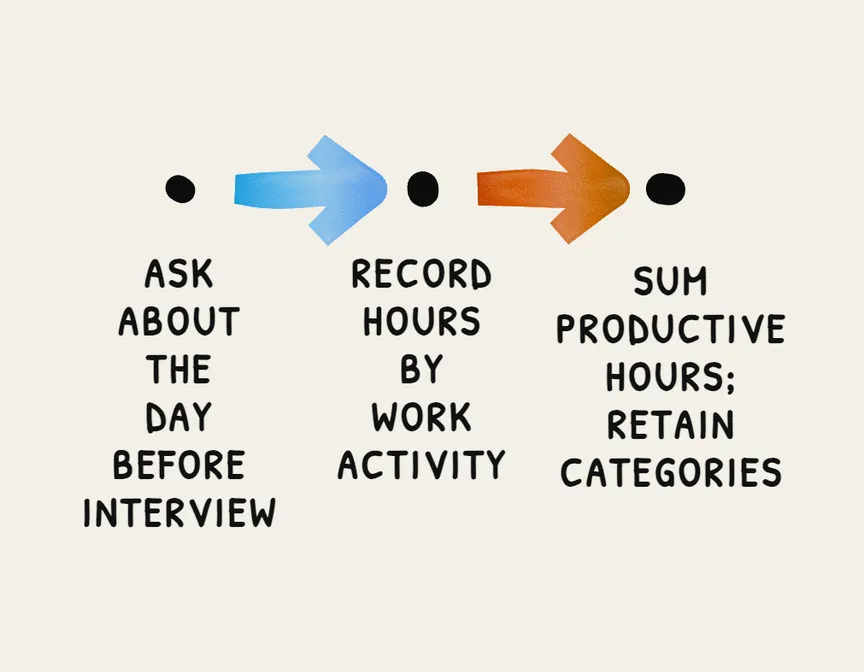
Focusing on the immediate past day minimizes memory decay and recall bias.
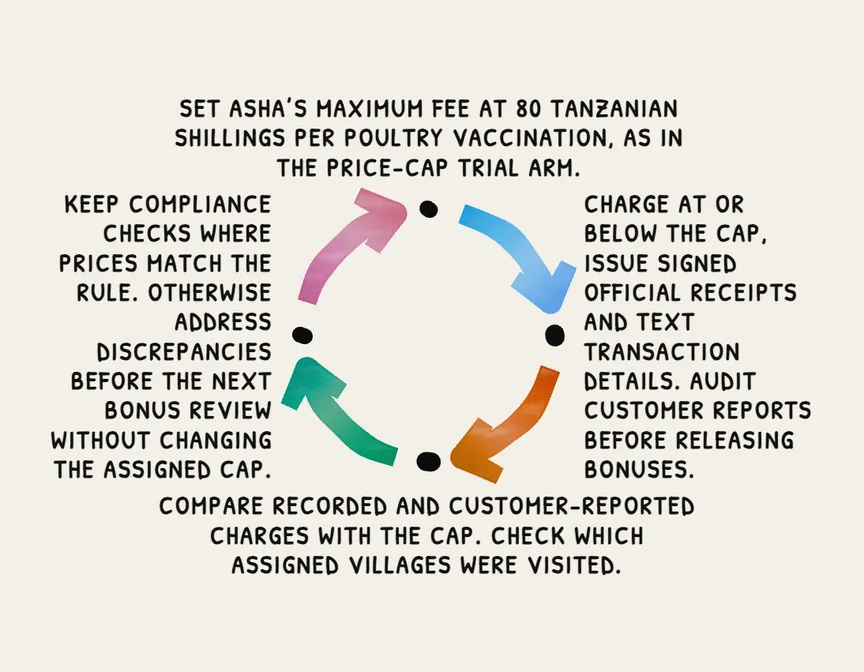
Setting a mandatory fee cap restricts the ability of monopoly providers to extract excess consumer surplus through value-based price discrimination.
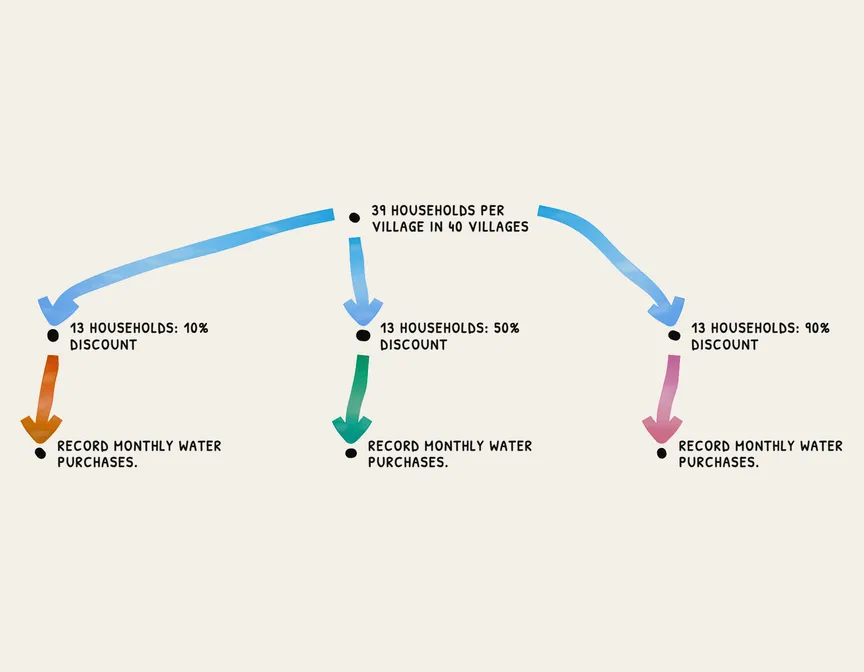
Tiered discounts reveal how price affects clean water demand among cash-constrained rural families.
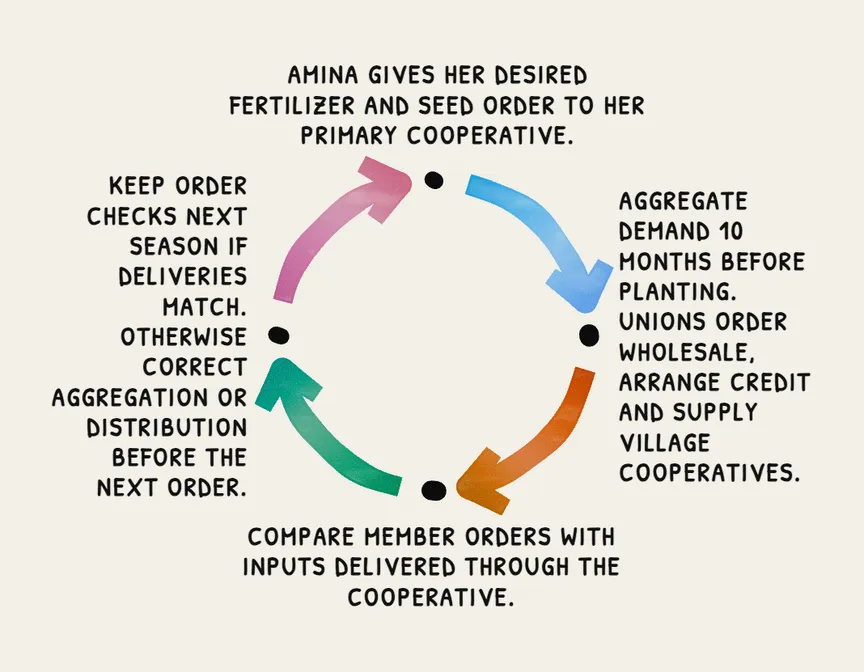
Aggregating individual smallholder demand through village cooperatives reduces administrative transaction costs for commercial banks and input suppliers.
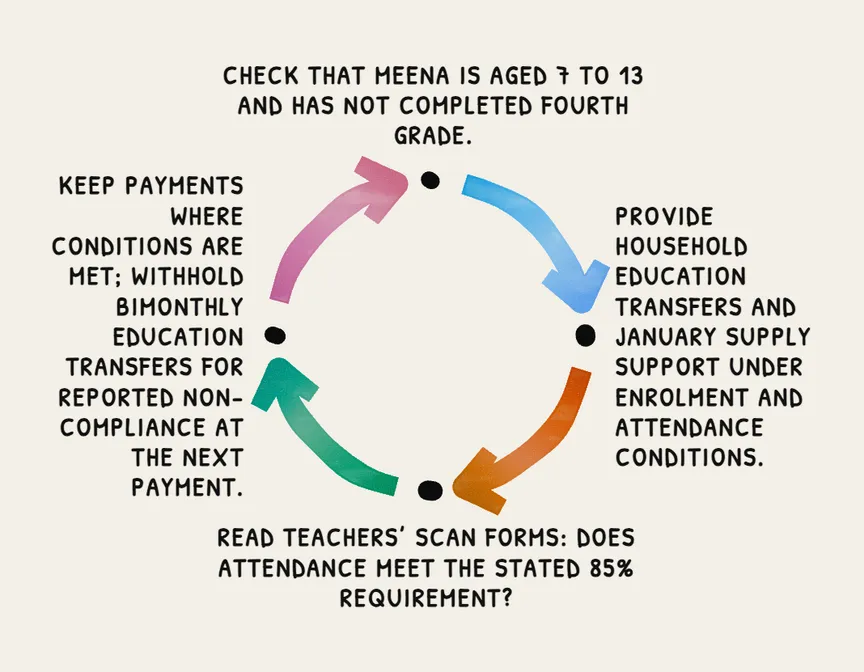
Financial incentives directly reduce the financial burden of schooling on impoverished parents and offset household opportunity costs.
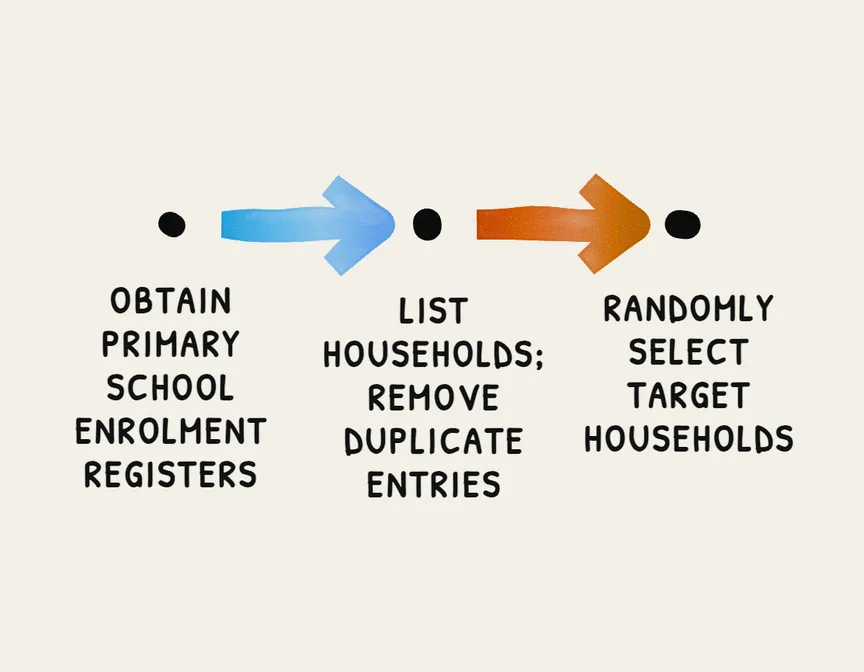
Free primary education leads to high enrollment rates, making school registers a near-complete census of local households with children.
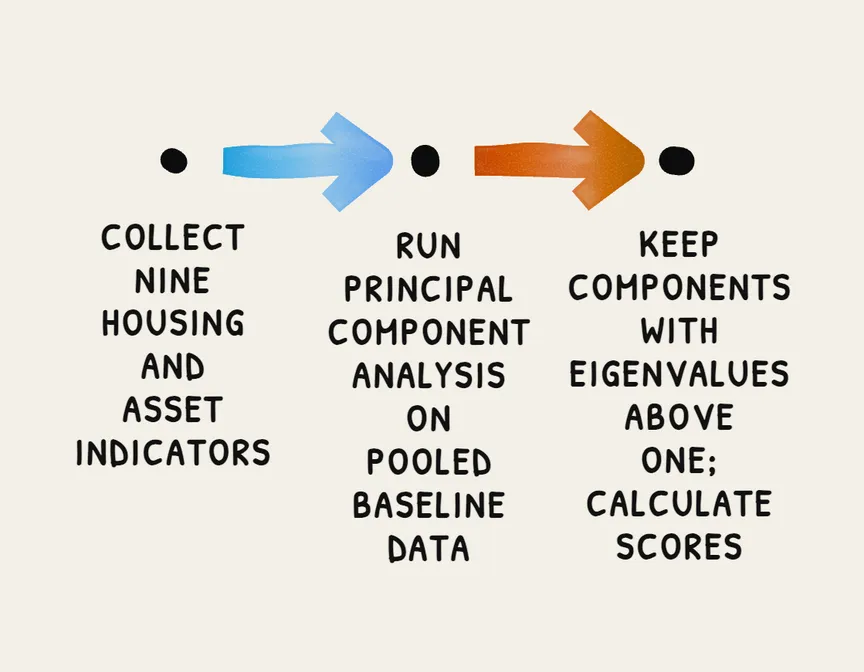
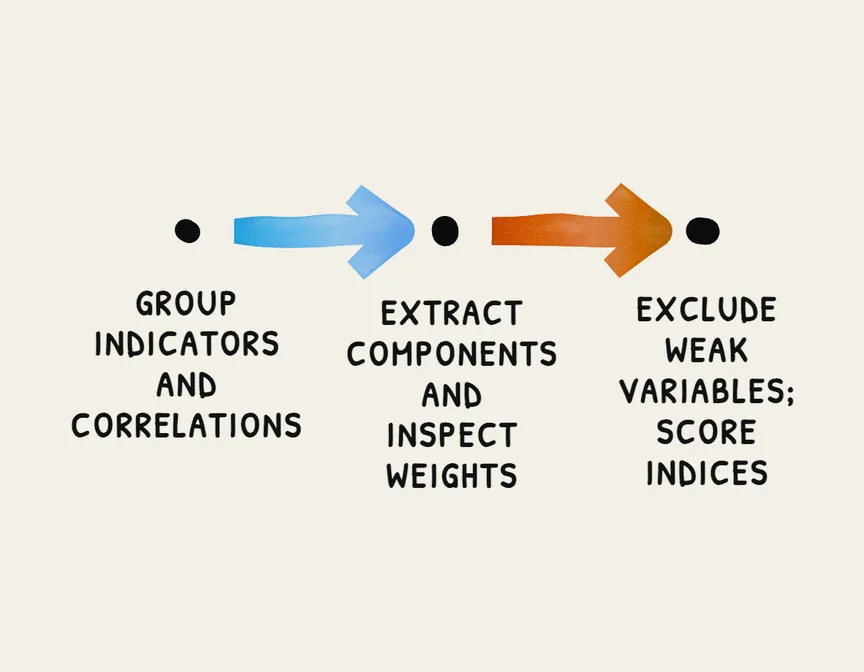
Principal component analysis isolates the common variation across diverse physical asset indicators, weighting rare or high-value items appropriately.
Eigenvalue decomposition extracts a single composite variable capturing the dominant shared variance across multiple correlated indicators.
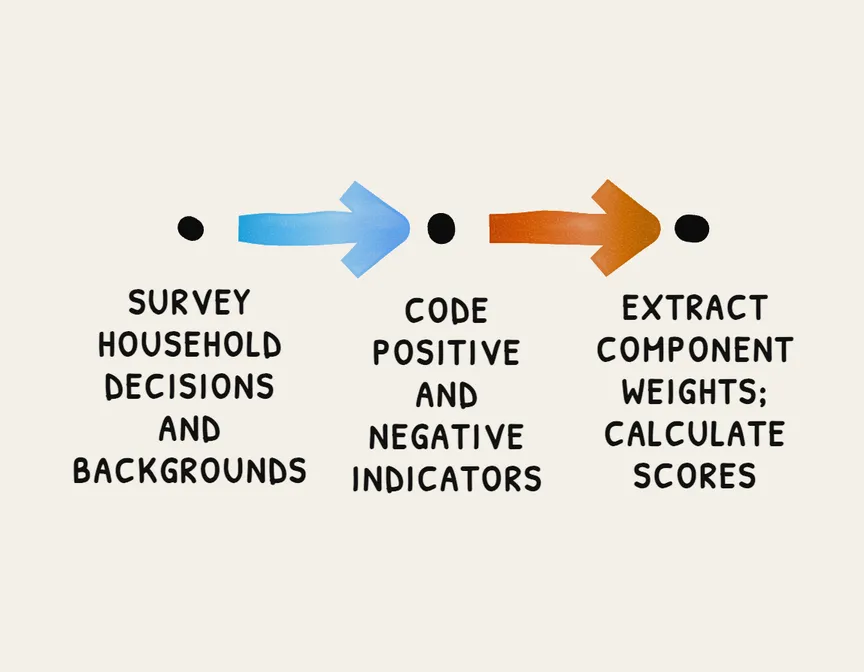
Single survey indicators fail to capture multidimensional bargaining power within married couples.
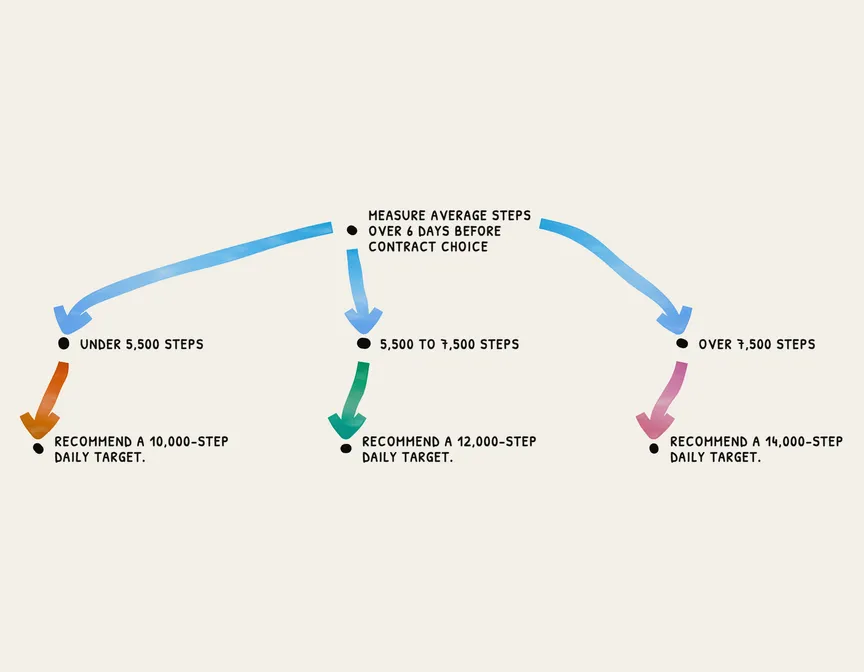
Informational nudges aim to reduce decision complexity and inform participants of their expected optimal targets using expert data analysis.
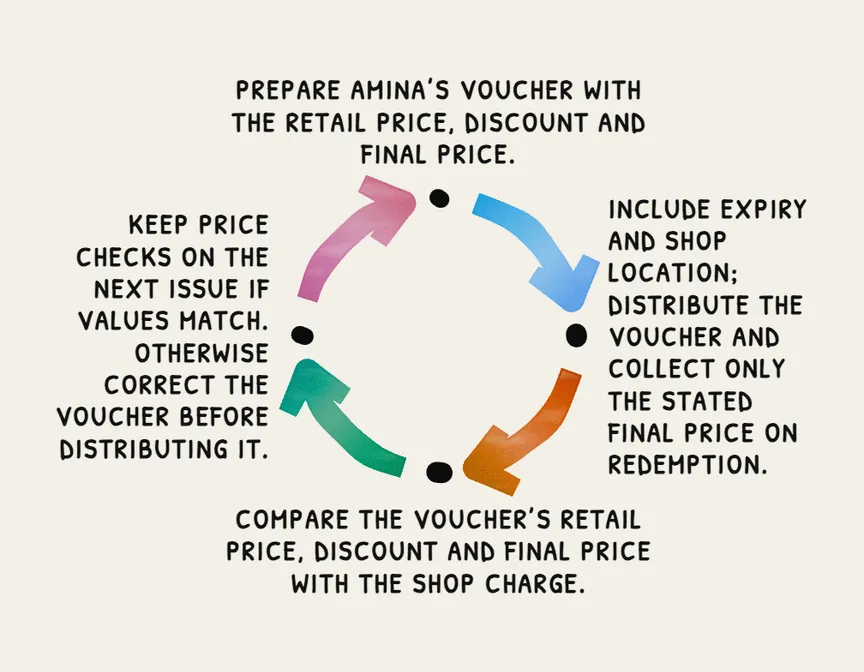
Displaying the full retail price alongside the discount creates reference price transparency without adding distribution costs.
At-risk youth face higher baseline rates of criminal justice involvement, providing greater opportunity for program structure to prevent crime.
Interviewing respondents in strict privacy prevents spousal intimidation and socially desirable answers.
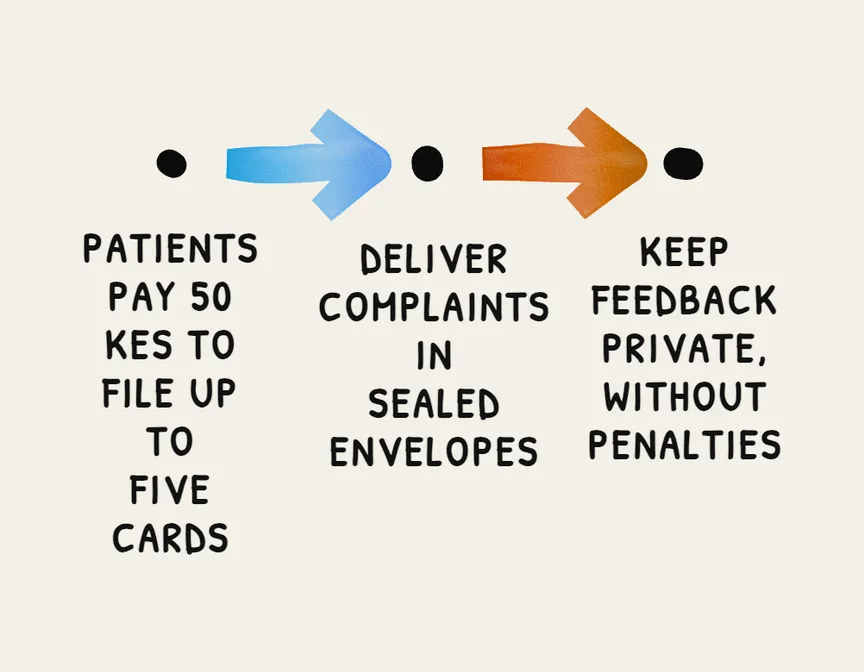
Private complaint boxes deliver individual feedback directly to service providers without incurring social or financial penalties.
Market discipline gives private contractors an incentive to deliver high-quality, personalized guidance to job seekers.
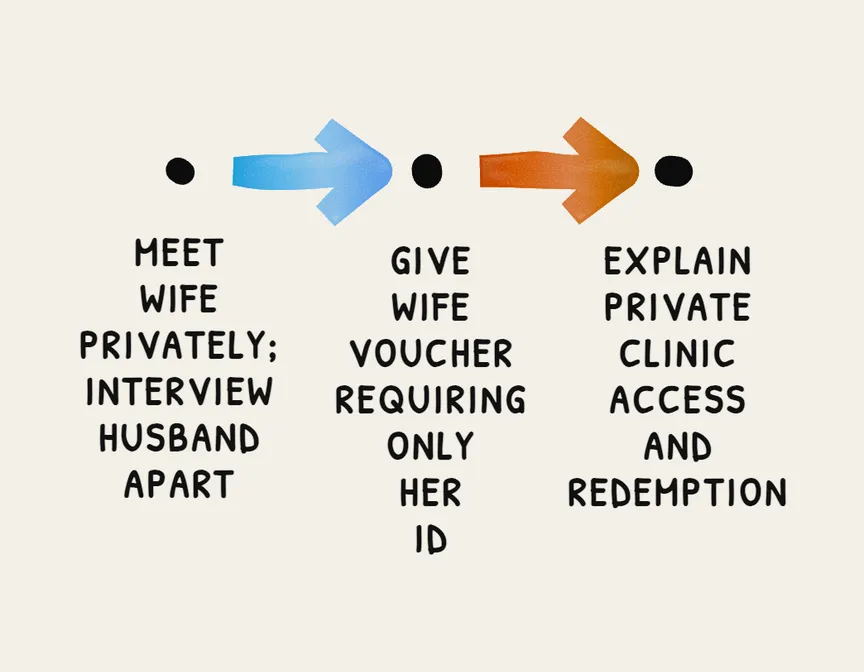
Giving vouchers privately to women eliminates the need for spousal consent and reduces spousal monitoring.
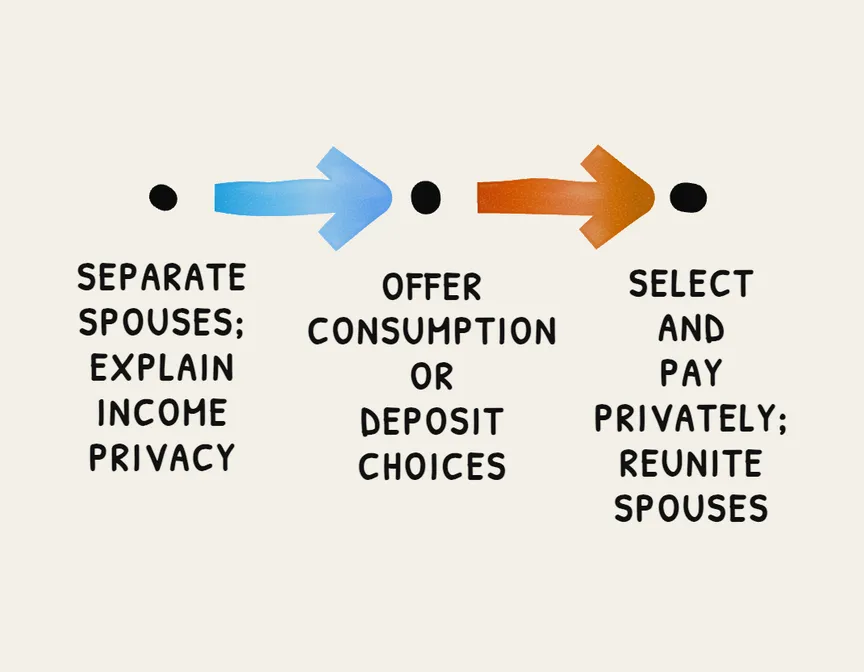
Information privacy shields income shocks from spousal monitoring and expropriation by the primary household financial manager.
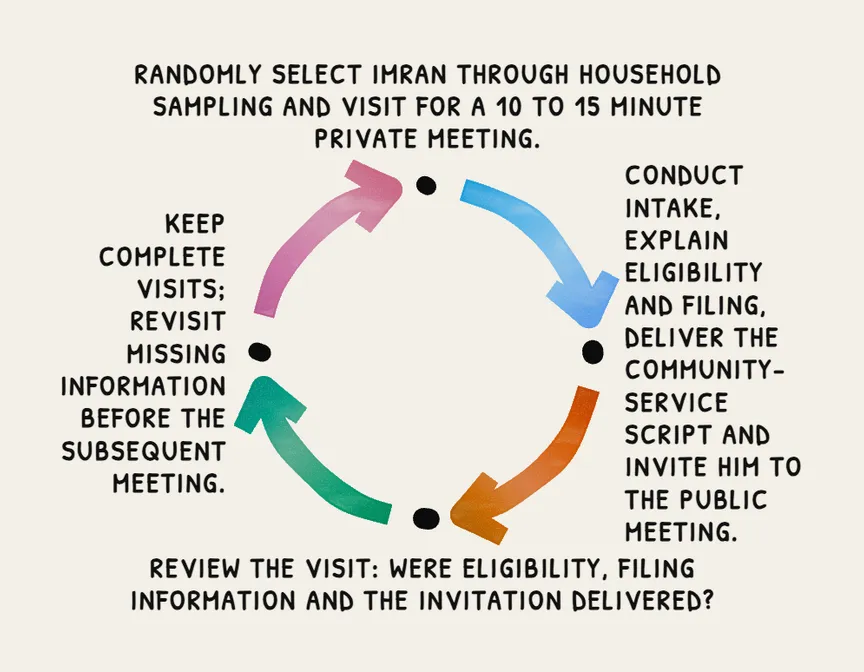
Private prosocial messaging aims to raise an individual's intrinsic motivation by making community welfare returns salient.
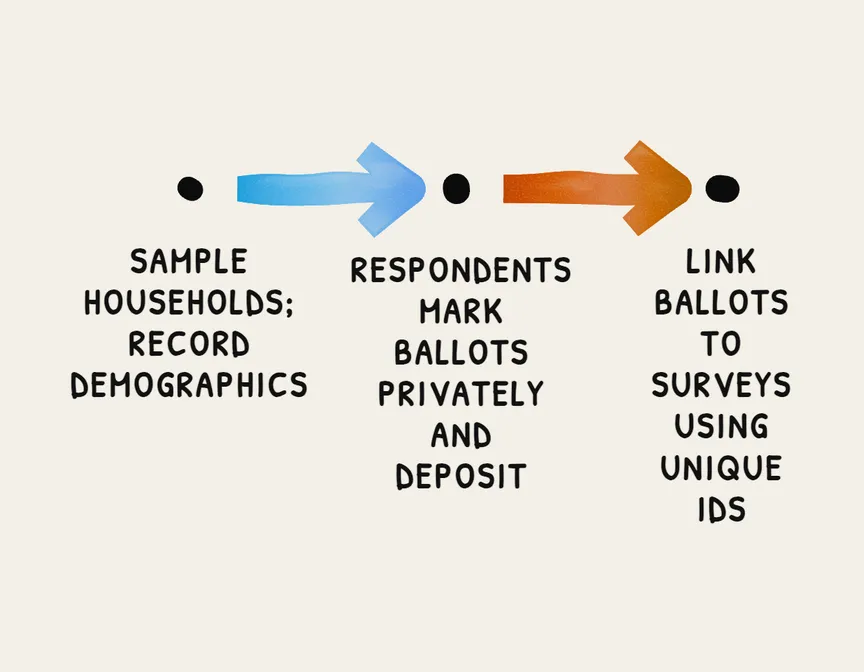
Providing a private paper ballot and a portable ballot box mirrors official voting secrecy, overcoming social desirability bias and fear of political retribution.
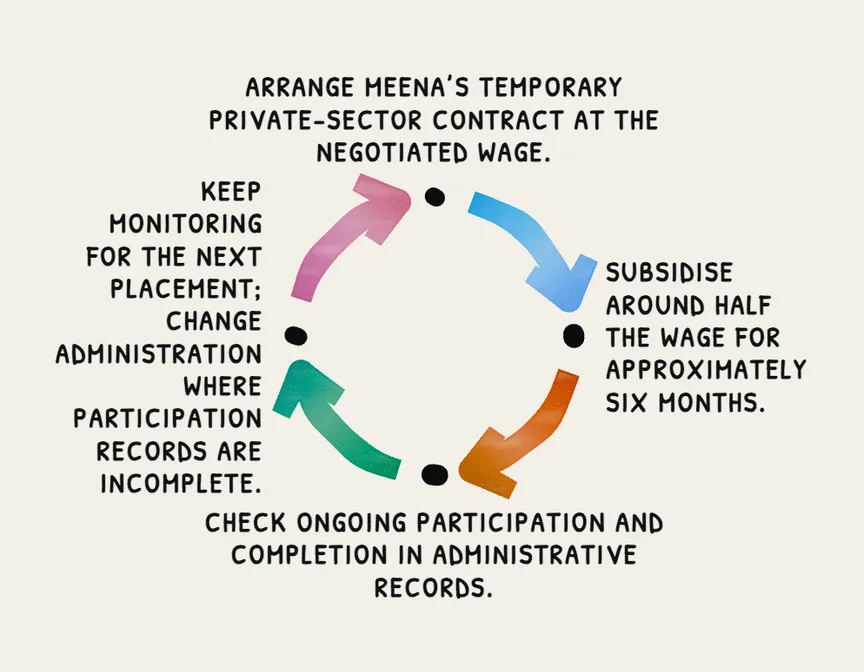
Subsidizing temporary private sector wages reduces hiring risks for employers while placing job seekers into real workplace environments.
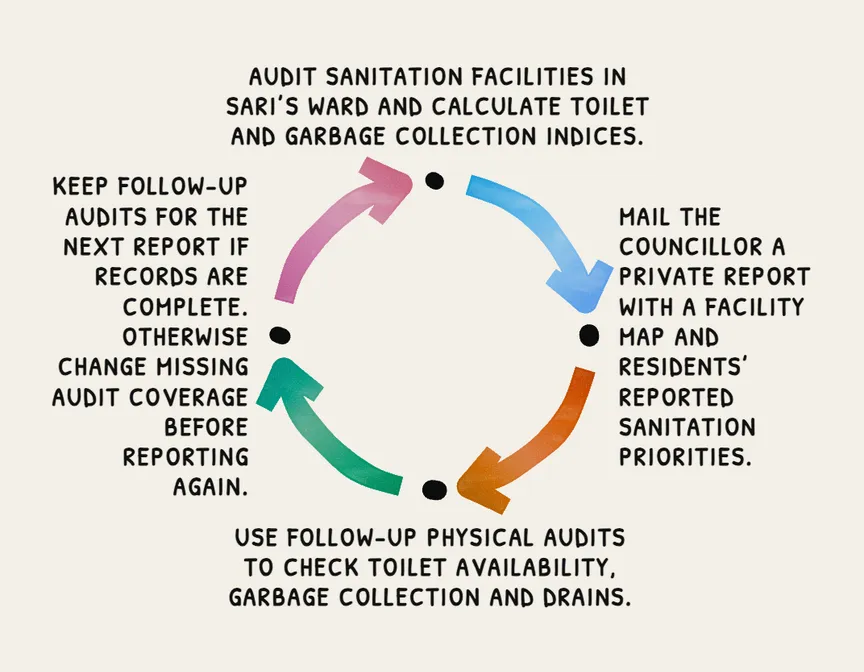
Private disclosures provide actionable information about localized public good failures to politicians who may be intrinsically motivated or unaware of specific infrastructure defects.
Restricting public visibility prevents direct candidate contacts and eliminates unqualified application floods.
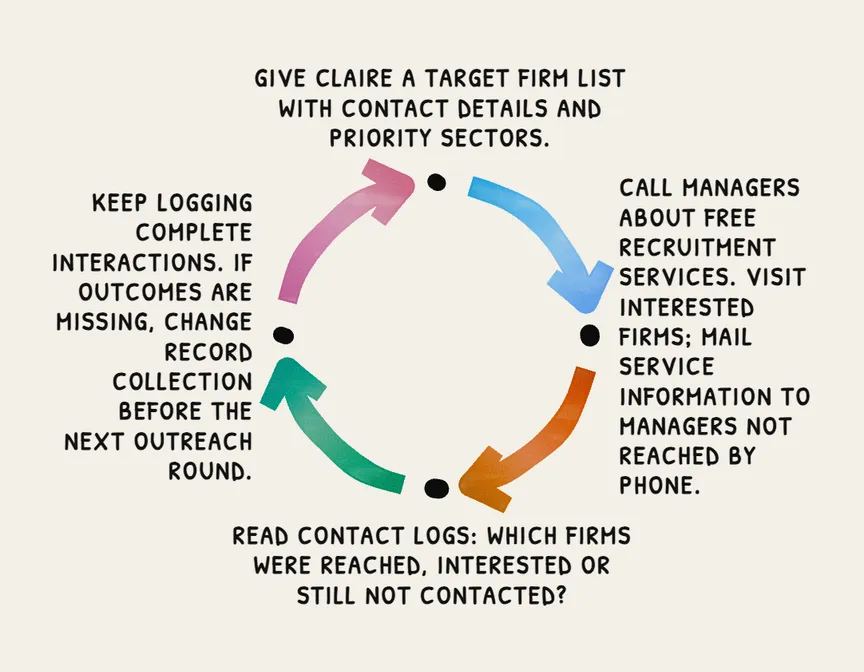
Direct multi-channel prospection lowers information frictions by informing business owners about free customized agency services.
Outbound phone calls reduce the time-varying psychological costs of initiating job applications, such as attention friction, cognitive load, and procrastination.
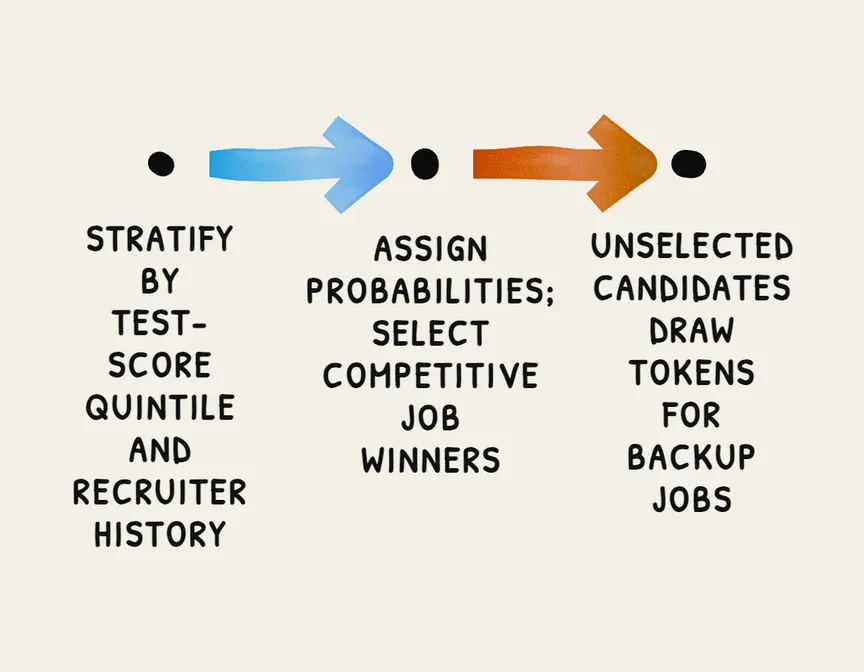
Randomizing job offer probabilities breaks the connection between unobserved worker traits and job placement.
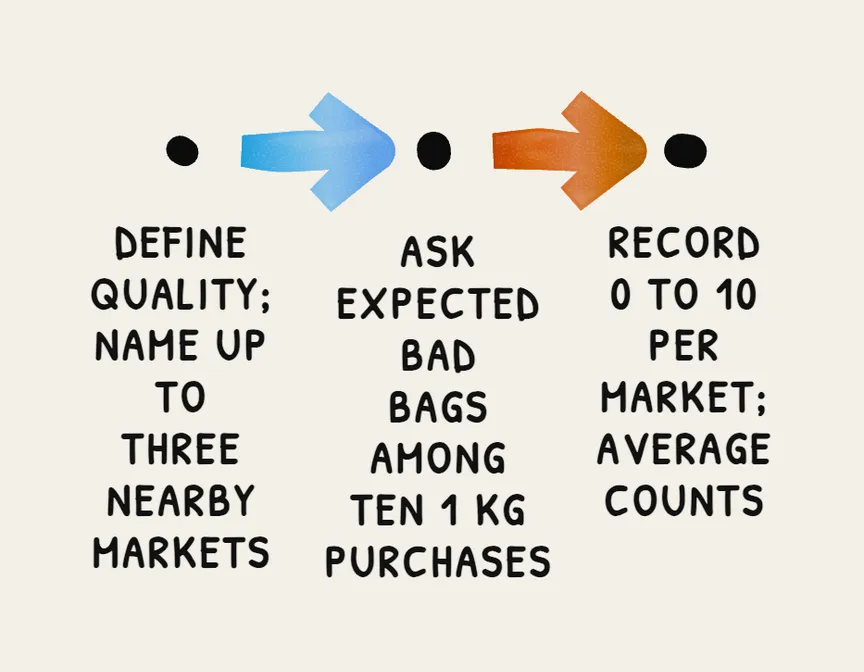
Asking farmers to evaluate a concrete count of ten purchases mirrors how rural consumers buy 1-kilogram scoops, avoiding abstract mathematical probabilities while capturing fine-grained subjective risk beliefs.
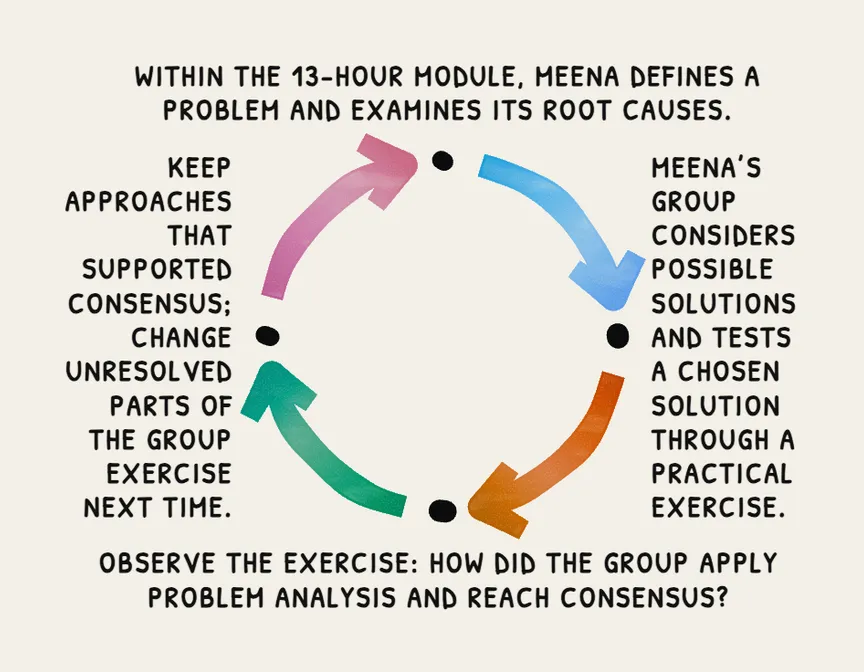
Structured problem-solving training builds individual self-reliance and autonomous functioning when addressing daily shocks.
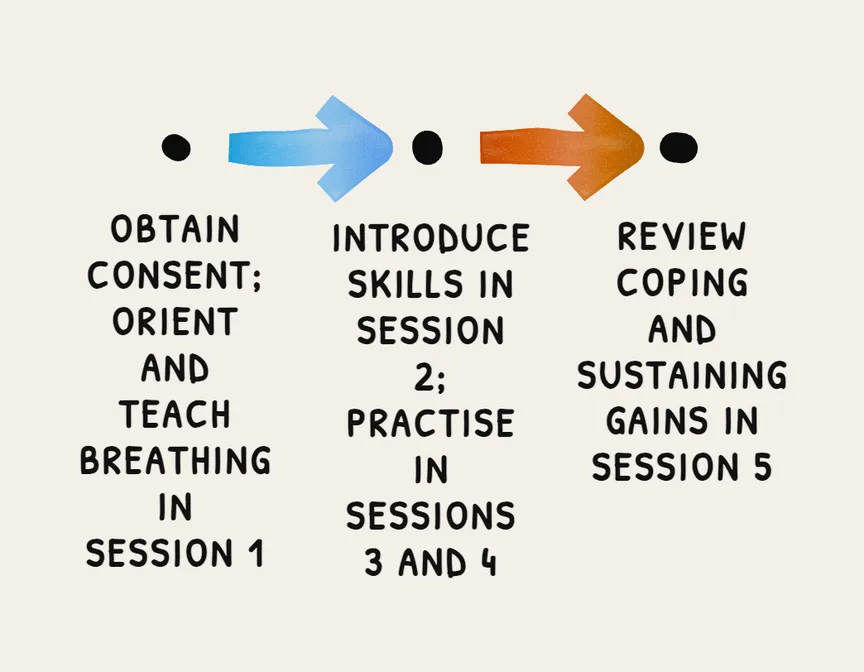
Teaching practical cognitive behavioral strategies helps individuals manage adversity, solve pressing personal problems, and strengthen local social networks.
Direct delivery of factual information by a high-status advocate triggers role-modeling effects without requiring fictional drama.
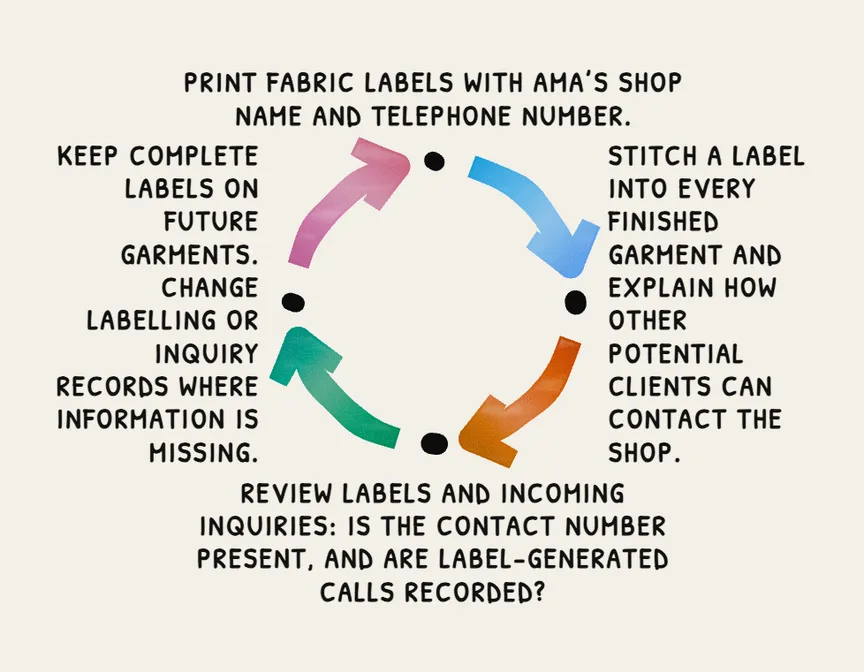
Branding labels convert satisfied customers into walking advertisements, allowing interested third parties to contact the tailor directly.
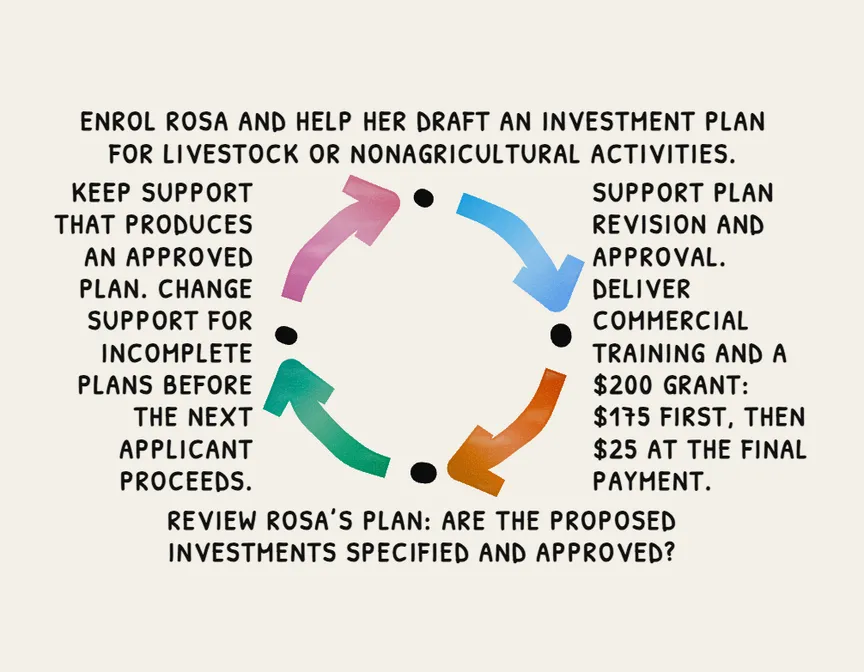
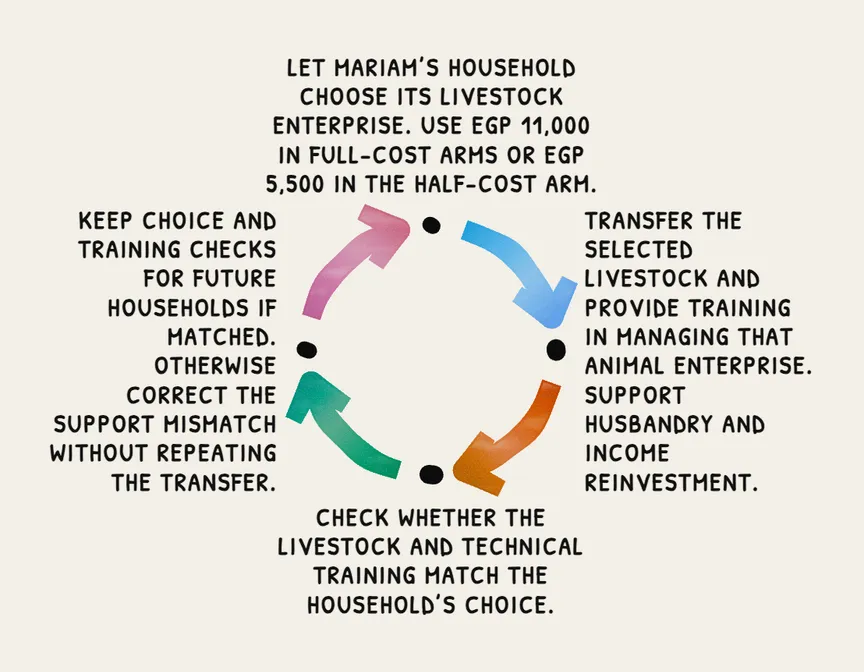
Combining financial capital with technical training removes liquidity constraints and managerial skill barriers, encouraging households to start nonagricultural businesses.
Livestock transfers provide immediate productive wealth that households can manage, grow, and reinvest.
Systematic training replaces outdated practices with modern scientific techniques to improve officer competence.
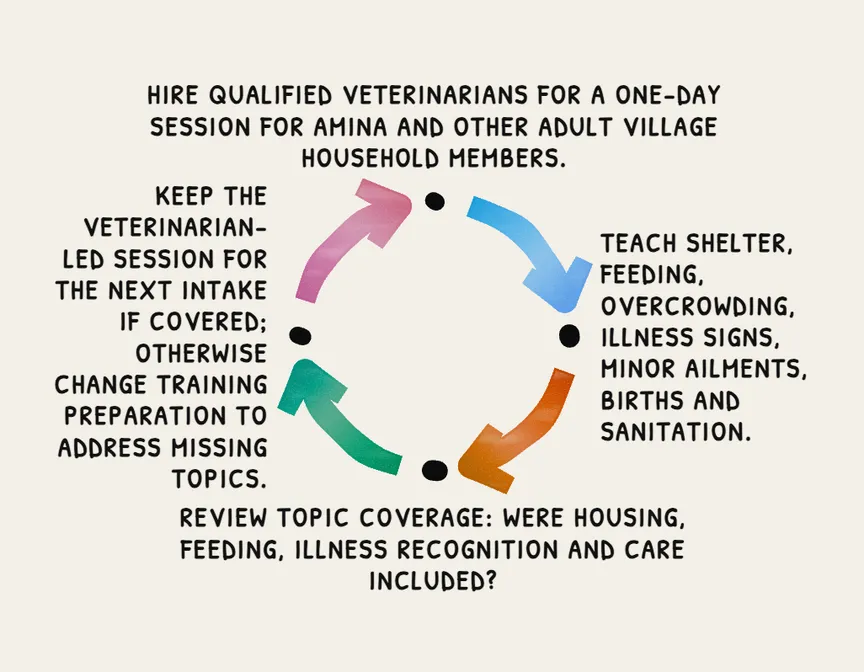
Training from professional veterinarians ensures that households adopt correct animal care and disease control techniques.
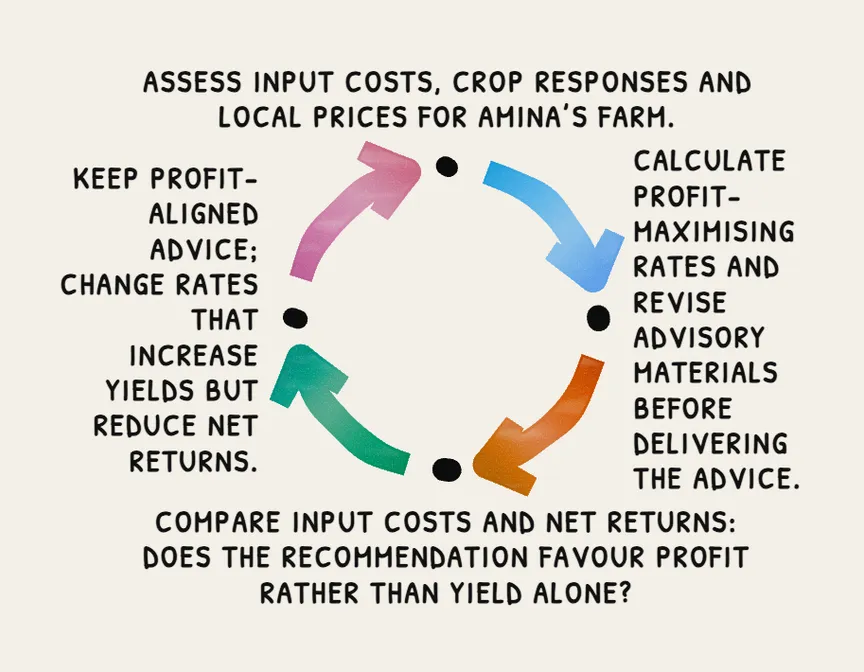
Aligning extension recommendations with profit incentives reflects smallholders' economic priorities and prevents over-investment in expensive inputs.
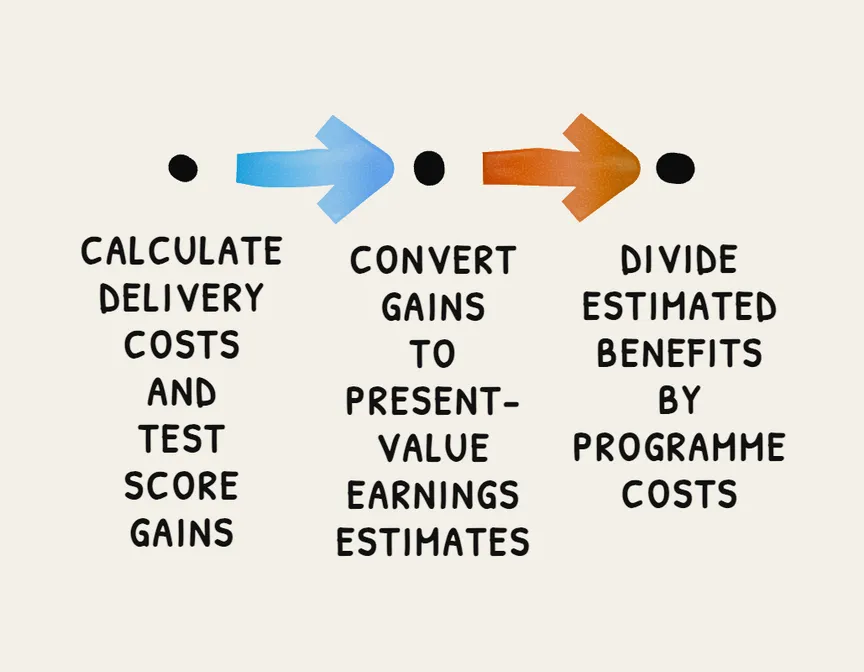
Converting standardized academic test score gains into present-value lifetime earnings allows direct monetary comparisons between health intervention costs and long-term economic benefits.
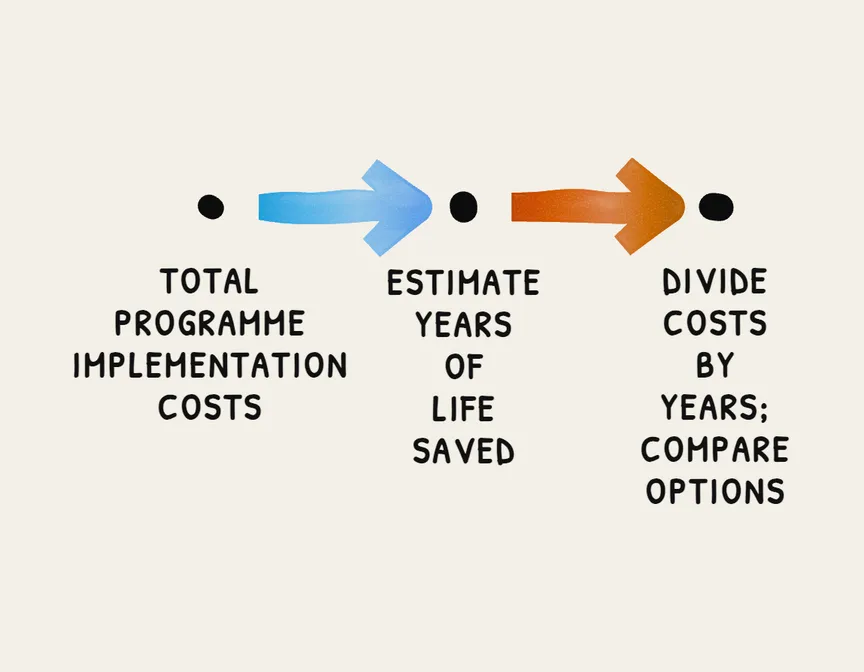
Measuring cost per year of life saved accounts for both financial inputs and verified health outcomes.
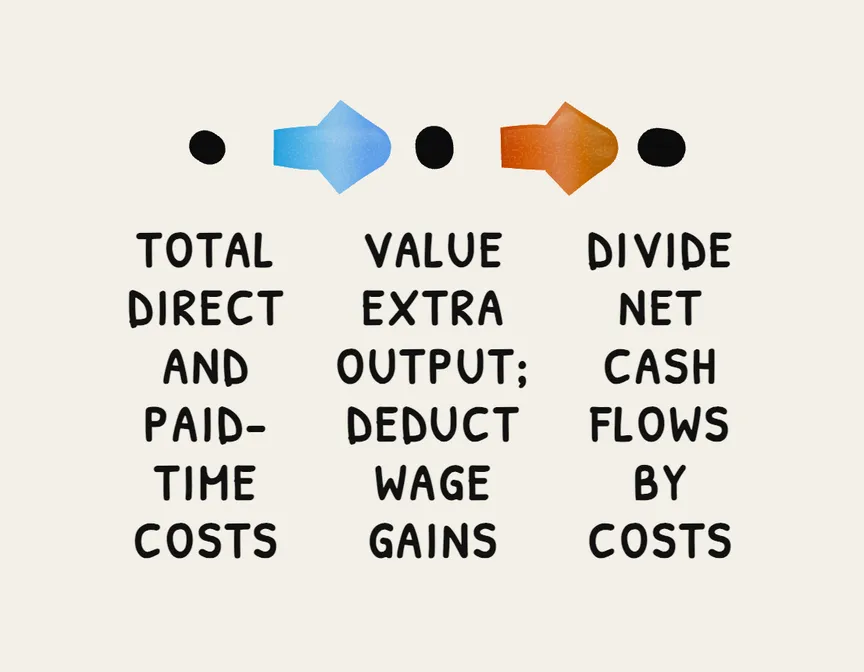
Monetizing productivity gains alongside direct and wage costs proves whether general soft skills training generates net firm profits.
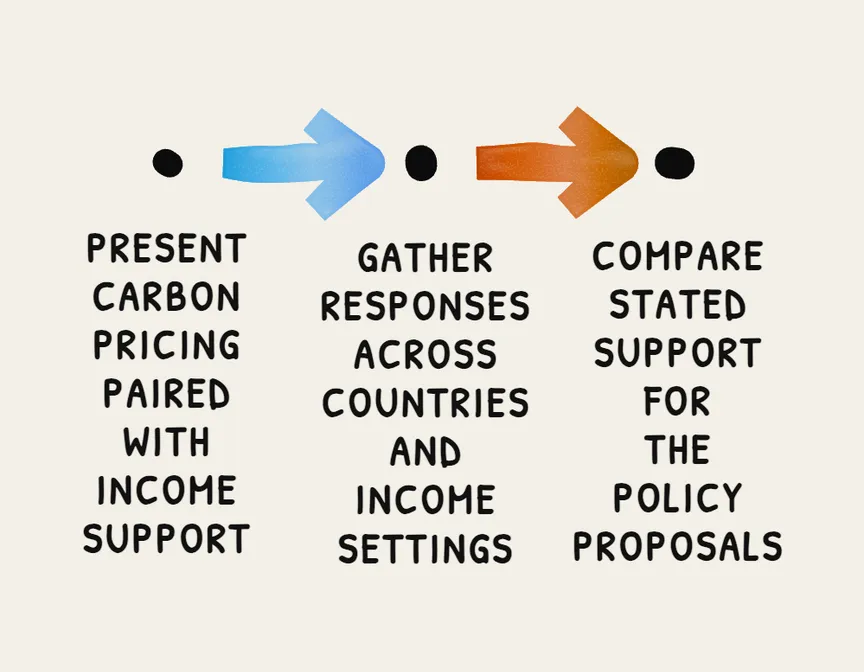
Recycling carbon tax revenues into cash transfers offsets increased energy prices for low-income households.
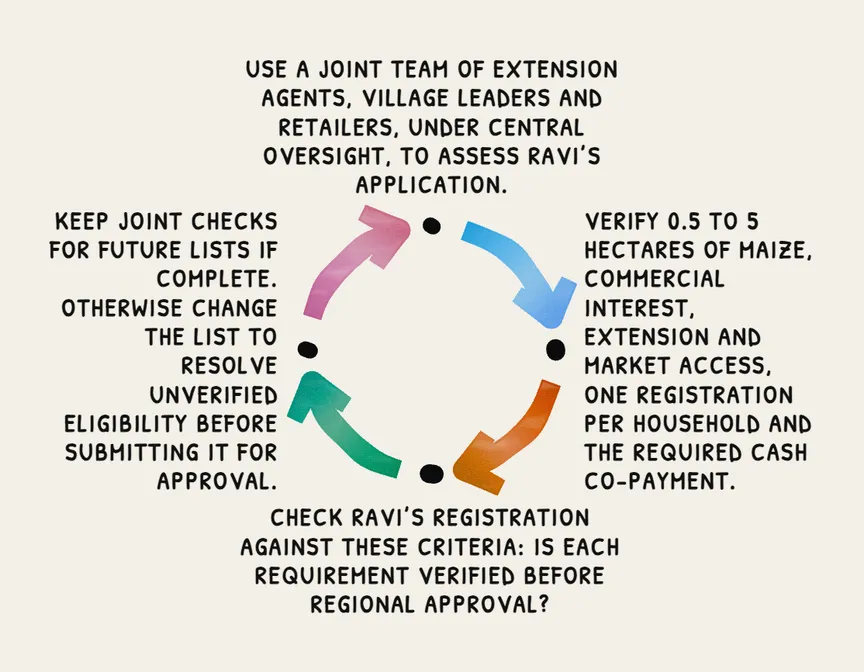
Local leaders and extension staff hold ground-level knowledge about farm sizes and producer motivation that formal records lack.
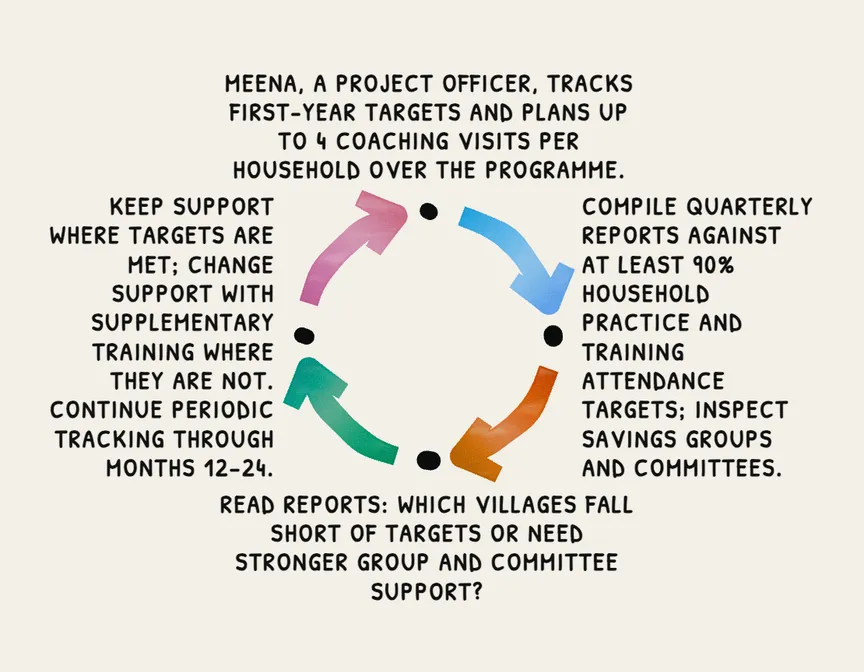
Intensive officer tracking and early targeted interventions prevent implementation lapses before they affect outcomes.
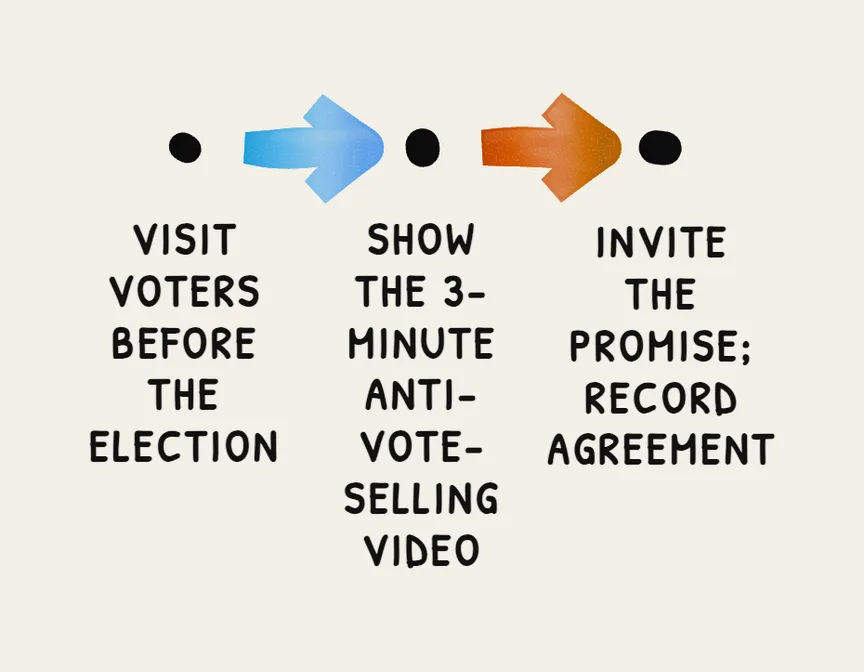
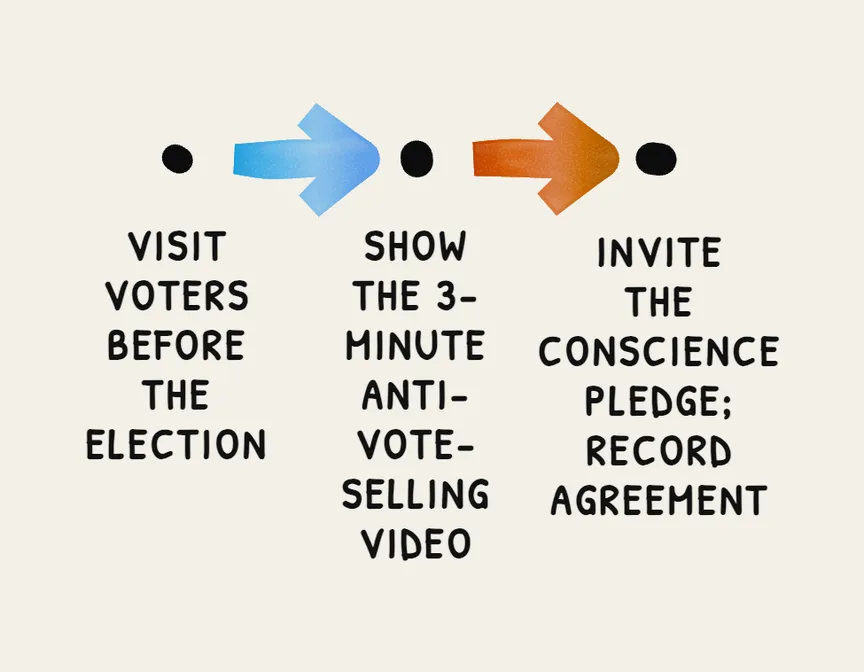
Securing an explicit promise not to accept money reduces the initial acceptance of cash.
The campaign intends to decouple cash acceptance from voting obligation.
Page 30 of 45
Previous
1
…
29
30
31
…
45
Next